1923 Nickel Error List with Pictures

Can a two-feather nickel still show a scrap of the third feather? A documented 1923 example can, which makes comparison more useful than simply counting.
For a price comparison, a different-year 1927-S two-feather coin sold for $2,280 in February 2021. The 1923 nickel errors below have estimated ranges from $5 to $2,500; that comparison is not a recorded 1923 sale.
Read on for the missing details, displaced designs, and damaged blank surfaces worth examining.
1. 1923 Buffalo Nickel Lamination
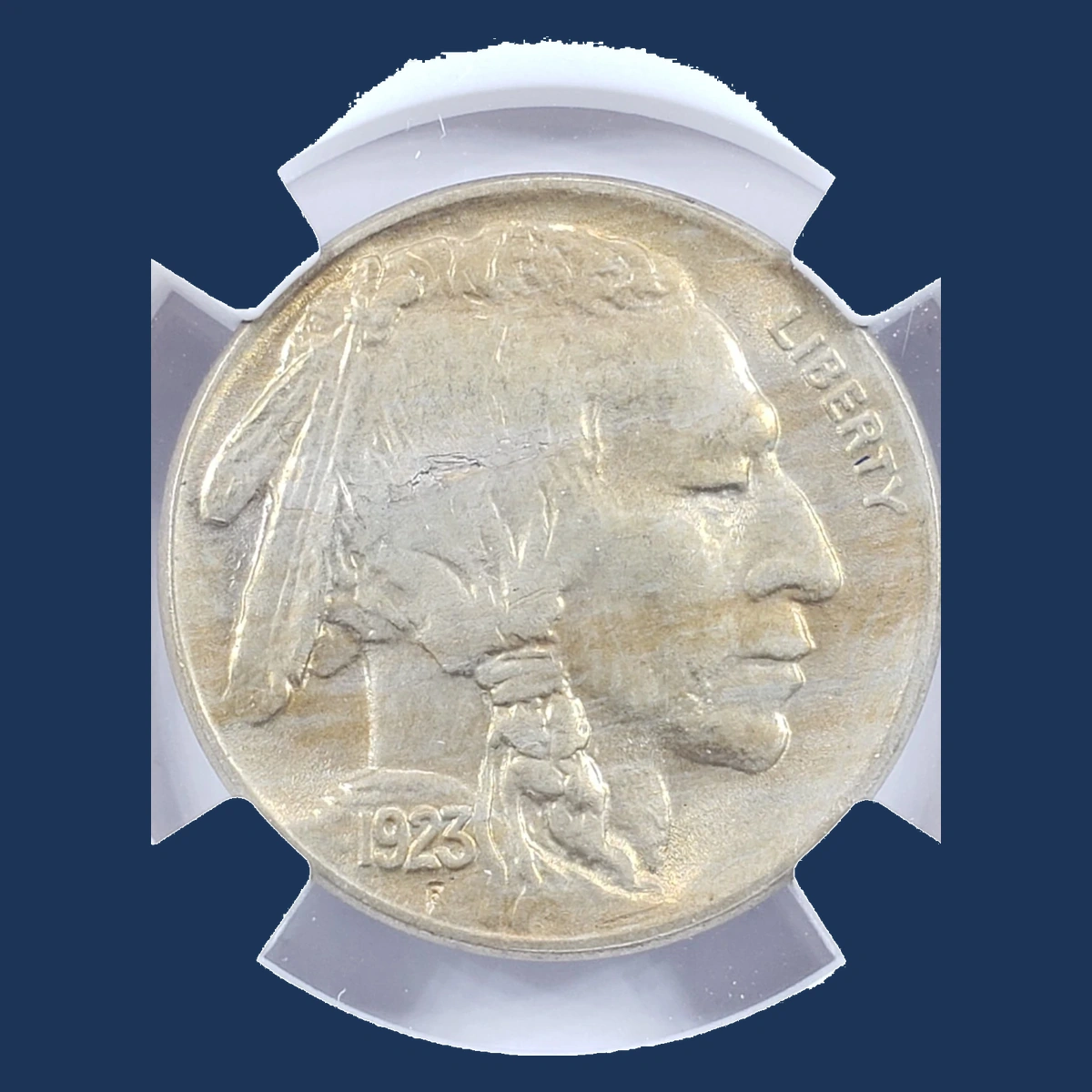
Peeling metal on this date has appeared in several places. A Philadelphia catalog example has a separation running from the right rim toward the nose.
San Francisco examples include a small neck peel, peeling on both faces, and another patch above the buffalo. Each description belongs to its own coin.
The fault is called lamination: a weak area inside the alloy opens and part of the surface lifts or falls away. These reports do not establish a coin split into two complete halves, and the nickel’s copper and nickel are mixed rather than plated in separate layers.
Estimated Value
Worn 1923 lamination examples can be modest purchases, with an estimated $5–$100 range for small, recognizable peels. More dramatic defects and better-preserved coins need individual comparison.
The historical catalog offered four Philadelphia and San Francisco pieces with $3 or $4 minimum bids. Those were starting requirements, not completed-sale prices.
For a different-year comparison, a 1944-D Jefferson lamination sold for $27 in April 2008. Its wartime alloy and design differ from this Buffalo nickel.
How to Identify
If metal is already lifting, leave it where it is. Opening a flap can turn an intact mint error into a damaged fragment.
Use a 10× magnifier to inspect the exposed seam and any original detail carried by the peeling metal. Compare the location carefully: the Philadelphia nose peel is not the same coin as a San Francisco neck peel.
A loose normal coin is about 5 grams and 21.2 millimeters; check with a scale and calipers without squeezing the weak area. The edge should otherwise be plain.
Weight may remain near normal when the separated metal is still attached. Inspect both faces for related openings, but do not assume that a surface peel means the whole coin has split through its thickness.
2. 1923 Buffalo Nickel Struck Through Grease
An area that failed to receive the design may look softer than the surrounding coin. Grease mixed with debris can block a die, the steel tool that stamps the design.
The blocked recesses then fail to form their usual raised details. This differs from a hard object leaving a sharply outlined dent during striking.
A 1923 Philadelphia nickel graded ANACS F15 appeared in a 2023 auction as struck through grease. F15 means a worn coin with recognizable detail; the written listing does not identify the affected face or a particular missing letter.
Estimated Value
The 1923 grease-filled example shared a two-coin lot with a 1967 half dollar at Centennial on April 11, 2023. The published result was $108 for both coins.
An estimated $15–$150 for an individual 1923 example depends on how clearly the missing design shows. The group result cannot be assigned to the nickel alone.
Coins with readable dates and obvious localized weakness are easier to compare than pieces whose entire design has worn away.
How to Identify
Examine the ordinary high points first. If the portrait and buffalo are worn flat everywhere, a weak patch may simply reflect circulation.
Then compare a suspect patch with nearby details under a 10× magnifier. Material in the tool can prevent selected design from forming while leaving adjoining areas more complete.
For a loose candidate, use a scale to compare its weight with 5 grams. Calipers should show roughly 21.2 millimeters, and the edge is plain.
The auction listing establishes the Philadelphia example’s description without specifying which design is missing. Match photographs of the actual coin before assigning that example’s identity to yours.
Scraping or smoothing that removes surrounding surface texture points toward later damage instead of a blocked design.
3. 1923 Buffalo Nickel Missing Designer Initial
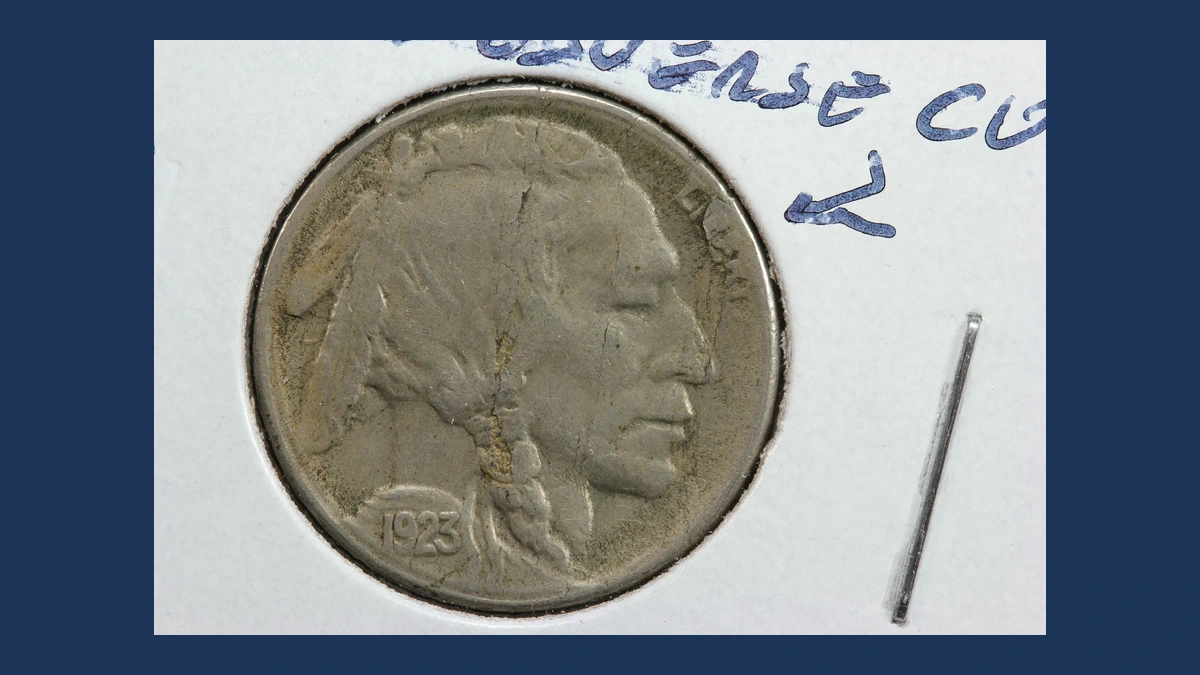
The little F below 1923 is the designer’s initial. It stands for James Earle Fraser and is not the mint letter that identifies San Francisco.
A missing F is reported for this year, but its cause needs examination. Polishing a stamping tool or blocking its small recess can both reduce a letter before a coin is made.
Wear and later smoothing can also erase it. The report does not establish one certified 1923 pattern or a mint, so the useful question is whether the surrounding surface supports a mint-made missing initial rather than ordinary damage.
Estimated Value
For a genuine mint-made missing F with a readable date and convincing surrounding detail, use a conditional $20–$200 estimate. A worn coin whose tiny initial simply disappeared does not qualify.
This is an estimated range, not a documented 1923 auction result. The visible surface and the coin’s condition need to justify the premium.
Comparable missing-detail varieties can attract collectors, but a two-feather price should not be transferred directly to a missing designer initial.
How to Identify
Find the date before looking for an absent letter. The F belongs immediately below it on the front; an S, when present, is under FIVE CENTS on the back.
Inspect the date’s relief and the nearby open surface through a 10× magnifier. A clear date beside an undisturbed blank spot is more promising than a heavily smoothed lower portrait.
Photograph the area from several lighting angles. Parallel scratches, a shallow ground patch, or damage that also cuts the date weaken the case for a mint-made omission.
A loose normal Buffalo nickel weighs 5 grams and measures about 21.2 millimeters, with a plain edge. Record those figures with a scale and calipers, then compare the missing-initial area with a normal coin of similar wear.
4. 1923 Buffalo Nickel Clipped Planchet
A jagged missing piece can originate at the edge of the metal strip used to make blanks. If an incomplete blank reaches the press, its design forms around the shortage.
The reported 1923 type is a ragged end clip, not a specifically located curved bite. The available year report does not identify its mint or a certified specimen.
That leaves the coin’s edge as the important evidence. A later cut or a break after striking can also leave an irregular outline, so a rough gap alone does not establish when the metal went missing.
Estimated Value
A reasonable conditional range for an ordinary 1923 clipped nickel is $40–$350, depending on condition and the size of the missing section. The edge must support a mint-made shortage.
A 1927 Philadelphia Buffalo nickel with a 6% clip sold for $223.25 in August 2015. That different-year certified example offers a comparison, not proof that the reported 1923 ragged clip has the same shape or value.
Keep unusually valuable San Francisco coin grades outside this general estimate.
How to Identify
Use calipers across the intact part of a loose coin before judging the missing section. The usual diameter is about 21.2 millimeters, and a scale provides a comparison with the normal 5 grams.
Turn the plain edge toward the light and inspect the gap through a 10× magnifier. Look where the design meets the shortage for metal shaped during striking rather than fresh tool cuts.
Check the rim opposite the gap for weakening that can accompany an incomplete blank. Its absence alone does not settle the question.
Finally, read the date and the area beneath FIVE CENTS. A normal Philadelphia coin has no mint letter, while an S identifies San Francisco; neither identity should be guessed from the gap’s shape.
5. 1923 Buffalo Nickel Doubled Front Design
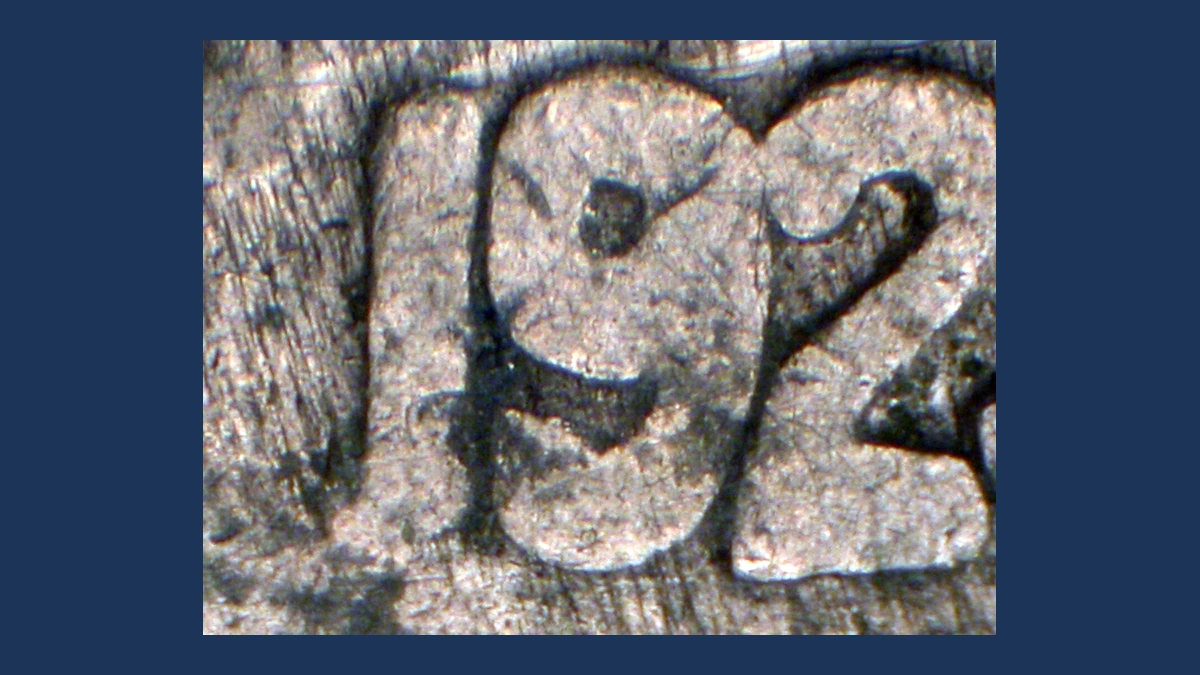
Broad-looking strokes in 1923 and LIBERTY can belong to a doubled die. This is a steel stamping tool that received slightly misaligned copies of the design during its preparation.
The Philadelphia catalog describes strong extra thickness in those front details. A coin struck from that tool inherits the thickened pattern even if it receives only one normal blow.
Some two-feather descriptions also mention a doubled front. That relationship does not make every two-feather coin a doubled die, and a thick date alone still needs comparison with the cataloged letter and numeral shapes.
Estimated Value
Estimate $40–$600 for a matched 1923 Philadelphia doubled front, from worn examples to better-preserved coins. This is a working range rather than a recorded sale of the particular cataloged die.
A different-year 1927-S front doubled die brought $840 in June 2019 in lightly worn AU58 condition. Its different mint and stronger specific pattern prevent treating that result as a direct 1923 price.
When doubling and missing feathers occur together, value the complete coin without adding both ranges.
How to Identify
Confirm Philadelphia’s normal unmarked back first. An S coin needs its own variety comparison and should not be identified from the Philadelphia date pattern.
Check a loose coin with a scale and calipers against 5 grams and approximately 21.2 millimeters. Its edge is plain.
Compare the numeral widths with CONECA’s illustrated Philadelphia variety under a 10× magnifier. Then examine LIBERTY for the related extra thickness.
Wear can swell or blur isolated edges, and movement during striking can leave flat shelves. Keep the same lighting on your coin and the comparison so shadows do not create false width.
Look at the small feather separately if needed. Missing feather detail cannot replace the required match in the date and lettering.
6. 1923 Buffalo Nickel Off-Center Strike
The date and the S remain especially useful when part of the design misses its blank. An off-center strike shifts the design away from the middle, leaving an untouched crescent on the opposite side.
A collector’s PCGS Registry display records a 1923-S example struck 10% off-center and graded VF30. That grade describes moderate wear with much of the design remaining.
Read the blank crescent, missing design, and surviving mint letter together. An uneven rim by itself is not enough, because the coin may still carry a complete design or show damage from later handling.
Estimated Value
For a readable 1923-S off-center nickel, estimate $150–$1,000 according to condition and how much design has missed the blank. The collector-listed VF30 example supplies no sale price here.
As a different-design comparison, a 1940 Philadelphia Jefferson nickel struck 15% off-center sold for $218.50 in October 2010. Its year, mint, and displacement differ from the 1923-S coin.
A full date and clear mint identity generally make an error easier to collect than a displaced design that cannot be dated.
How to Identify
Lay photographs of the front and back side by side. Determine whether the design is cut off and blank metal remains opposite it, rather than relying on one uneven rim.
A one-sided shift with a complete opposite face may have another cause. Inspect the plain edge through a 10× magnifier for filing or cutting that could imitate missing design.
On a loose coin, weigh against 5 grams and measure with calipers against the usual 21.2 millimeters. Off-center striking moves the design without necessarily removing metal.
Now check the readable 1923 date and the S beneath FIVE CENTS against the collector-listed example. Its 10% description does not supply a direction, so keep both whole-coin views beside any close-up of the blank crescent.
7. 1923 Buffalo Nickel Two Feathers
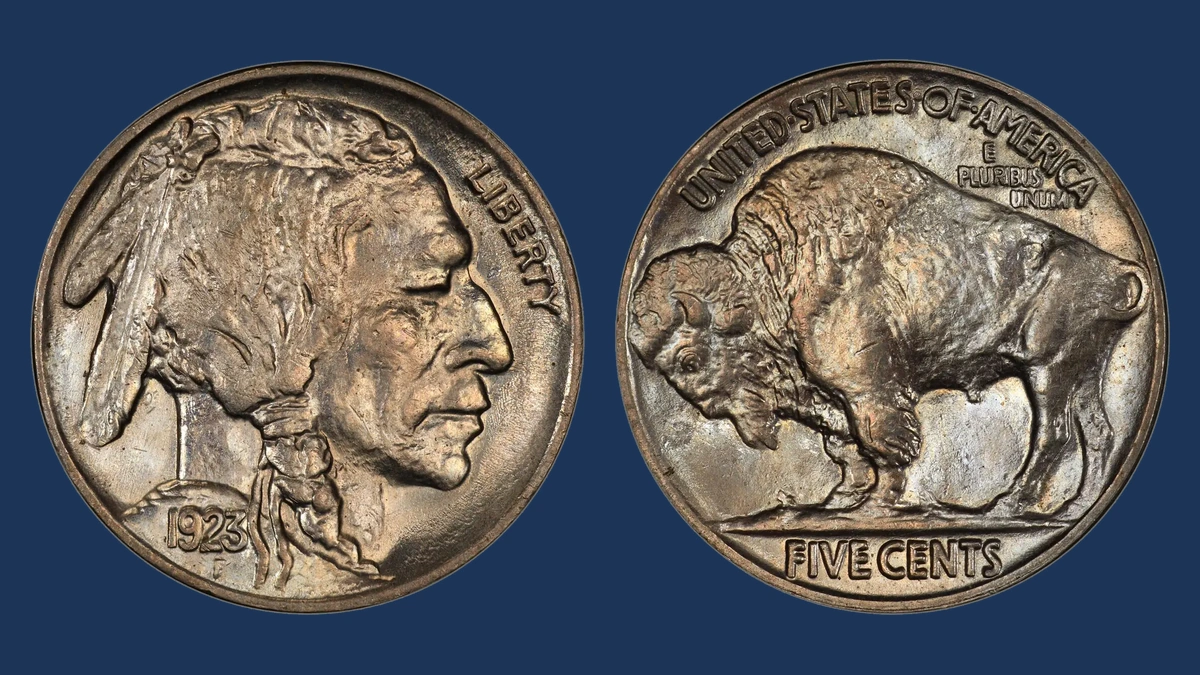
Two large feathers remain clear while the small inner feather is reduced or absent. Heavy polishing of the stamping tool removed the shallow design that would normally form that feather.
The collector’s documented 1923 Philadelphia MS64 example can retain a small isolated scrap. It is disconnected from both the neck and hair, so the variety need not show a completely empty space.
MS64 describes an unworn coin with some marks. On more heavily worn pieces, the scrap may vanish through circulation, which makes the condition of the nearby design important when deciding whether the variety is genuine.
Estimated Value
An estimated $75–$2,500 spans recognizable worn examples and better-preserved 1923 two-feather coins. No auction amount is shown on the PCGS page for this variety.
For comparison, a 1927-S two-feather MS63 sold for $2,280 at Heritage in February 2021. That is a different year and mint, not a sale of the 1923 Philadelphia coin.
A clear detached remnant can support identification rather than lower it automatically. Preservation and a sound variety match matter more than a perfectly empty gap.
How to Identify
A detached speck is worth inspecting before dismissing the coin. Under a 10× magnifier, see whether it touches either the neck or the hair.
The collector’s illustrated 1923 example allows that isolated remnant. Compare the two large feathers and nearby portrait details to judge whether ordinary wear explains the missing small feather.
For a loose coin, record its weight and diameter with a scale and calipers. Normal figures are 5 grams and about 21.2 millimeters, with a plain edge.
Check that the back has no S, as this is the Philadelphia variety. Look across the small-feather area under low light for scraping that disrupts the surface; do not try to remove or flatten the remaining speck.
Conclusion
A remaining feather scrap can help identify a variety, while a missing F can have several causes. Read the nearby design before assigning either name.
The estimated $5–$2,500 spread covers small worn laminations through better two-feather examples. The $2,280 comparison belongs to a 1927-S coin, and the $108 grease-error result covered two different coins.
Protect peeling metal and keep the date, mint area, and suspected error visible in your photographs.