1941 Nickel Error List with Pictures

A pair of 1941 nickels caught together in the press sold for $2,760 in August 2010. One coin carried a backward image from the other.
This 1941 nickel error list also covers doubled letters, peeling metal, and nickels made on the wrong blanks. Estimated prices run from $5 to $3,500, including complete paired errors.
Read on to see which features matter and how to check them.
1. 1941 Jefferson Nickel Die Crack
A thin raised line can come from a crack in a die, the steel tool that stamps the coin. Metal enters that opening during a strike and forms a narrow ridge.
The line may cross letters or run through the smooth background. Its route depends on where the tool broke.
Die cracks appear in the 1941 error listings, but no single route identifies every example. A scratched coin has a cut into its surface instead.
Some scratches push up metal beside the cut. Check the middle of the line before deciding.
Estimated Value
Allow an estimated $5–$40 for a genuine small crack on an ordinary 1941 nickel. This is a working range for minor Jefferson nickel cracks, rather than a recorded sale for one specific example.
A long, clear ridge may attract more interest than a faint line. Heavy wear can hide the feature.
A high price for an otherwise exceptional coin should not be treated as the value of the crack alone.
How to Identify
Pass a light across the line while looking through a 10× magnifier. A raised ridge should cast a small shadow on the opposite side as the light moves.
Now inspect any crossing letters. A die crack can continue through the design, while a scrape often cuts away the tops of letters.
For a loose coin, a scale and calipers provide basic checks against the normal 5.00 grams and 21.21 millimeters. This error adds no separate piece of metal, so a small ridge should not cause a major weight change.
Compare several points along the line, not just its brightest spot. Look for a raised center without a gouged channel beside it.
2. 1941 Jefferson Nickel Lamination
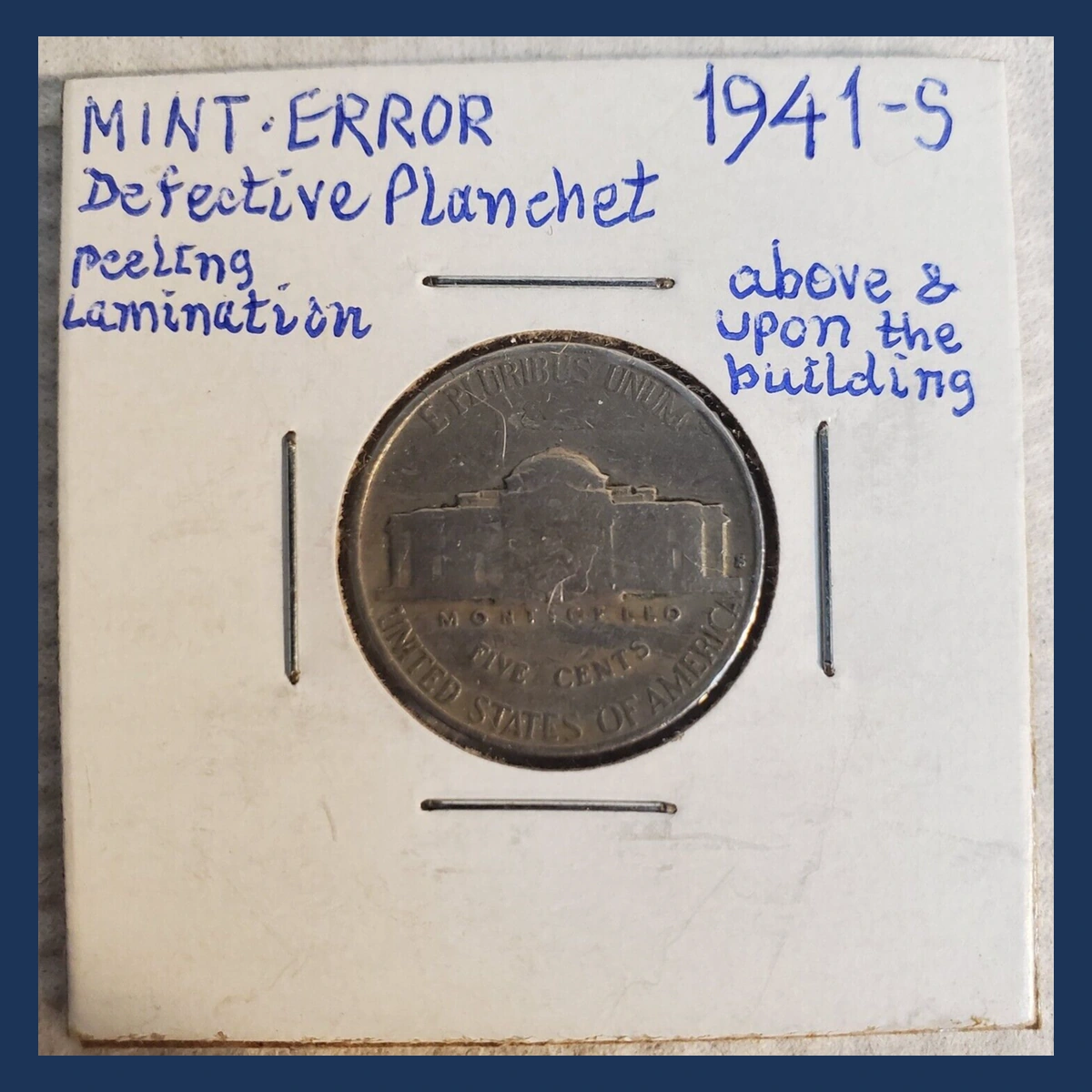
A lamination is a layer of coin metal that begins to separate. It can appear as a shallow peel, a loose flap, or a rough patch where a thin layer has fallen away.
The trouble starts inside the metal used to make the blank. Dirt or poorly joined metal can leave a weak area.
The 1941 listings include this kind of surface flaw. Its position and size must be judged on the individual coin.
This is not a silver coating peeling from a wartime nickel. Normal 1941 nickels contain copper and nickel.
Estimated Value
An estimated $10–$100 covers small to fairly clear laminations on typical 1941 nickels. A large attached flap may draw stronger interest, especially when nearby letters remain easy to read.
This range uses similar surface separations as a guide; it is not a quoted 1941 auction result. Deep corrosion can also remove metal, but that damage does not earn the same premium.
Avoid lifting a flap to test it.
How to Identify
Leave any loose layer in place. Tilting the coin under a lamp can reveal its thin edge without touching it.
Use a 10× magnifier to follow the separation into the nearby surface. A peeling layer may carry part of a letter, while corrosion more often leaves scattered pits and eaten edges.
The normal alloy is 75% copper and 25% nickel, with a weight of 5.00 grams. A scale can show missing metal, though a very thin peel may barely affect the reading.
Use calipers gently on an undamaged edge to check the usual 21.21-millimeter diameter. Do not close them over a loose flap.
At the damaged patch, look for a layer separating from the coin rather than a lump stuck on top.
3. 1941 Jefferson Nickel Doubled Die
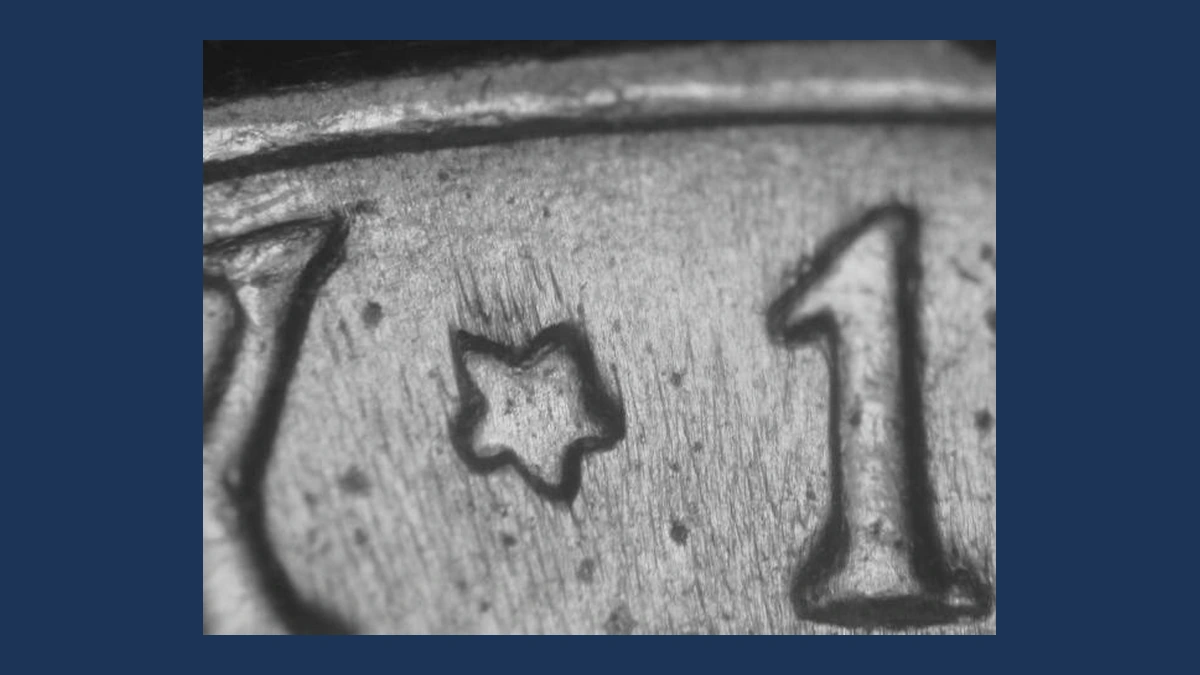
Doubled letters can begin on the stamping tool before it ever touches a coin. This is called a doubled die.
Several 1941 varieties show this effect on the back. On one Denver variety, E PLURIBUS UNUM spreads more clearly toward the right, while parts of CENTS and AMERICA show three outlines.
Other Denver and San Francisco examples show closer doubling or thick letters. A Philadelphia front variety has slight clockwise doubling.
These are different patterns, not extra strikes counted from the number of letter outlines. Small details separate one variety from another.
Estimated Value
Use an estimated $10–$150 for the subtle 1941 doubled dies discussed here. The broad range allows for visibility, wear, and collector demand for the particular variety.
These are estimates rather than a single auction record covering every listed pattern. A clearly separated extra outline is usually easier to sell than slight thickening.
Check whether a coin is an ordinary issue or a Proof, a specially made collector coin, before comparing prices.
How to Identify
Choose the correct mint first. A small D or S sits to the right of Monticello; Philadelphia coins have no mint letter.
Then compare the affected letters with the matching photographs in Brian’s 1941 variety listings. The strongest Denver example involves E PLURIBUS UNUM, CENTS, and AMERICA; a San Francisco example is clearest on UNITED STATES.
A 10× magnifier should show the shape of any extra outlines. Flat ledges that make letters look shaved can result from movement during striking instead.
Normal size remains 21.21 millimeters and normal weight 5.00 grams, checked with calipers and a scale on a loose coin. For a holdered coin, use its recorded measurements.
Match several letters in the same direction; one thick letter is not enough.
4. 1941 Jefferson Nickel Repunched Mintmark
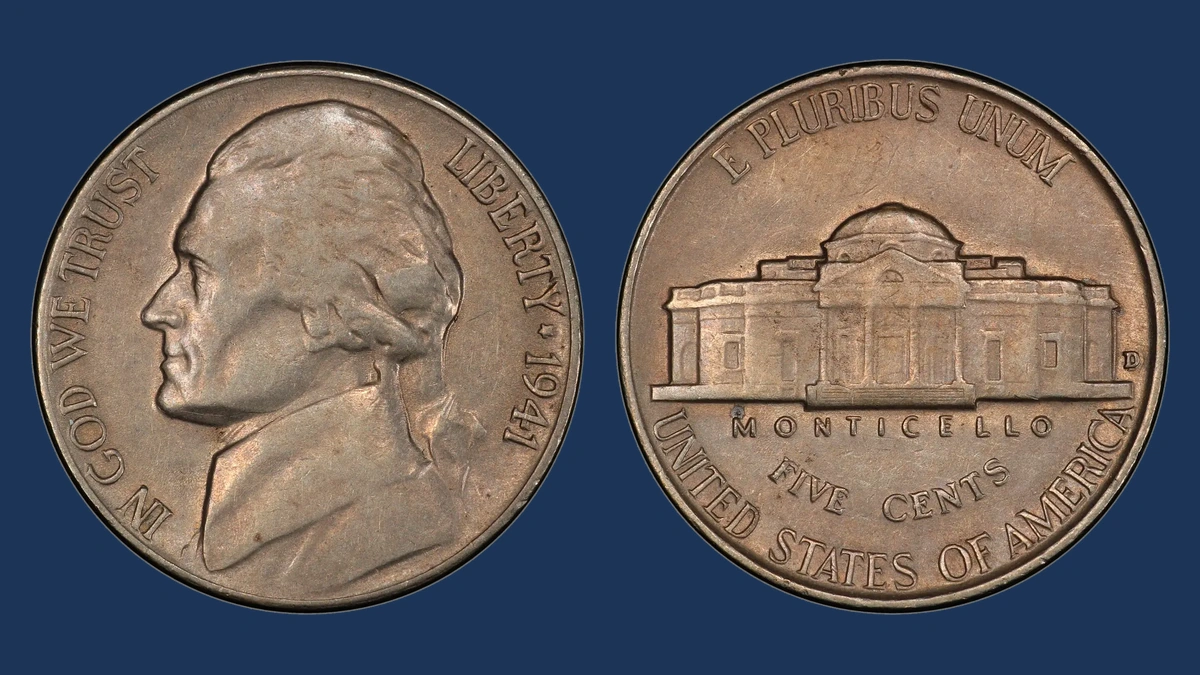
The small mint letter was punched into the stamping tool by hand. If another punch landed in a different position, pieces of both impressions could appear on the coins.
On 1941 nickels, collectors recognize several doubled D and S mintmarks. Some extra strokes sit above, below, or beside the main letter.
An inverted-S variety involves an upside-down impression beneath the final S. Its overlapping curves need close comparison.
A large-looking S by itself is not proof of repunching. The useful feature is part of an earlier letter that remains visible.
Estimated Value
Estimated prices run about $5–$200 for the repunched mintmarks described here. The precise pattern and condition matter more than simply calling the letter doubled.
Dealer listings illustrate the spread: one worn Denver variety was offered at $4.95, while an MS64 inverted-S example was offered at $149.95. Both were asking prices, not auction results.
An inverted-S identification should be checked independently when that variety is not named on the grading label.
How to Identify
Turn the coin over and find the small letter just right of the building. No letter means this repunched-mintmark check does not apply.
With a 10× magnifier, compare the full D or S rather than a single bright edge. The S/S known as FS-502 shows a lower impression, while other varieties have strokes to the left or above.
For the inverted S, trace both curves and their ends against a clear example. Damage can reshape one curve without leaving the rest of a second letter.
The feature changes neither the usual 5.00-gram weight nor the 21.21-millimeter diameter; a scale and calipers check those basics. The decisive detail is a second letter fragment that fits the whole repunched pattern.
5. 1941 Jefferson Nickel Ragged Clipped Planchet
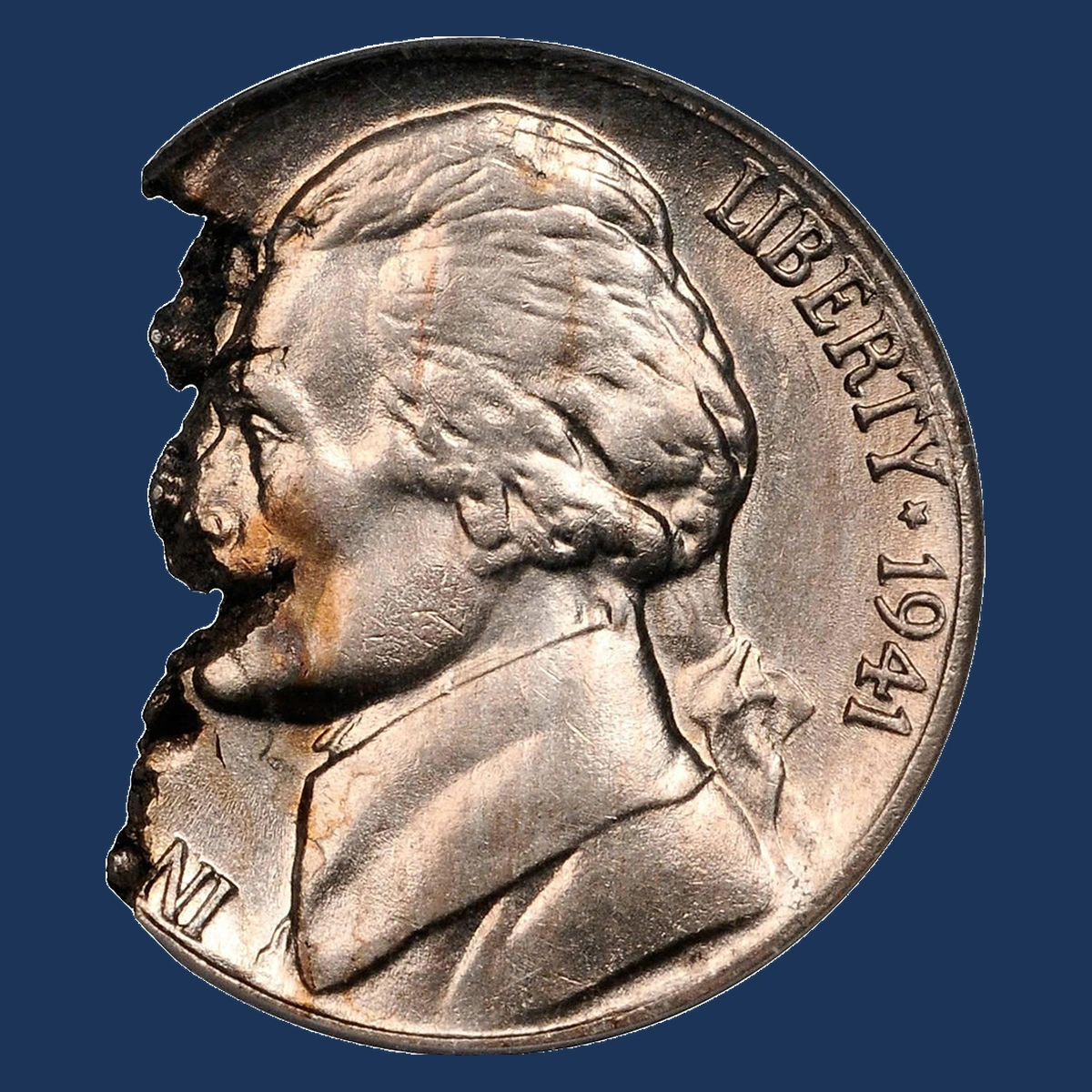
A clipped planchet is a coin struck on an incomplete blank. The 1941 example here has a rough missing section, described as a 20% ragged clip.
A ragged edge differs from the smooth curve often seen on other clipped coins. The shape comes from the incomplete metal present before striking.
NGC graded this example MS64, meaning it has no circulation wear but does have visible marks. It appeared in an auction group with four other clipped nickels.
Those other coins had different dates and clip shapes. Their missing sections do not describe this 1941 piece.
Estimated Value
A confirmed 1941 ragged clip of this general size has an estimated range of $75–$250. The documented MS64 coin sold within a five-coin group for $460 in August 2010.
That total cannot be assigned to the 1941 nickel alone. It also should not be divided evenly without knowing what each buyer valued.
An intact date, clear clip, and undamaged remaining surface help support the upper end of the estimate.
How to Identify
The opening should show metal that was absent when the design was struck. Start where the design meets the missing edge, looking for details that flow toward the gap.
A saw cut made afterward can leave parallel marks or a sharp wall through finished lettering. Use a 10× magnifier to inspect both ends of the opening and the exposed edge.
Weigh the coin on a scale; a substantial clip should reduce the normal 5.00-gram weight. Calipers can check the surviving span against the usual 21.21-millimeter diameter, without assuming the clipped span will match.
A ragged outline alone cannot prove a mint error. Examine whether the edge and nearby design were formed together rather than cut apart later.
6. 1941 Jefferson Nickel Off-Center Strike
An off-center strike leaves part of the blank outside the stamping tools. The design lands to one side, with a bare area opposite the missing design.
A 1941 example was described as 15% off center and graded NGC MS65 Full Steps. The grade means no circulation wear and relatively few marks.
Full Steps describes the sharp lines on Monticello’s staircase. It is a separate quality feature, not another striking error.
The amount of missing design varies between off-center coins. A readable year lets buyers connect the error to 1941.
Estimated Value
The documented 15% off-center nickel brought $373.75 in September 2010. An estimated $100–$600 is a practical comparison range for clear, dated 1941 off-center examples.
The auction coin also had a strong grade and Full Steps, so its price reflects more than the shift alone. A worn coin with a smaller shift can sell for less.
Greater displacement helps only when enough design remains to interest buyers.
How to Identify
View both sides before measuring the bare area. A true off-center strike shifts the design on both faces, although the missing details will differ.
If only one face looks misplaced, consider a misaligned stamping tool instead. That is a different problem from a blank entering the press off center.
The unstruck area should retain its original surface, not look filed flat. A 10× magnifier helps reveal tool marks where someone has removed the design.
Because no metal must be missing, a scale reading can remain near the normal 5.00 grams. Use calipers to compare the original round blank with the usual 21.21-millimeter size.
Check that the date belongs to the struck design and that the opposite face shows the same sideways displacement.
7. 1941 Jefferson Nickel Wrong Planchet
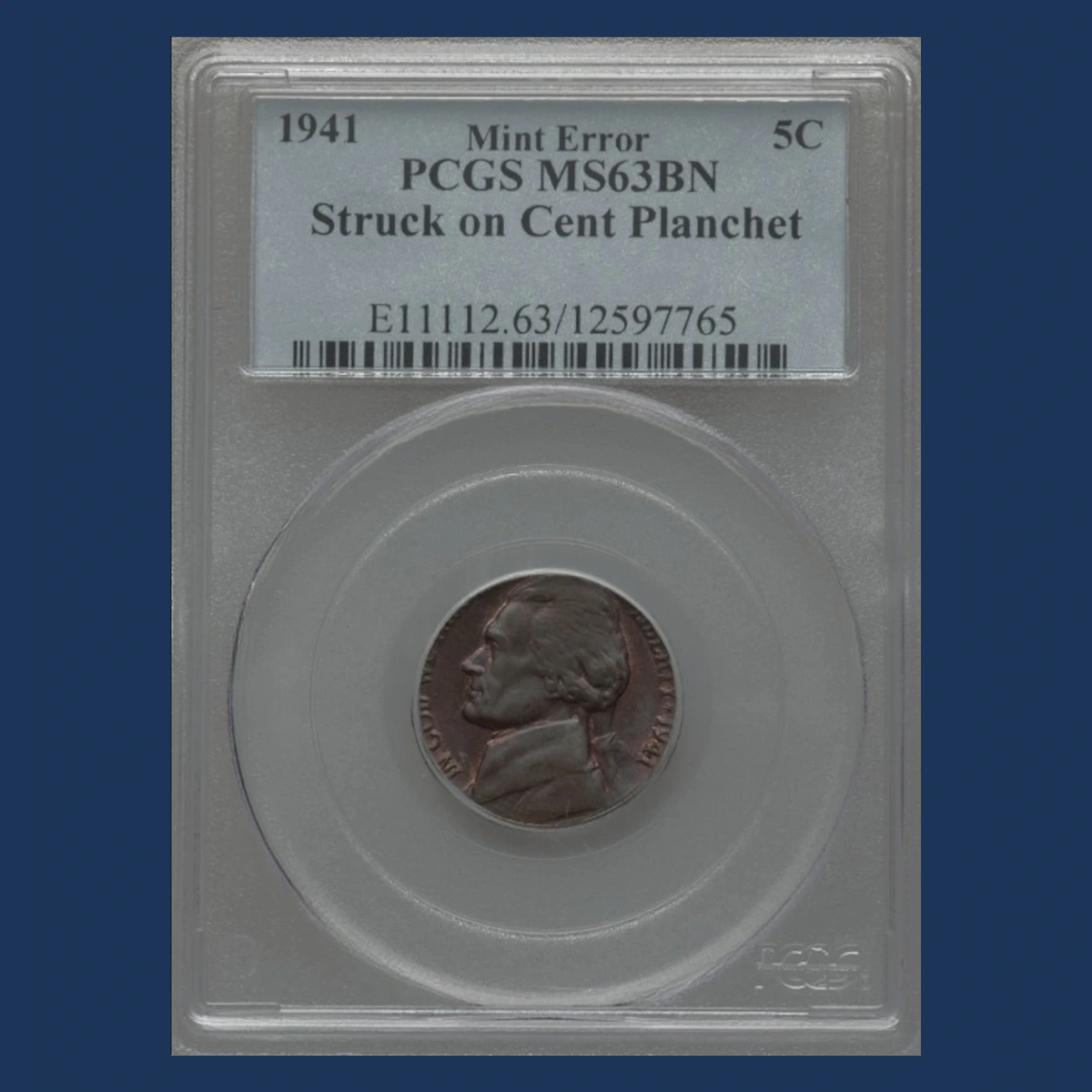
A nickel design can land on a blank intended for a smaller coin. The finished piece may have the wrong color, lower weight, and missing design near its edge.
A Philadelphia example was struck on a copper cent blank and weighed 3.2 grams. NGC graded it MS66 Red and Brown, describing its strong condition and remaining copper color.
A separate 1941-S example was struck on a silver dime blank. That belongs to a different metal group.
Neither example is a normal wartime silver nickel. The regular 1941 coin used copper and nickel.
Estimated Value
The cent-blank MS66 coin sold for $2,400 in July 2021. A 1941-S silver-dime-blank example brought $396 in June 1995, a much older result for a different piece.
Use an estimated $400–$3,000 across these two wrong-blank types. Color, surviving date, surface condition, and the identified blank all affect the price.
Do not give a discolored normal-weight nickel this range without evidence that the metal or blank is wrong.
How to Identify
A scale provides an early clue: compare the coin with the normal nickel weight of 5.00 grams. The documented copper example actually weighed 3.2 grams; that figure should not be copied onto the silver example.
For comparison, a standard 1941 cent blank was about 3.11 grams and a silver dime blank about 2.50 grams. These are normal blank specifications, not measured weights for every error.
Use calipers to check size against a normal 21.21-millimeter nickel, then inspect the rim with a 10× magnifier. Small blanks often cannot hold the full design, while grinding can also reduce size and weight.
Metal testing by a grading service can separate altered coins from genuine wrong blanks. Keep the date, mint letter, metal, and measured weight together when checking the identification.
8. 1941 Jefferson Nickel Mated Brockage Pair
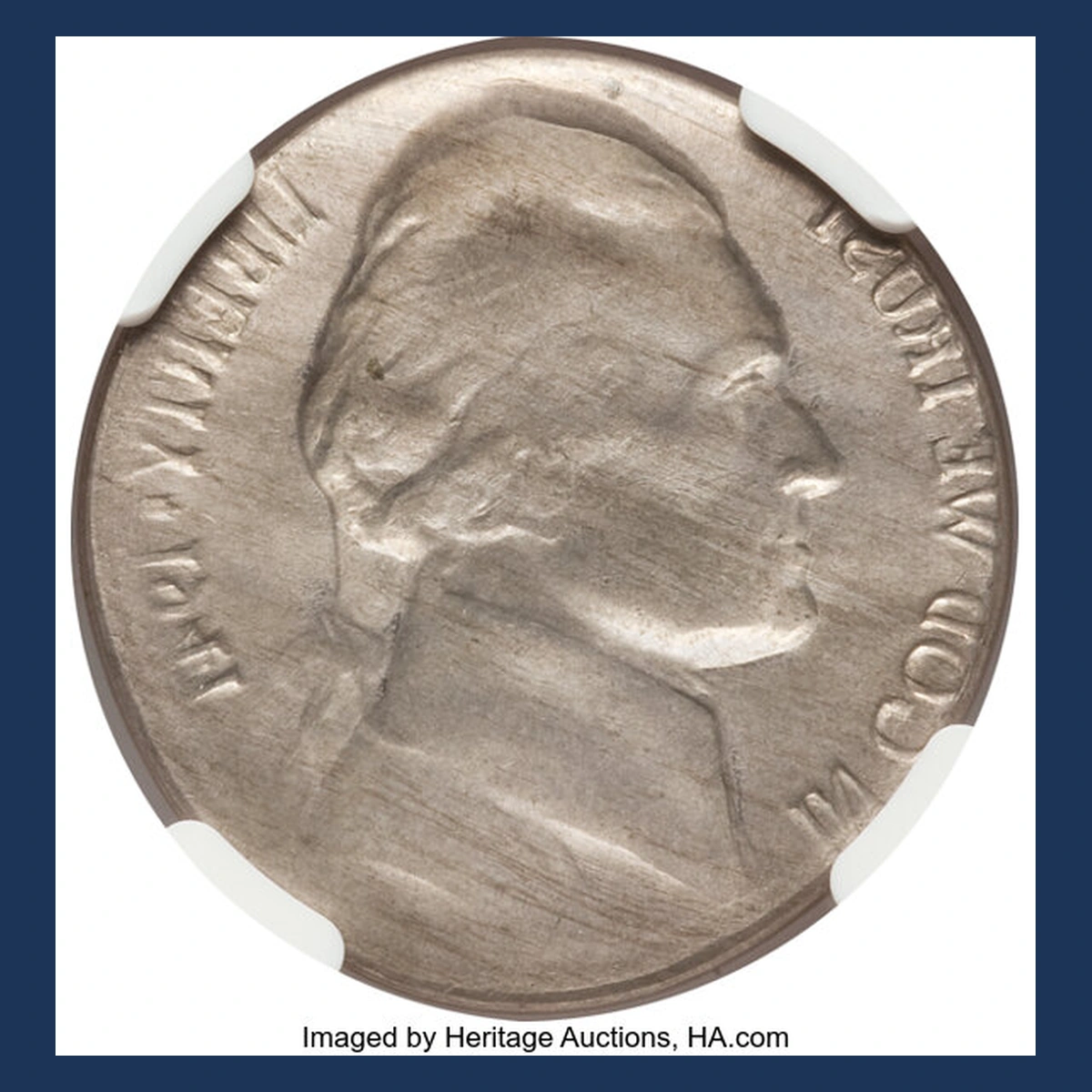
These two nickels record the same accident. A struck coin stayed in the press, and a new blank landed on top of it.
When the tools came down, the lower coin pressed its portrait into the new blank. This left a sunken, backward image called a brockage.
The lower coin received another strike and an indent on its front. Both coins spread outward during this second press stroke.
Collectors call them a mated pair because their matching features explain how they met. Keeping them together preserves that visible link.
Estimated Value
The documented pair brought $2,760 in August 2010. Both coins were graded MS65, and the lower coin also had Six Full Steps.
An estimated $2,000–$3,500 applies to a comparable complete pair with clearly matching features. It is not a separate price for each nickel.
A single brockage coin can be collected on its own, but it no longer supplies the complete two-coin story shown here.
How to Identify
Lay photographs of the two coins beside each other. The upper coin has a normal front and a sunken mirror image of Jefferson on its back.
The lower coin shows the extra strike and a front indent. Follow how that contact area fits the transferred portrait, using a 10× magnifier or enlarged photographs.
Each began as a normal 5.00-gram nickel blank, and the unrestricted strike allowed metal to spread beyond the usual 21.21-millimeter size. For loose coins, check with a scale and calipers; use records for sealed examples.
Do not press the coins together to test the match. Compare the same portrait outlines in the backward impression and on the coin that made it.
Conclusion
The errors here span about $5 to $3,500, from small raised cracks to matching coins from one striking accident. A missing edge, backward portrait, or copper-colored blank deserves a closer look.
Tiny doubled letters need more careful comparison. Keep the mint letter and condition in mind when comparing prices.
Leave peeling metal attached, and remember that a price for two matching coins covers the pair.