1982 Nickel Error List with Pictures

A brown 1982-D nickel weighing 3.07 grams sold for $632.50 in January 2009. Its copper cent blank had received the nickel design twice.
The 1982 Jefferson Nickel errors below also include a raised rim lump, a large off-center strike, and detail blocked during striking. Estimated values range from $5–$1,500.
Read on to check the metal, the placement of the design, and the marks left by the press.
1. 1982 Jefferson Nickel Detail Blocked during Striking
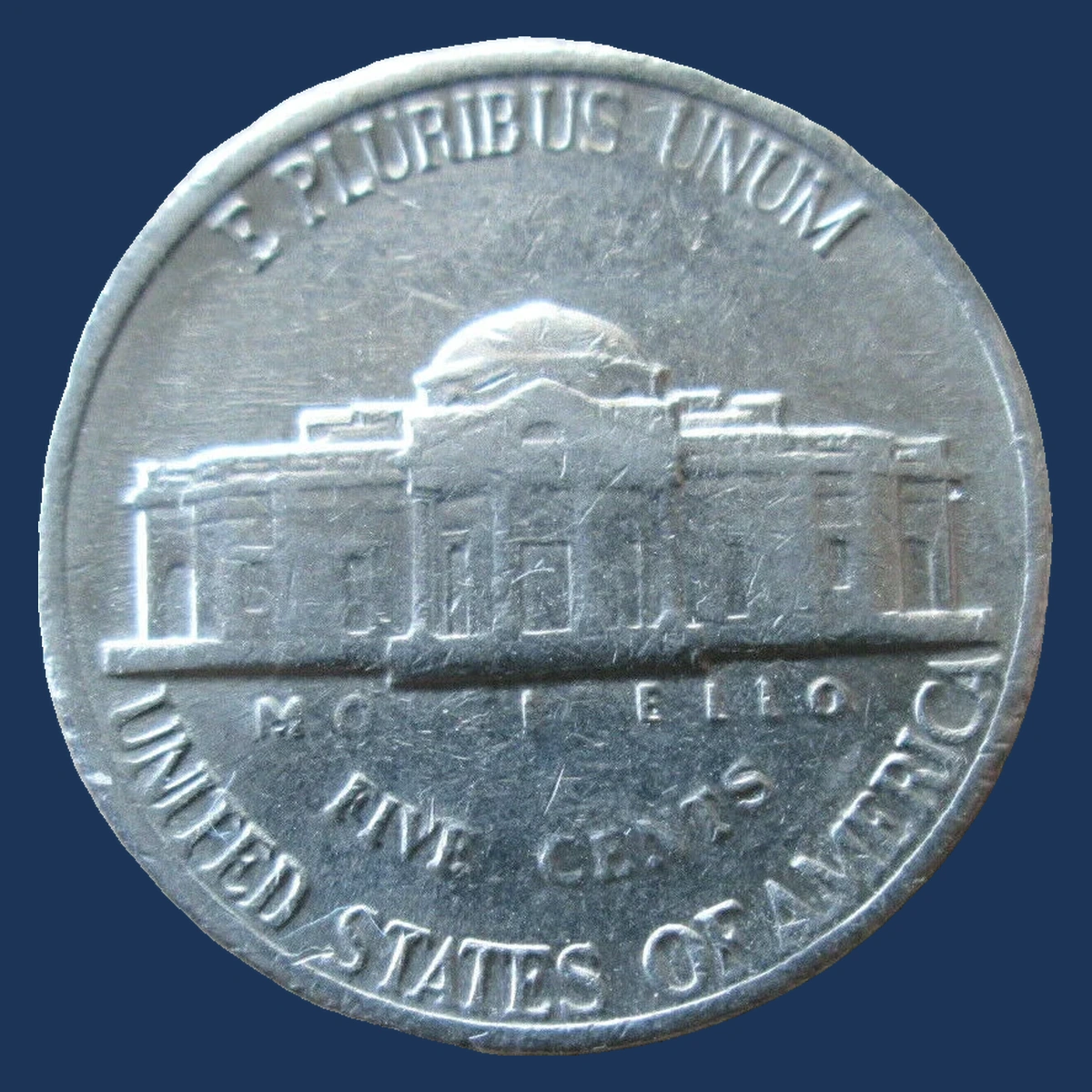
A missing letter can begin in the press rather than after years of wear. Grease or other debris can fill part of the stamping tool and prevent its design from reaching the metal.
The steel tool is called a die. The resulting coin is described as struck through material or struck from a filled die.
This type is reported for 1982 without one established mint or affected letter. A smooth weak area does not reveal the exact substance that caused it.
Wear and later polishing can also remove detail. The nearby original surface helps separate those explanations.
Estimated Value
For a genuine small blocked area, estimate $5–$40. A larger, distinct strike-through with attractive surrounding detail can fit roughly $40–$200.
A 2000 Philadelphia struck-through nickel sold for $84 in February 2015, offering a related-date comparison. That sale does not identify a particular obstruction on a 1982 coin.
The estimate depends on original striking evidence. A letter worn flat or polished away does not receive the same premium simply because it is missing.
How to Identify
Compare the weak patch with nearby high points before naming an error. If exposed details across the coin are equally flat, wear may explain the missing letter.
Use a 10× magnifier and light from different directions to inspect the boundary. Sharp neighboring detail beside a local interruption can support a blockage, while scratches may reveal later removal.
For a loose nickel, check approximately 5 grams and 21.21 millimeters with a scale and calipers. Inspect its plain edge for squeezing or other damage.
Keep the affected word and nearby normal design together in your photographs. Their relationship is more informative than a close crop of the blank-looking spot or a guess about grease.
2. 1982 Jefferson Nickel A Raised Lump Joined to the Rim
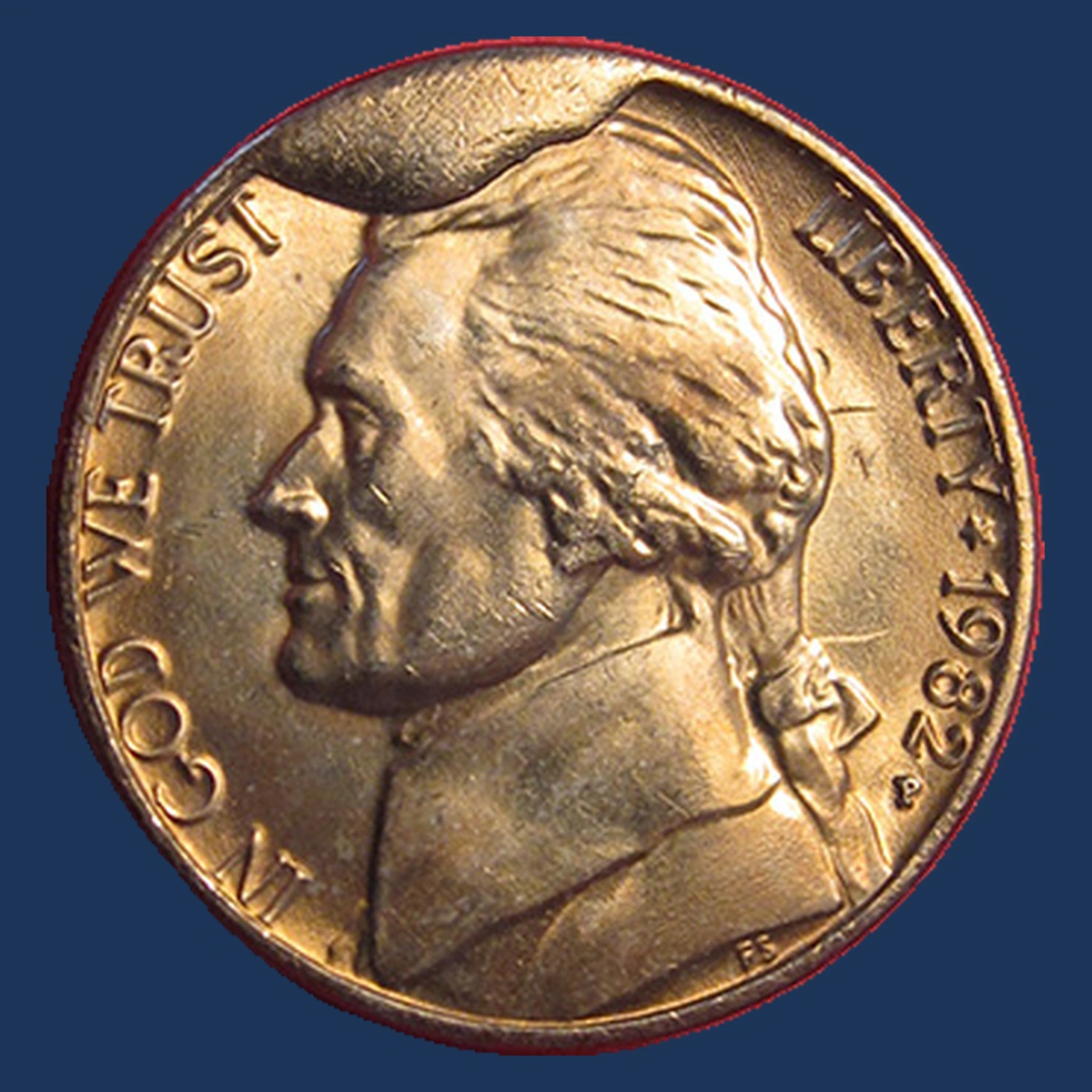
A broken piece of a stamping tool can leave a lump instead of the intended design. Metal enters the new gap in the tool during the strike.
When this raised area joins the rim, collectors call it a cud. A small isolated bump elsewhere is not automatically the same type.
A 1982-P example was graded PCGS MS65, meaning an unworn coin with relatively few marks. The auction identifies a cud without specifying a clock position in its written description.
The lump is part of the struck coin. Solder or metal pushed upward by a later impact has a different origin.
Estimated Value
The PCGS MS65 example sold for $84 on August 26, 2021. Estimate $20–$300 for comparable genuine 1982 cuds, depending on the size of the break and the coin’s condition.
A large clear lump can attract more attention than a tiny patch, but the date and surrounding design still matter. The quoted sale belongs to one Philadelphia coin.
Its value should not be assigned to an attached object or a crushed rim that only resembles a broken-tool impression.
How to Identify
Compare the lump with the rim, using a 10× magnifier and light from the side. For a cud, raised metal must reach the rim and replace part of the intended design.
A stamping tool loses metal when it breaks, but the coin does not lose a matching piece. A loose nickel should therefore remain near 5 grams on a scale, with a normal diameter of 21.21 millimeters checked by calipers.
Inspect the plain edge for an impact or a seam around added material, then compare both faces with the identified Philadelphia example. Follow the actual boundary where normal design disappears into the raised patch; a separate attached lump will not share that struck boundary.
3. 1982 Jefferson Nickel A Large Off-Center Strike
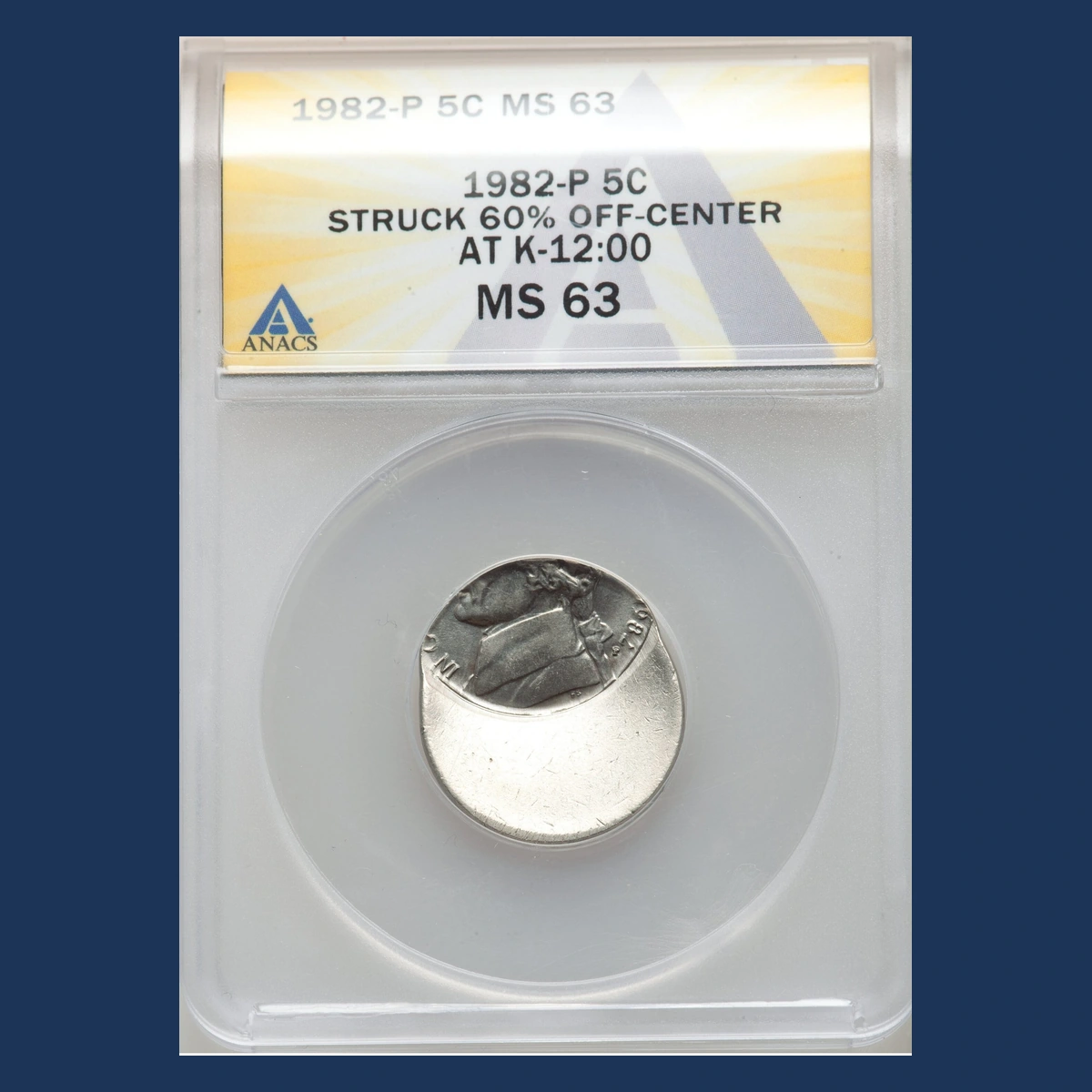
Most of the design misses the blank on the recorded Philadelphia example. It was described as seventy percent off center toward eleven o’clock and graded ANACS MS64.
The blank is the metal disk before it receives a design. Here it entered the press far from the intended position.
The percentage describes displacement of the strike, not seventy percent of the metal being cut away. A broad untouched area remains beside the surviving design.
MS64 indicates an unworn coin with some marks. Its preserved date and mint identity should be checked before the same-year comparison is used.
Estimated Value
Estimate $40–$400 for genuine dated 1982 off-center nickels, with visibility and preservation affecting the price. A dramatic shape alone does not guarantee the upper amount.
The recorded seventy-percent ANACS MS64 coin has no individual sale assigned here. A 1999-D nickel struck sixty-five percent off center sold for $75 in September 2024.
That different-year result offers context. A readable date can make a smaller displacement more useful to collectors than a larger shift that removes the identifying details.
How to Identify
Most of this coin never received a design. Check the surviving date and P first, since a large shift can leave very little identifying detail.
Turn it over and find the matching division between struck and untouched metal. Both faces should fit the same off-center strike.
The blank can still weigh close to the usual 5 grams on a scale. Unlike a clipped blank, it has not necessarily lost metal.
Use calipers to compare its outline with the normal 21.21-millimeter nickel, allowing for spreading during the strike. A 10× magnifier helps reveal grinding along the plain edge.
Examine where the untouched surface meets the design. It should show metal left outside the stamping tools, without scraped-away letters or a newly flattened patch.
4. 1982 Jefferson Nickel A Second Strike in a New Position
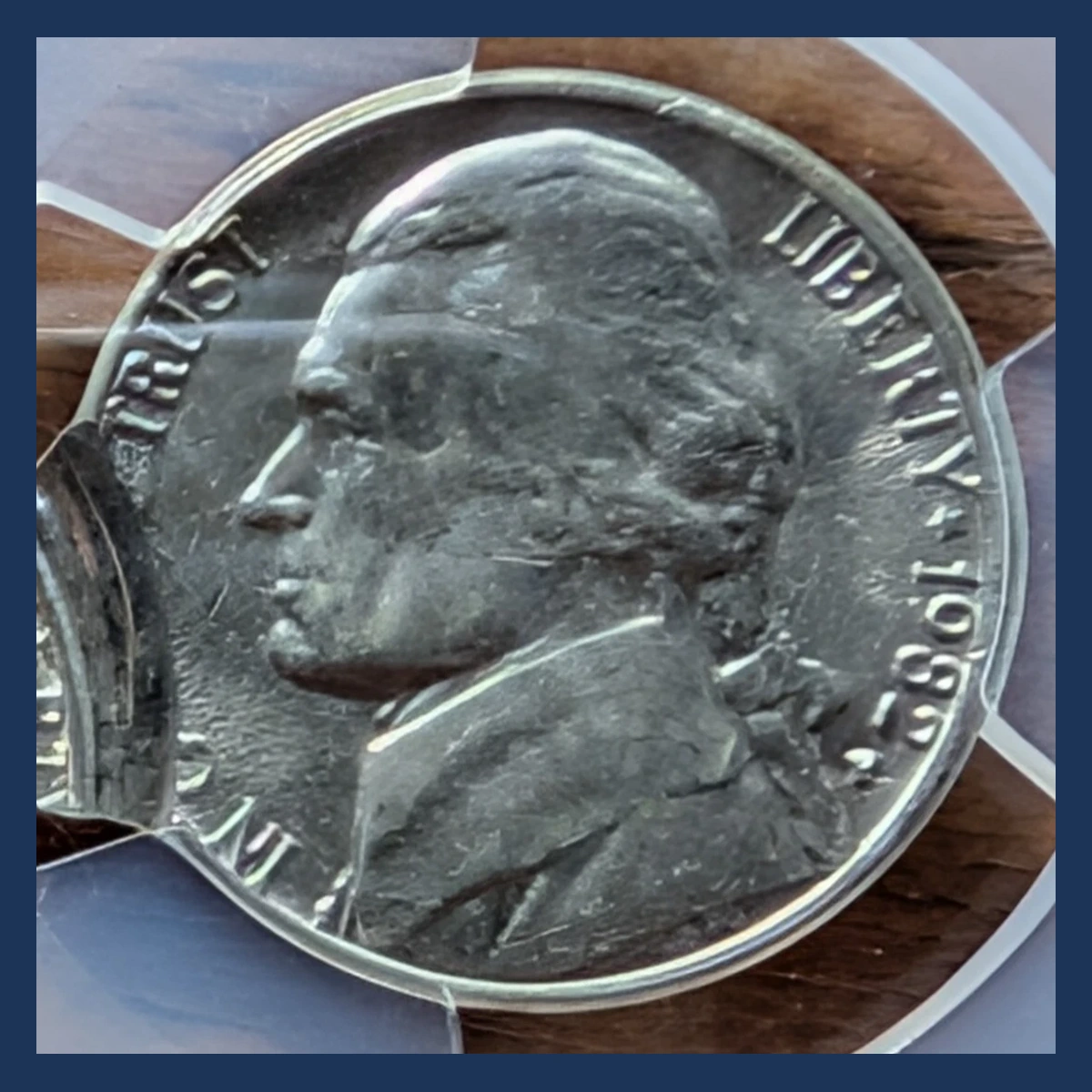
Two sets of design can overlap when a coin fails to leave the press after the first blow. The second strike may land far from the original center.
A reported 1982-P example was graded ANACS AU55 and listed through GreatCollections. AU55 indicates light wear with much of the design still visible.
The report identifies an off-center second strike without a fixed percentage or angle. Those details should come from the actual specimen.
This Philadelphia coin is separate from the Denver double strike on a copper cent blank. A shared second blow does not make their starting metal or value identical.
Estimated Value
Comparable identified Philadelphia double strikes are estimated at $100–$600. A clear second image, readable date, and original surfaces usually support stronger interest than a confusing damaged overlap.
The ANACS AU55 listing has no individual sale used here. For a related comparison, a 1986-D nickel with its second strike seventy percent off center sold for $253 in June 2008.
That percentage belongs to the comparison coin. It should not be copied onto the 1982 report or used as a price formula.
How to Identify
Under a 10× magnifier, trace a recognizable part of the second portrait or a repeated word. Follow it across the first design to see where the later blow flattened earlier details.
The two faces should tell the same story, rather than show unrelated scratches. Inspect the plain edge as well; a scale and calipers check a loose coin against the usual 5 grams and 21.21 millimeters.
A double strike can spread the coin, so an unusual outline needs to be read alongside the repeated images. Look for whole design details in different positions, not just narrow shelves beside individual letters.
Keep the P and date visible when comparing the ANACS AU55 example. The second image must be part of the struck metal, not a scratch shaped like a letter.
5. 1982 Jefferson Nickel Two Strikes on a Copper Cent Blank
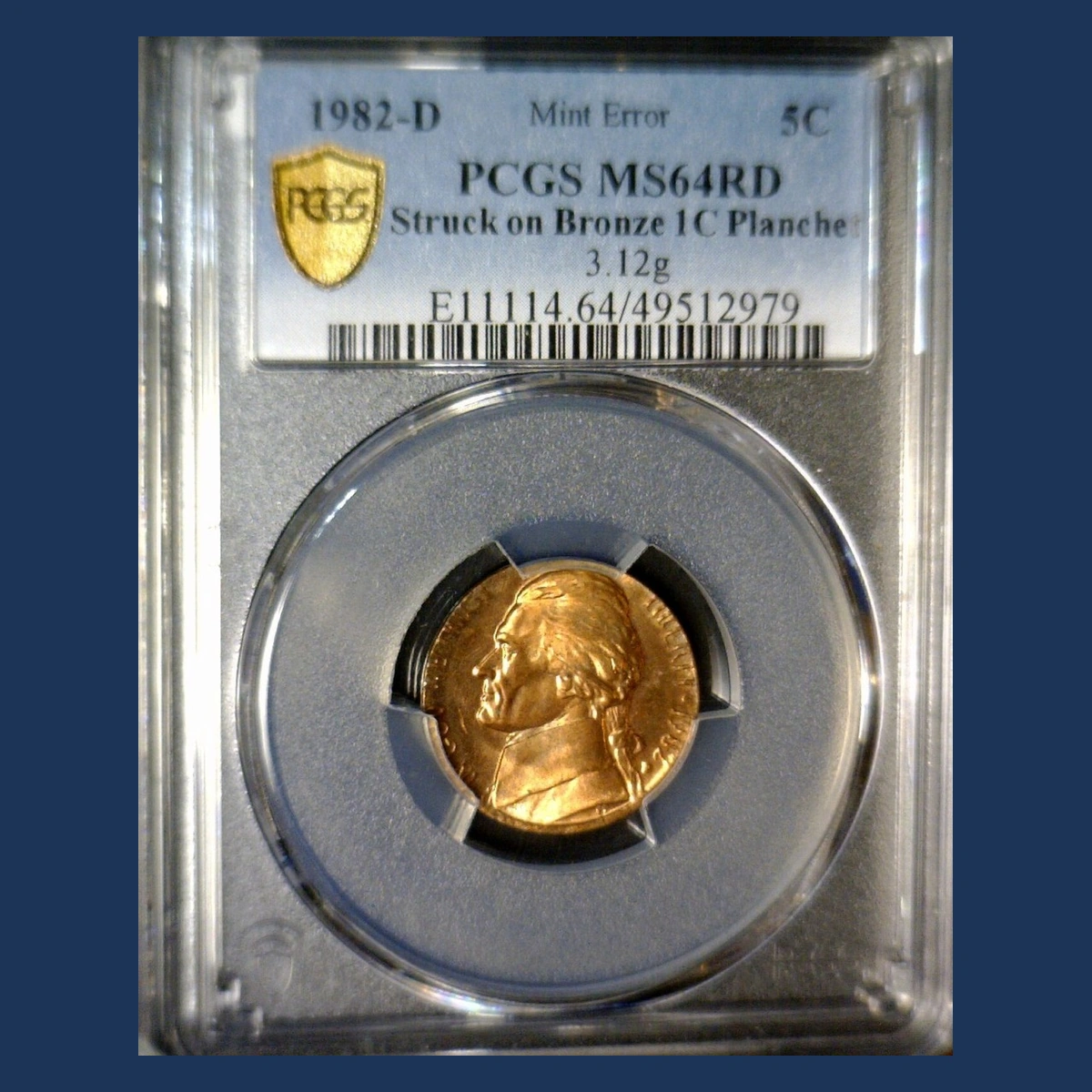
This error brings two production mistakes together. A copper cent blank entered the nickel press and received the nickel design twice.
The documented 1982-D coin weighs 3.07 grams and graded NGC MS64 Brown. That means it is unworn with some marks and has brown copper surfaces.
A normal nickel weighs 5 grams and uses copper and nickel mixed throughout. The smaller copper blank cannot hold the full nickel design in the usual way.
The repeated strike belongs to this same object. It should not be treated as another coin or confused with striking over an already finished Lincoln cent.
Estimated Value
The NGC MS64 Brown example sold for $632.50 on January 11, 2009. Estimate $400–$1,500 for a comparable authenticated combination, depending on the repeated design’s clarity and the coin’s preservation.
The wrong blank and the two blows contribute to one whole-coin value. Their estimated prices should not be added as separate complete coins.
A normal nickel plated with copper afterward does not acquire the smaller blank or genuine second strike represented by this sale.
How to Identify
The recorded 3.07-gram weight is an important starting point. It is close to the older copper-cent standard of 3.11 grams and far below a normal nickel’s 5 grams.
Both copper and lighter copper-plated zinc cents were made during 1982. Do not require the documented copper-blank error to match the zinc-cent standard of 2.5 grams.
Use a scale and calipers on a loose candidate, comparing the cent’s starting 19.05-millimeter diameter with the nickel’s 21.21 millimeters. Striking can spread the smaller blank.
Now examine the plain edge and overlapping nickel details with a 10× magnifier. Look for a second struck design on the smaller copper blank; brown color alone cannot prove either mistake.
Conclusion
Estimated values of $5–$1,500 depend on the actual mistake and the coin’s preservation. A missing letter, raised cud, and copper blank do not need the same kind of proof.
Check the whole coin before choosing a price. Keep the Denver copper-blank double strike separate from the Philadelphia ordinary-metal example.
Take clear photographs of both faces and the edge. Do not clean the surface to make the error stand out.