1995 Nickel Error List with Pictures

A small silver-colored coin can carry Jefferson’s portrait even though its metal was meant for a dime. One such 1995-P nickel weighed just 2.3 g and sold for $336 in July 2022.
This 1995 Jefferson nickel error list explains that mix-up alongside extra impressions, missing metal, and damaged stamping tools. Estimated values run from $3 to $2,500.
Follow the visible clues below to distinguish the mistakes, then compare the coin’s condition and measurements before choosing a price range.
1. 1995 Jefferson Nickel Extra Raised Lines around the Eyes, Lips, or Letters
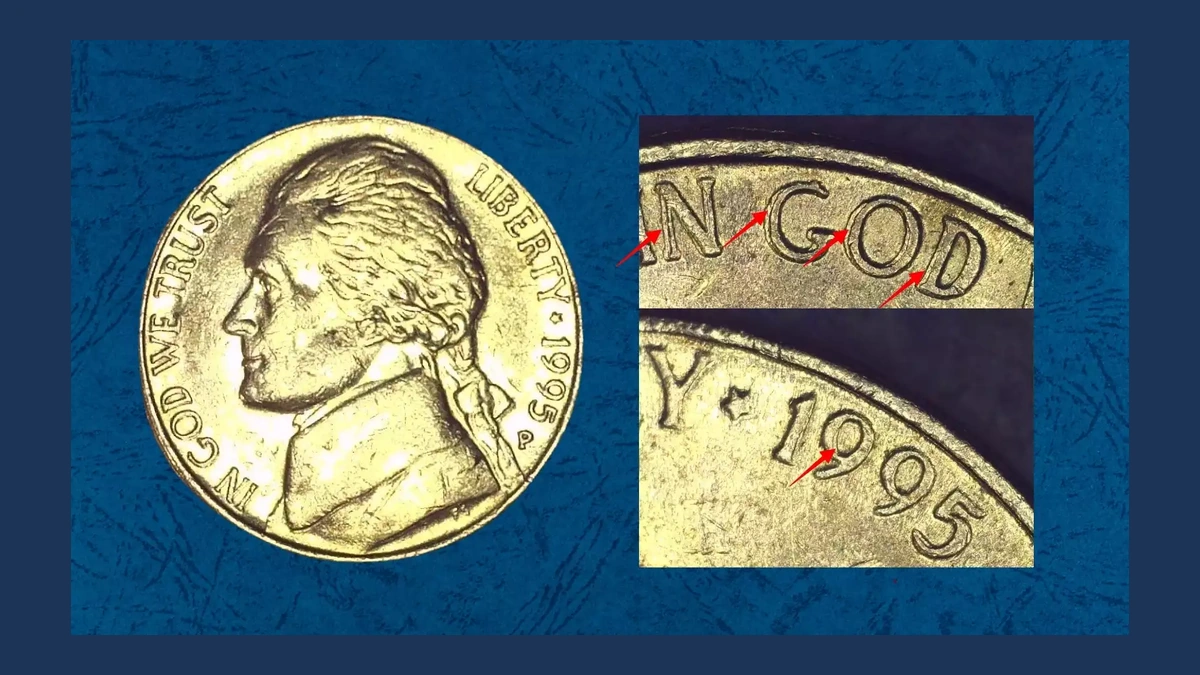
A second raised outline may appear beside Jefferson’s eye, lips, or letters in LIBERTY. Reports for 1995 nickels describe these areas as possible signs of a doubled die.
A die is the steel stamping tool that shapes a coin’s design. If that tool already carries repeated detail, a single blow can transfer both outlines onto the nickel.
The extra outline must be separated from flat marks caused by movement during striking. Those common marks can make a normal letter look doubled.
A report for this nickel does not establish a particular numbered variety.
Estimated Value
Use an estimated $10–$150 range for clearly confirmed tool doubling in the reported areas. An ordinary flat ledge beside a letter does not receive that premium.
This is an estimate for the nickel reports, rather than a documented 1995 nickel auction result. Prices for the well-known doubled 1995 Lincoln cent describe a different coin.
Strong, repeatable raised outlines and attractive surfaces support the higher end. Wear that merges the outlines makes the variety harder to recognize.
How to Identify
Begin with an ordinary 1995 nickel beside the candidate so the natural eyelid and lip contours are easy to recognize. A 10× magnifier can then show whether an added raised line sits beyond those normal shapes.
Move the lamp and turn the coin slightly. A reflected bright edge may disappear, while a real raised feature stays in place.
Check LIBERTY for rounded extra contours or split corners, rather than a flat ledge that narrows a letter. Match the visible pattern with a confirmed example before attaching a variety name.
Calipers and a scale should find about 21.2 mm and 5 g on a loose nickel. Inspect the plain edge for alteration and the portrait for polishing that could blur or reshape the apparent outlines.
2. 1995 Jefferson Nickel Thin Metal Flakes or Splits in the Surface
A thin flap may lift from the surface, or a shallow patch may remain where metal flaked away. Collectors call this a lamination error when a weakness within the metal causes that separation.
An ordinary 1995 nickel uses a uniform mixture of copper and nickel. It does not have the bonded outer layers and copper center found in a modern dime.
Reports of 1995 nickel lamination therefore describe a flaw inside the nickel’s own mixture. They do not identify the separate lightweight coin struck on a defective layered blank.
Scraping can leave similar-looking patches.
Estimated Value
Estimate $10–$150 for an identifiable 1995 nickel lamination. A larger retained flap or a clear split crossing the design usually offers more interest than a tiny rough patch.
The range assumes an original metal flaw on an otherwise ordinary nickel. It is not the value of a wrong-blank coin merely because part of the surface looks thin.
Cleaning, corrosion, or a scraped cavity can reduce the value sharply. A loose flake should be preserved rather than peeled farther back.
How to Identify
Do not lift a flap to see underneath it. Its connection to the surrounding surface helps show whether the separation began within the metal.
Use a 10× magnifier along the split and look for rough, thin layers rather than the sharp trench left by a scraping tool. Follow nearby design details to see how they cross or stop at the damaged area.
An ordinary loose nickel should be close to 5 g on a scale and 21.2 mm across with calipers. A detached flake can reduce the weight slightly, but a much lighter coin needs a different explanation.
Inspect the plain edge for cutting or peeling caused after minting. The visible path of the separation matters more than an assumed position on Jefferson or Monticello.
3. 1995 Jefferson Nickel Soft Front Design from a Coin Covering the Tool
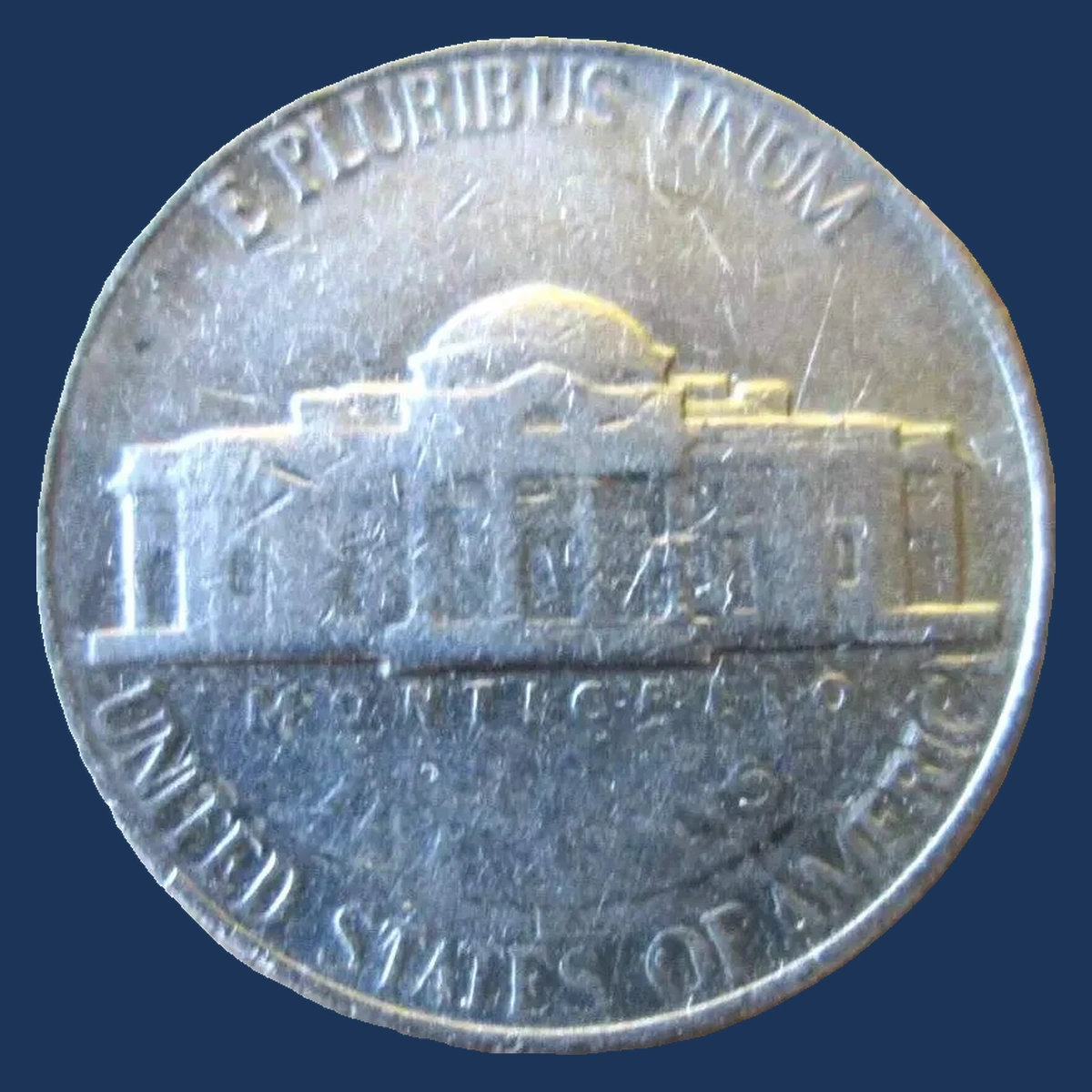
A softened front can sit opposite a sharply detailed Monticello. On the recorded 1995-P example, another coin covered the front stamping tool and blocked its direct contact with the fresh blank.
The trapped coin formed a cap over the tool. Pressure passed through that covering, leaving a distorted impression on the nickel below it.
NGC graded this example MS64 Full Steps, meaning an unworn coin with clear building steps. Those steps are a detail-quality label, not an additional error.
The nickel described here received the blocked strike; it was not necessarily the cap itself.
Estimated Value
A clear 1995-P strike through a cap can be estimated at $50–$300. The better the contrast between the affected front and preserved back, the easier the error is to show.
A 2000-D example graded NGC MS64 Full Steps sold for $84 in September 2025. That is a later-year comparison for the same general process, not a sale price for this 1995 coin.
Heavy circulation wear makes a weak face less persuasive and generally lowers collector interest.
How to Identify
Compare Monticello’s steps with Jefferson’s face before enlarging either image. If the back remains crisp, simple wear becomes a less convincing explanation for widespread front distortion.
Now examine the weak front through a 10× magnifier. Look for remnants of the design beneath the softened impression, rather than assuming that every missing letter was blocked by a trapped coin.
Grease inside a stamping tool can also hide small details. Compare the overall shape of the affected area with an authenticated cap-struck example.
Check a loose nickel with calipers near 21.2 mm and a scale near 5 g. The plain edge should not show grinding or pressure damage that explains the weak design.
Leave the surface untouched; cleaning can erase the shallow details needed for that comparison.
4. 1995 Jefferson Nickel One or More Curved Gaps in the Edge
A curved gap can interrupt an otherwise round nickel. Several such gaps may occur when a blank, the unstruck metal disc, is punched from an incomplete part of the metal strip.
Recorded 1995-P examples include a five-percent curved clip, a thirty-five-percent double clip, and a coin with four curved clips. These are separate coins with different missing areas.
The remaining design was stamped after the blank had already lost its full outline. A weak rim may appear opposite a gap, though that feature is not required on every genuine example.
Estimated Value
The four-clip 1995-P example graded NGC MS62 Full Steps sold for $154 in July 2022. A thirty-five-percent double clip graded PCGS MS63 brought $141 in July 2014.
Estimate $15–$100 for modest clips and $100–$350 for larger or multiple clips with convincing original surfaces. The number of gaps alone does not set the price.
Later cuts or file marks do not add a mint-error premium, even when the altered outline looks dramatic.
How to Identify
Examine every gap separately with a 10× magnifier instead of assuming that all the missing sections formed together. Check how the surrounding design approaches each opening and look for saw marks or fresh filed surfaces.
A scale can record the loss against a normal 5 g nickel, but low weight alone cannot distinguish an original clip from a later cut. Calipers should be used across intact portions of the usual 21.2 mm outline.
Trace the plain edge between the gaps and inspect any weak rim on the opposite side. The incomplete blank must explain the strike around each missing area, while a cut through already finished letters points to later damage.
5. 1995 Jefferson Nickel Raised Cracks and Large Patches at the Rim
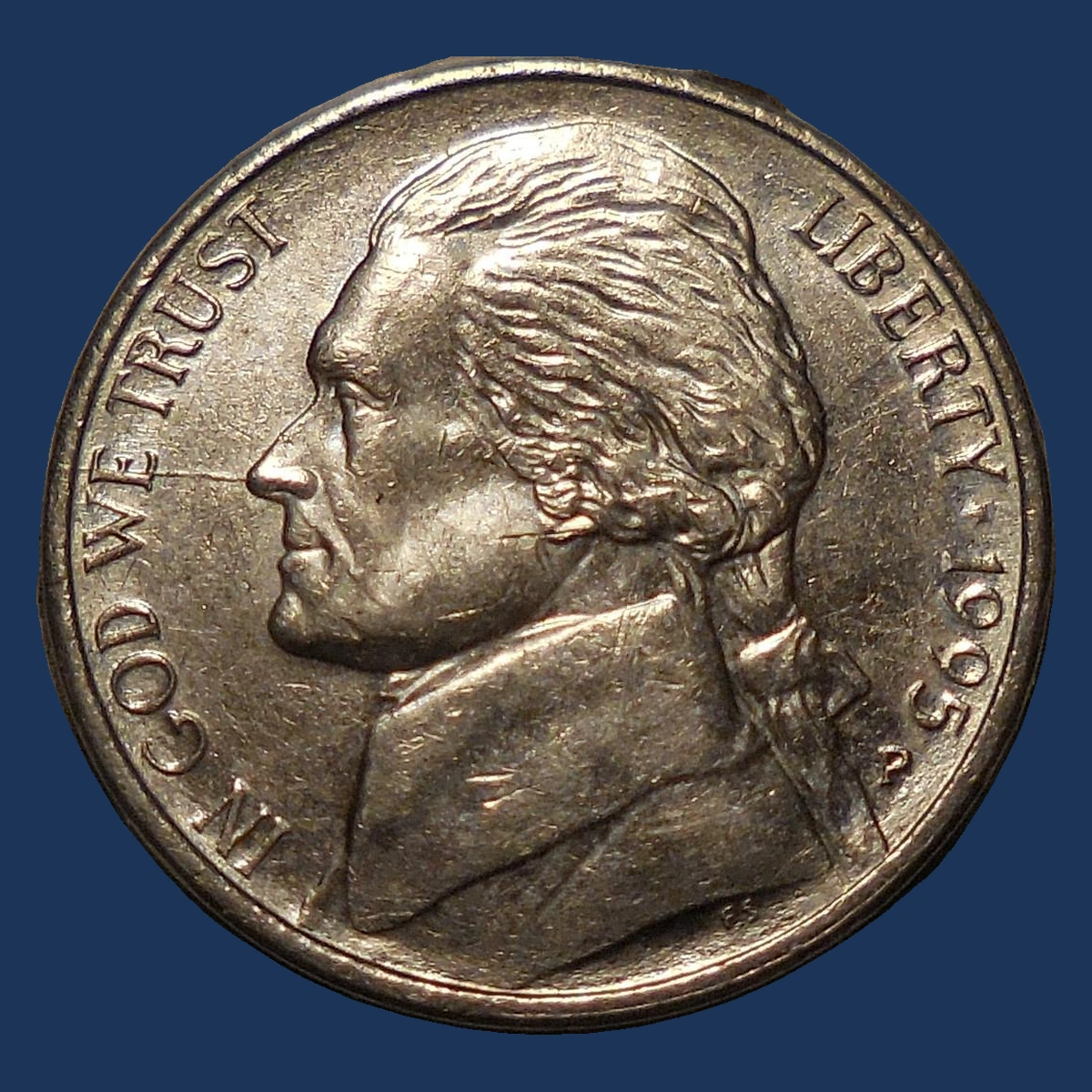
A fine raised line can cross the design when the stamping tool develops a crack. Metal enters that opening during the blow and leaves a narrow ridge on the coin.
If a larger piece breaks away at the tool’s edge, the coin may show a raised patch joined to the rim. This larger feature is often called a cud.
A 1995-P example with a major front break was graded NGC MS64. It is a stronger failure than an ordinary hairline crack.
Neither a particular clock position nor a path across the portrait applies to every example.
Estimated Value
Small raised cracks can be estimated at $3–$30. A genuine, clearly visible rim-connected break deserves a broader estimated range of $50–$500, depending on size and preservation.
For a lower-priced comparison, a 1983-P nickel with a cud and an AU53 grade sold for $63 in July 2022. That worn, earlier-year coin does not establish the value of the stronger 1995-P example.
A damaged rim pushed over the design should not receive a cud premium.
How to Identify
Tilt the coin to check whether the line or patch rises above its surroundings. A cut-in scratch is a different feature, even if it follows a long path across the portrait.
For a large patch, find where it meets the rim. Through a 10× magnifier, check whether normal design was replaced by struck metal or simply covered by a folded edge.
Inspect the plain edge beside that area for a dent. A hard impact can push metal inward and imitate a rim break.
Use a scale and calipers on a loose coin against 5 g and 21.2 mm. Keep the measuring jaws clear of the patch, then compare its actual boundary with a photographed example of the same break.
6. 1995 Jefferson Nickel An Off-Center Design on an Ordinary Blank
Part of the nickel remains plain when its blank sits outside the correct position in the press. The tools stamp a shifted design, leaving some intended detail beyond the metal’s edge.
A 1995-D report describes this off-center error on an ordinary nickel blank. Its degree and direction of displacement need to be judged from the individual coin.
It should not be confused with the Philadelphia coin struck ten percent off center on a cent blank. That separate piece combines a misplaced strike with the wrong metal disc.
An empty crescent still contains metal.
Estimated Value
For a genuine 1995-D off-center nickel on its normal blank, estimate $25–$200. Attractive examples with a larger displacement and a readable date may reach an estimated $200–$500.
A 1999-D nickel struck sixty-five percent off center sold for $75 in September 2024. That later-year result shows why a large displacement alone does not guarantee an exceptional price.
Wear, scratches, and how much of the date survives all affect the most useful comparison.
How to Identify
Check the date and D mint letter before comparing the coin with a priced example. Then locate the plain crescent and decide whether metal is still present or a section has actually been removed.
Use a 10× magnifier along the boundary of the struck design, watching for scratches from grinding. Turn the coin over to see whether the back fits the same misplaced blank.
A scale should find close to 5 g on a loose ordinary-blank nickel, since leaving an area unstruck does not remove its metal. Measure its outline with calipers against the normal 21.2 mm and inspect the plain edge for cuts or crushing that could explain the apparent missing design.
7. 1995 Jefferson Nickel Wide Strikes and Overlapping Impressions
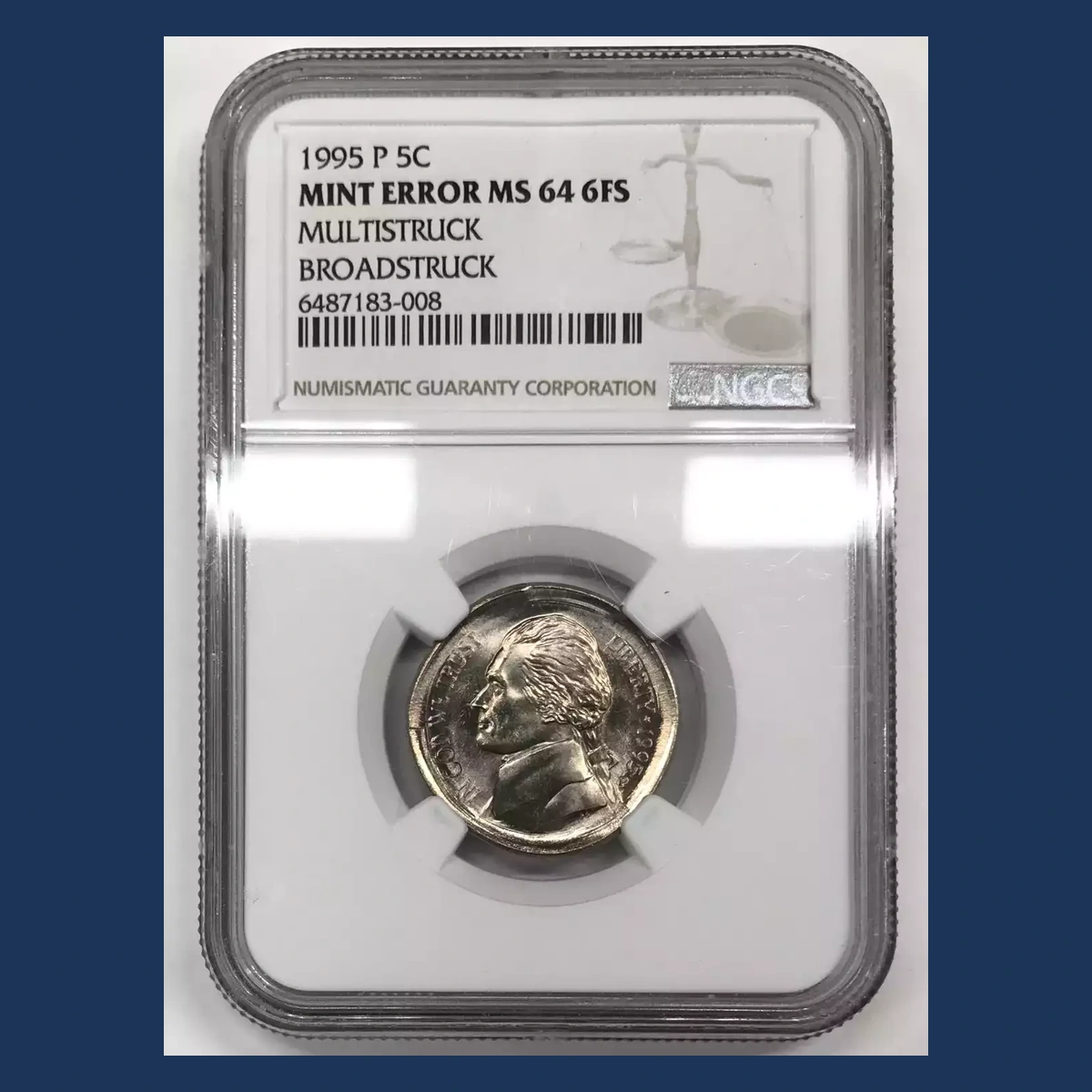
The border may spread outward while the intended design remains on the metal. The collar, a ring around the blank, normally limits that spread during striking.
When the ring fails to contain the blank, a broadstrike can result. A 1995-P example also received more than one blow, leaving overlapping impressions alongside its wider shape.
That coin was graded NGC MS65 Full Steps. The grade describes an attractive unworn coin, while Full Steps refers to the clarity of Monticello’s steps.
A wide outline by itself does not prove repeated striking or a missing section of metal.
Estimated Value
The 1995-P broadstruck, repeatedly struck nickel sold for $154 on December 22, 2025. Its combination of features still brought a modest three-figure price.
Estimate $25–$200 for straightforward broadstrikes and $100–$750 for clear examples also showing repeated impressions. The extra design must be visible rather than assumed from a wide border.
These are prices for complete coins, not separate premiums to add for every descriptive word. Later flattening does not qualify as broadstriking.
How to Identify
Compare the width of the coin with the amount of surviving design. A broadstrike should preserve the intended design on an expanded outline, while an off-center strike can lose part of it beyond the blank.
Calipers can measure the spread beyond the normal 21.2 mm, and a scale should find about 5 g on an intact loose nickel. Both measurements need to be considered with the plain edge and raised details.
Examine the letters with a 10× magnifier for crushing that would suggest later flattening. If a second impression is claimed, follow its portrait or lettering separately from the first.
A broad border and a doubled-looking shadow are not enough. Look where two impressions cross to establish that an additional blow changed the design.
8. 1995 Jefferson Nickel Small or Defective Blanks Intended for Other Coins
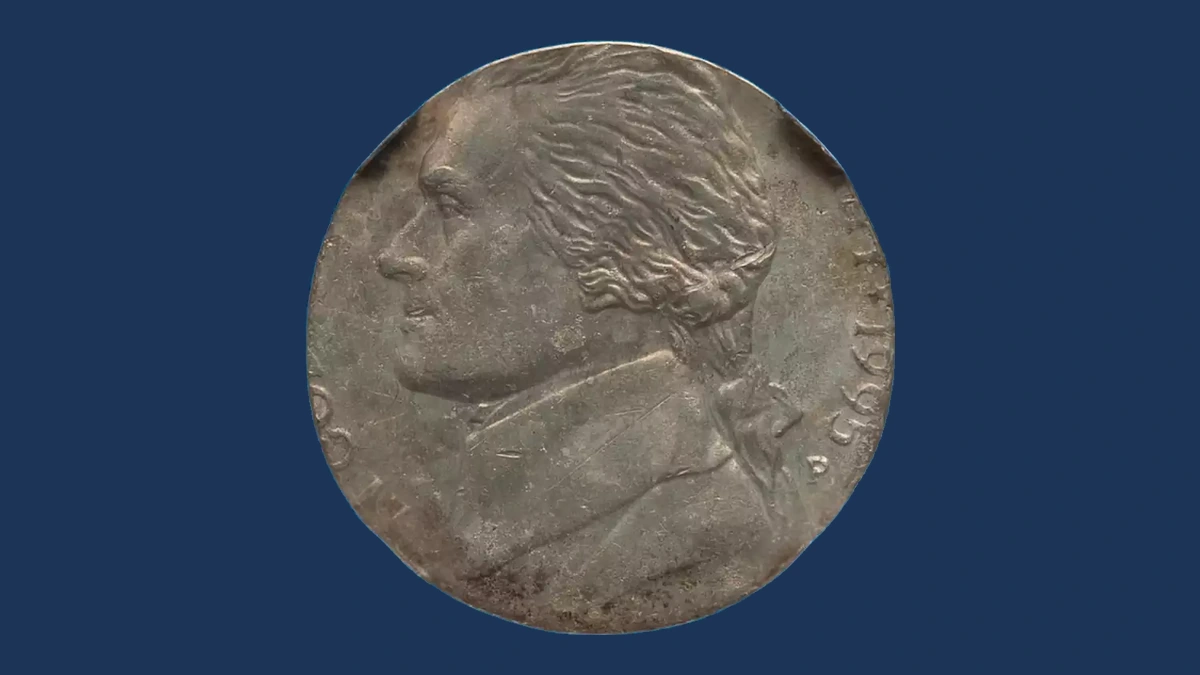
A nickel design can run off a smaller disc when the wrong blank reaches the press. Three recorded 1995-P examples involve different metal problems.
One was struck ten percent off center on a defective cent blank. Another used a dime blank and weighs 2.3 g.
A third weighs 2.54 g and was described as a defective clad blank. Clad means bonded layers of metal, but its intended denomination was not stated.
An ordinary nickel uses a uniform copper-nickel mixture. A light layered coin therefore needs a different explanation from a small flake separating within normal nickel metal.
Estimated Value
The dime-blank nickel sold for $336 in July 2022, while the separate defective layered-blank coin brought $186. Their different grades and metal problems make them separate comparisons.
Estimate $150–$700 for clear dime or defective layered-blank examples and $300–$1,500 for a defective cent blank with an off-center strike. These are whole-coin estimates.
A coin merely plated to look copper-colored does not qualify. Its original weight, size, metal, and remaining design must support the claimed blank.
How to Identify
Record the actual weight first. The two measured auction examples are 2.3 g and 2.54 g, both far below an ordinary 5 g nickel.
Do not identify the blank from weight alone. The 2.54 g layered example was not specifically called a dime blank, despite its light weight.
A 10× magnifier can reveal the metal at an exposed edge and show where the larger nickel design runs out of room. Calipers should compare the altered outline with the normal 21.2 mm nickel diameter.
Check for filing or added plating around the edge, which is normally plain on a nickel. A dime blank need not acquire the grooves of a finished dime when nickel tools strike it.
Keep the separate ten-percent offset of the cent-blank example in view when comparing its design.
9. 1995 Jefferson Nickel Second Strikes after Movement or a Flip
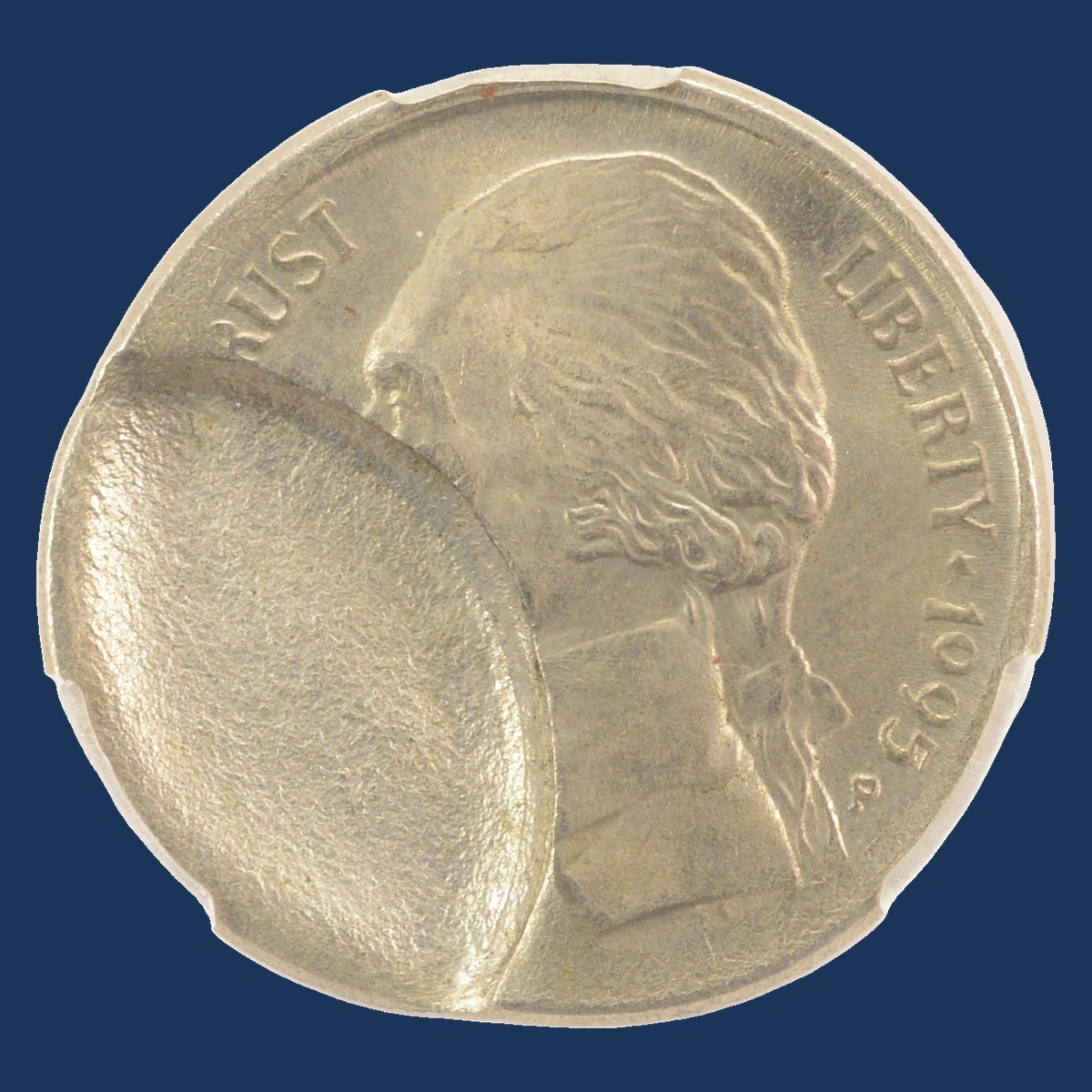
A second blow can leave another portrait near the edge after a nickel moves in the press. Recorded 1995-P examples have second strikes seventy-five or eighty percent off center.
Another received its second strike sixty percent off center, with a smooth front indent. Part of the back was blocked from receiving the second impression, a feature called a uniface strike.
A different coin flipped between blows, putting Jefferson and Monticello on the same face. That is a flipover double strike.
These distinct appearances come from different movements or contacts during repeated striking.
Estimated Value
Estimate $150–$1,000 for clear displaced double strikes and $500–$2,500 for attractive flipover or complex overlapping-blank examples. Preservation and readable intersections between impressions matter more than displacement alone.
A 2007-D double strike with major outward spread sold for $1,260 in August 2025. That later-year combination is a comparison for a strong repeated strike, not a transaction assigned to any of these 1995 pieces.
Ordinary flat doubling beside letters does not receive this valuation.
How to Identify
Find one recognizable portrait or building and trace it without jumping to the other impression. A 10× magnifier helps separate overlapping outlines where the later blow partly flattened the earlier design.
For the flipover form, check both faces for raised fragments of the opposite design. A backward, sunken impression suggests contact with another coin instead.
On the sixty-percent second-strike example, compare the smooth front indent with the back area shielded from that blow. Do not apply those features to the separate seventy-five- or eighty-percent examples.
Record a loose coin’s weight against 5 g on a scale and its spread against 21.2 mm with calipers. Follow the plain edge around the overlapping impressions for fresh cuts or squeezing marks that might explain an artificial shape.
10. 1995 Jefferson Nickel Struck over a Finished Lincoln Cent
Pieces of Lincoln’s design can remain beneath Jefferson’s portrait when a finished cent enters the nickel press. The new blow stamps a five-cent design over the earlier one-cent coin.
This is a double-denomination error, meaning two different face-value designs share one piece of metal. A published 1995 report describes this kind of nickel-over-cent mistake.
It differs from a nickel struck on an unused cent blank, which has no older Lincoln design. The nickel date alone also does not establish the date or mint letter of the cent underneath.
Estimated Value
For an authenticated 1995 nickel over a struck Lincoln cent, use an estimated $600–$2,500 range. Both designs should remain identifiable enough to support the explanation.
A 1999-D nickel over a 1999-D cent sold for $1,320 in September 2024. That later dated pair of designs provides a comparison, not a documented sale of the reported 1995 piece.
The estimate depends on confirming the underlying cent. A small copper-colored blank without older design belongs in the wrong-blank category instead.
How to Identify
Inspect the edge for plating, filing, or a seam before treating a two-design coin as genuine. A 10× magnifier can also show pressure damage from forcing two finished coins together.
Weigh a loose example on a scale and measure it with calipers. A nickel normally starts at 5 g and 21.2 mm, while cents are smaller and lighter.
Modern cents begin at 2.5 g, but older copper cents weigh about 3.11 g. The cent’s own date must be established before choosing the right weight comparison.
Next compare suspected Lincoln or memorial fragments with an ordinary cent. Earlier raised details should lie beneath the later nickel impression, rather than appear backward and sunken.
Examine those intersections on both faces. Retain clear photographs of the surviving cent design before arranging a specialist’s review.
Conclusion
From small raised cracks to overlapping coin designs, estimated 1995 nickel error values range from $3 to $2,500. The reason for the unusual appearance matters as much as its size.
A normal nickel can shed a thin metal flake, but it was not made from the layered material used for dimes. Keep that distinction in mind, protect fragile surfaces, and check both faces before paying for a claimed minting mistake.