2021 Nickel Error List with Pictures

A nickel with marks left by debris sold for $94 at Heritage in March 2023. That coin was dated 1970-D, offering a useful comparison for smaller modern errors.
The 2021 nickel errors below have estimated values of $5–$150. A tiny bump by Jefferson’s eye, an extra doorway detail, and a sideways building each need a different check.
Read on to learn which marks came from the Mint and how to separate them from everyday damage.
1. 2021 Jefferson Nickel Die Cracks and Chips
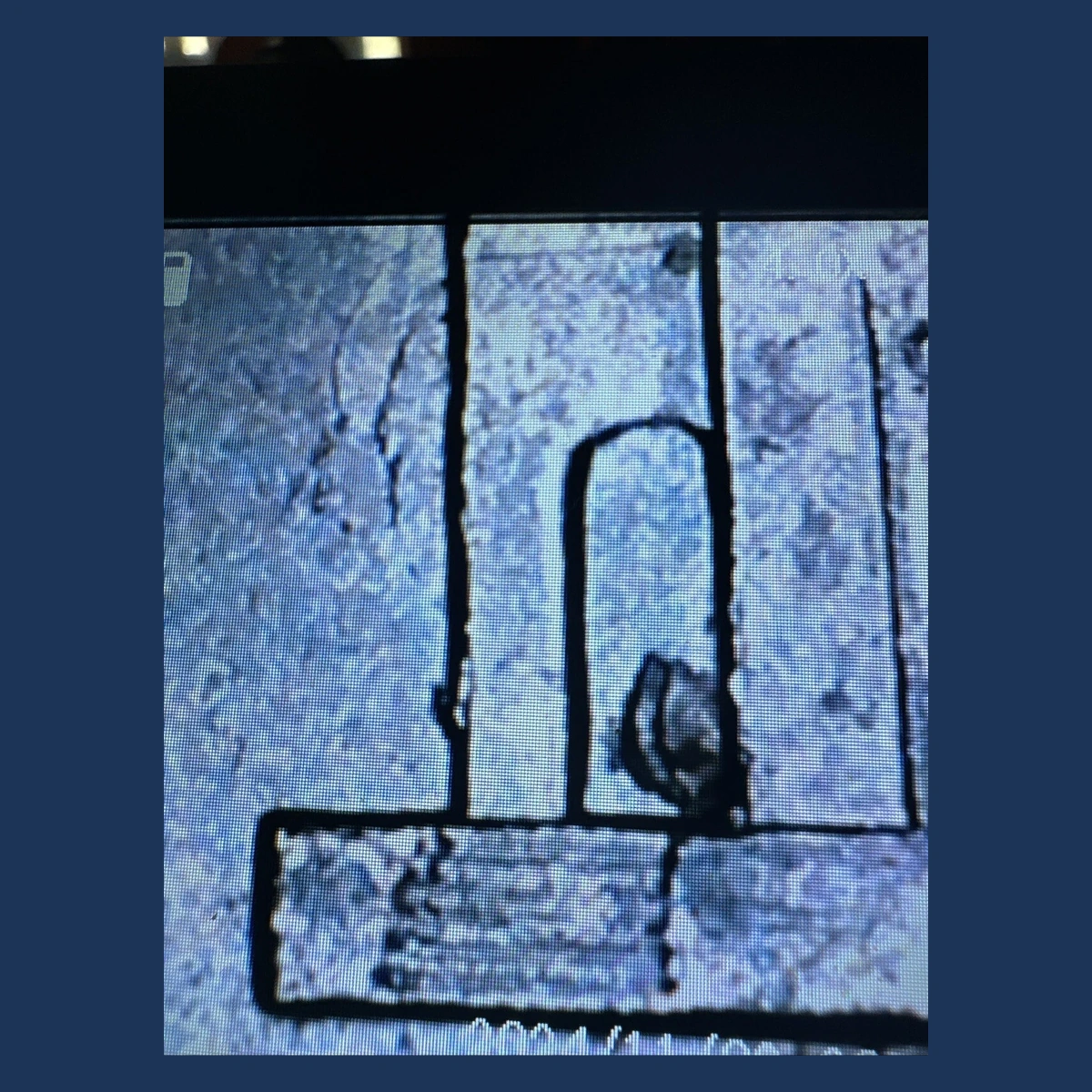
A small bump near Jefferson’s eye may come from a chip in the die, the steel tool that stamps coins. A thin raised line instead can show where that tool cracked.
Reports for 2021-P include marks near OF and small lumps on Monticello. Denver examples with facial lines above the eye and across the lips carry the nickname “Scarface.”
These are different locations, not one required pattern. An interior facial mark is not a cud, which is a larger break joined to the coin’s outer rim.
Estimated Value
Allow an estimated $5–$25 for visible chips or cracks on otherwise ordinary 2021 nickels. The lower end suits tiny bumps that need magnification.
Published listings ask about $5 for small Philadelphia chips, $10–$15 for a crack near OF, and $20 for the Denver facial marks. Those are asking prices, not auction results.
A clear, larger feature may attract more interest, while several tiny bumps do not multiply the coin’s value.
How to Identify
Check the mint letter below the date before choosing a location to compare. The Denver facial report concerns lines above the eye and across the lips; the Philadelphia reports include OF, Monticello, and a separate eye bump.
Light the affected area from the side and examine it with a 10× magnifier. A crack leaves a raised ridge, while a chip usually makes a small solid lump; a scratch has a cut center even when its edges stand up.
For an intact loose nickel, a scale and calipers provide comparisons with 5.00 grams and 21.21 millimeters. Inspect the plain edge beside any raised patch for an impact that pushed metal onto the face.
2. 2021 Jefferson Nickel Doubled Die Reverse
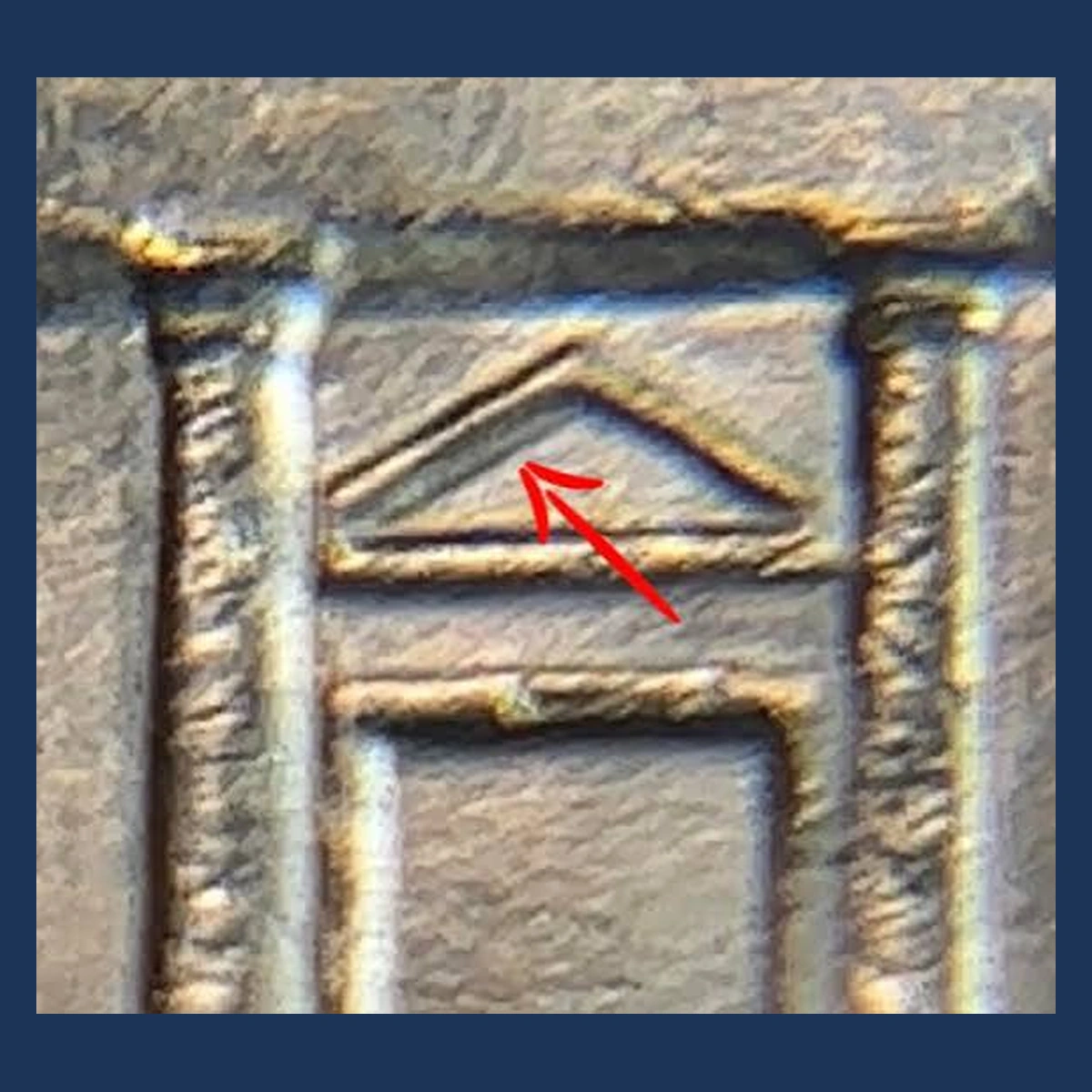
Monticello’s small central doorway is the place to examine for this variety. Extra raised detail appears near its upper frame or inside the opening on listed 2021-P nickels.
The building does not need to look doubled everywhere. A doubled die carries an extra part of the design before it ever strikes a coin.
Brian’s Variety Coins lists several doorway examples for this year. Their small differences belong to the same basic type here.
A flat step beside a letter can instead come from movement during striking.
Estimated Value
An estimated $10–$40 suits a clearly matched doorway variety with readable detail. This is a collector estimate for minor modern doubling, rather than a reported 2021 auction result.
Tiny extra shapes seldom bring the prices paid for bold, easily seen doubled lettering on older coins. Sharp doorway details and clean surfaces help.
A label identifying the variety may aid a sale, but grading fees can exceed the value of an ordinary example.
How to Identify
Find the P below the date, then put Monticello’s central doorway under a 10× magnifier. Compare the upper frame and the opening itself with a clear photograph of the listed variety.
Photograph the doorway straight on before moving the light to either side. A reflection that shifts or disappears is not extra metal.
The added shape should occupy the same spot as the pictured example. General softness across the whole building is a different clue and does not establish doubling.
Normal size and weight remain about 21.21 millimeters and 5.00 grams, checked with calipers and a scale. At the doorway, separate a rounded extra detail from a flat, shaved-looking ledge.
3. 2021 Jefferson Nickel Hubbing Induced Damage
Some unusual marks begin while the Mint makes its stamping tools, rather than when it strikes the coin. This is called hubbing induced damage, or HID.
A hub is the tool that presses the design into a working die. Trapped material during that step can leave an abnormal shape that later appears on coins.
A 2022 CONECA report describes a 2021-P nickel with such features on both faces. The report separates this toolmaking problem from debris pressed directly against a coin during striking.
Estimated Value
For a specialist-matched 2021-P example, use an estimated $15–$50. This estimate follows the modest market for small modern tool defects, with extra allowance for a clearly identified two-sided example.
It is not a recorded sale of the nickel pictured by CONECA. Nor should it be priced as two separate coins because both faces have marks.
Good close-up photographs and a convincing match give buyers a stronger reason to pay the upper end.
How to Identify
For a loose coin, record 5.00 grams and 21.21 millimeters as the normal comparisons on a scale and calipers. Inspect the plain edge, but leave a graded example inside its holder.
Now compare both faces with the illustrated 2021-P coin in the CONECA report. Use a 10× magnifier and photographs taken with light from different directions to match each shape against nearby letters or design details.
A second coin with exactly the same marks can show that the stamping tool carried them. A later impact on one coin is unlikely to repeat every small feature on another.
A random bump or dent is not enough to establish this toolmaking problem. Follow the report’s individual shapes rather than assuming that any two-sided damage has the same cause.
4. 2021 Jefferson Nickel Improper Annealing
One reported 2021-P nickel has dark and silver-colored areas across its surface. The claimed cause is improper annealing, a problem during the heating used to soften coin blanks.
That heating happens before the design is struck. A surface change from the process can remain visible on the finished nickel.
Color needs care. Heat, chemicals, and damp storage can also darken a coin after it leaves the Mint.
The two-tone appearance is a reason to investigate, not proof by itself. Rubbing the surface to test it can remove the very evidence needed to identify it.
Estimated Value
An estimated $25–$75 is appropriate once the color has been identified as a minting error. A year guide reports 2021-P examples around $45–$50, without providing a directly matched auction record.
Use that figure as guide information, not a guaranteed sale price. The upper end suits a clear, attractive color difference on an unworn coin.
Ordinary dark staining does not qualify for this range, even if it covers the entire nickel.
How to Identify
Keep the coin dry and uncleaned. Under a 10× magnifier, inspect where the dark region meets the normal silver-colored metal.
Look for crust, pits, scratches, or a coating that sits over the design. These can point toward later treatment or corrosion instead of a change before striking.
Weigh the loose coin on a scale and measure it with calipers. A regular 2021 nickel is copper-nickel, about 5.00 grams and 21.21 millimeters, with a smooth edge.
Compare both faces with an ordinary nickel under the same light. Color alone cannot establish when the change happened.
Before paying an error premium, have a specialist examine the boundary and the original surface beneath the color.
5. 2021 Jefferson Nickel Proof Die Clash
A faint piece of the opposite design can appear after two stamping tools hit each other without a blank between them. This is a die clash.
The tools may then pass those unwanted outlines onto later coins. The marks are usually fragments rather than a complete second portrait or building.
The 2021-S guide includes this as a possible error on a Proof, a specially made collector coin. It does not identify a specific 2021-S specimen, so a suspected piece needs a matching design trace.
Estimated Value
Use an estimated $50–$100 for a confirmed 2021-S Proof with a clear clash. The guide’s $50 starting point supports this conditional range, but it is not a documented sale.
Price depends on how much of the opposite design is visible and whether the reflective surface remains clean. A tiny stray line is less persuasive.
Normal Proof value alone does not support an error premium, and the estimate applies only after the clash is established.
How to Identify
The first check is the S below the date, together with the specially prepared Proof finish. A shiny P or D coin is not a San Francisco Proof.
Use a 5× to 10× magnifier to study the unusual lines without touching the reflective surface. Turn a photograph of the opposite side to see whether its design could produce those fragments.
Fine parallel polishing lines do not automatically form a clash. Neither does a dent with displaced metal beside it.
The nickel remains copper-nickel even when it comes from a Silver Proof Set. For a loose coin, a scale and calipers check the usual 5.00 grams and 21.21 millimeters.
The deciding visible feature is a recognizable piece of the opposite design in the correct relationship to it.
6. 2021 Jefferson Nickel Rotated Dies
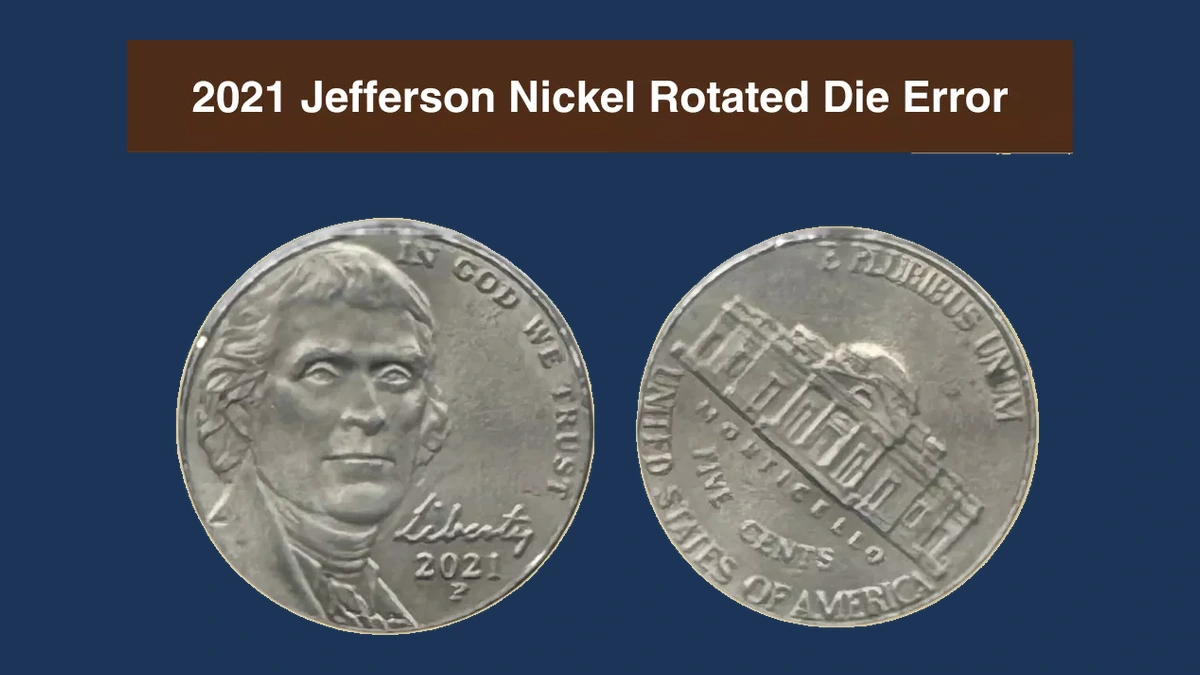
Monticello can lean sideways even when Jefferson is held upright. A rotated die error means the two stamping tools were turned out of their normal relationship.
The design may still be complete and centered. This is an alignment problem between the faces, not a missing part of the coin.
The 2021 nickel guide reports rotations around 30–45 degrees and discusses stronger examples. A carefully controlled flip is essential, since turning the coin loosely in your fingers can create the same apparent tilt.
Estimated Value
For clearly measured examples, allow an estimated $20–$150. The year guide places modest ungraded rotations around $20–$50, while stronger examples receive higher estimates.
The angle is more important than a seller’s use of “rare.” A small tilt and a large rotation should not receive the same price.
Photographs showing the coin held in one fixed position help a buyer judge the claim. Clear surfaces and an easy-to-see angle favor the upper end.
How to Identify
Place the nickel in a clear holder that stops it turning. Hold Jefferson upright, then flip the holder from top to bottom without twisting it sideways.
On a normal nickel, Monticello now appears upright. Use a protractor to measure any remaining tilt, and repeat the flip to make sure the result stays the same.
If you instead turn the holder left to right, the normal back appears upside down. Do not mix the two tests when describing the angle.
Check a loose coin’s 5.00-gram weight and 21.21-millimeter diameter with a scale and calipers before placing it in the holder. Record both faces while keeping the holder fixed: the building’s repeatable tilt is the feature that matters.
7. 2021 Jefferson Nickel Struck Through Grease or Debris
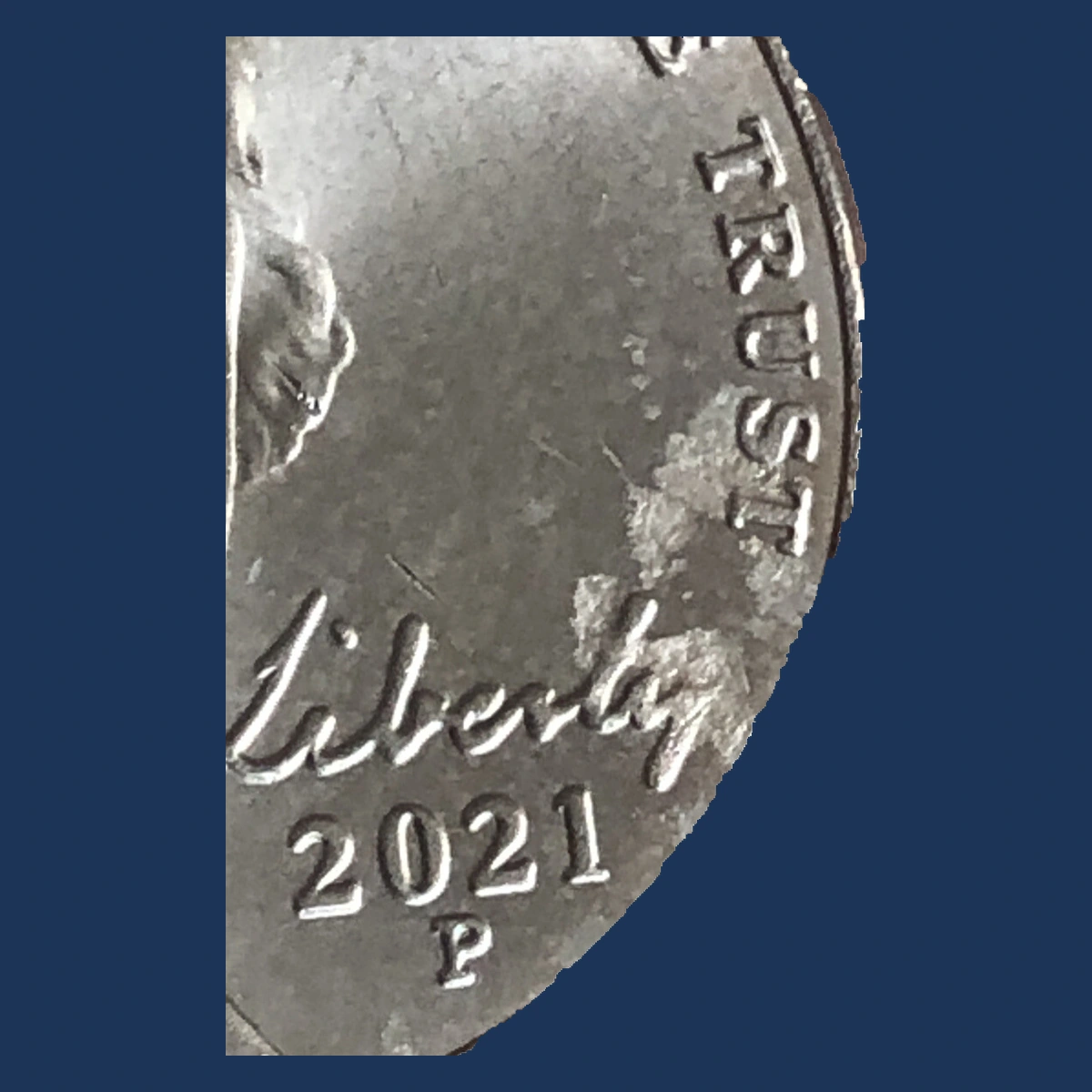
A patch of missing detail on Monticello can form when grease blocks part of the stamping tool. A harder piece of debris can instead leave a distinct hollow in the coin.
Both are struck-through errors: something interfered while the design was being pressed into the metal. Reports for 2021 include Denver coins with weak building details and lettering, plus marks on the portrait side.
The blocked area need not reach the edge. Nearby sharp details can help separate a small blocked patch from a coin whose whole design was weakly struck.
Estimated Value
Estimated values are $15–$150, with faint grease patches near the lower end and large, clear impressions higher. For comparison, Heritage sold a 1970-D nickel for $94 in March 2023.
That ANACS AU50 coin had light wear, major die breaks, and a strike through debris. Its price covered the entire coin, not the debris mark alone.
The different year and combined errors make it a comparison, not a recorded 2021 sale.
How to Identify
Compare the weak patch with details immediately around it. Grease can leave a soft or missing feature while neighboring letters remain sharp, whereas ordinary wear smooths exposed high points across the design.
For a deeper hollow, move a lamp across the surface and inspect its boundary with a 10× magnifier. A later impact may push metal into a raised lip or leave damage on the opposite face.
Check a loose nickel with a scale against 5.00 grams and calipers against 21.21 millimeters. A blocked strike need not remove metal, so normal weight can agree with the error.
Inspect the plain edge for squeezing and photograph the transition from sharp to missing detail. Leave any attached material undisturbed rather than cleaning out the depression.
Conclusion
Estimated prices run from $5–$150, with small chips at the low end and strong rotations or struck-through marks higher. A dark surface alone earns no automatic premium.
Check Monticello’s doorway for extra detail, inspect raised facial marks, and test the alignment with a controlled flip. Keep both sides in your photos.
For the reported toolmaking damage or a possible Proof clash, a matching specialist example matters more than a dramatic nickname.