1834 Cent Error List with Pictures

Three outlines of Liberty’s face appear on an 1834 large cent that brought $2,640 in January 2022. That lightly worn coin also has a small copper separation on the back.
Estimated values in this 1834 penny error list span $30–$8,000. The features range from small edge gaps to a repeated strike that flattened much of an earlier portrait.
Look beyond the most noticeable mark as you compare the examples below. Several different features can share one coin and one sale price.
1. 1834 Coronet Head Cent An Incomplete Copper Blank
The copper disk can be incomplete before the portrait ever reaches it. If a cutting punch crosses an earlier opening or the strip’s edge, part of the intended blank may be absent.
The later strike places the design on whatever copper remains. This is a clipped blank, also called a clipped planchet.
A seller offered an 1834 large cent in Fine condition with this description. The report does not establish the gap’s direction or precise shape.
A missing section alone does not prove a Mint error. Its boundary should reflect striking, rather than fresh cuts through finished details.
Estimated Value
Use an estimated $40–$200 for worn 1834 cents with modest genuine clips and $200–$1,000 for stronger, better-preserved examples. A readable date and original boundary improve the comparison.
The year guide cites an approximately $53 offer for a Fine example. That was an asking price, not a confirmed sale.
A later 1852 clipped large cent graded NGC MS63 Brown brought $384 in June 2024. Its unworn condition and different date mean it is only a general comparison.
How to Identify
Confirm the 1834 date before examining the missing section. With a 10× magnifier, follow both ends of the gap and look at the nearby design.
Fresh filing strokes or cuts through finished letters suggest later damage. A scale can reveal lost copper, but a low weight cannot tell you when that copper disappeared.
Compare a loose coin with the normal 10.89 grams, then use calipers across intact sections against roughly 28–29 millimeters. Include the remaining plain edge and the border opposite the gap in clear photographs.
An original clip may leave a weak border opposite the missing section. Have the whole boundary examined before treating that weakness as proof.
2. 1834 Coronet Head Cent The Wreath Tilted about Forty-Five Degrees
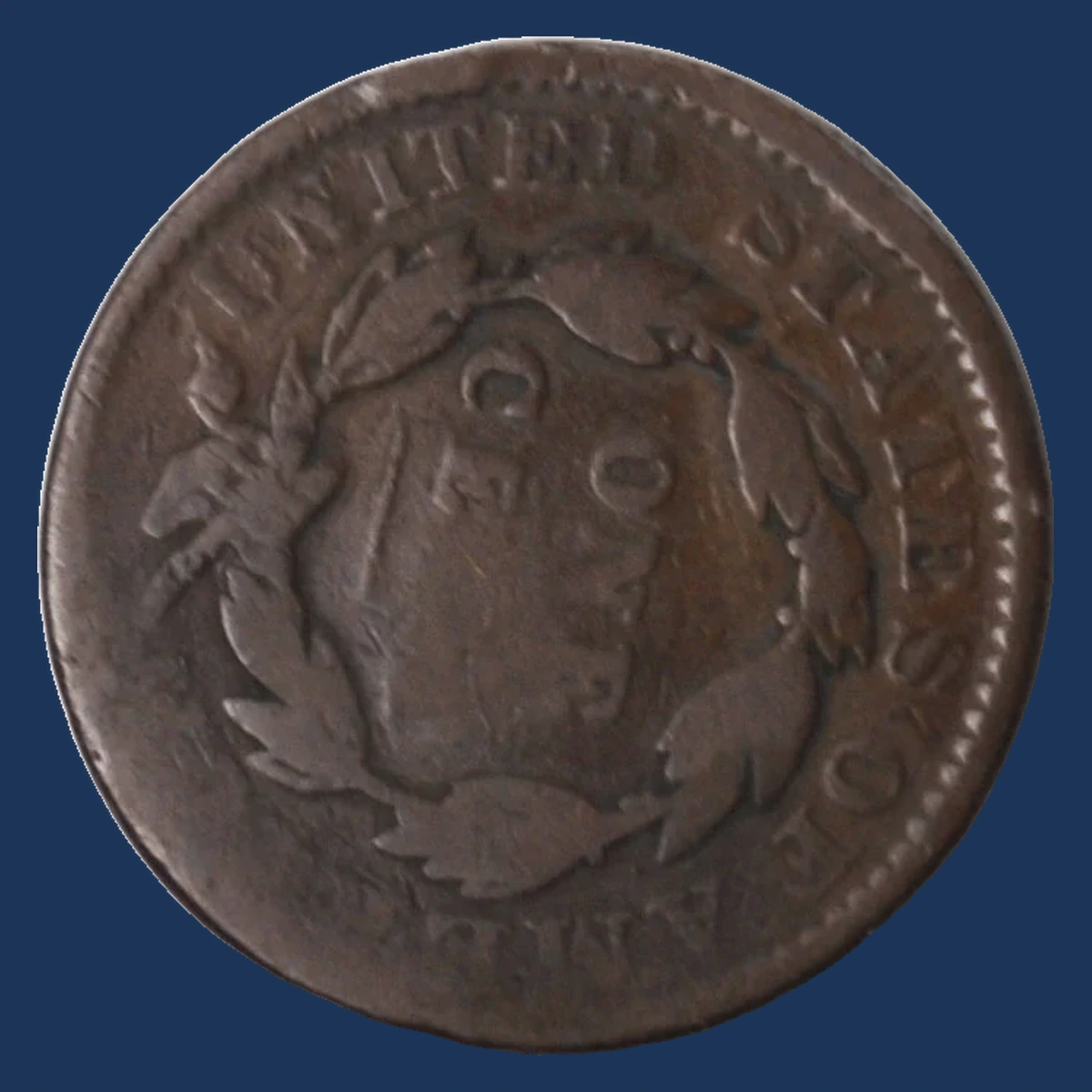
The wreath can look upright in a separate photograph while being tilted relative to Liberty. To see the relationship, hold the front upright and turn the coin from top to bottom.
Heritage describes an N-3 cent with its back nearly forty-five degrees clockwise from normal. N-3 names a particular pair of stamping tools.
A different catalog records a similar angle on an N-6 example. The two cents should still be compared separately.
Rotation concerns the angle between the finished designs. It is not the same as a copper disk turning between two blows that leave overlapping impressions.
Estimated Value
Estimate $40–$500 for worn 1834 cents with a demonstrated rotation. Attractive examples with little wear can fit an estimated $500–$2,000 range.
The N-3 coin was graded NGC AU58, indicating very slight wear. Its rotated back occurs with a doubled profile and a tool crack, so any whole-coin price would cover those features together.
These ranges do not assign an auction result to that specimen. A slight tilt on rough copper generally adds less than a clear angle on smooth surfaces.
How to Identify
Hold Liberty upright and turn the coin from top to bottom without twisting it sideways. Repeat this movement several times, watching whether the wreath stops at the same angle each time.
On a normally aligned cent, the wreath will also be upright after this turn. A video showing the entire movement makes the difference clearer than two photographs that someone has rotated separately.
Inspect the plain edge with a 10× magnifier for a seam joining two faces, then check the date for alteration. Use a scale and calipers on a loose coin to compare it with 10.89 grams and roughly 28–29 millimeters.
3. 1834 Coronet Head Cent Raised Cracks and a Small Break above STA
A raised line can run from the rim below the date’s 4 toward the lower-right stars. The recorded N-3 line passes through stars thirteen and twelve before reaching the border again.
It comes from a cracked die, the steel tool that stamps the design. Copper entering that opening leaves a raised trace on the coin.
A separate N-1 report describes a small rim-connected break above STA on the back. This larger missing piece of steel produces a raised patch called a cud.
The thin front line and the back patch belong to different tool pairs. Neither is peeling copper.
Estimated Value
For worn 1834 cents with clear tool cracks or small rim breaks, estimate $30–$750. Attractive examples with stronger detail can fit an estimated $750–$2,500 range.
The date variety and surface quality account for much of a better coin’s value. A tiny ordinary crack may add little by itself.
An unworn 1838 large cent with several strong tool breaks brought $1,762.50 in September 2016. That different-year comparison does not price the small 1834 patch above STA on its own.
How to Identify
Count the stars from the lower left with the portrait upright. The last two occupy the lower-right area beside the path described for the N-3 crack.
Follow the line at 10× magnification with light from the side. Its center should rise above the copper, unlike a cut that removes metal.
Turn over a suspected N-1 example and examine STA at the upper back rim. A cud should connect to that rim rather than float as a separate dot within the design.
Check the plain edge beside a raised patch for a dent or added material. Record a loose coin with a scale and calipers against 10.89 grams and roughly 28–29 millimeters, keeping the front and back examples distinct in your notes.
4. 1834 Coronet Head Cent Tiny Splits within the Copper Surface
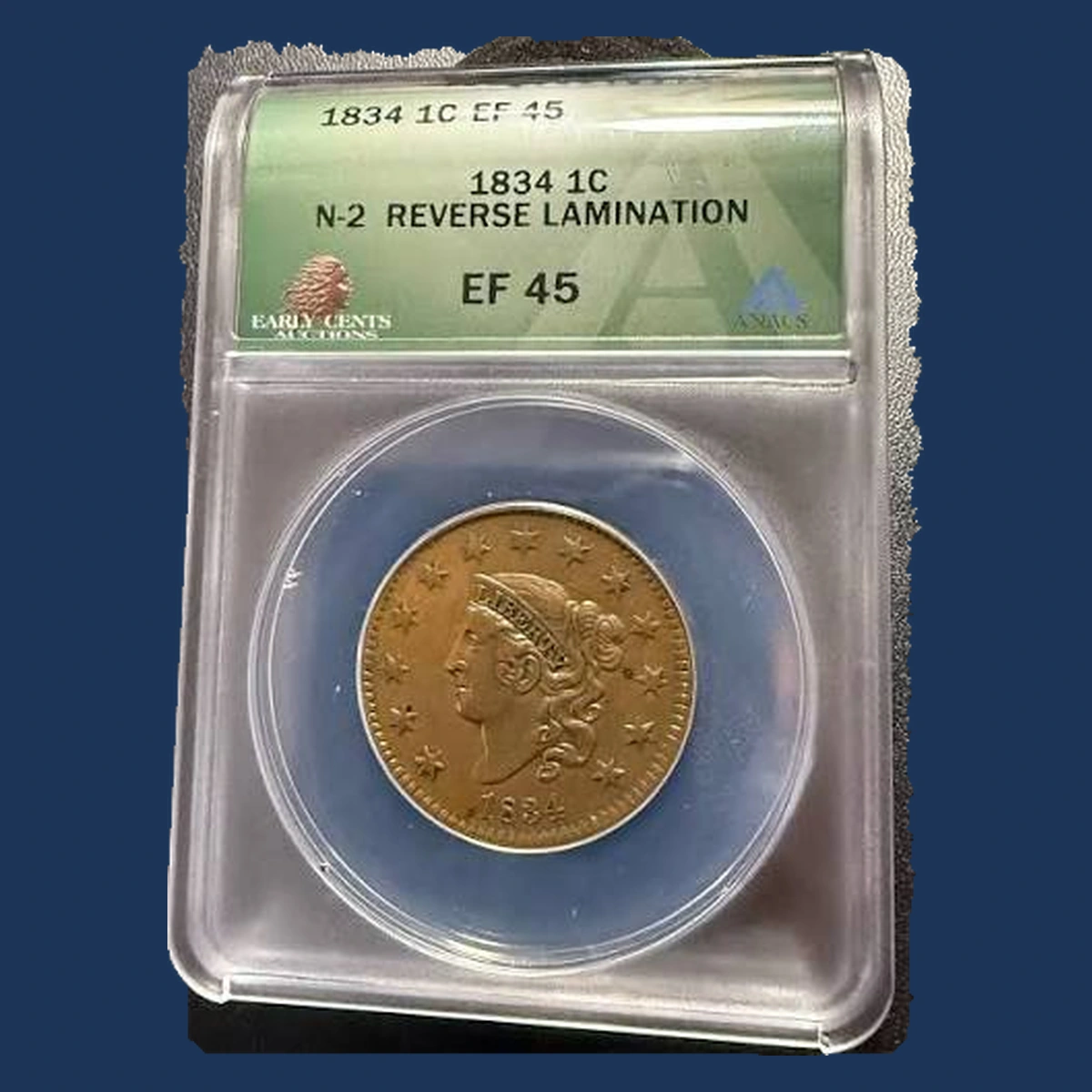
A very small opening beyond Liberty’s nose identifies one N-5 cent in an auction catalog. The catalog describes it as an original lamination, a separation within the copper blank.
A different N-6 cent has a faint split on the back near the boundary between two brown tones. That same coin also has a tripled portrait outline.
These examples place the flaw on different faces. Color alone does not prove that copper has separated.
The important feature is the actual break between layers. A shallow scratch or scattered corrosion can resemble it without sharing the same cause.
Estimated Value
Estimate $40–$400 for worn 1834 cents with small original laminations and $400–$3,000 for attractive examples of scarcer varieties. The flaw’s size does not explain that full difference.
The N-6 coin also discussed under repeated profiles sold for $2,640 in January 2022. Its variety, lightly worn condition, and several visible features share that one price.
The tiny N-5 nose-area flaw belongs to a separate specimen. A lamination that removes important detail can reduce appeal rather than increase it.
How to Identify
Locate the correct area before comparing the two examples. The N-5 flaw lies in the plain area beyond the nose, while the N-6 split is on the wreath side.
A 10× magnifier and light from a low angle can reveal a fine separation. Look for an actual boundary within the copper, not just a change of color.
Keep any loose flap attached. Do not scratch a dark area to see whether a layer lies beneath it.
A scale compares a safely handled loose coin with 10.89 grams, though a tiny retained flaw may change the weight very little. Calipers can check intact spans near 28–29 millimeters.
Include the plain edge if the separation reaches it. Photograph the surrounding surface as well so corrosion or a scraped trench is not mistaken for original peeling.
5. 1834 Coronet Head Cent Two or Three Outlines around Liberty’s Face
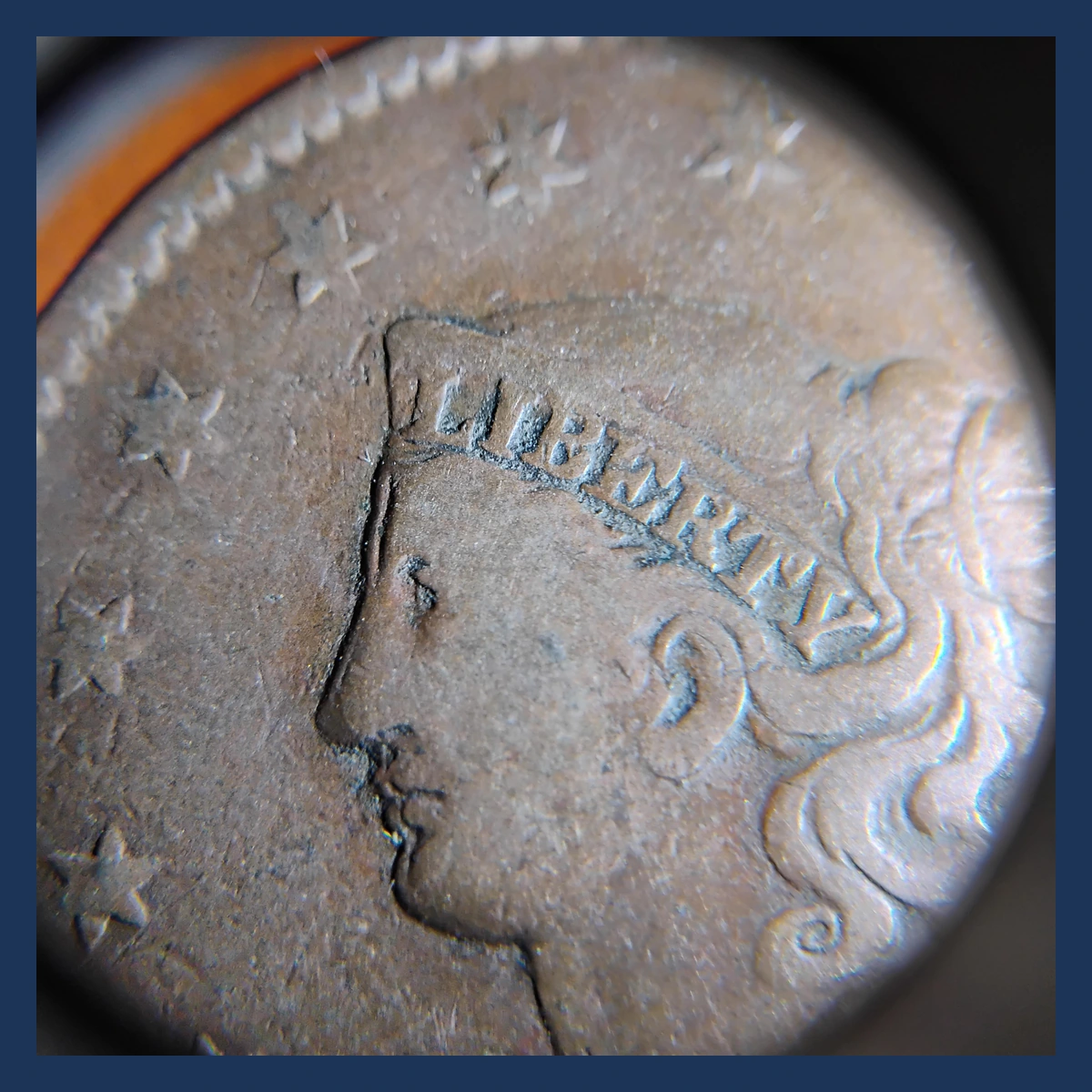
An extra nose or chin can make Liberty’s profile look doubled. On a particularly bold N-6 example, three outlines survive beside the normal face.
An N-3 catalog example shows doubling from the chin to the nose. Another N-6 description extends the repeated features to the forehead, ear, and RTY in LIBERTY.
The outlines describe what is visible, not automatically how the effect formed. Movement during striking can produce repeated edges without a stamping tool carrying a doubled design.
A clearly displaced second design requires its own evidence. Count the surviving contours before deciding whether a coin received another blow.
Estimated Value
The N-6 cent with a tripled profile brought $2,640 in January 2022. PCGS graded it AU50, a lightly worn grade.
For worn examples with clear repeated outlines, estimate $75–$750. Attractive, lightly worn pieces can fit an estimated $750–$3,500 range.
That auction price includes the variety and the rest of the coin, including its back lamination. Three contours do not earn three separate error premiums.
How to Identify
Trace the nose, lips, and chin through a 10× magnifier rather than judging one enlarged point. A genuine repeated contour stays connected to the same features as the light moves.
Photograph RTY and the ear when they are affected, then compare the full back. A proposed second strike should explain more than an isolated thick edge.
Keep flat ledges separate from rounded extra raised metal. Do not label the coin a doubled die merely because its face looks doubled; that diagnosis concerns how the steel tool was made.
With a loose cent, use a scale and calipers against 10.89 grams and about 28–29 millimeters. Inspect the plain edge for signs of squeezing, and retain uncropped photographs to show where each repeated outline begins and ends.
6. 1834 Coronet Head Cent A Shifted Strike with a Doubled Profile
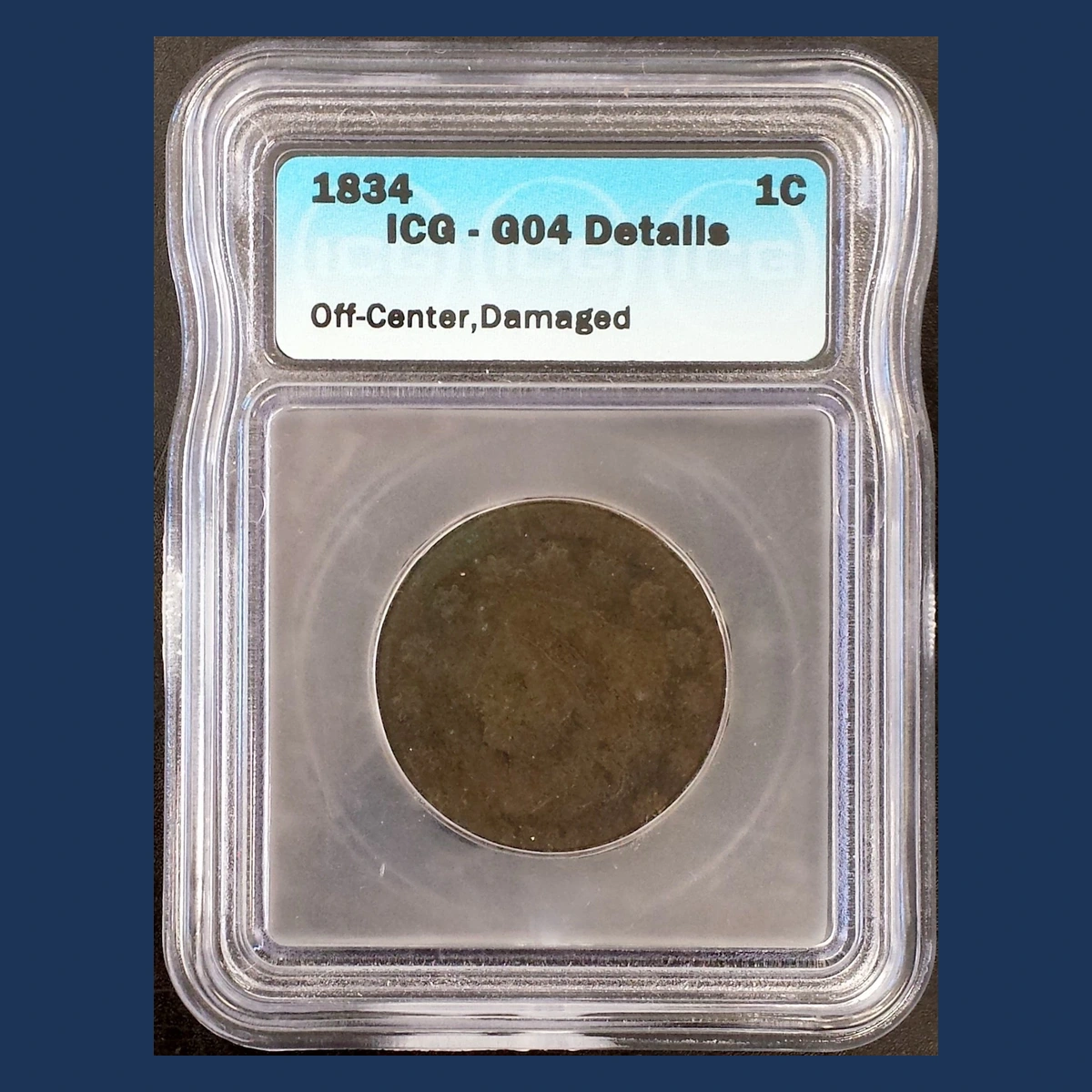
A crescent of unused copper can remain beside a design pushed toward the opposite edge. A collector’s N-1 cent reportedly shows a ten-percent off-center strike and a strong double profile.
The copper disk sat out of position between the stamping tools. Part of their design missed the disk, leaving some copper without a design.
The repeated facial outline is another visible feature on this coin. It does not by itself prove that the cent received two separate blows.
Check both faces when judging the shift. A design displaced on only one face points to a different problem.
Estimated Value
For genuine 1834 off-center cents, estimate $200–$1,500 on worn examples and $1,500–$5,000 on stronger, attractive pieces. Readable dates and clear unstruck areas help collectors assess the displacement.
The ten-percent N-1 example has no quoted sale price in these comparisons. Its repeated profile belongs to the same coin and does not carry a price to add.
The range is an estimate based on the visible error and condition. Heavy surface damage can matter more to buyers than a larger quoted percentage.
How to Identify
Keep the empty crescent and the whole copper outline in view. The empty area should still contain copper, unlike a clipped coin with a section missing.
Use calipers to compare intact spans with roughly 28–29 millimeters, and weigh a loose cent against 10.89 grams. Check its plain edge for trimming before judging the shape of the strike.
Turn it over using the same physical edge as a reference. The two faces should show a matching shift toward one side of the disk.
Now examine the boundary between the design and plain metal through a 10× magnifier. Ground-away letters leave damaged surfaces; photograph the surviving date with the entire outline so the amount of displacement remains visible.
7. 1834 Coronet Head Cent A Second Strike with the Front Pressed against Another Blank
One cataloged N-3 cent moved before a second blow. The later impression was about twenty-five percent off center, with the coin turned roughly twenty-five degrees clockwise between strikes.
During that blow, another blank lay against its front. The contact flattened about three-quarters of the earlier portrait-side design.
The backward impression formed on the other blank, not on this described cent. The catalog grades this coin VG8, meaning heavy wear, and notes a separate dig near the lips.
The back therefore preserves a later impression while much of the front looks unusually flat. Both appearances came from that second blow.
Estimated Value
Estimate $500–$2,500 for worn 1834 double strikes with readable overlapping designs and $2,500–$8,000 for stronger, attractive examples. A clear explanation of both faces helps support the comparison.
The old catalog offered the described N-3 coin at $750. That is an asking price, not a confirmed auction result.
As a later-series comparison, a scratched 1856 large cent with a displaced second strike sold for $2,640 in January 2023. Its date, preservation, and particular striking sequence differ from this example.
How to Identify
Follow the second back impression first and note how it moves relative to the earlier one. Use a 10× magnifier to find where one design crosses or flattens another.
Turn to the front and compare the broad blunted area with the cataloged overlap. Do not expect the backward portrait made on the other blank to appear on this coin.
The small dig beside the lips is separate later damage. Keep it out of the explanation for the original striking sequence.
Use a scale on a loose example against 10.89 grams and calipers against a starting width around 28–29 millimeters. A second strike may spread the copper.
Inspect the plain edge for filing or heavy blows that could alter the outline. Keep those later marks separate from the overlapping designs.
Conclusion
Estimated values of $30–$8,000 cover these 1834 examples, with the coin’s variety and condition contributing alongside the error. A repeated portrait outline is not automatically proof of a doubled stamping tool.
For missing metal, examine the original boundary; for a tilted back, control the way you turn the coin. A repeated strike needs evidence of the sequence on both faces.
When several features occur together, assess the complete cent rather than adding a separate maximum price for each one.