1983 Nickel Error List with Pictures

An old-style bronze cent blank took an unexpected trip through a nickel press in 1983. The Philadelphia example sold for $4,800 in April 2021, combining the wrong denomination’s metal with material left over from an earlier production standard.
This 1983 Jefferson nickel error list covers estimated values from $10 to $7,000. Other examples show missing edge sections, weak central details, and overlapping strikes.
The checks below explain why similar-looking coins can have different causes, especially when their metal or surfaces have changed.
1. 1983 Jefferson Nickel A Missing Part of the Original Edge
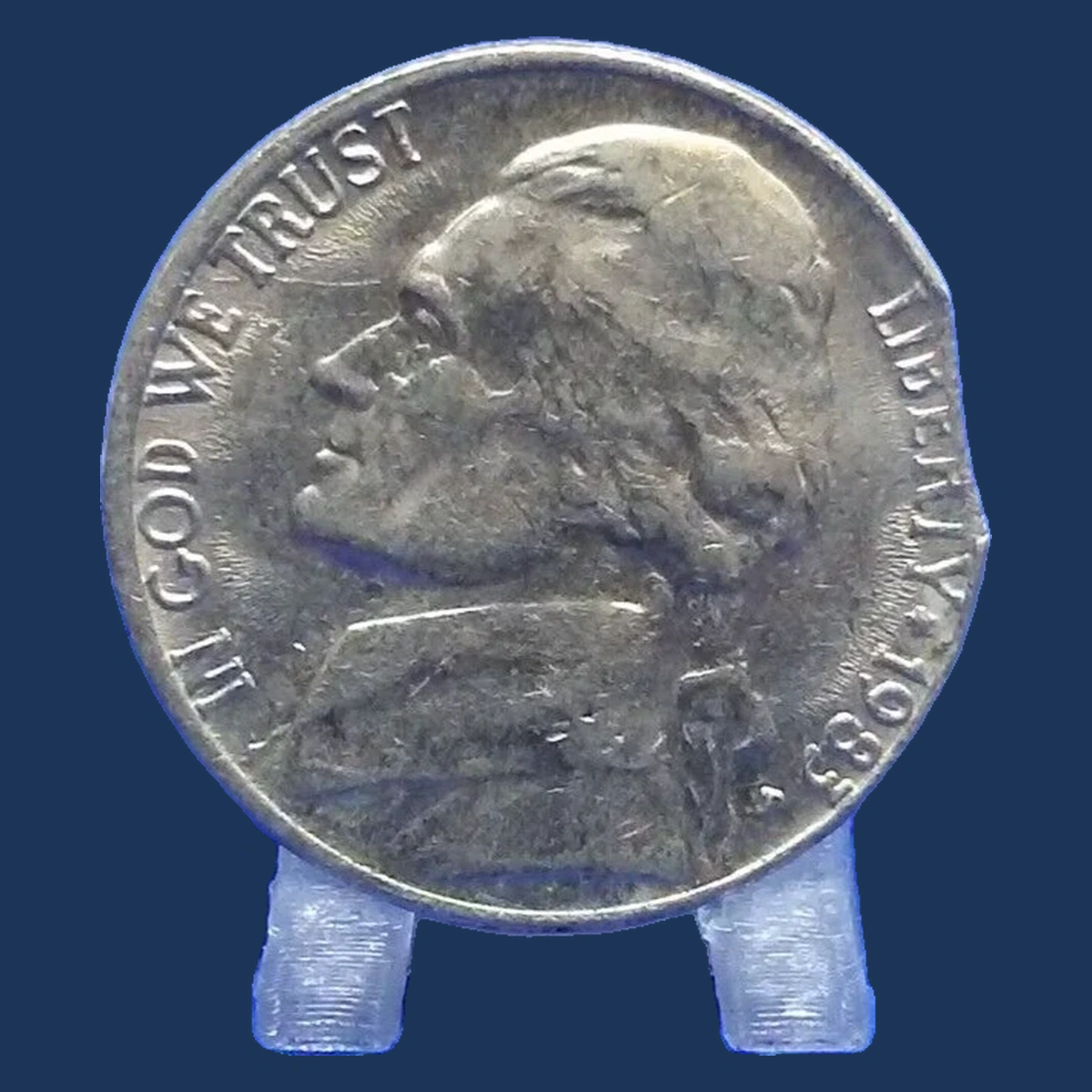
A nickel can reach the press with a piece already missing from its blank. The remaining metal receives the design around that incomplete outline.
This is a clipped-planchet error; planchet simply means the metal blank prepared for striking. A 1983-P clip is reported in the year’s error list, without a specific gap shape or direction.
The important feature is that the opening existed before the design was stamped. A saw, file, or later impact can create a similar outline after the coin is finished.
A weak opposite rim can help, but is not required on every clip.
Estimated Value
Estimate $15–$150 for a genuine 1983-P clip with a recognizable original boundary. The size of the missing section and condition of the remaining coin affect the comparison.
A 1999-P nickel with a twenty-percent curved clip and a slight off-center strike sold for $54 in March 2025. That later coin has a specific combined error, so its exact shape should not be assigned to the reported 1983 piece.
Later cuts or corrosion do not receive this mint-error premium.
How to Identify
Inspect both ends of the gap through a 10× magnifier, looking for filing lines, saw marks, or a cut through a finished letter. Then compare the surrounding struck detail with the incomplete outline rather than assuming the gap must have a particular shape.
A scale can record missing metal against a normal 5 g nickel, while calipers measure intact spans against 21.2 mm. A later cut also lowers the weight, so neither reading establishes when the opening formed.
Follow the plain edge into the gap and check the opposite rim for any weakness. That weakness can support an original clip, but the surface inside the opening and the surrounding design need to tell the same story.
2. 1983 Jefferson Nickel Faint Design Traces on Both Faces
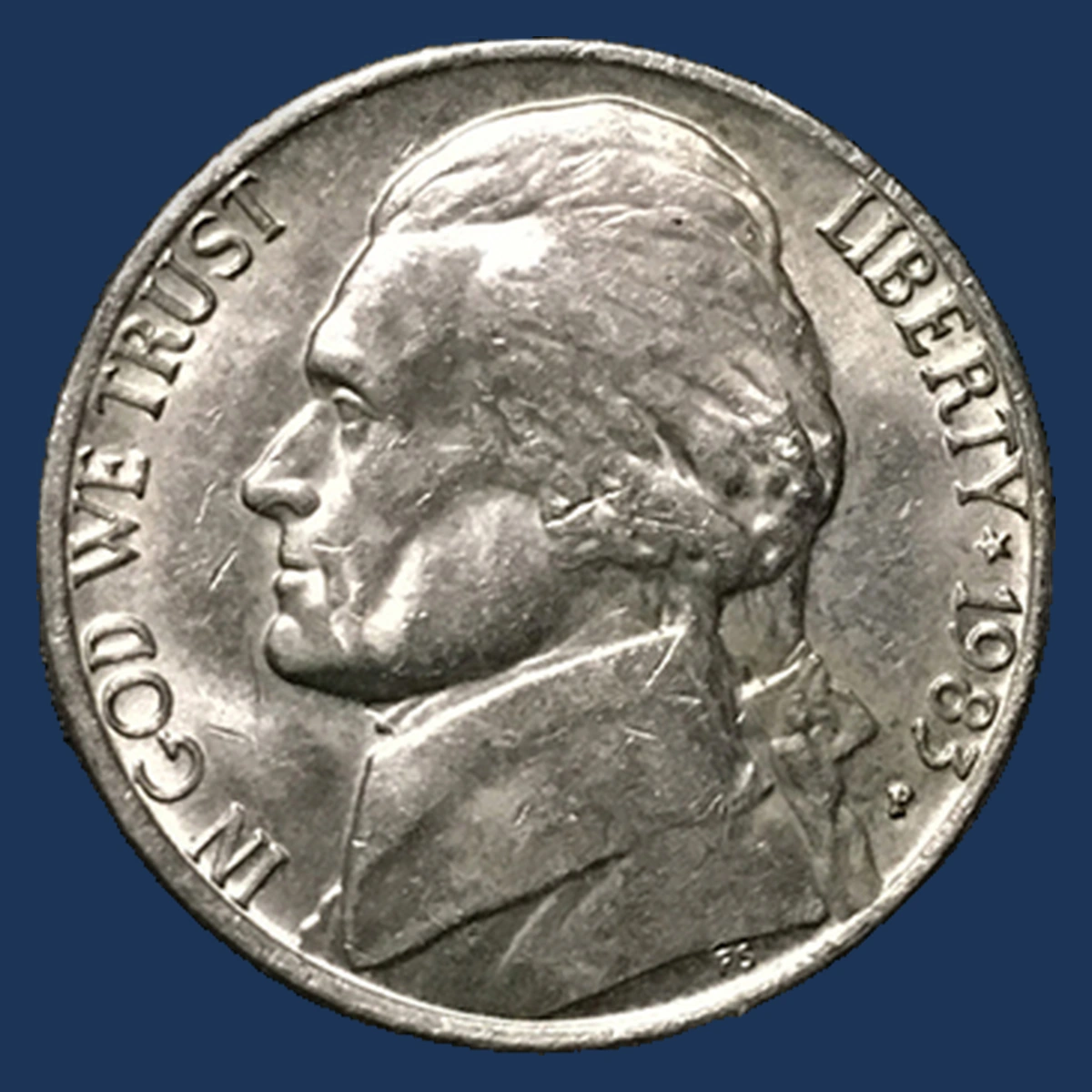
Faint traces from the opposite design can appear around the intended portrait or building. They form when the two stamping tools meet without a blank between them and damage each other’s surfaces.
Later coins copy those marks along with the normal design. This process is called a die clash.
A dealer recorded a 1983-P nickel with strong clash marks on both faces and a PCGS AU53 grade. That grade indicates light circulation wear.
The report does not place every trace at a fixed location. Random scratches must still be separated from transferred design outlines.
Estimated Value
Allow an estimated $10–$150 for identifiable 1983-P clash marks, with clearer two-sided examples near the stronger end. Wear can soften the shallow traces even when the basic portrait remains recognizable.
This range is an estimate for the reported feature, not an auction result assigned to the PCGS AU53 dealer example. Each visible trace should match part of the opposite design.
Deep mirror-image impressions or random scratches need different explanations and should not be priced merely as stronger clashes.
How to Identify
Use mirrored photographs of an ordinary nickel to compare unexpected traces with the opposite design, keeping the two faces correctly aligned. Study each trace through a 10× magnifier and check whether more than one short fragment supports the proposed match.
A loose coin should remain near 5 g on a scale and 21.2 mm with calipers. Look around the plain edge and across raised details for squeezing or grinding that could have added misleading outlines after minting.
Inspect both faces of the reported two-sided clash rather than choosing one suggestive line in isolation. A deep sunken mirror image points to direct contact with another coin, whereas a clash copies marks left on the stamping tools.
3. 1983 Jefferson Nickel A Blocked Impression on the Back
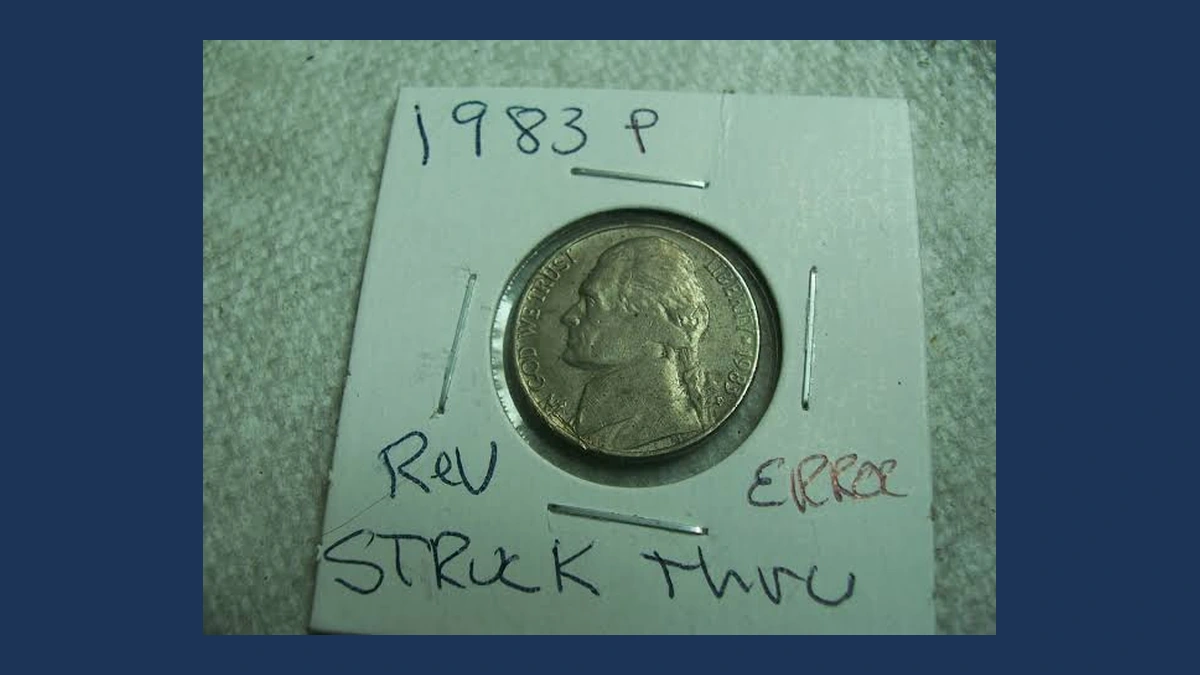
A depression or missing patch of detail can appear on the back while the surrounding design remains visible. Material between the blank and stamping tool prevented direct contact in that area.
GreatCollections lists a 1983-P nickel with a reverse struck-through error and an NGC MS62 grade. Reverse means the back, and MS62 describes an unworn coin with substantial marks.
The description does not identify the material that blocked the strike. Its shape should not be called wire, grease, or cloth without supporting evidence.
Later scraping can remove the same area’s design for an entirely different reason.
Estimated Value
Estimate $15–$100 for modest, clear back strike-throughs and $100–$300 for larger impressions with attractive surrounding detail. The value depends on how convincingly the surface shows material blocking the original strike.
These are estimated ranges for the documented 1983-P type, not a selling price inferred from the NGC MS62 listing. An unworn grade alone does not determine the error’s importance.
A vague worn patch offers less evidence than a defined original boundary. Scraping after minting receives no comparable premium.
How to Identify
Locate the interruption on the back and compare nearby lettering with the affected area. A 10× magnifier can show whether the design ends naturally against the impression or was scraped away later.
Check the front for damage opposite the hollow. An impact or later squeezing may affect both surfaces differently from material caught against the back tool.
If anything remains attached, leave it where it is. Removing it could destroy the contact that explains the shape.
Use a scale on a loose nickel against 5 g and calipers against the ordinary 21.2 mm diameter. Examine its plain edge for deformation linked to the weak patch.
Choose the material’s name only after its actual texture or surviving remains support that description.
4. 1983 Jefferson Nickel A Blurred Front from a Worn Coin Cap
Jefferson’s front design can become blurry while Monticello remains normally formed. A coin stuck to the front stamping tool can act as a covering between that tool and later blanks.
After repeated use, the trapped coin stretches and loses much of its own clear design. A later blank struck beneath it may receive a soft, distorted impression.
An expert forum discussion identifies a reported 1983-P example with this late-stage cap-struck appearance. That public opinion is separate from a grading-service certification.
The coin receiving the blurred impression is not necessarily a cup-shaped cap itself.
Estimated Value
For a confirmed 1983-P late-stage cap strike, use an estimated $50–$300 range. A clear difference between the affected front and preserved back helps establish the process.
A 2000-D nickel certified NGC MS64 Full Steps sold for $84 in September 2025 as a cap-struck example. Full Steps refers to clear Monticello steps; that later-year sale is a comparison, not the price of the forum coin.
Heavy wear or later flattening can reduce both the value and the strength of the identification.
How to Identify
Turn the coin to the back first. A normal Monticello provides an important contrast with a front that appears broadly softened or distorted.
Compare Jefferson’s remaining detail with an authenticated late-stage cap strike through a 10× magnifier. A small weak letter by itself may come from grease rather than a coin covering the tool.
Check the high points and plain edge for rubbing, flattening, or pressure marks. Those signs may explain a worn-looking front without any cap in the press.
For a loose coin, a scale and calipers should record roughly 5 g and 21.2 mm. The normal weight also helps separate this possibility from a thin or wrong blank.
Preserve the faint surface as found. Cleaning can erase the shallow lines needed for comparison.
5. 1983 Jefferson Nickel Weak Centers from Unusually Hard Metal
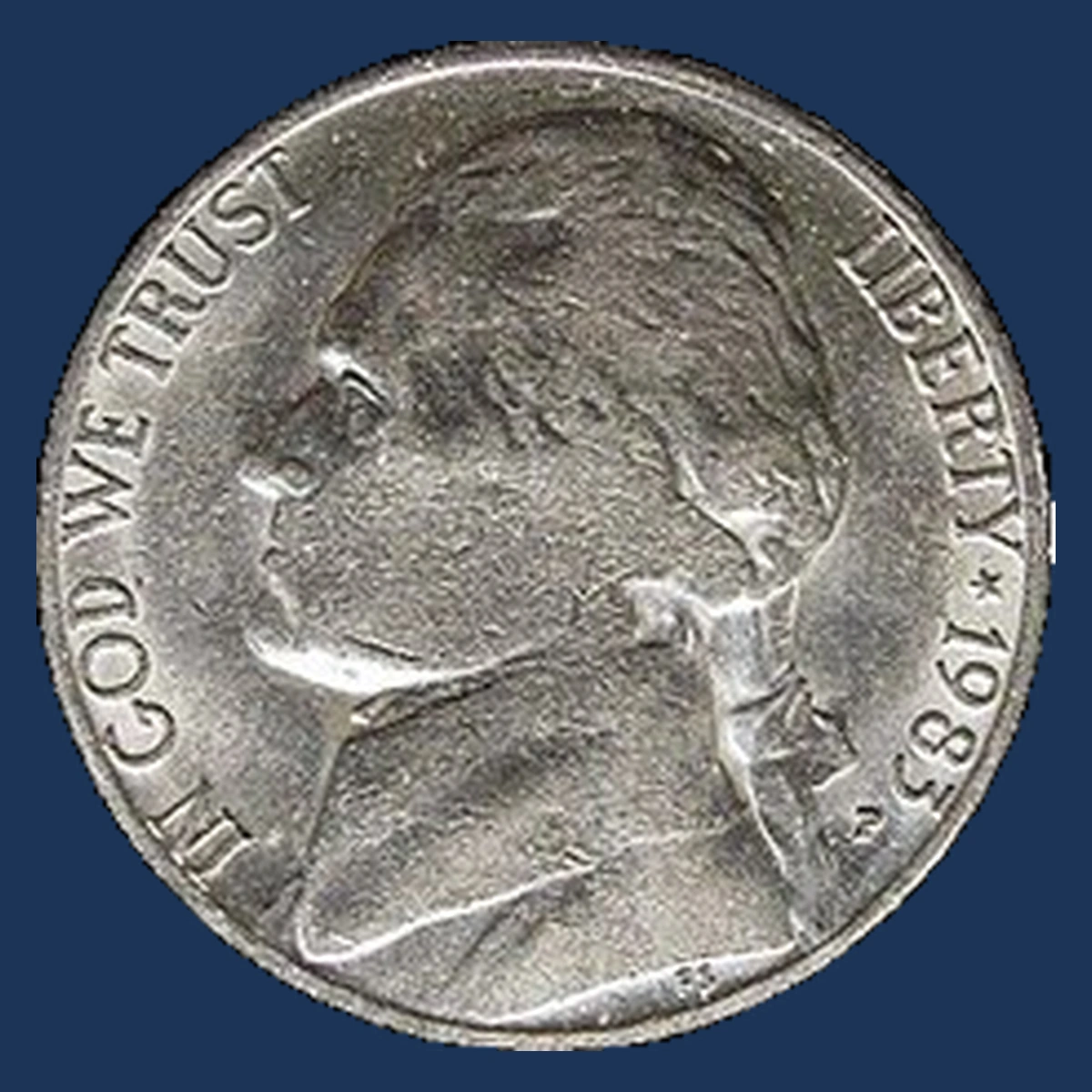
Jefferson’s face can have a shallow, nearly featureless center while other parts of the coin remain visible. The center of Monticello may also lack detail.
Error specialist Mike Diamond reports examining several 1983-P examples made from unusually hard blanks. Their metal resisted the movement needed to fill the deeper parts of the stamping tools.
This differs from a local obstruction hiding one small section of the design. A hard blank can affect the metal’s response across both faces.
The appearance still needs careful comparison because weak pressure, wear, or other problems can also leave shallow detail.
Estimated Value
A clearly identified 1983-P hard-blank strike can be estimated at $50–$350. The range assumes the central weakness fits the reported metal problem, rather than ordinary wear or a blocked tool.
No sale amount is assigned to the expert’s examined examples. Surface preservation and how clearly both centers show the effect help determine a useful comparison.
An almost featureless, damaged nickel does not automatically belong at the higher end. The explanation must account for the rest of the coin as well.
How to Identify
Locate the weak center on Jefferson, then turn directly to Monticello’s center. The two-sided pattern matters more than one missing facial feature.
Under a 10× magnifier, compare those shallow areas with the surrounding raised design. Scratches, worn high points, or a sharply bounded object impression may explain a different type of weakness.
Use a scale to check a loose coin against 5 g. Calipers can compare its outline with 21.2 mm, while an edge view shows damage from later pressure.
A normal plain edge and ordinary weight cannot prove that the blank was unusually hard. They help rule out some thin or wrong blanks.
Ask an error specialist to assess how the metal responded on both faces. Do not scratch, bend, or press the coin to test its hardness yourself.
6. 1983 Jefferson Nickel A Shifted Front and a Stepped Edge
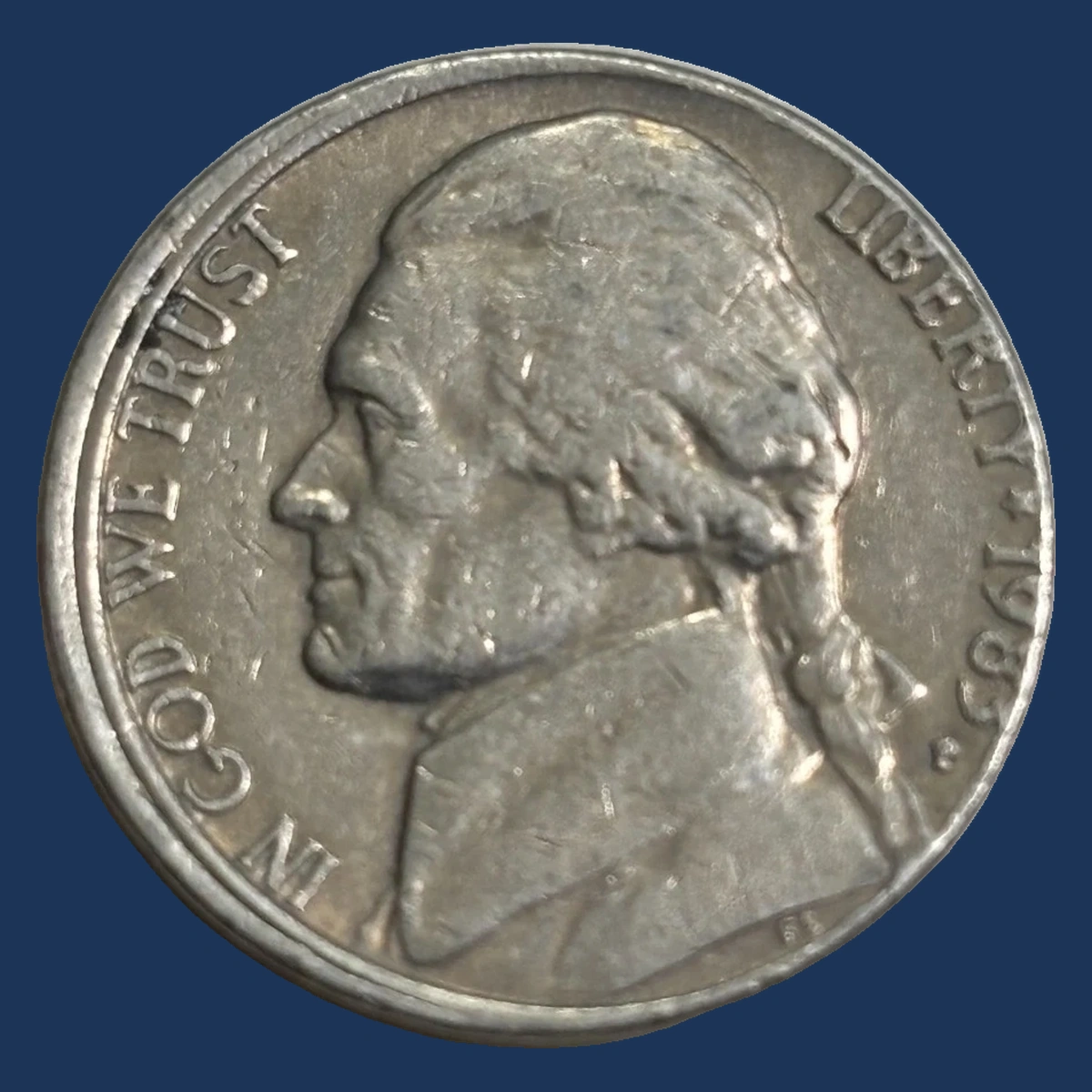
Jefferson’s design can sit off center while the coin’s edge shows a step. The recorded 1983-P example combines a misplaced front stamping tool with incomplete support from the collar ring.
That ring normally restrains the blank’s edge during striking. If part of the blank sits above it, exposed metal can spread beyond the portion still held inside.
Collectors call the stepped result a partial collar strike. The example in a collector’s display was graded PCGS MS62, an unworn grade with substantial marks.
The shifted front and stepped edge belong to the same coin.
Estimated Value
For a confirmed 1983-P shifted-front and partial-collar combination, estimate $50–$350. A visible edge step and a clear mismatch between the faces support the higher part of that range.
A different 1987-P nickel struck by a tilted, misaligned tool sold for $32 in July 2022, with cleaning noted. That damaged, different-year example is a modest comparison, not the price of this partial-collar coin.
Value the two connected features together rather than adding a separate price for each.
How to Identify
View the plain edge at eye level and locate the step with a 10× magnifier, without pressing the coin flat. The narrower part should show where the collar held the blank while exposed metal spread beyond it.
Compare the centering of Jefferson with Monticello to see whether the front tool sat in a different position. That mismatch should be distinguished from an entire blank shifted between both tools during one off-center blow.
A scale can record a loose example against 5 g, and calipers can measure its outline against 21.2 mm. Check the step for dents or later squeezing before comparing the combined front-and-edge pattern with the documented coin.
7. 1983 Jefferson Nickel Outward Spread around the Complete Design
Extra metal can spread outside the intended design when the collar ring fails to hold the blank. The blow still stamps the portrait and building, but the outline grows beyond its ordinary width.
A 1983-P broadstrike was cataloged in ANACS MS65, an attractive unworn grade. Its exact diameter was not given in the description.
The complete design is more useful than a smooth edge for recognizing the error. Nickels normally have plain edges even when correctly struck.
An off-center strike differs because some intended design can fall outside the metal altogether.
Estimated Value
Allow an estimated $25–$150 for worn or marked 1983-P broadstrikes and $150–$350 for attractive examples with clear expansion. These are whole-coin values.
A 1999-P broadstrike graded PCGS MS63 sold for $89 in March 2025. That later-year result provides a practical comparison without assigning an invented sale to the ANACS MS65 1983 listing.
Expansion needs to have occurred during striking. A normally struck nickel flattened afterward does not receive a broadstrike premium just because it is wider.
How to Identify
Measure a loose coin in several directions with calipers against the normal 21.2 mm diameter, and weigh it against 5 g on a scale. A wider outline with roughly normal weight is only the beginning of the check.
Examine the portrait, date, building, and outer letters through a 10× magnifier to see whether the intended design remains on the metal. Crushed high points, sharp lips, or fresh pressure marks along the plain edge may indicate later flattening.
Compare the extra border on both faces and look separately for any repeated impression. Broadstriking explains outward spread, but a claim that the coin received another blow needs visible overlapping design rather than width alone.
8. 1983 Jefferson Nickel Off-Center Strikes, Sometimes with One Face Blocked
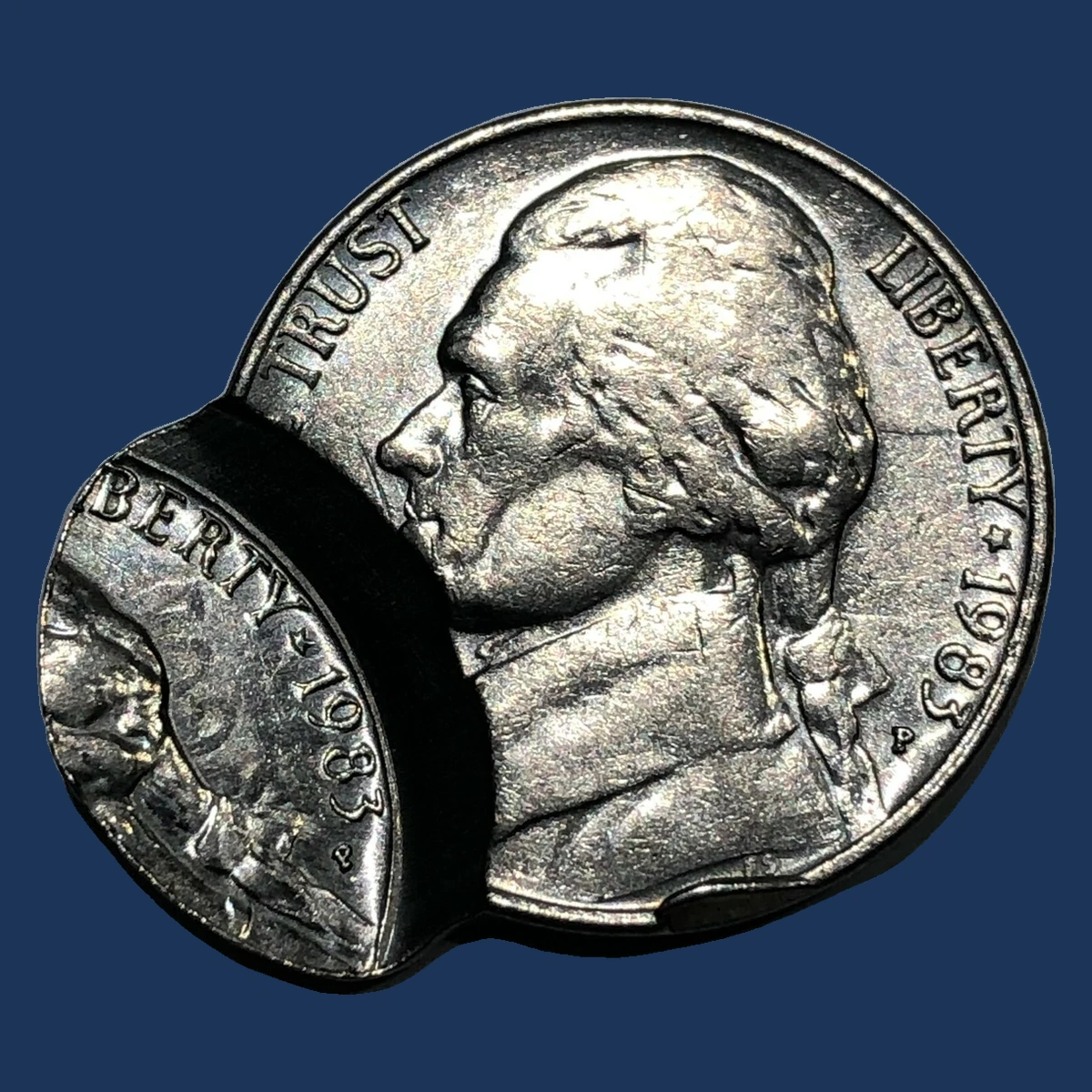
A displaced design leaves part of the metal unstamped while some lettering misses the blank. One 1983-P example is fifteen percent off center toward one o’clock.
Another Philadelphia coin is seventy-five percent off center toward eight o’clock, with a face blocked from receiving design. This additional feature is called a uniface strike.
A year guide also reports a Denver example fifty percent off center. Its percentage belongs to that coin rather than the Philadelphia examples.
The large unstruck area is still metal. A missing edge section instead points to a clip or later damage.
Estimated Value
Estimate $25–$250 for clear ordinary off-center 1983 nickels and $100–$800 for strong examples combined with a blocked face. Date visibility and surface preservation affect the comparison.
A 1999-D sixty-five-percent off-center nickel sold for $75 in September 2024. That individual later-year result shows why displacement alone does not guarantee a high value.
The blocked-face combination needs to retain evidence of the original strike. A face ground smooth after minting receives no comparable premium.
How to Identify
Match the mint letter and displacement to the specific coin before comparing photographs. The fifteen-percent Philadelphia example points toward one o’clock, while the seventy-five-percent Philadelphia example points toward eight.
Use a 10× magnifier to inspect where raised design meets the plain crescent. On the blocked-face coin, inspect both sides rather than assuming which face lacks an impression.
Grinding may leave scratches or faint remnants where a later alteration removed finished detail. Original blocked metal should fit the rest of the striking event.
A scale can compare a loose coin with 5 g, and calipers can document its outline against 21.2 mm. Follow the plain edge for cuts or missing metal, which cannot be explained merely by leaving an area unstruck.
9. 1983 Jefferson Nickel Raised Rim Breaks and an Unusual Grainy Surface
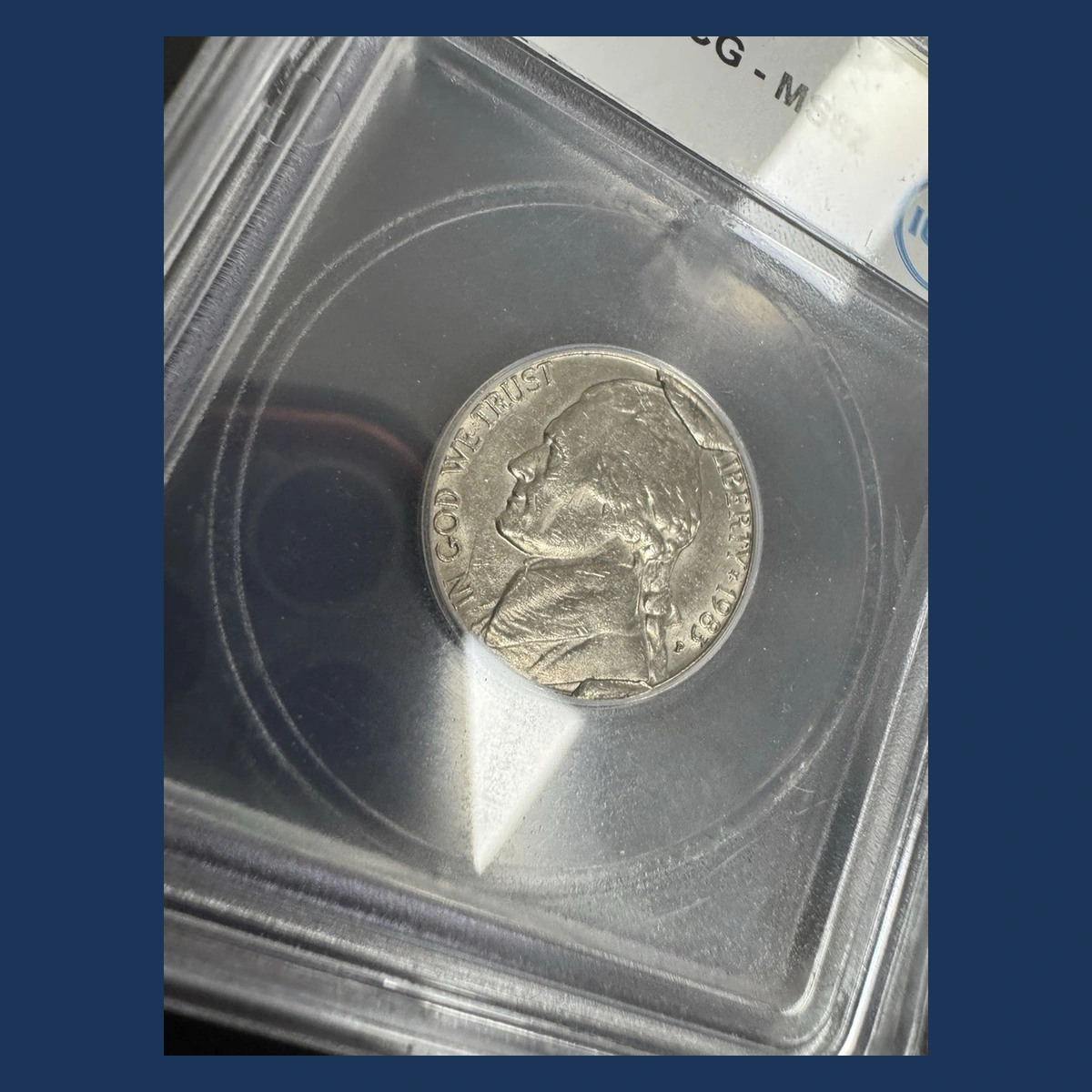
A raised patch joins the rim when part of a stamping tool breaks away. Collectors call this a cud, and several 1983-P examples are recorded.
One unusual coin has a large break across the left half of the front, with smooth depressed spots inside it. Its right half looks grainy, with faint, thin letters.
An expert proposes that a thin layer of tool steel peeled away, called die exfoliation. That explanation remains a proposed cause for this particular surface.
The same unusual coin also has slight front-tool misalignment and a cracked back tool.
Estimated Value
Ordinary recognizable 1983-P cuds can be estimated at $20–$300. A PCGS AU53 example sold for $63 in July 2022, providing a direct worn-coin comparison.
For the documented large-break coin with the unusual grainy surface, allow an estimated $200–$1,500 based on the complete visible combination. That estimate is not a sale record or a premium proving the proposed steel-peeling explanation.
Surface damage and later added metal must be excluded before either range applies.
How to Identify
Inspect the plain edge beside the patch for a dent before calling it a cud. A 10× magnifier should show whether the raised metal naturally replaces design or was folded inward later.
One separately recorded AU58 example has a front break at twelve o’clock. That position does not belong automatically to the older AU50 coin.
For the unusual half-face example, compare the smooth depressed spots within the left break with the grainy right side. Check its faint letters rather than relying on texture alone.
Weigh a loose nickel against 5 g on a scale and measure intact spans near 21.2 mm with calipers. Keep the jaws away from raised or fragile areas.
Leave the surface unchanged for an expert’s inspection. The visible combination can be described without treating proposed steel peeling as an established cause.
10. 1983 Jefferson Nickel Repeated Strikes, Flips, and Backward Impressions
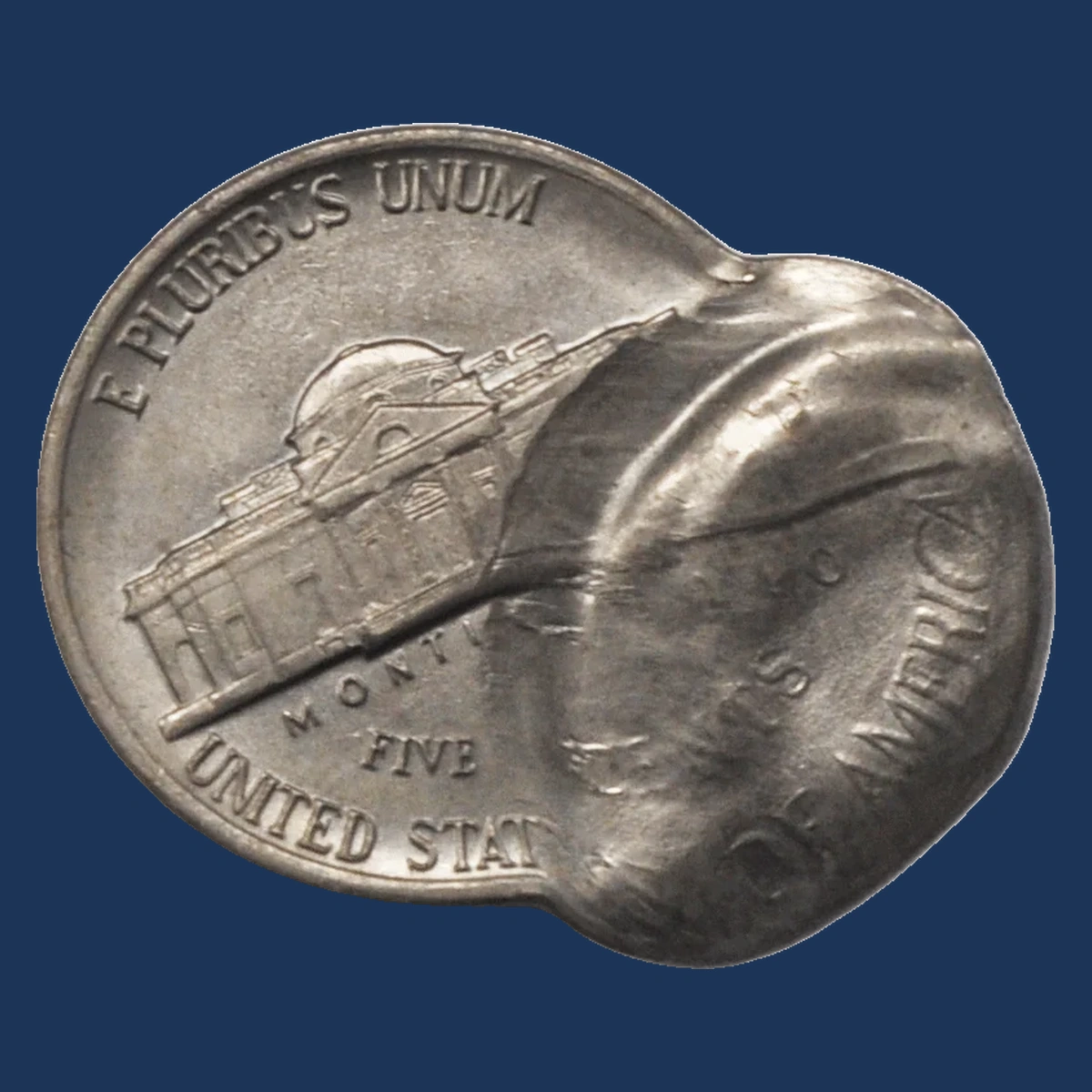
Two impressions can remain after a nickel moves and receives another blow. A recorded 1983-P example has its second strike eighty-five percent off center.
A separate seventy-percent off-center example flipped between blows. That movement places parts of the front and back designs together on the same face.
A dealer also reports an off-center double strike with a back brockage. A brockage is a sunken mirror image made when an already struck coin presses its design into another blank.
The shape of each impression shows which movement or contact happened. Raised overlap differs from a sunken mirror image.
Estimated Value
The eighty-five-percent second-strike example sold for $69 in January 2016. Its NGC MS65 grade describes an attractive unworn coin, showing that a large displacement need not bring thousands.
Estimate $50–$750 for clear ordinary repeated strikes and $300–$2,500 for attractive flipover or brockage combinations. These are estimated ranges for complete coins.
The amount depends on how clearly the impressions can be understood. Later coin-against-coin squeezing is damage, not a genuine Mint brockage.
How to Identify
Separate raised design from sunken design before deciding how the coin moved. Under a 10× magnifier, a flipover strike can leave ordinary raised fragments from both faces together, while a brockage leaves reversed details pressed inward.
For the eighty-five-percent second strike, trace where the newer impression crosses the first. Do not borrow a direction from the separate seventy-percent flipover example.
Check a loose coin’s weight against 5 g on a scale. Calipers can record its changed outline against the normal 21.2 mm width.
Inspect the plain edge and opposite face for later squeezing or cuts. The reported dealer combination needs its own clear contact evidence before its description can be applied to another nickel.
11. 1983 Jefferson Nickel Old Bronze Cent Blanks and a Damaged Dime Blank
Copper-colored nickels can contain leftover bronze blanks from the cent’s earlier metal standard. The Philadelphia example weighs 3.1 g; the Denver example weighs 3.06 g.
Cent production switched from bronze to copper-coated zinc during 1982. An old bronze blank reaching a nickel press in 1983 therefore combines two material mix-ups.
A separate Denver nickel used a dime blank with heat-related damage reported by a specialist. Its bonded outer layers show slits and peeling that expose reddish metal.
That coin is not the same as either bronze example, and its measured weight was not stated.
Estimated Value
The Philadelphia bronze-blank nickel sold for $4,800 on April 24, 2021. The Denver bronze example brought $4,312.50 on August 13, 2010.
Estimate $2,500–$7,000 for authenticated old-bronze examples and $250–$1,500 for the reported damaged dime-blank type. A 1995-P dime-blank nickel sold for $336 in July 2022, a different-year comparison without the same metal damage.
Color alone cannot establish either mistake. Added plating or later heating requires a different assessment.
How to Identify
A scale should distinguish the recorded bronze weights from the 2.5 g standard of a modern zinc cent blank. Compare each mint’s actual measurement separately, using calipers against the normal nickel’s 21.2 mm diameter and 5 g weight.
Through a 10× magnifier, inspect the Philadelphia coin’s cut-off IN GOD WE TRUST. On the Denver bronze coin, the design shifts toward one o’clock and much of STATES OF misses the blank.
The separate dime-blank coin has exposed reddish metal within slits, peeling near the border, and a copper-colored edge. Its normal blank comparison is 2.27 g, not a supplied actual weight.
Check the edge for added plating or artificial damage rather than expecting the nickel’s usual uniform plain edge. Metal testing can help distinguish old bronze, layered dime metal, and altered surfaces.
Conclusion
Estimated values for the 1983 nickel errors discussed range from $10 to $7,000. The bronze cent-blank examples carry a special leftover-material history, while smaller striking mistakes often trade much lower.
Compare each coin with its own documented features. A weak center, a blocked face, and a grainy surface do not automatically share one cause, and measurements from one wrong-blank coin should never be borrowed to describe another.