1802 Cent Error List with Pictures

Look beneath the wreath on an 1802 cent: a fraction reading 1/000 was wrong before the coin ever entered the press. Other mistakes happened later, including a second blow that landed partly outside the copper.
One double-struck example drew a $3,000 winning bid before fees in 2007. This 1802 Draped Bust cent error list covers estimated whole-coin values of $50–$20,000.
Use the checks below to separate engraving mistakes, damaged tools, missing copper, and overlapping strikes.
1. 1802 Draped Bust Cent Small Edge Clip
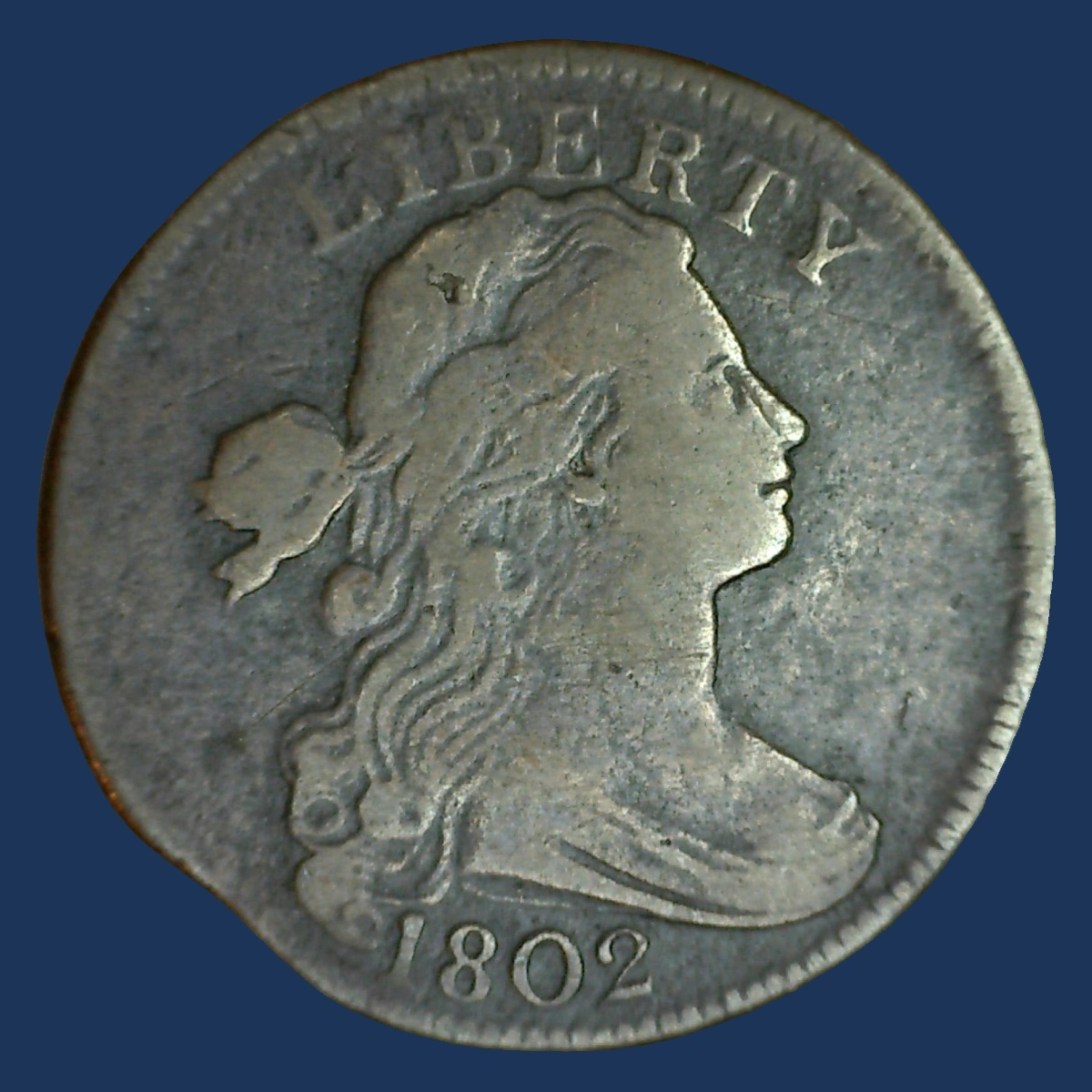
A small piece is absent from the edge of the recorded Stemless cent. It was described as a tiny planchet clip, meaning the metal disc was incomplete before the design was struck.
The Stemless name refers to missing wreath stems in the design. It does not describe the missing copper at the coin’s edge.
A gap added afterward can imitate the shape of a clip but may leave cuts or disturbed border details. The original seller described the coin as Fine, without giving a grading-service certification or a precise clock position for the small edge defect.
Estimated Value
For an authenticated small clip on an 1802 cent, estimate $100–$3,000 across different conditions. A tiny gap may add less than the coin’s Stemless variety and surface quality contribute.
A later 1851 large cent with a minor clip sold for $159 in January 2022 at NGC AU58. That lightly worn, different-series example offers a comparison for a small clip, not a sale price or a certified grade for the reported 1802 Fine coin.
How to Identify
Read the back before examining the gap: missing wreath stems belong to the Stemless design, not to a clipped edge. Compare both features independently under a 10× magnifier instead of assuming that one missing detail explains the other.
A scale may show less than 10.89 grams, but a small clip need not produce a large change. Calipers compare about 29 mm across intact copper, and the remaining edge should be plain rather than filed or folded.
Beside a genuine clip, struck border details may weaken naturally as copper flows toward the gap. Turn the coin over as well: fresh cut surfaces or tool marks on either face can reveal later removal of the copper.
2. 1802 Draped Bust Cent Clash Marks
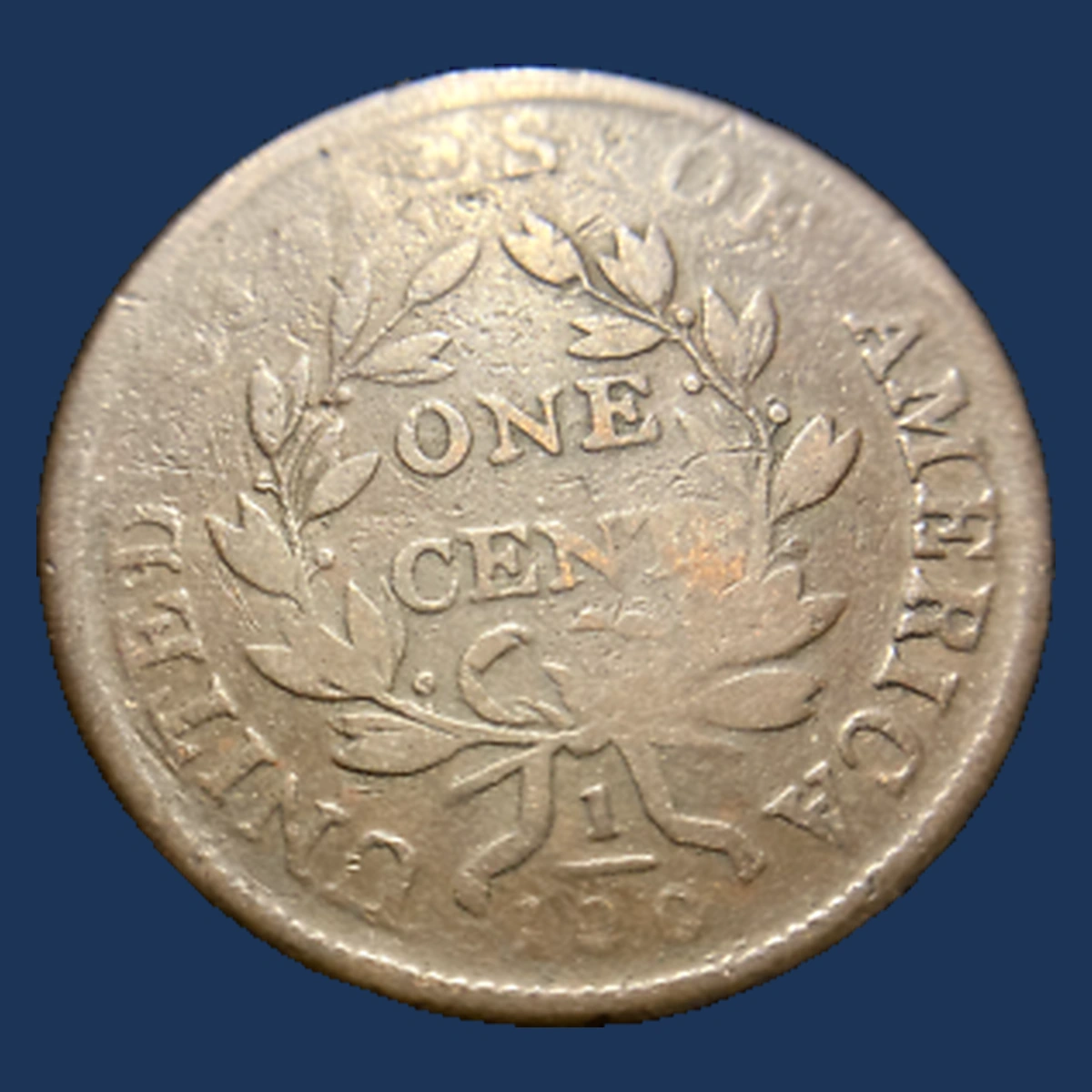
A small part of the wreath can appear below Liberty’s chin on the S-227 variety. The mark came from the two steel stamping tools touching without a copper disc between them.
Those tools are called dies. Their damaged surfaces passed traces of the opposite design onto later coins.
A different 1802 variety, S-232, shows sunken tooth-like impressions between the wreath and AMERICA. These marks should not all be described as raised lines, and their regular shapes help distinguish them from random scratches or pitting across the back of a heavily worn cent.
Estimated Value
The S-232 example graded NGC AU58, with sunken tooth marks and a rim cud, sold for $1,611.15 in March 2004. That was a whole-coin price for strong preservation and several features.
Estimate $50–$4,000 for worn through nearly unworn 1802 cents with recognizable clash marks. Small, faint traces can add little, while original surfaces help preserve their shape; do not add another full price because the same coin also has a rim break.
How to Identify
Start with the variety’s expected location. S-227 calls for a wreath comparison below the chin, while S-232 calls for the small sunken shapes between AMERICA and the wreath.
Photograph both faces at the same scale. The extra mark should relate to the opposite design, rather than resemble an arbitrary line through the copper.
Light the area from several directions under a 10× magnifier; sunken tooth marks should not be rejected simply for being below the surface. For a loose coin, a scale checks 10.89 grams and calipers check about 29 mm, followed by inspection of the plain edge.
Move the light again if a shadow seems to join separate marks into one continuous scratch.
3. 1802 Draped Bust Cent Cracks and Raised Rim Breaks
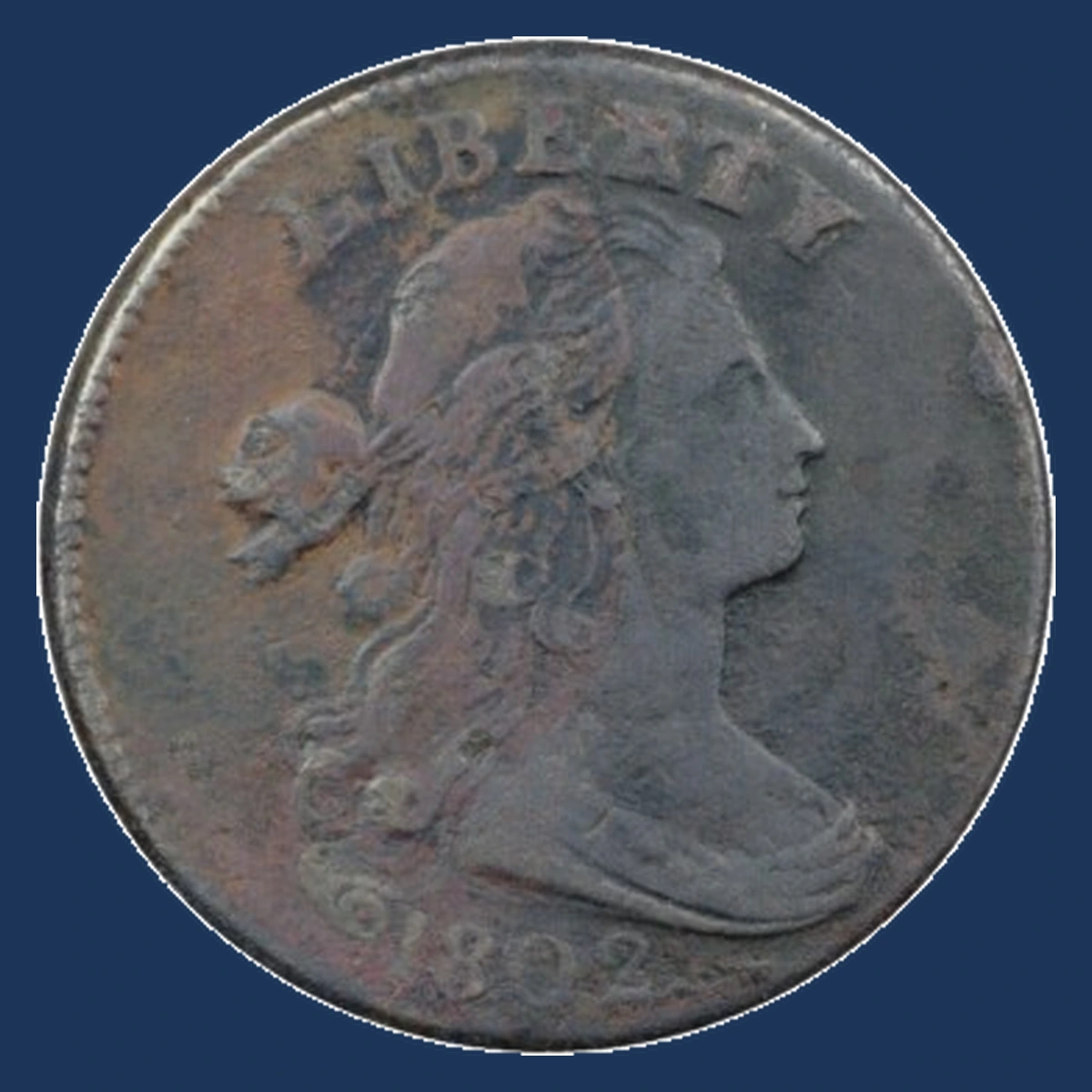
A raised line or enlarged break near B in LIBERTY marks damaged steel on some 1802 cents. Copper entered the opening in the tool and copied it as a raised feature.
On S-232, a substantial raised patch joins the back rim above AT in STATES. That rim-connected break is called a cud.
These locations belong to different examples, not one required pattern on every 1802 cent. A thin crack and a larger missing tool section are related failures, while a gouge cut into a finished coin removes metal instead of copying an opening in the stamping tool.
Estimated Value
A PCGS VG10 S-232 with the cud above AT sold for $244 in September 2026. A much sharper NGC AU58 example brought $1,611.15 in March 2004.
Use an estimated $75–$6,000 across readable cracks and substantial authenticated rim breaks in varied conditions. These are whole-coin values, not premiums to add to an ordinary price; the back cud’s results also do not establish a price for every different break near LIBERTY.
How to Identify
Check the rim connection first if the claim is a cud. On the recorded S-232 coins, the raised patch lies directly above AT in STATES rather than floating inside the wreath.
A 10× magnifier helps reveal whether the patch is original copper or attached material. Look along the plain edge for a seam or an impact that pushed metal inward.
For a loose coin, compare 10.89 grams on a scale and about 29 mm with calipers.
A separate front break near B requires its own matching photograph. Keep the whole word LIBERTY in view so a scratch elsewhere cannot be mistaken for the recorded break.
An edge hit may flatten nearby lettering as well as push up a lump.
4. 1802 Draped Bust Cent Wrong Fraction and Missing Wreath Stems
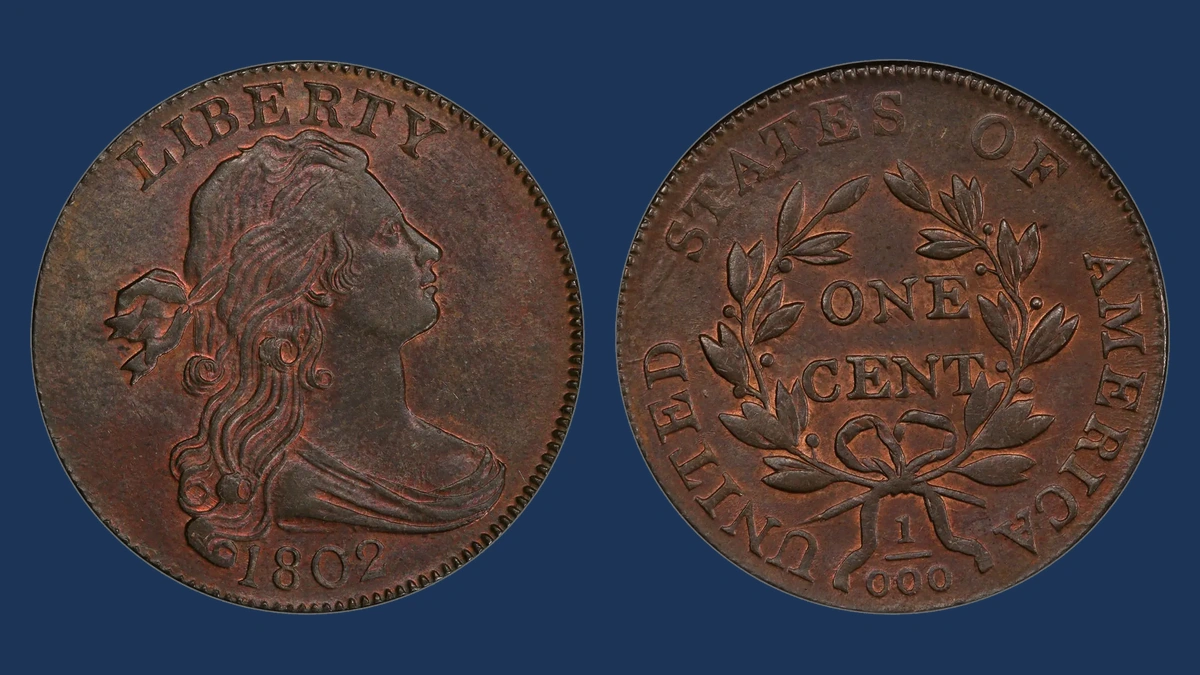
Three zeros appear beneath the fraction bar on S-228 cents, making 1/000 instead of the intended 1/100. The mistake was cut into the stamping tool and repeated on coins made from it.
Another 1802 back omits both wreath stems and shows two fraction bars plus a repeated final S in STATES. These are a separate combination of engraving features.
The word ONE CENT still states the coin’s denomination. Neither the meaningless fraction nor the missing stems changed its spending value, and neither requires the coin to have received a second strike in the press.
Estimated Value
Estimate $100–$10,000 for identified 1802 engraving-error varieties, with the exact back design and condition affecting the whole price. The fraction error alone does not place a worn cent in the upper tier.
For same-year condition context, an NGC AU58 S-232 with a different back design and a rim break sold for $1,611.15 in March 2004. That comparison is not a sale of S-228 or the Stemless combination, whose features must be matched separately.
How to Identify
Read the fraction in good light before deciding that a missing stroke is a zero. A worn 1 may fade, whereas a genuine 1/000 has the recorded three-zero pattern beneath its bar.
Use a 10× magnifier and an identified S-228 photograph. For the Stemless back, inspect both wreath-stem positions, the double bar, and the final S together.
Calipers compare a loose coin with about 29 mm; a scale compares 10.89 grams. Its edge should be plain, without a seam or signs of extensive reworking.
Look around the fraction for fresh engraving cuts. Wear can erase the tiny stem ends, so absent stems alone should not decide the identification on a heavily worn coin.
5. 1802 Draped Bust Cent Bent Pin Impression
A bent line ending in a rounded head can record a pin caught between the copper disc and a stamping tool. The pin blocked the normal design and left its own shape in the metal.
The recorded 1802 example belongs to the American Numismatic Society collection. The early reference describes a bent pin about thirty-three millimeters long.
That measurement describes the pin, not the coin’s diameter. The error does not require the pin to remain attached today, and a later scratch or a private punch mark should not be mistaken for an object impressed during the original strike.
Estimated Value
For an authenticated 1802 cent with a clear pin impression, estimate $500–$10,000. This is an estimate for comparable coins, not a claimed sale or appraisal of the museum’s specimen.
An 1843 large cent with a thread impression was offered at $890 as MS64 Brown. That is a dealer asking price for a different object and date; a pin’s distinct round head and bent outline need their own assessment alongside wear and surface quality.
How to Identify
Follow the bent outline to its rounded end under a 10× magnifier. A random scratch that merely curves does not reproduce both parts of the object.
Compare the affected design with nearby normal detail: it should show how the object blocked the blow.
Fresh cut marks or a punched letter suggest a later addition instead. The normal copper cent is about 29 mm across and 10.89 grams, which calipers and a scale can check on a loose coin.
Inspect the plain edge for other damage without probing the impression. Do not use thirty-three millimeters as the required coin diameter.
Photograph the depression from different lighting angles; do not rub or polish it to expose its outline.
6. 1802 Draped Bust Cent Overlapping Disc Impression
A smooth curved area can interrupt the design where a second disc overlapped the coin. The edge of that disc left one curved boundary, while the coin’s own edge forms the other.
This lens-shaped impression is called an indent. It forms when two prepared metal discs, or planchets, enter the press together and prevent part of the design from reaching one surface.
The American Numismatic Society’s recorded 1802 example belongs to this group. Unlike a brockage, the smooth overlapping area does not need a sunken mirror image of letters or a portrait inside it.
Estimated Value
Estimate $500–$12,000 for authenticated 1802 indents, with a clear boundary and attractive copper surfaces supporting stronger interest. This is a comparison estimate, not a transaction involving the museum coin.
An 1810/09 cent with an overlapping-disc effect and an off-center second strike sold for $2,520 in January 2022. That later compound error shows the appeal of a recognizable overlap, but its extra strike and different date prevent treating it as an identical 1802 example.
How to Identify
The smooth area should fit the edge of another round disc, rather than have the jagged outline of a missing copper flake. Study its boundary with a 10× magnifier without scratching or pressing the surface.
Use a scale and calipers on a loose coin to compare 10.89 grams and about 29 mm. An indent changes the shape locally but does not automatically remove a piece of the coin.
Inspect the plain edge for later bending or squeezing. A depression made after striking may flatten existing design differently from an area blocked during the blow.
A genuine smooth overlap can lack mirror lettering entirely. If backward letters do appear inside it, compare that feature with a brockage instead.
7. 1802 Draped Bust Cent Repeated Strikes and Mirror-Image Impressions
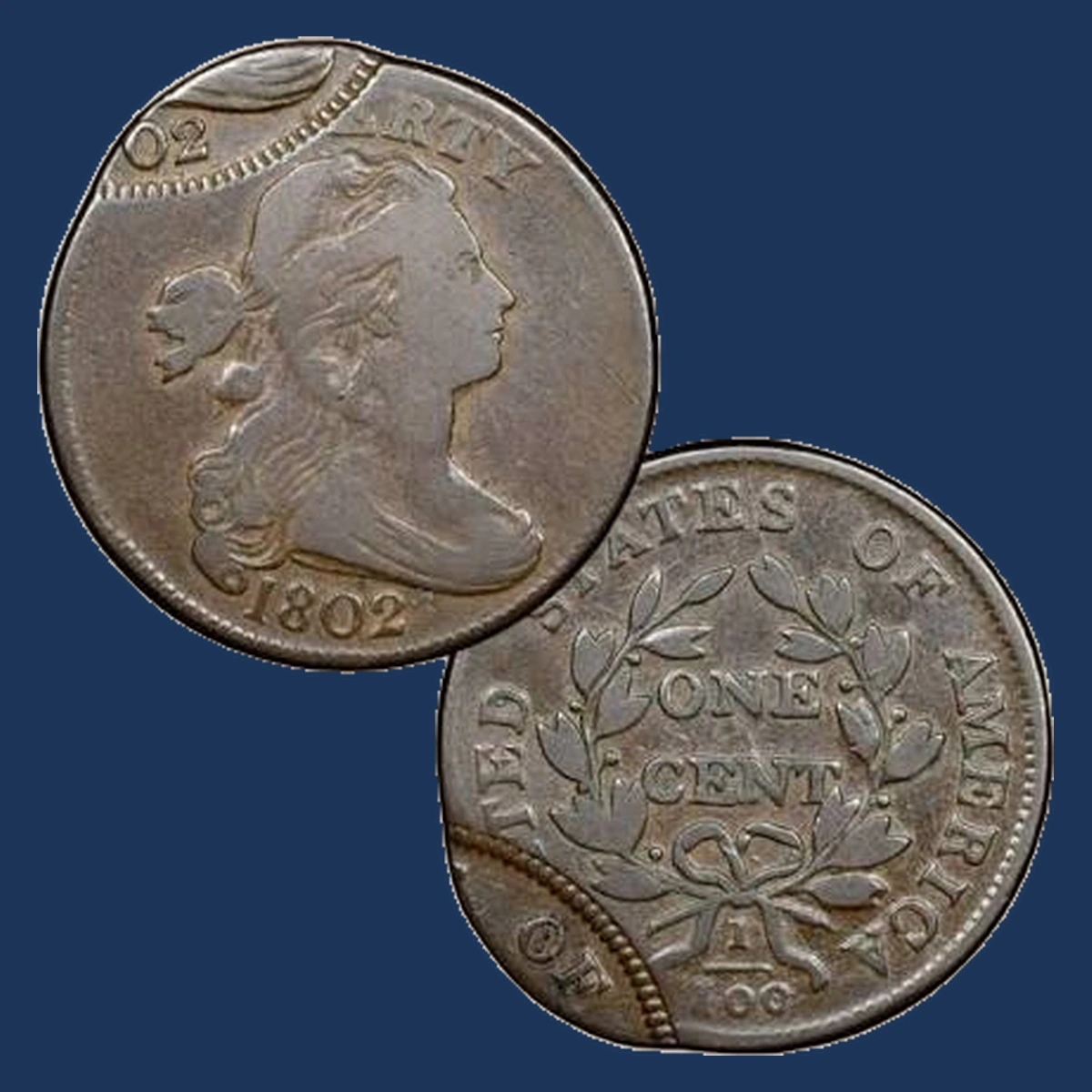
Repeated wreath leaves nearly a millimeter apart reveal two blows on the S-228 AU53 example. An arc of impressed border teeth also crosses its hair.
Another coin, S-227, received a second strike fifteen percent off center with its back blocked. Its first back design survives; the whole face is not blank.
A different recorded 1802 coin was flipped and struck over a partial brockage, a sunken mirror image transferred by another coin. Raised later detail and surviving mirror detail must be read together, rather than treating every doubled outline as the same kind of strike.
Estimated Value
The NGC VF30 coin with an off-center second strike drew a $3,000 winning bid before fees in 2007. Its blocked back is part of that same accident.
Estimate $500–$20,000 across clear double strikes and more complex brockage overstrikes. As a different-year comparison, an 1819 cent with partial brockage and an off-center strike brought $5,175 in November 2010; neither result is a claimed sale of the 1802 historically recorded brockage example.
How to Identify
Choose the visible type of repeated design before comparing prices. On the S-228 example, inspect the hair’s impressed teeth and separated wreath leaves with a 10× magnifier.
For the S-227 coin, compare the displaced second front impression with the back where that blow was blocked. Keep the earlier back design separate from the missing second impression.
A flipped brockage overstrike requires both raised normal detail and surviving sunken mirror detail. Do not identify it from two raised outlines alone.
A separate single-strike example was recorded fifteen percent off center toward one o’clock; that direction does not describe every doubled coin.
On a loose coin, use a scale and calipers against 10.89 grams and about 29 mm. Check the plain edge for a join, crushing, or other later alteration.
Conclusion
Read the fraction and wreath first, then decide whether the unusual feature came from engraving, a damaged tool, or an accident in the press. A tiny clip, a pin impression, and a mirror-image overstrike require different checks.
Estimated whole-coin values range from $50 to $20,000. Keep each specimen’s features together, and price a compound error as one coin rather than adding separate full values for every visible effect.