1832 Cent Error List with Pictures

LIBERTY beside the face can reveal a second strike on an 1832 penny. A curved gap in another example instead began before the first blow.
This 1832 Coronet Head cent error list separates those stories across estimated whole-coin values of $30–$7,500. For price context, an unworn 1836 cent with a cud and crack brought $2,040 in August 2020.
That is a different-year comparison, not an 1832 auction result. Read below to match the visible feature before choosing a price range.
1. 1832 Coronet Head Cent Peeling Layers in the Copper
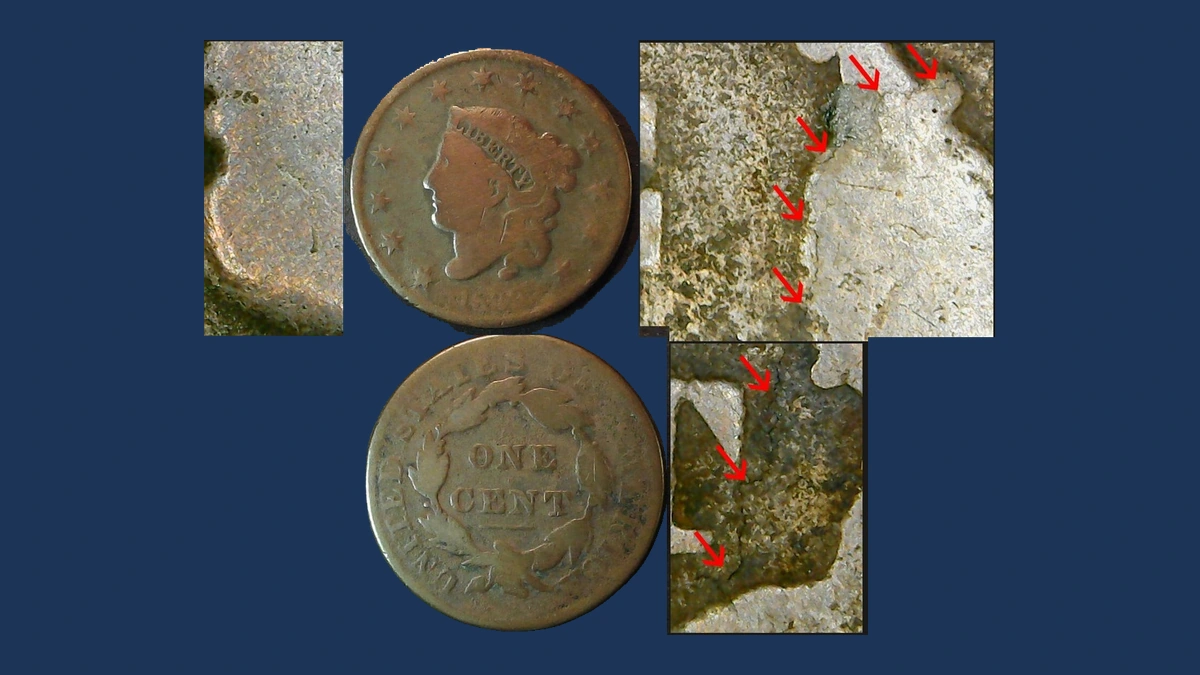
The surface can open along a thin layer within the copper. A partly attached flap or a shallow peeled patch may expose where that weak layer separated.
Collectors call this lamination. It concerns the coin’s metal, rather than a line copied from a cracked stamping tool.
This is a reported possibility for 1832 large cents without a particular specimen identified here. An actual example needs visible layer separation before this estimate applies.
The fault does not mean the entire coin split into two halves. Corrosion, scraping, and deliberate bending can also disturb the surface, but they leave different evidence.
Estimated Value
For an authenticated 1832 lamination, estimate $30–$2,500, including the underlying cent’s value. The range covers worn pieces and better-preserved coins with a recognizable layer fault.
A later 1839 cent with two front laminations brought $600 before the buyer’s fee in January 2026. Its auction grade was AU50, describing light wear.
That comparison does not establish an 1832 sale. A large missing layer can remove attractive detail, so greater damage does not automatically mean a higher price.
How to Identify
Examine a suspected flap without bending or lifting it. Use a 10× magnifier to follow the opening from the intact surface into the separated area.
Light from the side can show whether a layer lies above another piece of copper. A groove sliced across the surface needs a different explanation.
For a loose coin, use a scale and calipers to compare 10.89 grams and roughly 28 millimeters. Check the plain edge, especially where a surface opening approaches it.
An attached flap may leave the weight near normal. Missing copper can lower it, but weight alone cannot distinguish peeling from corrosion or later removal.
Look for a continuous thin layer rather than scattered rough pits.
2. 1832 Coronet Head Cent Curved Clipped Blank
The round outline is interrupted by a curved missing piece. This can happen when the blank-cutting punch overlaps a hole already cut in the copper strip.
The incomplete blank then receives the cent design. The gap existed before the coin was struck, rather than being cut from a finished penny.
GreatCollections offered an 1832 example in September 2025, graded ANACS Fine 15 with substantial wear. Its listing records a weight of 10.65 grams.
The curved shape needs its own edge evidence. A later cut can imitate the outline, and the recorded weight does not establish the clip’s clock position.
Estimated Value
The September 2025 collection catalog identifies the 10.65-gram 1832 clip without a public price used here. Estimate $75–$3,000 for authenticated examples across different sizes and conditions.
For comparison, an unworn 1852 clipped large cent graded NGC MS63 Brown sold for $384 in June 2024. Its preservation differs considerably from Fine 15.
Keep the date, edge quality, and wear in view when comparing prices. Low weight by itself does not qualify a cut coin for this range.
How to Identify
The recorded 10.65 grams is slightly below the normal 10.89-gram standard. For a loose coin, use a scale to measure it, rather than assuming every curved clip has that weight.
Use calipers across intact spans to compare roughly 28 millimeters. Measuring through the gap would make the whole coin seem misleadingly small.
Under a 10× magnifier, inspect where the struck rim approaches both ends of the missing section. The design and border should fit a blank that already lacked that copper.
Look directly at the curved edge for filing, saw marks, or a clean cut through finished detail. Check the remaining plain edge too; a similar silhouette can conceal a very different history.
3. 1832 Coronet Head Cent Raised Cracks and Rim Cuds
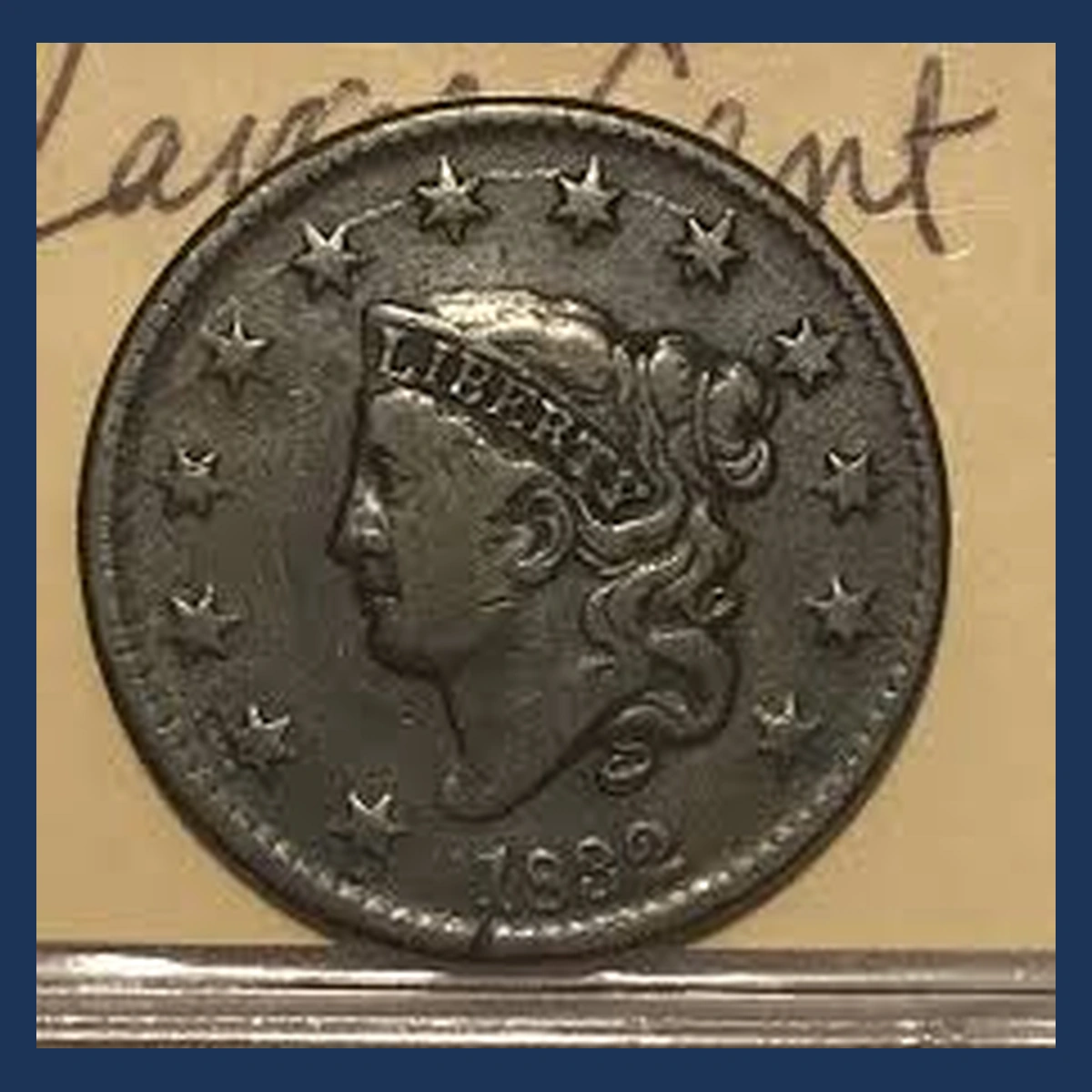
A fine ridge can cross otherwise normal letters or open space. During striking, copper entered a crack in the die, the steel tool that stamps the coin.
The finished cent copied that opening as a raised line. Several coins made from the same cracked tool can share its path.
A larger piece breaking away at the tool’s edge can produce a raised rim patch called a cud. The 1832 reports include both cracks and cuds without assigning one location to every example.
Cracks need not add value. A scratch cut into a finished coin is a separate form of damage.
Estimated Value
An unworn 1836 cent with a front cud and back crack sold for $2,040 in August 2020. PCGS graded it MS65 Brown, indicating relatively few marks on brown surfaces.
For 1832 tool cracks and cuds, estimate $30–$5,000 across worn minor examples and attractive coins with distinct breaks. The 1836 comparison values a complete coin of another date.
A thin line and a broad rim patch have different visual appeal. Neither should receive an automatic fixed premium simply for being mint-made.
How to Identify
Compare the suspected mark with a normal area of the same coin under a 10× magnifier. Tilt the light to determine whether it rises above the surface or cuts into it.
A scratch may have narrow raised lips, but its central groove remains sunken. A tool crack instead leaves a raised ridge along the actual line.
For a loose coin, use a scale against 10.89 grams and calipers against about 28 millimeters. Inspect the plain edge for added metal or a folded section.
If the feature is a broad patch, follow its border to the rim. A true cud must connect there; an isolated interior bump needs a different description.
4. 1832 Coronet Head Cent Second Strike over an Off-Center First Impression
Traces of an earlier LIBERTY sit beside the portrait instead of remaining only on the headband. A stray star appears near eight o’clock, with extra ICA from AMERICA near nine o’clock on the back.
These details belong to an 1832 Medium Letters cent graded PCGS Fine 15. Its first strike was off center before another blow formed the main design.
The catalog called it double struck in collar, referring to the surrounding ring used during striking. The description also recognized the displaced first impression.
Both observations describe one event. The extra letters are not thick edges on the final lettering.
Estimated Value
Estimate $500–$7,500 for identifiable 1832 double strikes, depending on wear and the surviving earlier design. The documented Fine 15 example appeared at Heritage in November 2004.
An unworn 1881 Indian cent graded PCGS MS64 Brown brought $1,880 in August 2013 for its double strike. That smaller bronze coin offers price context for the worn 1832 copper example.
One coin received both blows. Do not add a separate off-center price to the full double-strike estimate.
How to Identify
Find a readable piece of the earlier design before judging the crowded portrait. On the Heritage example, use extra LIBERTY near the face and the star at eight o’clock as starting points.
For a loose coin, use a scale to compare 10.89 grams and calipers to record its outline against roughly 28 millimeters. Check the plain edge for a seam or later crushing.
Turn to the back and locate the earlier ICA near nine o’clock with a 10× magnifier. Its position should fit a separate earlier impression, not random dents.
Photograph the overlap as well as each full face. Follow how the later design covers the earlier letters while recognizable parts remain.
Conclusion
The extra LIBERTY and stray star on the double strike record one coin’s movement through two blows. A clipped edge records missing copper, while a peeling layer or raised ridge points elsewhere.
Whole-coin estimates range from $30–$7,500. Compare the actual fault and preservation together, keeping later-date auction examples separate from an 1832 sale.
Medium and Large Letters are normal back designs. Letter size alone does not make either version an error.