1831 Cent Error List with Pictures

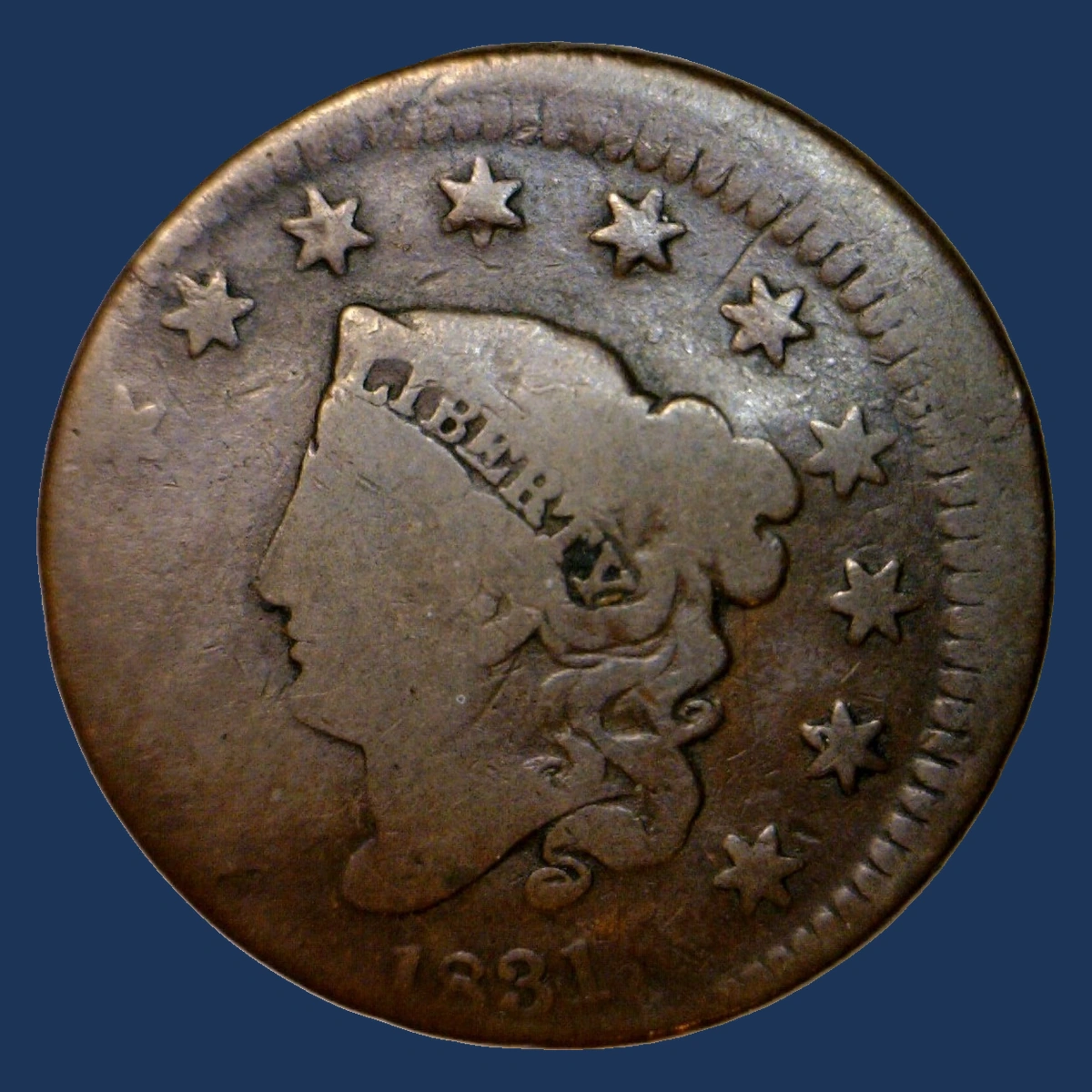
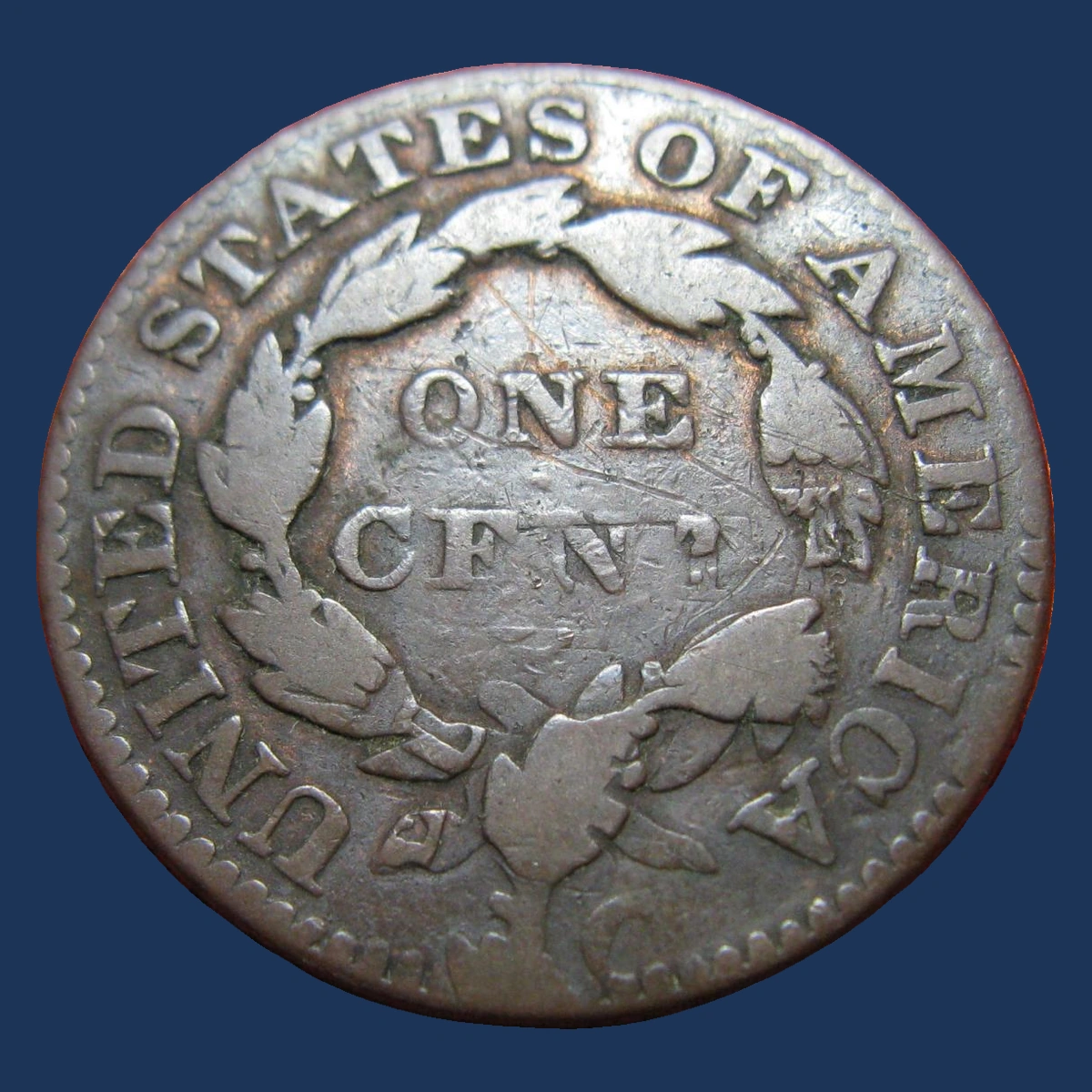
A blank back and a back with sunken, reversed detail tell different stories. Both appear among reported 1831 large-cent errors, alongside raised rim breaks and displaced strikes.
A well-preserved 1831 cent with a rim break brought $2,340 in September 2020, including its value as an attractive old coin. This 1831 Coronet Head cent error list covers estimated whole-coin values of $25–$20,000.
Follow the sections below to see which clues point to missing metal, damaged stamping tools, or an extra strike.
1. 1831 Coronet Head Cent Die Clash — Estimated Up to $600
A faint outline from the opposite face can appear in an unexpected place. The stamping tools, called dies, can hit each other when no metal disc is between them.
That contact damages their surfaces. Later coins can then carry traces of a design that belongs on the other side.
A clash is reported for the 1831 N-6 variety. Identifying it requires a shape that actually matches the opposite design; a random raised line, scratch, or streak in the copper does not become a clash simply because it looks unusual.
Estimated Value
For ordinary circulated examples with a clear clash, estimate $25–$600. The design match and the coin’s condition matter more than the number of faint stray lines.
A much later 1857 Flying Eagle cent with a quarter-dollar clash sold for $1,380 in 2006 at NGC MS62. That unusual cross-denomination clash is more distinctive than an ordinary same-design clash, so it serves only as a broad comparison and not a direct price for 1831 N-6.
How to Identify
Compare the suspected mark with the opposite face before deciding what caused it. A clash should have a recognizable relationship to part of that other design.
Try the comparison at the correct coin alignment and scale. Random scratches often seem meaningful when photographs are enlarged by different amounts.
Use a 10× magnifier to distinguish raised transferred lines from cuts. Inspect the plain edge, then compare 10.89 grams and approximately 28 mm using a scale and calipers.
Check an identified N-6 example rather than assuming all 1831 cents show the same marks. Find a specific opposing design outline that fits the mark’s shape and position.
2. 1831 Coronet Head Cent Minor Struck-Through Error — Estimated Up to $800
A small area may look recessed or lack detail that is clear nearby. Material between a stamping tool and the copper can prevent the design from forming normally.
This is a struck-through error. Minor examples are reported for 1831, but the mark alone does not identify the material that caused it.
A sharp dent made after the coin left the Mint can look similar. The surrounding copper must show that the interruption formed during striking, rather than from a later blow, scraping, or corrosion that removed the design.
Estimated Value
An estimated $30–$800 suits authenticated minor struck-through examples in varied condition. A small faint mark may add little; a clear shape with undisturbed surrounding copper is more desirable.
For a later comparison, a 1947 cent with retained scrap and ANACS XF40 detail sold for $324 in March 2023. Retained material makes that example easier to demonstrate, so its price should not be transferred unchanged to a small 1831 impression with no material remaining.
How to Identify
Place the coin beside a normal 1831 cent and find exactly which detail is interrupted. Do not identify the trapped material from a vague shape alone.
At 10×, look for displaced copper around the mark. A sharp raised lip can indicate a later impact rather than material blocking the strike.
For a loose coin, compare its weight with 10.89 grams and its diameter with about 28 mm using a scale and calipers.
Inspect the plain edge for damage that continues onto the face.
Follow the normal struck surface into the affected area; a natural interruption without fresh cuts or pushed metal supports a struck-through explanation.
3. 1831 Coronet Head Cent Two Small Clips — Estimated Up to $1,000
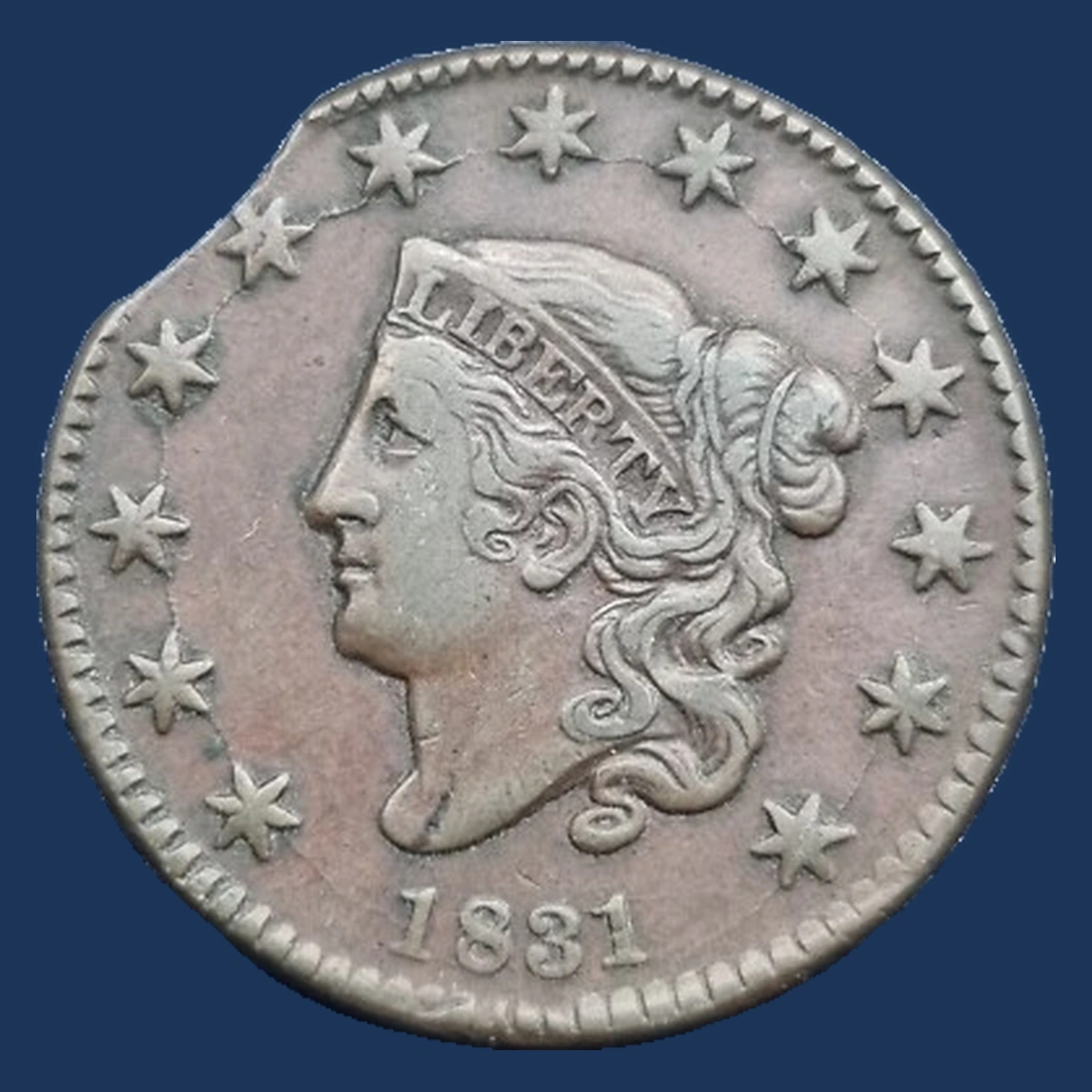
Two separate pieces of the edge are missing on the reported example. These are described as small clips, formed before the metal disc was struck into a coin.
Their exact locations and shapes need to be judged on the actual piece. Two gaps do not automatically mean two curved bites or establish any particular clock positions.
The rim and design should have formed naturally beside each missing area. Later cutting can remove metal from two places as well, so the count of gaps alone does not establish a mint-made error.
Estimated Value
For genuine small double clips, estimate $80–$1,000 depending on wear, surface quality, and the clarity of both gaps. Very small losses may have less visual appeal than one larger, unmistakable clip.
A much later 1939 clipped cent graded MS64 Brown sold for $180 in January 2023. That result supplies a basic clip comparison, while the 1831 copper cent’s age and condition affect its whole-coin price; it does not establish a sale for the reported two-gap example.
How to Identify
Examine each gap separately rather than accepting the pair as one proof. Under a 10× magnifier, follow the rim into both ends of the first gap, then repeat at the second.
File marks, sharp cut faces, or fresh exposed copper can point to later removal. Weakness opposite a gap can help, but wear also softens the rim.
Use calipers across intact portions of the roughly 28 mm disc. Compare its measured weight with 10.89 grams on a scale, allowing for wear and the missing copper.
Inspect the remaining plain edge between the gaps. Both missing sections need natural struck-rim transitions, not merely a low combined weight.
4. 1831 Coronet Head Cent Lamination — Estimated Up to $1,500
A loose layer or an irregular opening can reveal a weakness inside the copper. When part of that layer peels away, the resulting flaw is called lamination.
An example is reported on the 1831 Medium Letters design. The lettering size is a normal variety feature, not the cause of the metal separating.
A dark patch alone is not enough. The coin needs a visible layered boundary or exposed inner surface, and a local peel should not be described as an entire coin split without evidence of that larger separation.
Estimated Value
For a genuine surface-layer flaw, use an estimated $30–$1,500. Loose retained copper can make the cause clearer, but extensive damage may still reduce the coin’s overall appeal.
An 1842 large cent with a small border-layer flaw brought $750 in September 2021. It had unworn detail and a flaw noted on its label, making it a useful nearby-series comparison; that result is not a recorded sale of the reported 1831 Medium Letters example.
How to Identify
Avoid lifting any loose copper. First decide whether the feature is actually a separating layer rather than a stain or rough corrosion.
With a 10× magnifier, follow the edge of the opening into intact surface. A scraped area may instead show tool marks cutting across the surrounding design.
On a loose coin, weigh against the normal 10.89 grams if handling will not disturb the layer.
Keep caliper jaws on intact areas when comparing the diameter with about 28 mm. Inspect the plain edge for a separation that reaches it.
Find the thin layer boundary itself; a change in color without physical separation does not identify lamination.
5. 1831 Coronet Head Cent Rotated Dies — Estimated Up to $2,000
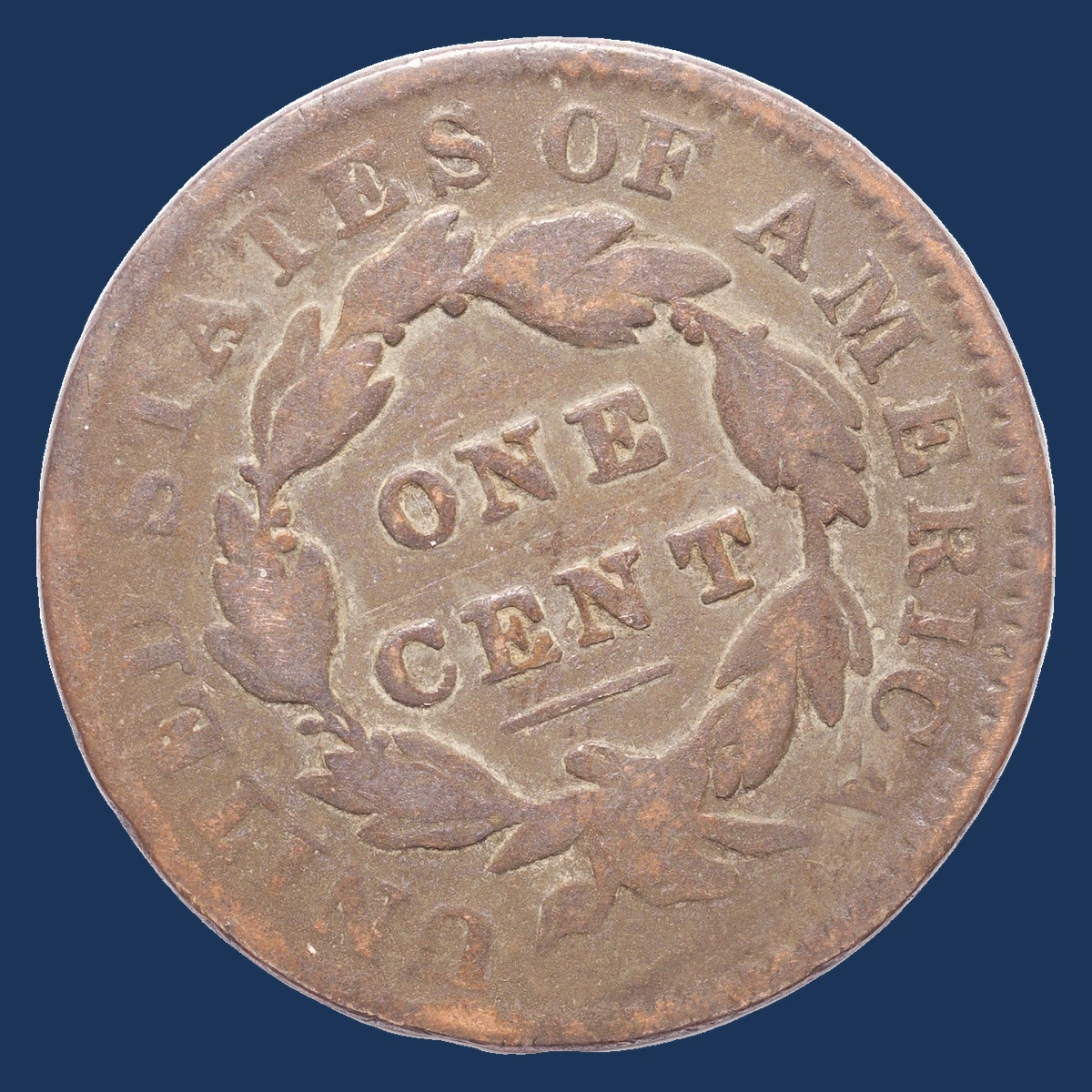
The back tilts slightly left when this 1831 N-3 cent is turned over on a fixed axis. Its auction description records about 15 degrees of counterclockwise rotation.
The two stamping tools were set at slightly different angles. Nothing has to be missing from the design for this error to occur.
The documented coin carried a PCGS MS64 Brown grade, while the auctioneer used a more conservative AU55 assessment. That grading difference affects how its price is compared, but both descriptions concern the same coin and its modest back rotation.
Estimated Value
The documented N-3 coin sold for $920 in 2010. Its preserved surfaces and detail contributed substantially to that amount, so the result is not a $920 premium for fifteen degrees of rotation.
Estimate $30–$300 for ordinary circulated cents with a similar mild tilt, or roughly $500–$2,000 for better-preserved examples. Keep the whole coin’s grade and surface quality in view when comparing a small alignment error with this auction specimen.
How to Identify
Check whether the coin is sitting crooked in its holder before using the holder as a guide. The design, rather than the plastic, must establish upright.
Hold the portrait and lettering upright, then turn the coin top to bottom without a sideways twist. For this example, the back should finish about fifteen degrees counterclockwise from upright.
A scale and calipers can check a loose coin against 10.89 grams and about 28 mm. Use a 10× magnifier on the plain edge to exclude joining or other alteration.
Repeat the turn using the same fixed vertical line. The same small leftward tilt must return consistently, rather than appearing only in one angled photograph.
6. 1831 Coronet Head Cent Die Cracks and Rim Cuds — Estimated Up to $3,000
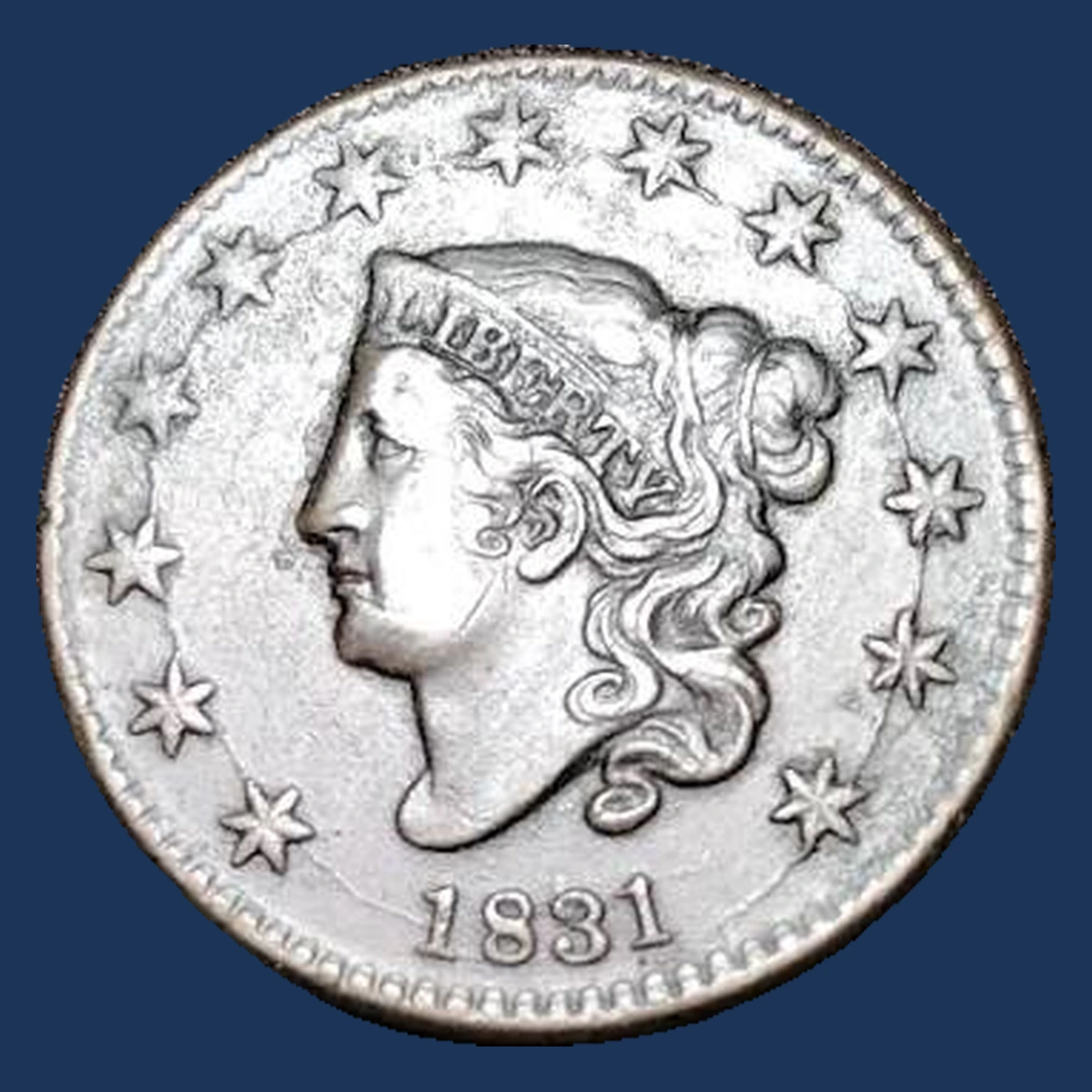
A broad raised patch joins the rim when part of a stamping tool breaks away. This rim-connected feature is called a cud.
On 1831 N-12 cents, a front break develops near five o’clock around stars twelve and thirteen. A raised crack can also run through the date and stars toward the border teeth.
The N-11 variety shows a different back break from TES toward the rim. These locations belong to separate varieties, while thin cracks and larger raised patches reflect different stages of damage to the steel stamping tools.
Estimated Value
An estimated $30–$3,000 covers small cracks through pronounced cuds, with condition strongly affecting the whole price. Thin lines on worn cents may add little.
A separate 1831 N-2 cent with a rim cud near star eleven brought $2,340 in September 2020 at PCGS MS63 Brown. Its strong preservation explains much of that result; the same-year comparison should not be mistaken for either the N-11 or N-12 example described above.
How to Identify
Choose the face before following a nickname: N-12 is checked near the lower-right front stars, while N-11 is checked beside TES on the back. A cud must actually reach the rim.
Under a 10× magnifier, trace that connection and look for raised copper rather than a dent. Added metal and a rim folded onto the design can create false lumps.
Compare the normal 10.89 grams and roughly 28 mm using a scale and calipers on a loose, safely handled coin. Examine the plain edge at the patch, then follow the original raised boundary into the correct N-11 or N-12 design area.
7. 1831 Coronet Head Cent Partial Brockage — Estimated Up to $3,000
Part of the surface carries a reversed design pressed below the surrounding copper. This occurs when an already-struck coin contacts a fresh disc during a strike.
The raised features of the first coin press into the second one. Collectors call that sunken, mirror-image transfer a brockage.
An 1831 Large Letters example graded ANACS Good 6 appeared in a Heritage error auction. Because the effect is partial, it should not be described as an entirely mirrored face or confused with the separate 1831 coin whose whole back is blank.
Estimated Value
The ANACS Good 6 example sold for $159 on December 18, 2023. This is a price for a heavily worn partial brockage, rather than a complete mirrored impression on an unworn coin.
Use an estimated $150–$3,000 range for varied genuine partial brockages. Larger recognizable impressions, readable dates, and better surfaces can increase interest, while wear that leaves only faint traces can keep a coin near the lower end.
How to Identify
Change the light across the unusual impression to see whether it sinks into the copper. The direction of the design matters too: a brockage is reversed, not simply a second upright raised image.
Compare it with the matching normal design under a 10× magnifier. A later coin pressed against another coin can also leave an impression, so inspect nearby metal for crushing.
The plain edge should not show squeezing that explains the whole mark.
Check a loose coin on a scale against 10.89 grams and with calipers against about 28 mm. Find a recognizable sunken, reversed design formed within otherwise naturally struck surfaces.
8. 1831 Coronet Head Cent Uniface Blank Back — Estimated Up to $4,000
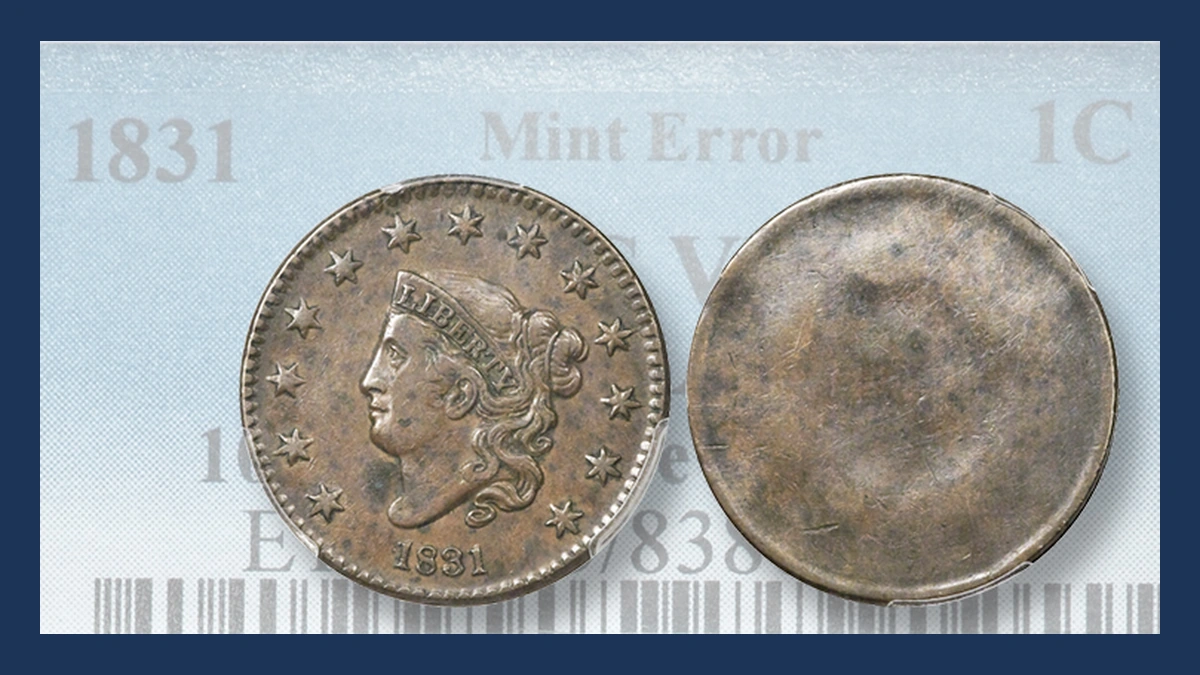
The front has a normal portrait and readable date, but the entire back lacks its usual design. The documented example is graded PCGS VF35, indicating considerable surviving detail with circulation wear.
A second metal disc blocked contact with the back stamping tool. With two blank discs stacked in the press, only the exposed outer face of each received a design.
This one-sided strike is called uniface. The front tool matches the N-2 and N-3 varieties; the absent back cannot display actual Medium or Large Letters, even if a holder gives a lettering label.
Estimated Value
For a genuine circulated uniface 1831 cent, estimate $500–$4,000. The fully blank back is visually striking, but authenticity and surface condition determine whether a coin belongs in that range.
A published auction record lists about $646 for the PCGS VF35 example in August 2017. That historical amount reflects the specific circulated coin; an attractive surface and a convincing original blank back matter more than treating every one-sided-looking cent as equally valuable.
How to Identify
Inspect the blank back before focusing on the attractive dated front. Grinding can remove a design, but usually changes the surface, thickness, or border in ways a genuine uniface strike does not.
For a loose coin, record weight against 10.89 grams and diameter against approximately 28 mm with a scale and calipers. Do not open a certified holder just to take measurements.
A 10× magnifier helps reveal parallel polishing lines or altered plain edges. The documented front matches the tool used for N-2 and N-3, so compare that portrait and date with clear certified photographs.
Check that the blank back retains a natural struck surface and original border rather than a ground-down design.
9. 1831 Coronet Head Cent Off-Center Strike — Estimated Up to $6,000
An off-center design leaves some of the original copper unstamped while part of the design extends beyond the available disc. An 1831 large cent in the Smithsonian collection is identified as struck off center.
This happens when the metal disc is not centered between the stamping tools. A complete but unevenly bordered design needs a different explanation.
The museum example should also be kept separate from a documented 1831 double strike whose second impression is far off center. An extra strike changes the story, even when both coins show a displaced design.
Estimated Value
Estimate $400–$6,000 for genuine readable-date off-center cents in varied condition. The museum coin establishes an example of the error, not an auction price for it.
A nearby-year comparison is an 1848 large cent struck 30% off center, graded PCGS XF40, which brought $1,980 in December 2023. That result helps frame the estimate, but the 1831 coin’s remaining date, surface quality, and amount of displacement must be assessed separately.
How to Identify
Look across the whole disc for untouched copper beside the displaced design. The blank crescent should be part of the original coin, not metal flattened by a later blow.
Read the surviving date under a 10× magnifier and inspect both faces for missing design.
The normal copper cent weighs 10.89 grams and measures about 28 mm. Use a scale and calipers to record the actual piece rather than assuming an irregular outline has normal dimensions.
Check the plain edge for cutting or filing. If a second portrait or lettering survives, consider a double strike instead of a single displaced impression.
Locate original unstruck copper opposite design that runs off the disc’s edge.
10. 1831 Coronet Head Cent Double Strike — Estimated Up to $20,000
A second strike can leave a small patch of new design far beyond the first impression. A reported 1831 cent graded PCGS F12 has its second strike about 90% off center.
The coin failed to leave the press normally and received another blow in a shifted position. The resulting overlap is different from a doubled outline created in the stamping tool.
Another photographed 1831 example has extra ED lettering inside the wreath and a C near six o’clock. Those surviving design fragments should not be mistaken for a solid rim break.
Estimated Value
For authenticated double strikes, use an estimated $500–$20,000, with a wide spread for displacement, remaining detail, and surface quality. Small repeated outlines need not command the price of a clearly separated second impression.
An 1811 large cent with its second strike 50% off center sold for $16,200 in September 2025 at PCGS VF30. That dramatic same-denomination comparison supports the upper range, but it is not a sale of the reported 1831 PCGS F12 coin.
How to Identify
Begin by locating two recognizable impressions rather than any isolated lump. On the reported F12 coin, most of the second strike lies off the disc, so inspect the surviving overlap closely.
Use a 10× magnifier to compare repeated portrait, wreath, or lettering fragments. On the separate photographed example, follow ED inside the wreath and the C near six o’clock without assuming its strike order.
A scale and calipers compare the normal 10.89 grams and roughly 28 mm size. Inspect the plain edge for later crushing, then trace genuine repeated letters or design curves across the overlap instead of calling a featureless raised patch a second strike.
Conclusion
For 1831 cents, start with what survives: a blank back, reversed sunken detail, repeated lettering, or a raised rim patch. Those clues separate several very different mint errors.
Estimated whole-coin values span $25–$20,000. Small surface flaws and mild rotation often depend heavily on ordinary coin condition, while dramatic repeated strikes can attract much more; compare the same kind of error before using an auction result.