1895 Penny Error List with Pictures

Even a small extra date stroke can be collectible. An unworn 1895 Snow-1 repunched-date penny sold for $264 in November 2022.
This 1895 Indian Head penny error list has estimated whole-coin values of $15–$5,000. The examples range from tiny misplaced numeral parts to a coin struck twice in two different off-center positions.
Use the checks below to find the right feature before comparing prices. A missing edge, an extra digit, and an unused crescent tell different stories.
1. 1895 Indian Head Penny Rim Breaks and Cuds
A raised patch connected to the rim can mark a missing piece of a stamping tool. Coin metal filled the opening where normal design detail should have formed.
This feature is called a cud. One recorded 1895 example lies on the lower-left back rim, between about seven-fifteen and eight-fifteen.
Another tool developed damage along the upper-left front border, between nine-thirty and eleven-thirty. That damage appears in a later stage of the Snow-1 repunched-date variety.
These are separate examples. A narrow border break should not automatically be described as the same broad raised patch seen on the back.
Estimated Value
Use an estimated $25–$1,000 for authenticated rim breaks across worn and well-preserved 1895 cents. Small border defects usually need a more modest comparison than a clearly defined cud.
An 1866 cent with a back cud brought $504 in March 2021 at MS62 Brown, an unworn grade. That other-year result offers context for a substantial tool failure.
The 1895 coin’s date variety and condition also matter. They remain parts of one whole-coin price rather than separate amounts to add.
How to Identify
Find where the raised area meets the edge before examining its interior. Under a 10× magnifier, check for a seam, added metal, or a folded rim that could imitate a cud.
For the back example, keep the shield upright and locate the lower-left patch between seven-fifteen and eight-fifteen. The front Snow-1 border damage requires a different photograph.
A loose coin can be checked against 3.11 grams with a scale and 19.05 millimeters with calipers.
Examine the original plain edge at the patch for later crushing or a folded lip. Follow the raised area into undamaged struck detail, checking that the rim connection is natural rather than added or pushed metal.
2. 1895 Indian Head Penny Curved Clip
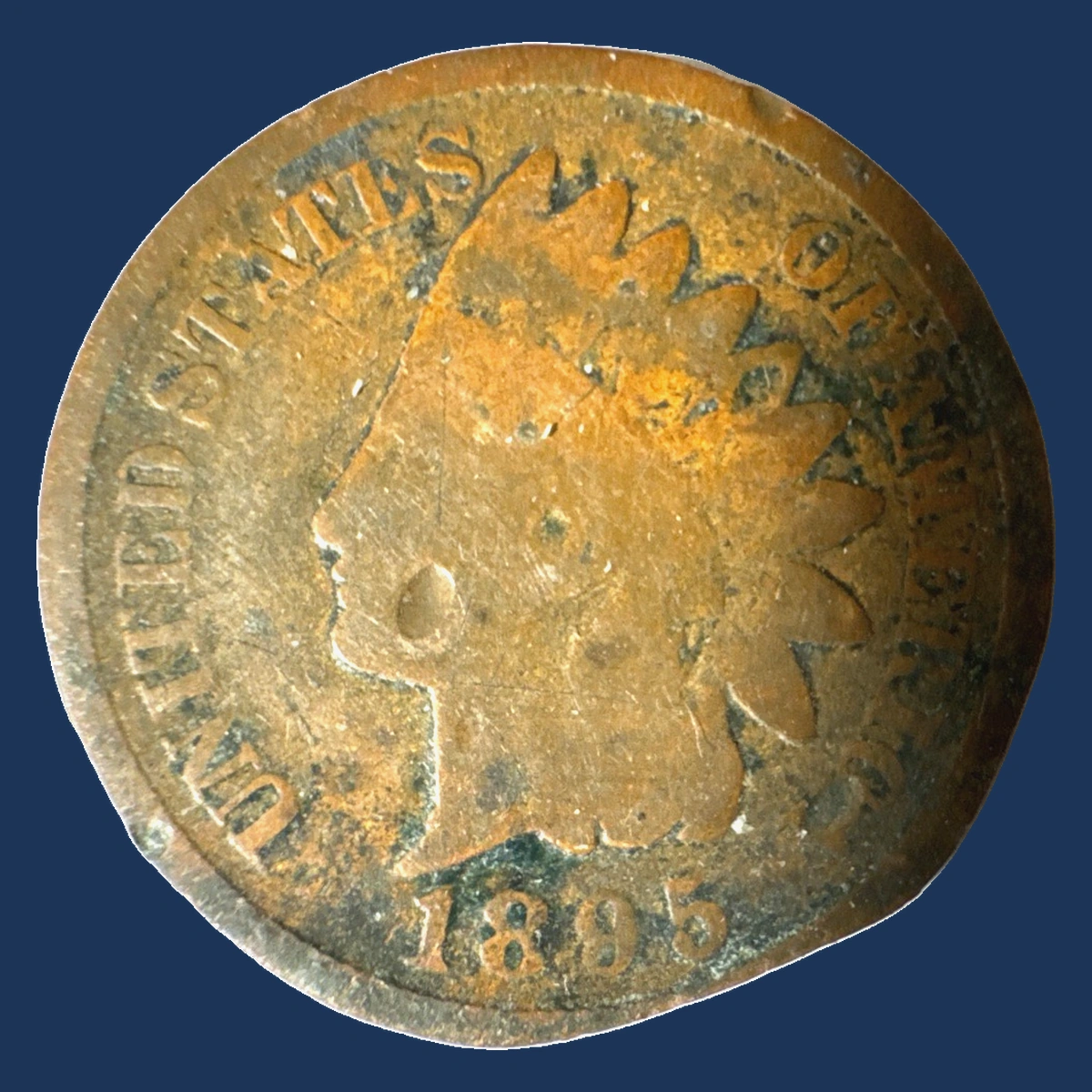
A curved gap can form when a blank-cutting punch overlaps a hole already present in the metal sheet. The incomplete disc then receives the coin’s design.
GreatCollections recorded an 1895 curved clip in an ANACS holder with a listed weight of 3.14 grams. That is close to, and slightly above, the ordinary cent standard of 3.11 grams.
The listed number therefore cannot prove the missing metal by itself. The gap and nearby struck rim carry more useful clues.
A curved cut made after striking can imitate the outline. Its exposed surface and the way the design ends need separate examination.
Estimated Value
Estimate $40–$1,200 for genuine 1895 curved clips across different conditions. The listed weight is not a sale result or a guarantee of value.
A clipped 1910-S cent graded MS63 Red and Brown sold for $134 in March 2025. That unworn Lincoln cent is a different date and design, but it provides context for an incomplete blank.
Better preservation and a clear original gap can support stronger prices. Cutting, corrosion, or cleaning can reduce the appeal of an otherwise unusual outline.
How to Identify
Photograph the gap under low side lighting without cleaning or filing it. A 10× magnifier can reveal saw grooves or a freshly cut lip on a later alteration.
Inspect both ends where the struck rim approaches the missing curve. Look at the opposite rim for weakness as supporting evidence, without making that one feature the entire test.
For a loose coin, record the actual scale weight and measure intact spans with calipers against 19.05 millimeters. The reported 3.14 grams belongs to one example and should not be treated as a target for every clip.
A certified coin can remain sealed while its photographs and label are compared. Follow the naturally struck rim into both ends of the gap, rather than relying on its curved outline alone.
3. 1895 Indian Head Penny Off-Center Strike
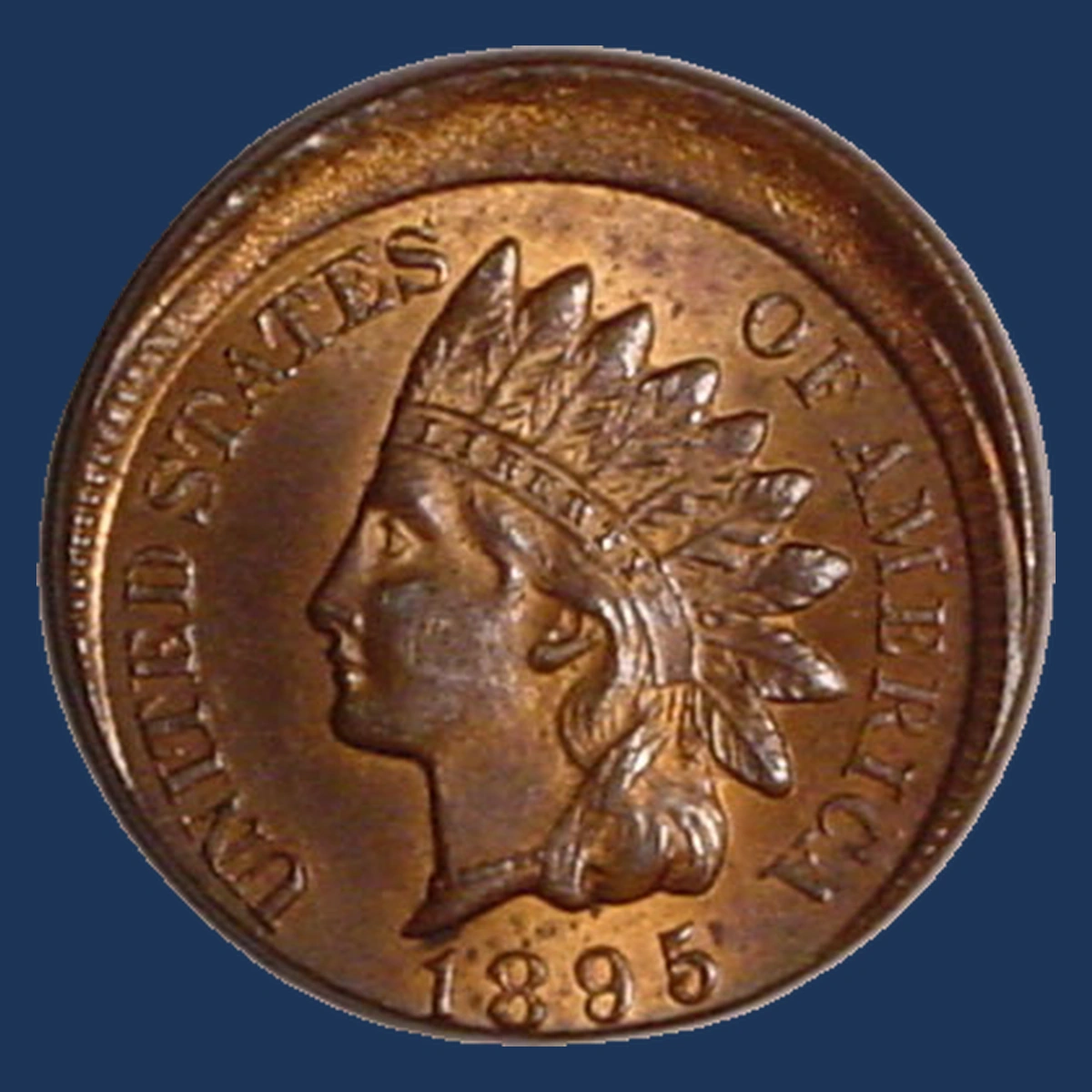
One side of the blank remained outside the striking area, leaving a bare crescent next to the design. On the opposite side, some intended detail fell beyond the available metal.
An 1895 example described as 10% off center appeared in a March 2026 Heritage sale. NGC graded it AU58, meaning very little circulation wear.
This is one displaced blow, rather than a coin with two complete impressions. An extra-wide rim alone does not establish the same error.
Both faces should fit the position of the misplaced blank. A shift limited to one face can instead come from one misaligned tool.
Estimated Value
The 10% off-center AU58 coin sold for $231.80 on March 23, 2026. That price provides a same-year comparison for a modest shift on a very lightly worn penny.
For dated 1895 off-center cents, estimate $150–$2,500 across different conditions and amounts of displacement. The cited example has little wear, so it is not a direct match for a heavily worn penny.
A readable date and natural surfaces help the comparison. More missing design does not always mean greater value.
How to Identify
Read the complete date before estimating the blank crescent. A similar undated Indian cent cannot establish that the piece was made in 1895.
Follow the design to the point where it leaves the disc, then inspect the other face under a magnifier.
Use a scale to compare a loose example with 3.11 grams, since displacement alone does not remove metal. Calipers can record its outline beside the normal 19.05-millimeter size.
Check the plain edge for grinding or flattening that could create an apparent missing border.
Compare the recorded ten-percent example without assuming every coin shifted in the same direction. Find original unstruck copper opposite design that runs off the disc on both faces.
4. 1895 Indian Head Penny Misplaced 5 in the Hair
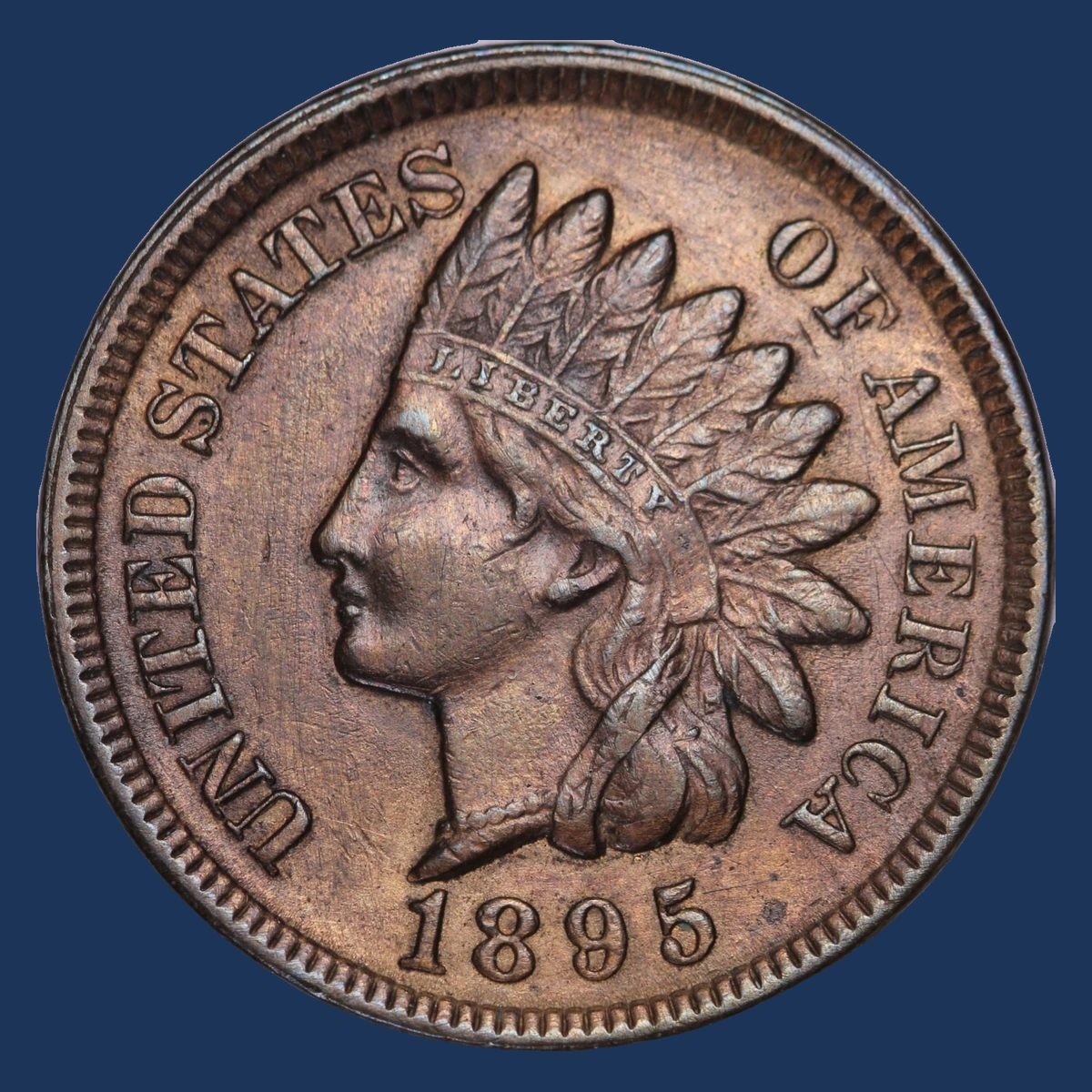
A tiny straight-topped fragment can hide in the hair instead of near the date. On the recorded Snow-29 variety, it is the tip of an extra 5 at the top of the lower hair curl.
The date punch touched the stamping tool in the wrong place. Later coins copied the surviving fragment along with the intended portrait.
Collectors call this a misplaced date. The small piece need not resemble a complete numeral to preserve part of its original shape.
A normal hair line or a scratch can look similar. The fragment’s precise position and raised shape are the useful clues.
Estimated Value
For a matched 1895 misplaced 5, estimate $25–$2,500, with preservation and the clarity of the fragment affecting the complete coin’s value. A rough hair curl alone does not qualify.
A 1908 misplaced-date penny graded MS65 Red and Brown recorded $1,187 on eBay in 2021. That unworn later-year example offers a comparison, not a sale for Snow-29.
The 1895 fragment has its own location in the lower hair. Do not transfer the other coin’s diagnostic position or grade to it.
How to Identify
Place a normal 1895 portrait beside an enlarged view of the lower hair curl. Under a 10× magnifier, look at the curl’s top for the small part of the extra 5.
Follow its raised edge while changing the light. A cut scratch lies in the surface and may have pushed-up metal beside it, while a normal hair strand continues along the expected design.
A scale and calipers check a loose bronze cent against 3.11 grams and 19.05 millimeters; inspect its plain edge as well.
Match the fragment with the Snow-29 photograph. Keep the whole curl in view so a close crop does not make a mark elsewhere appear correctly placed.
5. 1895 Indian Head Penny Double Strike with Both Blows Off Center
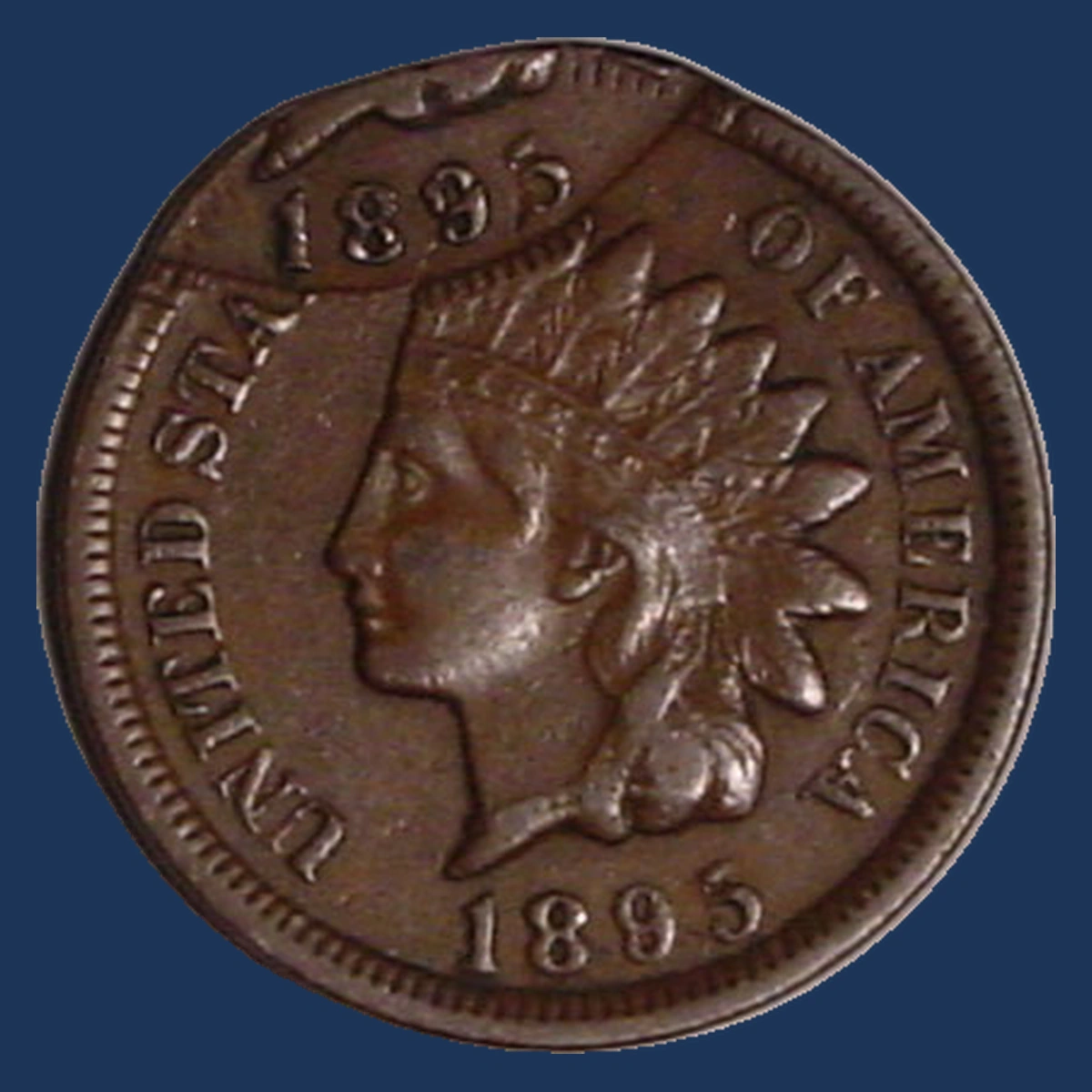
An 1895 penny in the Charmy Harker collection missed the center on both blows. The published description gives 15% and 90% off-center impressions on a PCGS AU50 Brown coin.
AU50 indicates light circulation wear. The striking error itself came from the coin staying in the press and moving before another blow.
The ninety-percent figure means most of that later strike missed the coin, leaving a small contact area. It does not mean ninety percent of the penny broke away.
Another reported example has a seventy-five-percent second strike. Its measurements belong to a different coin.
Estimated Value
Estimate $300–$5,000 for identifiable 1895 double strikes, depending on wear, surface quality, and how both designs remain visible. The collection photograph is not a completed auction result.
An 1899 cent with an 85% off-center second strike sold for $632.50 in July 2007. That lightly worn comparison had a one-sided second impression and should not supply unreported details for the 1895 coin.
Two off-center blows still make one collectible piece. Do not add two separate off-center prices to the double-strike range.
How to Identify
Look for the two design areas before assigning percentages. Under a magnifier, trace each visible portrait, date, or letter group to the border made by that blow.
At the overlap, examine which design flattened the other. A later dent may move metal without creating a recognizable second struck image.
The collection coin’s two displaced impressions differ from a centered first strike followed by a small edge strike.
For a loose coin, a scale compares 3.11 grams and calipers record the irregular outline against 19.05 millimeters. Inspect the plain edge for a join.
Keep both faces in the comparison photographs, with the separate seventy-five-percent coin excluded. Trace the two recognizable design impressions and their overlap on the same piece before calling it a double strike.
6. 1895 Indian Head Penny Repunched Dates on Ordinary and Proof Coins
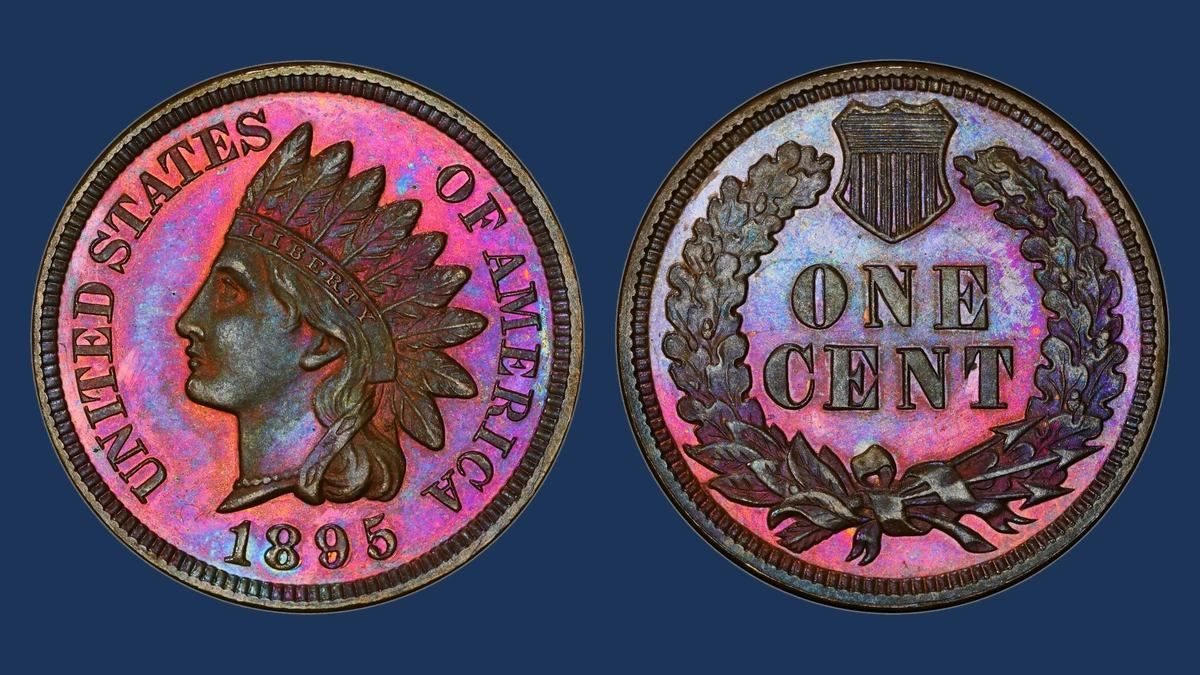
The date can show parts of an earlier punch position beside the final numerals. Repeating the date punch during tool preparation left some previous strokes uncovered.
Snow-1 shows earlier strokes toward the right in the lower loops of 895. Other ordinary varieties repeat different digits in different directions.
The year also has repunched dates on specially prepared collector coins, called Proofs. One Proof pattern repeats parts of 895, while another has an earlier 1 above and 9 below.
Some Proof tools were later used for ordinary pennies. Matching a date stroke alone cannot establish which kind of coin you have.
Estimated Value
A Snow-1 coin graded MS64 Brown sold for $264 in November 2022, recorded by PCGS. It was unworn, with brown surfaces and some marks.
Estimate $15–$2,000 for ordinary repunched dates and roughly $300–$5,000 for matched Proofs. These are whole-coin ranges, with finish, variety, and preservation affecting the comparison.
The ordinary Snow-1 result is not a Proof sale. A shiny circulated penny does not move into the Proof range merely because its date looks repeated.
How to Identify
If the coin is described as a Proof, compare its specially prepared finish and both faces with an identified Proof example. Some tools made both finishes, so the date alone cannot settle this.
On a loose penny, compare its scale weight with 3.11 grams and its caliper width with 19.05 millimeters, then inspect the plain edge for alteration.
Photograph all four digits sharply and mark each earlier stroke under a 10× magnifier. For Snow-1, compare the rightward remnants in the lower loops of 895; a different pattern needs its own reference.
A flat shelf beside a digit can result from movement during striking. The extra strokes should instead reproduce parts of the earlier numeral at the correct positions.
Conclusion
An 1895 penny’s extra mark may be in the date, in a hair curl, or along the rim. Start at that exact location and compare the complete feature before naming the error.
Estimated whole-coin values range from $15–$5,000. Keep ordinary and Proof prices separate, inspect the actual edge on a clip, and value two displaced strikes as one coin rather than two independent errors.