1858 Cent Error List with Pictures

The tiny tip of a 7 beside the final 8 helped identify a Flying Eagle cent worth $74,025 at a 2014 Heritage auction. Most examples are far less costly.
Our 1858 cent error list spans estimated values of $30–$75,000, from weakened back lettering to major striking errors and exceptional overdates. Large Letters and Small Letters identify two normal designs, not mistakes.
Follow the examples below to find the visible clues and compare coins of similar quality.
1. 1858 Flying Eagle Cent Weak Back Design from Grease
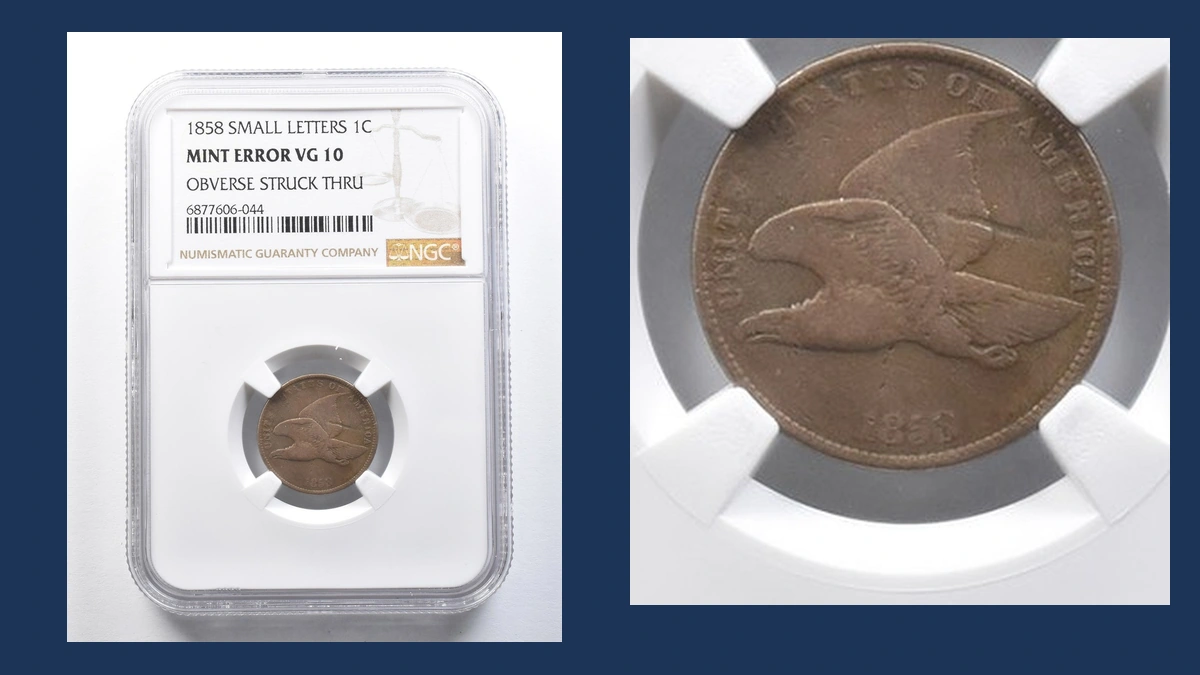
Parts of ONE CENT can look shallow even while nearby detail remains clearer. Robinson’s Coin Town lists an 1858 Small Letters penny with this kind of back weakness.
The dealer describes it as struck through grease and grades its wear as Choice Fine. Grease packed into a stamping tool can block the blank from filling the design.
The result is weak or absent detail where the material interfered. It does not mean grease still remains attached to the coin.
Ordinary wear or an incomplete strike can weaken the center. A worn coin needs more evidence than a missing letter.
Estimated Value
An estimated $30–$300 covers circulated 1858 pennies with recognizable grease-blocked design. The modest end suits smaller weak areas on worn coins like the dealer’s Fine example.
No completed sale price is assigned to that listing here. The estimate includes the Flying Eagle cent itself, rather than treating every dollar as a grease-error premium.
A broad clear missing area can draw more interest. Smooth wear across all high points or deliberate abrasion instead calls for a different comparison.
How to Identify
The dealer’s Small Letters example has circulation wear as well as the reported error. Under a 10× magnifier, compare ONE CENT with nearby wreath details at similar heights instead of treating a flattened center as proof.
Low side light can expose grinding grooves or metal pushed over the lettering. A loose penny should also be checked against 4.67 g on a scale and 19.05 mm using calipers, since blocked detail need not alter either.
Confirm the Small Letters design by the gap between A and M in AMERICA. In a matching design, follow where the weak patch meets the surrounding clearer detail.
2. 1858 Flying Eagle Cent Peeling or Separated Surface Metal
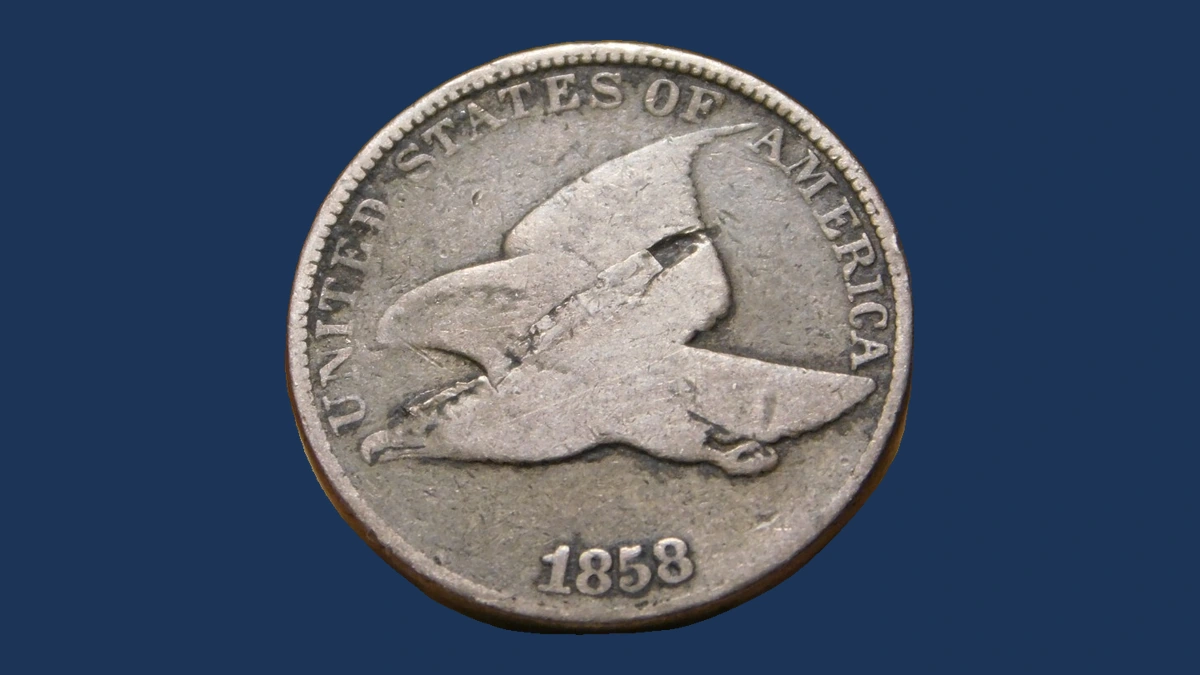
A thin piece of copper-nickel surface can lift away and leave a shallow hollow beneath it. This is a lamination, caused by a weakness within the original metal.
An 1858 year guide includes this error among ordinary Flying Eagle cents. Its description does not establish whether the example has Large Letters or Small Letters.
It does not locate a flap beside the eagle or wreath. Its position must be read from the actual coin.
A peeling surface differs from a crack running deeply through the blank. Experimental 1858 coins with other designs or metals are separate from these ordinary cents.
Estimated Value
For a modest lamination on a circulated 1858 Flying Eagle cent, estimate $35–$200. Larger clear separations on better-preserved examples can fit roughly $150–$500.
These are whole-coin estimates for the reported mechanism, not a realized price for a specifically pictured 1858 specimen. The amount of original surface left matters alongside the peeling.
Coins with experimental designs or different metals require separate pricing. Their auction results should not be used as if they belonged to an ordinary copper-nickel Flying Eagle cent.
How to Identify
Inspect both sides in angled light to find a thin boundary separating one metal layer from another. A 10× magnifier can show whether any original struck surface continues onto a lifting flap.
Do not pull or flatten that flap.
Place a loose example on a scale and compare it with 4.67 g. A small surface flake may remove too little metal for weight alone to identify the cause.
Calipers across the intact outline should be compared with 19.05 mm. Pitting across many unrelated areas suggests corrosion, while sharp cuts may show deliberate removal.
Follow the actual peeling edge instead of assigning an imagined location from a generic year-guide description.
3. 1858 Flying Eagle Cent Back Design at the Wrong Angle
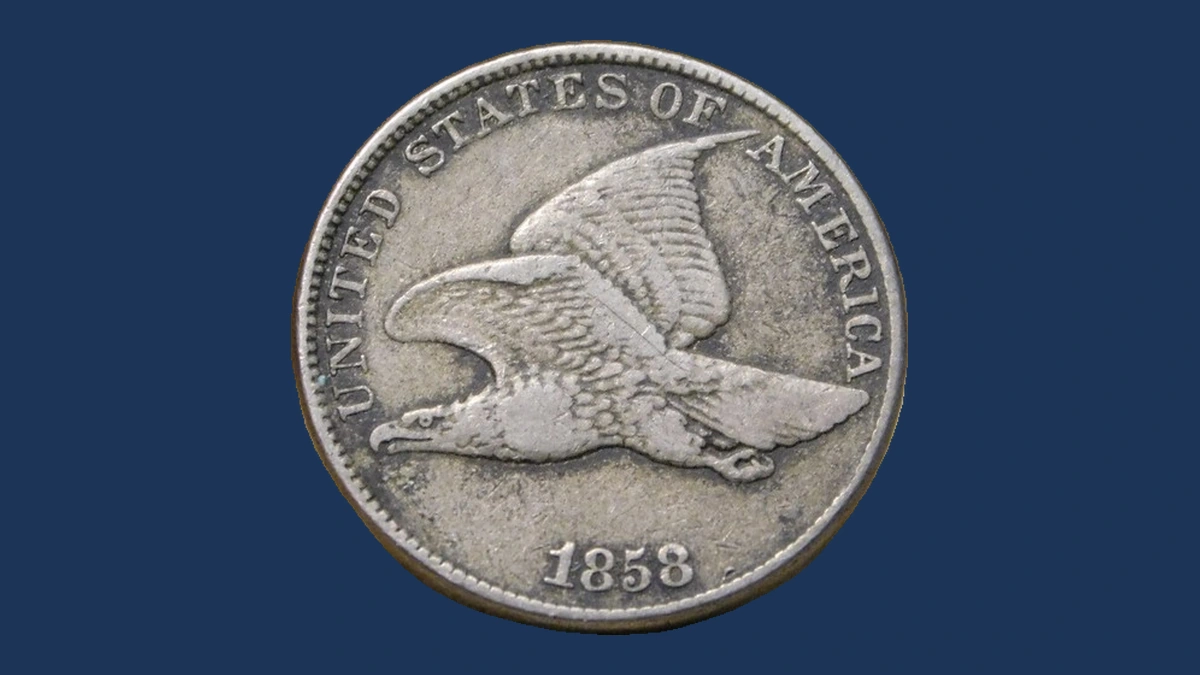
A wreath that stays tilted after the eagle is flipped top to bottom can reveal a rotation error. The two stamping tools were aligned at the wrong angle to each other.
Records include a Large Letters ANACS Fine 12 example and a Small Letters ANACS VF30 Details example. Both are circulated coins.
Neither establishes the same angle for every 1858 rotated cent. The Details label also signals a condition problem beyond a simple numerical wear grade.
A coin can turn between two blows during a double strike as well. That movement is different from the fixed alignment between the tools.
Estimated Value
For circulated 1858 rotated examples, allow an estimated $75–$400 when the tilt is clear and repeatable. Stronger rotations on better-preserved coins can fit roughly $300–$1,000.
The reported Fine 12 and VF30 Details examples do not provide sale prices adopted here. Their grades also need different condition comparisons.
The angle should be measured before using the upper range. A nearly inverted back attracts different interest from a slight lean, and a rotated photograph establishes neither.
How to Identify
Place the eagle upright with the date level, then flip the coin top to bottom around a horizontal axis. Keep the same grip so the penny does not twist sideways.
Photograph the back against a vertical guide. A protractor can measure the remaining tilt.
Repeat the flip before deciding the direction; the separate double-strike example’s half-turn does not supply an angle for this test.
A 10× magnifier helps locate the wreath’s center if wear makes alignment difficult. A scale and calipers compare a loose cent with 4.67 g and 19.05 mm.
The same tilted back should appear after each controlled flip, with the whole design still in its original single-strike position.
4. 1858 Flying Eagle Cent Repeated Date Digits
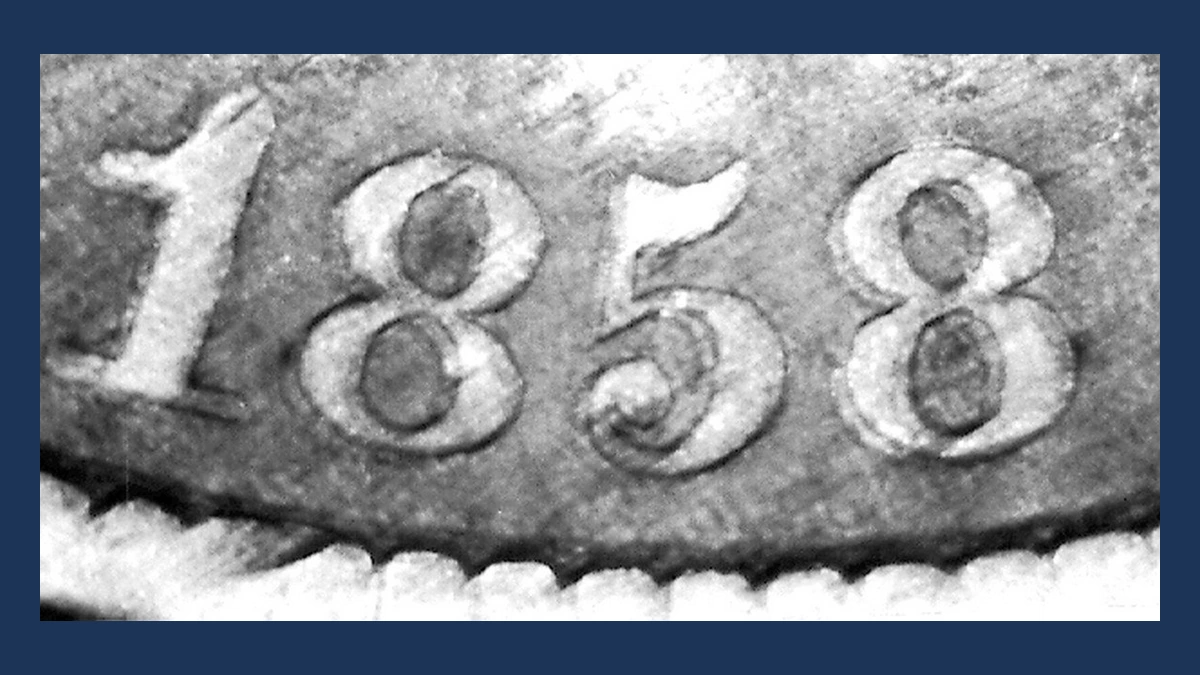
Thin extra curves beside the date can survive from an earlier position of the date punch. The stamping tool received the digits more than once before it made coins.
The 1858 Large Letters catalog includes RPD-001 alongside a doubled-front listing. Both features can therefore occur on the same penny.
The catalog summary does not describe every extra stroke or its direction. A date-specific close-up is needed to match the pattern.
This category concerns a repeated 1858 date. It is different from the recognized 1858/7 overdate, where part of the earlier year’s final 7 remains beneath the last 8.
Estimated Value
Estimate $50–$300 for circulated 1858 repunched dates with clearly matched extra strokes. Better-preserved Large Letters examples can fit roughly $300–$1,500.
The range is an estimate for this cataloged date feature, not a sale record assigned to RPD-001. Its accompanying doubled lettering may influence the same coin’s appeal.
Both features still receive one whole-coin price. The famous 1858/7 overdate has its own market and should not supply an automatic premium for a repeated same-year numeral.
How to Identify
Keep all four digits together under a 10× magnifier before enlarging a suspected curve. Compare their spacing and the raised extra metal with a photograph of the listed repunched date.
For a loose cent, a scale and calipers check 4.67 g and 19.05 mm. Confirm the normal Large Letters design as well: A and M in AMERICA touch.
Keep a certified comparison in its original holder during examination.
The Large Letters catalog identifies the combined date and lettering variety. Check its actual date close-up rather than assuming which digit was repunched or borrowing the position of the 7 from an overdate photograph.
5. 1858 Flying Eagle Cent Raised Patch Connected to the Rim
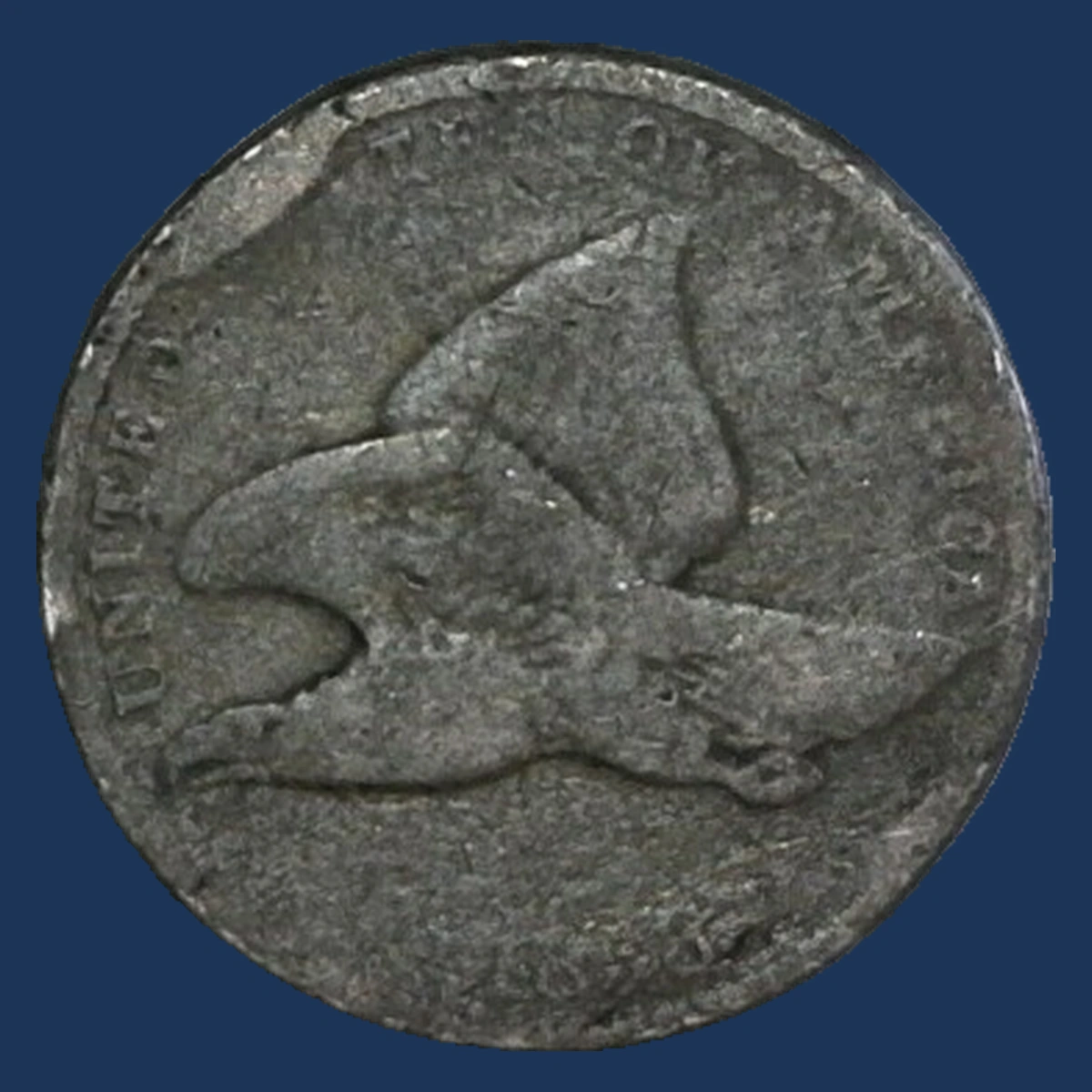
A smooth raised patch can interrupt the design and join directly to the rim. This feature is called a cud.
Part of a steel stamping tool broke away, leaving a space that the coin’s metal filled during striking. Normal design is lost where that tool fragment was missing.
The Flying Eagle cud catalog includes 1858 examples with both Large Letters and Small Letters. They should be compared within the correct normal design.
The size and position vary among coins. Letter size does not establish a clock position, and metal folded over the edge after striking can imitate a raised patch.
Estimated Value
An estimated $75–$500 suits many circulated 1858 cuds with a clear rim connection. Larger or better-preserved examples can fit roughly $500–$2,000.
These are estimates rather than a completed sale attributed to one of the catalog photographs. The affected design, size of the patch, and remaining surfaces all influence the whole-coin price.
A tiny edge bump should not inherit a large cud’s value. Compare the specific break and the correct letter-size design before using the higher part of the range.
How to Identify
A raised patch needs both a top view and a direct edge view under a 10× magnifier. Look for a folded lip, an attached blob, or crushing before matching the missing design with a cataloged cud.
The cud catalog includes both normal designs: A and M touch on Large Letters but stand apart on Small Letters. Select the correct letter size and face before comparing the break’s rim position.
A scale and calipers can check a loose cent against 4.67 g and 19.05 mm. The actual match should show the same rim-connected raised shape replacing the same portion of the design.
6. 1858 Flying Eagle Cent Doubled Front Lettering
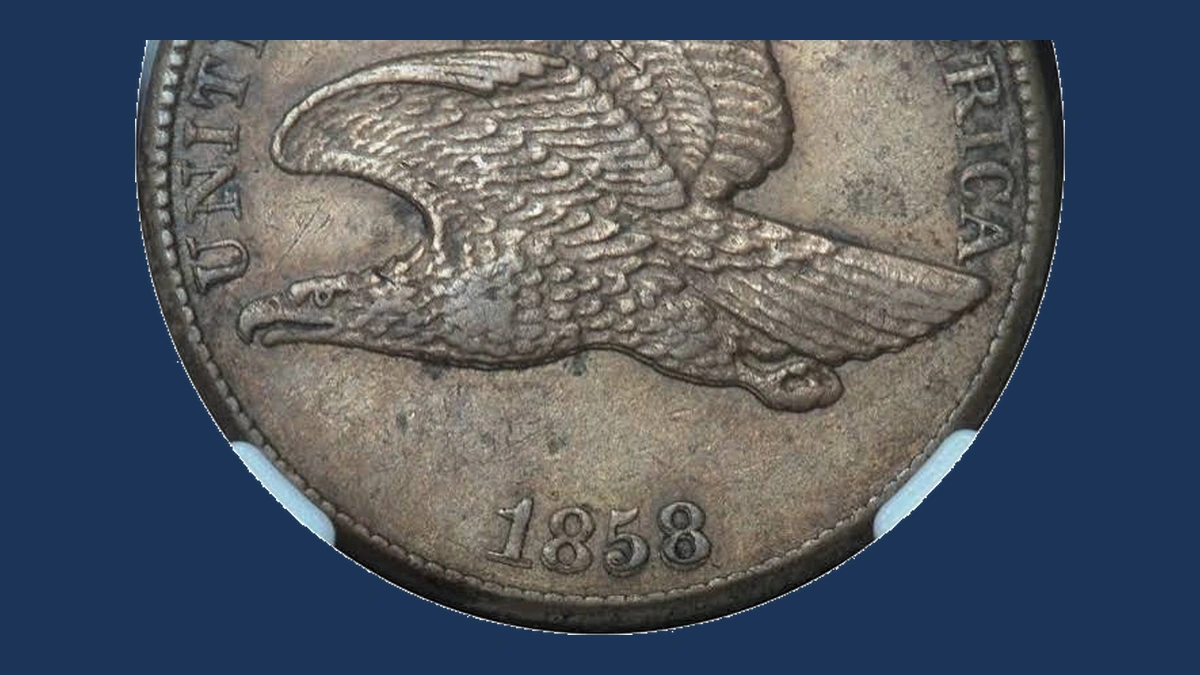
Second edges on UNITED STATES OF AMERICA can reflect a repeated design already present on the stamping tool. The 1858 Large Letters catalog records several such examples.
The tool received slightly shifted design impressions while it was being made. Coins then copied the repeated outlines in a single blow.
The letters affected and the direction of the extra outlines vary among examples. One pattern should not be stretched to describe every listed doubled front.
Some examples also have repunched dates. The date punch and the repeated front lettering involve separate features even when they appear together on a single cent.
Estimated Value
Identified 1858 Large Letters doubled fronts can fit an estimated $75–$500 in circulated condition. Clear unworn examples can fit roughly $500–$3,000, depending on the pattern and surfaces.
These figures are estimates across several cataloged examples, not one recorded price for every doubled letter. A matching pattern is more important than a vaguely thick inscription.
If the same cent also carries a repunched date, compare its combined features and condition. Do not add two complete coin values together.
How to Identify
Examine several adjacent front letters under a 10× magnifier rather than isolating one thick corner. Photograph the entire word containing the repeated edges so their direction can be compared.
The Large Letters design has touching A and M in AMERICA; its normal outlines should not be mistaken for an error.
A loose copper-nickel cent is normally about 4.67 g and 19.05 mm. Use a scale and calipers for that basic check without removing a sealed coin.
Change the lighting to distinguish raised second outlines from reflections.
Compare the pattern with the same doubled-front photograph, and reject a match based only on a flat shelf or an ordinary border around a letter.
7. 1858 Flying Eagle Cent Missing Segment at the Rim
A short piece of the outside outline can be absent because the blank was incomplete before striking. The press still applied the Flying Eagle design to the remaining metal.
Heritage lists an 1858 Small Letters example as a rim clip, graded ANACS MS61. That grade describes no circulation wear but noticeable marks.
The listing specifies neither a curved nor straight clip nor its clock position. Those details should come from this coin’s photographs.
A clip differs from a crack that separates metal within a full blank. Cutting or filing the finished coin’s edge can also create a missing section.
Estimated Value
Circulated 1858 clips can fit an estimated $150–$800. Unworn examples with clear original edge features can fit roughly $800–$4,000.
The ANACS MS61 Small Letters listing provides a graded example, but no completed sale is assigned to it here. The range therefore remains an estimate.
The missing percentage and amount of readable design affect comparisons. A modest natural clip can be more convincing than a dramatic cut through finished lettering, regardless of how eye-catching the outline appears.
How to Identify
Use a 10× magnifier to inspect where the missing segment meets the struck rim. The surviving lettering should fit a blank that was already incomplete, rather than ending at a fresh cut.
Weigh a loose coin on a scale against the usual 4.67 g, then use calipers across an intact span against 19.05 mm. The missing mass should make sense for the absent portion.
Inspect the opposite rim for weakness, while recognizing that this supporting sign varies. Because the listing gives no particular shape or position, match the actual clipped edge and label before calling it a curved example or assigning a clock direction.
8. 1858 Flying Eagle Cent Crack in the Blank before Striking
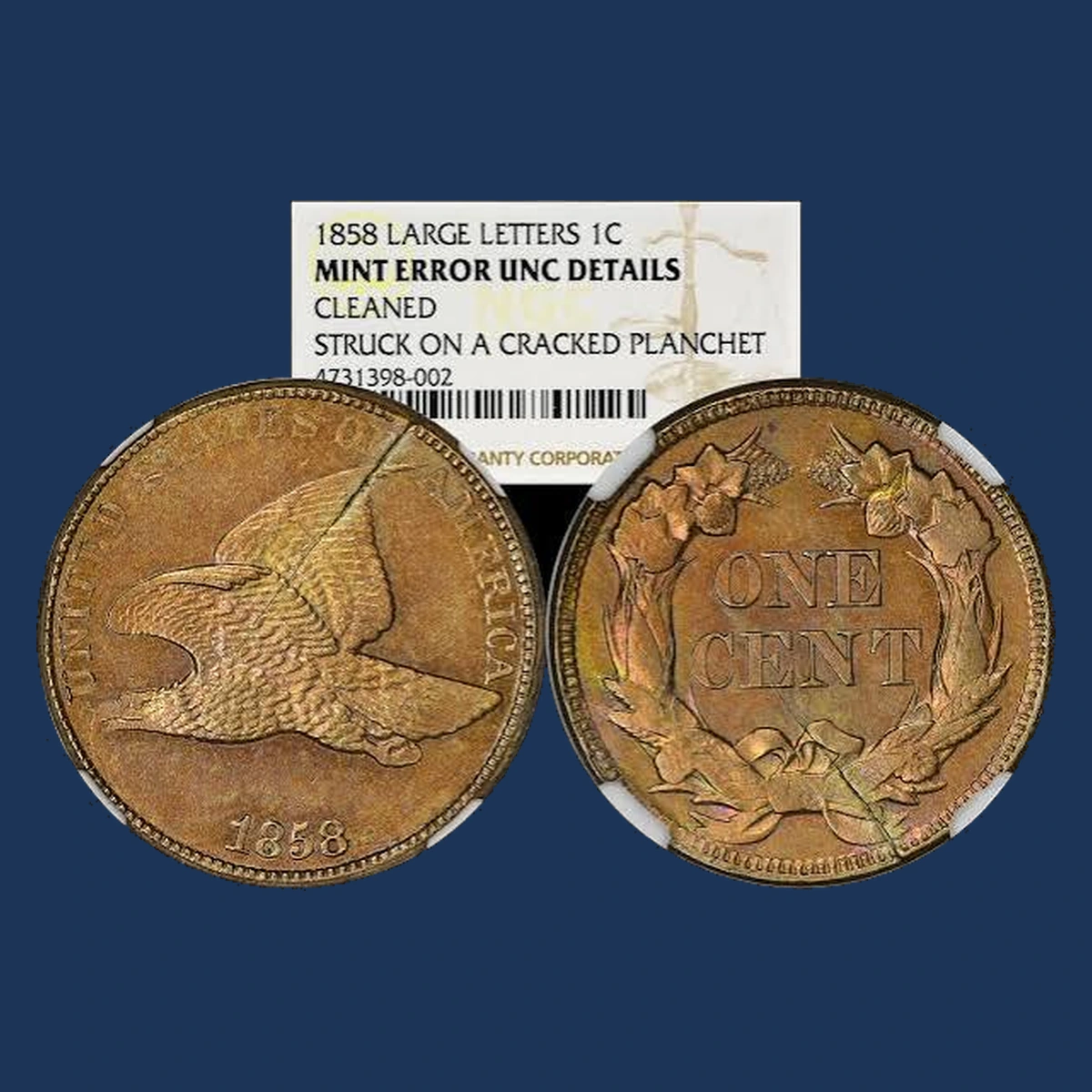
A split can interrupt the coin because the blank was cracked before the designs were struck. Pressure from the press may open or reshape the weakness.
Charmy Harker’s collection includes an 1858 Large Letters example described as struck on a cracked blank. NGC recorded unworn detail with a condition issue in its Details grade.
The description does not give the crack’s direction. It should not be assigned to a particular feather or letter without the photograph.
This defect lies in the coin metal itself. It differs from a cracked stamping tool that leaves a raised ridge on otherwise solid metal.
Estimated Value
A genuine pre-strike crack on a circulated 1858 cent can fit an estimated $100–$750. Clear unworn examples may fit roughly $750–$5,000, depending on the split and overall condition.
The collection example’s Details grade requires attention to its recorded condition issue. Read the holder to learn which problem affected it.
These are estimated whole-coin ranges rather than a reported sale for the illustrated piece. Evidence that the crack existed during striking matters more than an impressive split alone.
How to Identify
Compare both faces and the edge at the opening, using a 10× magnifier to inspect the walls without bending the coin. The surrounding struck design must be considered along with the split itself.
A loose piece can be weighed against 4.67 g on a scale and measured against 19.05 mm with calipers, without forcing the sides together. Little missing metal may leave the weight nearly normal even when the crack is conspicuous.
A line raised above an otherwise intact surface points instead toward a cracked stamping tool. For a split in the blank, follow how the design meets the opening to judge whether the crack was already present during the blow.
9. 1858 Flying Eagle Cent Two Strikes with a Turn or Flip
Overlapping eagle and wreath details can appear when a coin turns over before receiving a second strike. A published 1858 Small Letters example has its later blow thirty-five percent off-center.
PCGS graded that flip-over coin VF25, showing moderate circulation wear. Another published example, graded NGC VF35, records a second strike rotated through half a turn.
The two descriptions concern separate coins. A flip changes which face meets each stamping tool, while a turn can change the angle without swapping faces.
The movement occurred between blows. It does not establish that the stamping tools were permanently aligned 180 degrees apart.
Estimated Value
Allow an estimated $750–$10,000 for genuine 1858 double strikes, with readable overlapping designs and preservation driving the comparison. The circulated VF25 and VF35 examples provide different forms of the error.
Neither publication supplies a completed sale price used here. For perspective, a double-struck copper-nickel 1862 cent graded ANACS MS60 sold for $690 in 2001, a different date and configuration.
An 1858 flip-over with clear opposite-face detail should be compared on its own merits rather than inheriting that older result.
How to Identify
Find one clear eagle fragment and one clear wreath fragment before tracing an overlap. A 10× magnifier should reveal recognizable feathers or leaves, not just confused raised lines.
If the coin is loose, record its width with calipers against 19.05 mm and its weight on a scale against 4.67 g. Avoid pressure on thin metal where the impressions overlap.
The flip-over example should explain why detail from the opposite face appears in the later impression.
The separate half-turn example requires a different comparison of orientation. Follow identifiable letters across both faces so the two design positions fit the same second blow, rather than impressions from another coin pressed against it later.
10. 1858 Flying Eagle Cent Design Missing Part of the Blank
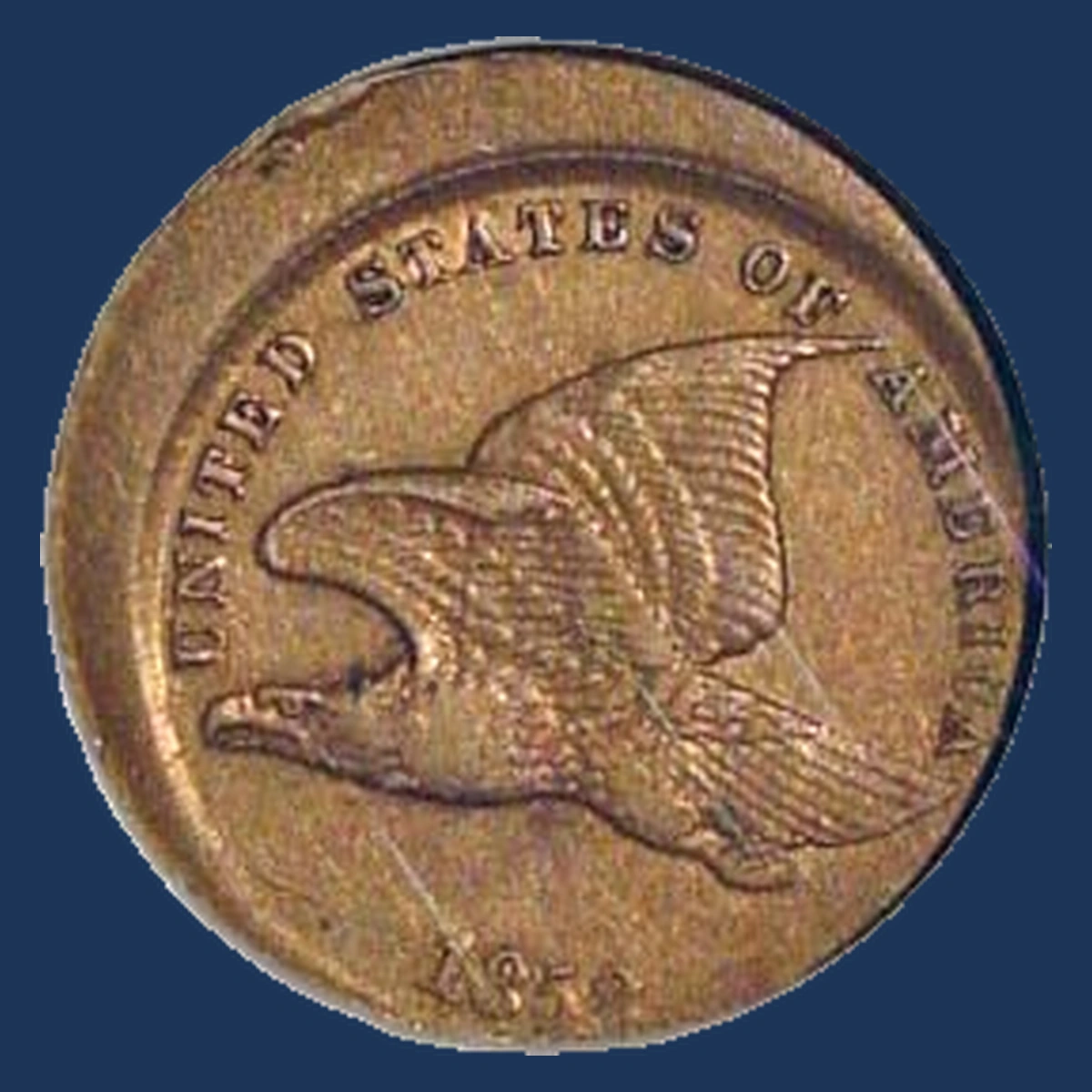
An unstruck crescent can remain where the blank missed the stamping tools. On the opposite side, part of the intended design falls beyond the available metal.
The collection example with a ten-percent shift points toward five o’clock. Separate records show a twenty-five-percent example graded PCGS VG10 and a thirty-percent example labeled MS63.
These are different coins with different wear and displacement. The five-o’clock direction belongs only to the ten-percent example described that way.
The full blank was present, even where no design appeared. An off-center strike therefore differs from a clip that actually removes part of the original metal outline.
Estimated Value
A PCGS VG10 example struck twenty-five percent off-center sold for $4,080 at Heritage in December 2024. Despite considerable wear, its dramatic displacement attracted substantial interest.
Estimate $500–$5,000 for circulated 1858 off-center cents with identifiable dates. Strong unworn examples can fit roughly $5,000–$15,000.
The reported ten- and thirty-percent coins need their own grade comparisons. A percentage alone cannot explain the price, and the $4,080 result does not establish a sale for either collection photograph.
How to Identify
Photograph the front with the date level, including the entire blank crescent. Then compare the back to establish that both designs fit the same displaced blank.
The twenty-five-percent auction example is a useful dated and graded whole-coin comparison, not a source for the ten-percent coin’s clock direction.
On a loose piece, use a scale against 4.67 g and calipers to compare several spans with 19.05 mm. Metal spreading can change its outline.
Under a 10× magnifier, follow the boundary between untouched blank and struck design. It should explain the missing outer details on both faces without requiring a cut-away segment.
11. 1858 Flying Eagle Cent 1858/7 Overdate
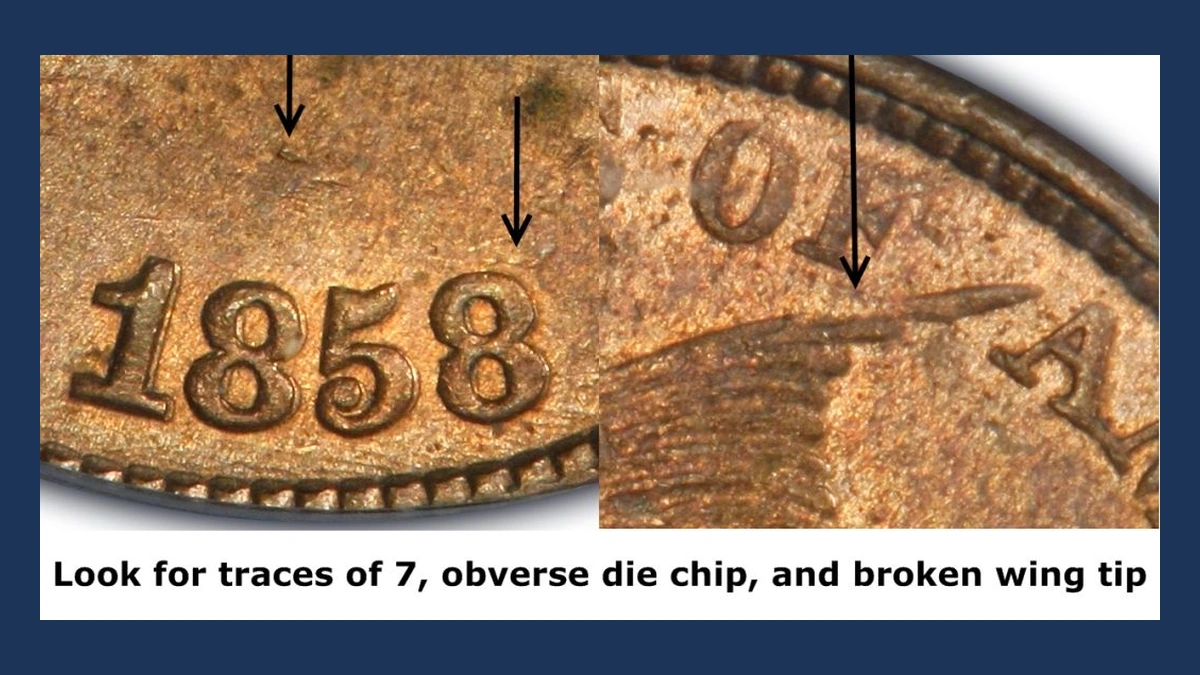
The right tip of an earlier 7 can peek out beside the upper part of the final 8. This is the recognized 1858/7 overdate on the Large Letters design.
The stamping tool had an earlier dated impression before the 1858 date was applied. Parts of the older digit survived instead of disappearing.
PCGS describes a raised spot above the date and an incomplete wingtip below the F in OF. Those marks support identification but do not replace the numeral itself.
Stronger and weaker forms are recognized. Wear and changes to the tool can make the underlying 7 difficult to see.
Estimated Value
PCGS records a strong-overdate MS65+ sale at $74,025 through Heritage in October 2014. That exceptionally preserved unworn coin sits far above ordinary circulated examples.
A PCGS VF30 strong overdate brought $451 at David Lawrence in May 2022. This offers a worn comparison with clear major design details.
Estimate $200–$5,000 across many circulated overdates and roughly $5,000–$75,000 for selected unworn grades. Strong and weak forms need separate matching, and the highest result should not be applied to every faint date mark.
How to Identify
The most direct clue is the small 7 tip at the upper right of the final 8. Examine it under a 10× magnifier alongside the PCGS overdate photograph.
A scale and calipers can compare a loose example with 4.67 g and 19.05 mm. Leave a certified coin sealed.
Confirm Large Letters by the touching A and M in AMERICA.
The raised spot above the date and the wingtip below F can support the match. Neither feature establishes an earlier 7 by itself.
For a strong overdate, return to the projecting numeral tip rather than assigning the variety from an unrelated bump or damaged wing.
Conclusion
Start by separating the ordinary Large Letters and Small Letters designs. Then decide whether the unusual feature involves a tiny extra stroke, missing metal, or the placement of a complete design.
The estimated $30–$75,000 range reflects very different coins and grades. A spectacular overdate result does not set the price of a worn grease-filled strike.
Keep the date, both faces, and the edge available when comparing an example.