1819 Cent Error List with Pictures

A portrait appearing backward on the back of a cent is more than an oddly placed design. One 1819 coin combined that sunken impression with a 20% off-center strike and sold for $5,175 in November 2010.
The 1819 Coronet Head cent error list below covers estimated whole-coin values of $25–$10,000. It also separates an older digit beneath the date from a coin actually struck twice.
Read the visible checks to see which feature your coin matches before choosing a price comparison.
1. 1819 Coronet Head Cent Die Crack and Reported Rim Cuds — Estimated Up to $1,500
A thin raised line leads from the upper-right side of the 9 toward the eleventh star on the N-10 variety. Copper entered a crack in the steel stamping tool and formed that ridge during striking.
The tool is called a die. A larger piece breaking away at its edge can leave a broad raised rim patch, called a cud.
A claimed 1819 cud needs a separate matching example with a clear rim connection. The specific N-10 crack does not by itself establish a cud elsewhere on the same coin.
Estimated Value
Estimate $25–$500 for circulated examples with a clear crack, allowing for the ordinary coin’s condition. A substantial authenticated rim cud can be estimated around $100–$1,500.
For comparison, an 1827 cent with a retained break below the date sold for $264 including fees in May 2025. That is a different year and a retained tool section, so it cannot establish a sale or an exact location for a claimed 1819 rim cud.
How to Identify
Read the final 9 and count the right-side stars before tracing the line. For N-10, it should run from the date toward star eleven, rather than follow a random scratch elsewhere.
A 10× magnifier and changing light help determine whether the line is raised. Corrosion and pushed copper beside a scratch can create misleading ridges.
Compare a loose copper cent with 10.89 grams on a scale and about 28 mm using calipers.
Inspect the plain edge if a broad rim patch is claimed. Follow a natural raised connection into the original rim; the known date-to-star crack alone does not prove that larger break.
2. 1819 Coronet Head Cent Retained Lamination — Estimated Up to $2,000
A thin layer remains attached on the front of the recorded Large Date N-2 cent, extending toward the fifth star. The copper separated internally but did not entirely fall away.
This is retained lamination. The surviving flap and its boundary reveal the metal defect more clearly than a dark stain alone would.
The auction described the coin as AU50 detail with cleaning, without a grading-service certification. Cleaning is a separate condition problem; it should neither be counted as a mint error nor mistaken for the reason a copper layer formed.
Estimated Value
An estimated $30–$2,000 covers authentic lamination across worn and better-preserved 1819 cents. A cleaned example should be compared with similarly impaired coins rather than original-surface pieces of the same apparent sharpness.
An 1842 large cent with a small rim-layer flaw sold for $750 in September 2021. That nearby-series comparison concerns a different coin with unworn detail; it does not establish a sale amount or a certified AU50 grade for the reported 1819 retained-layer example.
How to Identify
Leave the attached layer undisturbed. Start near star five under a 10× magnifier and follow the flap’s boundary into the surrounding front surface.
Look for an actual thin layer, not just cleaning lines or a rough patch. An artificial scrape can leave fresh cuts across the design.
If the loose coin can be handled safely, a scale checks it against the normal 10.89 grams. A retained flap may leave the weight close to normal because the copper is still present.
Use calipers on intact areas to compare about 28 mm and inspect the plain edge gently. Follow the attached layer toward star five without lifting it to test the separation.
3. 1819 Coronet Head Cent Rotated Dies on an 1819/8 — Estimated Up to $5,000
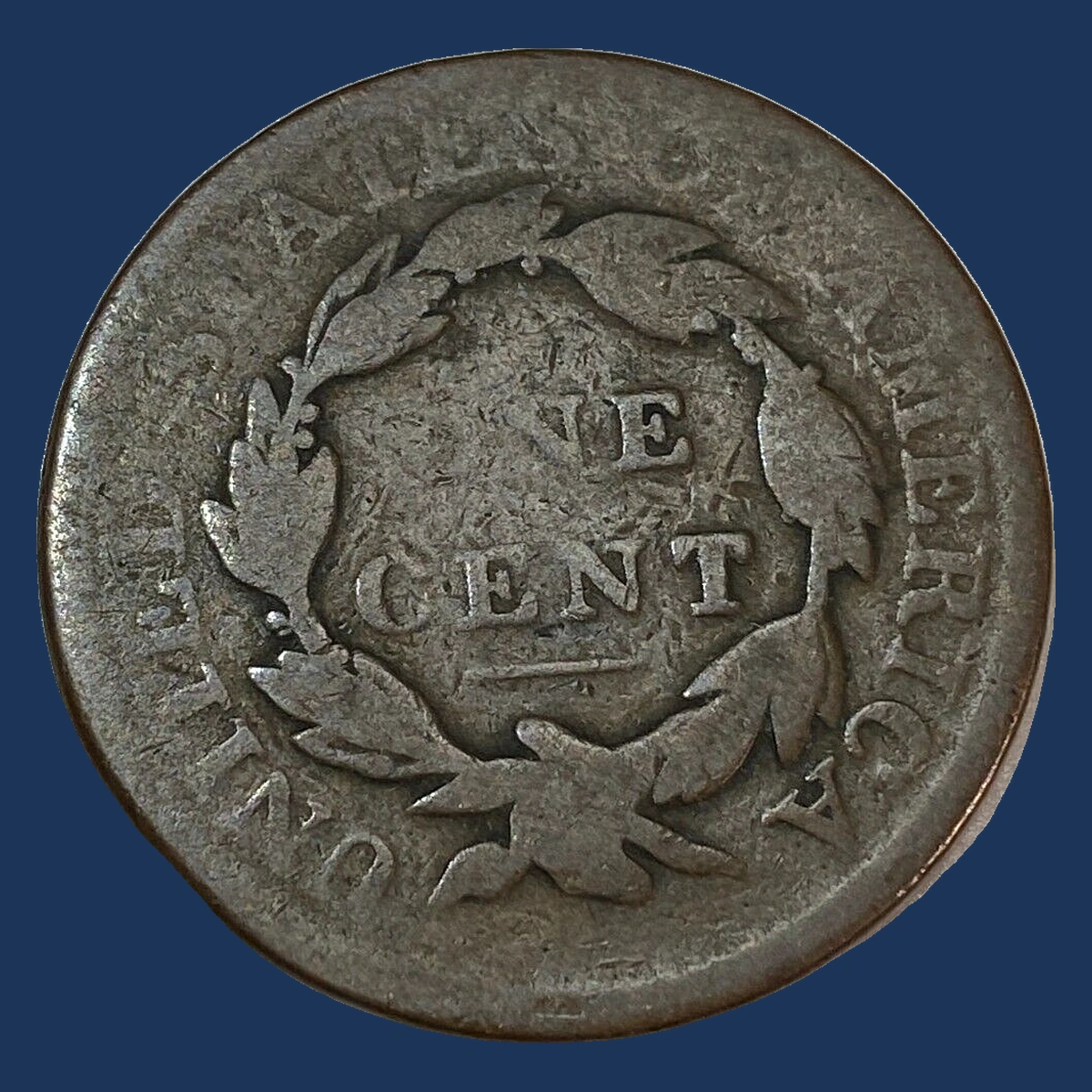
The back finishes tilted when the dated front is held upright and the coin is turned over correctly. An 1819/8 N-1 example with NGC AU55 Brown grading is reported with this rotation.
The front and back tools were set at different angles. Both sides can remain complete, since rotation does not require the disc to miss part of the strike.
The overdate is a separate feature in the front tool. Its visible older digit does not measure the rotation, and no fixed angle should be assigned to this example without measuring the coin.
Estimated Value
For an authenticated rotated 1819/8 cent, estimate $150–$5,000 across varied circulated conditions. The overdate’s underlying collector value and the copper’s preservation are part of that whole price.
A rotated 1831 cent brought $920 in 2010, with a documented fifteen-degree tilt and strong preservation. That later-year sale offers a comparison, but neither its angle nor its grade should be transferred to the reported 1819/8 AU55 example when estimating the rotation premium.
How to Identify
A holder can sit at an angle, so begin with the design upright rather than the plastic frame. Turn the coin top to bottom over a fixed vertical line and repeat the motion without twisting.
Record the back’s actual departure from upright. Do not choose a quarter-turn or half-turn merely because those angles appear in general error guides.
Check the plain edge with a 10× magnifier for a join.
On a loose coin, use a scale against 10.89 grams and calipers against roughly 28 mm. A certified example can stay sealed for the alignment check.
The same tilt must return on repeated controlled turns, independently of the older 8 visible in the date.
4. 1819 Coronet Head Cent 1819/8 Overdate — Estimated Up to $8,000
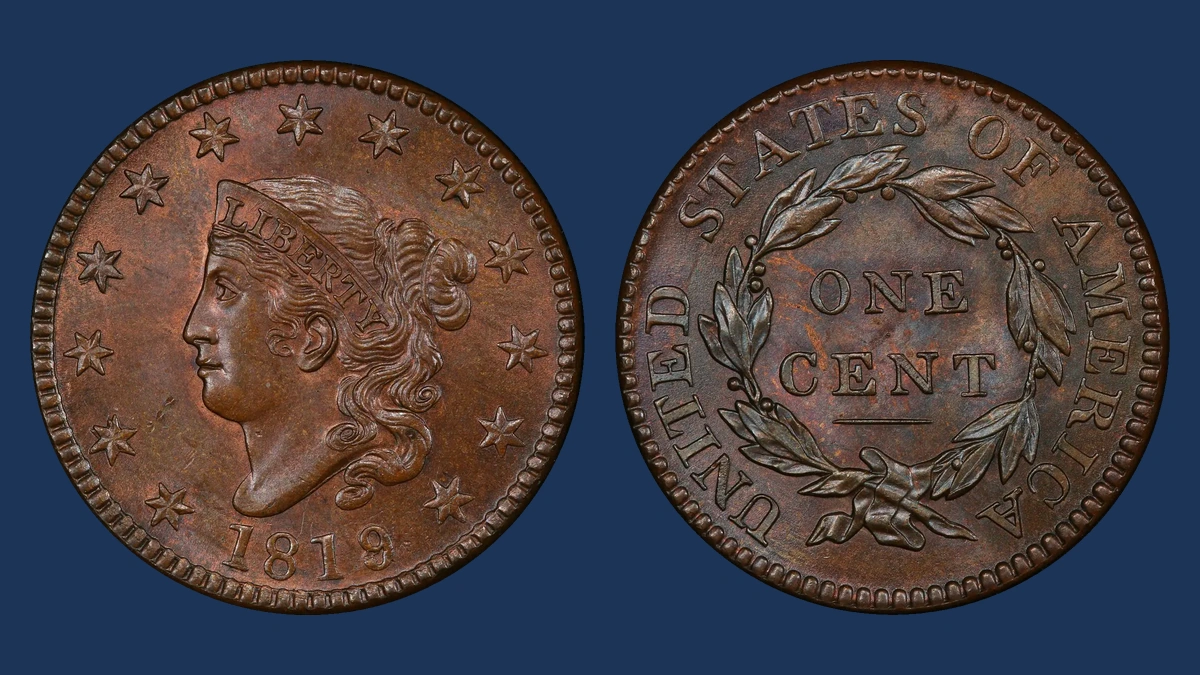
Part of an older 8 shows around the final 9. The date on the stamping tool was changed, leaving portions of the first numeral visible on coins made from it.
The bold version is written 1819/8. Other examples have much weaker remnants, sometimes written 1819/(8), so a faint version should not be expected to match a strong overdate photograph exactly.
Large Date and Small Date are ordinary design descriptions, not automatic evidence of an overdate. The earlier numeral must be identified from its surviving curves rather than from the size of the current digits.
Estimated Value
Estimate $100–$8,000 for genuine overdates from worn coins through attractive nearly unworn examples. The strength of the older digit, grade, and original surface quality all affect the comparison.
For another early large-cent overdate, an 1823/2 graded AU55 brought $15,600 in April 2025. That different date has its own demand and scarcity, so its higher result should not be assigned to an 1819/8 merely because both coins show a changed final number.
How to Identify
Place strong and weak overdate photographs beside the actual date before deciding what is missing. A weak remnant may not show every curved stroke visible on a bold example, even under a 10× magnifier.
The copper coin normally weighs 10.89 grams and measures about 28 mm, which a scale and calipers can check. Inspect the plain edge, then look above and to the upper left of the 9 for the earlier 8.
Follow the suspected curves to see whether they form part of a numeral or continue randomly as scratches. Match those older strokes to the appropriate overdate version, rather than treating the normal size of the 9 as proof.
5. 1819 Coronet Head Cent Double Strike on an 1819/8 — Estimated Up to $8,000
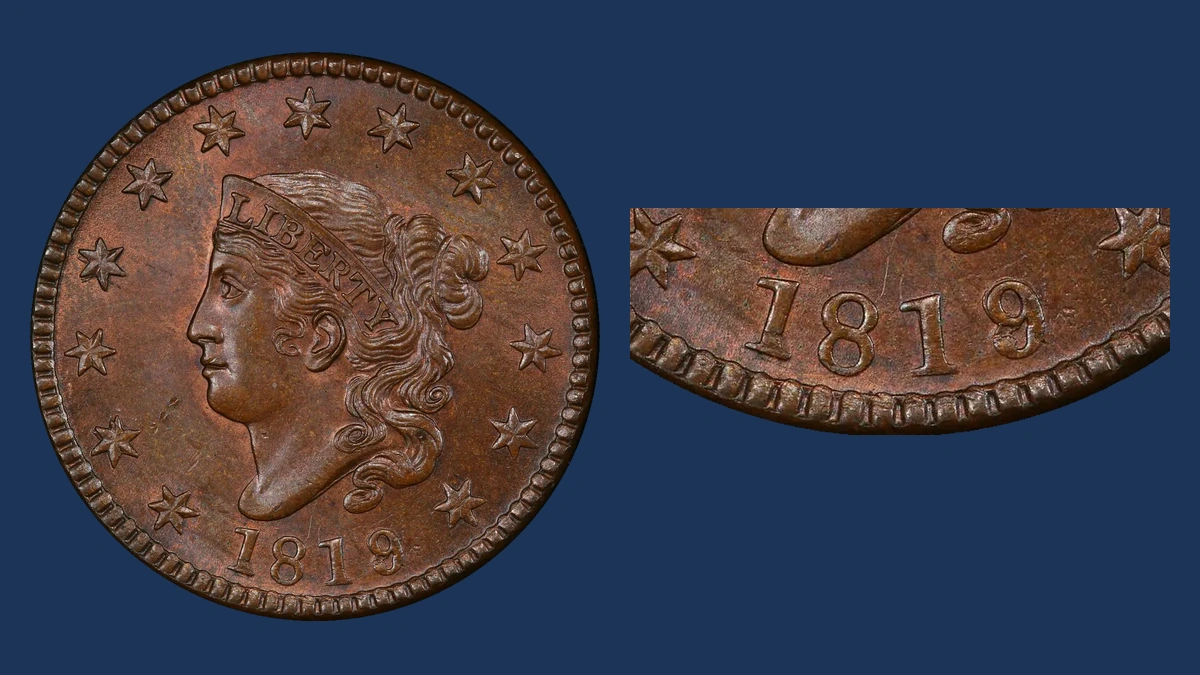
The documented 1819/8 Large Date cent was struck twice, in addition to having an older 8 beneath its final 9. Those are two different events in the coin’s manufacture.
The overdate existed in the tool before any coin was struck. A double strike occurred later, when the same piece of copper received another blow from the press.
Heritage offered the coin with an NGC MS63 Brown grade, indicating unworn brown surfaces with some marks. Its repeated design must be examined separately from the small extra curves that identify the overdate itself.
Estimated Value
The recorded NGC MS63 Brown double-struck overdate brought $2,115 in January 2014. That amount was paid for the complete coin, including its variety, condition, and striking error.
For comparable identifiable 1819 double strikes, estimate $500–$8,000, with visible separation and surface quality affecting demand. Do not add an independent overdate price to the double-strike value, and do not assume that every 1819/8 received a second strike just because its final digit looks crowded.
How to Identify
Look beyond the final digit. The old 8 beneath a 9 can occur on a coin struck only once, so those date remnants cannot establish a second blow.
Use a 10× magnifier to compare repeated portrait, letter, or border details with the certified double-strike photographs. Follow separate impressions rather than a flat shelf beside one worn design edge.
For a loose example, compare 10.89 grams with a scale and roughly 28 mm with calipers. Inspect the plain edge for crushing or a join.
Find genuine repeated struck design independently of the underlying 8 before identifying the coin as both an overdate and a double strike.
6. 1819 Coronet Head Cent Off-Center Strike with Back Brockage — Estimated Up to $10,000
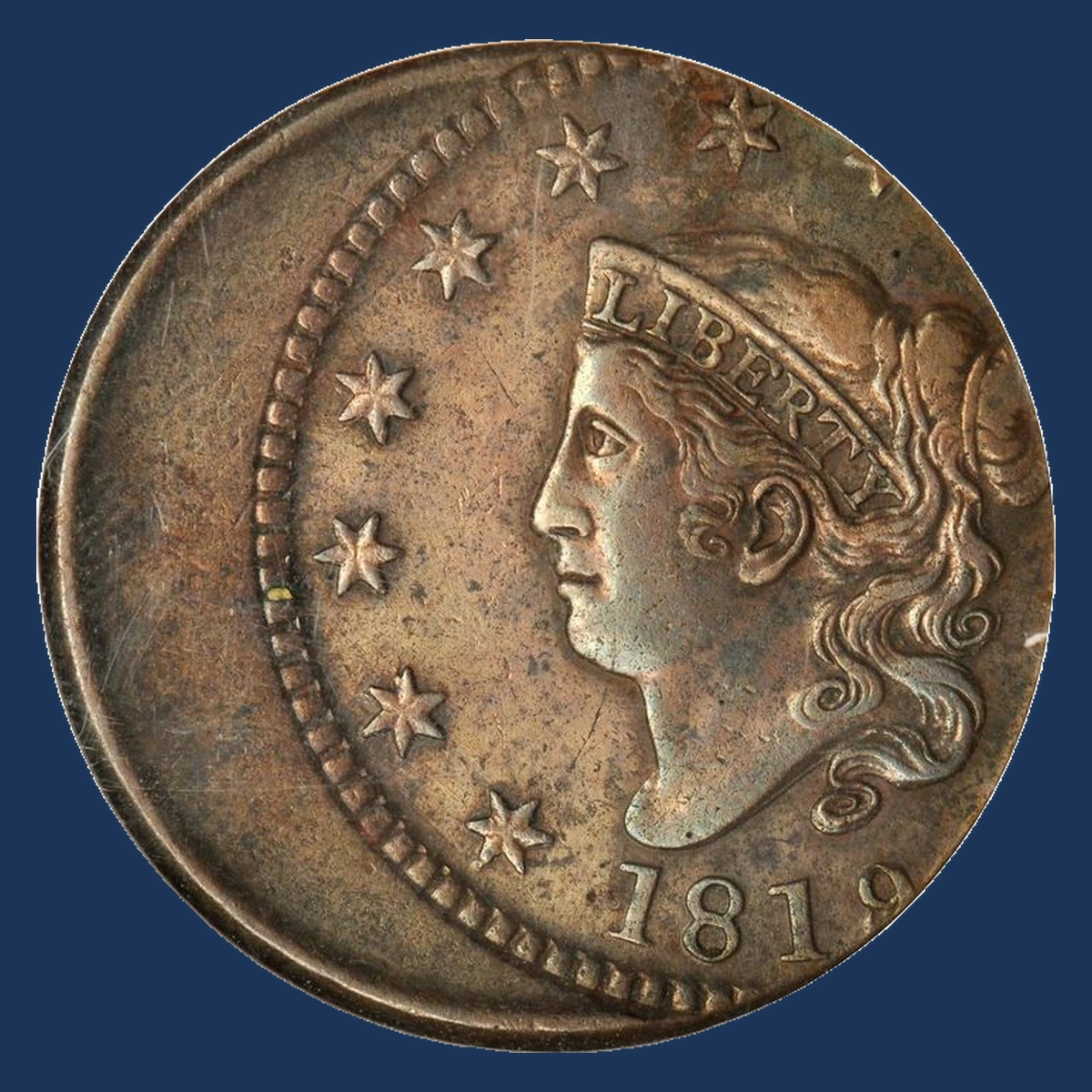
The front design is displaced toward three o’clock, while the back carries a partial reversed impression pressed into the copper. The recorded coin combines about 20% off-center striking with a back brockage.
A brockage forms when an already-struck coin presses its raised design into another disc. It leaves a sunken, mirror-image copy instead of the normal raised back design.
These two effects belong to one NGC XF40 Brown cent. The holder displayed the back upward to show the unusual impression, and the partial transfer should not be described as a complete mirrored face.
Estimated Value
The combined-error coin sold for $5,175 in November 2010. Its recognizable back impression and substantial front displacement help explain why it differs from a modestly off-center ordinary cent.
Use an estimated $1,500–$10,000 for comparable authenticated pieces, allowing for wear and surface quality. That is a whole-coin range: the off-center strike and brockage are not two separate coins or two prices to add to each other.
How to Identify
Inspect the back first under a 10× magnifier: the transferred design should be sunken and reversed, unlike an ordinary raised second impression. Then compare the front’s displacement toward three o’clock with the original unstruck copper beside it.
The documented coin is about twenty percent off center, but that measurement does not describe how much of the back is mirrored. A scale and calipers compare a loose piece with 10.89 grams and a normal diameter near 28 mm.
Check the plain edge for later squeezing or grinding that could imitate part of the effect. Compare the naturally displaced front strike and the sunken mirror impression together on the same original coin.
Conclusion
An 1819/8 date is not proof of a double strike, and a tilted back does not establish an off-center strike. Judge the date, the design positions, and the metal surface as separate clues.
Estimated values range from $25 to $10,000 across these examples. Keep cleaning apart from mint-made lamination, measure rotation directly, and value the off-center brockage as one coin with two linked effects.