1865 Penny Error List with Pictures

Two different shapes of the 5 are normal on 1865 pennies. Extra digits, an upside-down back, or a second complete impression need a closer look.
A heavily worn double-struck Fancy 5 penny sold for $1,080 in January 2023. The 1865 penny errors below have estimated whole-coin values from $10 to $6,000, covering small tool defects through larger striking mistakes.
Start with the date style, then follow the checks below to separate an unusual mint-made feature from later damage.
1. 1865 Indian Head Penny Clashed Dies — Estimated Value $15–$600
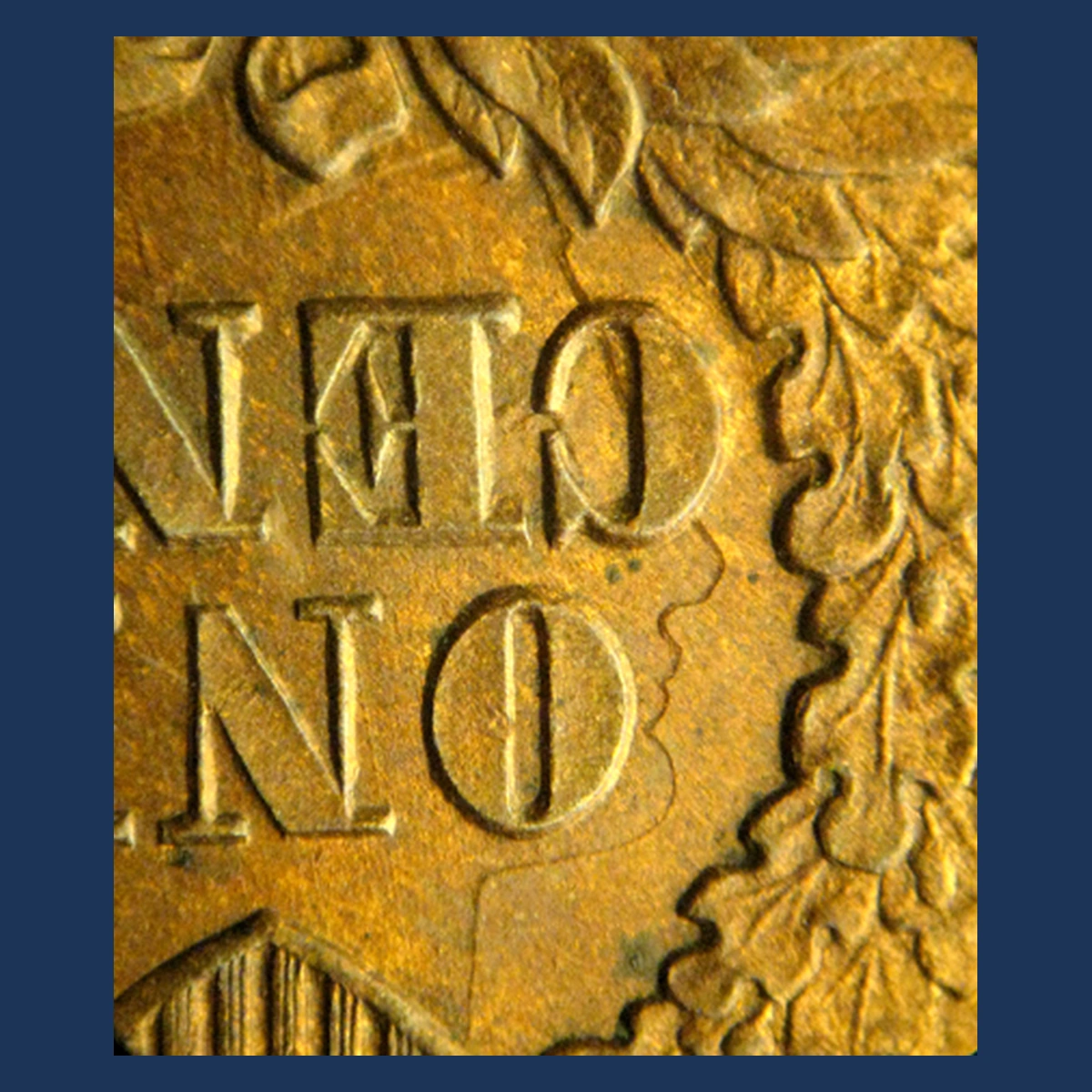
Faint lines in front of the face can belong to the design on the other side. They appear when the two dies, the steel tools that stamp coins, strike each other without a blank between them.
The damaged tools then leave those transferred outlines on later pennies. The coin itself has not been turned over and struck again.
The Plain 5 example shows marks near the face and below the chin. Other traces sit near the O in ONE and beside the value on the back.
Fancy 5 examples also have recorded clashes.
Estimated Value
Clear, recognizable traces support an estimated $15–$600 whole-coin range. A few faint lines on a worn penny usually matter less than a strong outline on clean surfaces.
The documented Plain 5 coin combines clash marks with other tool features. Its value should reflect that combination once, rather than adding separate maximum prices.
This is an estimate for identifiable 1865 examples, not a reported auction result for the illustrated tool pair.
How to Identify
A second design outline is easier to recognize when you know what it could match. Compare the faint face-side lines with the wreath and lettering on a normal penny’s back.
The Plain 5 example also has traces near the O in ONE and to the right of the value. Use a 10× magnifier and light from the side to separate these lines from scratches.
Check both sides together, since a random line on one face proves little. A loose bronze example normally weighs about 3.11 g and measures 19 mm, with a plain edge.
Those measurements cannot confirm a clash. The important next step is finding a shape that actually follows the opposite design.
2. 1865 Indian Head Penny Clipped Planchet — Estimated Value $40–$750
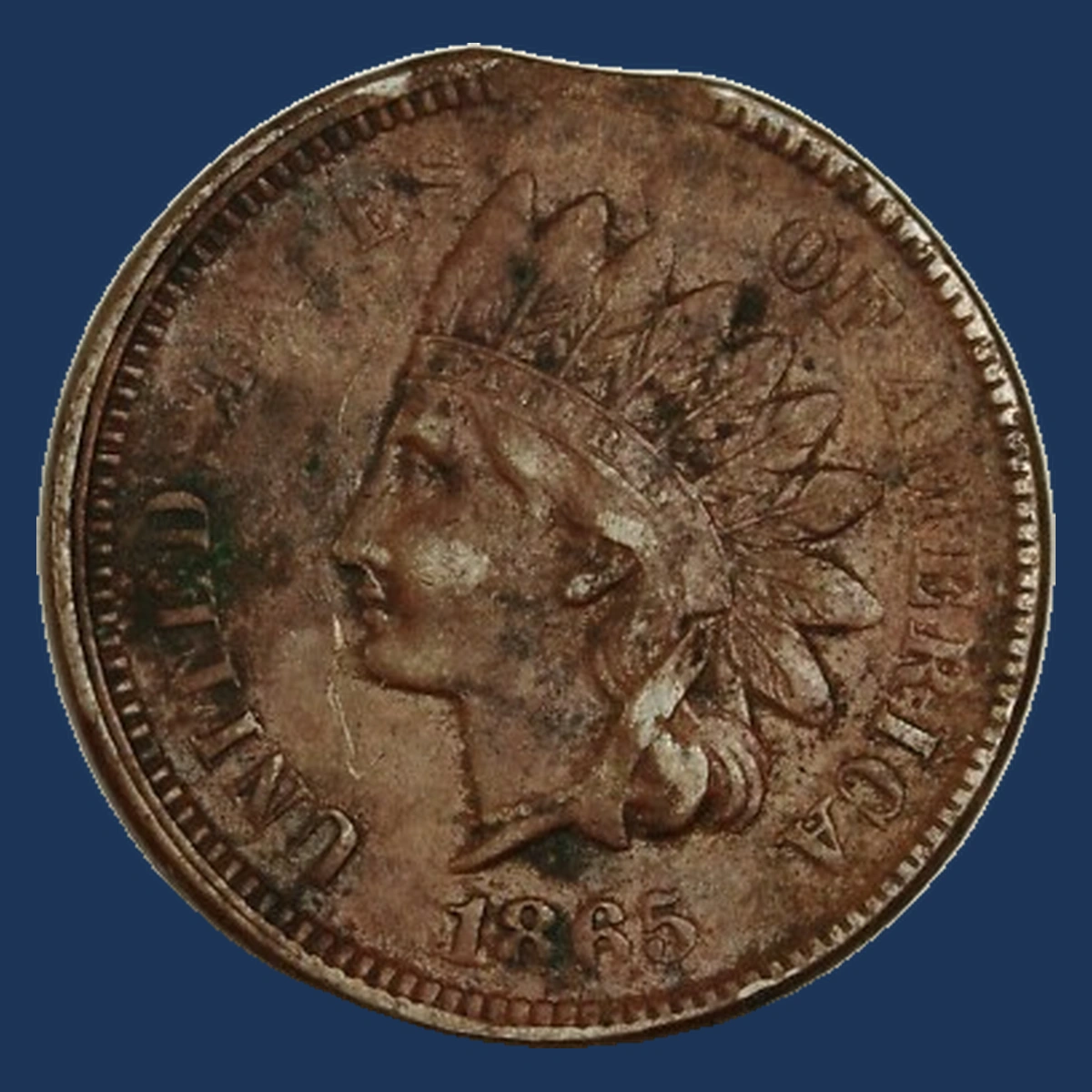
A clip leaves part of the penny’s outline missing. The loss happened while the blank metal disc was being cut, before the coin received its design.
The press struck that incomplete disc, so the design and rim developed around an edge that was already missing. That sequence helps separate a genuine clip from a piece cut out later.
An 1865 penny was offered as a clipped-planchet example by Capitol Coin Auctions. The listing did not establish a certified grade, a particular gap shape, or a position around the rim.
Estimated Value
An estimated $40–$750 allows for modest worn clips through clearer examples with better surfaces. The missing section must be shown to predate striking before this error range applies.
A separate ungraded 1865 example was advertised at $199.99 or best offer. That was a seller’s asking price, not a confirmed sale.
A large gap alone does not justify the upper end. Damage inside the cut and poor remaining detail can make a coin less desirable.
How to Identify
Do not polish or file the opening to make it easier to inspect. A close photograph of the missing edge can preserve clues that cleaning would remove.
Saw lines or repeated file marks suggest cutting after the coin was struck. A genuine clip can instead show softly formed design where the metal ran into the opening.
Weigh a loose coin and compare its surviving diameter with calipers. The normal cent was 3.11 g and 19 mm, with a plain edge, but both clipping and later cutting remove weight.
For a curved gap, also examine the opposite rim. It may be weak because of the incomplete blank, although that feature is not required on every genuine clip.
A weight deficit without these surface clues is not enough.
3. 1865 Indian Head Penny Rotated Dies — Estimated Value $40–$1,200
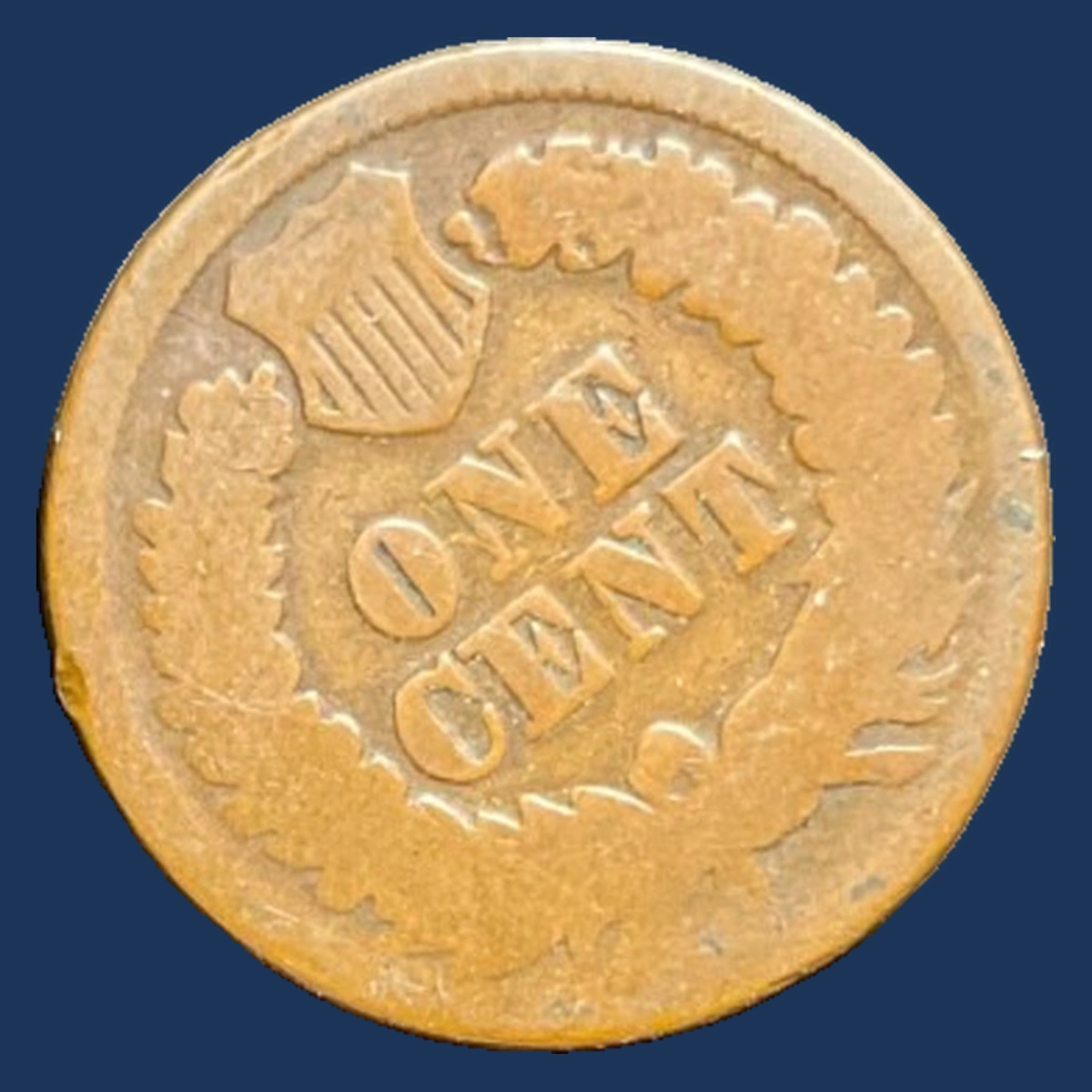
Turn a normal United States penny from top to bottom, and its back should stand upright. On a rotated-die example, the back ends up tilted instead.
One stamping tool was turned away from its proper position when the coin was made. The design can still be complete and neatly centered.
The 1865 Plain 5 listings include a full 180-degree rotation, as well as smaller angles. With a 180-degree error, the back appears upside down after the correct flip.
Turning a photograph on a screen can create the same appearance without any error in the coin.
Estimated Value
A half-turn is much easier to show than a slight tilt. For confirmed 1865 rotations, estimate $40–$1,200, with the larger, clearly demonstrated angles and better condition supporting higher values.
This range is a price estimate; the cataloged 180-degree example is not assigned a sale price here. Small alignment differences should not receive the same comparison automatically.
When a penny also has repunched digits, its price concerns the complete coin. Rotation does not create a second coin to value.
How to Identify
Hold the portrait upright above a soft surface. Flip the coin from top to bottom without turning it sideways, then look at the wreath.
Repeat the movement. A 180-degree example should leave the back upside down each time, rather than changing position with the way you hold it.
Keep the coin in its grading holder if it is sealed. Two separately rotated sales photographs cannot establish the angle; ask for one continuous turning video instead.
This error changes alignment, not the normal bronze specifications of 3.11 g, 19 mm, and a plain edge. A scale and calipers help check a loose coin’s identity, but the repeatable flip establishes the rotation.
4. 1865 Indian Head Penny Doubled Die — Estimated Value $30–$1,500
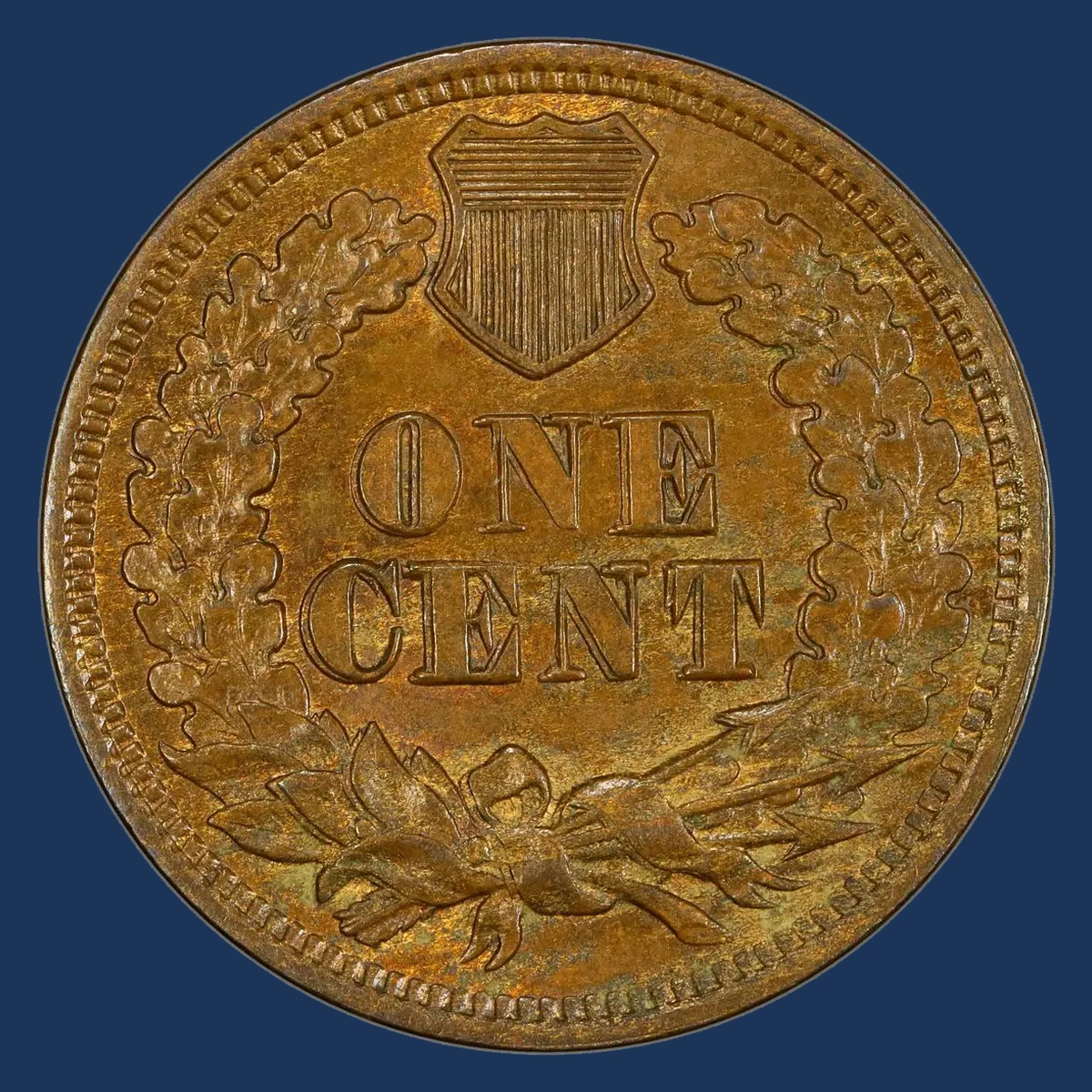
The doubled design belongs on the back of the Fancy 5 variety. Its repeated outlines are shifted toward the right, rather than surrounding the coin as a second large strike.
This kind of doubling starts when a stamping tool receives its design more than once in slightly different positions. Every coin made from that tool can carry the same pattern.
A doubled die therefore does not require the penny itself to be struck twice. The reported back-doubling pattern should not be assigned to a Plain 5 coin simply because both pennies bear the date 1865.
Estimated Value
For a correctly matched Fancy 5 example, use an estimated $30–$1,500 range. The useful price depends on the strength of the doubled outlines, remaining detail, and overall condition.
As a same-series comparison, an 1887 Indian cent with front doubling brought $1,380 in June 2025. It is a different year’s pattern on the opposite face.
That result helps frame stronger doubled-die coins; it does not establish a $1,380 sale for this 1865 back variety.
How to Identify
The recorded variety belongs to the Fancy 5 date style. Match that normal numeral shape before comparing any suspected doubling on the back.
A normal bronze cent weighs about 3.11 g, measures 19 mm, and has a plain edge. For a loose coin, use a scale and calipers to check that basic identity.
Now enlarge the back with a 10× magnifier and compare it with the recorded variety’s photographs. Follow the extra rightward outlines across several details rather than accepting a single thick letter.
Move the light to make the height of those edges visible.
A low, flat shelf made during striking is a common lookalike. It does not establish this variety even when it points in the expected direction.
5. 1865 Indian Head Penny Die Cracks, Chips, and Cuds — Estimated Up to $1,500
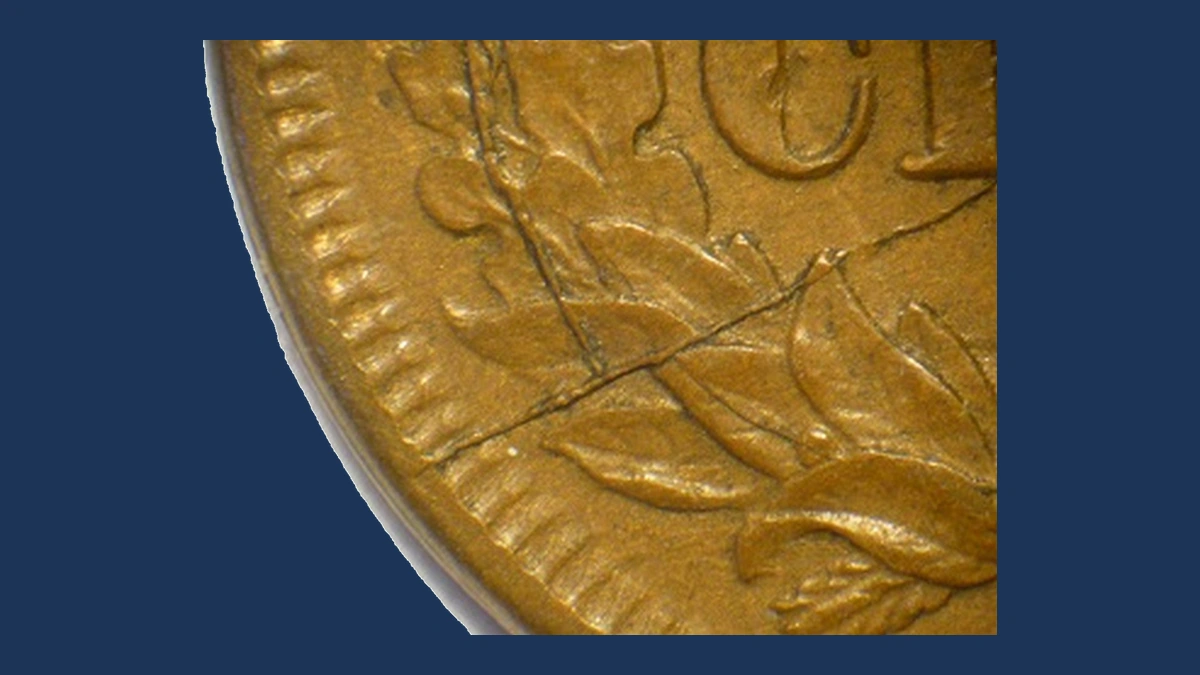
A damaged stamping tool can leave raised lines or lumps on the penny. Cracks make thin lines, while small missing pieces produce chips.
A larger break reaching the rim is called a cud. If the broken piece stays in the tool, a retained cud can preserve shifted design inside its outline.
Plain 5 examples include a chip in the N of ONE and a retained break at the top of the back. Fancy 5 reports include cheek or letter chips and a separate break near the lower-right back rim.
Estimated Value
Small cracks and chips fit an estimated $10–$300 whole-coin range; clearer rim breaks can reach $75–$1,500. Their size matters, but remaining detail and surface condition matter too.
A 1946-S Lincoln cent cud sold for $288 in March 2021. That later design provides a general broken-tool comparison, not a price for any particular 1865 location.
The ranges overlap because a well-preserved coin with a small chip can outvalue a badly damaged large-cud example.
How to Identify
For the Plain 5 retained break, examine the back rim from roughly 11:15 to 12:45. The Fancy 5 lower-right example occupies a different area, about 3:45 to 5:00.
A retained piece can still stamp design within the broken outline. A fully missing piece instead leaves a raised area where normal detail should have appeared.
Use side lighting to check whether a suspected crack rises above the surface. The Plain 5 example has a line above TES toward the rim and another along the left wreath.
Small chips need the same check under a 10× magnifier. For a loose coin, use a scale and calipers to check the ordinary 3.11 g, 19 mm body and plain edge, without scraping any raised feature.
6. 1865 Indian Head Penny Repunched Date — Estimated Value $20–$2,500
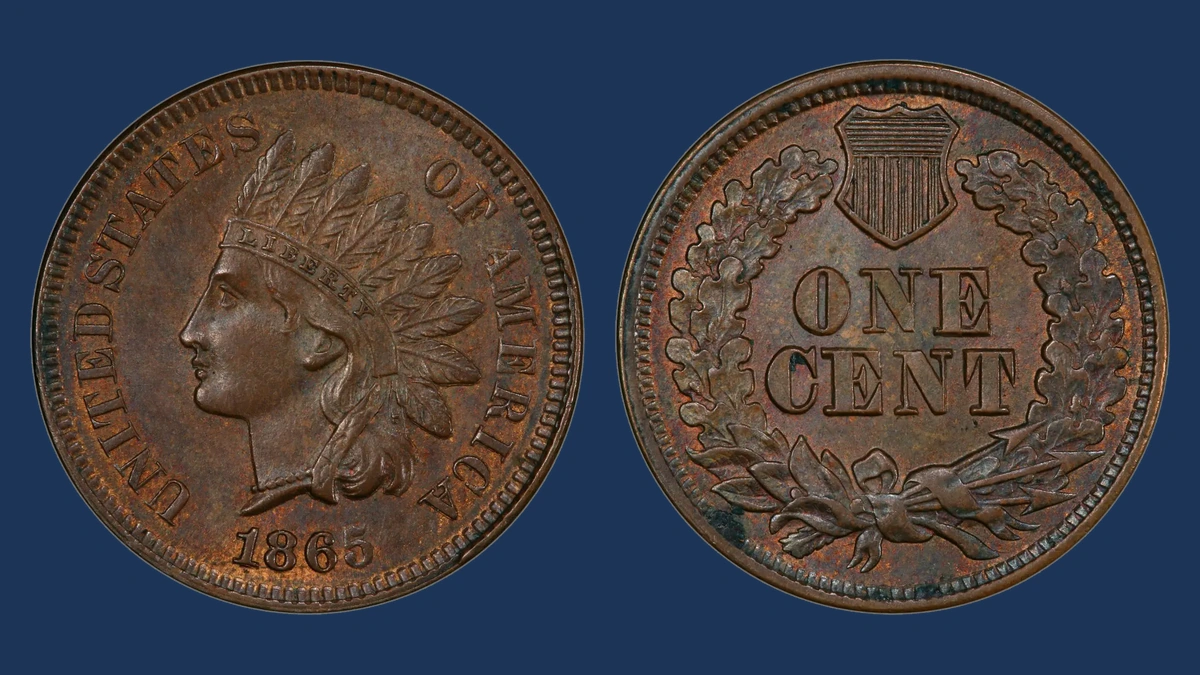
Extra strokes close to the normal digits can show where the date punch first entered the stamping tool. The worker struck the punch again after its position shifted slightly.
The finished tool then passed both impressions to the coins. This is called a repunched date.
On a documented Plain 5 example, extra parts of 18 lie below the main digits, while parts of 65 lie above them. Fancy 5 varieties also exist, but their patterns must be compared separately.
The two normal styles of 5 are not themselves signs of repunching.
Estimated Value
Estimate $20–$2,500 for identified 1865 repunched dates across worn examples and stronger, better-preserved varieties. The top of the range assumes an attractive coin with a clear, desirable pattern.
An 1889 repunched-date cent graded MS64 recorded $405 on eBay in May 2015. MS64 means unworn, with some visible marks.
That different-year result is a comparison for the same process, not a sale of the Plain 5 pattern shown here. Tiny isolated bumps deserve a more cautious comparison.
How to Identify
The extra strokes do not all point the same way on the Plain 5 example. Sketch the lower remnants beside 18 and the upper remnants beside 65 before comparing photographs.
Use a 10× magnifier and move the lamp while leaving the penny still. A reflection may vanish, but a raised extra stroke remains part of the surface.
For a loose cent, a scale and calipers should show a body close to 3.11 g and 19 mm, allowing for wear. Check its plain edge as well.
Go back to the date with the matching variety photograph beside it.
Cut grooves or freshly disturbed metal beside the digits need closer professional examination. The extra strokes should rise like parts of the numerals themselves.
7. 1865 Indian Head Penny Misplaced Date — Estimated Value $40–$2,500
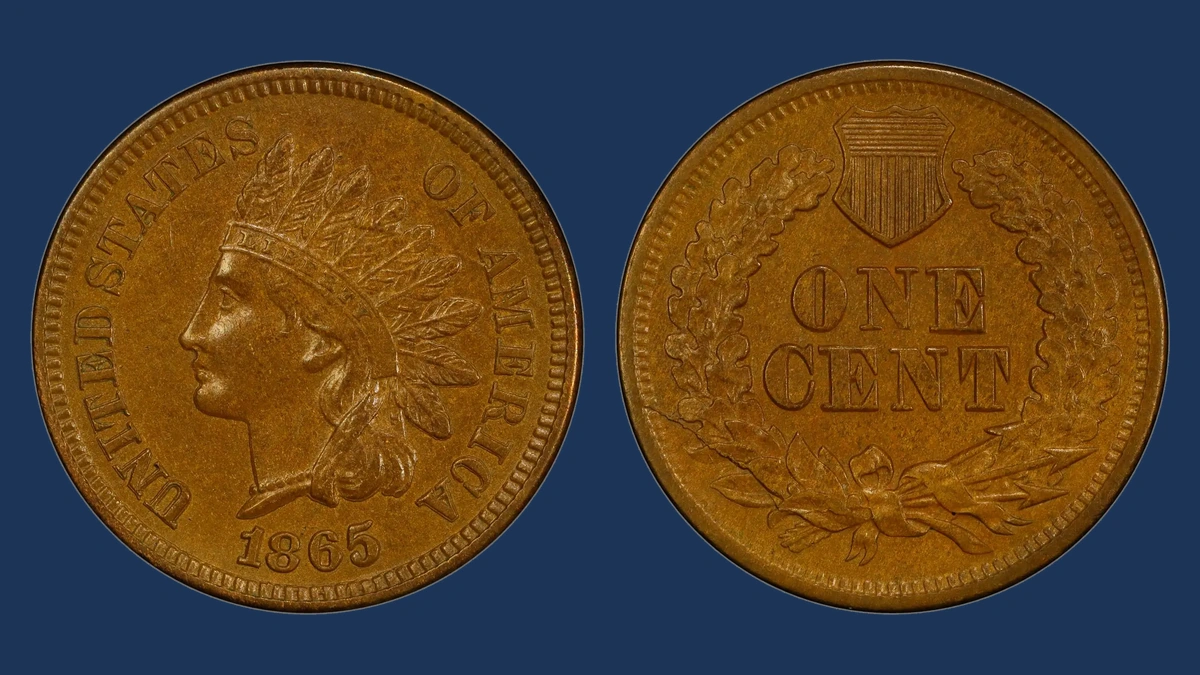
A misplaced date fragment sits somewhere the date was never meant to appear. A worker placed the date punch too high or too low while preparing the stamping tool.
Even after the date was put in its proper position, a fragment of the earlier attempt could remain. The finished pennies repeat that small extra shape.
Plain 5 examples include fragments among the border teeth below the date or between 8 and 6. On Fancy 5 examples, lower parts of 6 or 5 appear near the ribbon below the portrait.
Estimated Value
An estimated $40–$2,500 covers recognizable fragments on worn coins through better-preserved examples with stronger collector appeal. The price should reflect the exact pattern, rather than the number of extra marks.
For perspective, a 1908 misplaced-date penny graded MS65 Red and Brown recorded $1,187 on eBay in 2021. That is an unworn, later-year coin retaining some original red color.
The 1865 estimate uses that broader comparison, not a claimed matching sale at the same amount.
How to Identify
Tiny border teeth can resemble digit fragments, so first compare the penny with a normal coin of the same date style. A scale and calipers can check a loose coin against the normal 3.11 g weight and 19 mm diameter.
The plain edge should also remain intact. With a 10× magnifier, search the Plain 5 border below the date and the space between 8 and 6.
Match the fragment’s curve to part of a numeral, rather than naming an uneven tooth by its location alone. Fancy 5 examples require a different search near the ribbon below the neck, where lower parts of 6 or 5 are reported.
8. 1865 Indian Head Penny Off-Center Strike — Estimated Value $150–$3,500
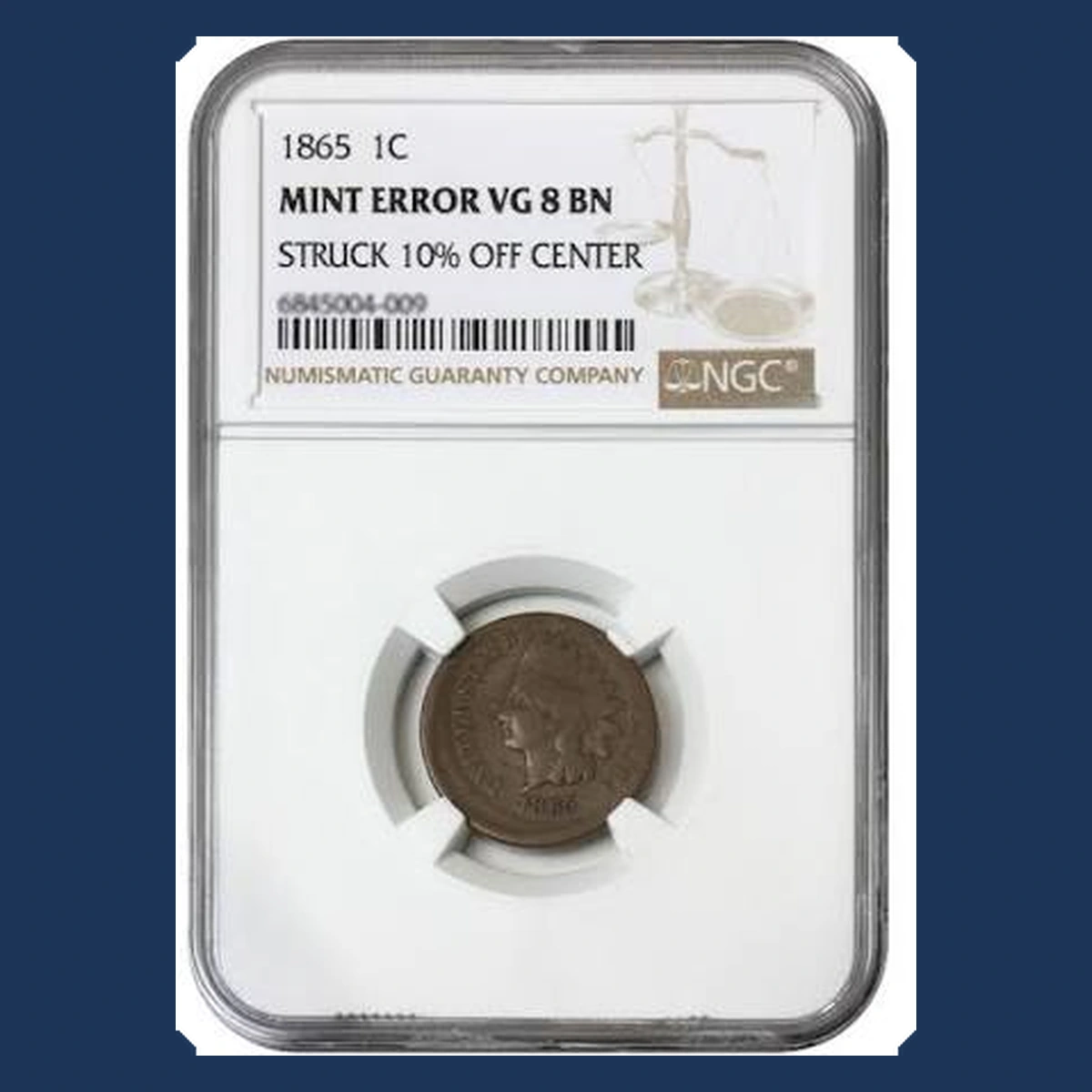
Part of the design runs beyond the blank when a penny enters the press off center. The opposite side of the disc remains unstruck, creating a bare crescent.
A reported NGC MS64 Brown 1865 example is about 20% off center toward 11 o’clock. Its unworn surfaces are different from the worn coins often offered with this error.
Other 1865 examples have different directions and amounts of movement. One complete but displaced strike should not be confused with a double strike whose second impression lands off center over an earlier design.
Estimated Value
For ordinary 1865 off-center pennies, estimate $150–$3,500, with readable dates and attractive unworn surfaces supporting stronger prices. The amount missing from the design also changes the comparison.
A 1984 dealer catalog asked $85 for a different, lightly worn 1865 example struck 20% off center toward 9 o’clock. That decades-old asking price is not a modern auction result.
The MS64 Brown example is a separate coin. Neither its condition nor its direction should be attached to the historical $85 listing.
How to Identify
Compare the front and back before measuring the offset. A genuine off-center strike normally cuts off part of both designs, while a shifted tool can leave only one face off center.
Find the bare crescent and the opposite area where the design runs out of room. The reported 11-o’clock direction describes the displaced strike; it should not be copied onto every photograph’s blank side.
An intact bronze blank starts near 3.11 g, so a digital scale should not show the loss expected from a large clip. Calipers can reveal an uneven outline around the normal 19 mm size.
Look along the plain edge for crushing or filing. A complete design merely surrounded by extra metal points toward a broadstrike instead.
9. 1865 Indian Head Penny Broadstrike — Estimated Value $150–$4,000
The design remains complete, but the penny spreads wider than it should. This happens when the collar, the ring that normally limits outward movement, fails to contain the blank during striking.
An 1865 Plain 5 example appeared in the 2011 Stack’s Bowers ANA sale, graded NGC MS66 Red and Brown. Its central design was clearly struck, with spreading around both faces.
MS66 describes an especially well-preserved unworn coin. The error is the uncontrolled spreading itself, not simply the coin’s attractive condition or the amount of original red color left.
Estimated Value
A recent same-series comparison is an 1893 broadstrike graded PCGS AU58+, which sold for $414.80 in March 2026. That coin had very little circulation wear but was not the 1865 MS66 example.
Estimate $150–$4,000 for 1865 broadstrikes, allowing for worn pieces through unusually well-preserved examples. The 2011 catalog appearance alone does not establish a realized price.
Keep the full design and surface quality in the comparison. A flattened penny is not valuable merely because it measures wider.
How to Identify
Measure across more than one direction with calipers on a loose coin. A broadstrike should show expansion beyond the normal 19 mm outline, rather than metal missing from one side.
A scale reading close to the bronze cent’s original 3.11 g helps show that the disc remained substantially intact. Check the plain edge for later grinding or squeezing.
Next, follow the outer lettering around both faces. It should remain on the coin even where the rim is unusually wide or poorly formed.
The 2011 cataloged Plain 5 example combines that full design with clear central detail. Flattened lettering and crushed surfaces would instead make later mechanical damage the first concern.
10. 1865 Indian Head Penny Double Strike — Estimated Value $600–$6,000
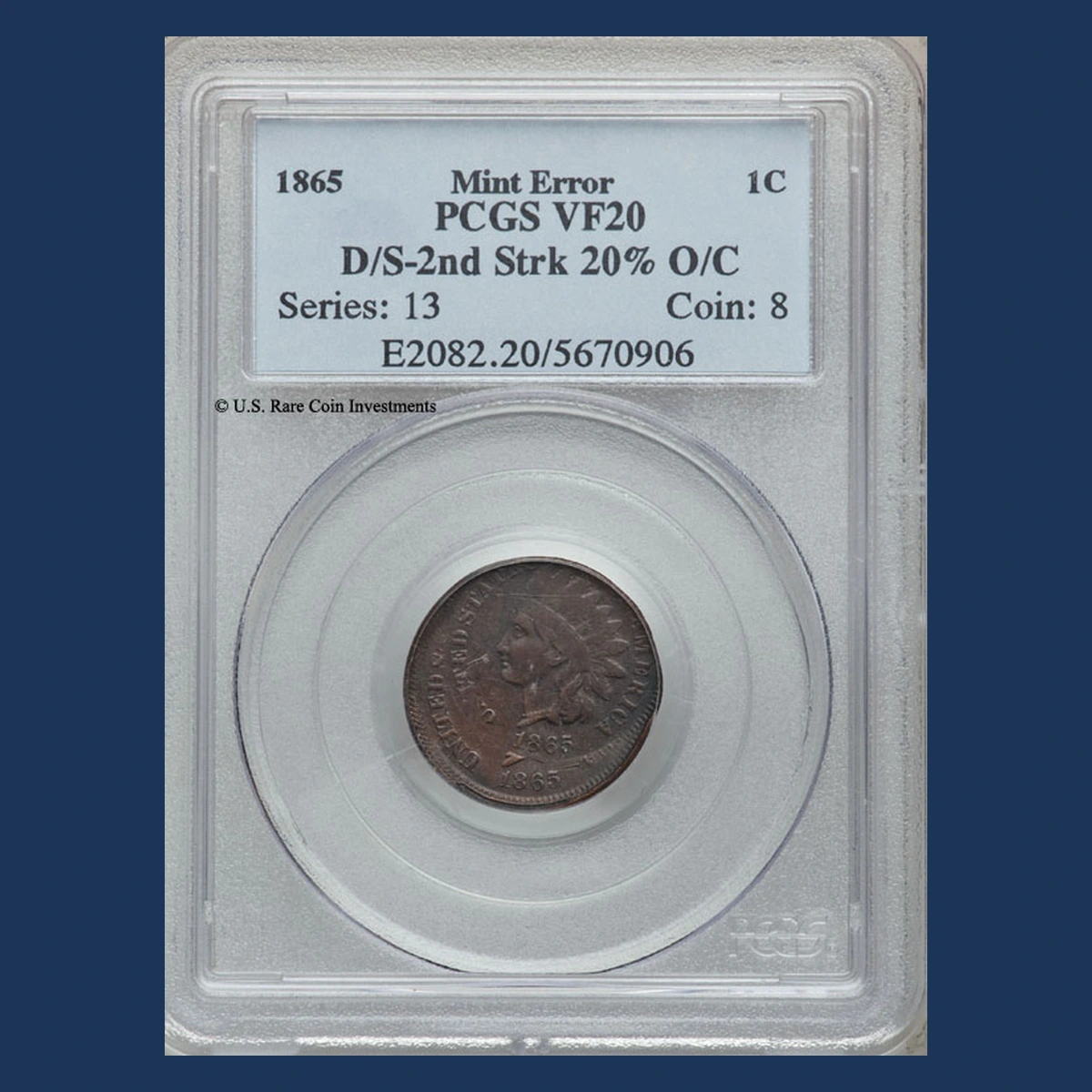
Two overlapping impressions can leave a penny with repeated dates or an extra part of the portrait. The struck coin failed to leave the press and received another blow after moving.
One Fancy 5 example graded PCGS VF20 has a second strike about 20% off center toward 1 o’clock. A separate NGC MS62 Brown coin has its second strike about 20% off center toward 2 o’clock.
The latter shows two dates. These are different coins, and their positions should not be combined into one imagined sequence of three strikes.
Estimated Value
A Fancy 5 double strike graded PCGS VG8 sold for $1,080 on January 2, 2023 at Heritage. VG8 describes a heavily worn coin; its second strike was 25% off center.
An estimated $600–$6,000 spans worn examples through stronger, attractive double impressions. That sale concerns a third specimen, not either 20% example described above.
Visible separation and remaining date detail can matter greatly. A second strike over a nearly unreadable first impression offers less to see.
How to Identify
Two apparent dates deserve a whole-coin comparison. Before naming a double strike, use a scale and calipers on a loose example and inspect the plain edge for a joined seam.
An intact coin should remain near 3.11 g, less circulation wear, but its irregular outline may exceed the normal 19 mm span. Now trace each date into the neighboring portrait or lettering to find the two separate impressions.
The reported MS62 Brown example has two dates and a second strike toward 2 o’clock. The VF20 coin is a different example, with the second blow toward 1 o’clock.
At the overlap, look for metal moved by the later blow. Small extra date strokes without a second surrounding design are more consistent with a repunched tool.
Conclusion
The shape of the 5 is the first useful sorting step for an 1865 penny. Then look for a repeated digit, a raised break, or a change in the way the full design was struck.
Estimated values run from $10 to $6,000, with the worn double strike’s $1,080 auction result showing that visible errors can matter even on circulated coins.
Keep each photograph, grade, and price attached to the right example.