1861 Penny Error List with Pictures

An 1861 penny can carry two strikes even when almost all the second impression missed the coin. Its heavy copper-nickel metal also makes comparisons with later bronze pennies less straightforward.
For a real auction comparison, a worn 1865 bronze double strike brought $1,080 in January 2023. These 1861 penny errors have estimated values of $20–$5,000, depending on the feature and condition.
The following checks show where to look, including the tiny clues that separate repeated tool details from a second blow.
1. 1861 Indian Head Penny Clashed Dies — Estimated Value $25–$1,000
A faint outline beside the central arrow on the back can come from the opposite stamping tool. Such marks form when the dies, the steel tools that stamp coins, meet without a blank between them.
A later penny picks up the transferred outline. The original collision did not need to line up perfectly.
The 1861 catalog reports an off-center clash in this area. Here, off center describes the misplaced tool contact, not a penny with its whole design struck beyond the edge.
The main portrait and wreath can therefore remain centered.
Estimated Value
For visible, correctly matched clash marks, estimate $25–$1,000 for the complete penny. Much of that spread reflects the underlying coin’s condition, especially at the unworn end.
A faint unexplained line should not receive the same comparison as a recognizable transferred outline. The cataloged clash has no realized price assigned here.
If a coin also has cracks or repeated date strokes, compare that particular combination. Charging the full value of every feature separately would count the same coin more than once.
How to Identify
Normal size helps separate a clash from larger striking mistakes. For a loose 1861 penny, use a scale and calipers to check for roughly 4.67 g and 19 mm, with a plain edge.
The main designs may be centered, without a bare crescent. Examine the area beside the central arrow on the back with a 10× magnifier and compare the faint outline with the portrait on a normal coin.
The tool contact was shifted, so its trace need not occupy the usual position of a centered clash. Under side lighting, distinguish raised transferred detail from a scratch, then photograph both faces without turning each image separately.
2. 1861 Indian Head Penny Repunched Date — Estimated Value $30–$1,500
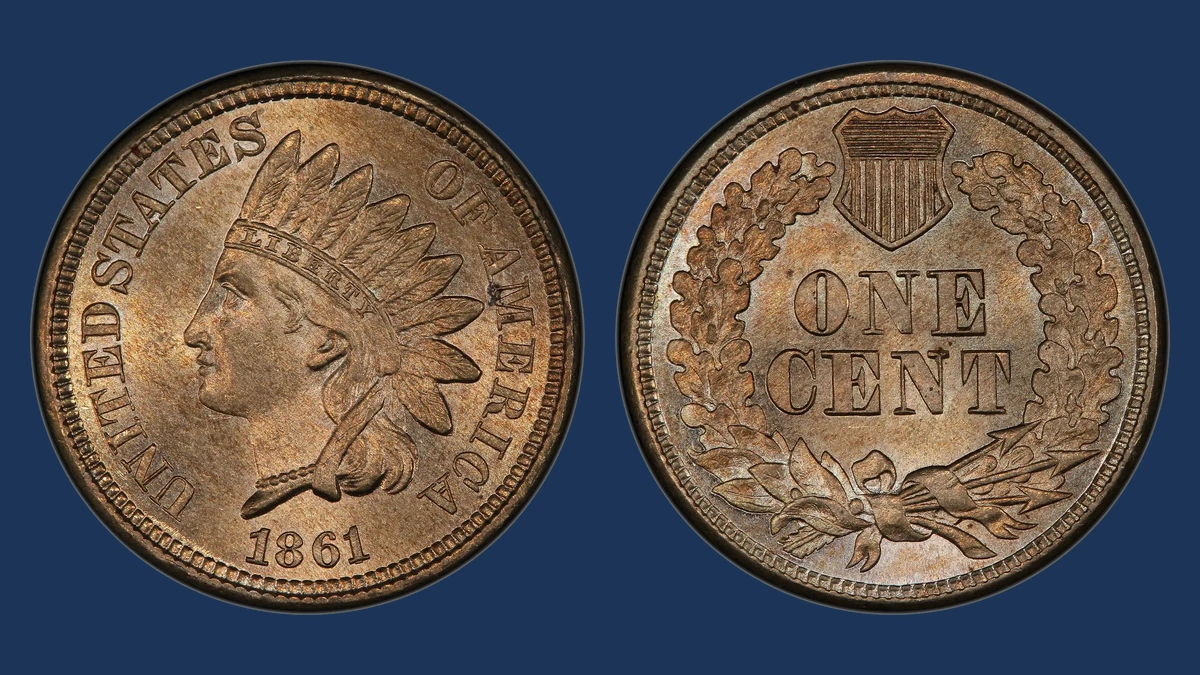
An extra curve under the 6 or a small repeated stroke under a 1 can come from the date punch. The date was punched into the stamping tool more than once, with a slight change in position.
The coins then received the overlapping digits from that tool. They did not each need a second strike.
One 1861 pattern has repeated parts of 61 below the main numerals. A separate pattern shows extra strokes below the small feet of the first 1.
These locations describe different varieties, rather than a required combination on every repunched date.
Estimated Value
Whole-coin estimates of $30–$1,500 allow for ordinary worn examples and stronger patterns in better condition. The visible extra digit must match the variety being priced.
An 1889 bronze repunched-date penny graded MS64 recorded $405 on eBay in May 2015. That unworn later coin gives a same-design comparison, but differs from the heavier copper-nickel 1861 issue.
The amount is not an 1861 auction result. Weak date remnants and scratched surfaces can reduce interest even when the variety is genuine.
How to Identify
Inspect the first 1 separately from the final 61. Mixing those two reported patterns can make a genuine example seem incomplete simply because it lacks the other variety’s feature.
Use a 10× magnifier to follow the lower curve of the 6 and the small horizontal feet of each 1. Shift the lamp to check that the extra stroke is raised, not a cut made beside the digit.
The ordinary 1861 cent uses 88% copper and 12% nickel, weighing 4.67 g at 19 mm across. Check a loose example with a scale and calipers, and examine its plain edge.
A flat shelf along many unrelated details suggests movement during striking instead. Look for a repeated part of a numeral, not just thickness.
3. 1861 Indian Head Penny Die Cracks and Cuds — Estimated Up to $2,000
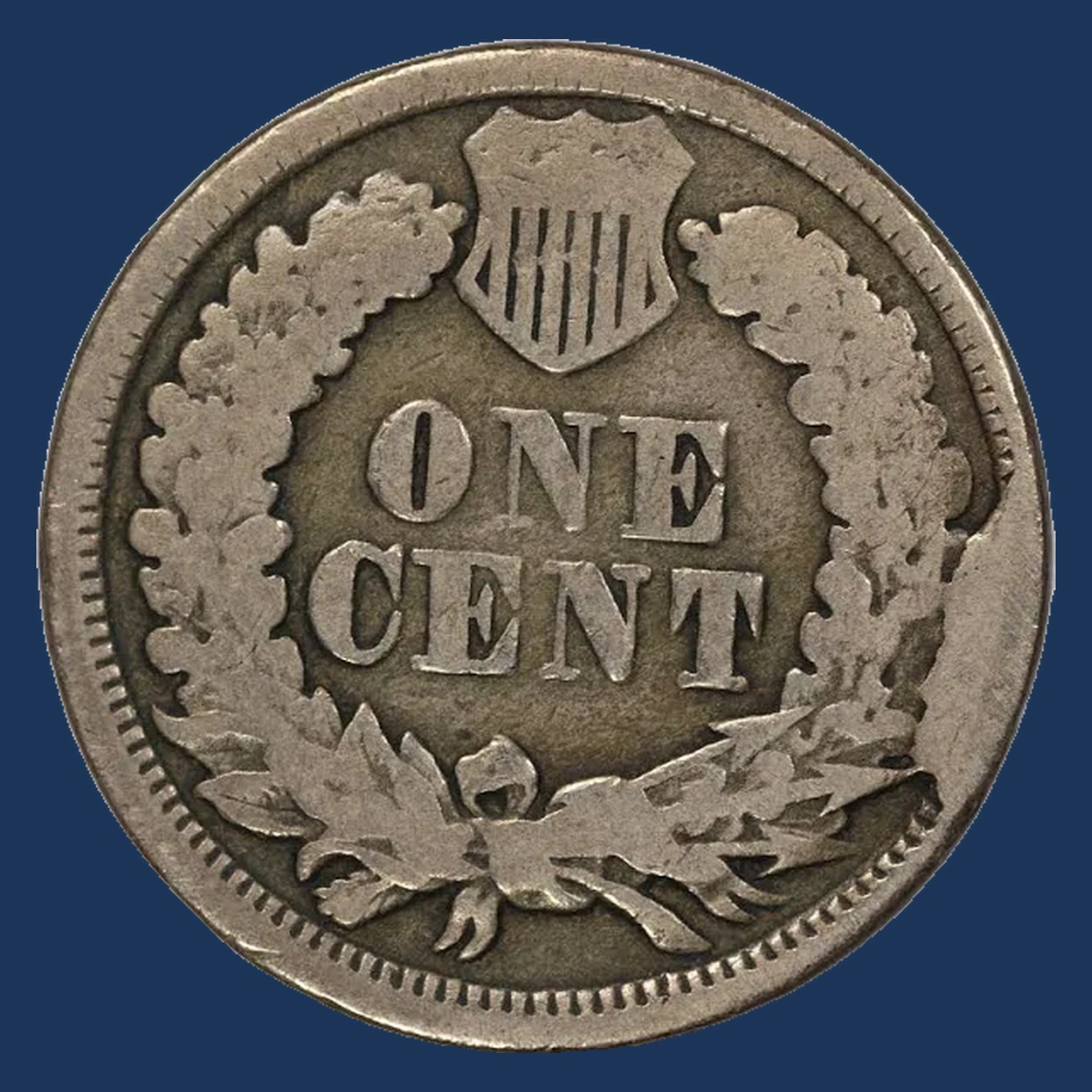
A raised patch reaching the rim can mark a missing piece of the stamping tool. Collectors call this a cud.
Metal flowed into the opening instead of receiving the normal design. Thin raised lines elsewhere may show where the tool cracked before a larger piece broke away.
The reported 1861 cud lies on the right side of the back, around 3 to 4:15 o’clock. Other cataloged coins show cracks at several points around the back rim.
A stronger crack near the upper-right edge is a separate example, not an extra feature required beside every cud.
Estimated Value
Allow approximately $20–$500 for visible cracks and $100–$2,000 for clear rim-connected breaks. These are whole-coin estimates, so a high-quality small-crack coin can overlap a worn large-cud example.
A 1946-S Lincoln cent cud realized $288 in March 2021. That is a general comparison for the missing-tool-piece mechanism on a different design and metal mixture.
For an 1861 penny, inspect how much of the original design survives around the break. Corrosion and cleaning can outweigh the attraction of a large raised patch.
How to Identify
Begin at the edge beside the suspected patch. A post-mint impact may leave a dent with pushed-up metal, while a cud should show metal struck into a missing part of the tool.
The 1861 catalog places the reported back cud around 3 to 4:15 o’clock. Compare that location with the remaining wreath and rim under a 10× magnifier.
Use a scale and calipers on a loose coin to check its roughly 4.67 g weight and 19 mm diameter. The edge is normally plain.
Then trace any thin line through the design.
A genuine tool crack appears raised under side lighting. A groove cut across the coin is not the same feature, even if it follows a cataloged location.
4. 1861 Indian Head Penny Doubled Die — Estimated Value $40–$2,500
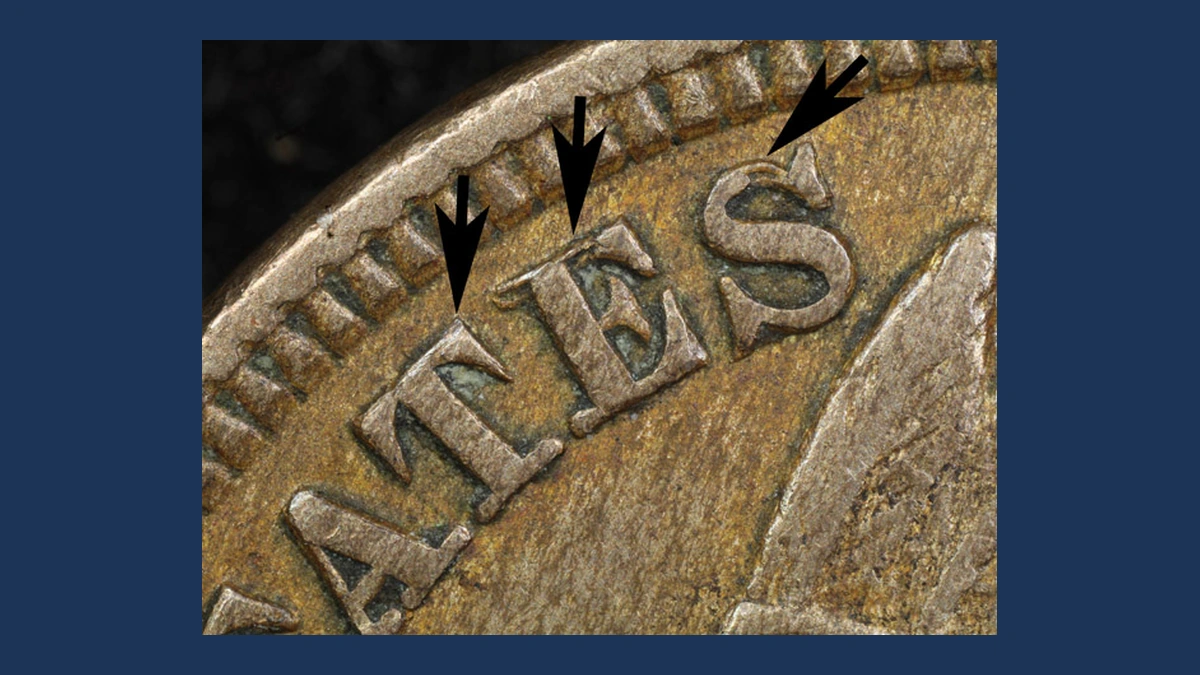
Look for extra raised detail in STA of STATES and along the right edge of the eyelash. Those features belong to a recorded 1861 doubled die.
The repeated design entered the stamping tool during its preparation. It differs from the simple weak or broken letters sometimes found on these pennies.
A missing piece of a letter does not establish doubling. The extra outline must be present.
The catalog describes the pattern as following work on the master design tool and another transfer of the design. The finished die then produced coins carrying the same small repeated features.
Estimated Value
A matching example can be estimated at $40–$2,500, from worn but recognizable coins through stronger examples in better condition. The repeated eyelash and lettering need enough detail to identify the pattern.
For comparison, an 1889 bronze cent with back doubling, graded AU55, sold for $240 in July 2025. AU55 means light circulation wear.
That result concerns a different year, face, and metal mixture. It helps compare a modest doubled-die coin without assigning its price directly to this 1861 front variety.
How to Identify
Weak letters are common enough that a broken E or S should not end the inspection. Start instead with the positive features: a repeated edge on the eyelash and doubling in STA.
A 10× magnifier is useful here. Look from more than one light angle, because a bright reflection can make a single raised edge appear doubled.
Check the loose coin’s weight and diameter with a scale and calipers: about 4.67 g and 19 mm, with a plain edge. The heavier copper-nickel body is normal for 1861.
Compare both marked areas with photographs of the same variety. A flat shelf produced during striking or an isolated nick by the eye does not reproduce the complete pattern.
5. 1861 Indian Head Penny Clipped Planchet — Estimated Value $75–$3,000
A missing section of the original blank can leave an 1861 penny with an incomplete outline. The design was struck after that metal was already absent.
Dealer Charmy Harker reported owning a large clipped example described as MS64, meaning unworn with some marks. Her report establishes the claimed example without fixing the gap’s position or naming a grading service.
The shape of the opening therefore needs to be checked on the actual coin. A penny cut or filed after circulation can also look incomplete, but it did not leave the Mint that way.
Estimated Value
The reported MS64 example belongs among unworn comparisons, not low-grade damaged pennies. Estimate $75–$3,000 for genuine 1861 clips across different sizes and levels of preservation.
A later 1865 bronze clip was advertised at $199.99, without a certified grade. That is an asking price on a lighter-metal issue, not a sale of the 1861 coin.
The size of the missing area needs to be considered alongside the design. A large gap does not cancel the effect of cleaned or scratched surfaces.
How to Identify
The reported clip does not come with a specified clock position. Do not reject a candidate just because its opening differs from an unrelated photograph.
For a loose coin, use a digital scale to compare its weight with the original 4.67 g standard. Check the surviving diameter against 19 mm with calipers and inspect the plain edge.
Then study the opening itself under a 10× magnifier.
A struck incomplete blank can show soft detail beside the gap; a curved clip may also weaken the opposite rim. Saw marks, fresh cuts, or a repeated filed texture suggest later removal instead.
A low weight alone cannot decide between them. The way the design meets the missing area supplies the more useful evidence.
6. 1861 Indian Head Penny Broadstrike — Estimated Value $150–$3,500
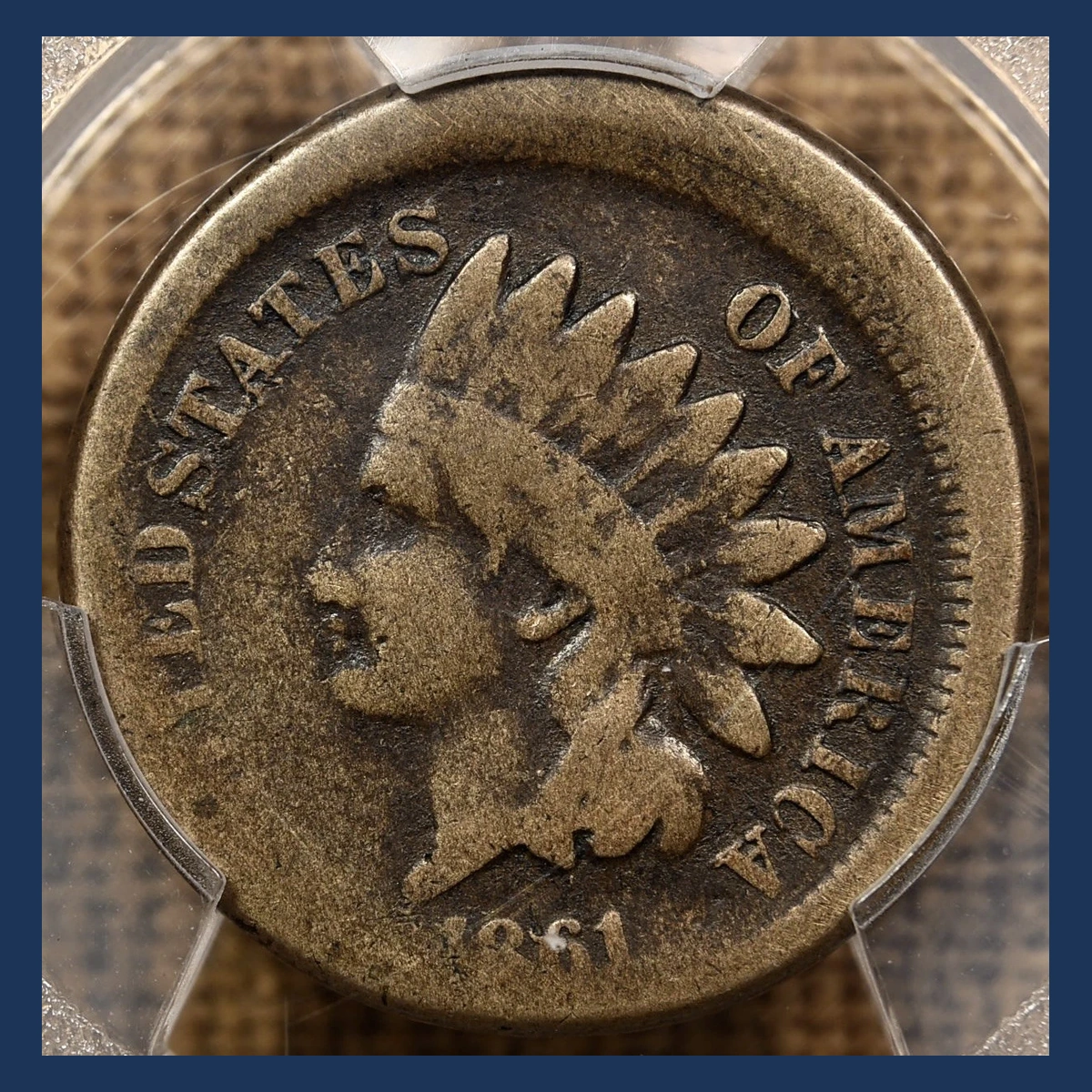
A broadstrike looks spread out around a design that still fits on the coin. The collar, the ring that normally controls the coin’s diameter, did not fully contain the blank during striking.
Robert Lutzel’s collection included an 1861 example described as broadstruck and shifted slightly toward 12 o’clock. That small upward shift can make one part of the expanded border wider than another.
The description does not require two separate striking mistakes to be priced independently. The visible result is one widened coin, whose complete design must be distinguished from a more strongly off-center strike.
Estimated Value
Use an estimated $150–$3,500 range for 1861 broadstrikes, depending on condition and how clearly the expanded shape survives. The collection report does not supply a sale amount for its example.
A different 1893 bronze broadstrike with very little wear sold for $414.80 in March 2026. It offers a later, lighter-metal comparison rather than a direct match.
For 1861, the thicker copper-nickel coin and its surface quality must remain part of the judgment. Diameter alone does not set the value.
How to Identify
Start with the outer lettering rather than the widest point of the coin. If substantial design runs off the disc, reconsider whether the result is a broadstrike or an off-center strike.
In the reported 1861 example, a slight shift toward the top accompanies the spreading. An uneven border is therefore possible even when the full design remains present.
For a loose coin, measure several spans with calipers instead of relying on one diameter. Compare them with the normal 19 mm size and use a scale to check against the original 4.67 g weight.
The plain edge and central detail should not show general crushing. Flattened letters across both faces would make later squeezing a stronger explanation for the increased width.
7. 1861 Indian Head Penny Double Strike with Off-Center Second Strike — Estimated Value $500–$5,000
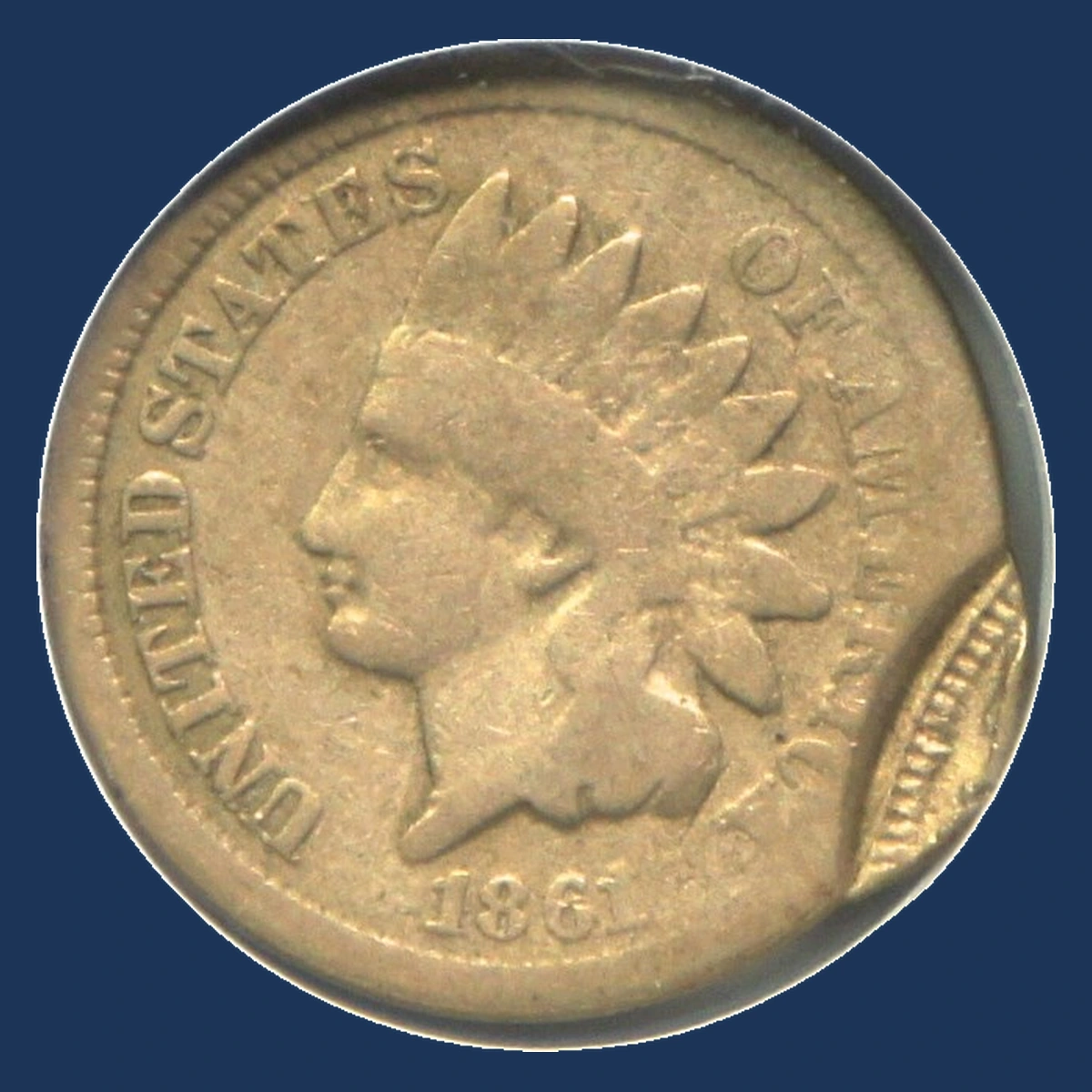
Most of this penny received a normal centered impression before a second blow caught its edge. The later strike landed near 4 o’clock, leaving only a small part of another design.
A collector’s NGC registry records an example graded VG10, a worn coin with major details still visible. Its label description gives a 90% off-center second strike, while the owner’s text says 95%.
Both descriptions indicate an extreme offset. They refer to the same coin, not two different examples.
The overlapping strike and its offset belong to one compound minting event.
Estimated Value
An estimated $500–$5,000 covers this kind of 1861 double strike, with the visibility of both impressions and remaining condition guiding the comparison. The reported VG10 specimen has no sale price assigned here.
A bronze 1865 Fancy 5 double strike graded VG8 brought $1,080 in January 2023 at Heritage. Its second strike was 25% off center, unlike the much smaller overlap described for 1861.
The two coins should not receive equal prices automatically. Compare the actual visible second design.
How to Identify
The label’s 90% and the owner’s 95% both describe a strike that mostly missed the coin. Neither figure should be selected as an exact measurement without comparing the photographs.
Keep the first portrait upright and examine the edge near 4 o’clock with a 10× magnifier. Trace any recognizable part of the second design into the area touched by the later blow.
A dent may push metal upward, but that alone does not provide a second struck image.
For a loose coin, inspect the plain edge for a joined seam and compare its weight with the original 4.67 g. Calipers may show an altered outline rather than the normal 19 mm circle.
The remaining second design must still explain that local change in shape.
Conclusion
An 1861 cent’s 4.67 g copper-nickel body is normal, even though it feels heavier than later Indian pennies. Its errors range from small repeated tool details to a second strike barely catching the edge.
Estimated whole-coin values span $20–$5,000. Keep the worn double strike, the reported unworn clip, and the smaller tool varieties in their own condition comparisons.
Before buying, match the actual feature rather than trusting an unusual outline or a dramatic label alone.