1875 Penny Error List with Pictures

Look below the date and above the N in ONE when checking an 1875 penny. Small details in those places can identify varieties that an ordinary glance misses.
An exceptionally preserved repunched-date example sold for $5,040 in August 2020. This 1875 Indian Head penny error list covers estimated whole-coin values from $10–$6,000, including misplaced numerals, broken-tool marks, and off-center strikes.
The checks below explain what each feature looks like and which price comparison belongs with it.
1. 1875 Indian Head Penny Numeral Tops Hidden in the Border
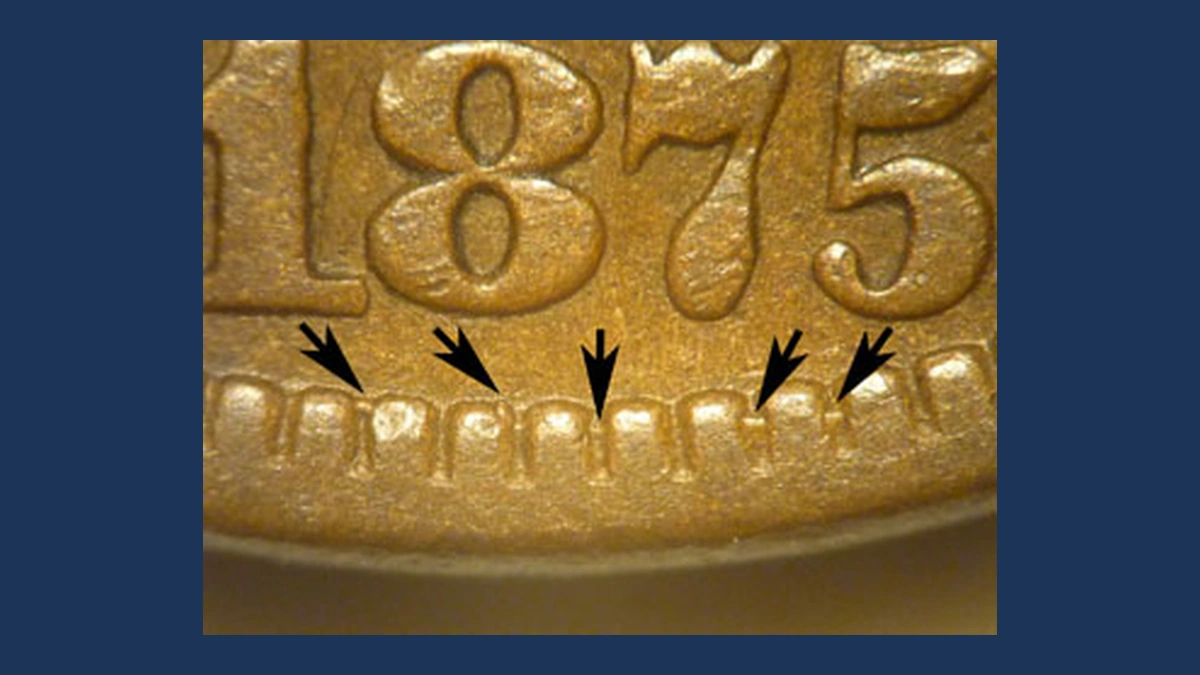
The tiny border teeth below the date can hide tops of extra numerals. One 1875 pattern contains parts of 875 below and to the left of the main digits.
The date punch first touched the stamping tool too low and too far left. Its surviving marks were copied onto later coins along with the correctly placed date.
This is called a misplaced date. The extra strokes sit away from the main numerals, unlike ordinary repunching beside them.
The reference identifies this arrangement as Variety 21. Its particular border marks should be matched before borrowing another misplaced-date variety’s name or price.
Estimated Value
Estimate $30–$300 for readable worn 1875 misplaced dates and $300–$3,000 for clearer examples with stronger preservation. These ranges value the complete coin, including its surfaces and ordinary date value.
An 1878 misplaced-date cent graded MS65 Red sold for $1,920 in October 2019. That unworn, red example shows a different arrangement of stray numerals.
Visible fragments do not set a fixed premium. A scratched border can make identification harder even when genuine strokes survive.
How to Identify
Start with a straight-on photograph that includes the whole date and the lower rim. Under a 10× magnifier, compare the small shapes with the tops of the normal 8, 7, and 5.
The Variety 21 reference places them below and left of those digits. Do not shift the comparison to random marks farther around the border.
For a loose penny, check 3.11 grams with a scale and about 19 millimeters with calipers. Inspect the plain edge for filing or damage reaching the date.
Change the light across the border teeth. A scratch can cut through several teeth, while an earlier numeral preserves its own recognizable raised outline.
2. 1875 Indian Head Penny Design Shifted off the Blank
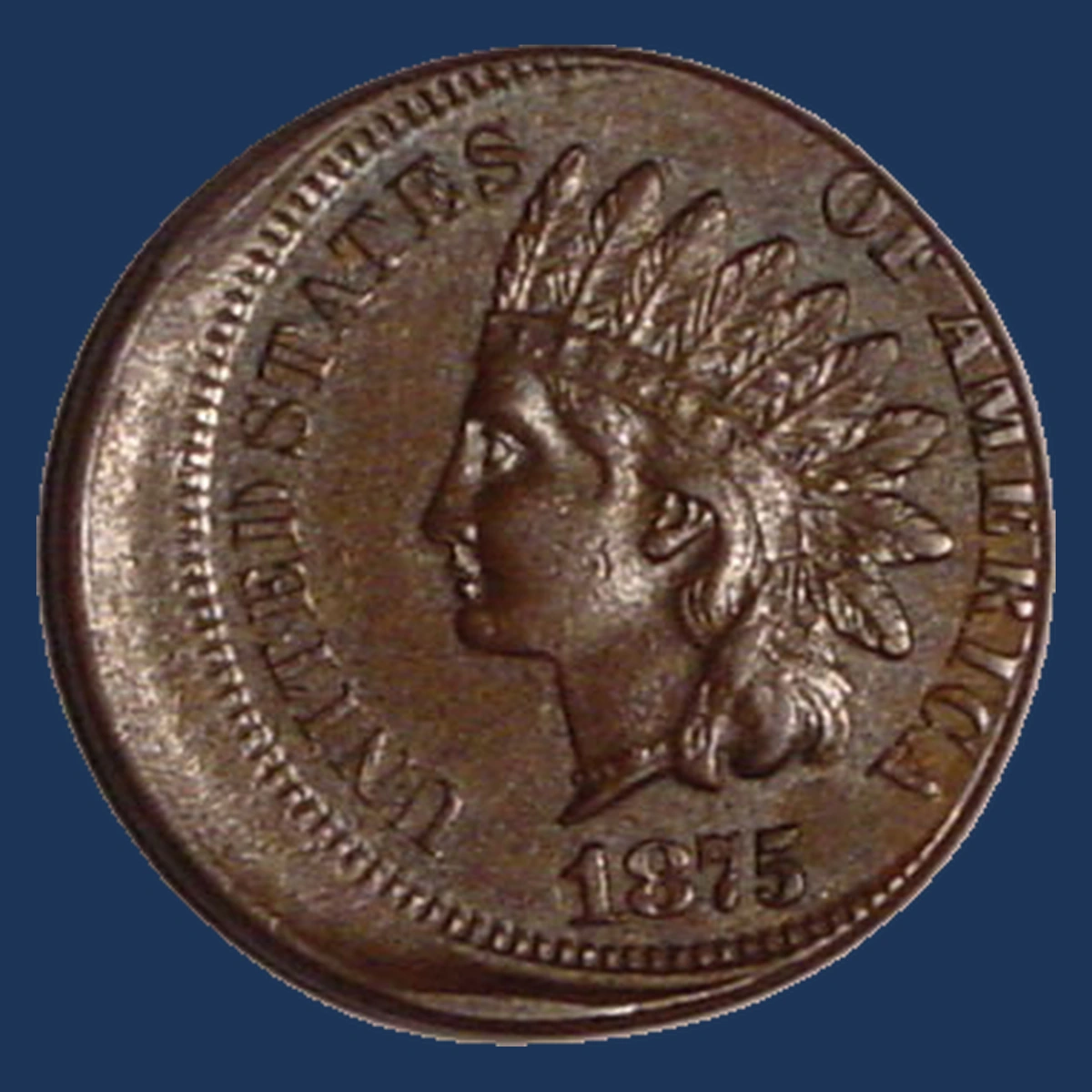
An off-center penny has lost outer design beside an unused crescent of metal. The blank sat outside the proper striking position when the tools came together.
One recorded 1875 cent is ten percent off center toward three o’clock and graded NGC MS61 Brown. MS61 describes an unworn coin with noticeable marks.
A separate Heritage example is twelve percent off center at PCGS Very Good 8, indicating heavy circulation wear. Its listing does not supply the other coin’s direction.
These examples show the same kind of accident in different conditions. Their percentage, grade, and direction must stay with their own descriptions.
Estimated Value
The twelve-percent PCGS Very Good 8 cent sold for $391 in February 2005. That is a completed sale of the worn example.
Estimate $150–$1,000 for circulated 1875 off-center cents and $1,000–$5,000 for more dramatic or better-preserved pieces. A clear original date helps establish the year.
The ten-percent unworn example needs a different condition comparison. The small difference between ten and twelve percent does not, by itself, explain what either coin should cost.
How to Identify
For a loose cent, record its weight on a scale beside the usual 3.11 grams. Use calipers to record several widths against the ordinary diameter of about 19 millimeters.
A shifted strike need not remove any copper. A low weight therefore needs an explanation beyond the bare crescent.
Use a 10× magnifier where the design stops and compare both faces. The displaced details should fit one misplaced blank rather than only one tool shifting.
Keep the complete outline and date in your photographs.
Inspect the plain edge and bare area for grinding or pressure applied later. Assign the three-o’clock direction only when it matches the coin, rather than copying it from the other recorded example.
3. 1875 Indian Head Penny Raised Dot on the N in ONE
A dot appears at the top of the N in ONE on this collected variety. Snow-16 and FS-801 are two reference names for the same feature.
A mark in the stamping tool produced the dot on each coin made from it. It differs from loose dirt sitting on a finished penny.
Some specialists regard the mark as intentional. The popular story that it helped catch a Mint thief is not established evidence for this coin’s manufacture.
Treat the dot as its own identifiable variety. It should not automatically be described as an accidental tool chip or a grease-filled design.
Estimated Value
A specialist dealer listed a PCGS MS63 Red and Brown example at $1,850. That is an asking price, even though the page later showed the coin out of stock.
For correctly identified 1875 Dot-on-N cents, estimate $50–$800 in circulated condition and $800–$5,000 for stronger unworn examples. Wear and surface quality still affect the whole coin.
The story behind the mark does not replace identification. A random lump near a different letter does not qualify for these ranges.
How to Identify
Locate ONE in the center of the back, then examine the upper part of N with a 10× magnifier. Keep the whole letter visible rather than enlarging only the bump.
The specialist’s example provides the shape and position to match.
Tilt the light to see whether the dot is part of the original raised design. Do not scrape away a suspected deposit to test it.
A scale and calipers compare a loose bronze cent with 3.11 grams and about 19 millimeters. Inspect the plain edge and both faces for alteration.
A nick can push copper into a raised lip, but it also leaves damaged metal nearby. Compare the complete N and its surroundings before assigning the variety.
4. 1875 Indian Head Penny Tool Cracks, Neck Chip, and Rim Cuds
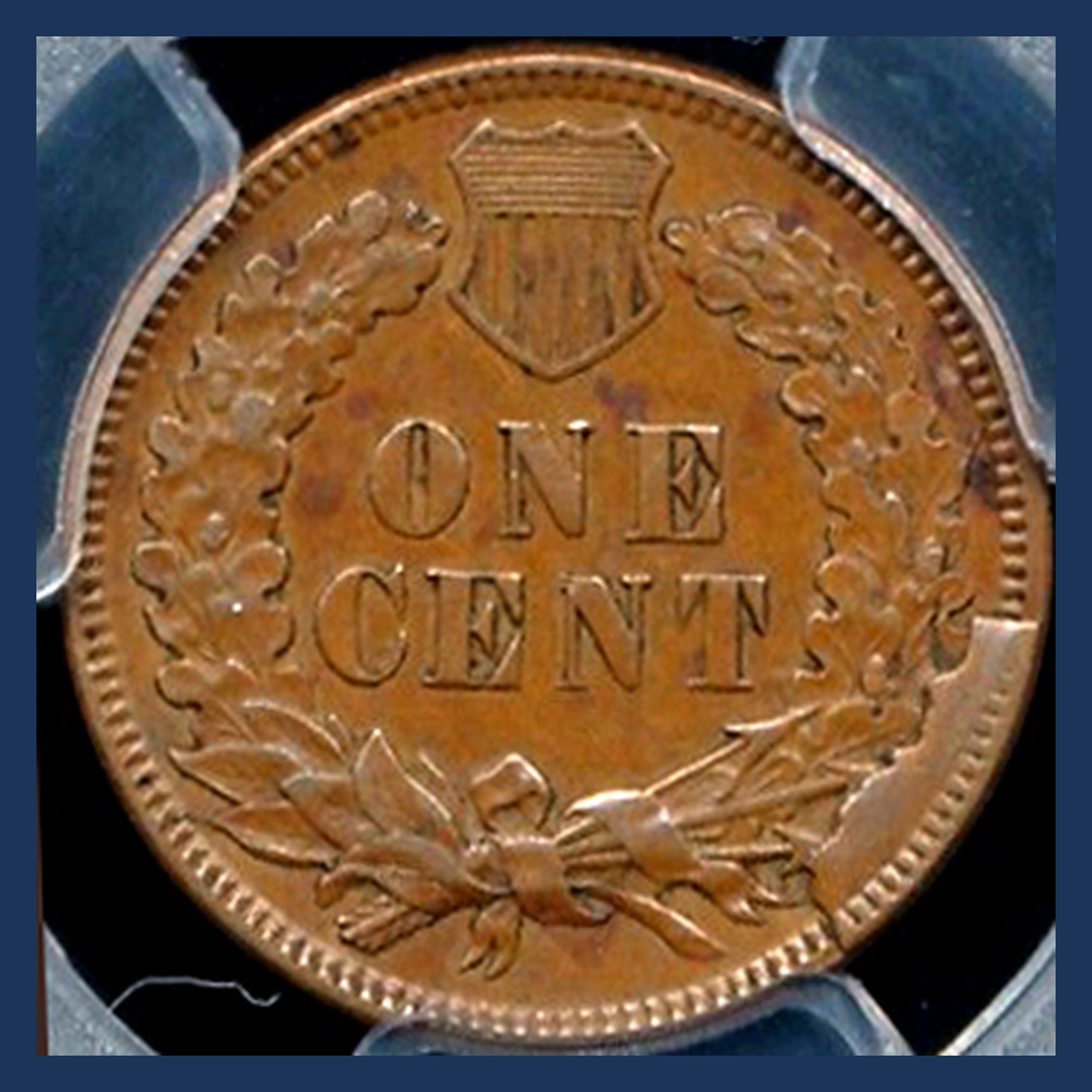
A cracked stamping tool can leave a raised line through the wreath. On Variety 21, one line rises from the back rim near five-thirty through the left ribbon end and olive leaves.
A small missing piece inside a tool can instead leave a raised chip. The Snow-3a repunched-date variety has a noticeable chip on Liberty’s neck.
A larger missing edge piece produces a rim-connected patch called a cud. Several 1875 cud patterns are recorded.
These faults belong to different examples. A neck chip, a ribbon crack, and a rim cud need not occur together as one pattern on a penny.
Estimated Value
Estimate $10–$150 for small cracks and $25–$1,500 for clearer chips or cuds across ordinary conditions. Exceptionally preserved varieties can reach roughly $1,500–$6,000 as complete coins.
The Snow-3a with a neck chip sold for $5,040 in August 2020 at PCGS MS66 Red. Its unworn preservation, red color, and repunched date all mattered.
That high result does not price the chip alone. A worn penny with a small raised mark needs a much lower-condition comparison.
How to Identify
Decide whether the feature is a thin line, an interior bump, or a broad rim patch. A 10× magnifier and side light help show the difference.
Trace the Variety 21 line from the lower rim through the left ribbon end and leaves. For the Snow-3a chip, examine the neck instead; its repunched date supplies another matching feature.
For a loose coin, use a scale against 3.11 grams and calipers against about 19 millimeters. Check the plain edge beside a claimed cud for folding or added metal.
A genuine cud must meet the rim. An isolated lump on the N in ONE needs the separate Dot-on-N comparison, whose origin should not be assumed to be an accidental break.
5. 1875 Indian Head Penny Earlier Date Strokes beside the Main Digits
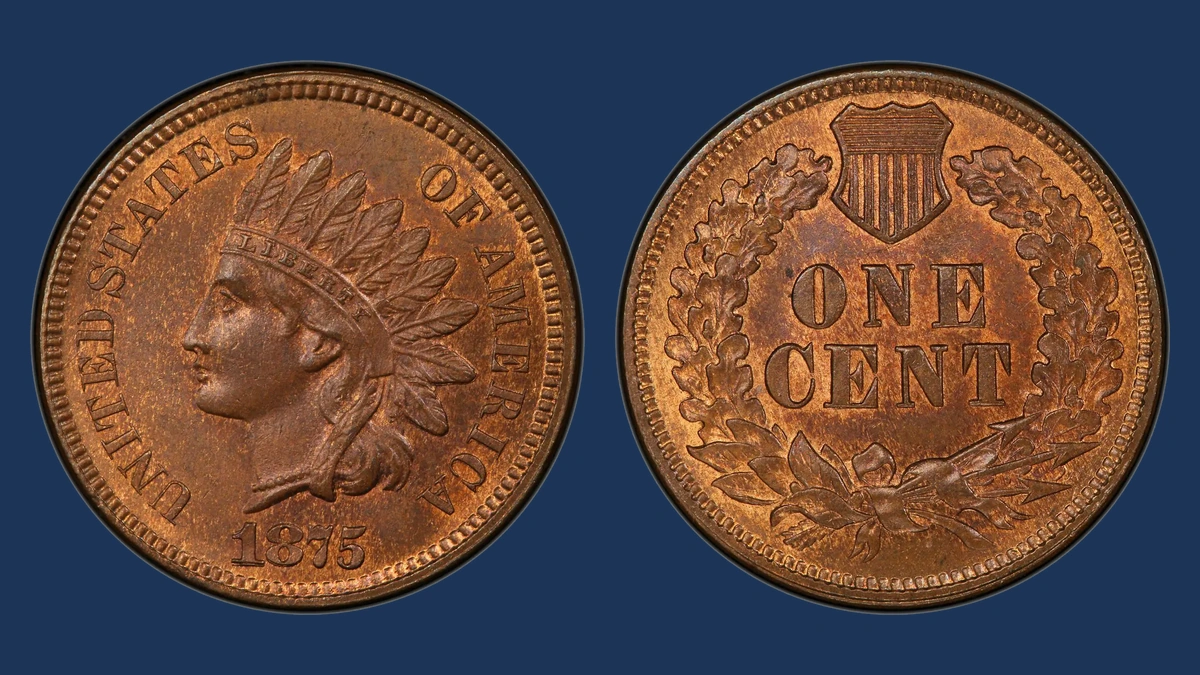
The date can show small raised strokes beside the main numerals when an earlier punch position remains visible. The worker applied the date punch to the steel tool more than once.
Those extra impressions were already on the tool when each penny was struck. This differs from the whole coin receiving another blow.
Several 1875 repunched-date patterns are recorded, including Snow-1, Snow-2, and Snow-3. Their extra strokes occupy different positions and need separate photographs.
The documented Snow-3a example also has the neck chip described above. The two features help identify one variety, rather than proving two separate striking accidents.
Estimated Value
The Snow-3a graded PCGS MS66 Red sold for $5,040 in August 2020. MS66 describes exceptional unworn preservation, while Red refers to retained copper color.
Estimate $30–$500 for identifiable circulated 1875 repunched dates and $500–$6,000 for stronger unworn examples. The exact pattern and surface quality guide the comparison.
The auction price already includes its neck chip. Do not add the full chip-section value to the full repunched-date value when both describe the same penny.
How to Identify
For the Snow-3a example, examine the neck chip alongside the date with a 10× magnifier. The two marks should match the same variety photograph, while other repunched dates may lack that chip.
Photograph all four digits before enlarging the extra strokes, and compare their position with the matching Snow variety. A scale and calipers check a loose bronze penny against 3.11 grams and about 19 millimeters; inspect its plain edge for alteration.
Tilt the light across each extra stroke to see whether it forms a recognizable part of an earlier numeral. Sharp cuts from engraving, dirt on the surface, or a flat ledge beside a digit can imitate doubling without that earlier numeral shape.
Conclusion
Two small marks on an 1875 penny can have very different meanings. A numeral top in the border comes from a misplaced date punch, while the dot on N identifies a separately collected tool variety.
Estimated whole-coin values run from $10–$6,000. Match the physical feature and condition together, and remember that the $5,040 Snow-3a sale already includes both its repunched date and its neck chip.