1879 Penny Error List with Pictures

A pale 1879 penny brought $13,200 in February 2025 because its metal differed from the usual bronze. Its old country label was challenged, but the unusual metal remained the key feature.
This 1879 Indian Head penny error list also covers extra date strokes, broken stamping tools, missing copper, and misplaced strikes. Estimated whole-coin values run from $5–$20,000.
Start with the visible feature, then use the matching checks and price range below.
1. 1879 Indian Head Penny Blocked Design near the Lower Left Rim
The lower left part of the front can have an impression where material blocked the normal design. Collectors call this a struck-through error.
The obstruction sat between the blank and a stamping tool during the blow. Its shape could remain after the material fell away.
A historical Jim’s Coins listing describes an 1879 example with this feature between seven and eight-thirty on the clock. The coin was heavily worn, described as Good.
The listing does not identify the object or substance. A dent made after striking can also remove detail, so location alone does not establish the cause.
Estimated Value
Estimate $10–$300 for worn through sharper 1879 examples with a clear original obstruction mark. Size, surviving design, and surface quality affect the whole-coin value.
The historical listing carried an $8.50 minimum bid. That is a starting amount, not a recorded selling price.
For broader same-series context, a worn 1862 broadstrike with a struck-through feature sold for $192 in October 2022. Its expanded outline was an additional error, so that result does not price a simple 1879 impression directly.
How to Identify
Keep the date upright and examine the lower left area under a 10× magnifier. Seven to eight-thirty describes the recorded location, rather than a mark required on every struck-through penny.
Side lighting can show whether the struck design fades naturally into the impression. A later impact may flatten existing detail and push metal up around its edge.
A loose bronze cent normally weighs 3.11 grams and measures 19.05 millimeters; check these with a scale and calipers. Inspect its plain edge beside the affected area.
Do not name a wire, cloth, or grease obstruction from location alone. The visible shape needs to support that more specific description.
2. 1879 Indian Head Penny Shallow Surface Flaw beside the Nose
A shallow patch near Liberty’s nose appears on an unworn 1879 cent graded PCGS MS64 Red and Brown. Red and Brown describes the copper’s remaining color.
The auction title calls the feature lamination, meaning a weak metal layer separated. The description also allows a shallow struck-through impression, made when material blocked the blow.
Both explanations describe the same patch. A lifted metal layer would favor lamination, while an impression without a separating sheet could fit an obstruction.
The surrounding portrait is sharply struck. Examining the patch’s boundary helps distinguish a separating layer from a surface depression left by an obstruction.
Estimated Value
Use an estimated $25–$750 for a genuine 1879 shallow mint-made surface flaw across different conditions. The attractive unworn auction example belongs with comparisons that preserve similar detail and color.
A different 1890 Indian cent with lamination sold for $104 in April 2010. That provides context for a layer defect, rather than a completed sale of the 1879 nose-side patch.
The range covers the whole coin. One patch receives one value, whether caused by a weak layer or an obstruction.
How to Identify
Leave any attached copper untouched. A thin lip or lifting sheet beside the nose would help explain the patch as a weak layer separating within the metal.
For a loose coin, use a scale against 3.11 grams and calipers against 19.05 millimeters. A shallow surface fault may leave both measurements close to normal.
Now examine the boundary with a 10× magnifier and side light. A depression where the design was blocked, without a separating sheet, could instead fit a struck-through impression.
Inspect the plain edge and neighboring surface for scraping or corrosion. Keep the nose-side patch separate from the worn example with an obstruction mark beside the lower-left rim.
3. 1879 Indian Head Penny Missing Part of the Original Blank
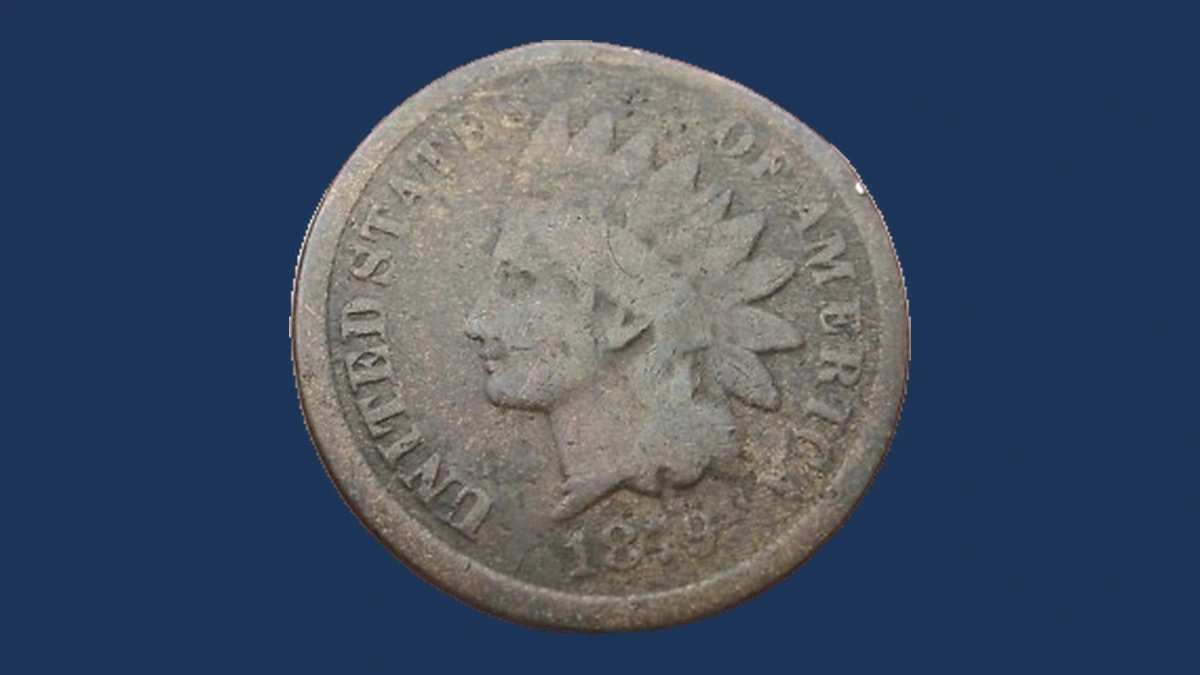
A gap in the round outline can begin before the penny receives its design. An incomplete blank enters the press, and the strike spreads copper beside the missing section.
A seller described an 1879 example as a clipped planchet with Very Good Details. Planchet is the collecting term for a prepared metal blank.
That description indicates a worn coin, but does not provide a grading-service record. It also does not establish a clip shape or clock position.
The important question is when the gap formed. Cutting or filing a finished penny can remove metal after its design was already present.
Estimated Value
Estimate $20–$200 for genuine worn 1879 clips, with $200–$1,000 for stronger examples in better condition. A readable date and an original edge support the comparison.
An unworn 1852 large cent with a clip brought $384 in June 2024. That different-sized copper coin provides broad error-market context, not a direct price for the seller’s worn 1879 cent.
A small gap may add only modest interest. Surface damage and alteration remain separate from the original missing part of the blank.
How to Identify
The seller described a worn coin, so compare the gap with wear on the surrounding rim. A fresh cut through that older surface needs particular attention.
Use a 10× magnifier to inspect the boundary from the side and from both faces. Look for filing, saw lines, or finished design cut off abruptly.
For a loose coin, use a scale against 3.11 grams and calipers across an intact span against 19.05 millimeters. A missing segment shortens measurements taken through the gap.
Trace the remaining plain edge, then inspect the rim beside and opposite the gap. Local weakness can support missing metal before striking, but it must fit the whole edge rather than one isolated weak spot.
4. 1879 Indian Head Penny Raised Cracks and Retained Rim Breaks
A fine raised ridge can cross the wreath when a steel stamping tool cracks. Copper enters the opening and copies its shape onto the penny.
One 1879 pattern has back cracks near twelve, three, and five o’clock. In a later stage, part of its lower right rim area breaks but remains in place.
This is a retained rim break: some design survives inside the broken area. Other recorded examples have breaks at the lower left or upper right.
Those locations belong to separate tool patterns. They should not be combined into a single required outline on every 1879 penny.
Estimated Value
Estimate $5–$100 for small cracks and $50–$1,500 for clearer retained rim breaks on genuine 1879 cents. Condition and the particular tool pattern affect the complete coin’s price.
An unworn 1866 Indian cent with a back cud sold for $504 in March 2021. A cud is a rim-connected raised patch left by missing tool metal.
That comparison concerns a different year and break. A faint crack alone need not add much beyond an ordinary cent’s value.
How to Identify
Surviving design inside a raised boundary matters when identifying a retained break. The steel piece broke but stayed in place, so it could still press some of its detail into the penny.
With a 10× magnifier, compare that detail with the appropriate back photograph. The lower-left, lower-right, and upper-right breaks belong to different patterns.
For a loose coin, use a scale and calipers to check 3.11 grams and 19.05 millimeters. View its plain edge beside the break for a fold or added metal.
Keep the back upright when checking the recorded positions. Compare seven-forty-five to nine, four-forty-five to five, or one to three with the matching example, rather than joining all three areas into one break.
5. 1879 Indian Head Penny Earlier Numeral Strokes beside 1879
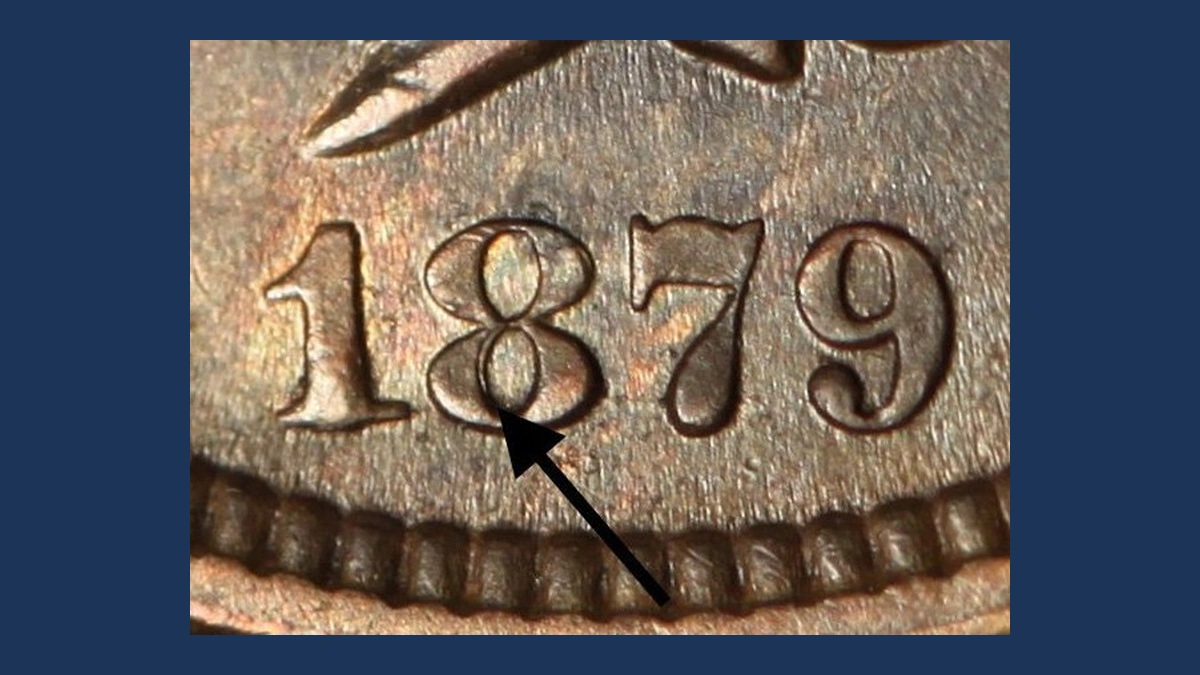
Tiny pieces of an earlier date can remain beside the main numerals. The worker pressed the date punch into the stamping tool again at a slightly shifted position.
One 1879 pattern has earlier strokes toward the right inside the lower loop of the 8 and upper loop of the 9. Other examples repeat the 9 above and below, or the 8 toward the lower left.
These are separate arrangements, not one combined date. Each earlier stroke must match its variety picture.
The finished coin received this detail from its tool. It did not need another blow in the coin press.
Estimated Value
For identifiable 1879 repunched dates, estimate $20–$300 in circulated condition and $300–$2,000 for attractive unworn examples. The particular date pattern and its visibility matter.
An 1895 Snow-1 repunched date graded MS64 Brown sold for $264 in November 2022. MS64 indicates an unworn coin, while Brown describes its copper color.
That is a different date variety within the same series. Its sale gives context without assigning an identical price to every extra line around an 1879 numeral.
How to Identify
For a loose coin, use a scale and calipers to compare 3.11 grams and 19.05 millimeters. Check its plain edge and the date area for signs of alteration.
The 1879 variety photographs show several different date patterns. Enlarge the complete date, then choose the correct photograph before examining the 8 and 9.
Under a 10× magnifier, follow the older curve inside the appropriate numeral. Change the light to separate raised metal from dirt or a cut beside the main stroke.
A repeat below and left of the 8 differs from extra strokes above and below the 9. Match the visible shape and direction without combining those separate arrangements.
6. 1879 Indian Head Penny Design Struck toward the Left
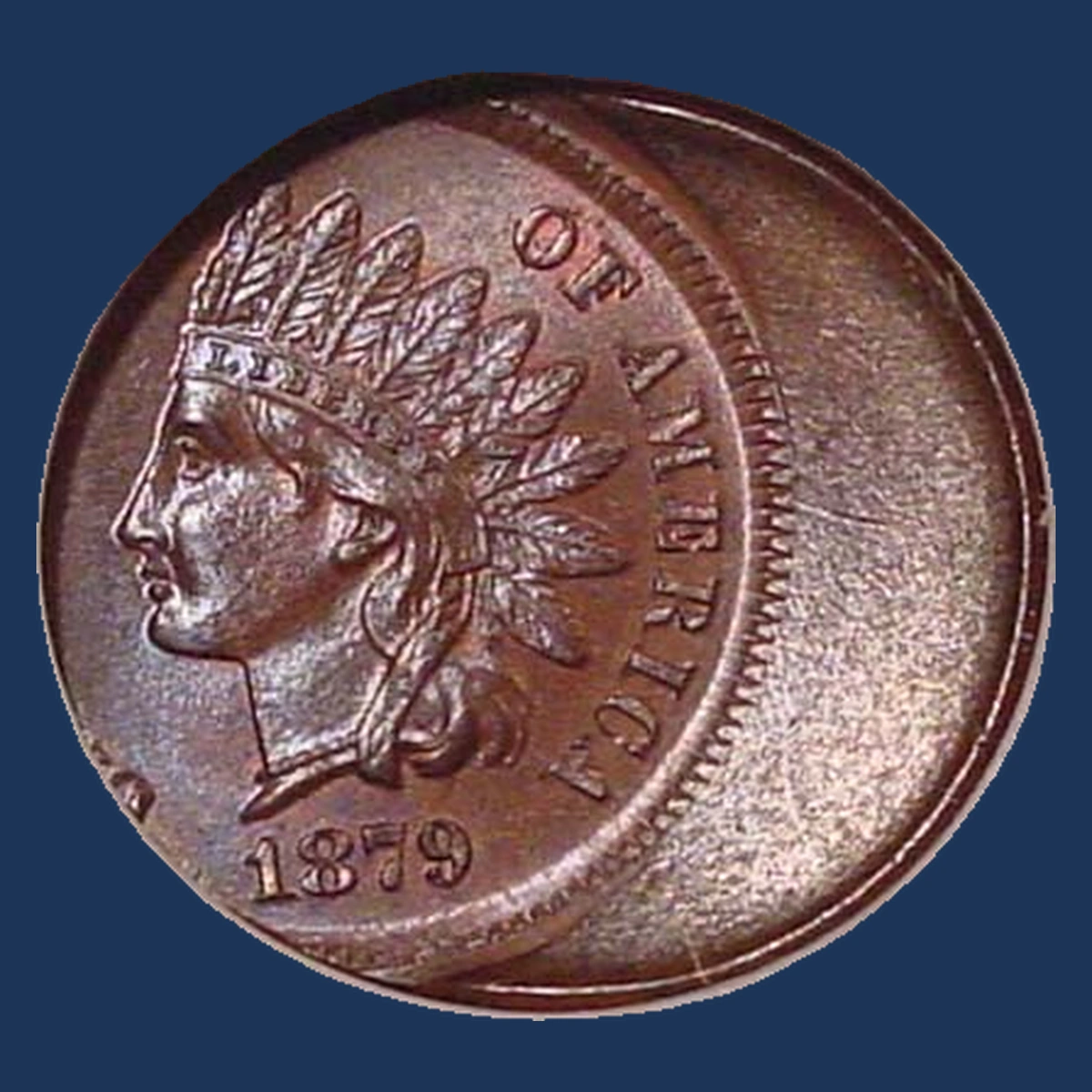
The portrait and lettering shift toward the left when the blank sits outside its intended striking position. A bare crescent remains where the tools did not reach the copper.
Mint Error News records an NGC MS65 Brown example at thirty percent off center toward nine o’clock. Heritage describes a PCGS MS65 Brown example at thirty-five percent in the same direction.
Keep those records separate. Their matching year and direction do not establish that they are the same coin.
MS65 means the coins show no circulation wear and relatively few marks. The visible date connects each displaced design to 1879.
Estimated Value
Estimate $150–$1,000 for readable worn 1879 off-center cents and $1,000–$5,000 for attractive unworn examples with substantial displacement. The complete coin’s condition matters alongside the amount missing from the design.
A different 1895 cent struck ten percent off center sold for $231.80 in March 2026 at NGC AU58, a lightly worn grade.
That sale provides a lower-displacement comparison. It is not a realized price for either of the unworn thirty- or thirty-five-percent 1879 records.
How to Identify
Photograph the entire outline with the date upright. The nine-o’clock direction should describe the displaced design, and the original bare area should fit the same misplaced strike.
Under a 10× magnifier, inspect where struck detail ends. Grinding can remove a finished design but leaves a different surface from untouched blank metal.
Weigh a loose example against 3.11 grams and measure several widths with calipers against the usual 19.05 millimeters. A shifted strike does not itself require missing copper.
Turn the coin over and compare the back’s placement. If only one face shifts while the other stays centered, consider a misplaced stamping tool rather than a blank displaced between both tools.
7. 1879 Indian Head Penny Struck on an Unusual Metal Blank
A pale 1879 cent contains much more nickel than an ordinary bronze penny. Its auction record reports seventy-four percent copper, twenty-five percent nickel, and small amounts of aluminum and iron.
The coin weighs about 3.20 grams, close enough to ordinary weight that a scale alone cannot identify its metal. The left-side lettering is weak, while the right side shows clearer striking.
An earlier label assigned the blank to a Colombian coin. The later auction description challenged that identification.
The unusual composition supports the wrong-metal category. It does not establish a particular foreign country, denomination, or separate experimental coin identity.
Estimated Value
The PCGS AU58 example sold for $13,200 in February 2025. AU58 means that slight circulation wear remains.
For authenticated 1879 cents on a comparable unusual metal blank, estimate $8,000–$20,000, depending on preservation and supporting identification. This range is for the rare wrong-metal error, not for an ordinary cent with pale toning.
The auction’s reported metal analysis matters more than the old country label. Plating or cleaning can change color without changing the original blank into this type of error.
How to Identify
A pale color is a reason to investigate, not a metal test. For a loose coin, record its weight with a scale and diameter with calipers beside the ordinary 3.11-gram, 19.05-millimeter bronze standard.
The recorded weight is about 3.20 grams. That small difference does not identify the alloy by itself.
Use a 10× magnifier to check the edge for plating and to compare the weaker left lettering with the better-struck right side. Keep the coin’s complete outline visible.
Have a grading service or qualified specialist assess the metal without scratching the surface. The composition and original strike must support the error together; a country written on an older label is a separate attribution claim.
Conclusion
A missing edge, an extra date stroke, and a pale surface call for different checks. Compare the complete coin first, then enlarge the feature without cleaning or moving loose metal.
Estimated whole-coin values range from $5–$20,000. Keep the two off-center records separate and treat the nose-side patch as one feature.
The wrong-metal range requires more than pale color. The coin’s measured composition and original strike must support that identification.