1881 Penny Error List with Pictures

The words ONE CENT do not guarantee that an 1881 penny used the right blank. An example struck on metal intended for a three-cent nickel sold for $19,550 in June 2006.
This 1881 Indian Head penny error list covers estimated values of $5–$30,000, from a small chip below the jaw to that wrong-blank rarity. All the examples discussed belong to the ordinary coinage, with different causes behind missing, repeated, or displaced detail.
Follow the visible clues below before comparing prices.
1. 1881 Indian Head Penny Overpolished Back Die (Estimated Up to $300)
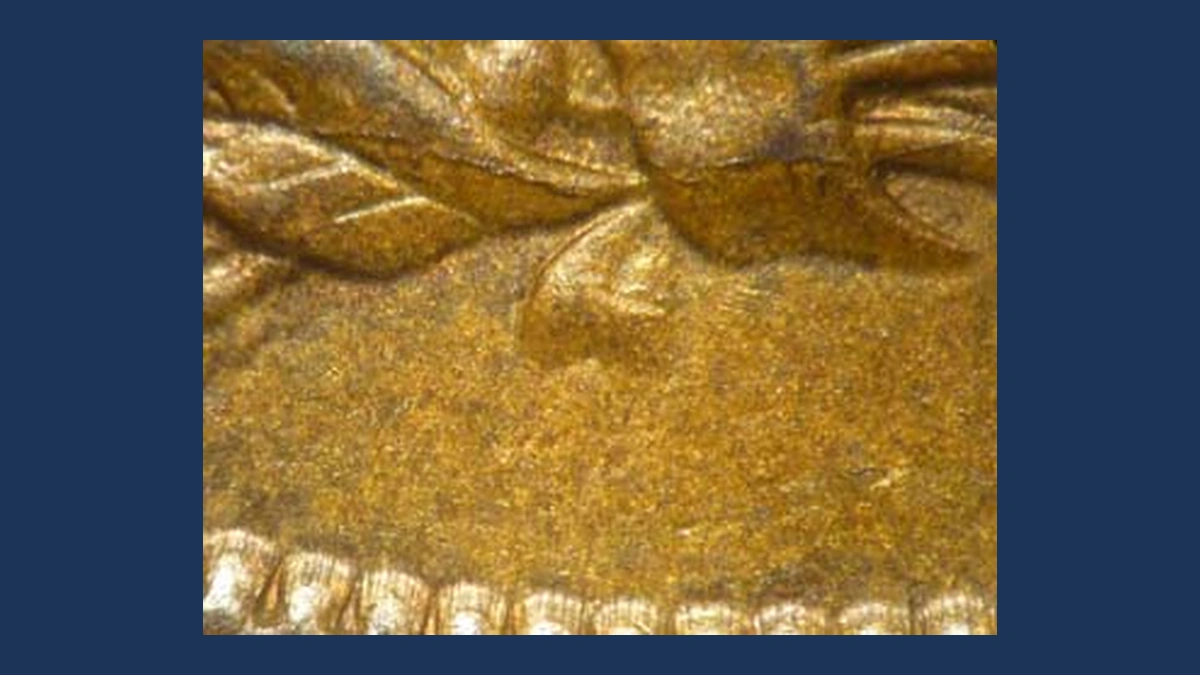
The bow below the wreath can lose detail while nearby lettering remains clear. The documented 1881 pattern affects the left ribbon tail, knot, and right ribbon end.
Too much polishing removed shallow parts of the design from the stamping tool. Later coins could not receive detail that was no longer there.
This is different from polishing the finished penny. It is also different from general circulation wear, which flattens raised points across the coin.
The missing bow parts form a particular pattern. An indistinct ribbon on a worn coin should not be assigned to it merely because something is absent.
Estimated Value
A matched overpolished-tool example may fit an estimated $10–$300, depending on the coin’s preservation and the clarity of the missing bow parts. That amount includes the underlying penny.
There is no fixed payment for every absent ribbon line. Heavy wear can hide the distinctions that make this variety recognizable and reduce any premium.
The range is an estimate for the cataloged pattern, not an auction result assigned to a particular 1881 coin. Coins polished after striking require a different assessment.
How to Identify
Examine the plain edge for later treatment and compare accessible scale and caliper readings with 3.11 grams and about 19 millimeters. Those measurements check the basic bronze cent without proving why a small design part is missing.
Now set a normal bow photograph beside the suspect back and mark its left tail, knot, and right end. With a magnifier, compare the absent shallow parts with nearby design that remains sharp, rather than assuming every weak ribbon came from an overpolished tool.
Cut-in cleaning lines across completed detail point toward treatment of the coin itself. If the whole wreath is worn flat, look for a better-preserved matching example before assigning the loss to this particular tool.
2. 1881 Indian Head Penny Clipped Blank (Estimated Up to $400)
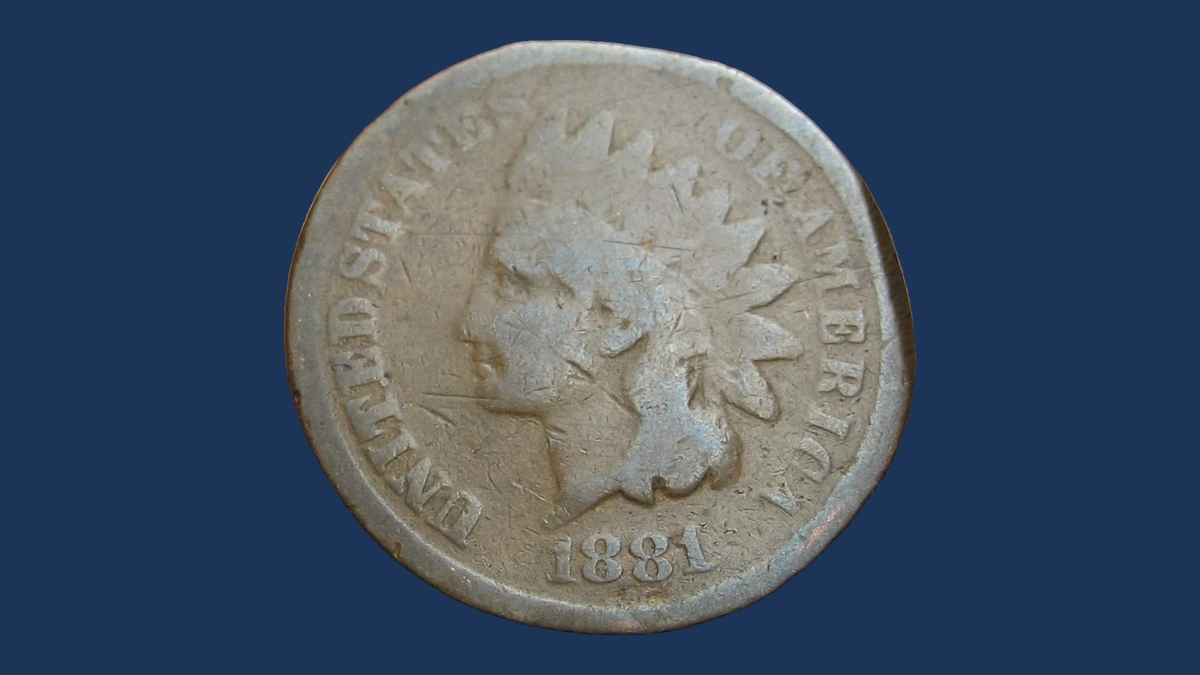
A missing section of the edge can begin before the coin receives its design. If the blank is cut from an unsuitable part of the metal strip, it may enter the press incomplete.
An 1881 listing describes a clipped blank in heavily worn condition. That description is a report, not independent authentication of the edge.
The gap’s shape and position need to be read from the coin. They help distinguish an original clip from later cutting.
A cut made after striking can look similar in a front photograph. The exposed edge and nearby design are important parts of the comparison.
Estimated Value
A clip can be estimated at $20–$400 across heavily worn through better-preserved ordinary examples. The size, shape, and original edge quality affect the price.
The seller’s description does not establish a completed sale or a professional grade. This range applies after the missing section is identified as an original blank defect.
A saw cut or filed notch can lower a penny’s value instead of adding a premium. Do not use the upper range merely because a large portion is missing.
How to Identify
Inspect the exposed edge under magnification before deciding what shape of clip to call it. Photograph where the design meets the missing section and check the remaining plain edge for fresh cutting or filing.
Weigh accessible metal against 3.11 grams and use calipers to compare the outline with a normal 19-millimeter cent. A low reading establishes missing weight, not whether the metal disappeared before or after striking.
Look opposite the gap for rim weakness, which can support some genuine clips without being required in every case. Read the date, then describe the gap’s actual shape and position from the photograph rather than assuming every clip is curved.
3. 1881 Indian Head Penny Die Clash (Estimated Up to $500)
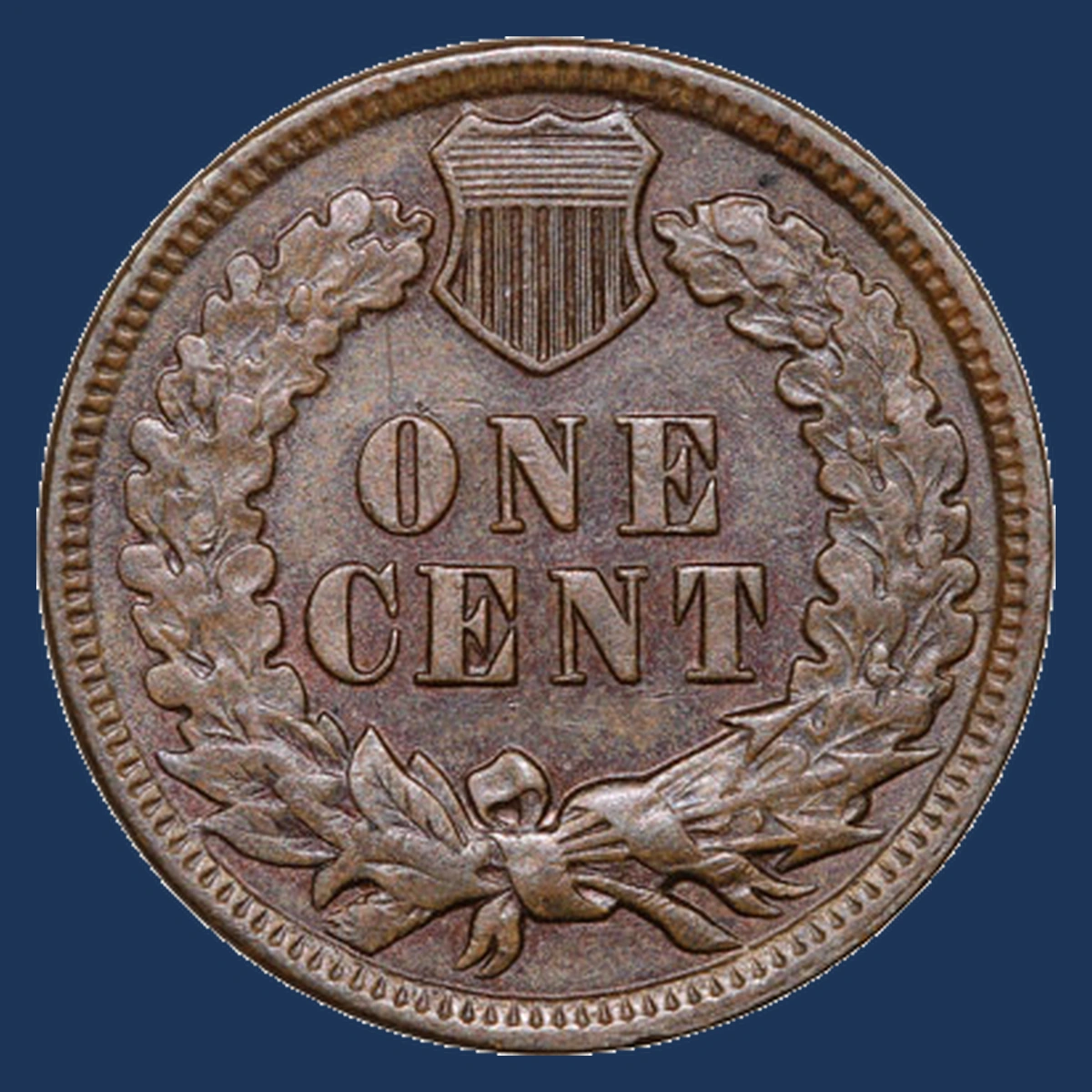
A faint outline in the open area of the back may come from the front design. The two stamping tools touched without a blank and marked one another.
Those marks could then appear on later coins as a die clash. The 1881 catalog explicitly records back clash marks on one tool pair.
The same example also has cracks, but a crack line is not automatically a transferred portrait outline. The two need separate comparisons.
A random scratch cannot be completed into a hidden portrait by imagination. Follow the surviving shape rather than treating every unexpected back line as a clash.
Estimated Value
Estimate $15–$500 for an 1881 cent with recognizable clash marks, allowing for differences in condition and clarity. Faint, incomplete lines may add little beyond the normal coin value.
The catalog documents the feature without supplying a sale used here for that exact tool pair. The range is therefore an estimate, not a claimed $500 transaction.
A coin with both cracks and clashes still has one whole-coin price. Compare the combined appearance rather than charging a separate maximum for each line.
How to Identify
Begin with a normal front design beside an enlarged photograph of the unexpected back outline. Rotate the comparison only as needed to match the documented opposing design, not to turn a random scratch into a portrait.
Use a magnifier to separate any raised crack from the suspected transferred outline. They can cross the same area without sharing a cause.
For a safely accessible penny, scale and caliper readings can be compared with 3.11 grams and about 19 millimeters. Inspect the plain edge for later pressing or a join.
Move the light and follow the mark itself. If only a reflection completes the proposed outline, the physical surface has not supplied that missing shape.
4. 1881 Indian Head Penny Die Cracks, Chips, and Cuds (Estimated Up to $1,000)
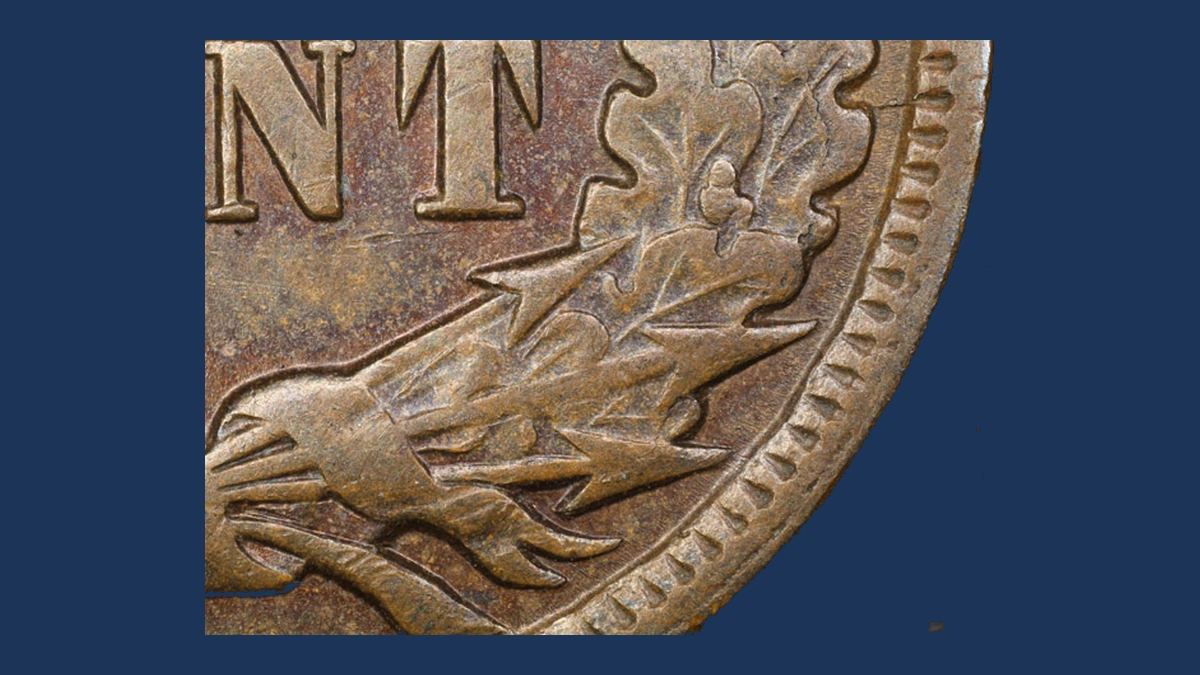
Damage to a steel stamping tool, called a die, can leave raised lines or patches on the coin. The 1881 examples include a small chip below the jaw and cracks beside the back wreath.
A missing piece at the tool’s edge produces a rim-connected lump called a cud. One front example spans about 9 to 10:30 o’clock.
A separate retained break appears around 11:30 to 12:30 on the back. Here the broken tool section stayed in place, allowing some design to survive.
These are different examples of tool damage. The jaw chip is separate from defects within the date.
Estimated Value
Estimate $5–$150 for modest chips or cracks and $50–$1,000 for stronger cuds or retained rim breaks. Each range includes the value of the entire penny.
A later 1946-S Lincoln cent cud sold for $288 in March 2021. That bronze-cent result offers context for a larger break, not a direct price for the small jaw chip.
Compare the same form of damage and preservation. A narrow raised line should not receive a broad cud’s premium automatically.
How to Identify
Identify the shape first: a small patch below the jaw, a thin line by the wreath, or a rim-connected area. Under a magnifier, distinguish original raised metal from dirt or a scratch with pushed-up sides.
Inspect the plain edge for folding or added metal, then compare safely accessible scale and caliper readings with 3.11 grams and roughly 19 millimeters.
For the front cud, use the 9–10:30 photograph; for the retained back break, use the 11:30–12:30 example. Look for surviving design inside the retained section instead of demanding a blank lump.
Keep the jaw chip’s outline with its own photograph. A defect in a date numeral does not establish that separate patch below the portrait.
5. 1881 Indian Head Penny Repunched Date (Estimated Up to $1,000)
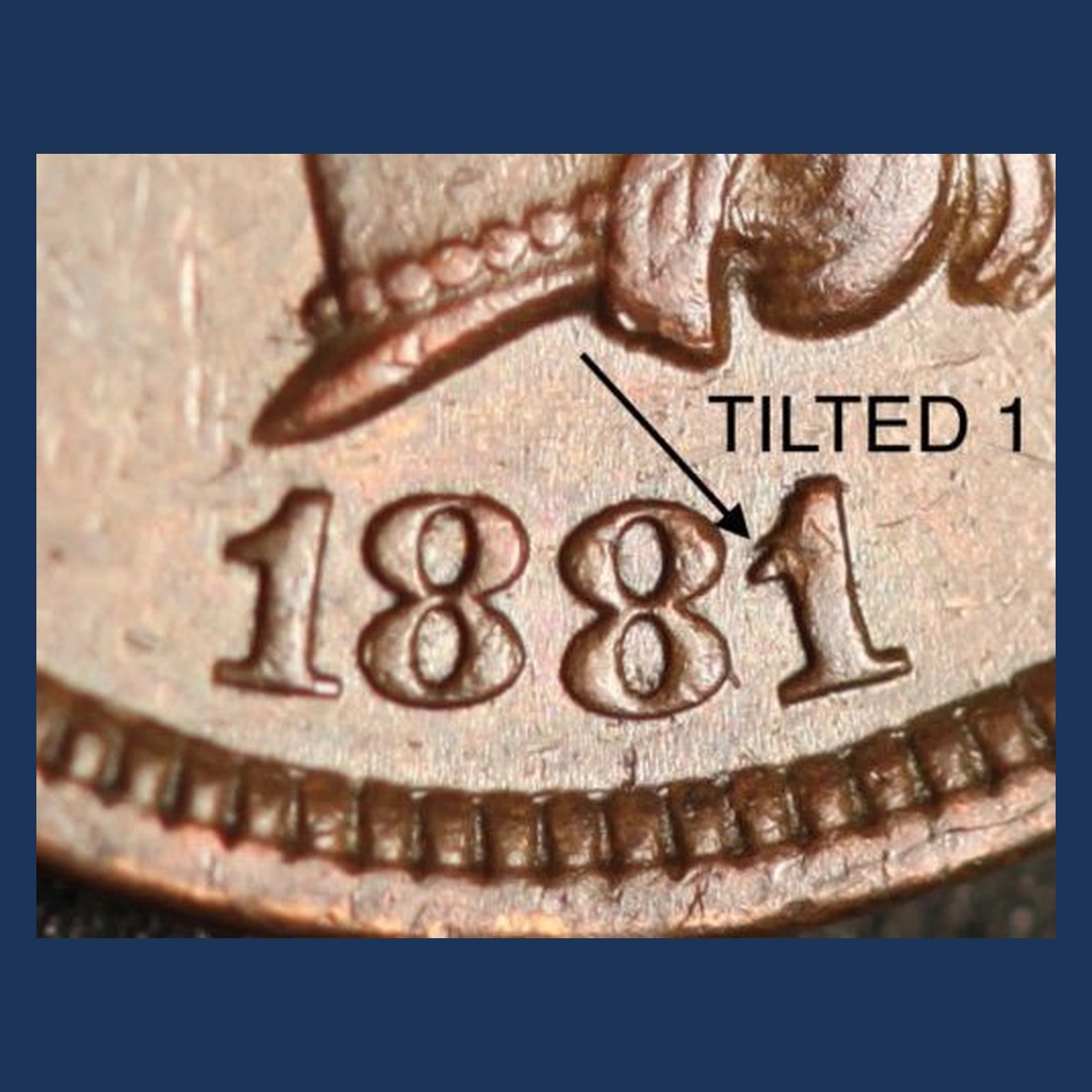
An extra stroke inside an 8 can survive from an earlier position of the date punch. When the punch was applied again to the tool, part of that first impression remained.
One 1881 pattern shows remnants in the second 8’s loops and around the flag at the top of the final 1. Other listed varieties use their own date comparisons.
The resulting repunched date can appear on a coin struck only once. It does not require a repeated portrait or two complete dates.
Small tool defects and damage can imitate a numeral fragment. Matching several affected parts establishes the pattern.
Estimated Value
Identified ordinary repunched-date examples can be estimated at $10–$1,000, depending on their clarity and preservation. The range covers complete coins rather than a fixed charge per repeated numeral.
An 1889 Indian cent repunched date graded MS64 has a recorded $405 eBay result from May 2015. That is an unworn, different-year comparison with some surface marks.
It does not make every 1881 extra stroke equally valuable. A matching pattern in several digits offers a stronger comparison than one damaged-looking corner.
How to Identify
With the date upright under a 10× magnifier, compare the final 1’s upper flag against the second 8’s loops. Match more than one affected part on the same known variety, rather than combining details from different date photographs.
Check the date surface and plain edge for alteration, then compare safely accessible scale and caliper readings with 3.11 grams and about 19 millimeters. A flat shelf that narrows a numeral can come from movement during striking instead of another date-punch position.
Examine the surrounding portrait only to distinguish the mechanism. It can remain single on a repunched-date coin, so the absence of another portrait does not invalidate genuinely matching date remnants.
6. 1881 Indian Head Penny Off-Center Strike (Estimated Up to $1,500)
An unused crescent opposite a shifted design can show that the blank missed its proper position in the press. Part of the intended image landed beyond the available metal.
A dealer’s year guide reports off-center 1881 cents without fixing one specimen’s percentage or direction. The actual outline must supply those details.
This is a single misplaced strike, distinct from the documented coins that received a second off-center blow. A second portrait or border changes the comparison.
A front-only shift can have another explanation. Compare the back before assigning the whole blank a position based on one photograph.
Estimated Value
For a genuine dated single off-center strike, estimate $100–$1,500 across different shifts and conditions. This is not a reported auction result for a specific 1881 example.
An 1897 Indian cent struck 10% off center in AU58 sold for $280.60 in March 2026. AU58 indicates very slight circulation wear, making it a useful nearby-year bronze-cent comparison.
Keep the $1,880 1881 double-strike result separate. An unused crescent alone does not establish the extra blow that defines that more complex error.
How to Identify
Check for a second border or portrait before measuring the crescent. Under a magnifier, read the date and decide whether the coin shows one displaced image or overlapping images from separate strikes.
Use calipers to record the accessible outline beside a normal cent’s 19-millimeter diameter, and weigh against 3.11 grams. A displaced strike does not automatically remove the metal that missed the design.
Inspect the plain edge for filing and photograph the back straight on. Its design boundary must fit the same misplaced blank.
If only the front shifts, investigate the position of that stamping tool. If both faces fit one displaced blank, describe its actual shift without borrowing the 70% or 75% figures from double-struck examples.
7. 1881 Indian Head Penny Double Strike (Estimated Up to $5,000)
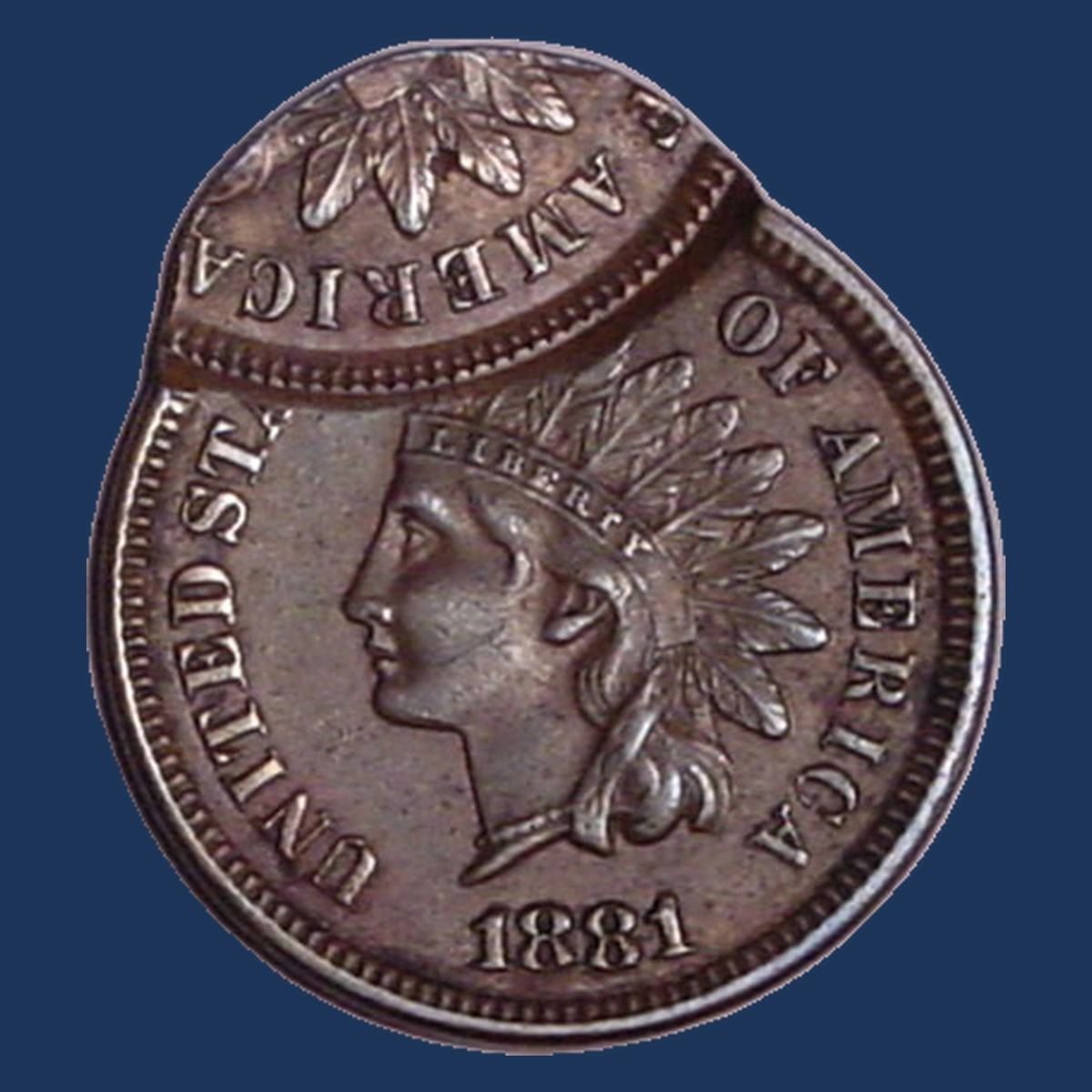
The press can strike a penny again after it moves from its original position. A second, partly overlapping design then covers some of the first image.
One 1881 example graded PCGS MS64 Brown has its second strike 70% off center. MS64 means an unworn coin with some surface marks.
Another illustrated coin, graded NGC AU58, has a second strike 75% off center near 12 o’clock. AU58 indicates very slight wear.
Their measurements belong to different coins, and each overlap needs its own comparison photograph. Neither is simply a tool with doubled lettering, which would leave much smaller repeated detail.
Estimated Value
The PCGS MS64 Brown coin with a 70% second strike sold for $1,880 in August 2013 at Heritage. That amount belongs to the unworn example.
Estimate $400–$5,000 for double-struck 1881 cents across different arrangements and preservation. The separate AU58 coin is not assigned the MS64 coin’s realized price.
Clear overlap and surviving date detail help explain value. Large displacement alone does not outweigh damage, heavy wear, or difficulty distinguishing the two original images.
How to Identify
Inspect the plain edge for a join and weigh accessible metal against 3.11 grams before interpreting two overlapping images. Calipers can document the unusual outline beside a normal cent’s roughly 19-millimeter size.
Use enlarged photographs and a magnifier to connect each portrait with its own lettering or border.
The later image may flatten part of the earlier one. Follow that overlap onto the back to see whether the same two-strike arrangement makes sense there.
For the AU58 example, compare the second strike near 12 o’clock and its 75% displacement. The separate MS64 example requires its own 70% photograph.
If you can find only a repeated date stroke, stop before assigning a second strike. The surrounding design must supply evidence of the extra blow too.
8. 1881 Indian Head Penny Struck on a Three-Cent Nickel Blank (Estimated Up to $30,000)
Pale metal and incomplete outer lettering can point to a blank intended for another coin. An 1881 Indian cent is documented on a three-cent nickel blank.
The blank is the prepared metal disc before its design is stamped. It received the cent’s design instead of the intended three-cent design.
NGC recorded an example graded MS64, meaning unworn with some surface marks. This is a cent struck on the wrong material, not a three-cent coin mislabeled as a penny.
The smaller blank cannot carry every outer detail in the same way as a normal cent. A coating alone cannot establish identity.
Estimated Value
The NGC MS64 example sold for $19,550 in June 2006, according to NGC’s wrong-blank overview. That is a completed sale for an authenticated cent on a three-cent nickel blank.
Estimate $8,000–$30,000 for confirmed examples, depending on condition and surviving design. The material identification is essential to using that range.
A plated or filed bronze cent does not qualify. Nor should the price be transferred to a normal 1881 three-cent nickel simply because it shares the same date.
How to Identify
Begin with recorded measurements and a metal check, keeping any certified coin sealed. A standard three-cent nickel blank is about 1.94 grams and 17.9 millimeters, compared with the cent’s 3.11 grams and 19 millimeters.
Those are denomination standards, not claimed measurements of the illustrated error. A blank can spread during striking, so caliper width alone cannot settle its original purpose.
The expected mixture is 75% copper and 25% nickel rather than cent bronze. Have it tested without scratching or acid, and inspect the plain edge under magnification for plating or filing.
Then follow the cent’s remaining outer lettering. Its relationship to the available metal should agree with a smaller blank, while the design itself must remain the Indian cent’s.
Conclusion
The estimated $5–$30,000 span runs from small tool flaws to an authenticated cent on a three-cent nickel blank. The $19,550 wrong-blank sale and $1,880 double-strike sale belong to very different coins.
Begin with what survives: a ribbon that disappears, a repeated date stroke, or an overlapping second portrait. Weight and edge checks help separate unusual original metal from damage, but they cannot replace a matching design.