1864 Penny Error List with Pictures

The tiny L on an 1864 penny names its designer, not its mint. This year also includes two normal metal recipes, so identifying the coin comes first.
A repunched-date L variety brought $1,560 at auction in July 2024. The 1864 Indian Head penny errors below have estimated whole-coin values of $10–$5,000, depending on the error, metal, and condition.
Read on to separate doubled details, missing metal, and misplaced strikes without confusing normal design changes with errors.
1. 1864 Indian Head Penny Clashed Dies — Estimated Up to $400
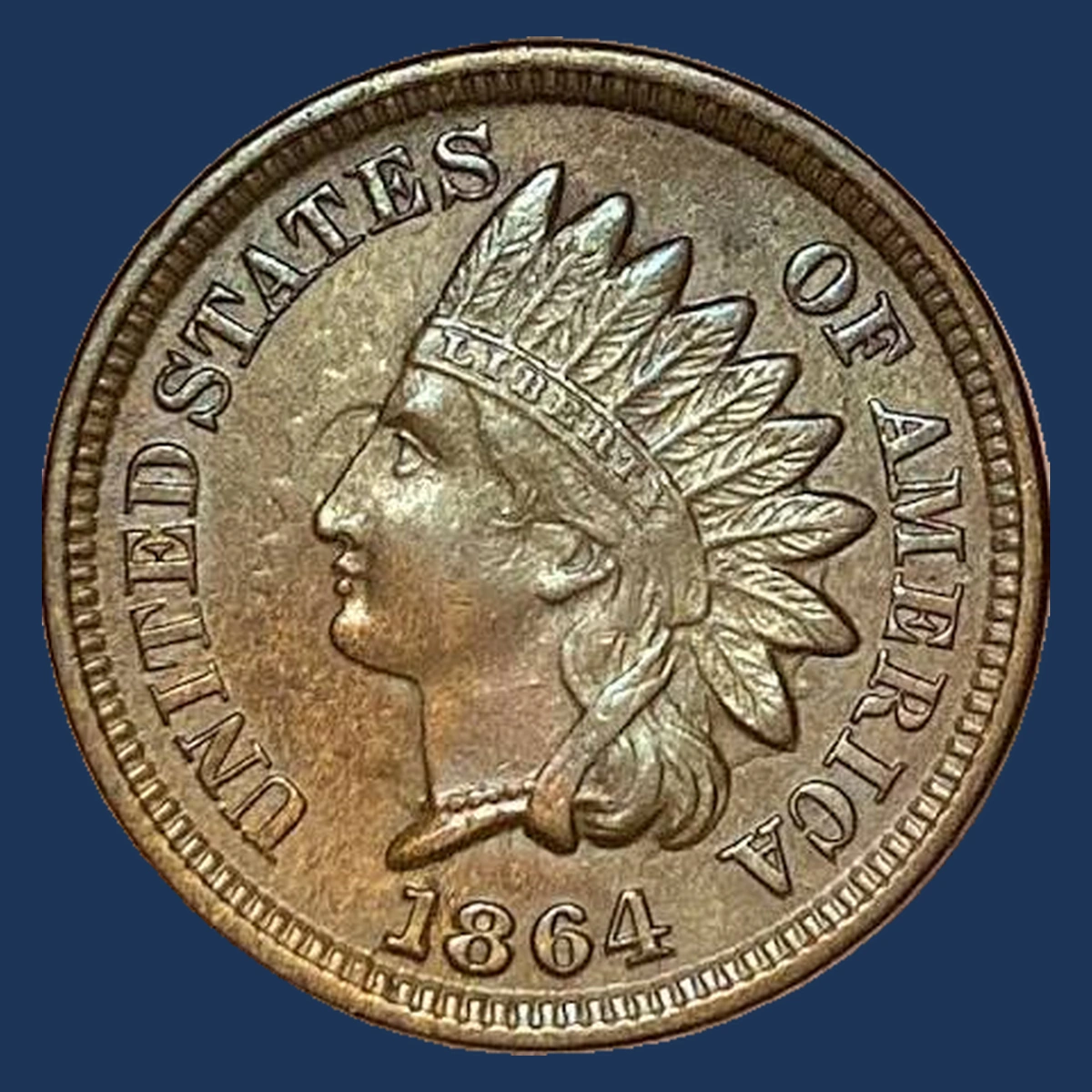
Faint shapes from the opposite face can appear beside ONE CENT or within the wreath on an 1864 L penny. Other examples show traces among the feathers.
These marks begin when the two steel stamping tools, called dies, hit each other without a coin between them. The damaged tools then leave extra outlines on later coins.
The coin itself receives its normal strike. Clashes may look like stray lines, but their shape follows part of the opposite design rather than a random scratch.
Estimated Value
An estimated $20–$400 covers circulated to attractive examples with clear clash marks. Much of that amount can come from the normal value of an L penny.
A 2026 bronze No L coin with a broadstrike and rotated back sold for $164.70. That different error offers only a general price comparison; a faint clash usually adds less than a dramatic change in the coin’s shape.
How to Identify
Place a normal L penny beside the suspected example, with both backs upright. Concentrate on the open areas left of ONE CENT and between the wreath branches.
Follow each extra outline with a 10× magnifier. A clash should resemble part of the front design; a sharp groove cutting across everything suggests a scratch.
Turn to the feathers if that is where the extra marks appear. Different clashed tools need not leave identical marks on both faces.
This bronze version normally weighs 3.11 grams and measures about 19 mm across. Use a scale and calipers, and check the plain edge for alteration; a recognizable opposite-side outline is the useful first clue.
2. 1864 Indian Head Penny Struck-Through Error — Estimated Up to $600
A patch of missing or weak detail may sit next to sharply formed letters on an 1864 penny. Grease or other material can block the stamping tool and prevent that small area from forming fully.
This is called a struck-through error. A reported L bronze example graded XF40, meaning it retained substantial detail despite circulation wear, was described as struck through grease.
The affected patch must be judged against the rest of the coin. Even wear across the portrait and lettering tells a different story.
Estimated Value
Allow an estimated $25–$600 for a visible struck-through area on an otherwise collectible coin. A barely weakened letter belongs toward the bottom, while a large clear interruption can attract more.
The $164.70 sale of a different 1864 bronze striking error in June 2026 supplies a broad same-year comparison. It was a broadstrike with rotation, so that price is not a sale record for the reported grease-filled example.
How to Identify
Compare the weak patch with nearby high points before reaching for a magnifier. Circulation wears exposed areas together, while trapped material may block only one letter or part of a design.
Test the metal version with a scale: copper-nickel normally weighs 4.67 grams and bronze 3.11 grams. Calipers should show about 19 mm on an ordinary round example, and the plain edge should show no filing.
Under a 10× magnifier, inspect the weak area for scratch lines or metal pushed aside by scraping. A sharply formed letter immediately beside softly missing detail gives a direct reason to investigate a blocked strike instead of general wear.
3. 1864 Indian Head Penny Curved Clip — Estimated Up to $600
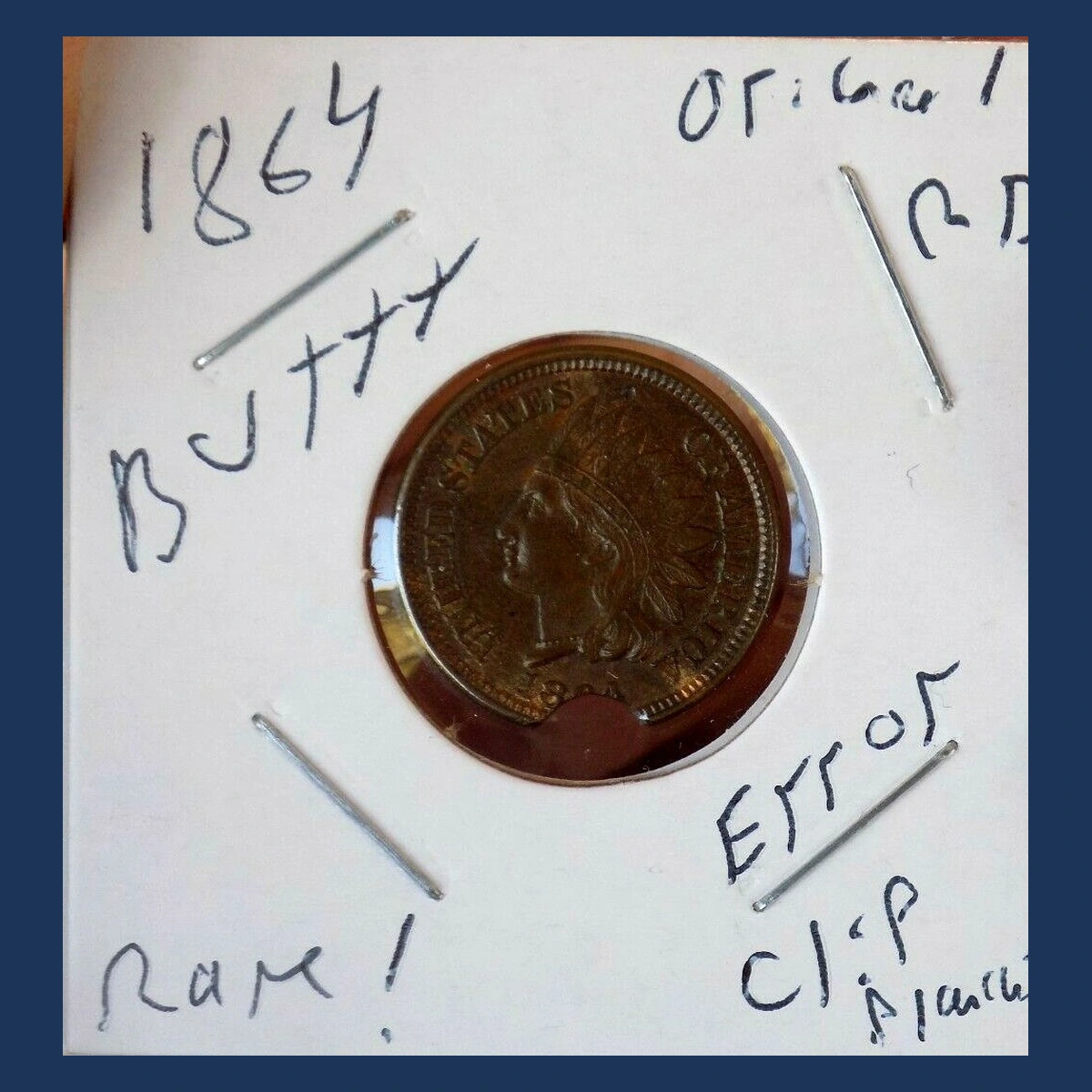
A curved piece missing from the edge can indicate a clipped blank. The blank is the metal disc before it becomes a coin.
If the punch overlaps an earlier hole in the metal strip, it cuts out an incomplete disc. The remaining metal is then struck with the penny design.
1864 clips have been reported, although the metal recipe and L status must be checked on each coin. A rounded notch alone is not enough: cutting a finished penny can create a superficially similar shape.
Estimated Value
Estimated values of $30–$600 allow for clip size, coin condition, and the correct 1864 version. A small clip on a worn bronze coin differs greatly from a large clip on a sharp copper-nickel example.
For a later-cent comparison, an unworn 1939 clipped cent graded MS64 Brown sold for $180 in January 2023. The older Indian Head coin’s ordinary collector value must also be included, rather than treating $180 as a fixed premium.
How to Identify
Do not clean the notch. Examine it with a 10× magnifier and look for saw marks, fresh cuts, or metal pushed into a sharp lip.
The rim across from a genuine clip can be weak because the incomplete disc passed unevenly through rim-forming equipment. This clue is not equally strong on every clip.
Weigh the coin against the normal 4.67-gram copper-nickel or 3.11-gram bronze disc. Missing metal should reduce its weight.
Use calipers across an intact portion to compare its roughly 19 mm diameter. Trace the plain edge into the gap and inspect both faces.
Study the design near the notch together with the opposite rim; softened details there are more informative than the notch’s curve alone.
4. 1864 Indian Head Penny Die Cracks and Rim Breaks — Estimated Up to $800
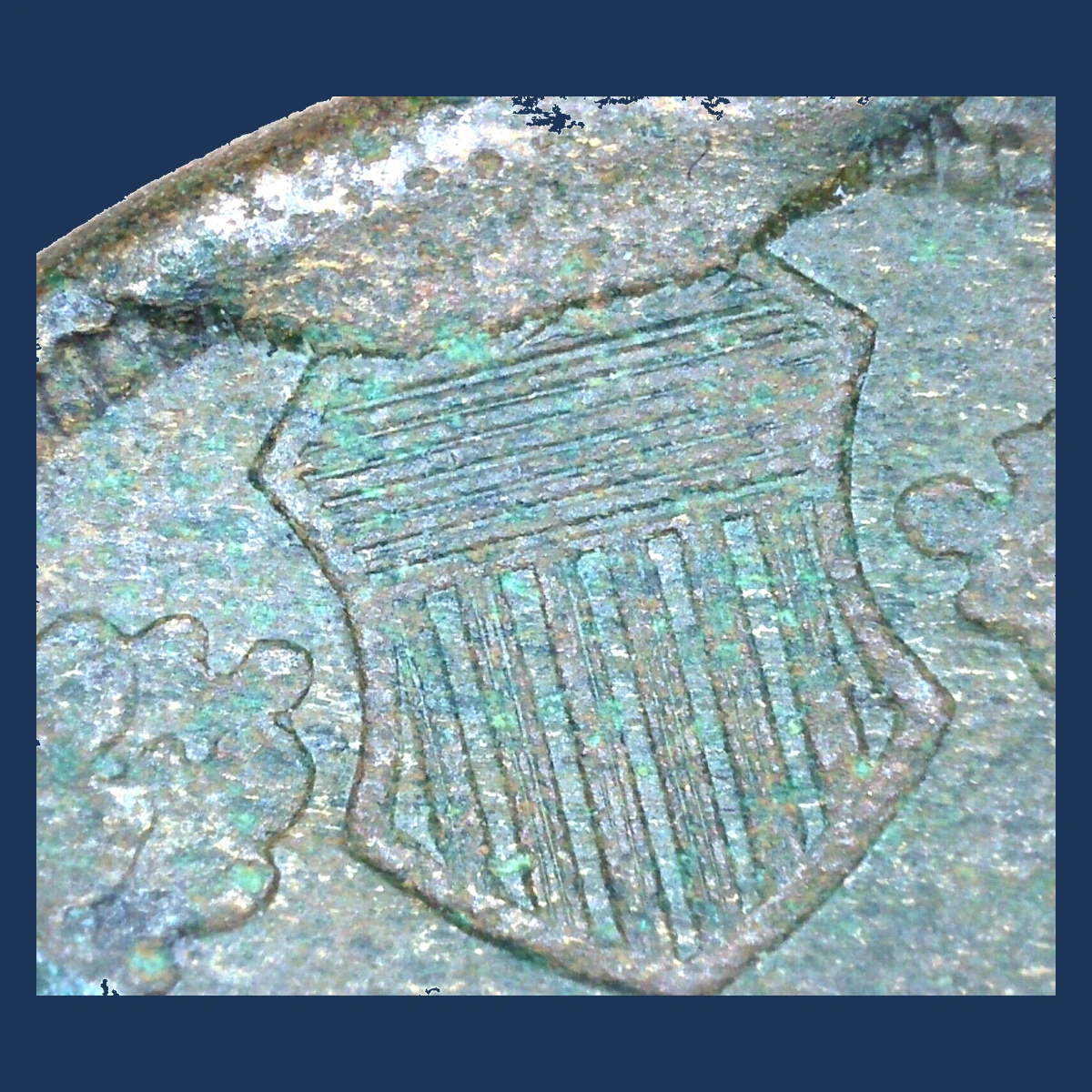
A raised line or lump can interrupt the wreath on an 1864 penny. A thin line records a crack in a stamping tool; a larger missing tool section can produce a broad raised patch.
Collectors call a patch joining the rim a cud. Copper-nickel examples include breaks around the upper and right portions of the back.
Other copper-nickel coins show raised lines near the left edge, while L bronze examples have different wreath cracks. These locations belong to separate coins, not one required pattern.
Estimated Value
Thin cracks may leave the coin near its ordinary value, while a large rim break can add much more. The estimated whole-coin range is $10–$800.
An unworn 1864 copper-nickel coin graded MS64 sold for $646.25 in August 2016 with both a broadstrike and a retained rim break. That combined-error price supports the upper part of this range but cannot be assigned to a small crack alone.
How to Identify
If a lump joins the rim, examine where it meets the plain edge under a 10× magnifier. Original raised metal should merge into the struck surface, while solder, glued material, or impact damage can show a separate boundary.
For a thin line, move a lamp across it and determine whether it stands above the surface or cuts down into it. A scale and calipers check the correct version: 4.67 grams for copper-nickel, 3.11 grams for bronze, and about 19 mm across.
Compare the pattern with a photograph of that same metal and design version. Follow the raised line or rim-connected patch into undisturbed lettering to separate a broken-tool feature from a later scratch or dent.
5. 1864 Indian Head Penny Reported Tapered Blank — Estimated Up to $1,500
One edge looks thick while the opposite edge looks thin on a reported 1864 copper-nickel penny. That difference can suggest a tapered blank: the metal disc was uneven before the design was struck.
The thin end may receive less pressure and show weaker detail. However, a tilted stamping tool can also produce uneven sharpness without proving that the original disc was tapered.
Thickness matters here. The reported coin needs measurements across opposite edges before its appearance can establish the cause of the weak strike.
Estimated Value
For an authenticated copper-nickel tapered-blank example, use an estimated $100–$1,500. The reported coin does not yet have a measured, certified sale attached to it.
A different copper-nickel error—a broadstrike with a retained rim break—brought $646.25 in 2016. That result helps set a general collector-price scale, while the taper’s size and the coin’s condition would determine its own value within the estimated range.
How to Identify
Calipers come first. Measure opposite edges without comparing a high rim with a worn or dented area.
Repeat the measurements around the coin and record any gradual change. One isolated low spot may be damage rather than a taper.
Weigh this copper-nickel version against 4.67 grams and measure its diameter against about 19 mm. Those figures describe a normal coin, not measurements already established for the reported example.
Under a 10× magnifier, check the plain edge for grinding or flattening. Compare the weak design on both faces with the thin end.
Test whether the thick-to-thin change repeats across undamaged metal; weak lettering alone cannot establish that the blank was tapered.
6. 1864 Indian Head Penny Broadstrike on an Unprepared Blank — Estimated Up to $1,500
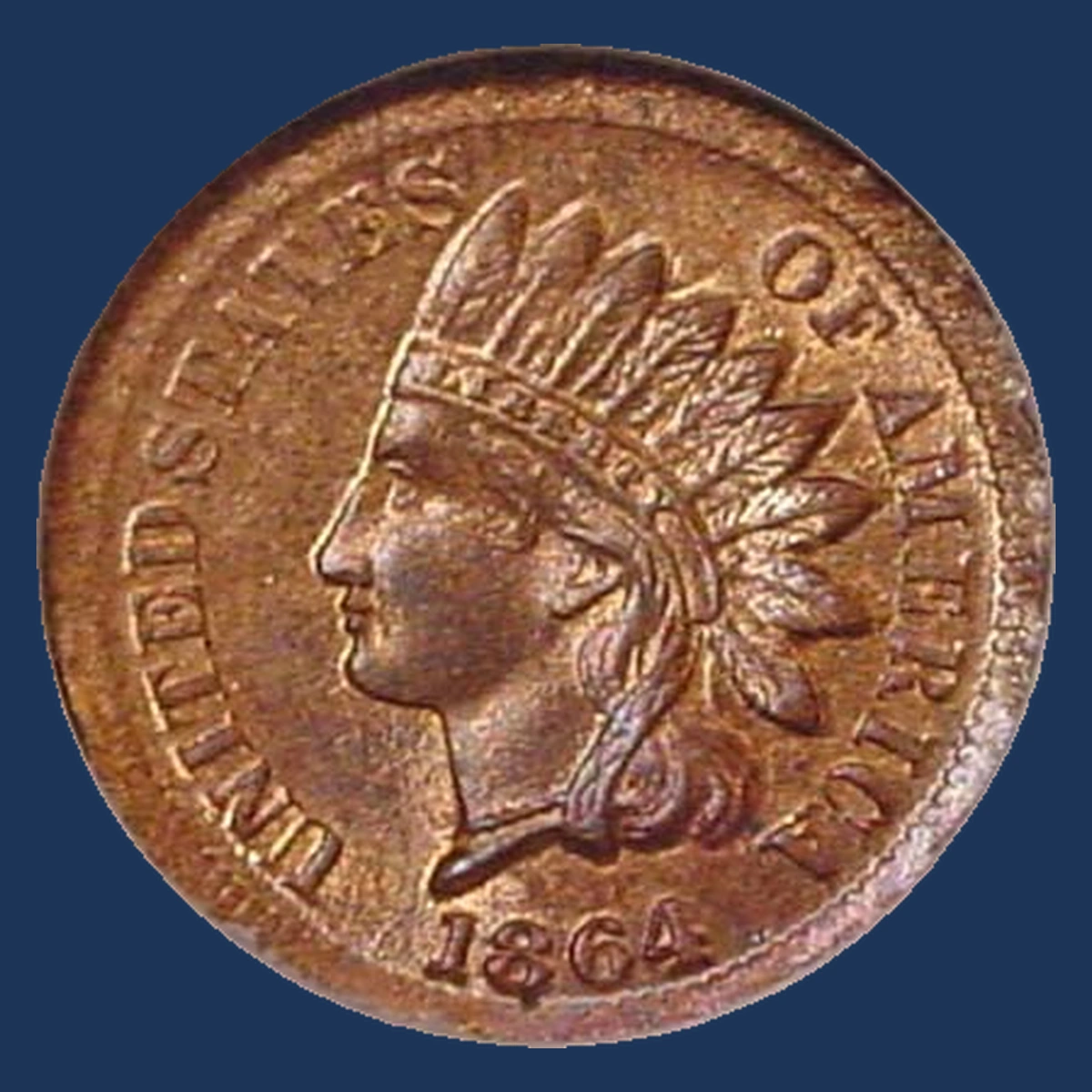
The design stays complete, but extra metal spreads beyond its normal circular boundary. This bronze 1864 error was struck without the surrounding collar, the ring that normally limits sideways expansion.
The illustrated example is unworn, graded MS64 Red and Brown. It was also described as struck on a Type 1 blank.
Here, Type 1 means the blank had not received its raised edge before striking. It does not mean the heavier copper-nickel coin also made in 1864; this particular example is bronze.
Estimated Value
A whole-coin estimate of $125–$1,500 spans worn examples through attractive broadstrikes with strong detail. The unprepared blank can add interest when its features remain clear.
In June 2026, an 1864 bronze No L broadstrike with a rotated back graded MS60 Brown for unworn surfaces with marks sold for $164.70. An earlier copper-nickel broadstrike with a rim break brought $646.25, but that coin had different metal and a second visible error.
How to Identify
Check every outer letter before judging the large diameter, because a broadstrike retains the full intended design. An off-center strike instead cuts part of it away, even when the remaining border looks equally wide.
Put this bronze coin on a scale and compare its weight with 3.11 grams, then use calipers to measure its spread beyond about 19 mm. Under a 10× magnifier, examine the plain edge for grinding, which removes metal rather than spreading it.
A flat-looking rim alone cannot prove that the blank skipped the rim-forming step. First establish the broadstrike by finding complete outer lettering inside metal that has spread beyond the normal circular boundary.
7. 1864 Indian Head Penny Doubled Die — Estimated Up to $2,000
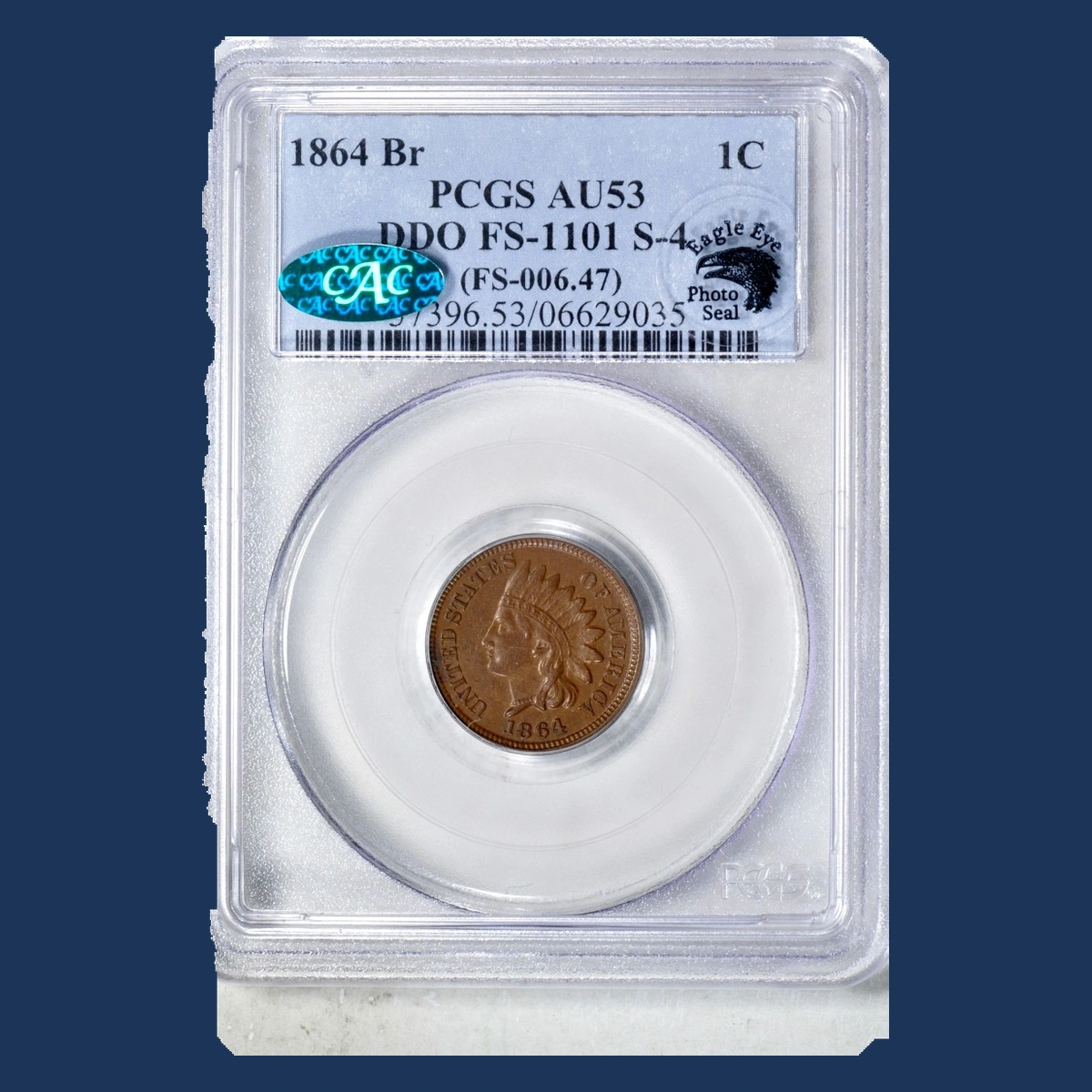
Look at LIBERTY across the headband. Raised extra outlines in this word identify the main area to study on the reported bronze No L doubled die.
The doubling entered the steel stamping tool while the design was being copied onto it. Each coin struck from that tool could inherit the same doubled details.
This differs from a coin receiving two separate strikes. The doubled front tool was paired with three different back tools, so differences on the back do not automatically rule out the same doubled front.
Estimated Value
The estimated range is $75–$2,000, with clear doubling and less wear supporting stronger prices. These are whole-coin estimates, not a claimed auction record for the 1864 variety.
A later Indian Head comparison is the 1887 FS-101 doubled die graded MS63 Brown for unworn surfaces with marks, which sold for $1,380 in June 2025. Its different date and doubling pattern make it a useful comparison rather than an exact price match.
How to Identify
A worn headband may hide the feature completely, so inspect LIBERTY with a 10× magnifier before assessing the rest of the coin. Search for separate raised outlines that repeat the same letter shape.
Flat shelves along letters can come from movement during striking. They should not be confused with the doubled shape already present in the tool.
Check that the coin is bronze and lacks the designer’s L. A scale should read near 3.11 grams, and calipers should show about 19 mm; inspect the plain edge for alteration.
Back-tool differences are possible, so keep the comparison focused on the front. Compare the raised outlines in LIBERTY directly with a photograph of the recorded 1864 doubled die.
8. 1864 Indian Head Penny Rotated Dies — Estimated Up to $2,000
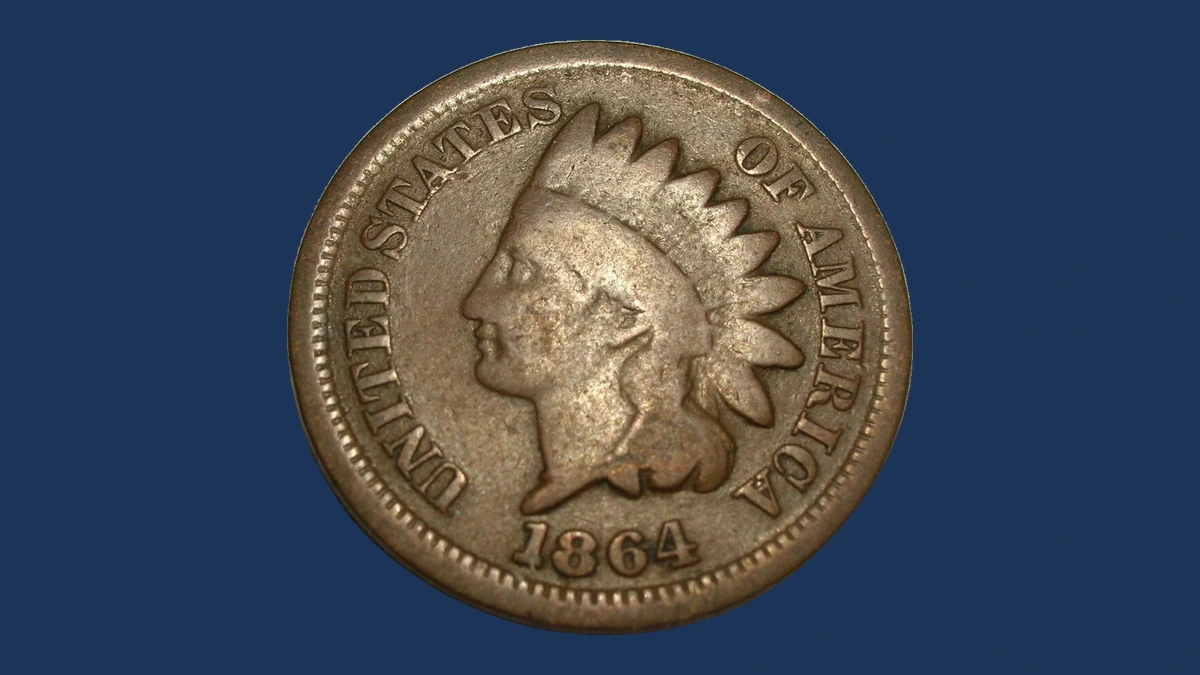
Hold the front upright and flip the penny from top to bottom. If the back now leans strongly instead of standing upright, the two stamping tools may have been misaligned.
One 1864 L example has a back rotated about 100 degrees clockwise. It is also struck 25% off center toward the upper right.
Another recorded L variety shows an 83-degree counterclockwise turn. Those are different arrangements: the amount and direction should be measured for the individual coin rather than borrowed from another example.
Estimated Value
The L bronze coin with a 100-degree turn and 25% off-center strike sold for $1,035 on May 6, 2005. PCGS graded it AU58, indicating only slight wear.
Use an estimated $75–$2,000 for visible rotation on collectible 1864 examples. The Heritage auction coin carried two striking errors, so its price cannot show how much the rotation alone added.
Surface quality still matters.
How to Identify
Practice the top-to-bottom flip with a normal United States coin first. A sideways flip gives the wrong comparison and can make normal alignment seem unusual.
Keep the 1864 penny’s front upright, then turn it over without twisting your fingers. Photograph both positions or use a clear holder to preserve that relationship.
A magnifier at 10× helps establish the upright date and back lettering even when the strike is displaced. For an L bronze coin, check roughly 3.11 grams with a scale and about 19 mm with calipers.
Inspect the plain edge for a seam or rejoined halves. Repeat the straight flip: the back should return to the same tilted position each time.
9. 1864 Indian Head Penny Repunched Date — Estimated Up to $2,500
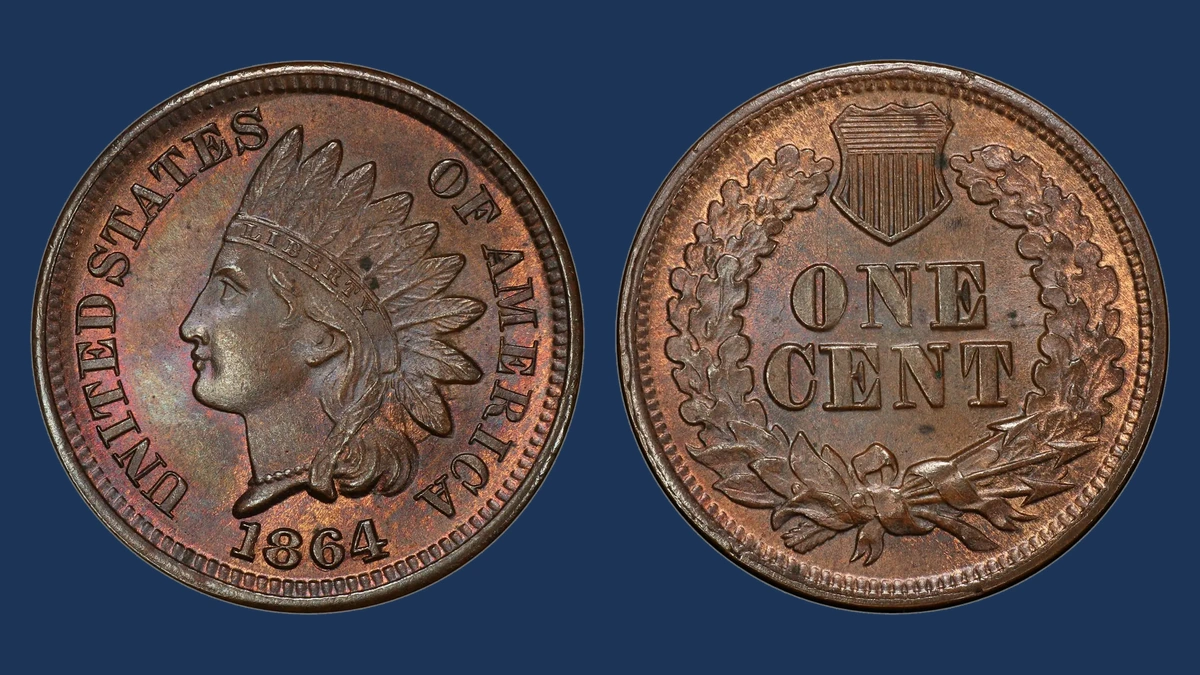
An extra curve beside a 6 or a second stroke beside another date digit can record an earlier punch position. Mint workers applied the date to the steel tool, and a misplaced impression could remain after another application.
The coins then copied both positions. Repunched dates occur on copper-nickel and L bronze 1864 pennies, with different patterns on different tools.
Not every extra line is repunching. A common mark beneath the horizontal stroke of the 4 can come from a flaw in the original number punch.
Estimated Value
A bronze L repunched date identified as Snow-3, FS-2302, graded MS65 Brown for well-preserved unworn surfaces sold for $1,560 in July 2024. That is a specific variety, not a price for every doubled-looking 1864 date.
An estimated $40–$2,500 covers less dramatic circulated examples through sharp collectible varieties. Identification matters alongside condition: the ordinary punch flaw beneath the 4 should not receive the same premium as a clearly repunched date.
How to Identify
Choose a copper-nickel or L bronze comparison before studying small strokes. Their repunched dates have different patterns.
A scale distinguishes normal 4.67-gram copper-nickel from 3.11-gram bronze. Calipers should show about 19 mm, while the plain edge should show no cutting.
Under a 10× magnifier, follow the suspected extra stroke around the digit. It should form part of an earlier number.
Look for metal pushed into place around the date. A damaged digit can produce misleading ridges without a second punched number.
Pay special attention to the 4: compare its strokes with the correct 1864 variety photographs, rather than treating the common line beneath its crossbar as proof of repunching.
10. 1864 Indian Head Penny Off-Center Strike — Estimated Up to $2,500
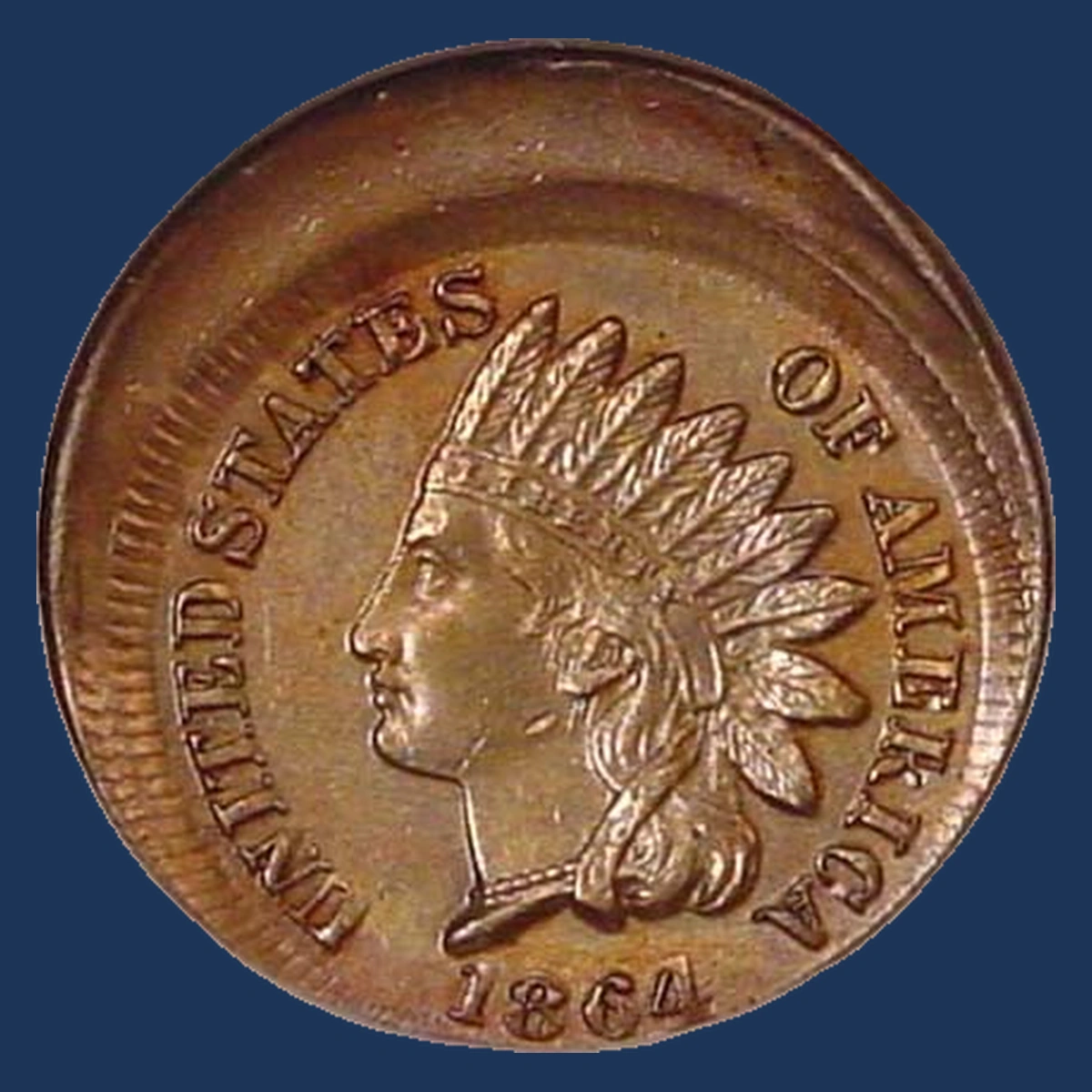
A blank crescent sits beside a design that has run off the opposite edge. The metal disc was partly outside the correct position when the tools struck it.
1864 examples span both metal recipes. Recorded copper-nickel coins include a 15% shift toward the lower right; bronze examples include shifts toward the top left and bottom.
An L bronze example is displaced toward the lower left. The direction describes that particular coin, while the visible date, metal, and amount of missing design determine how collectors compare it.
Estimated Value
An 1864 bronze No L penny struck 20% off center and graded MS63 Brown for unworn surfaces with marks sold for $492 in October 2021. That result provides a same-year example of an attractive, visibly displaced strike.
Estimated values of $150–$2,500 cover a broader range of displacement, condition, and 1864 versions. A readable date helps, while a second error or a desirable L coin can raise the whole-coin price further.
How to Identify
Read the surviving date first. The absence of an L alone cannot date a penny when the actual numerals are missing.
Compare both faces under a 10× magnifier. The cut-off design should lie opposite unstruck metal.
Weigh the coin against 4.67 grams for copper-nickel or 3.11 grams for bronze. Use calipers to compare its shape with a normal roughly 19 mm penny, allowing for stretching during the misplaced strike.
Inspect the plain edge for cutting or artificial flattening. A shifted rim with all the design present needs a different explanation.
Locate the missing design and the untouched crescent together; that pair shows where the metal disc sat outside the proper striking position.
11. 1864 Indian Head Penny Defective Blank — Estimated Up to $2,500
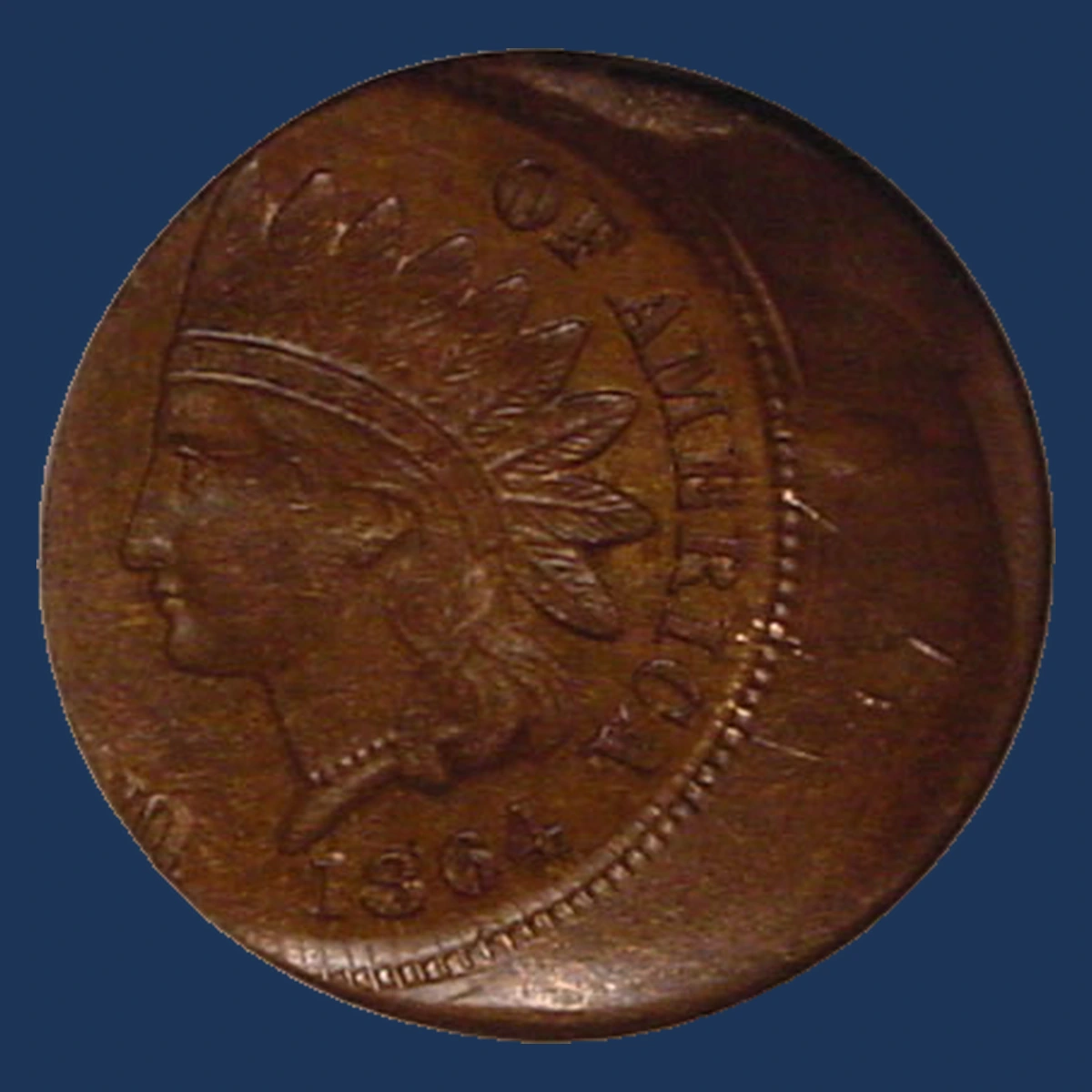
The surface of this bronze penny shows an irregularity in the metal, as well as a clearly displaced design. The recorded coin was struck 25% off center toward the upper left and graded MS64 Brown, meaning unworn with some marks.
Its original metal disc was described as defective. That description does not establish whether the problem was a split layer, a hollow, or another flaw.
The two features tell different parts of its story: the disc had a defect, and it also sat in the wrong position during striking.
Estimated Value
The estimated $300–$2,500 range applies to the whole combined-error coin, not to the blank defect added on top of a separate off-center price.
A bronze 1864 No L penny struck 20% off center sold for $492 in 2021 at MS63 Brown. That comparison helps value the displaced strike; the size, visibility, and nature of the additional metal flaw would determine how much more a collector might pay.
How to Identify
Under a 10× magnifier, study the metal flaw separately from the blank crescent created by the off-center strike. An unstruck area is not automatically a defective area.
A scale should normally place a bronze penny near 3.11 grams, although missing metal could reduce that figure. Calipers can compare its stretched shape with an ordinary diameter of about 19 mm.
Follow the irregularity across any surviving design and inspect the plain edge. A fresh gouge cuts through an already finished surface; an original defect can show evidence of pressure from the strike.
Do not assume every rough patch is a peeling layer. Compare the actual flaw and nearby struck details with the documented coin before assigning a more specific name.
12. 1864 Indian Head Penny Double Strike — Estimated Up to $5,000
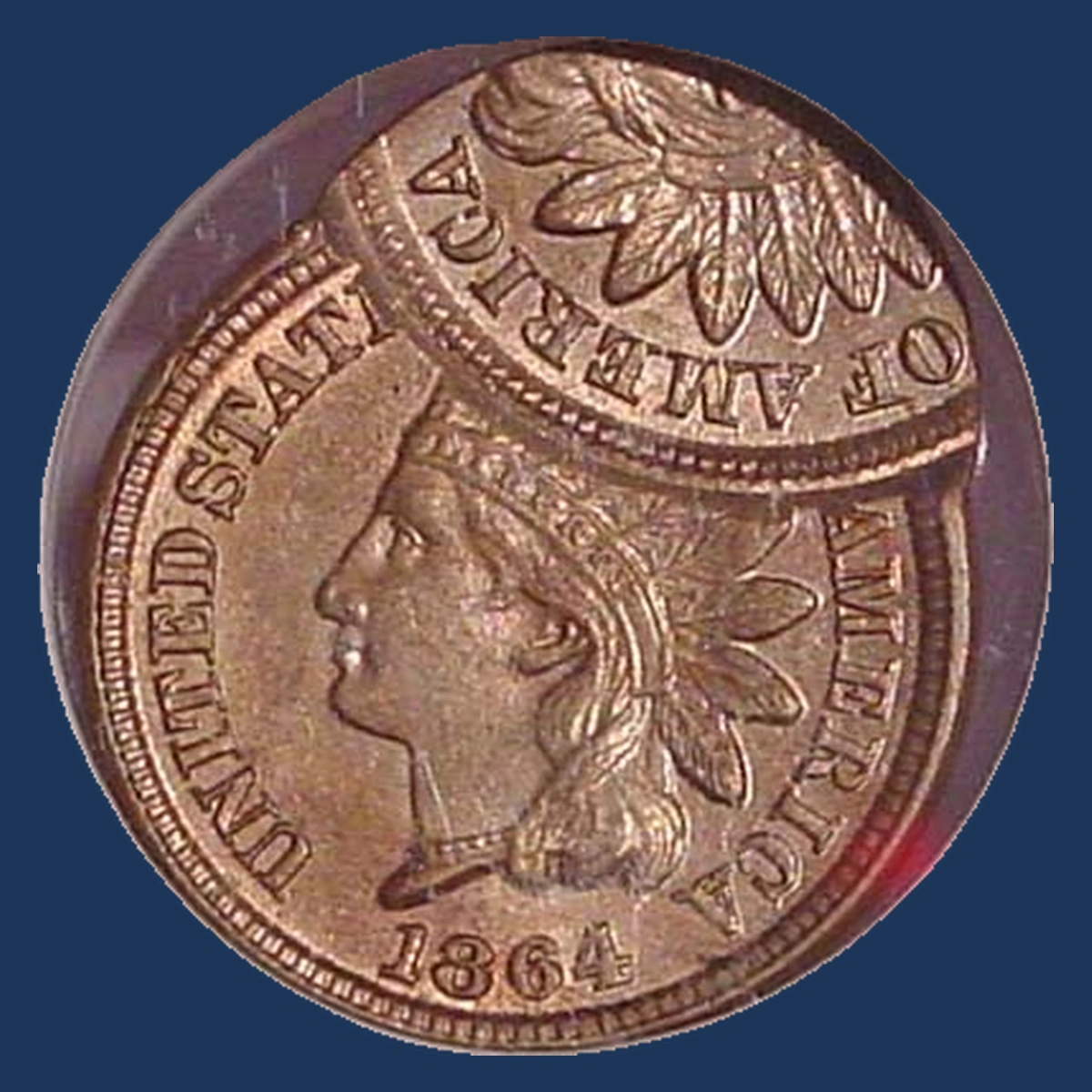
Two impressions can leave a second date, extra lettering, or a displaced part of the portrait across the penny. The coin failed to leave the press and was struck again.
A recorded copper-nickel example has its second strike 65% off center toward the upper right. Bronze examples include second strikes 25% and 50% off center toward the lower right.
A bronze No L example also turned over before the second strike. That flip can mix front and back details on the same face of the coin.
Estimated Value
Examples need not cost thousands: a heavily worn bronze No L double strike sold for $156 in October 2021. A different 1864 double strike with its second impression 95% off center brought $189.75 in 2010.
The estimated range is $150–$5,000. At the higher end, dramatic overlapping designs and strong condition matter; a later 1908 Indian Head double strike sold for $4,080 in June 2024.
How to Identify
Find a design feature in two positions. Track which portrait fragments and letters belong to each strike using a 10× magnifier.
For a flipover coin, look for wreath details or ONE CENT sharing a face with the portrait. Later pressure may flatten much of the earlier impression.
A scale compares weight with 4.67 grams for copper-nickel or 3.11 grams for bronze. Calipers reveal any stretching beyond the normal roughly 19 mm size.
Inspect the plain edge for joins or other evidence that pieces were attached. Two genuine strikes occur on one original disc.
Trace the surviving design into two distinct positions, then read the remaining date digits; an absent L alone does not establish 1864.
Conclusion
For 1864 pennies, metal and design matter before the error does. Copper-nickel coins weigh 4.67 grams, while bronze coins weigh 3.11 grams; the L is a normal designer initial.
Estimated values here run from $10 to $5,000 for the whole coin. Check raised details, missing design, and edge shape together, then compare the correct version before paying for an unusual appearance.