1894 Penny Error List with Pictures

The extra date strokes on an 1894/1894 cent helped one exceptional red example bring $30,000 at Heritage in August 2019. PCGS graded that coin MS66 Red, meaning unworn and very well preserved.
This 1894 penny error list ranges from tiny misplaced digits to double strikes and sunken mirror images. Estimated values span $5–$30,000, with the highest figure belonging to an exceptional date variety.
Read the visible differences below before deciding which price comparison fits your penny.
1. 1894 Indian Head Penny Clipped Blank with a Double Strike
A small missing piece near six o’clock is recorded on an 1894 double-struck penny. The date remains readable despite the nearby clip.
The gap was already present in the blank, the flat metal disc, before the design was struck. Two later blows from the press then added the separate double-strike feature.
Heritage described this particular coin as ANACS MS60 Red-Brown, meaning unworn but with noticeable surface marks and mixed red-brown color. Its second strike is far off-center near the top.
The little gap and the repeated design belong to one coin, not two separate error specimens.
Estimated Value
For a modest 1894 clip considered by itself, use an estimated $50–$500 across circulated and better-preserved coins. The documented double-struck piece needs a combined assessment instead.
Its overall price can be driven more strongly by the second strike than by the small missing segment. No separate sale amount is assigned here to the clip alone.
Compare another small clip by its original edge, visible date, and condition before borrowing a price from a more dramatic double strike.
How to Identify
Locate the small gap near six o’clock in a full photograph of the documented example. Keep the date visible so that its position relative to the clip stays clear.
Use a 10× magnifier to inspect the rim at both ends of the gap. A cut made after striking may show tool grooves through the finished edge.
A scale checks a loose bronze cent against 3.11 g; the missing metal can reduce its weight. Use calipers across intact portions when comparing the usual 19.05 mm diameter.
Now separate the gap from the stretched upper edge left by the second blow. A misshapen outline from repeated striking is not automatically another clip.
2. 1894 Indian Head Penny Single Off-Center Strike
The design sits slightly low on the recorded single off-center 1894 penny. The listing identifies a five-percent shift toward six o’clock.
A blank entering the press away from the correct center can miss part of the intended design. This coin received one reported strike, unlike the separate double-struck examples.
Mint Error News listed it as NGC MS62 Brown, an unworn coin with noticeable marks and brown surfaces. A modest shift can be less obvious than a large blank crescent.
Both the border and the ends of the design need to be visible in a useful photograph.
Estimated Value
The older Mint Error News listing gives $225 for the NGC MS62 Brown five-percent example. That was a listed price, not a confirmed auction result.
Use an estimated $100–$750 for identifiable single off-center 1894 pennies across suitable circulated and unworn grades. Larger shifts and clearer surviving dates can change the comparison.
A small offset should not inherit the price of a double strike simply because both coins have uneven borders or missing design.
How to Identify
Use calipers to record a loose penny’s outline against 19.05 mm, then weigh it on a scale against 3.11 g. Removing a finished design can reduce the weight and leave an altered edge.
Compare straight-on photographs of both faces, keeping the date upright. The listed five-percent example shifts toward six o’clock, so inspect its lower design boundary under a 10× magnifier for scraping or filing.
Then look across the rest of the coin for any extra portrait outline or repeated letters. A second recognizable design would point toward another blow, while the reported single strike should show one displaced impression rather than two.
3. 1894 Indian Head Penny Cracks and a Retained Back Break
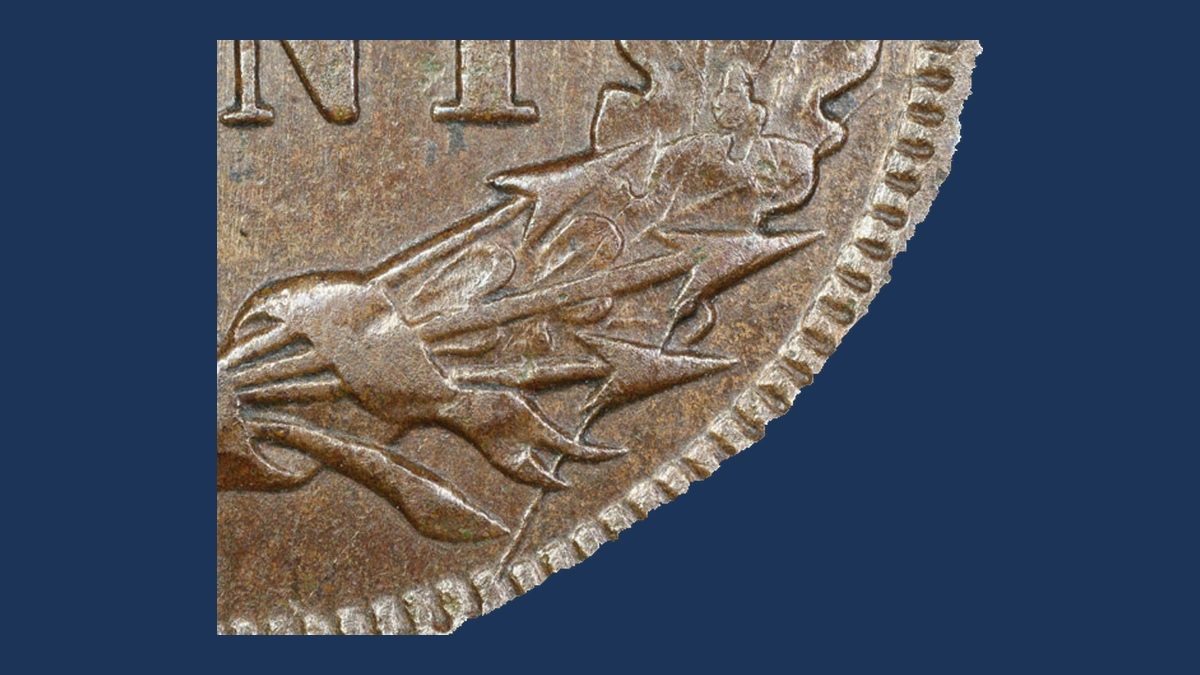
A raised crack begins near ten-forty-five on the back of one 1894 repunched-date pairing. A later stage has a larger outlined section between nine-fifteen and ten-forty-five.
This is a retained break: the cracked part of the die, or stamping tool, remained in position for a time. Some design could still be copied from that section.
Another recorded crack follows a different path between three-fifteen and five-fifteen. These locations should be compared as separate examples.
A retained section with remaining design differs from a solid lump left when a tool piece falls away completely.
Estimated Value
Estimate $5–$100 for modest raised cracks and $50–$1,000 for more visible retained breaks in otherwise suitable condition. These ranges describe different sizes and stages of tool damage.
The retained back break can occur on a valuable repunched-date penny. Its final price therefore needs to include that date variety and the coin’s condition as a single assessment.
Do not add the top break estimate to the top repunched-date price as though two coins were being purchased.
How to Identify
For the retained break, inspect the back between nine-fifteen and ten-forty-five using a 10× magnifier. Follow the boundary and look for parts of the original design still visible inside it.
Check the front date too, since this break belongs to a repunched-date pairing. A loose coin can be weighed on a scale against 3.11 g and measured with calipers against 19.05 mm.
Examine suspicious lumps for a seam or added metal before choosing a break name. For a narrow line elsewhere, turn the lamp across it: an original tool crack produces a raised ridge, while a scratch cuts into the coin.
4. 1894 Indian Head Penny Misplaced 94 Below the Main Date
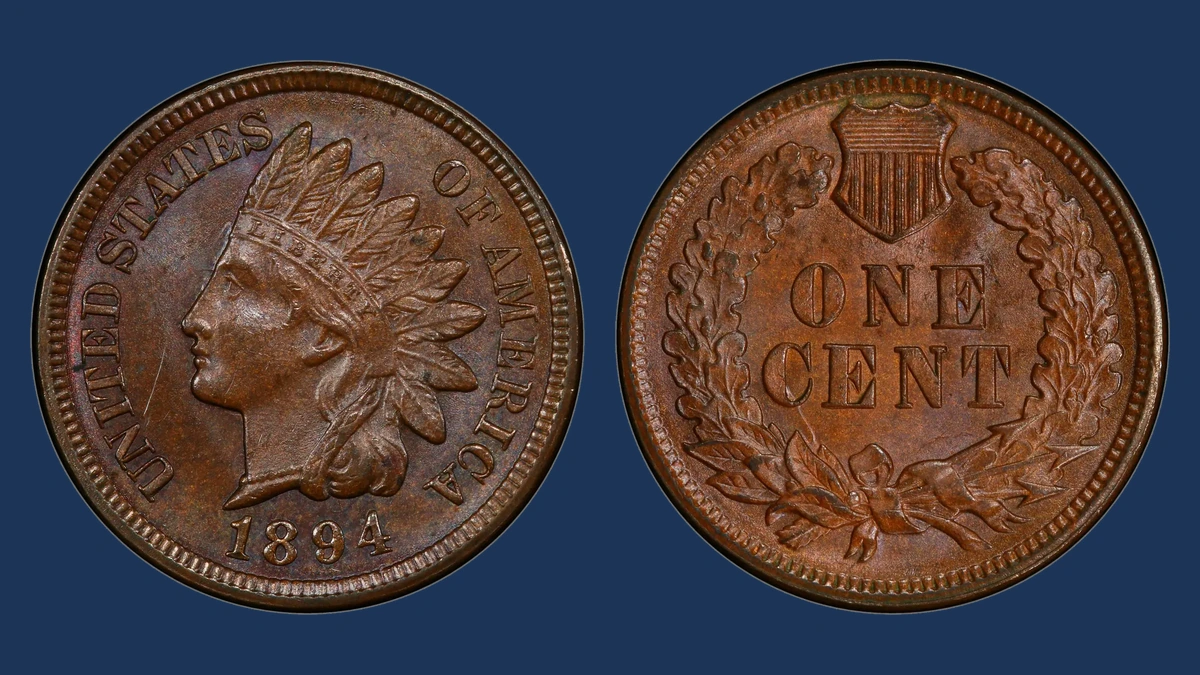
There are pieces of a second 94 below the main date on the recorded misplaced-date variety. They sit among the small teeth forming the border.
The date punch struck the stamping tool too low before the correct date was placed. The earlier fragments remained outside the main numerals and appeared on coins made from that tool.
This is Snow-2, also cataloged as MPD-001 or FS-402. Those names refer to the same type of misplaced-date feature.
It differs from the famous 1894/1894 repunch, whose extra strokes sit close to the normal digits rather than below them.
Estimated Value
PCGS records approximately $1,028 for an MS64 Red Snow-2 misplaced-date example at Heritage in February 2014. MS64 describes an unworn coin with some marks, while Red describes its remaining copper color.
Use an estimated $40–$1,500 across worn and better-preserved examples of this pattern. The clear survival of both digit fragments strengthens a comparison.
That sale belongs to the misplaced 94, not the separate repunched-date variety with a much higher top-grade record.
How to Identify
At 10×, inspect the border beneath the main 94 for parts of an earlier 9 and 4. Include the normal numerals in the photograph instead of isolating one small bump.
Compare the spacing of the two fragments with Snow-2 photographs. The regularly repeated border teeth are not themselves misplaced numerals.
If the coin is loose, a scale and calipers can check 3.11 g and 19.05 mm.
Those ordinary measurements will not identify a low date punch. Lower the lamp to expose a tiny curve without letting neighboring teeth cast misleading shadows.
Follow the fragment far enough to recognize part of a numeral. A rough, shapeless lump cannot establish the recorded 94 pattern.
5. 1894 Indian Head Penny Large Front Indent
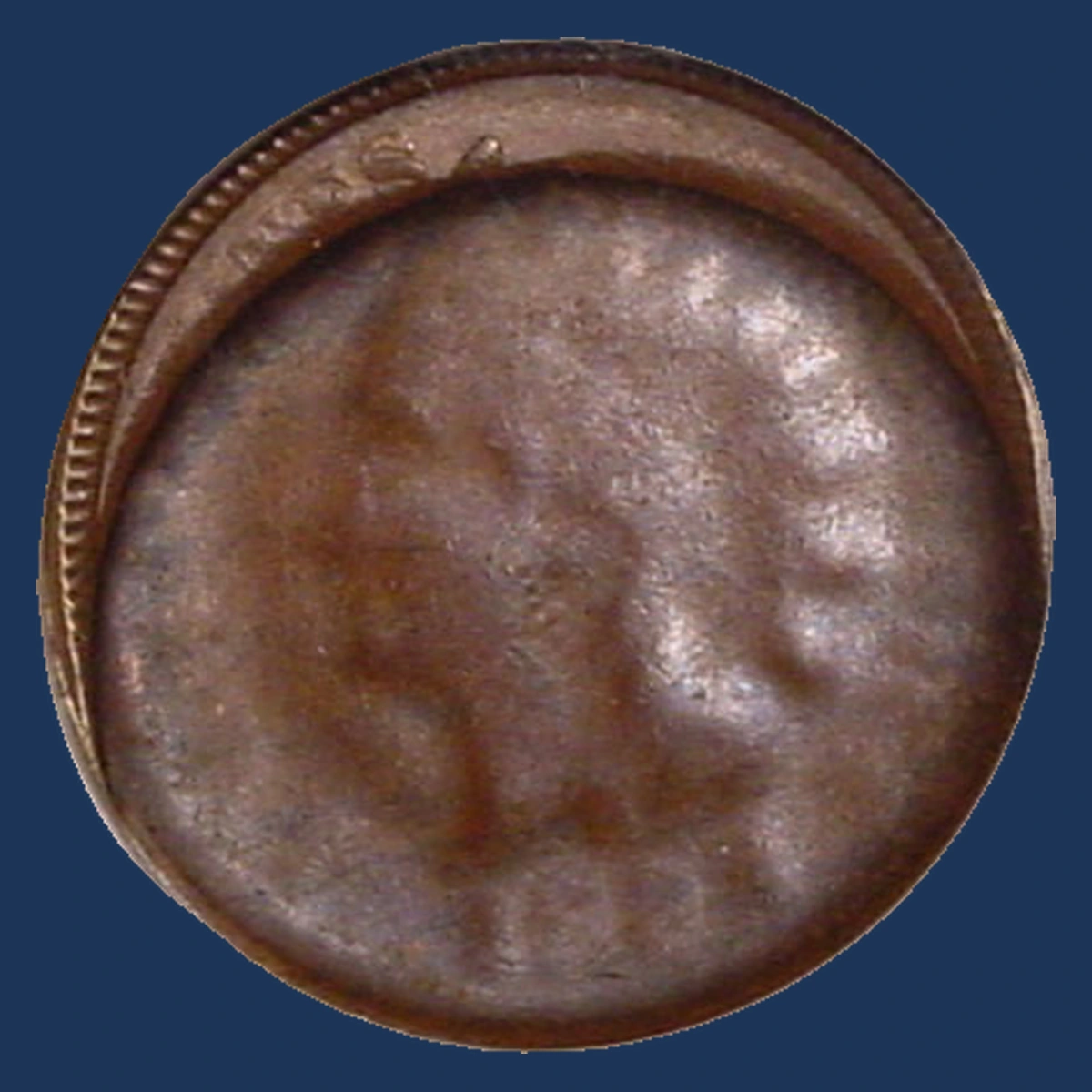
Most of the front lies within a large depressed area on the recorded 1894 indent. Mint Error News describes it as a ninety-percent front indent on a coin graded NGC MS64 Brown.
An object trapped between a blank and the stamping tool can force metal downward during the strike. A second blank can cause this kind of broad depression.
The report does not identify the metal of the object involved here. The visible depression therefore should not be given a specific foreign-metal explanation.
This is different from the sharp, reversed design expected when an already struck coin leaves a brockage.
Estimated Value
For an authenticated large 1894 front indent, use an estimated $300–$2,500 depending on its depth, preserved outline, and condition. The published MS64 Brown piece provides an unworn comparison with some surface marks.
This is an estimated range, not a stated sale of that collection coin. A clear depression formed during striking matters more than the ninety-percent label alone.
Deep later damage can resemble a large indent, but it should not receive the same comparison.
How to Identify
Compare the front depression with the back and edge before naming the error. A later hammer blow may damage those areas as well, or cut across a design that was already complete.
A scale helps distinguish lost metal from metal pushed aside: compare a loose example with 3.11 g. Use calipers against 19.05 mm and record any spread or distortion, rather than assuming every depression changes the size equally.
Examine the depression’s boundary through a 10× magnifier and follow the transition into surviving design. If the depressed surface contains recognizable sunken, reversed lettering, assess it as a possible brockage instead of a plain blank-shaped indent.
6. 1894 Indian Head Penny Double Strike with Displaced Impressions
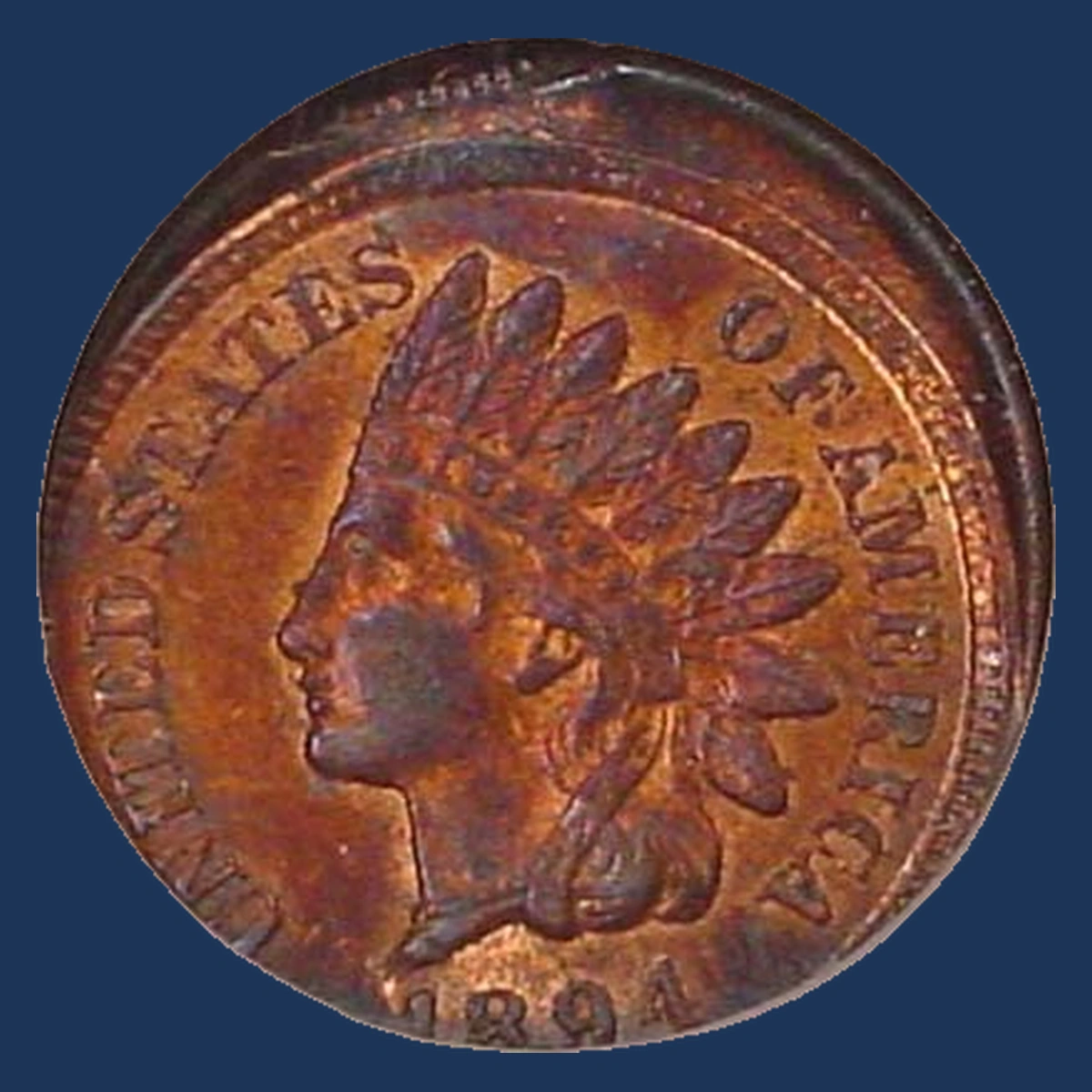
The second blow can leave either an overlapping design or a small separate impression near the edge. One published 1894 example has both strikes off-center: five percent toward eight o’clock, then ninety-five percent toward twelve.
Those impressions do not overlap. Mint Error News identifies the coin as NGC MS61 Red-Brown, unworn but noticeably marked.
A different NGC VF30 penny has a second strike seventy-five percent off-center and two dates. VF30 means moderate circulation wear.
These coins moved differently between blows, so the direction, overlap, and grade of one cannot describe the other.
Estimated Value
Heritage sold the NGC VF30 example with a 75% second strike for $517.50 in January 2008. It is a useful worn-coin comparison.
Estimate $250–$3,500 across confirmed 1894 double strikes, allowing for their very different layouts and condition. The upper range concerns stronger preserved examples rather than every two-date penny.
A coin that also has a clip must be priced as one combined error, not as the sum of separate maxima.
How to Identify
For the ninety-five-percent example, begin with a full photograph of the outline. The small second impression sits apart from the first and can disappear from a tight crop.
For the seventy-five-percent example, identify the two dates instead. Trace nearby letters and portrait outlines with a 10× magnifier to separate the two designs.
Check where the second blow moved metal at the edge. Calipers record that altered outline against the usual 19.05 mm.
A scale should show roughly the normal bronze mass of 3.11 g on an intact loose coin. A small accompanying clip can remove some of that metal.
Compare repeated features beyond the date. Extra strokes confined to a few numerals do not demonstrate a second complete strike.
7. 1894 Indian Head Penny Broadstrike with Back Brockage
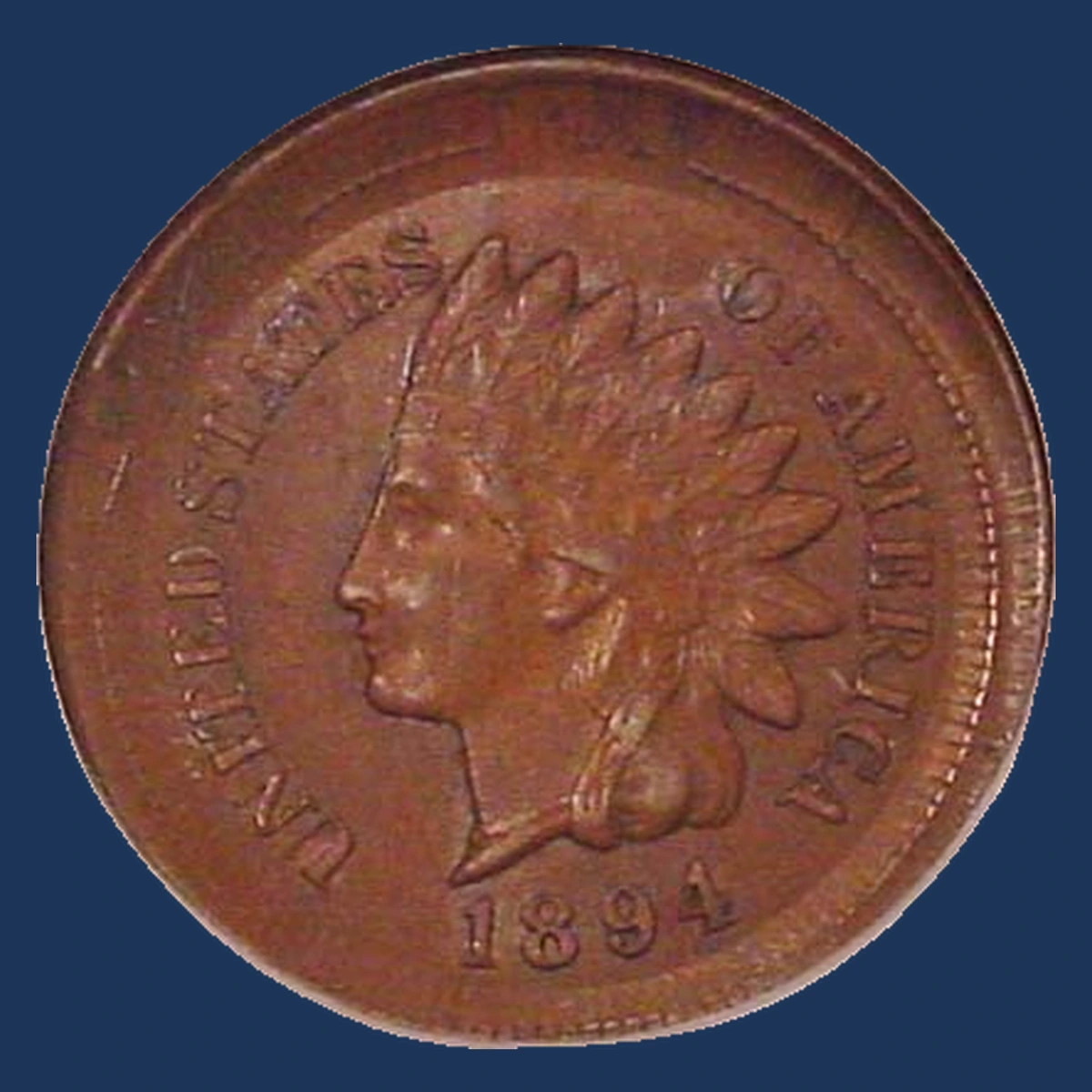
The published 1894 example combines two visible changes: spread metal at the edge and a sunken mirror image on the back. Mint Error News identifies it as NGC MS62 Brown.
The spreading happened without the normal restraint of the collar, the ring around the blank during striking. Collectors call that a broadstrike.
The reversed impression is a brockage. An already struck coin between the blank and a stamping tool pressed its raised design into the new coin.
The two features belong to one event sequence on the same penny, not two independent collectible pieces.
Estimated Value
Use an estimated $500–$5,000 for this kind of 1894 broadstrike with a clear back brockage. The range covers different wear levels and strengths of the mirrored impression.
The documented MS62 Brown example is unworn with noticeable marks; no final sale is assigned to that particular coin here. Its condition and both visible errors need a combined comparison.
A spread coin without a recognizable reversed image should not inherit the same estimate simply from an unusually wide edge.
How to Identify
A loose example can be measured with calipers against the usual 19.05 mm and weighed on a scale against 3.11 g. Record the full outline, since spread metal can make one width greater than another.
Inspect the back through a 10× magnifier for a design that is both sunken and reversed. Weak normal lettering is still in its normal direction and does not prove that another struck coin pressed into the blank.
Check the plain edge for grooves or folded metal from later filing or squeezing. Compare both faces with the entire rim visible, looking for a strike-related spread together with the mirrored impression rather than an isolated dent.
8. 1894 Indian Head Penny Repunched Date 1894/1894
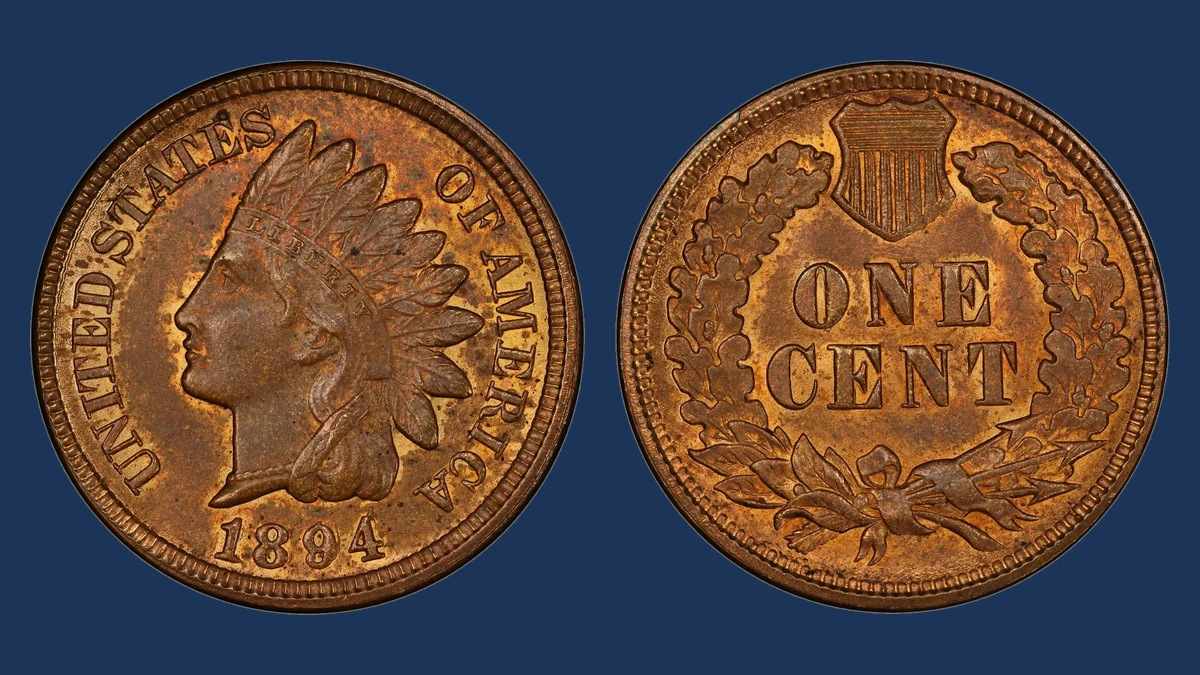
Extra date strokes appear above and to the right of the normal numerals on the famous 1894/1894 variety. The second-looking 9 and the upper point beside the 4 can be especially useful clues.
The date punch entered the tool more than once in different positions. Coins struck from that tool then carried both sets of strokes.
This ordinary-strike variety is Snow-1 or FS-301. A separate Proof, a specially made collector coin, has an earlier stroke below the small projecting tip of the 1.
The Proof pattern should not be identified from the ordinary variety’s upper-right traces.
Estimated Value
A PCGS MS66 Red repunched-date coin brought $30,000 at Heritage in August 2019. Its exceptional preservation and original red color distinguish it from most surviving examples.
Estimate $50–$30,000 across ordinary 1894/1894 coins, with the top reserved for exceptional red pieces. For the separate Proof repunch, use a whole-coin estimate of $300–$3,000.
The Proof’s collector finish contributes to its price; a small date stroke alone does not place it alongside the record ordinary strike.
How to Identify
For the ordinary variety, photograph all four date numerals at 10×. Compare the upper-right traces at the 9 and 4 before inspecting the smaller details of the other digits.
Weigh an accessible loose cent on a scale against 3.11 g and measure it with calipers against 19.05 mm. These checks will not separate two date varieties, but can help expose an altered coin.
Move the light across a suspected extra stroke. A low flat shelf beside the numeral can come from movement during striking, rather than an earlier date punch.
A Proof needs its collector finish established independently. On that separate pattern, inspect below the projecting tip of the 1; the ordinary variety’s upper-right marks are the wrong comparison.
Conclusion
The 1894 repunched date can bring a large premium in exceptional condition, while small cracks may remain modest purchases. Estimated values across these examples range from $5 to $30,000.
For the larger errors, examine both faces and the edge together. A clipped double strike is one coin with two features, and a broadstrike with a mirror impression also needs to be valued as a complete piece.