1893 Penny Error List with Pictures

An ordinary-looking front can hide a backward, sunken portrait on the back. One 1893 penny with that error sold for $2,530 in January 2010.
This 1893 Indian Head penny error list also includes smaller tool flaws and a historical report of a cent on a silver dime blank. Estimated values span $5–$15,000, with the silver-blank tier based on comparisons rather than a claimed 1893 sale.
Compare both faces and the edge as you work through the features below.
1. 1893 Indian Head Penny Weakly Transferred Wreath (Estimated Up to $150)
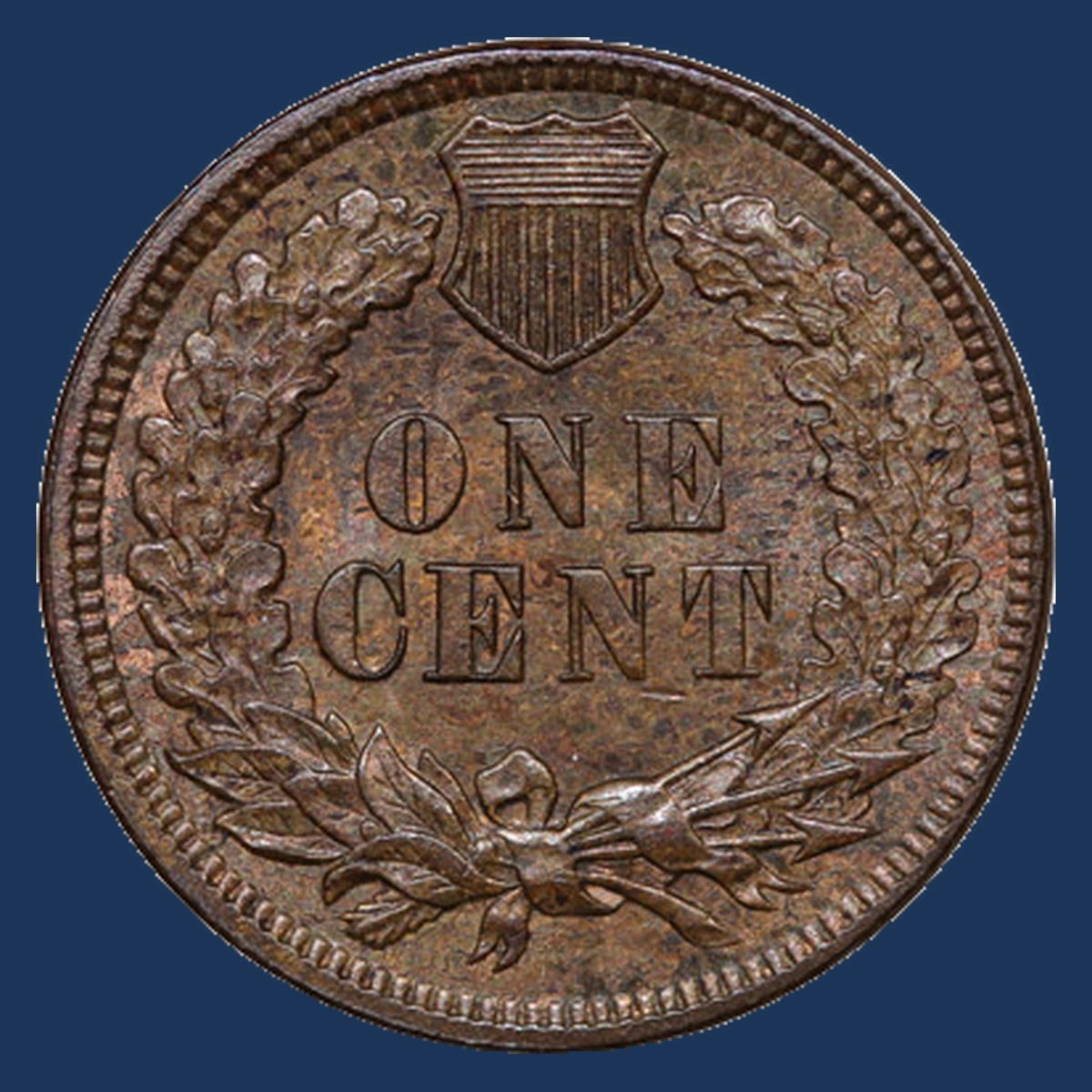
The right side of the wreath may lack detail even when other areas remain clearer. The specialist catalog describes one 1893 variety as having a weakly transferred right wreath.
In this explanation, the design was not fully copied into the steel stamping tool, called a die. Coins made with it could repeat that weak area.
This differs from wear rubbing away a previously sharp leaf. It also differs from a low-pressure strike affecting the finished coin.
The same tool pair can show clash marks from the two tools touching. Those extra marks should not replace the right-wreath comparison.
Estimated Value
For a matched ordinary example, estimate $5–$150 as a whole coin. The subtle weak area may add little when heavy wear makes it difficult to distinguish.
There is no automatic fixed premium for a weak wreath. A clear match in good condition offers a more useful comparison than indistinct leaves on a heavily worn penny.
A weak wreath on its own is not automatically valuable. Wear, blocked detail, and weak striking can produce superficially similar results with different explanations.
How to Identify
Look across the portrait and both sides of the wreath before focusing on the weak right leaves. General flattening of high points may explain the appearance through ordinary wear, rather than a flaw in the tool.
Inspect the smooth edge for pressing and check safely accessible weight and width with a scale and calipers against 3.11 grams and about 19 millimeters. A later flattened coin needs to be excluded before comparing leaf detail.
Now enlarge the right wreath beside a known example of this variety. Its weak pattern should match while the surrounding detail provides context; clash marks on the same tool pair cannot establish that leaf pattern for you.
2. 1893 Indian Head Penny Misaligned Front Die (Estimated Up to $300)
The front can sit near one edge while the back remains centered. The front stamping tool was misplaced, rather than the blank—the flat metal disc.
A year-specific report includes this misaligned-front type for 1893. It does not fix one direction or percentage for every example.
The uneven front border must be compared with the back. Looking at only one face can confuse this with an off-center strike.
A tilted photograph can also exaggerate a narrow rim. The coin’s actual design boundaries, not the angle of the camera, need to establish the displacement.
Estimated Value
A modest but clear front-tool misalignment can be estimated at $10–$300 on an ordinary 1893 cent. Small rim differences may add little to the coin’s basic value.
This range is an estimate for the reported mechanism, not a sale assigned to an identified specimen. Larger visible displacement and better preservation make comparisons more useful.
Do not borrow the full value of a double-sided off-center error. A centered back changes the explanation, while an angled photograph may show no actual error.
How to Identify
Take straight-on photographs of both faces without changing their relative scale. The back must remain normally centered if a shifted front is to support this particular explanation.
Before measuring the border, use calipers to record the accessible coin’s outline against the normal 19-millimeter size. A scale check against 3.11 grams and a smooth-edge inspection can reveal metal removed later.
With a magnifier, trace the front design’s distance from the edge around the whole circle. Compare the same relationship on the back.
If both faces lose design in the same displaced area, examine an off-center strike instead. If the border difference vanishes in a straight-on image, camera angle was part of the problem.
3. 1893 Indian Head Penny Die Clash (Estimated Up to $500)
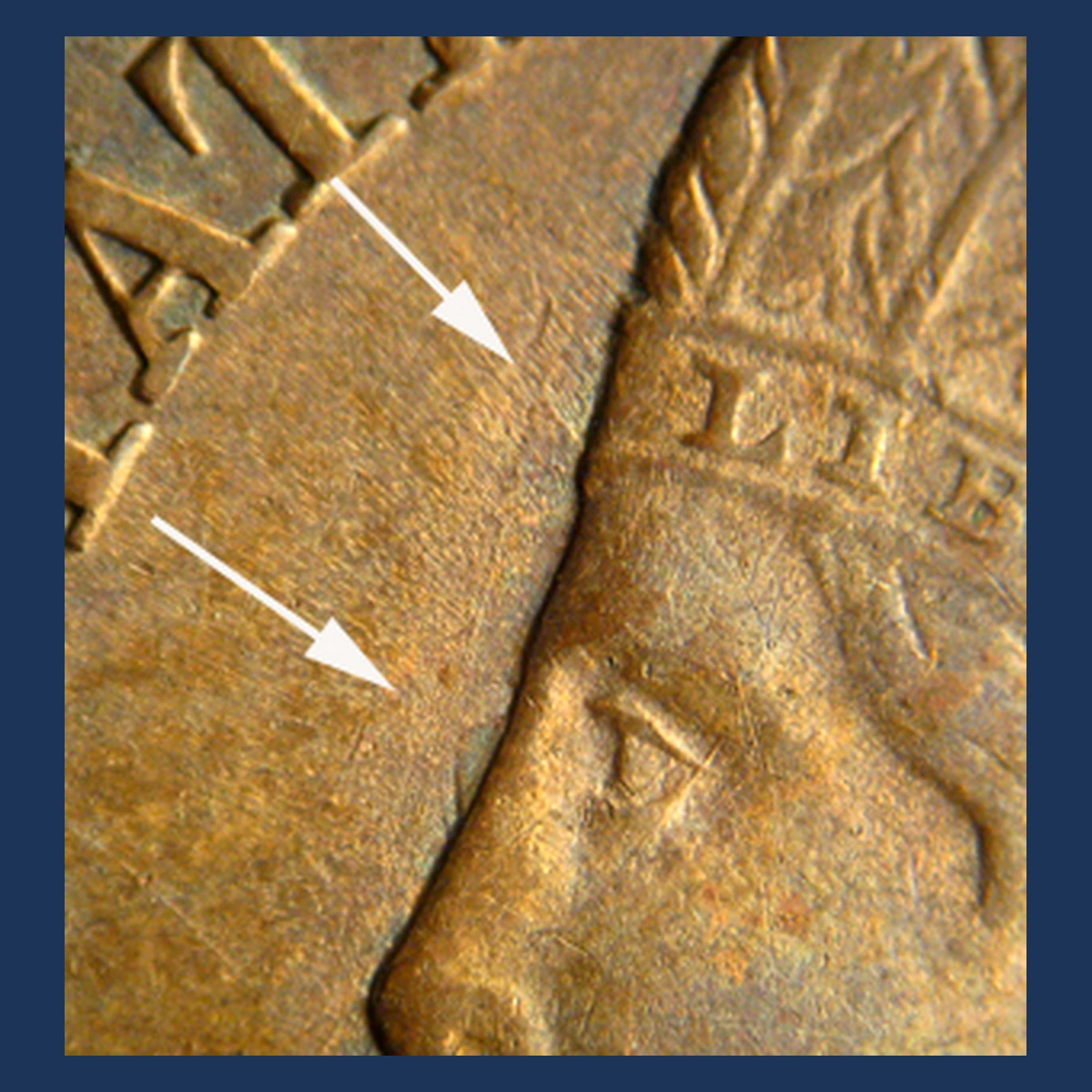
Part of the opposite design can appear as an unexpected faint outline. This can happen after the two stamping tools collide with no blank between them.
The event is a die clash. Marks left on the tools can then pass to later coins.
The specialist 1893 catalog records clashes on documented tool pairs. One pair also has a weak right wreath, but that weakness has a separate explanation.
Match each outline with its own photograph. A random line beside the portrait is not a wreath trace simply because the year has known clashes.
Estimated Value
Estimate $15–$500 for examples with recognizable clash marks, with their clarity and the coin’s condition guiding the comparison. A faint unrecognizable line may add very little.
The catalog reports the feature without providing a sale price for every tool pair. This range is an estimate, not a claim that a specific 1893 clash realized $500.
When a coin also has a weak wreath or date variety, compare the complete combination. Do not add a full second range for each feature.
How to Identify
Begin with correctly aligned photographs of a normal front and back. Select the opposite-face shape that could explain the unexpected outline on your penny.
Under a magnifier, follow the outline itself before trying to draw a complete hidden wreath or portrait. A short random line may not contain enough shape.
Record accessible scale and caliper measurements against 3.11 grams and about 19 millimeters. Inspect the smooth edge for later squeezing.
Change the lamp angle while keeping the coin still. A reflection may move, whereas the physical mark should remain in place.
If the coin also has the weak right wreath, compare that feature separately. It cannot complete a missing section of the proposed clash outline.
4. 1893 Indian Head Penny Struck Through Material (Estimated Up to $500)
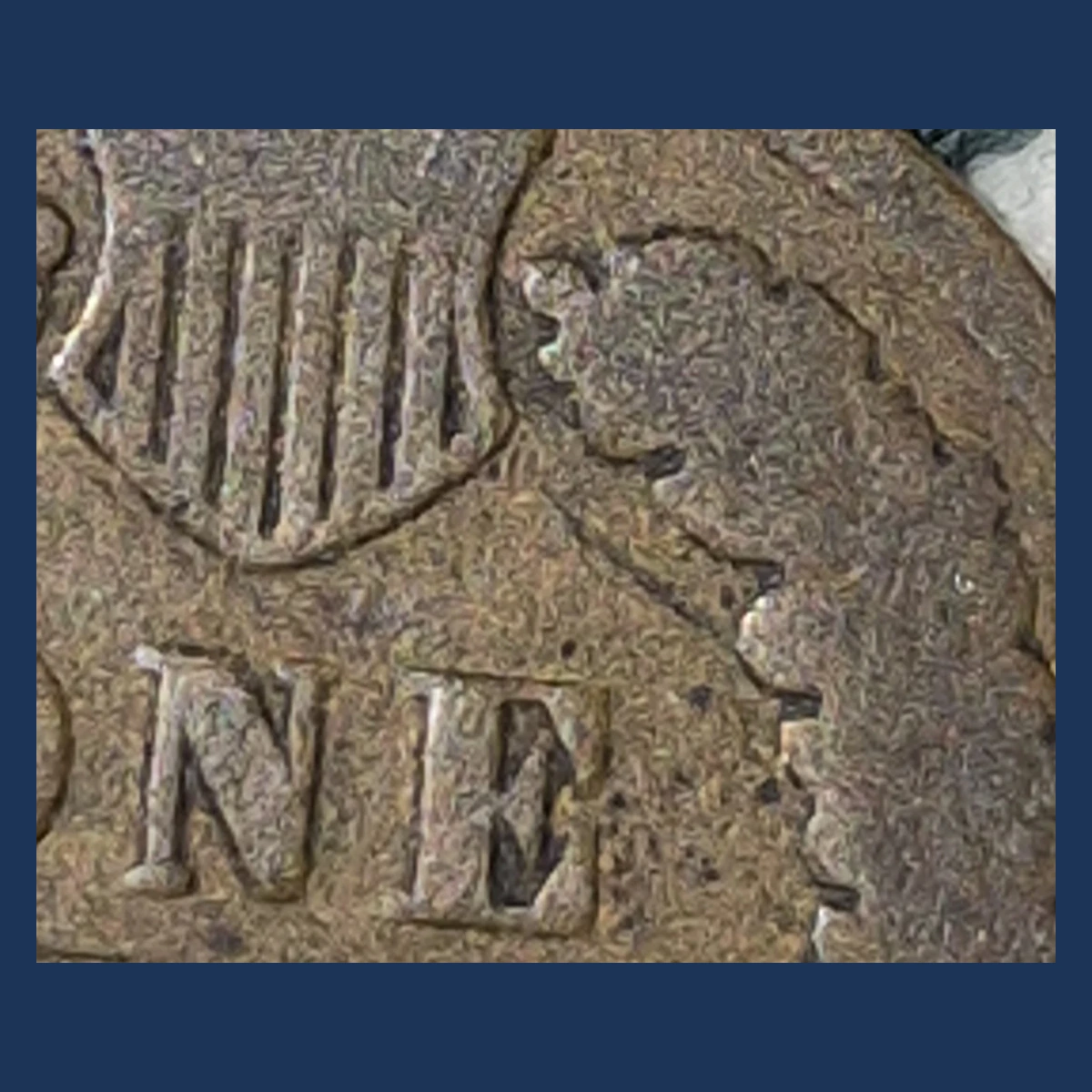
An object between the tool and blank can leave a depression or stop part of the design from forming. This is a struck-through error.
A year-specific report includes the type for 1893 without identifying the object. It should not automatically be described as cloth, grease, or metal.
The shape of the interruption can sometimes suggest what was present. Other impressions show too little detail to name the material.
A later impact can also flatten or remove design. The surface at the boundary helps distinguish an obstruction present during striking from damage to an already completed penny.
Estimated Value
Use an estimated $20–$500 for a genuine struck-through feature on an otherwise ordinary 1893 cent. Depth, shape, condition, and the amount of readable interrupted design affect the range.
A 1920 Lincoln cent struck through a metal fragment sold for $134 in March 2025. That later bronze-cent sale has a known object type, unlike the general 1893 report.
The comparison does not identify the material on your penny. A plain dent without evidence of an original obstruction needs a different assessment.
How to Identify
Leave any attached material in place and photograph it before further handling. Removing it could erase evidence of how the design met the obstruction.
Check an accessible coin’s weight and outline with a scale and calipers against 3.11 grams and about 19 millimeters. Inspect the smooth edge for a related impact.
Now follow a nearby letter or portrait feature into the affected area under magnification. Does the design fail to form at the boundary, or does it look crushed after forming?
A sharp raised lip may come from displaced metal in a later blow. Compare the surrounding surface as well as the depression, rather than naming an object from the outline alone.
5. 1893 Indian Head Penny Repunched Date (Estimated Up to $1,000)
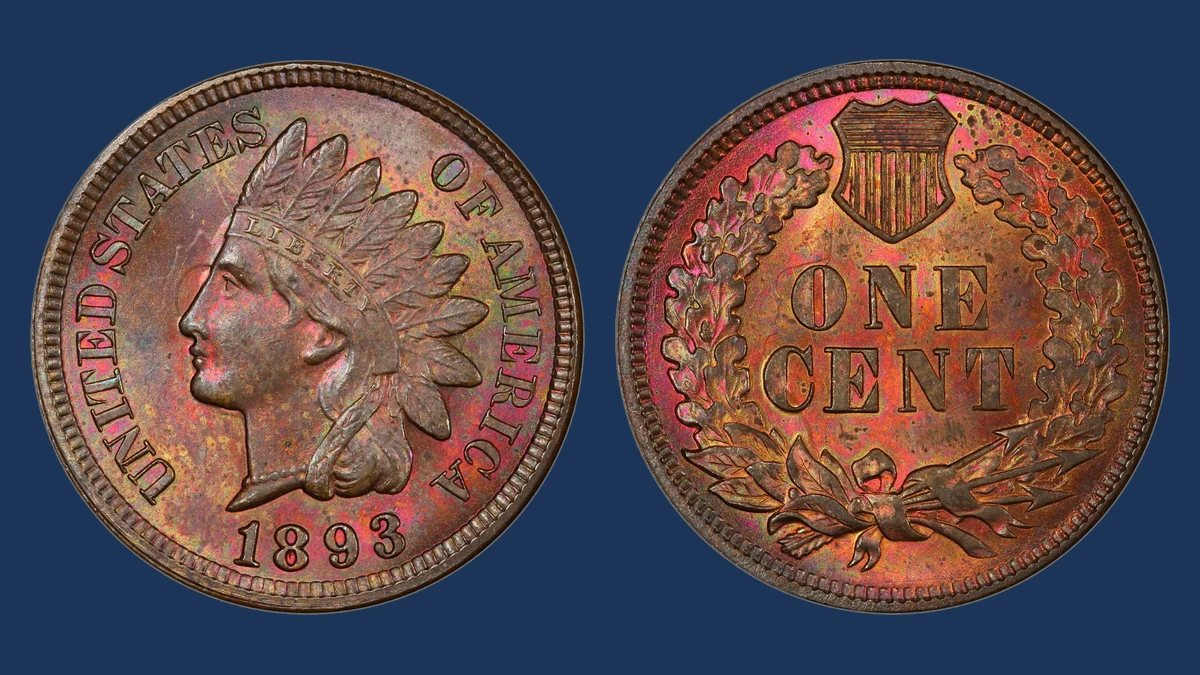
The loops of the date may show small extra raised strokes. An earlier punch position in the stamping tool can remain visible after the date is punched again.
One documented 1893 pattern has rightward remnants in the lower loop of 8, both loops of 9, and the upper loop of 3. Other varieties have different directions.
The same date punch was not necessarily used in that position on every tool. That is why a single doubled-looking digit needs comparison.
A repunched date can leave the portrait single. It concerns preparation of the tool, not two blows to the finished coin.
Estimated Value
A PCGS MS62 Brown Snow-2 repunched-date cent sold for $168 in December 2022. MS62 describes an unworn coin with noticeable surface marks.
Estimate $10–$1,000 for identifiable examples ranging from minor worn varieties to stronger, better-preserved coins. The exact date pattern and condition determine the useful comparison.
The $168 sale should not be transferred to every repeated digit. A damaged date, a flat shelf made during striking, or an unidentified raised speck does not establish the same variety.
How to Identify
Use a known date photograph before tracing the extra strokes. For the rightward 893 pattern, inspect the lower 8 loop, both 9 loops, and upper 3 loop under a magnifier.
Keep the date upright as you change the lighting. A true physical remnant stays in position even when its highlight changes.
Check the smooth edge and date surface for alteration. Compare safely accessible scale and caliper readings with 3.11 grams and roughly 19 millimeters.
If one loop seems to match, inspect the other affected digits on that same variety. A solitary flat shelf can have a different cause.
Do not demand a second portrait to complete the identification; date punching can leave all the surrounding design single.
6. 1893 Indian Head Penny Broadstrike (Estimated Up to $1,000)
A penny can spread into an unusually wide outline while keeping its intended design on the metal. The surrounding retaining ring did not contain the blank normally during the blow.
That ring is called the collar, and the resulting error is a broadstrike. The expanded border can be uneven without cutting off the design.
A PCGS AU58+ example dated 1893 appeared in a Heritage auction. The grade indicates very slight wear, close to an unworn appearance.
The open border belongs to its original strike. A penny hammered flat later may also widen, leaving different damage on the design and edge.
Estimated Value
The PCGS AU58+ broadstrike sold for $414.80 in March 2026. It provides a recent same-year comparison with very little circulation wear.
An estimated $50–$1,000 allows for worn examples through more attractive, clearly expanded pieces. The range concerns the complete coin rather than a flat fee for extra diameter.
Compare remaining surface quality and the strength of the original design. A wider but damaged penny may be less desirable than a smaller, cleaner broadstrike, even when both have genuine mint-made spreading.
How to Identify
Record the widest and narrowest spans with calipers, comparing them with the normal 19-millimeter diameter. Use a scale to weigh the accessible coin against 3.11 grams, because spreading by itself does not remove metal.
Follow the whole outer design under a magnifier. Its remaining letters and border should fit metal that spread during a complete strike, not design lost beyond a displaced blank.
Inspect the smooth edge for added metal or later flattening. Look across the portrait for crushing that might accompany hammering.
For a coin near AU58+, small areas of wear can coexist with a genuine broadstrike. Do not use that wear to explain away the original expanded outline, or the width alone to prove it.
7. 1893 Indian Head Penny Partial Collar (Estimated Up to $1,500)
A step along the edge can show that only part of the blank’s thickness entered the retaining ring. The portion above the ring was freer to spread during striking.
This is a partial-collar error. It differs from a broadstrike in which the usual edge restraint is absent more fully.
NGC illustrates an 1893 Indian cent graded MS65 Red and Brown with this error. That means a well-preserved unworn coin with partly red copper color.
Indian cents have plain edges. The important clue is the change in level or width along that edge, not borrowed reeding from another denomination.
Estimated Value
For genuine partial-collar examples, estimate $75–$1,500 across different wear and preservation. A clearly visible original step supports a more useful comparison than a vague rim irregularity.
The illustrated MS65 Red and Brown coin belongs among unworn comparisons. Its certification and appearance are not treated here as an unpublished auction price.
The 1893 AU58+ broadstrike that brought $414.80 in March 2026 offers context for loss of collar restraint. Its error and condition differ, so the figures are not interchangeable.
How to Identify
Photograph the edge from the side before judging the faces. A partial-collar step is a thickness-and-width relationship that a straight-on portrait photograph may hide.
Use a magnifier to follow where the restrained portion meets the expanded portion. Both sections can be plain on an Indian cent; missing grooves are not the test.
Calipers can record the different spans when accessible, using roughly 19 millimeters as the normal reference. A scale can compare the coin with 3.11 grams.
Check whether filing or a folded rim could have made the step afterward. A fresh cut or compressed border needs a different explanation from an original edge formed partly inside the ring.
8. 1893 Indian Head Penny Misplaced Date (Estimated Up to $1,500)
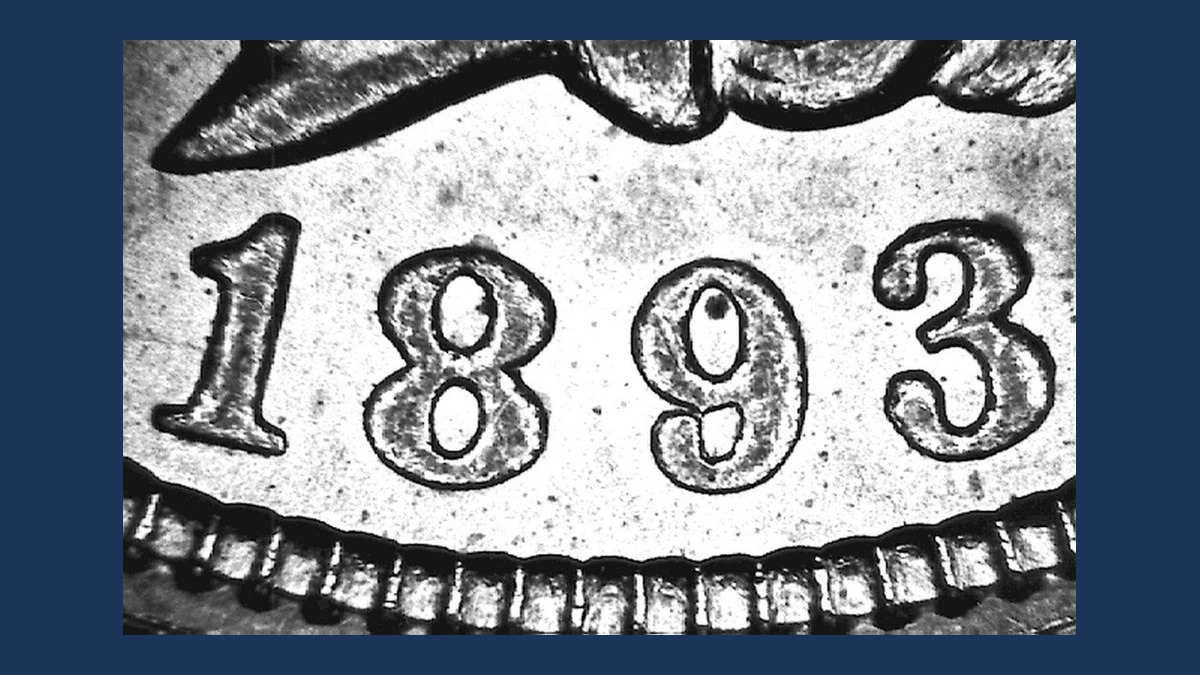
An extra digit can appear outside the normal date when the punch touches the wrong part of the stamping tool. Only a small curve or corner may survive on the finished penny.
A specialist list includes an 1893 misplaced-date entry. Another catalog suggests a possible extra 3 among the border teeth below and left of the main 3.
Those two reports should not automatically be treated as the same tool. The possible location needs its own matching photograph.
An uneven border tooth is not enough. The raised fragment must fit a number and a documented position.
Estimated Value
For an identified misplaced-date example, estimate $20–$1,500, allowing for the clarity of the extra digit and the coin’s preservation. The suggested border 3 needs confirmation before receiving a variety premium.
A different-year 1908 Indian cent misplaced date graded MS65 Red and Brown has a recorded $1,187 eBay result from 2021. That is an unworn comparison with partly red color.
The sale does not establish the identity or value of a doubtful 1893 border mark. Match the actual raised number first.
How to Identify
Inspect the date border and smooth edge for tooling before interpreting an extra number. Scale and caliper readings from safely accessible metal can check the basic 3.11-gram, roughly 19-millimeter cent without proving a variety.
Place a normal border beside the enlarged suspect area and follow the teeth under a magnifier. For the suggested 3 below and left of the main digit, compare only the raised fragment actually visible.
That tentative location cannot identify the separate listed misplaced-date entry by itself. If the fragment is a cut-in scratch or a worn tooth corner, stop short of extending it into a complete extra numeral on the photograph.
9. 1893 Indian Head Penny Doubled Die Obverse (Estimated Up to $1,500)
Repeated raised detail around the ear, headband, or feather bases can suggest doubling built into the stamping tool. A single normal strike can then copy that doubled design.
This is a doubled die obverse, with obverse meaning the front. A year-specific guide reports the type for 1893.
The reported areas still need comparison with a properly identified example. The description alone does not authenticate every doubled-looking feature in those locations.
Date repunching is separate because the date was added independently. Low flat shelves made during striking also differ from repeated detail already present in the tool.
Estimated Value
A matched doubled-front example can be estimated at $15–$1,500, depending on the strength of the repeated design and preservation. This is not a claimed sale for a confirmed 1893 variety.
A recognized 1887 Indian cent doubled front sold for $1,380 in June 2025. Its different date and established pattern make it a comparison rather than a direct price match.
Do not price a repeated date stroke or flat shelf as that stronger error. The design must support the category first.
How to Identify
Start away from the date, comparing the ear, LIBERTY, and feather bases with a normal portrait. Under a 10× magnifier, trace a repeated raised edge around the actual design rather than following a random nearby line.
If the date alone repeats, inspect the repunched-date patterns instead. If a low flat shelf trims a letter, consider movement during the strike.
Check safely accessible weight and width with a scale and calipers against 3.11 grams and about 19 millimeters, inspecting the smooth edge for alteration. Then return to a properly identified doubled-front photograph and compare the same affected parts; the general year report cannot supply missing details.
10. 1893 Indian Head Penny Off-Center Strike (Estimated Up to $1,500)
A misplaced blank can leave an unused crescent opposite the direction of the design’s shift. Those two directions should not be confused.
The documented 1893 example is described as about 12% off center. Its design moves toward 1 o’clock, leaving unused metal near 7 o’clock.
PCGS graded the coin MS61 Brown, an unworn piece with noticeable surface marks. Much of its design remains visible despite the displacement.
Compare both faces before naming the error. A shift limited to the front suggests a different alignment problem, while a later cut can remove design without creating an original off-center strike.
Estimated Value
Estimate $100–$1,500 for genuine dated 1893 off-center cents with different shifts and conditions. The MS61 example’s grade should remain attached to its own comparison.
A 1901 Indian cent struck 10% off center and graded AU53 sold for $231.80 in March 2026. It is a lightly worn, nearby-year comparison rather than the price of the 1893 12% coin.
The surviving date matters alongside the percentage. Cleaning, scratches, or edge damage can lower the value even when the original strike is genuine.
How to Identify
Read the date under a magnifier before selecting the 1893 example. Its year must survive independently of the unusual outline.
Mark where the design moved and where unused metal remains. On the reported 12% coin, these lie near 1 and 7 o’clock respectively.
Compare the second face with those boundaries. A front-only shift does not explain the same kind of misplaced blank.
Use a scale to weigh accessible metal against 3.11 grams and record its outline with calipers beside the normal 19-millimeter cent. Inspect the smooth edge for cutting or filing.
Examine the bare crescent under low light. Grinding away an already finished border leaves a different surface from original metal that never received the design.
11. 1893 Indian Head Penny Die Cracks, Chips, and Cuds (Estimated Up to $3,000)
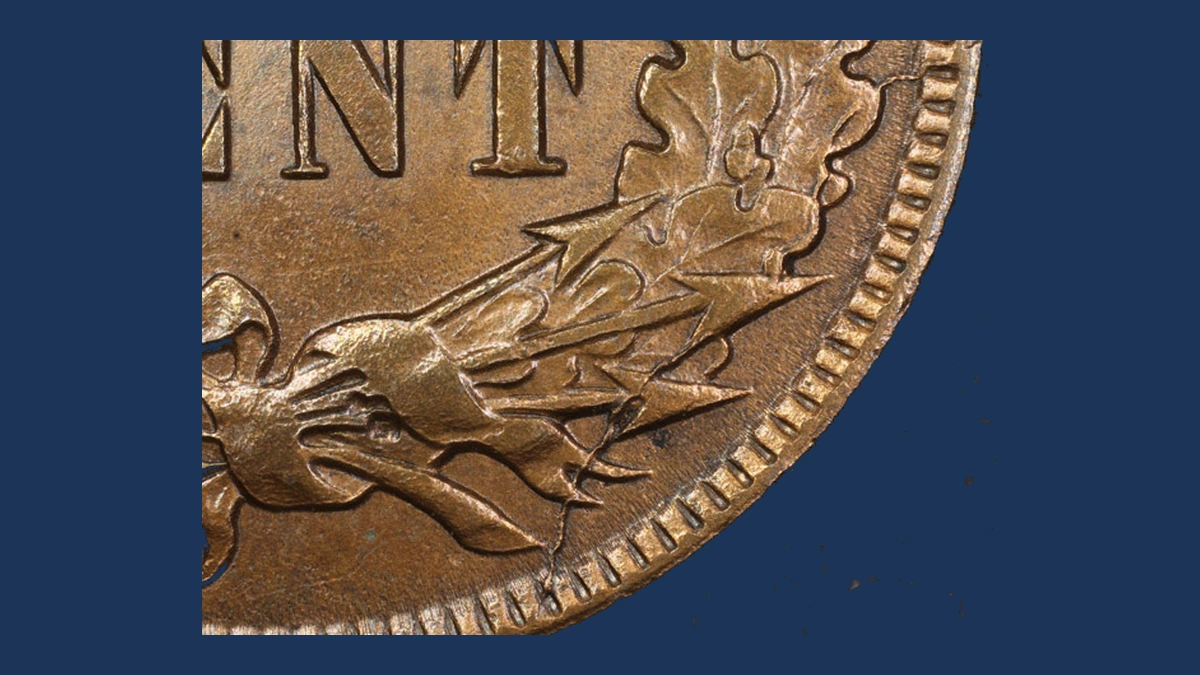
A damaged stamping tool can leave a thin raised line or a larger patch on the coin. Ordinary 1893 examples include cracks through the arrow area toward the right ribbon end and a separately listed rim cud.
A cud comes from a missing piece at the tool’s edge. A severe crack alone does not establish that stage.
A separate Proof variety has a small chip inside the lower loop of 9. Proofs are collector coins made with special preparation.
That filled-loop feature belongs to the Proof tool. Dirt in an ordinary coin’s date does not establish the same variety.
Estimated Value
Estimate $5–$75 for small ordinary cracks, $50–$750 for stronger rim breaks, and $200–$3,000 for suitable Proofs carrying the chip. These are whole-coin ranges.
A 1946-S Lincoln cud brought $288 in March 2021. An exceptional 1901 repunched-date Proof brought $8,700 in August 2019.
Those different-year examples illustrate different condition and feature comparisons. The Proof’s preservation can account for much more value than its tiny chip, and neither sale prices the 1893 feature directly.
How to Identify
First separate an ordinary coin from a Proof before choosing the affected area. The small chip comparison belongs inside the lower loop of 9 on the documented Proof, not every filled date.
Under a magnifier, trace an ordinary raised crack through the arrow-and-ribbon area. For a suspected cud, follow its rim connection and look for design replaced by raised metal.
Inspect the plain edge for folding or added metal. Safely accessible scale and caliper measurements can check 3.11 grams and about 19 millimeters for either finish; leave certified coins sealed.
Return to the suspect surface under changing light. A cut-in groove or loose deposit needs a different explanation, and picking at the Proof’s loop can damage the feature.
12. 1893 Indian Head Penny Double Strike (Estimated Up to $4,000)
Two designs can overlap without making the coin much larger, or they can spread far apart. The position of the coin before its second blow determines the arrangement.
A dealer-listed PCGS AU53 example turned between strikes while staying in the retaining ring. A second date appears around 10 to 11 o’clock on its front.
Another illustrated 1893 penny had a normal first strike and a second strike 75% off center near 3 o’clock. Both dates survive on that NGC MS63 Brown example.
These are separate coins. Their angles, grades, and borders should stay attached to their own examples.
Estimated Value
The PCGS AU53 coin was listed by Sullivan Numismatics at $1,950 on a page marked sold. That displayed dealer price is not treated as a verified final transaction amount.
Estimate $300–$4,000 for genuine double-struck examples across different wear and overlap. AU53 means light circulation wear, while the illustrated MS63 example is unworn with marks.
Two readable dates help, but their separation is not the only factor. Original surfaces and clear surviving designs also affect the whole-coin price.
How to Identify
The in-ring AU53 example can look nearly normal in size. Its second date around 10 to 11 o’clock provides a starting point for tracing the rotated image with a magnifier.
Inspect the smooth edge for a join before accepting the overlap. Scale and caliper readings from accessible metal can be compared with 3.11 grams and about 19 millimeters.
For the separate 75% off-center example, begin at the later design near 3 o’clock instead. Its border should fit that much larger displacement.
Connect each date to its own portrait and lettering on a photograph. A repeated digit alone cannot supply a second whole strike.
Keep the two arrangements separate when choosing which photograph matches your coin.
13. 1893 Indian Head Penny Reverse Brockage (Estimated Up to $5,000)
The front of this penny can look ordinary, but the back shows a sunken, backward version of the portrait. Another already struck coin pressed its raised image into the blank.
This transferred mirror image is called a brockage. The receiving coin is different from the older coin that acted as the stamp.
An NGC AU55 example has a nearly complete back brockage with slight spreading. The portrait is detailed, while the outer wording is weaker.
AU55 means light wear from circulation. The mirrored shape and depth, rather than the absence of a normal wreath alone, explain the error.
Estimated Value
The NGC AU55 example sold for $2,530 in January 2010 at Heritage. That is a completed sale for the detailed, nearly full mirror impression.
An estimated $1,000–$5,000 allows for differences in preservation and the amount of clear transferred design. A faint partial impression needs a different comparison from this lightly worn example.
The coin receives one value, including its slight spread. A separate broadstrike price should not be added merely because the outline is expanded.
How to Identify
Before explaining an unusual back, inspect the smooth edge for a seam or signs of later squeezing. Use a scale to weigh an accessible coin against 3.11 grams and record caliper spans beside the normal 19-millimeter outline, allowing for slight spreading.
Now compare its two portraits under a magnifier: the normal front is raised, while the copied image on the back must be sunken and reversed. A raised duplicate or plain blank area does not establish this brockage.
Follow the mirrored portrait outward into the wording, where the original description allows a softer impression. Weaker outer letters need not invalidate the match when the detailed central image has the correct direction and depth.
14. 1893 Indian Head Penny Struck on a Silver Dime Blank (Estimated Up to $15,000)
A cent design on a silver dime blank would combine the penny’s image with metal intended for another denomination. The smaller blank may leave outer detail incomplete.
A historical reference records an 1893 example reported by numismatist Don Taxay. The account does not supply a measured weight for that coin.
A standard silver dime blank then was about 2.50 grams, compared with 3.11 grams for a bronze cent. Those are comparison standards, not a measurement claimed for the reported piece.
Plating or a filed bronze penny cannot establish the same identity. The metal needs to agree with the proposed blank.
Estimated Value
For an authenticated 1893 cent on a silver dime blank, estimate $2,000–$15,000, depending on preservation and the surviving design. This conditional range is not a claimed sale for Taxay’s reported example.
A 1938 Lincoln cent on a silver dime blank sold for $10,200 in August 2025. That later bronze-cent design on silver provides a mechanism comparison, with a different date and portrait.
The estimated 1893 value requires the actual metal and blank identity. A silver-colored surface alone does not qualify.
How to Identify
Begin with a scale rather than color: compare an accessible coin with the dime standard of about 2.50 grams and the cent standard of 3.11 grams. Keep certified pieces sealed and consult their recorded measurements.
Use calipers to document its width, remembering that a dime blank starts near 17.9 millimeters and can spread during a cent strike. Do not demand an unchanged blank diameter.
Have the metal checked without scratching or acid testing. Under a magnifier, inspect the edge for plating, filing, or a join.
Finally compare the outer design with the smaller blank’s available area. The historical report cannot replace physical evidence that this particular coin was struck on silver.
Conclusion
The estimated $5–$15,000 range includes modest tool marks, visible striking mistakes, and the reported silver-blank rarity. The $2,530 back-brockage sale belongs to a specific lightly worn 1893 coin.
Do not transfer one example’s identity to another: the small chip inside 9 is recorded on a Proof, while the silver blank requires metal evidence. A weak wreath, missing design, or odd edge each calls for a different check.