1919 Penny Error List with Pictures

Some 1919 Wheat pennies show more than one minting mistake. A coin might spread beyond its normal width, turn between strikes, or receive a backward impression from another coin.
A triple-struck example brought $1,020 in March 2025. The estimated values below range from $2 to $4,000, with the upper figure informed by a dealer’s brockage asking price rather than a completed sale.
Explore each feature below, including how to recognize two errors on the same penny without counting its value twice.
1. 1919 Lincoln Wheat Penny Misaligned Die (Estimated Up to $100)
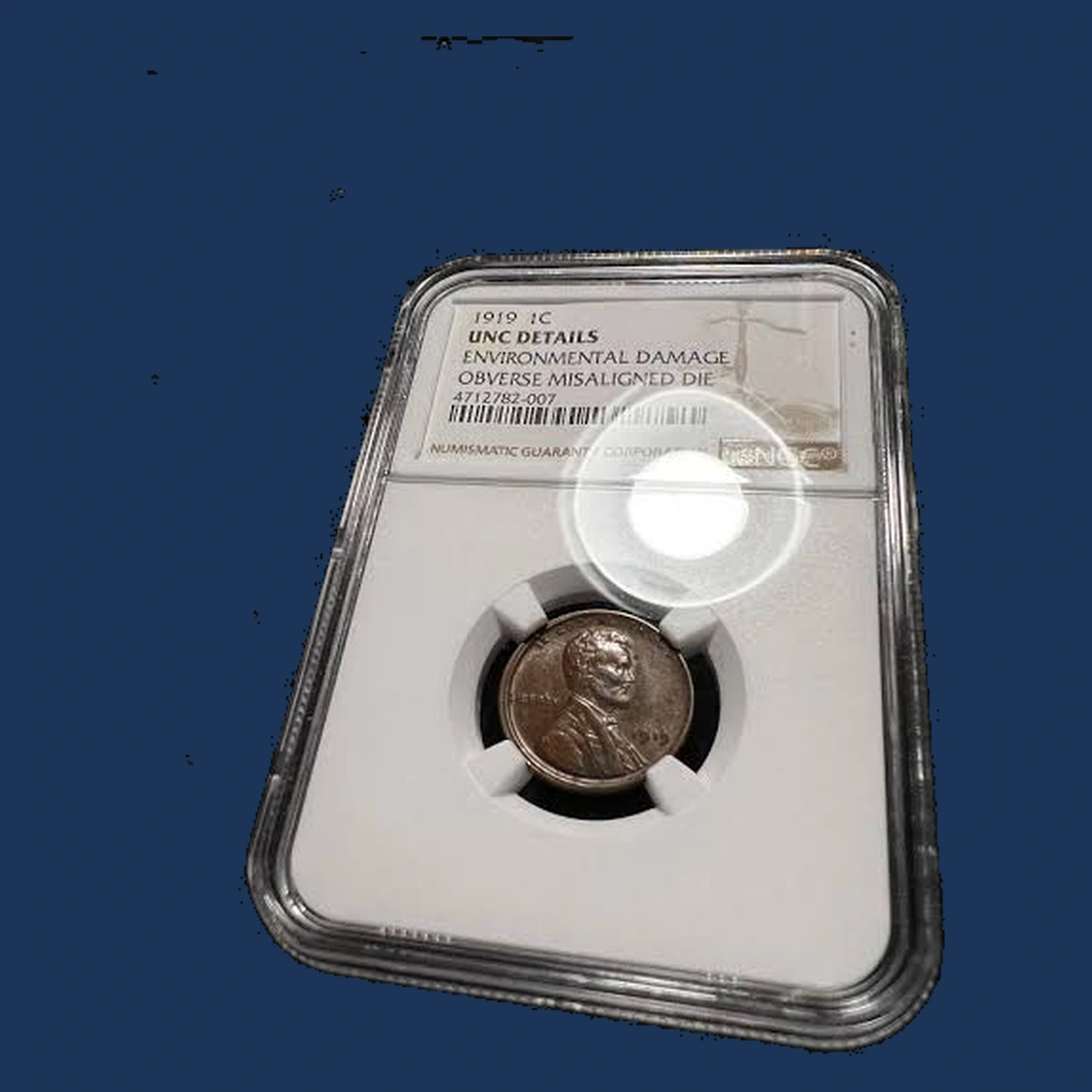
One face may sit noticeably closer to its rim while the other remains centered. That pattern can mean one die, the steel tool that stamps the coin, was displaced sideways.
The metal disc itself can remain properly seated. This separates a misaligned die from an off-center strike caused by a misplaced disc.
A 1919 misaligned-die error has been reported, without a firmly identified mint or measured shift. The visible relationship between both faces is therefore the essential clue.
Small differences in border width are common. A slightly uneven rim by itself does not establish a valuable error.
Estimated Value
An estimated $2–$100 covers modest through clear genuine 1919 die misalignments. Small shifts can add little beyond the penny’s ordinary value.
This is a comparison-based estimate for the mechanism, not a recorded transaction for a particular 1919 specimen. A large visible difference between the two faces carries more interest than an almost imperceptible shift.
The estimate excludes bent rims and other later damage. Stronger-looking damage does not turn a small mint fault into a major one.
How to Identify
Check for a bent coin first: inspect the plain edge, weigh against 3.11 g, and use calipers against 19.05 mm. Bending or squeezing can make the borders look uneven without moving a stamping tool.
Place the penny flat and photograph the front straight down. Take the back picture at the same distance so perspective does not create a false shift.
Compare the width of the border around each face. An off-center disc can displace both designs; one shifted tool can leave the other face centered.
Use a 10× magnifier wherever a letter approaches the rim. Put the two photographs side by side and check whether the narrow border occurs on only one face.
2. 1919 Lincoln Wheat Penny Die Clash (Estimated Up to $125)
A faint unfamiliar outline may appear beside the normal design. If its shape belongs to the coin’s opposite face, it may be a clash mark.
A clash begins when the two stamping tools meet without a metal disc between them. Each can pick up traces of the other’s design and transfer them to later coins.
Die clashes have been reported for 1919 pennies. No single position or mint letter should be assumed from that general report.
The extra trace is usually incomplete. Random scratches and lines left by polishing a tool can appear in spaces, without forming an opposite-side design.
Estimated Value
For a genuine 1919 clash, use an estimated whole-coin range of $5–$125. A faint trace on a worn penny belongs near the modest end.
The estimate compares similarly visible Wheat cent clashes rather than quoting a confirmed 1919 sale. Recognizable transferred shapes and clean original surfaces make the feature easier to appreciate.
More lines do not necessarily mean more value. Buyers need a real opposite-design match, and later scratches may reduce the coin’s appeal.
How to Identify
Find a clear drawing or photograph of each side of a normal Wheat cent. A real clash should be explainable by one of those designs, rather than by an imagined shape.
Choose one extra mark on the candidate and study its outline through a 10× magnifier. Does it resemble part of the opposite design, or is it simply a straight polishing line?
Inspect the plain edge for crushing from later pressure. Record the weight on a scale and width with calipers, using 3.11 g and 19.05 mm as normal comparisons.
Now turn the normal-design picture to the position needed to explain the mark. Compare the nearest curve and letter fragment at matching size; they should fit together without moving the picture between features.
3. 1919 Lincoln Wheat Penny Lamination (Estimated Up to $150)
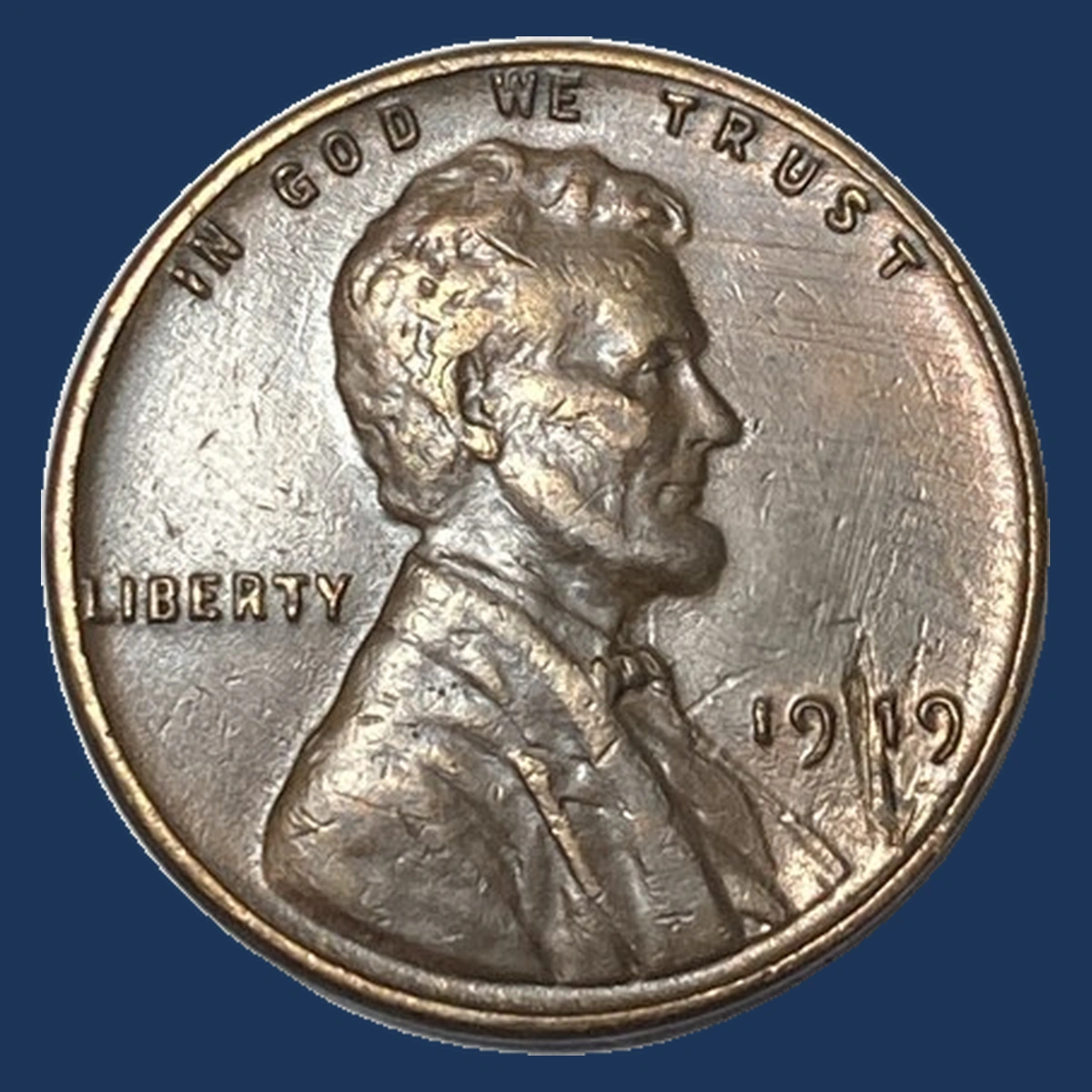
The copper may lift in a thin layer or leave a shallow area where that layer broke away. Collectors call this lamination, a separation within the coin’s own metal.
The 1919 report concerns the front, but its exact position and mint have not been established. It should not be expanded into a claim that the whole disc split into two pieces.
Poorly bonded metal can separate before or after the coin is struck. The remaining seam helps explain how the loss happened.
Brown stripes alone are different. Color variation can leave the surface intact, whereas lamination involves a layer.
Estimated Value
An estimated $5–$150 applies to genuine 1919 laminations on ordinary circulated or modest-grade pennies. A clearly visible flap generally has more appeal than a tiny rough patch.
A later copper-cent comparison is the 1966 front-lamination example graded MS63 Brown that sold for $61 in 2021. It is not a sale of a 1919 coin.
The estimate allows for differences in size and preservation. Corrosion must be assessed separately and can lower the value.
How to Identify
Weigh the penny before handling a loose-looking flap. Compare with 3.11 g, but remember that a very thin lost layer may barely affect a scale reading.
Keep the copper untouched while you tilt the coin beneath a lamp. A stripe of color alone should not change into a lifted edge as the light moves.
A 10× magnifier can follow the boundary of any actual layer. Look for a joined flap or a shallow seam, rather than granular pitting.
Check the plain edge for continuation of that seam and measure the diameter against 19.05 mm with calipers. Take a low-angle photograph of the boundary: a visible layer edge is the useful clue that a flat color band lacks.
4. 1919 Lincoln Wheat Penny Doubled Die Reverse (Estimated Up to $200)
The words E PLURIBUS UNUM and the wheat details on the back can look unusually thick or show repeated outlines. Those are the reported areas to examine on the Philadelphia type.
This type is called a doubled die reverse: a doubled back design built into the stamping tool. The repeated detail can therefore appear on more than one coin made by that tool.
It differs from a coin struck twice. A repeat strike moves an existing design under another blow.
On a worn penny, soft lettering can imitate thickness. A stable extra outline or matching shape matters more than fuzziness.
Estimated Value
The estimated range is $10–$200 for correctly identified 1919 doubled-back pennies with readable features. Better preservation helps show what a collector is paying for.
This estimate uses modest Wheat cent doubled-design varieties. It does not assign the prices of famous, strongly doubled dates to this smaller reported feature.
A label that merely says doubled is not enough to support the upper end. The motto or wheat detail must match the actual variety, with surface damage considered separately.
How to Identify
Set aside coins with D or S below the date; this doubled-back report concerns Philadelphia. Check the remaining coin’s 3.11 g weight, 19.05 mm diameter, and plain edge with a scale, calipers, and visual inspection.
Arrange a normal back and the candidate under the same light. Look first at E PLURIBUS UNUM without increasing magnification simply to make one set of letters seem thicker.
At 10×, compare the outline of one letter with a documented doubled-back example. Continue into the wheat detail only where that same variety shows a difference.
Flat shelf-like edges can be produced during striking. Move the light across the suspected extra outline and check whether it keeps the rounded shape shown in the matching variety picture.
5. 1919 Lincoln Wheat Penny Repunched Mintmark (Estimated Up to $250)
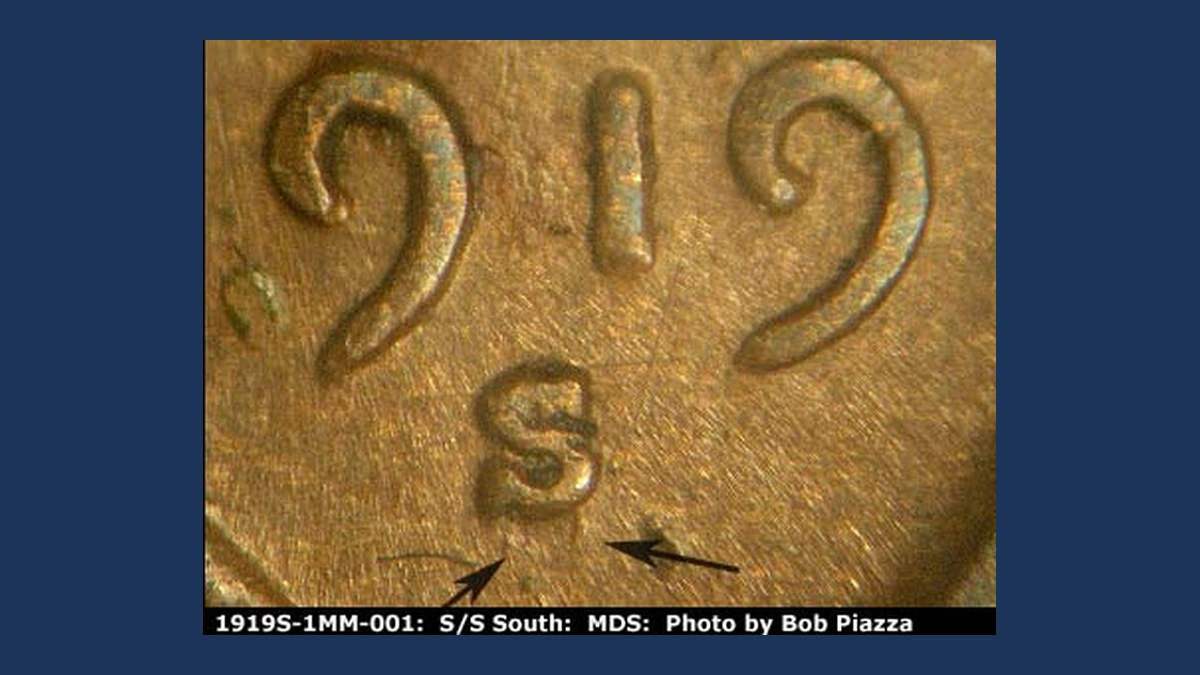
An extra stroke beside D or S can be a remnant of an earlier mintmark position. Workers placed these small letters on the stamping tools by hand.
If another punch landed slightly away from the first, part of the earlier letter could remain. Coins made with that tool would then reproduce both positions.
The Coppercoins S example has a clue near the letter’s lower-left tip. Denver repunching has also been reported, but it needs a separate shape comparison.
There is no P mintmark to repunch on a Philadelphia 1919 cent. An extra bump is not automatically another letter.
Estimated Value
A practical estimate is $10–$250 for genuine 1919 repunched mintmarks, including the ordinary value of the coin. The range favors visible, correctly matched examples over vague doubling claims.
It is based on comparable early Wheat cent mintmark varieties, not a specific 1919 auction result. A sharp S remnant or a clearly identified Denver variety is easier to sell than an unexplained blob.
Wear and corrosion can hide the earlier punch. Strong original details help support the upper end.
How to Identify
Locate D or S below the date and select a comparison for that letter. The documented S example has a remnant near its lower-left tip; a Denver coin needs a different picture.
Enlarge the mintmark to 10× and examine that small region before looking elsewhere. A rounded bump that fits no part of a letter may be dirt or tool wear.
Check the plain edge and copper around the mintmark for alteration. A scale and calipers should be compared with 3.11 g and 19.05 mm, without treating normal measurements as proof of a genuine extra punch.
Return to the close-up with the comparison beside it. Locate the same tip or curve of the earlier D or S, in the same position relative to the main letter.
6. 1919 Lincoln Wheat Penny Struck Through Material (Estimated Up to $300)
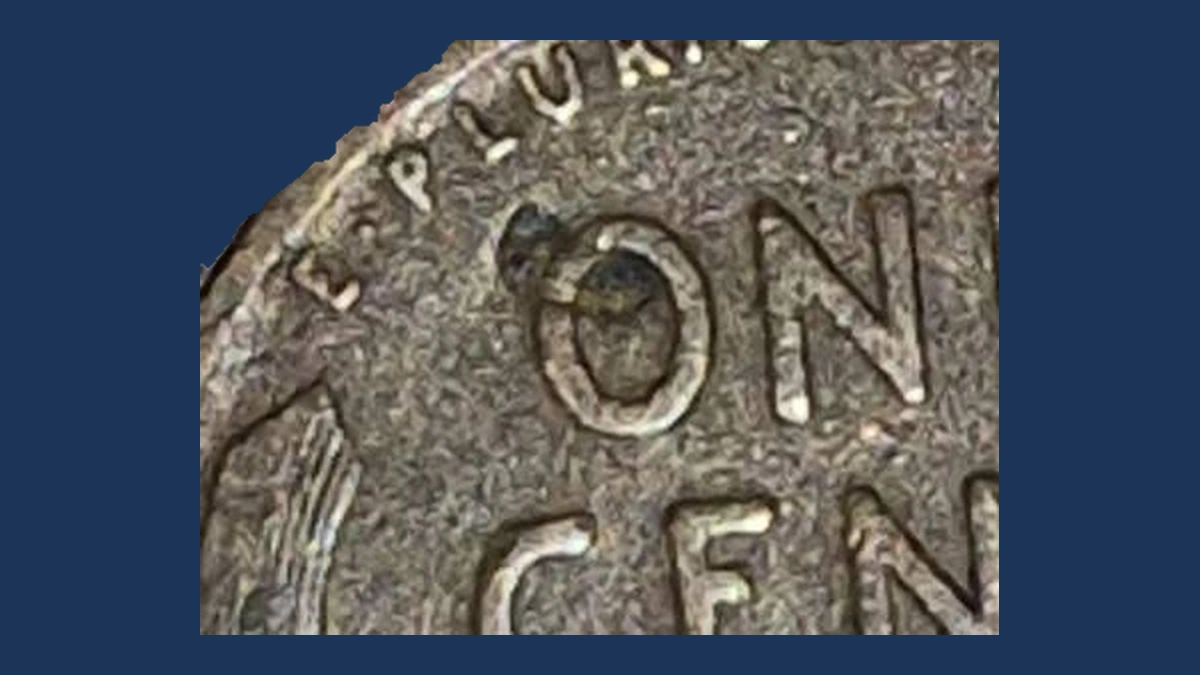
A patch of the design can fail to form where material blocks the stamping tool. The result may be a depression, a narrow trace, or an area with little visible detail.
This is called a struck-through error. The foreign material lies between the tool and the coin when pressure is applied.
A general 1919 struck-through type has been reported. Its mint, material, and exact location should not be assumed from the name alone.
A separate compound 1919 error has a fine lint trace on the back. That specific threadlike feature does not explain every other reported patch of missing detail.
Estimated Value
An estimated $15–$300 covers genuine 1919 struck-through errors of modest to clear visual size. The nature of the mark and the original coin’s condition both matter.
As a nearby-year comparison, a 1923 penny struck through thread graded MS64 Red and Brown brought $156 in 2018. That price does not establish the material on a 1919 example.
Small filled areas may add little value. A clear original impression is more persuasive than a shallow mark surrounded by damage.
How to Identify
Use a scale and calipers to record the coin’s weight and width before studying the weak patch. The normal comparisons are 3.11 g and 19.05 mm; missing metal and an obstruction during striking are different possibilities.
If the whole design is worn smooth, one faint letter tells little. Instead, compare the affected area with the nearest well-formed feature.
Follow their meeting point through a 10× magnifier. A scratch or dent may push metal into a sharp lip, whereas blocked design must fit an obstacle present during striking.
Inspect the plain edge for crushing and the opposite face for related damage. Tilt the local mark under side lighting and look along its boundary for cut or pushed-up metal that would point to later injury.
7. 1919 Lincoln Wheat Penny Die Cracks and Major Breaks (Estimated Up to $400)
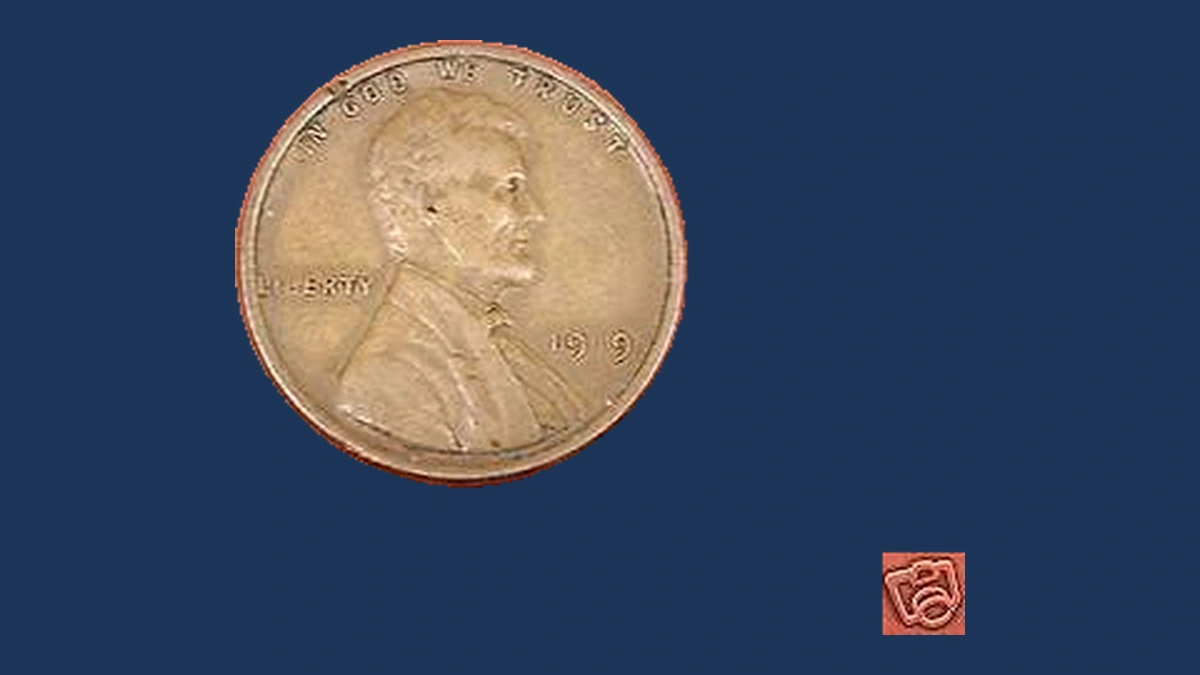
A raised line or lump can show where a stamping tool cracked or lost a piece. Metal flowed into that opening when the penny was struck.
Philadelphia examples described as major die breaks have appeared in auction listings with ANACS VG8 and XF45 grades. Other reports mention San Francisco breaks and Denver cracks.
These reports do not establish one position on every 1919 coin. A lump that meets the rim is a cud; an interior break stays within the design.
The feature adds raised metal. A sunken cut, a corroded patch, and something attached to the surface have other causes.
Estimated Value
The estimated $2–$400 range runs from small cracks to prominent genuine breaks. Tiny raised lines may add very little to an ordinary worn penny.
This is a comparison with similar Wheat cent tool damage rather than a quoted price for the VG8 or XF45 examples. A large natural lump that clearly replaces part of the design can command more attention.
Mint and condition also affect the whole coin’s value. Corrosion or an added blob does not earn the error premium.
How to Identify
Is the feature a line, an isolated bump, or a lump that reaches the rim? Follow its boundary before choosing a name.
A rim-connected lump can be a cud; an interior bump may be a chip or a larger internal break. For a large break, turn the coin over to look for possible weakness opposite the raised area.
Use calipers against 19.05 mm and a scale against 3.11 g, and examine the plain edge for dents or added material. These checks concern alteration, not the precise kind of tool break.
With a 10× magnifier, compare the mark’s height with the surrounding copper. Move the lamp from left to right: a genuine raised crack stays above the surface, while a sunken scratch changes shadows as a groove.
8. 1919 Lincoln Wheat Penny Rotated Die (Estimated Up to $500)
The wheat design can point the wrong way when the coin is flipped correctly. That is an orientation problem rather than sideways displacement.
A rotated die means one stamping tool turned from its intended position. U.S. pennies normally use opposite-facing designs that appear upright after a top-to-bottom flip.
A Philadelphia broadstrike graded NGC MS65 Brown was described with about 30 degrees of counterclockwise rotation. A Denver rotation has also been reported, without a confirmed angle.
Rotated photographs can create the same appearance. The angle must be measured while keeping the coin’s physical turning axis fixed.
Estimated Value
For a genuine 1919 rotation, an estimated $10–$500 allows for the size of the turn and the coin’s condition. Slight rotation often adds little.
The Philadelphia MS65 Brown broadstrike with roughly 30 degrees of rotation sold for $431.25 in April 2006. That sale includes both its expanded shape and turned design.
It is not a price for rotation alone. A Denver example needs its own angle measured before it can be compared sensibly with that coin.
How to Identify
Place an ordinary U.S. cent beside the candidate and practice a top-to-bottom flip. Both designs on the normal coin should appear upright after that motion.
Hold the candidate by a fixed axis and repeat the same flip. If the back tilts, repeat without changing your starting grip; a different result each time points to handling.
For the recorded Philadelphia coin, also examine the expanded plain edge under a 10× magnifier. Calipers compare its spread with 19.05 mm, and a scale compares its weight with 3.11 g.
The Denver report does not supply an angle to copy. Hold Lincoln upright against a vertical guide, flip top to bottom again, and measure the back’s tilt from that same guide.
9. 1919 Lincoln Wheat Penny Broadstrike (Estimated Up to $600)
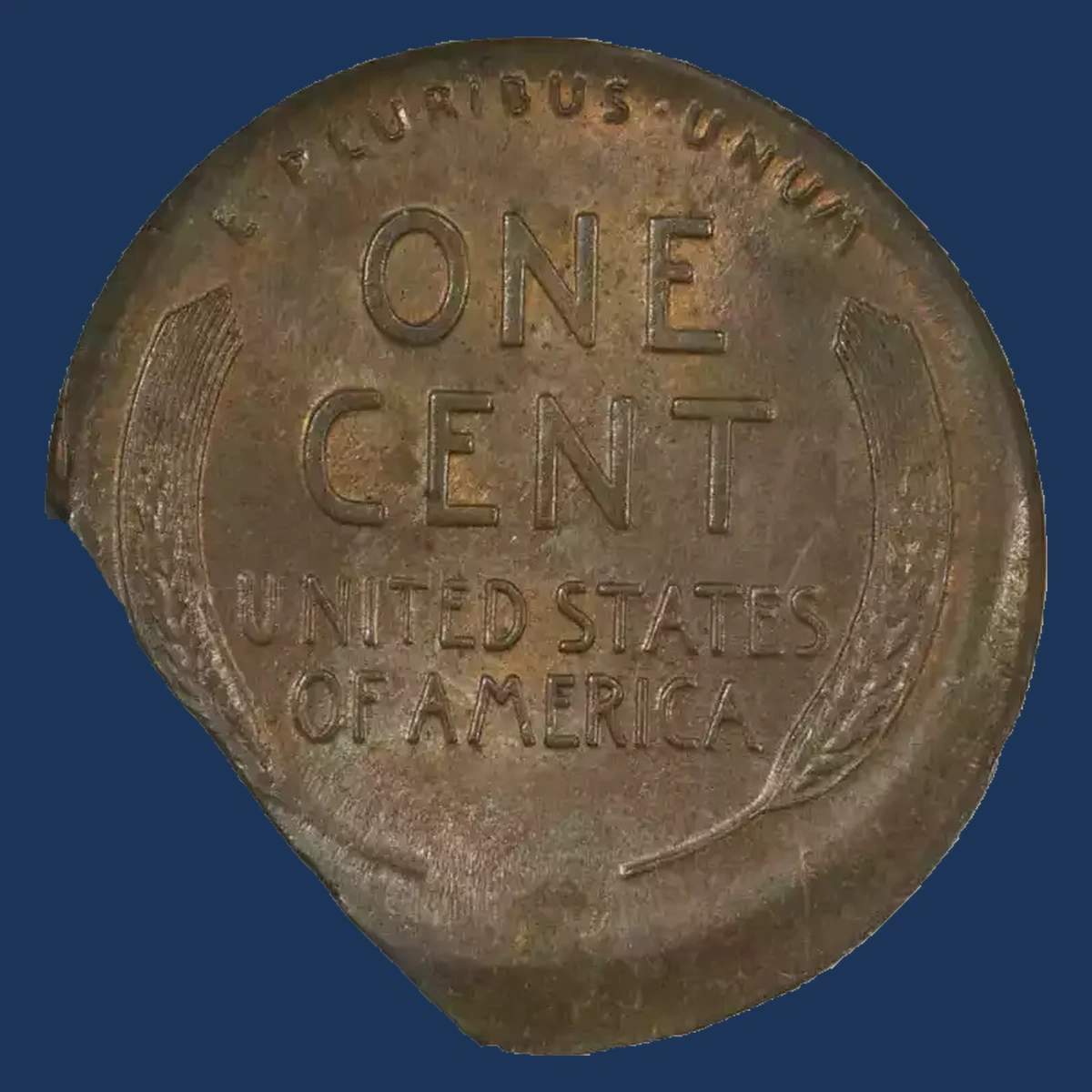
An enlarged border can surround a complete Lincoln and wheat design. That extra spread occurs when the collar, the ring around the striking area, fails to contain the metal.
Philadelphia examples include a PCGS MS63 Brown coin. A San Francisco catalog example was struck on a blank that had not received its usual raised rim before striking.
A separate Philadelphia broadstrike was described with lamination and corrosion. Lamination is a separating metal layer; corrosion is later damage and does not become another mint error.
Broadstriking explains the expanded shape. Other features on a particular coin still need their own explanation.
Estimated Value
Estimated whole-coin values run $35–$600 for genuine 1919 broadstrikes. Visibility, wear, and other minting faults can place two similarly wide pennies far apart in price.
The broadstrike with about 30 degrees of rotation sold for $431.25 in 2006. Its combined features help explain that figure, which should not be assigned to every broadstrike.
The corroded, laminated example belongs to a different condition assessment. Surface damage can reduce value even when the enlarged shape is genuine.
How to Identify
Look sideways at the plain edge before concentrating on the face. Flattening a finished penny can damage the rim and squash existing detail while making the disc wider.
Check those surfaces with a 10× magnifier, then record the widest and narrowest caliper measurements against 19.05 mm. A scale reading near 3.11 g fits a full disc, although wear or peeling can reduce it.
The reported corroded example needs separate attention to pitting and lamination. Neither feature, by itself, proves why the coin became wider.
Lay the candidate flat and follow the outer lettering all the way around both sides. Read each word at the border: a complete intended design within extra spread separates a broadstrike from a design that ran off the disc.
10. 1919 Lincoln Wheat Penny Clipped Planchet (Estimated Up to $650)
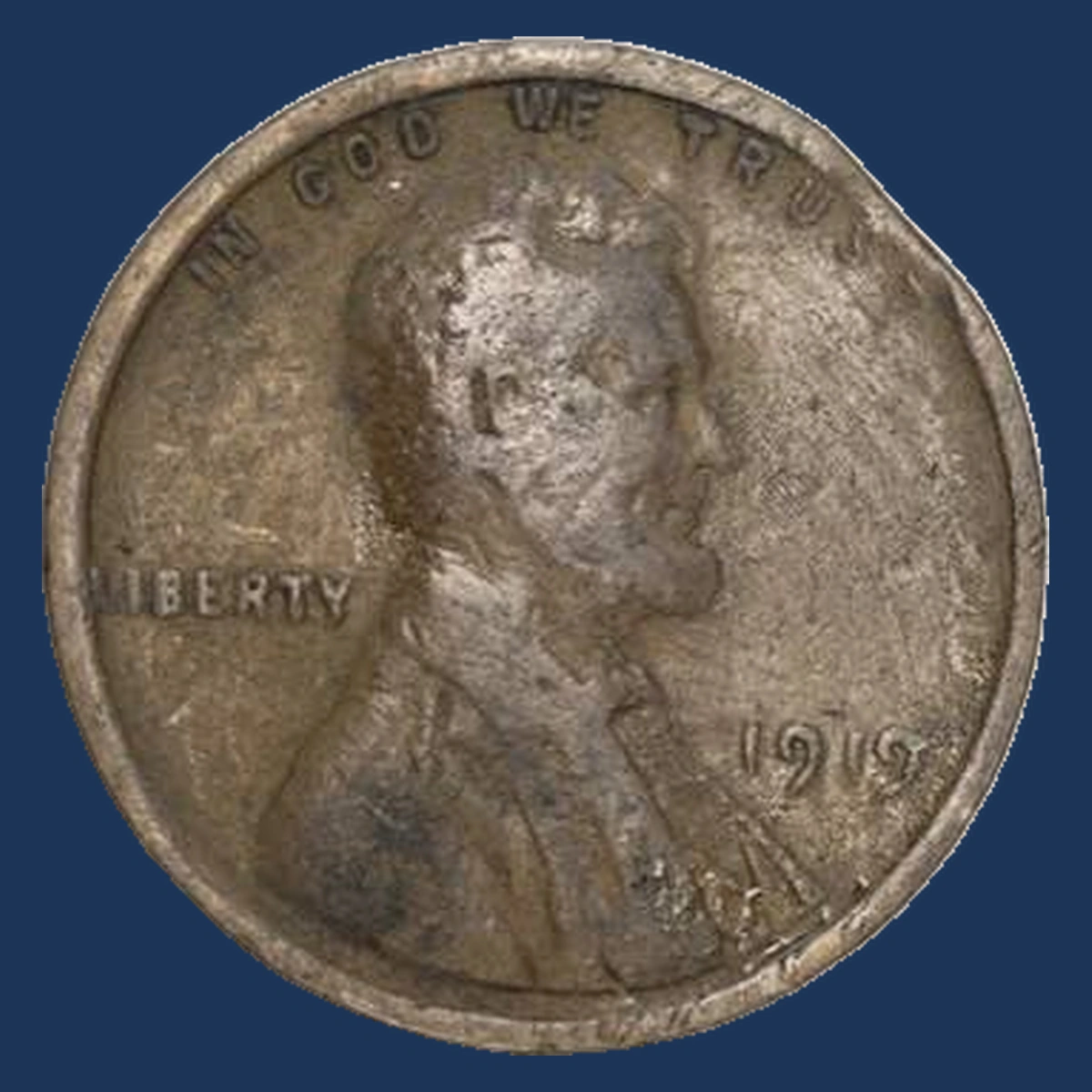
A missing section of the rim can begin with an incomplete metal disc. A planchet is the prepared disc that receives the coin’s design.
The 1919 reports include a Philadelphia clip and an NGC MS64 Red and Brown example with two overlapping curved gaps. Those two curves belong to the same clipping mechanism.
Another Philadelphia coin combines a straight clip with broadstriking. Its NGC MS63 Brown grade describes an unworn coin with brown surfaces.
The expanded shape and missing metal need to be read together on that example. Later cutting can imitate a clip, even on a genuine mint-error coin.
Estimated Value
An estimated $15–$650 covers genuine 1919 clips from small circulated examples to more conspicuous or combined errors. The high end favors clear shapes and better preservation.
A 1939 clipped cent graded MS64 Brown sold for $180 in 2023, providing a different-year comparison. It is not a sale of the 1919 overlapping-clip example.
The broadstrike and straight clip are features of one coin. Their estimated prices should not be added as though two separate coins were being bought.
How to Identify
Mark the location of each gap on a photograph, especially when two curves overlap. Examine the rim directly across from each gap for possible weakness, while allowing that some genuine clips lack a clear opposite-rim clue.
Weigh against 3.11 g and measure the surviving full width against 19.05 mm with a scale and calipers. The broadstruck example may be wider despite missing metal.
Now inspect the plain edge through a 10× magnifier. Low weight also fits later cutting, so it cannot settle the question.
Work from intact rim into the first gap, then repeat at the other end. Look closely at those junctions for natural strike transitions or, instead, saw marks and sharp cuts through an already finished rim.
11. 1919 Lincoln Wheat Penny Off-Center Strike (Estimated Up to $800)
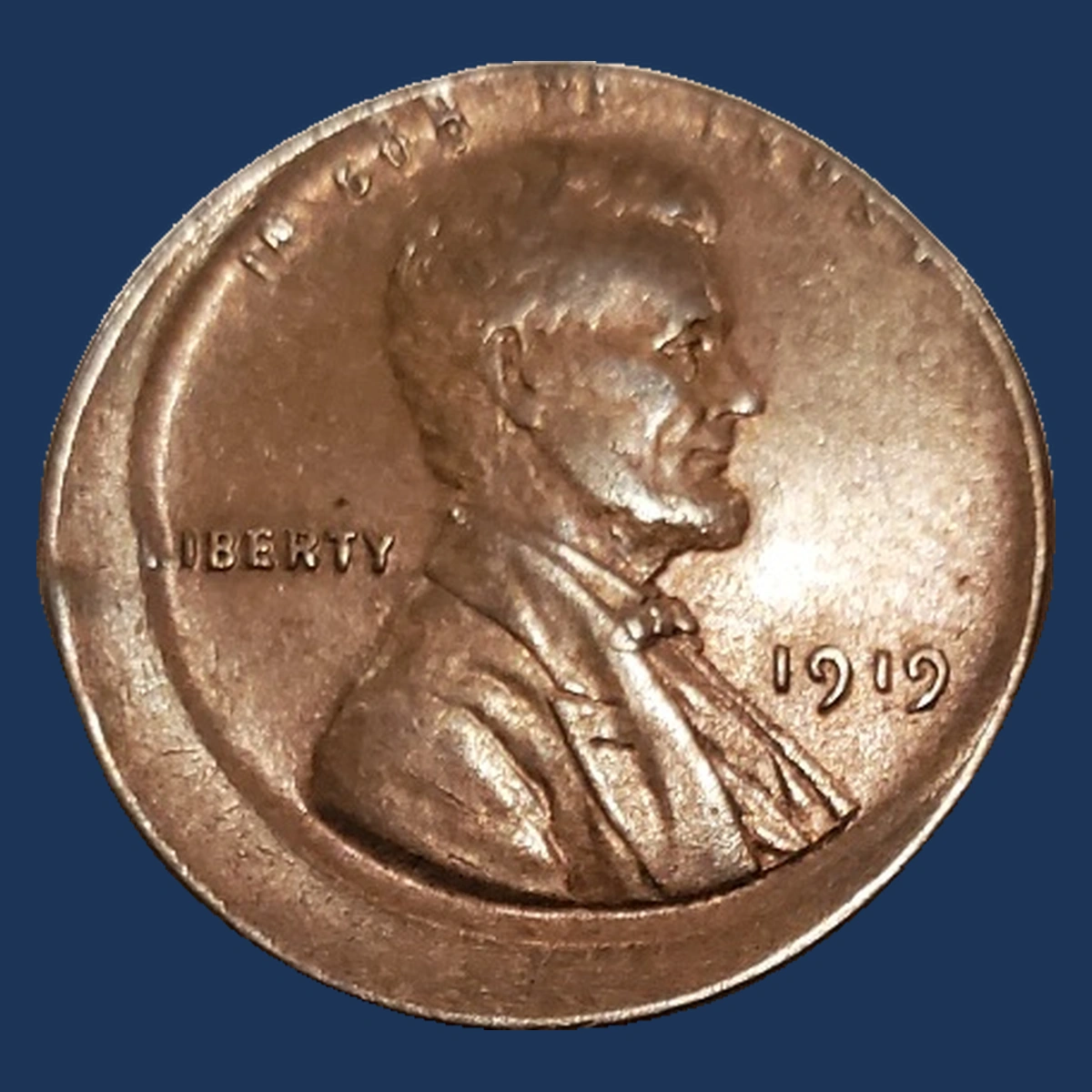
A crescent of unused metal beside a displaced design points to a coin that sat off center in the press. Part of the intended design can run beyond the disc.
The 1919-S example graded NGC MS63 Brown is described as 25% off center. A Philadelphia example graded PCGS AU55 Brown has a reported 5% shift.
The percentages refer to those individual coins, not to every penny from their mints. A Philadelphia example shows a larger 40% displacement.
Keeping the date readable helps identify the error. A wide border with all intended design still inside it may instead be a broadstrike.
Estimated Value
The 1919-S 25% off-center penny sold for $480 in July 2021. A Philadelphia 40% off-center example graded MS62 Brown brought $524.60 in June 2026.
Those sales support an estimated $40–$800 range for genuine 1919 off-center pennies with readable dates. Condition and the visual strength of the error matter together.
A larger percentage does not guarantee a higher price. Missing date digits, surface damage, or less attractive copper can offset the stronger displacement.
How to Identify
Read the date and mint letter before choosing a comparison. The Philadelphia 5% report and San Francisco 25% report concern different coins, not two views of one error.
Record the outline with calipers against 19.05 mm and the scale weight against 3.11 g. Missing edge metal would need a different explanation from copper that simply received no design.
Under a 10× magnifier, inspect the plain edge beside the unused area for trimming. Then turn the penny over without losing track of that same physical edge.
A displaced stamping tool can shift only one face. Check the back at the edge you just examined and see whether its design also fits the disc’s off-center position and unused metal.
12. 1919 Lincoln Wheat Penny Indent with Broadstrike (Estimated Up to $900)
A broad smooth depression can occupy part of the design when another disc overlaps it during striking. That second disc blocks the tool and pushes into the coin beneath it.
The recorded Philadelphia example has an indent covering about 30% near six o’clock on the front. It also spread outward as a broadstrike.
A fine lint trace was noted near six o’clock on the back of the NGC MS63 Brown coin. That smaller mark records another obstruction.
The overlapping disc was not included with the coin. The description does not establish a surviving matched pair or any material still attached.
Estimated Value
An estimated $150–$900 covers a genuine 1919 indent of this scale with broadstriking. A large clear depression has more visual impact than a small isolated obstruction mark.
This is a comparison-based whole-coin estimate for the combined error, not a quoted sale price for the MS63 Brown example. The extra lint trace is part of the same coin.
Condition, natural boundaries, and the strength of the remaining design affect value. A later punch mark does not qualify for this range.
How to Identify
The recorded example has two different marks near six o’clock: a broad depression on the front and a fine lint trace on the back. Begin with a photograph of each face so those features cannot be confused.
Compare the expanded outline with 19.05 mm using calipers and the weight with 3.11 g on a scale. Inspect the plain edge for later flattening.
A 10× magnifier helps follow the large depression’s curve and the way adjacent design ends at it. Do not assume another disc remains attached; none accompanied the recorded coin.
Inspect the fine back trace separately. Return to the front’s curved border and compare its smooth arc with the edge of a metal disc, rather than the jagged boundary of a gouge.
13. 1919 Lincoln Wheat Penny Wrong Foreign Planchet (Estimated Up to $1,200)
A pale, nickel-colored 1919 cent can have a different metal disc beneath Lincoln’s design. One ANACS AU50 example was identified as struck on an Argentina 10 centavos planchet.
That means an unused copper-nickel disc intended for the foreign denomination entered the cent press. It does not mean Lincoln was stamped over an already finished Argentine coin.
Another foreign-planchet example has an ANACS XF40 Details description, with later tooling damage. Its intended country was not firmly identified.
The wrong disc is the mint error. Tool marks are later damage, while plating can make an ordinary copper penny look deceptively similar.
Estimated Value
The Argentina-planchet AU50 penny sold for $345 in February 2002. An estimated $250–$1,200 provides a working range for correctly identified 1919 foreign-planchet errors of these kinds.
The old sale is a historical anchor, not a current fixed quote. Clear identification of the disc and better preservation can support a stronger price.
The tooled coin needs a discount for its damaged surfaces. Its uncertain foreign denomination should not be promoted into a more specific or rarer claim.
How to Identify
Write down the scale weight and caliper diameter before assigning a foreign denomination. A normal cent is 3.11 g and 19.05 mm, while one damaged foreign-disc report gives 3 g.
That small weight difference cannot identify the metal. Ask for a specialist’s non-destructive composition test, particularly when a pale coin might simply be plated.
Under a 10× magnifier, inspect the plain edge for exposed copper beneath a coating. Also check how the cent design fits the available disc.
Later tool marks should be recorded as damage, not evidence of a foreign origin. Compare the tested alloy and measured dimensions with the proposed foreign blank’s specifications; a color match alone cannot establish that identification.
14. 1919 Lincoln Wheat Penny Double and Triple Strikes (Estimated Up to $1,500)
More than one set of design details can remain when a coin receives extra blows. The penny may move between them, allowing an earlier impression to survive beside a later one.
A Philadelphia example graded PCGS AU55 has a second strike 25% off center. Another reported double strike has a smaller second displacement.
Triple-struck 1919 pennies are also recorded, including an NGC MS64 Brown example. Their surviving impressions need to show three strikes rather than merely several doubled-looking lines.
This happened to the coin in the press. A doubled die instead repeats a flaw already present on the stamping tool.
Estimated Value
The Heritage auction listing records $288 for the AU55 double strike in June 2019. The MS64 Brown triple strike brought $1,020 in March 2025.
An estimated $150–$1,500 covers these genuine multiple-strike forms, with the number and clarity of visible impressions affecting demand. A more dramatic coin still needs sound original surfaces.
Three strikes do not automatically triple the value. What buyers can actually see is more important than multiplying a price by the strike count.
How to Identify
Spreading from repeated pressure can alter a penny’s width without removing copper. Record scale and caliper measurements against 3.11 g and 19.05 mm, and inspect the plain edge for artificial squeezing.
Choose one clear letter that appears more than once. Through a 10× magnifier, trace its positions and note where a later impression cuts across an earlier one.
A triple-strike claim requires three impressions, not three ridges around a single letter. Parts of an earlier design may have been flattened by the later blows.
For an off-center second strike, locate the remaining first design outside that blow. Move to a second letter or portrait feature and test whether it repeats the same displaced positions as the first feature you traced.
15. 1919 Lincoln Wheat Penny Mirror Brockage with Off-Center Strike (Estimated Up to $4,000)
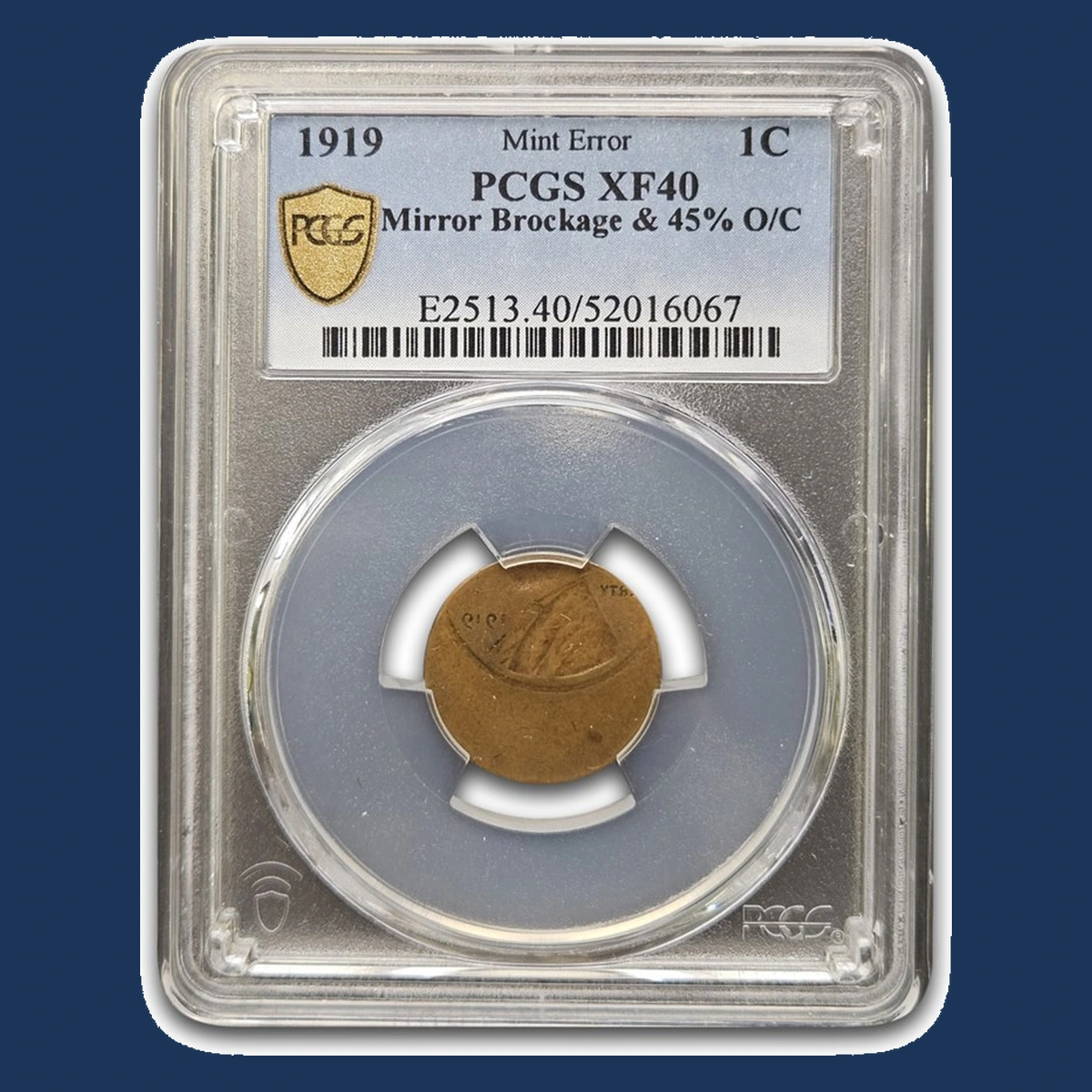
Letters that read backward and sink into the metal can reveal a brockage. The impression came from another struck coin trapped against the new disc in the press.
Instead of receiving the normal design from the tool, the disc received the other coin’s raised design. The result is a sunken mirror image.
APMEX listed a Philadelphia 1919 penny graded PCGS XF40 with mirror brockage and a 45% off-center strike. The shifted design and backward impression belong to one coin.
Squeezing two finished coins together can also produce backward marks. The damaged surfaces must be distinguished from the mint error.
Estimated Value
The APMEX listing asks $3,995 for the XF40 compound-error penny. This is a dealer asking price, not a completed auction sale.
An estimated $1,500–$4,000 covers a genuine 1919 mirror brockage of comparable visibility with a large off-center strike. The upper end reflects that retail offer and should not be treated as guaranteed resale value.
Clear backward detail and an identifiable date support collector interest. Worn, damaged, or less legible examples require a lower assessment.
How to Identify
Use an ordinary penny to remind yourself how its raised lettering catches the light. On the candidate, the brockage design should sink into the metal and read backward.
A 10× magnifier can show whether the impression boundary belongs to the original strike. Inspect the plain edge for crushing that might indicate two finished coins were squeezed together later.
Compare the scale weight with 3.11 g and the caliper diameter with 19.05 mm, allowing for the displaced strike. The listed XF40 coin is also 45% off center.
Keep the date and unused metal in view when comparing the recorded coin. Read a clearly preserved word backward, then tilt that same word under the light to check that its letters are recessed rather than raised.
Conclusion
Estimated values of $2–$4,000 reflect very different 1919 errors, from small tool defects to a backward impression combined with a large displaced strike. Actual sales and dealer asking prices serve different purposes.
Examine the whole coin before naming the fault. Check both faces, the edge, and the mint letter, then judge any combined errors as features of one coin rather than separate prices to add together.