1941 Penny Error List with Pictures

A 1941 cent sold as struck on a Panama blank brought $4,993.75 at auction. Its unusual metal tells a very different story from a tiny extra S below the date.
This 1941 penny error list covers both kinds, with estimated values from $3 to $7,500. Some clues are visible on the face; others need an edge view or a scale.
Read on to see where each error appears and what makes it worth checking.
1. 1941 Lincoln Wheat Penny Woodgrain Color Bands
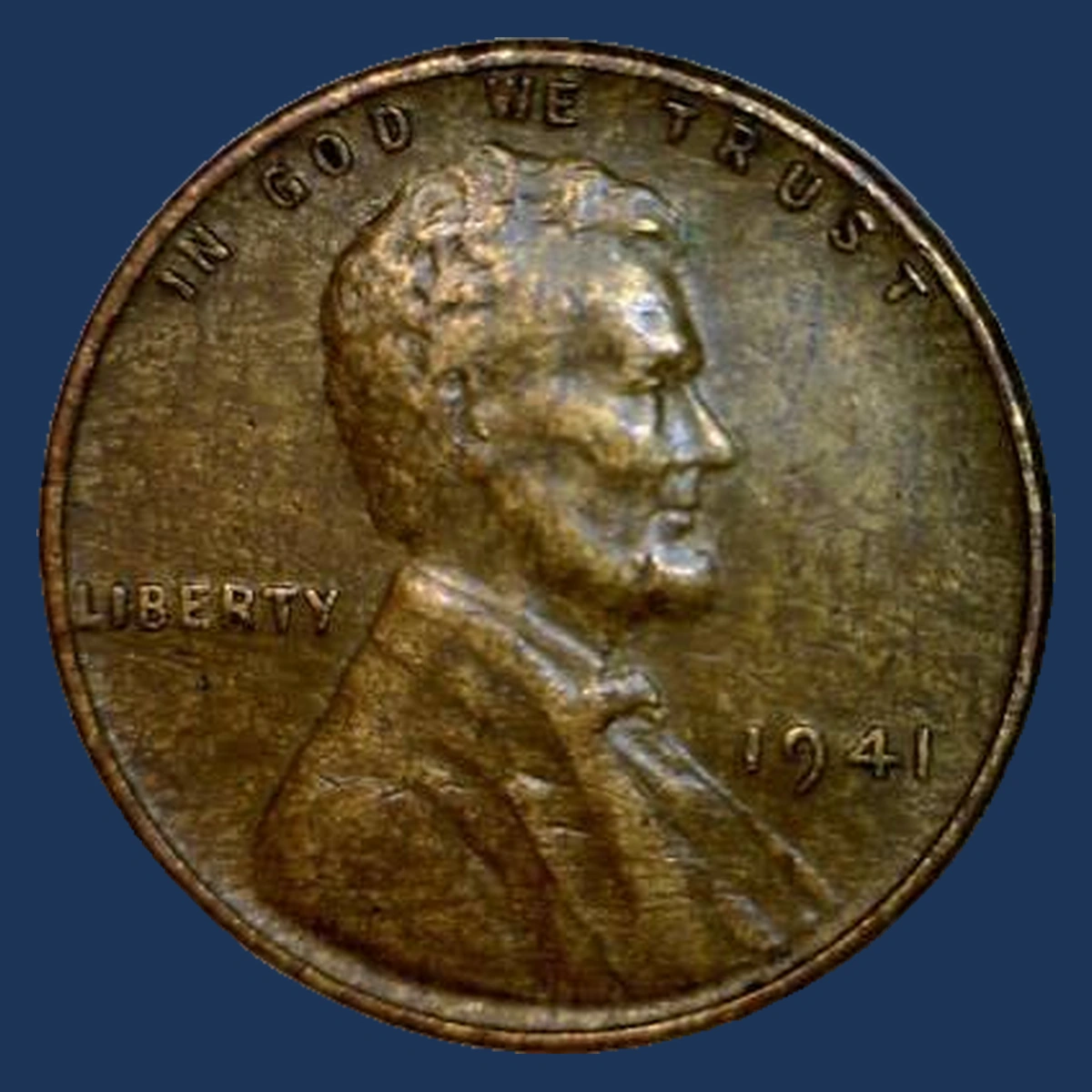
Long brown and gold streaks can give a 1941 cent the look of wood. Collectors call this a woodgrain effect.
The metals in the coin did not mix evenly before the sheet was rolled. Rolling stretched those differences into bands, which can change color at different rates.
This is a pattern within the coin’s metal, rather than an extra design stamped onto it. Some examples have faint streaks, while others show strong contrast across Lincoln and the surrounding background.
An even yellow color alone is a different question.
Estimated Value
Allow an estimated $3–$50 for a 1941 woodgrain cent, depending on the strength of the pattern and overall condition. This is a collecting estimate, not a recorded sale of the pictured coin.
Bold, attractive bands usually matter more than a tiny color difference. Scratches, corrosion, or an artificial stain lower the appeal.
Laboratory-confirmed unusual metal percentages belong in the separate abnormal-alloy discussion below.
How to Identify
Woodgrain is a color pattern, so weighing the coin will not settle it.
A scale and calipers can still check a loose example against 3.11 g and 19.05 mm.
Examine a long band where it runs over Lincoln’s portrait and into the smooth background. Follow the same band under a 10× magnifier as you move the light.
Scratches cut through the surface; natural mixing streaks can change color without leaving a groove. Stains may collect around letters or have sharply defined edges unrelated to the wider pattern.
Do not polish an area to expose its color. Photograph one uninterrupted streak across both a raised detail and the surrounding surface.
2. 1941 Lincoln Wheat Penny Lamination
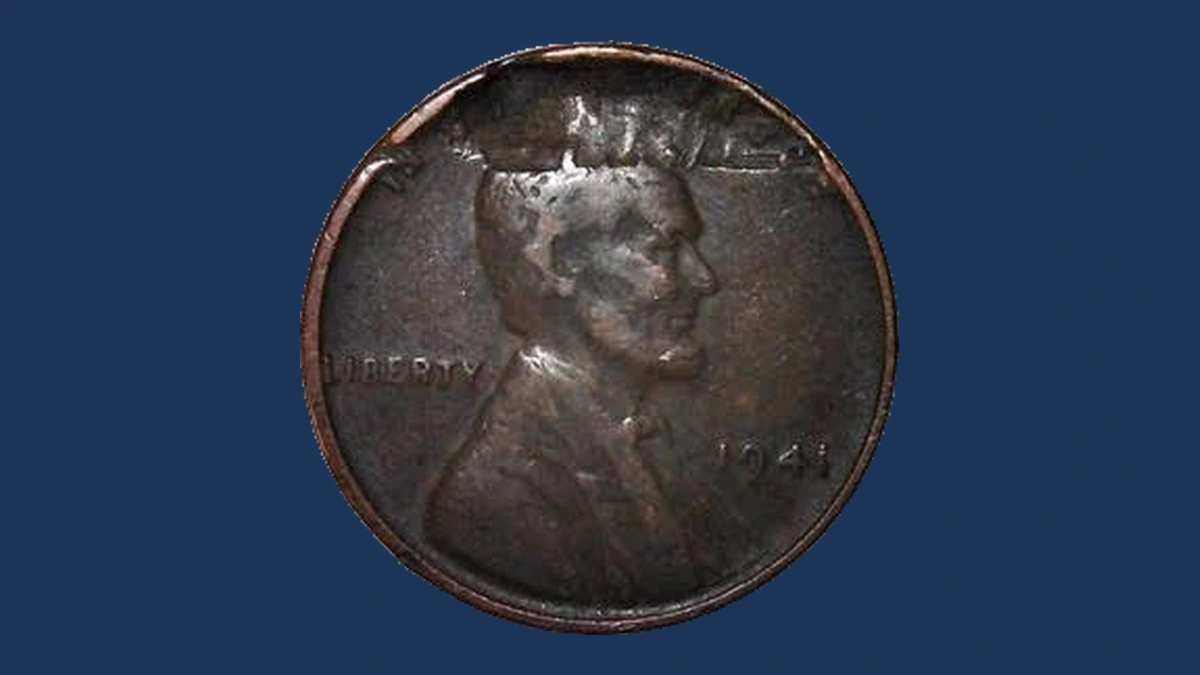
A thin flap or rough missing patch can come from a layer separating inside the copper alloy. This is called a lamination.
One Philadelphia example has lost much of its loose layer on the front. A different San Francisco coin still carries its separated layer on the back.
The metal starts to separate because a weak area formed within the original sheet. The flap may stay attached, break away later, or disappear before the coin leaves the Mint.
The shape and depth of the missing metal help distinguish this from a simple scrape.
Estimated Value
A 1941-S retained reverse lamination graded PCGS MS66 Red sold for $69 in April 2020. That grade describes an unworn coin with few marks and its original red copper color.
An estimated $10–$150 covers small worn examples through more obvious, attractive pieces. A broad missing patch can attract interest, but lost design and cleaning can reduce its value.
A loose flap should never be lifted to improve the display.
How to Identify
An attached flap needs no lifting. View it from the side with a 10× magnifier so you can see the thin sheet above the surface.
For a piece already lost, inspect the depression it left. A broad shallow layer is different from a narrow scrape that pushes copper along its sides.
Use calipers to compare the surviving diameter with 19.05 mm. Weigh a loose coin against the normal 3.11 g, allowing for metal lost with the flap.
Leave a certified coin inside its holder.
The Philadelphia example has front peeling, while the San Francisco example has a flap on the back. Find the edge of that thin layer without pressing on it.
3. 1941 Lincoln Wheat Penny Struck Through Debris
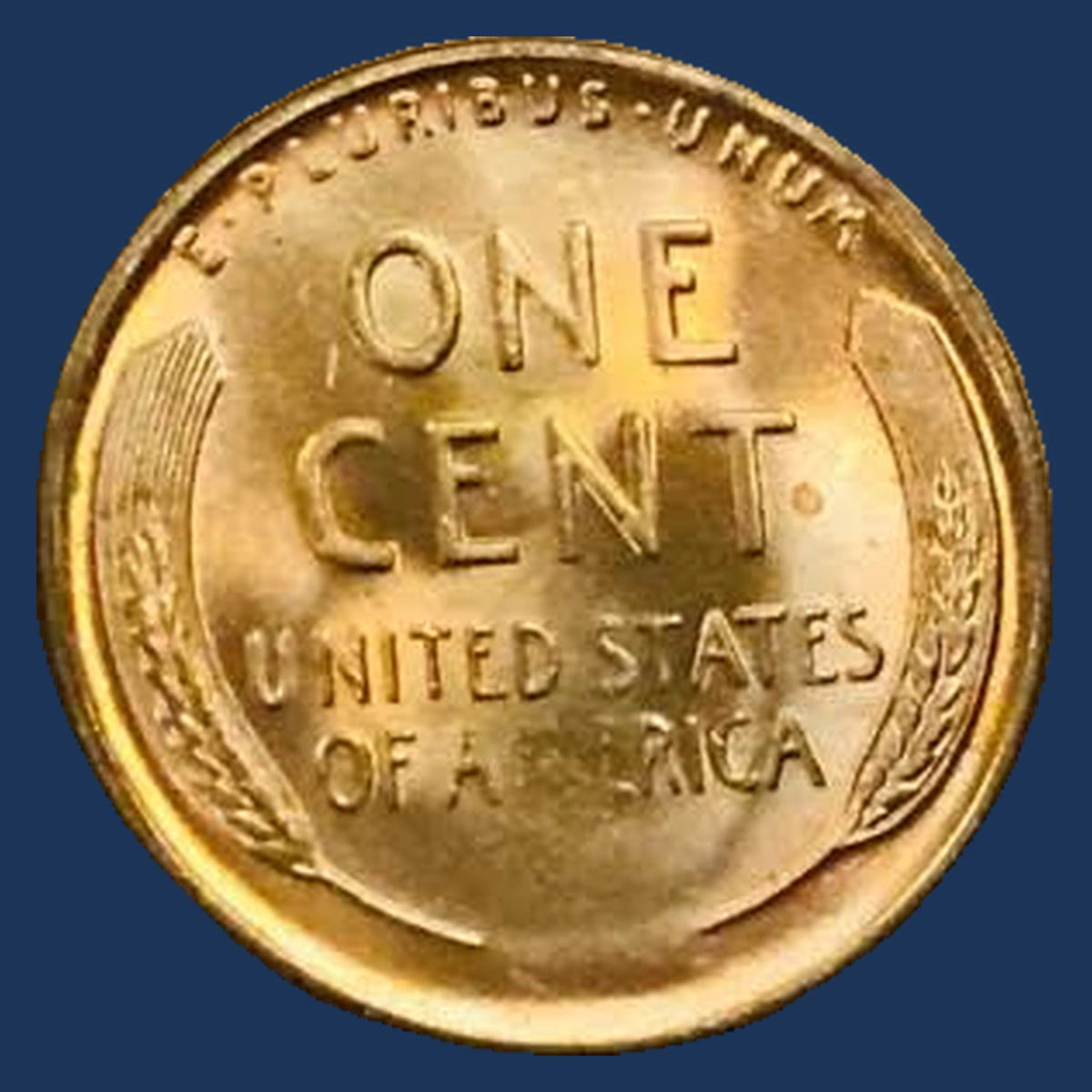
Two small sunken areas appear on the back of one documented 1941 cent. Something came between the blank and the stamping tool, preventing the normal design from forming there.
This is a struck-through error. It can leave a shallow depression or a patch with missing detail, depending on the material caught in the press.
The same coin also has doubled lettering on the front, but the two marks have different causes. The doubled design came from the tool itself.
The available description does not identify what caused the two small depressions.
Estimated Value
For small 1941 struck-through marks, use an estimated $15–$150 when the Mint-made origin is clear. This is an estimate for the striking error alone.
The documented coin also carries a doubled die, so its full price would include that separate attraction. A tiny shallow mark may add little to an already valuable variety.
Larger, clearly shaped impressions can command more than nearly invisible patches with missing detail.
How to Identify
The two reported marks are on the back, so begin there rather than at the doubled front lettering. Use a 10× magnifier to examine the border of each depression.
Check whether a nearby letter fades into the patch or has been sharply cut across. A later impact commonly moves finished metal into a lip beside the dent.
An ordinary loose cent measures about 19.05 mm with calipers and weighs 3.11 g on a scale. Normal measurements cannot distinguish a struck-through mark from every possible later dent.
Photograph the depression under light from opposite directions. If no woven texture or wire-shaped groove survives, describe the visible depression without naming the object that caused it.
4. 1941 Lincoln Wheat Penny Clipped Planchet
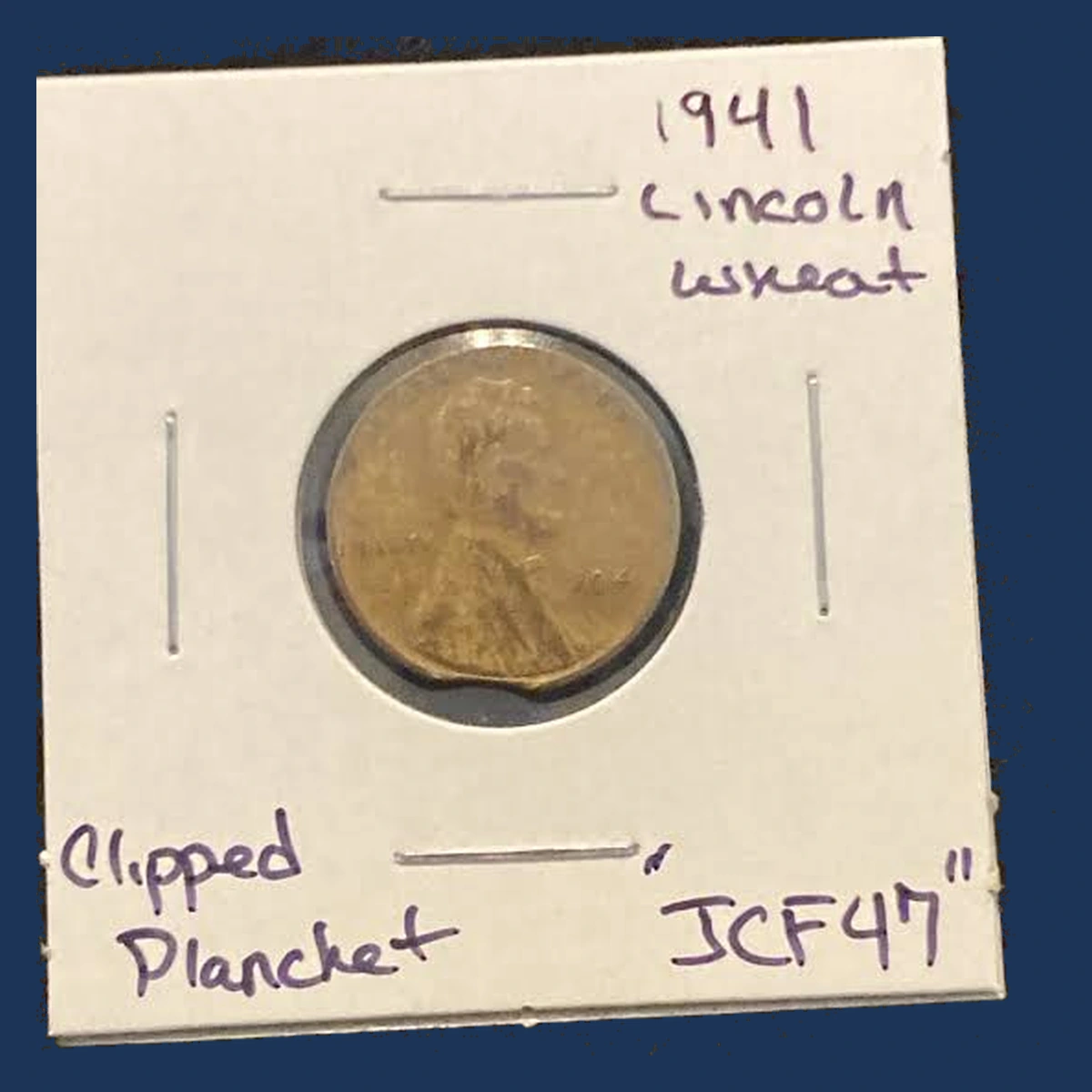
A bite-shaped gap may have existed before the penny was struck. A planchet is a prepared coin blank, and a clipped planchet was cut from an incomplete part of the metal sheet.
One 1941 example has a large curved gap and weighs 2.83 g. A 1941-S coin has a straight clip described as about four percent.
The straight gap can come from the sheet’s unfinished edge rather than overlap with a previous round hole. That San Francisco coin also spread beyond its normal size during striking.
Its two mistakes appear on the same coin.
Estimated Value
Estimate $25–$200 for typical 1941 clipped cents, with size, shape, and condition affecting the result. A clean curved gap is easier to sell than a small, poorly preserved edge defect.
The four-percent straight clip is paired with broadstriking, which can place that coin toward a higher combined range. Its two features should be valued together.
This estimate does not treat a sawed or filed edge as a Mint error.
How to Identify
The 2.83 g curved-clip example is lighter than a normal 3.11 g cent. Use a scale on a loose coin before inspecting where the missing metal meets the design.
A 10× magnifier can reveal filing lines, a fresh cut, or metal folded over the gap. Those features suggest removal after striking.
Around a genuine clip, the rim or nearby letters can be weakly formed. Check the opposite rim too; weakness there can provide another clue, although it is not always visible.
Calipers should measure an intact span against the usual 19.05 mm diameter. On the separate straight-clip coin, compare the strike around the straight gap rather than expecting the curved example’s outline.
5. 1941 Lincoln Wheat Penny Repunched Mintmark
Look below the date for part of a second D or S. In 1941, workers punched this mintmark into a die, the steel tool that stamped the coin.
If the punch moved between blows, an earlier outline could remain. Every coin struck by that tool could then show the extra mark.
The S-WRPM-001 variety has an extra curve and lower foot toward the left. D-WRPM-001 shows a second D toward the top.
Large, small, and trumpet-shaped S marks also exist, but those normal shapes alone are not repunching.
Estimated Value
An estimated $5–$250 is a useful range for these 1941 mintmark varieties. The lower end fits modest, worn examples with a small extra outline.
Clear separation, an established variety number, and attractive unworn surfaces can lift the price. This range is an estimate from comparable early Wheat-cent mintmark varieties, rather than a sale for every listed number.
A larger normal S should not receive the same premium.
How to Identify
For S-WRPM-001, aim light across the left curve and lower foot of the S with a 10× magnifier. The Coppercoins D-001 photographs require a different search because the extra D sits above the main letter.
A normal cent is 3.11 g and 19.05 mm when checked with a scale and calipers. Those figures screen for physical alterations but cannot name a mintmark variety, which depends on the shape of its extra outline.
Examine the extra curve for rounded, raised metal instead of a low flat shelf. Before choosing D-007, check to the left of the D rather than above it as on D-001.
6. 1941 Lincoln Wheat Penny Tilted Partial Collar
A raised step around the edge can show that the coin sat partly inside the collar. The collar is the ring that normally controls a penny’s width during striking.
On a tilted partial-collar strike, one side of the blank sits higher than the other. Part of the edge stays inside the ring while another part spreads above it.
A 1941-S example appears in an auction record for this error. The key feature is the uneven edge, rather than doubled letters or a missing piece.
Its shape reflects how the blank entered the press.
Estimated Value
A reasonable estimated range is $40–$250 for a clearly visible 1941-S tilted partial collar. This is an estimate, not a quoted result from the listed auction.
A pronounced edge step with an undamaged surface is more desirable than a slight uneven rim. Wear can soften the feature and make it harder to show in photographs.
Cleaning, dents, and an edge squeezed after minting reduce the appeal considerably.
How to Identify
Rotate the coin while looking directly at its edge. A tilted partial collar can leave a ledge whose height changes around the circumference.
Measure more than one span with calipers, using 19.05 mm as the ordinary diameter. Then weigh the loose coin on a scale against the 3.11 g standard.
Under a 10× magnifier, examine the wider part and the narrower part as one continuous edge. A regular 1941 penny has a plain edge, without a ring of grooves.
Squeezing a finished coin can fold its edge inward and damage the nearby design. At the transition between the high and low parts, check for a formed step rather than a battered, folded lip.
7. 1941 Lincoln Wheat Penny Die Cracks, Chips, and Cuds
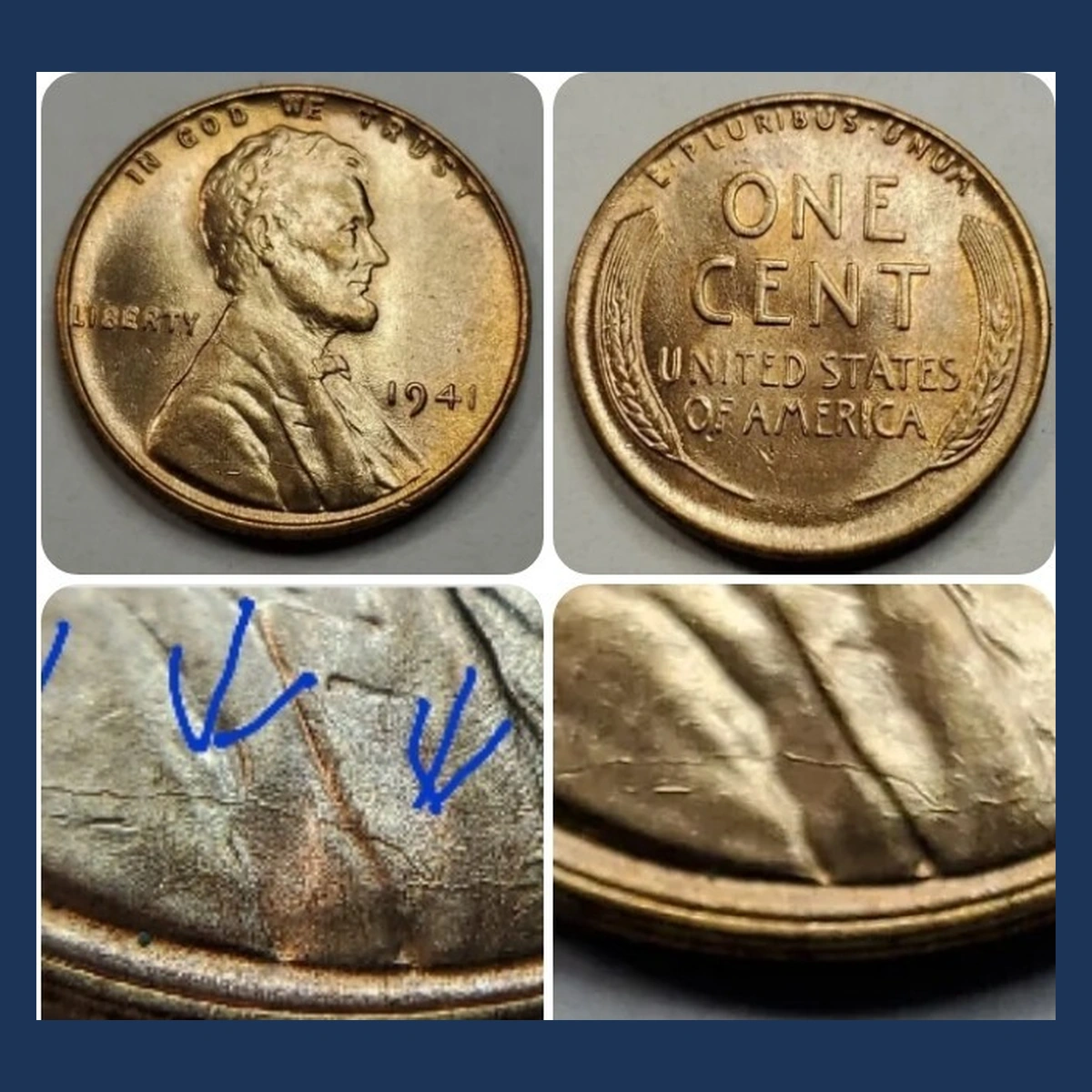
A line rising from Lincoln’s hair can record a crack in the stamping tool. As the crack opens, copper flows into it and forms a raised line.
Small pieces breaking away can leave raised lumps between letters, including the B and E of LIBERTY. A larger break touching the rim is called a cud.
Some broken pieces remain trapped inside the tool. These retained breaks may leave an outlined area that still shows parts of the design.
The 1941 examples include several stages of growth, from thin lines to larger rim breaks.
Estimated Value
Small cracks and letter chips have an estimated value of $3–$30. Larger retained breaks and clear rim cuds can fall around $30–$350, depending on size and preservation.
These are estimates for the different appearances, not recorded prices for each catalog number. A bold rim-connected lump usually has more visual appeal than a faint hairline.
Do not add separate premiums for every stage of the same growing break.
How to Identify
Read the letters beside a small raised bar before calling it BIE. Only the B-to-E gap produces that nickname; the reported multiple-letter coin has other filled spaces too.
The letter-break photographs show those positions. Compare each bar with a 10× magnifier and light from the side.
A loose cent should remain close to 3.11 g and 19.05 mm on a scale and calipers. A tool break moves copper into a new shape without adding metal.
For larger patches, look inside the outlined area for surviving letters. A retained section can still stamp them.
Follow a suspected full cud to the rim; a raised lump isolated in the middle is a different kind of tool break.
8. 1941 Lincoln Wheat Penny Broadstrike
The 1941-S straight-clip coin also has an unusually wide struck shape. It escaped the collar’s full restraint when the press forced metal outward.
This is called a broadstrike. The coin spreads beyond its normal outline, but the design can remain largely complete.
On this example, a straight piece of the original blank was already missing. The extra width and the missing edge therefore tell two parts of its story.
PCGS graded the coin MS65 Brown, describing an unworn piece with brown copper surfaces. The clip is not a separate second specimen.
Estimated Value
For the combined broadstrike and straight clip, estimate $100–$450. The two visible errors support one price for the whole coin.
That range is an estimate for an attractive, clearly identified example such as the reported MS65 Brown piece. It is not the sum of two independent auction results.
An evenly expanded design and intact surface are positive features; rubbing or a rim flattened after striking can weaken its appeal.
How to Identify
Trace all the outer lettering before measuring the coin. Broadstriking spreads the blank while keeping the intended design on the surviving metal.
This example also has a straight clip, so that original missing segment must be allowed for. Use a 10× magnifier to inspect the struck detail beside the gap and along the expanded border.
A complete ordinary cent starts at 3.11 g and 19.05 mm. Here, a scale can show weight lost to the clip, while calipers can show width gained during the strike.
A flattened edge made afterward may crush nearby letters. Follow those letters into the widened area to see whether they formed with the spread-out metal.
9. 1941 Lincoln Wheat Penny Clamshell Split
The edge of a clamshell error opens like the mouth of a shell. A deep weakness inside the blank lets two thicker parts separate while they remain joined elsewhere.
A 1941 Philadelphia example is recorded in a Heritage catalog. Its split goes farther into the coin than the thin surface peeling of a typical lamination.
Viewed from above, the penny may not look especially unusual. The open seam becomes clearer from the side.
The two sides are still parts of one coin, so pulling them apart would destroy an important part of the error.
Estimated Value
A 1941 cent with a thirty-percent clamshell split sold for $30 in March 2025. PCGS graded it VF30, meaning noticeable circulation wear with much of the design remaining.
An estimated $25–$500 allows for that worn example through larger, well-preserved splits. A deep visible opening can attract more attention, but condition still matters.
Forcing the coin open damages the connection and can lower its appeal.
How to Identify
Do not squeeze the opening shut or pull it wider.
Support the coin flat and examine its edge with a 10× magnifier.
Move around the circumference until you find where the two thicker parts remain joined. A thin surface flake is different from this deep split through the coin.
If safe to handle loose, the coin can be weighed on a scale. It may remain near 3.11 g when both parts retain all their metal.
Calipers can compare the face with the normal 19.05 mm diameter without clamping the seam. Examine the exposed opening for knife cuts or prying marks, then locate the natural connection that still holds the two parts together.
10. 1941 Lincoln Wheat Penny Off-Center Strike
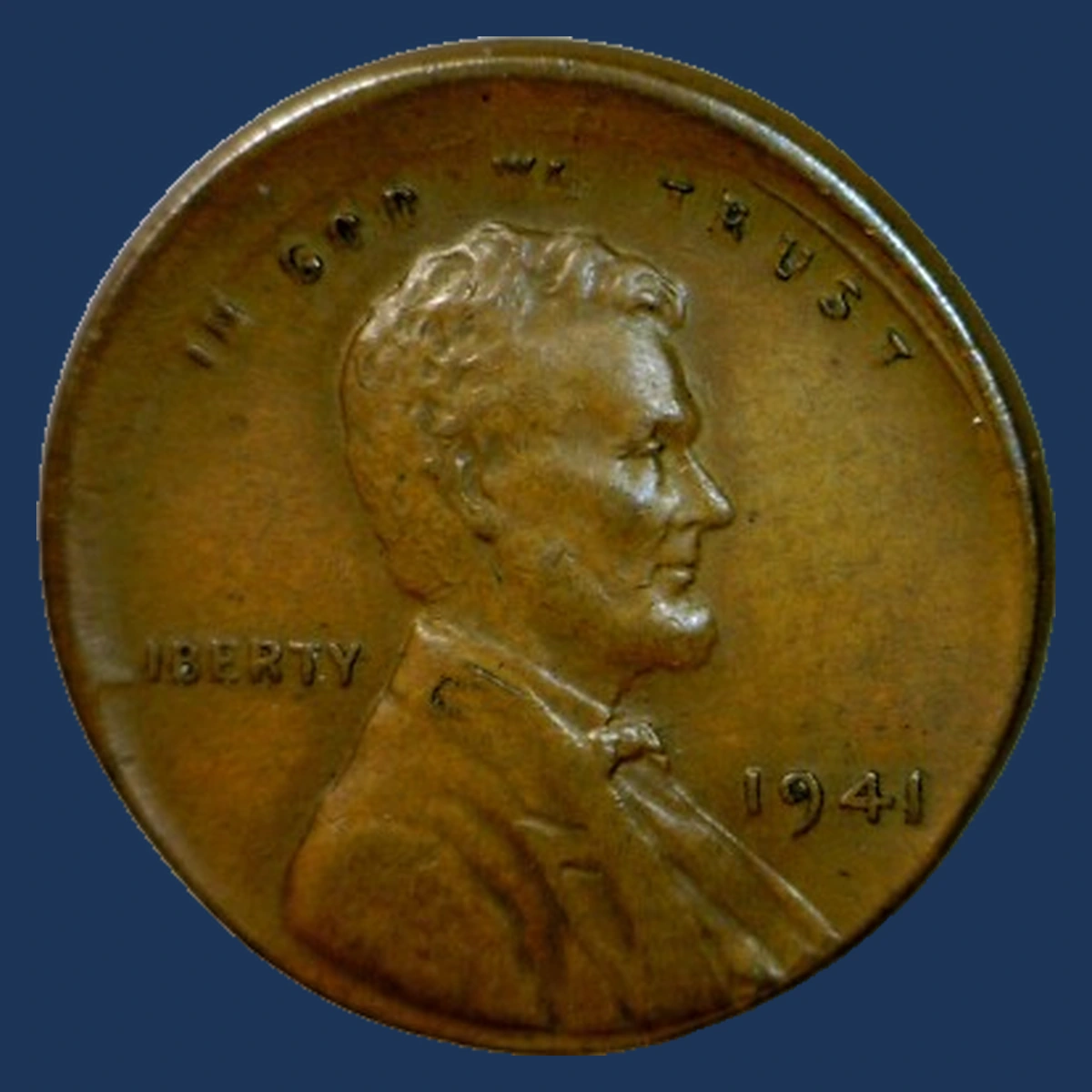
Part of the penny’s design can sit beside a smooth, unused crescent of metal. The blank was out of position when the stamping tools came together.
The 1941 Philadelphia reports include slight and much larger off-center examples. These are separate coins, not different estimates of one piece.
A San Francisco example was struck about fifteen percent off-center. NGC described it as having light wear and improper cleaning.
The empty area formed during the strike, while cleaning happened later. Both affect how the coin looks, but only the first is the striking error.
Estimated Value
An estimated $30–$600 spans slight displacement through more dramatic 1941 off-center strikes. A readable date and an obvious blank crescent help a buyer recognize the error immediately.
The cleaned 1941-S example should be judged below a similarly displaced coin with an untouched surface. A large percentage alone does not erase condition problems.
This range is an estimate across several appearances, not a claimed auction result for each reported coin.
How to Identify
A fifteen-percent shift and a forty-percent shift should not be judged from the same photograph. Orient each coin with its own date upright, then compare both faces.
The blank crescent should fit the area left outside the striking tools.
If only one face has a shifted border, a different tool-alignment problem may be involved.
Check a loose coin on a scale and with calipers against 3.11 g and 19.05 mm. An uneven strike can reshape the outline without removing metal.
Under a 10× magnifier, inspect the unused crescent for grinding lines. On the cleaned San Francisco example, separate those later surface changes from the genuine area that never received a design.
11. 1941 Lincoln Wheat Penny Thick Planchet
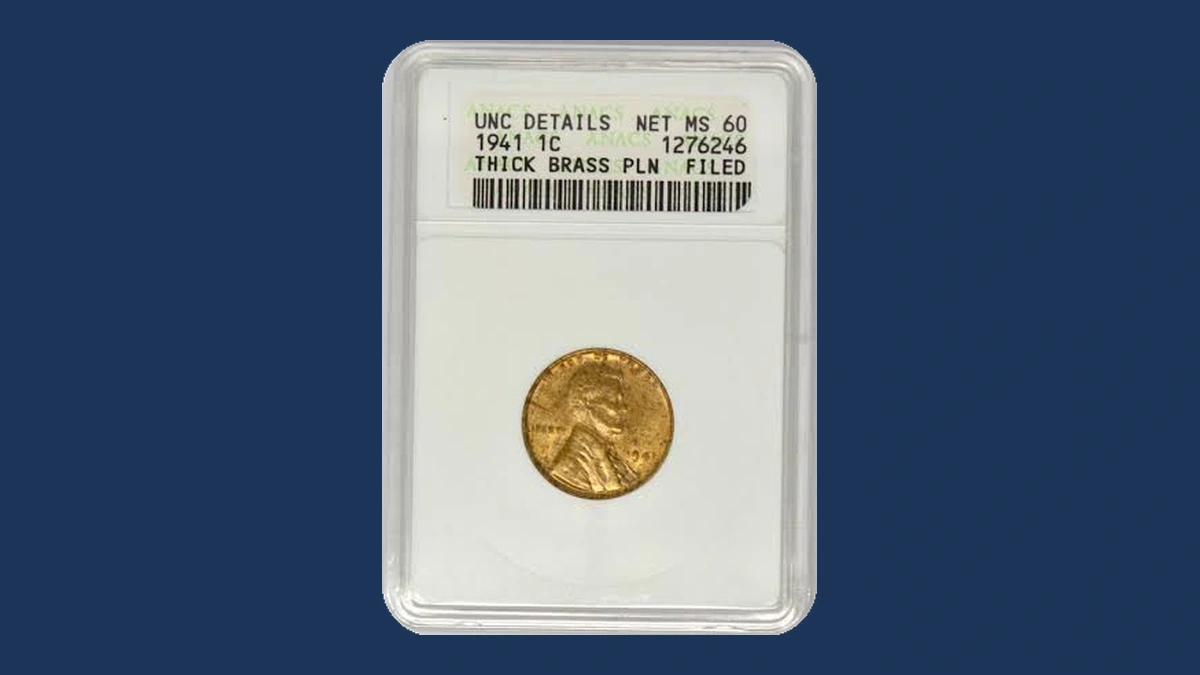
Some 1941 cents contain much more metal than an ordinary penny. A thick sheet can produce a heavy blank that still receives the cent design.
One recorded piece weighs 4.1 g. Another is listed at 62 grains, or about 4.02 g; those figures describe separate examples.
A brass-colored thick coin also appears in an older sale. Its description records cleaning and work done to its edge.
Extra thickness does not by itself prove that a blank was made for another country. Weight, metal content, and the way the design was struck must agree.
Estimated Value
Estimate $150–$1,200 for a genuine 1941 thick-planchet cent, with the stronger prices reserved for clear, well-preserved examples. This range is an estimate rather than a sale claim for the 4.1 g coin.
The cleaned, edge-altered brass-colored piece belongs toward the lower side compared with an undamaged coin of similar rarity. Its color alone does not establish an unusual foreign blank.
An accurate recorded weight is especially useful to buyers.
How to Identify
Set the scale to grams before comparing the reported weights of 4.1 g and 62 grains. These describe separate coins, both heavier than the normal 3.11 g cent, rather than two measurements of the same piece.
Use calipers to compare thickness at several points with an ordinary cent and check the diameter against 19.05 mm. A 10× magnifier can reveal a seam, solder, or added ring that explains a heavy reading.
Keep a sealed coin in its holder and use its recorded measurements. For the brass-colored example, examine the documented edge work closely because an altered edge cannot provide a reliable untouched thickness measurement.
12. 1941 Lincoln Wheat Penny Abnormal Alloy
Yellowish color and extra weight appear on several 1941 cents with unusual metal mixtures. The normal alloy contains 95 percent copper, with tin and zinc making up the rest.
Recorded mixtures include 88 percent copper, nine percent zinc, and three percent tin. Other pieces have different tested percentages.
These differences can arise when metal is mixed or rolled incorrectly. They do not automatically show that the Mint was testing a new coin.
One 3.40 g example has an 86/11/3 mixture. Another 3.4 g coin lacks a stated formula, so weight cannot identify its exact mixture.
Estimated Value
A 3.4 g 1941 thick-planchet and improper-alloy cent graded XF40 sold for $504 in August 2021. XF40 describes a coin with clear details and noticeable circulation wear.
Use an estimated $250–$2,000 for confirmed abnormal-alloy examples, allowing for composition, condition, and documentation. The sale does not prove that every yellow 1941 cent contains the same mixture.
A laboratory result adds more confidence than an unsupported experimental-coin label.
How to Identify
Keep the metal-test result beside the measurements for that particular coin. The 3.3 g, 88/9/3 piece is not the same example as the 3.40 g, 86/11/3 piece.
A scale and calipers can compare a loose coin with the ordinary 3.11 g and 19.05 mm standards. A 10× magnifier then helps check for coatings, attached metal, or a chemically altered surface.
The Error-Ref discussion explains how uneven mixing can produce visible streaks. Streaks alone do not reveal exact percentages.
Ask for professional non-destructive testing when an unusual formula affects the price. Read the measured copper, zinc, and tin figures rather than assigning a mixture from yellow color.
13. 1941 Lincoln Wheat Penny Double Strike and Flipover Strike
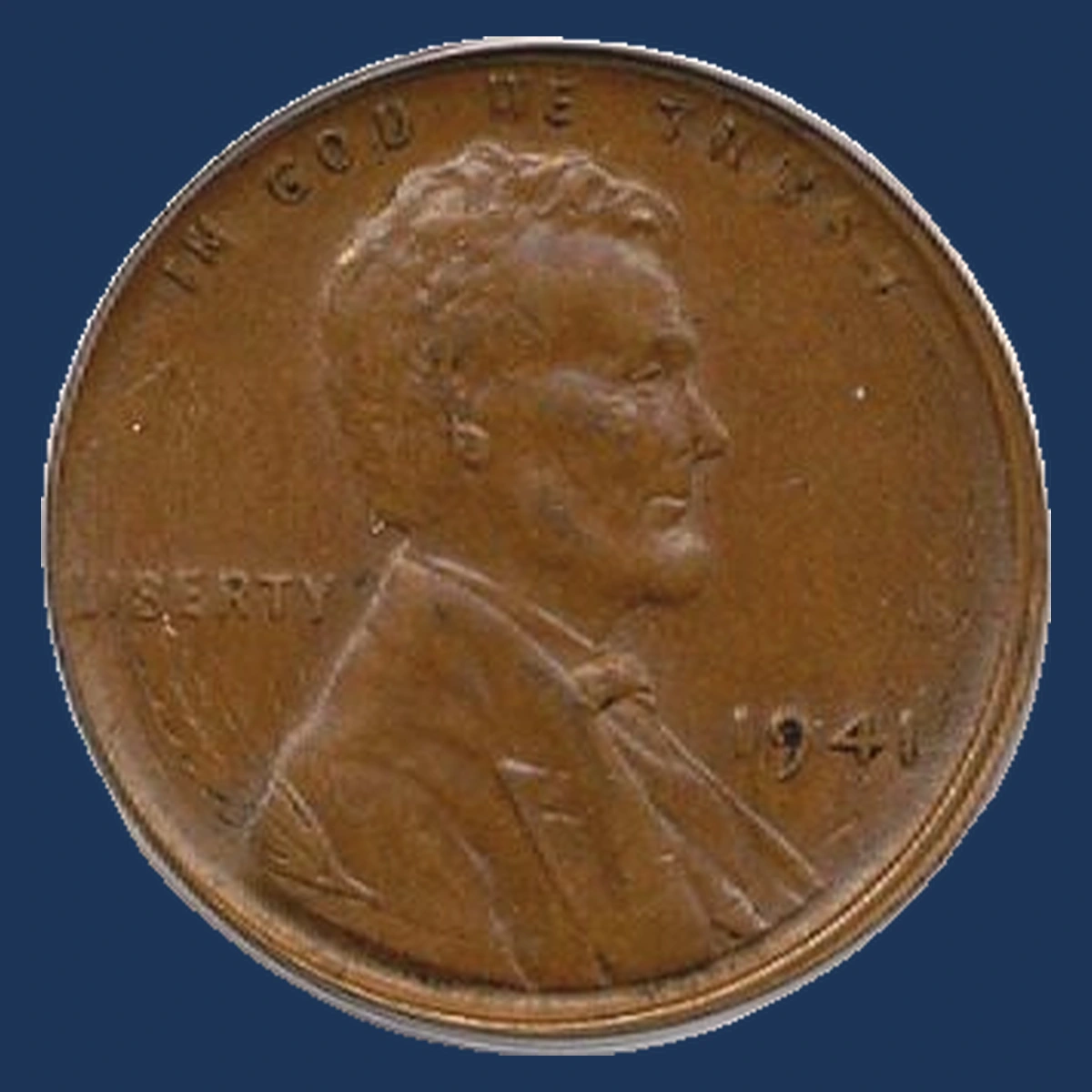
Two sets of design can show that a penny received another blow after its first strike. The coin failed to leave the press normally.
On a recorded 1941-S example, the second strike was about ninety percent off-center. Only a small part of that second design reached the coin.
A different Philadelphia example turned over before another strike inside the collar. Turning over can place traces of the back design on the front, and vice versa.
These are large changes in the coin’s position, rather than the closely spaced letter outlines of a doubled die.
Estimated Value
Estimated values run from $300–$2,500 for clear 1941 multiple-strike examples. The amount of visible second design and the coin’s condition both shape the price.
A strong flipover pattern can be especially interesting because features from both sides overlap. The reported San Francisco coin is PCGS MS62 Brown, an unworn example with noticeable marks.
The range is an estimate for these errors, not a quoted sale for either individual piece.
How to Identify
A second strike ninety percent off-center leaves only a small new contact area. Search the outer edge of the San Francisco coin for that partial design under a 10× magnifier.
The Philadelphia flipover coin poses a different question. Look for back-design traces on the front, or front-design traces on the back, where turning over changed their positions.
Normal cent standards are 3.11 g and 19.05 mm. Check loose coins with a scale and calipers, allowing for changes in outline from the extra blow.
Draw or photograph the position of each surviving letter group. Connecting those groups should reveal a second readable design, whereas random dents will not follow the same pattern.
14. 1941 Lincoln Wheat Penny Doubled Die
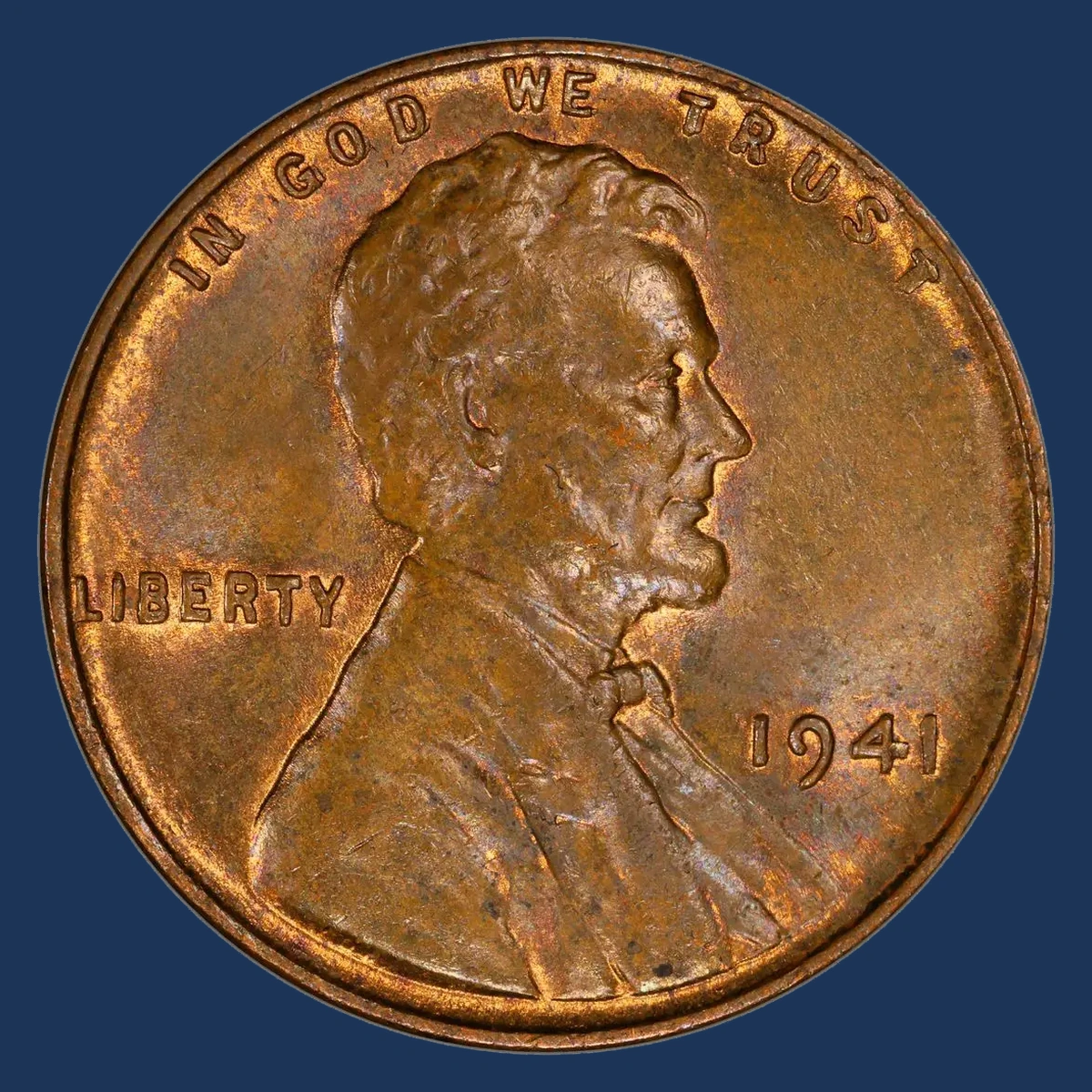
The familiar 1941 FS-101 variety shows separated outlines in the front lettering and date. Its steel stamping tool already carried a doubled design before it struck any coins.
Other 1941 varieties look different. Some affect Lincoln’s eye or parts of LIBERTY, while back varieties may thicken the motto or wheat tips.
Denver and San Francisco also have listed doubled dies. Their identifying details should not be borrowed from a Philadelphia coin.
A second outline can be small but still meaningful when it matches a known example. Blurred or flattened lettering alone is not enough.
Estimated Value
For this broad group, estimate $10–$5,000, with minor varieties near the bottom and strong, high-grade examples much higher. The appearance and exact variety matter greatly.
A Philadelphia FS-101 graded NGC MS66 Red sold for $2,070 in January 2012. Its grade indicates an unworn coin with few marks and original red color.
That sale supports the stronger variety’s value, not a four-figure price for every thickened letter.
How to Identify
On FS-101, compare several letters in IN GOD WE TRUST with the date and LIBERTY. A 10× magnifier should show matching raised extra outlines across those areas.
A normal weight will not confirm the variety. A scale and calipers check the basic 3.11 g and 19.05 mm standards on a loose coin only.
For a back variety, inspect E PLURIBUS UNUM and the wheat tips instead of expecting the front pattern. Different numbered tools have different small details.
Flat, low shelves beside letters can result from movement during striking. Match the rounded extra detail to photographs of the same mint and variety, including its small letter-end notches where present.
15. 1941 Lincoln Wheat Penny Wrong Planchet
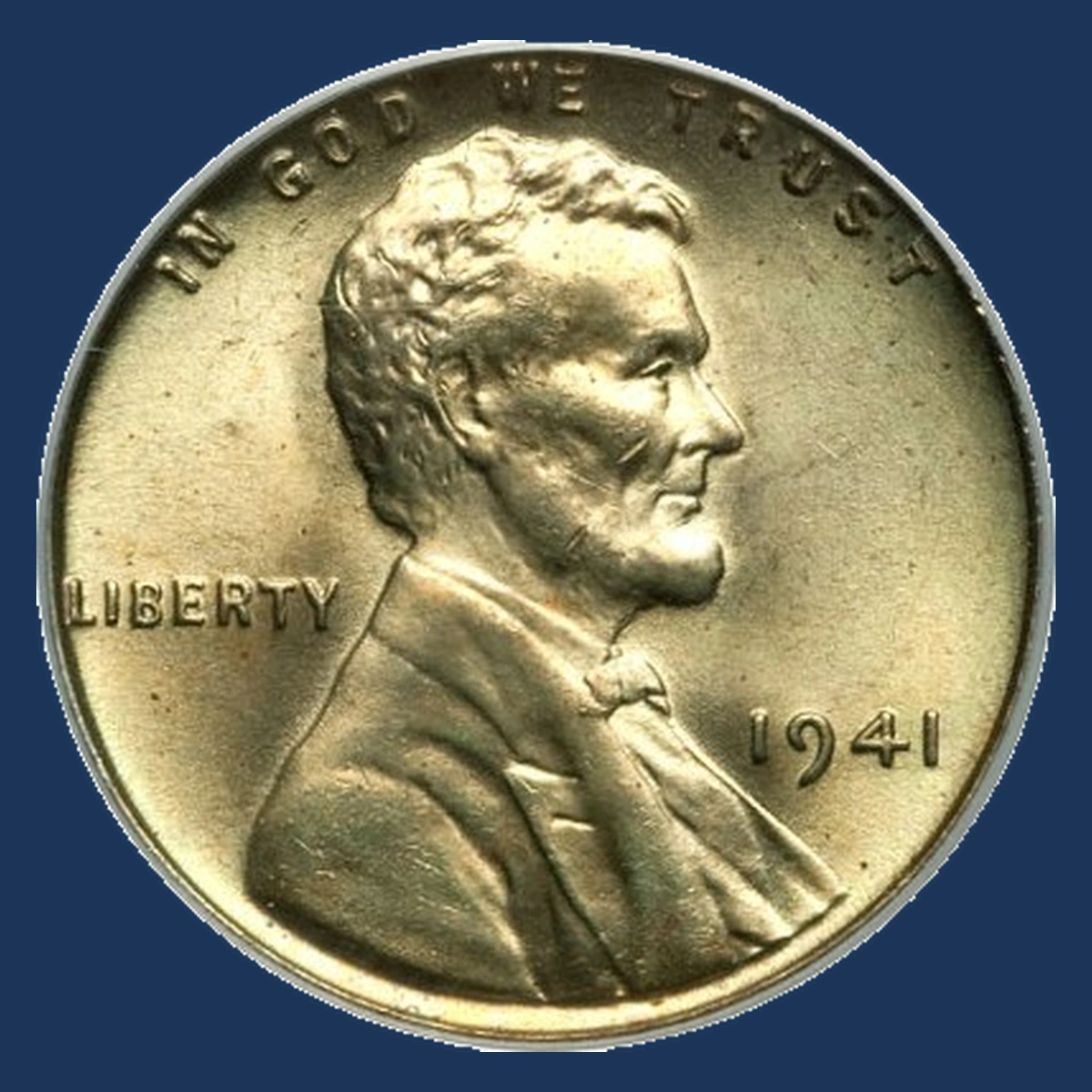
A silver-colored 1941-D penny was struck on a blank intended for a dime. At 2.5 g, it contains less metal than a normal copper cent.
Another Philadelphia cent has been sold as struck on a Panama blank. Its label and published descriptions disagree about the original denomination and metal mixture.
The foreign-blank identification therefore needs its own explanation when that coin changes hands. It should not be treated as identical to the silver dime example.
In each case, the cent design landed on metal outside the ordinary cent specification.
Estimated Value
The 1941-D silver-dime-blank cent graded NGC AU58 brought $2,640 in September 2024, as reported by Mint Error News. AU58 means only slight circulation wear.
The Panama-labeled PCGS MS65 coin sold for $4,993.75 in November 2013.
An estimated $1,500–$7,500 covers these recognized wrong-blank examples. The foreign coin’s metal identification, preservation, and sale history deserve more weight than its unusual color alone.
How to Identify
Compare a candidate’s measurements with both coin standards. A silver dime blank starts at 2.50 g and 17.91 mm, while a cent uses 3.11 g and 19.05 mm.
Weigh a loose coin and use calipers to record its struck outline.
Metal can spread during the cent strike, so the finished diameter need not equal an untouched dime blank.
Under a 10× magnifier, inspect the edge for plating and see how the outer letters fit the smaller surface. Silver color alone does not establish silver content.
For the Panama-labeled piece, ask which metal test supports the proposed foreign denomination. Compare that result with its actual weight before accepting the label’s specific blank identification.
Conclusion
Estimated 1941 penny error values range from $3 for small surface or tool features to about $7,500 for recognized wrong-blank coins. The clearest discoveries are not always the largest-looking marks.
Check extra lettering against photographs, inspect splits from the edge, and measure unusual blanks before judging their color. Keep the date, mintmark, and condition together when comparing prices.
Handle loose flakes gently and leave certified coins in their holders.