1945 Penny Error List with Pictures

One Lincoln cent still carries parts of a tiny silver coin made for the Netherlands East Indies. Cataloged as (1945-S), with the cent’s final date digits off the edge, it sold for $7,050 in November 2013.
This 1945 penny error list ranges from small raised chips to unusual metal mixtures. Estimated values span $3–$30,000, including a silver-bearing alloy offered at a five-figure asking price.
Read below to see what each feature looks like and how to check it.
1. 1945 Lincoln Penny Broadstrike (Estimated Up to $250)
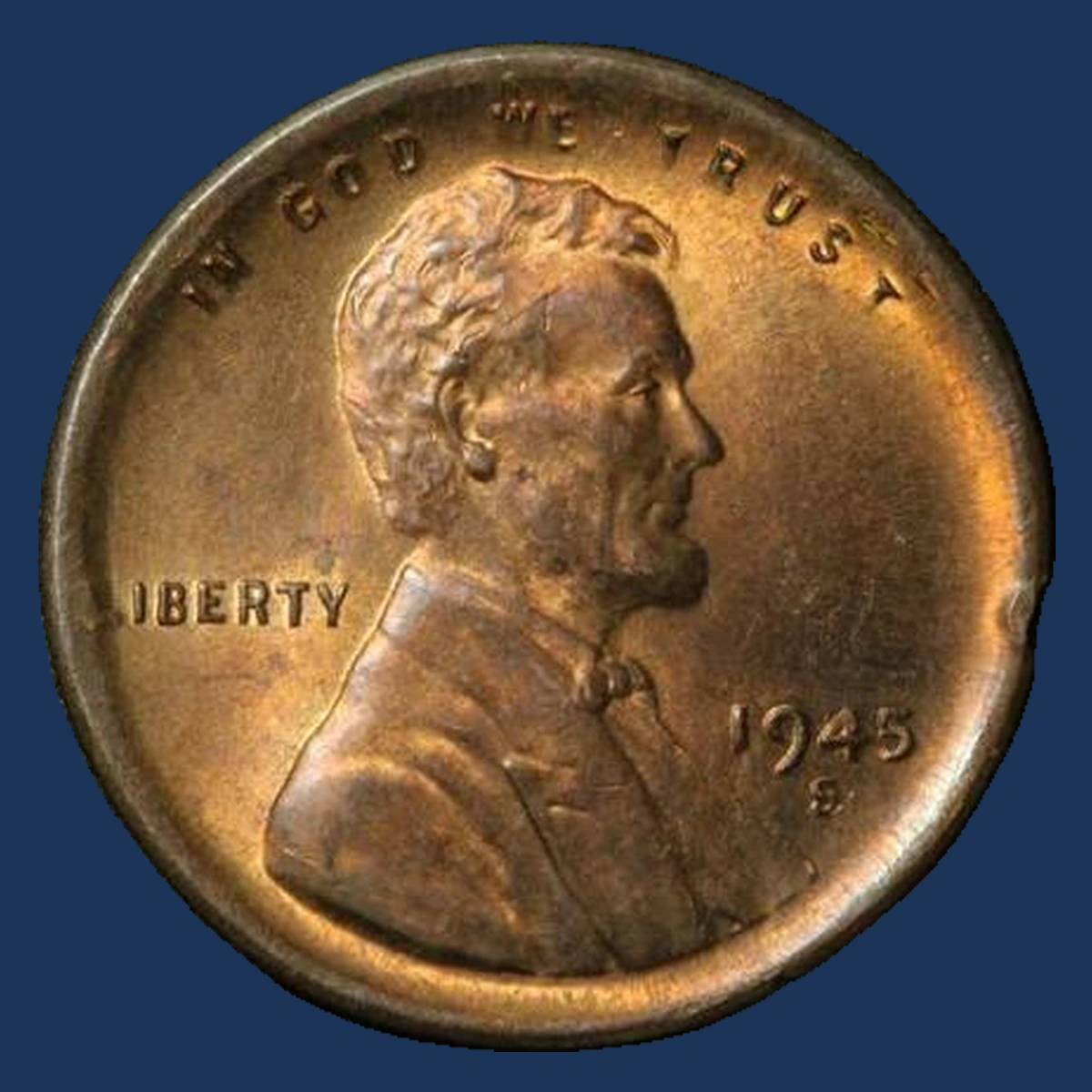
A broadstrike can make a penny look too wide even though its design remains complete. The metal spreads because the surrounding collar did not restrain it normally.
The collar is the ring that controls the coin’s edge during striking. Without that support, pressure pushes copper farther outward.
A Philadelphia 1945 example is recorded as NGC MS62 Brown. That grade means no circulation wear, with noticeable marks and brown copper surfaces.
The expanded outline needs to agree with natural strike pressure. Flattening a finished penny with a hammer can enlarge it too, but damages the design differently.
Estimated Value
Use an estimated $25–$250 range for identified 1945 broadstrikes. Clearly visible spread on an attractive coin can bring more than slight expansion on a marked piece.
A 1953-D broadstrike graded ICG MS61 Red sold for $48 in January 2009. That older, different-year sale provides a same-series comparison.
The 1945 NGC MS62 Brown coin should be judged on its own shape and surfaces rather than receiving that exact price.
How to Identify
The whole design should fit inside a broadstruck coin’s expanded outline. Follow the lettering around both sides before measuring the extra width.
Calipers can record the widest and narrowest spans against the ordinary 19.05-millimeter cent. A scale should remain near 3.11 grams when the original blank is complete.
Inspect the portrait and wheat with a 10× magnifier. Hammer damage may flatten raised details or leave impact marks that do not match normal outward metal flow.
A broadstrike can be unevenly centered without losing design beyond the edge. Distinguish that from an off-center strike where part of the picture is absent.
Complete lettering enclosed by a naturally widened edge is the useful combination here.
2. 1945 Lincoln Penny Lamination (Estimated Up to $350)
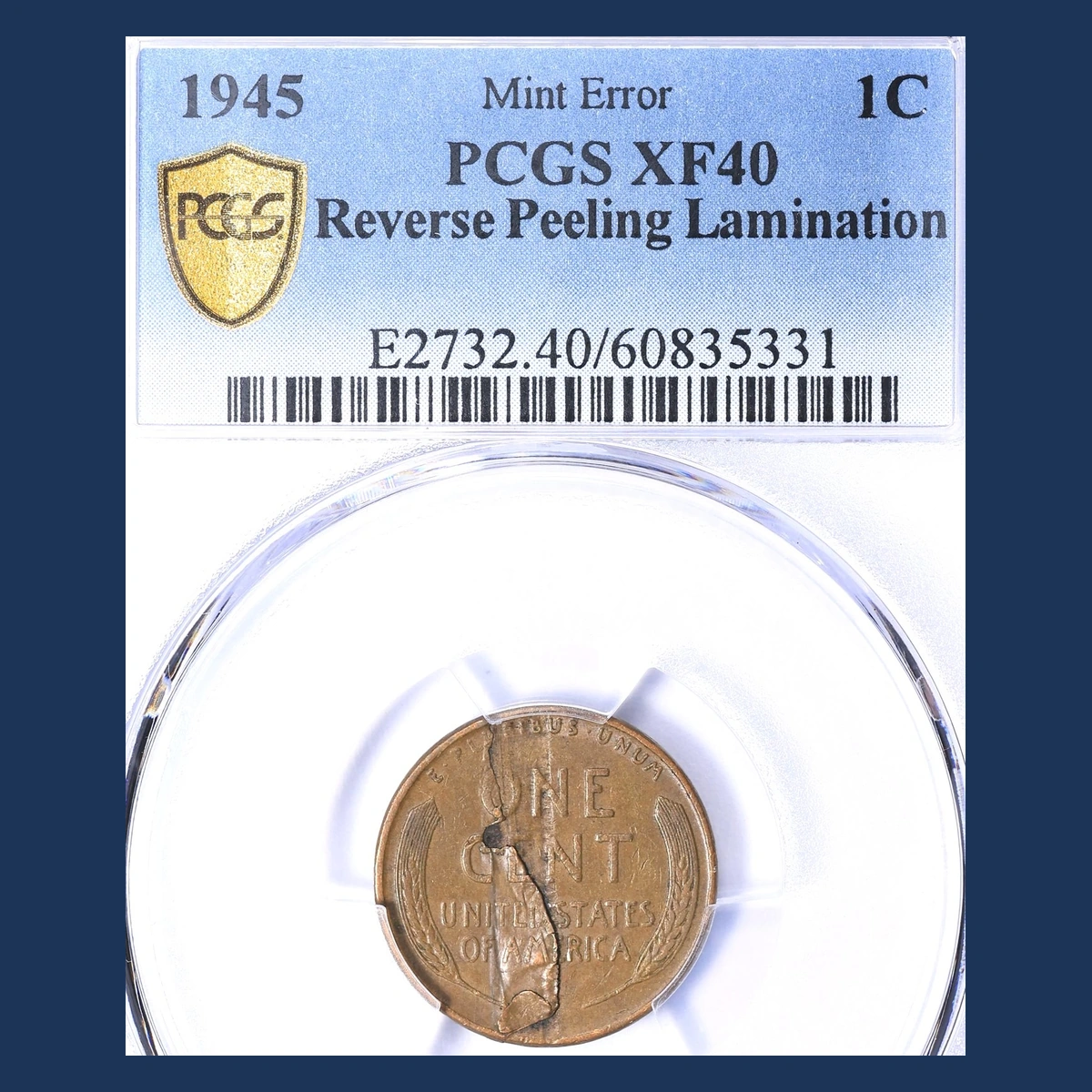
Part of the front surface can separate from the copper alloy before the coin is struck. The press then stamps its design across an already damaged blank.
One Philadelphia example is specifically described as lamination before striking. It weighs 2.8 grams and was graded NGC MS65 Brown, indicating an unworn, well-preserved coin.
A separate San Francisco example has a front-side lamination and a PCGS MS65 Red and Brown grade. Its missing or lifted layer is its own feature.
These wheat cents are copper alloy throughout. Their peeling surface is not the copper coating separating from a modern zinc cent.
Estimated Value
The 2.8-gram Philadelphia example brought $132 in August 2020. Its documented loss before striking makes it a useful comparison for a substantial, easily seen lamination.
Estimate $10–$350 for 1945 examples of varying size and condition. A small surface flake belongs lower than a prominent patch with a clear natural boundary.
Leave any attached metal in place, since an intact connection can help explain the error to a buyer.
How to Identify
Examine whether the design continues across the affected patch. On a loss before striking, parts of the design can have been impressed into the lower exposed surface.
Use low side lighting and a 10× magnifier to follow the layer’s boundary. A later gouge may instead cut straight through finished details and push metal to its sides.
A scale can compare a loose coin with the normal 3.11 grams; the documented Philadelphia piece reads 2.8 grams. Calipers provide a check against the regular 19.05-millimeter diameter.
Do not bend a loose flap or drag a measuring tool across it. A thin natural layer boundary, with the strike fitting the exposed surface, is the important view.
3. 1945 Lincoln Penny Tool Cracks, Chips, and Cuds (Estimated Up to $750)
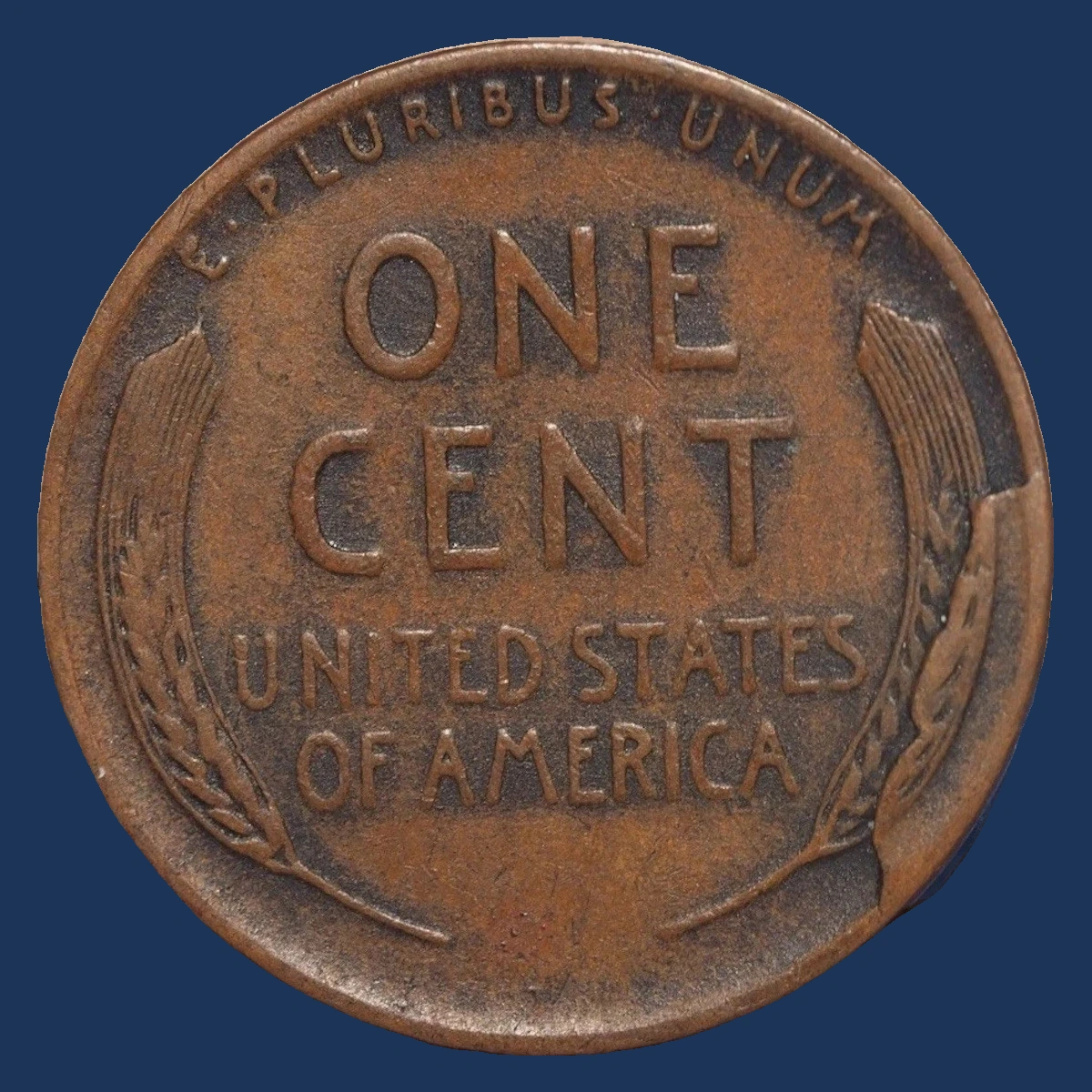
A damaged stamping tool can leave a raised line, a small blob, or a lump connected to the rim. The coin fills openings that were not part of the intended design.
A rim-connected lump replacing the original picture is called a cud. If the broken tool section stays in place, a shifted area may still retain design.
1945 examples also include head-to-rim cracks, interior retained breaks, and small chips between letters. Not every letter-space chip sits between B and E.
A crack reaching the rim at both ends can precede a cud without proving that the section already fell out.
Estimated Value
Estimate $3–$50 for small chips or narrow raised cracks and $30–$750 for prominent retained breaks or cuds. The larger range reflects how much design the break changes.
These are comparison ranges for wheat-cent tool damage. A documented Philadelphia PCGS AU58 cud provides a lightly worn example, but its grade alone does not set a price.
Strong visibility and an intact original surface usually matter more than a dramatic nickname.
How to Identify
The first distinction is height: tool cracks and missing tool pieces usually leave raised metal on the coin. A 10× magnifier under angled light can separate those ridges from cut-in scratches.
For a cud, trace the lump to the rim and check which original details it replaces. A retained break may keep lettering but shift it across a boundary.
The Cuds on Coins photographs help match the exact outline. Similar positions do not guarantee the same break.
Use a scale and calipers on loose coins to check roughly 3.11 grams and 19.05 millimeters. A raised head crack need not change those measurements noticeably.
Follow the entire raised line or lump to see whether it joins the rim or remains inside the design.
4. 1945 Lincoln Penny Clipped and Elliptical Blanks (Estimated Up to $750)
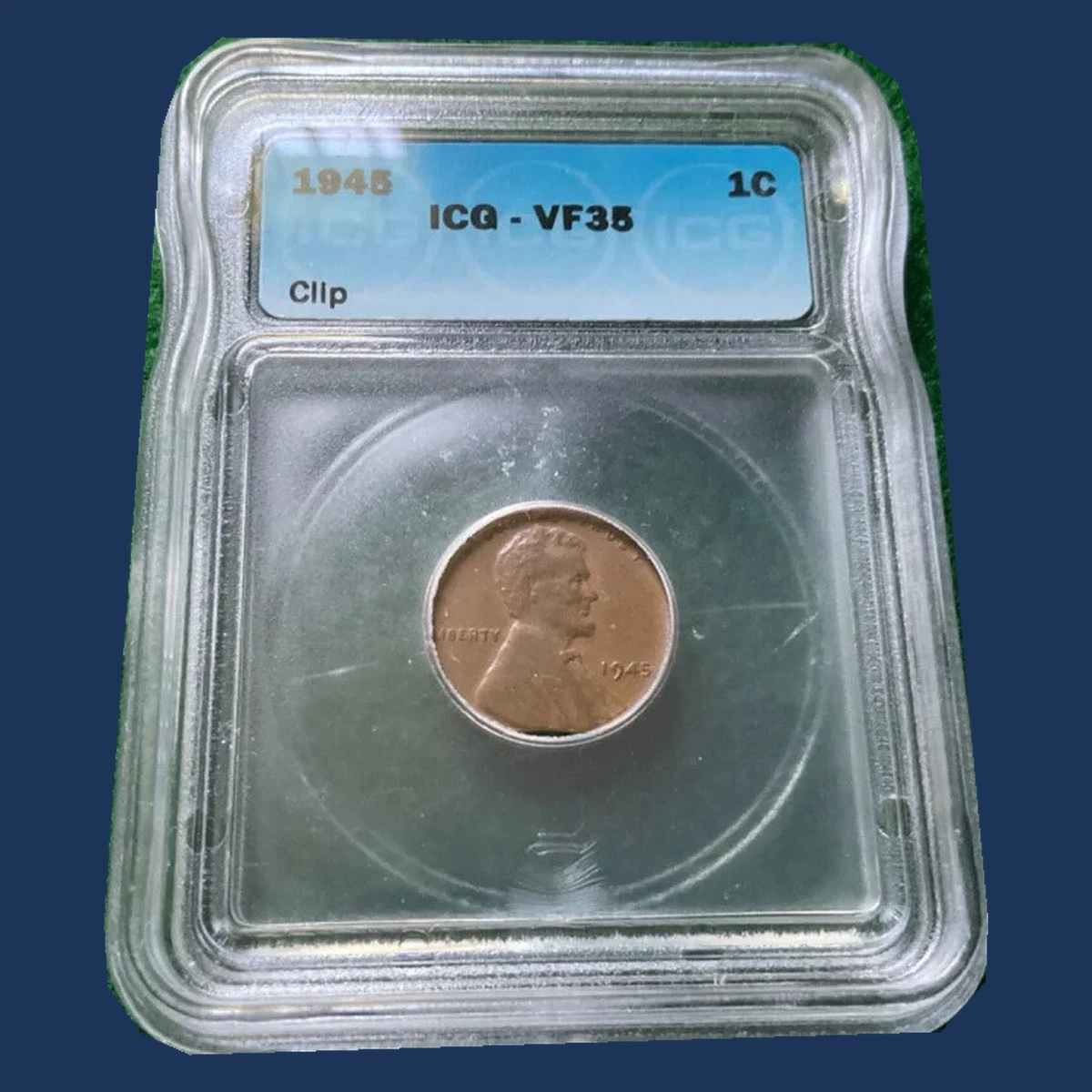
Not every incomplete blank looks like a round penny with a small bite missing. An elliptical blank can leave a lens-shaped piece of metal carrying only part of the design.
A 1945 PCGS MS64 Brown example combines this shape with a 10% off-center strike. Another elliptical example, NGC MS65 Red and Brown, weighs 2.5 grams.
A separate Denver penny has a reported 7% clip and an MS66 Red grade. Its smaller missing section is different from the long curved edges of an elliptical piece.
Each shape must be checked for natural cutting and striking evidence rather than later trimming.
Estimated Value
Allow an estimated $20–$250 for ordinary clips and $75–$750 for elliptical blanks, including a clear off-center combination. The date and overall shape help determine appeal.
A 1949-S curved clip graded NGC MS64 Brown brought $124 in March 2026. That is a recent clip comparison, not the sale price of either 1945 elliptical coin.
More missing metal does not automatically mean more value if the date becomes unreadable.
How to Identify
Study the overall outline before focusing on one edge. A long lens-shaped blank should not be identified from a photograph of an ordinary curved notch.
A precise scale can record the reduced weight, with 3.11 grams as the normal-cent standard. The separate NGC elliptical example was listed at 2.5 grams.
Calipers help record length and width against a normal 19.05-millimeter circle. Use a 10× magnifier to examine the exposed edges for filing, sawing, or freshly cut lettering.
For the PCGS combination, locate both the unusual blank outline and the displaced strike. For a small clip, check the opposite rim for possible weakness.
The edge should explain how the original strike reaches the missing area without cutting through finished details.
5. 1945 Lincoln Penny Off-Center Strike (Estimated Up to $800)
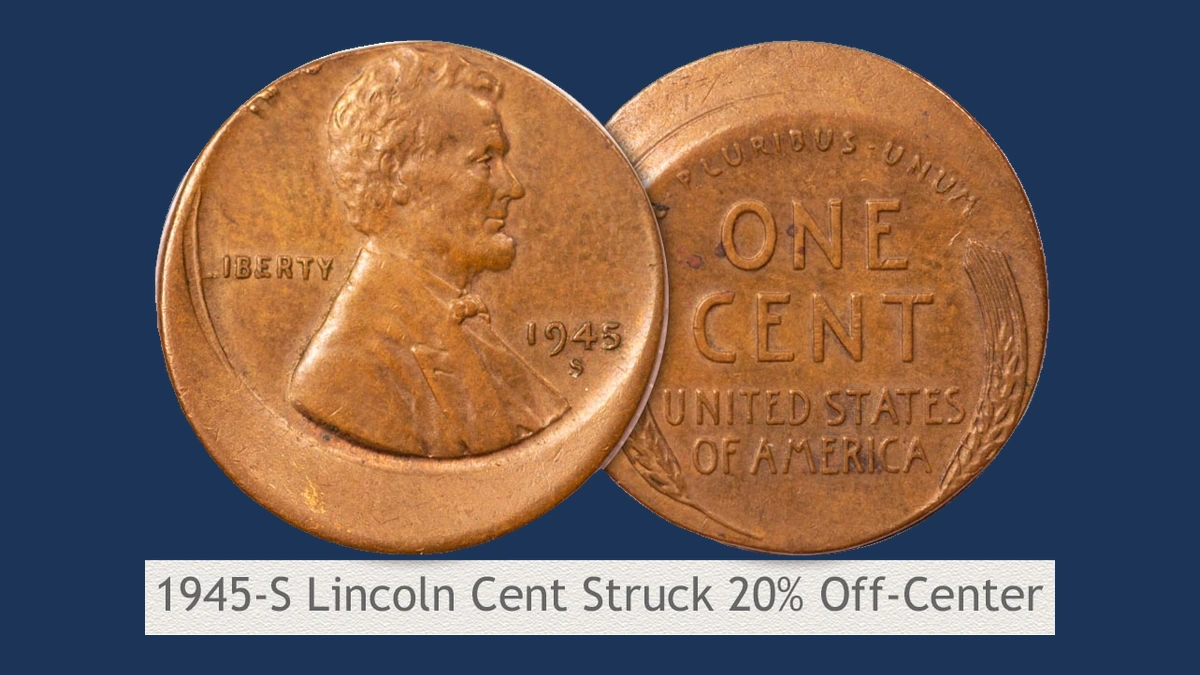
An off-center strike leaves a blank area next to a shifted part of Lincoln’s design. The prepared metal piece was not fully between the tools when they came together.
A Philadelphia example is recorded in ANACS MS62 Red and Brown. A separate San Francisco cent is graded NGC XF45, with circulation wear but much of its detail remaining.
Their exact percentages and directions should come from their own photographs. Neither grade tells you how far the design moved.
Missing letters along one edge distinguish this error from a broadstrike that retains the entire design within a wider outline.
Estimated Value
Estimate $30–$800 for identified 1945 off-center cents across different offsets and conditions. A complete date can be especially desirable when much of the remaining design is missing.
A high-grade 1949 Philadelphia cent struck 90% off center brought $630 in July 2021. That NGC MS66 Red and Brown coin is a different-year comparison near the stronger end.
The worn 1945-S example should not automatically receive the same premium.
How to Identify
Try to read the date and mintmark before judging the size of the blank area. Some extreme offsets remove the information needed to identify a year or mint.
Photograph both sides straight on, then inspect the end of the design with a 10× magnifier. Off-center striking should explain the relationship between missing design and untouched metal.
Calipers can measure the irregular outline, using the usual 19.05 millimeters as a normal-cent comparison. If the blank remains complete, a digital scale should be close to its original 3.11 grams.
Do not confuse wear on the San Francisco coin with missing design from the strike. Trace the sharp transition from impressed detail to smooth blank metal.
6. 1945 Lincoln Penny Repunched Mintmark (Estimated Up to $1,000)
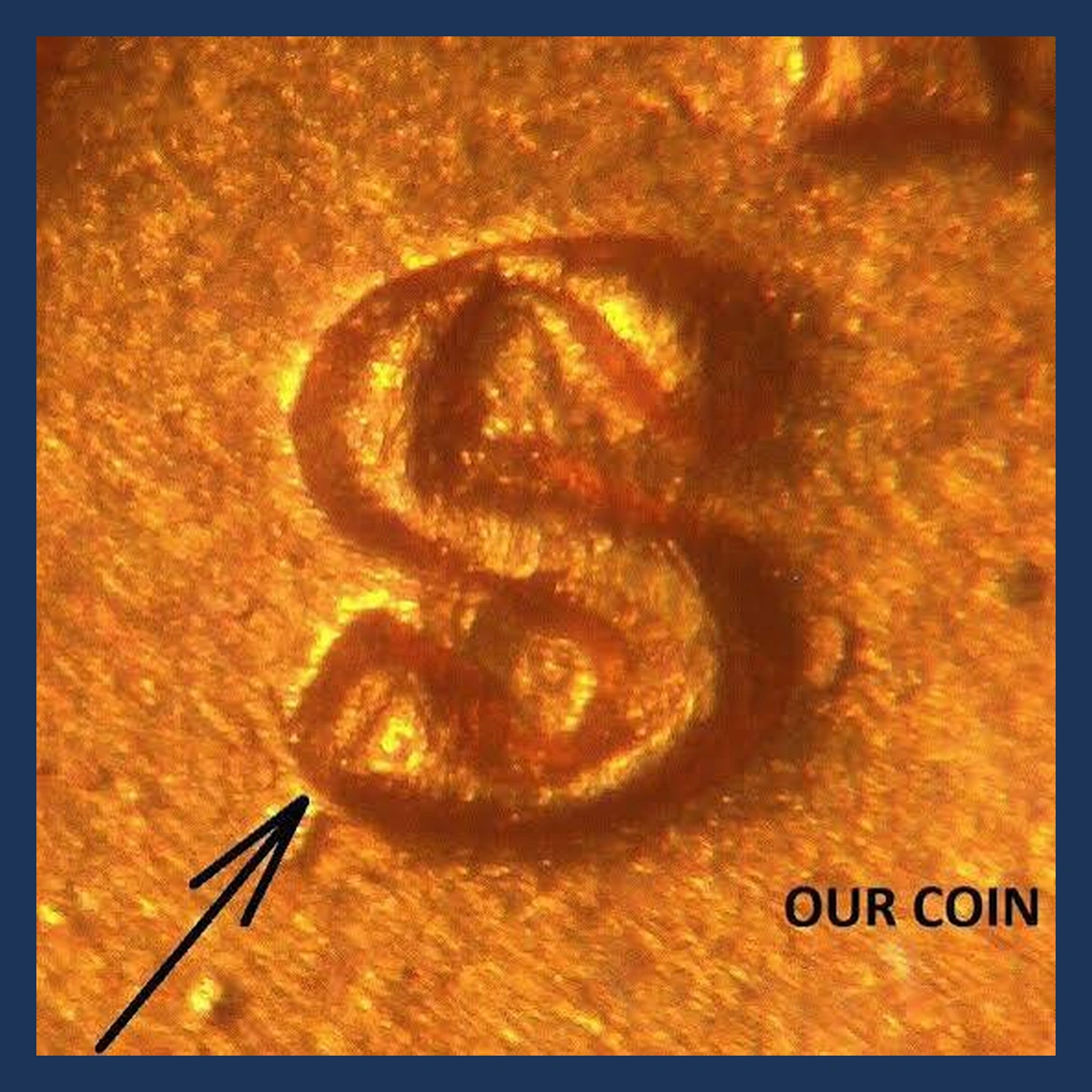
A second curve beside D or S can come from a mintmark punch landing twice in shifted positions. The punch marked the steel stamping tool, which then repeated the extra strokes on coins.
Denver examples include extra D traces above, below, and beside the main letter. San Francisco varieties include shifted or tilted S impressions.
Some repunched-mintmark tools also carried doubled designs elsewhere on the coin. The mintmark and the doubled eye or reverse detail remain separate things to inspect.
Tool wear can weaken an extra stroke gradually. A later example may not look as bold as an earlier one.
Estimated Value
For modest identified 1945 repunched marks, estimate $5–$200. Especially clear or sought-after patterns on excellent unworn coins can extend toward $1,000.
Comparable 1953-D FS-501 cents graded MS66 Red brought $149 and $420 in 2023. Those are different-year results for a named variety, not prices for every doubled-looking mintmark.
Condition and the specific extra-letter pattern both influence value, while a weak unidentified bump supports much less interest.
How to Identify
The date should be upright when you compare the extra letter’s direction. Use a 10× magnifier to follow the D or S around its full curve, including both ends.
Match the same mint and exact pattern in a specialist photograph. An extra stroke can become faint as the tool wears, so one missing tiny line need not settle the question.
A normal intact cent weighs about 3.11 grams and measures 19.05 millimeters. A digital scale and calipers screen for altered coins but cannot identify the mintmark pattern.
A lump filling the letter can instead come from a chip. Look for a second shaped curve that belongs to another D or S, rather than merely extra metal.
7. 1945 Lincoln Penny Thick Blank (Estimated Up to $1,000)
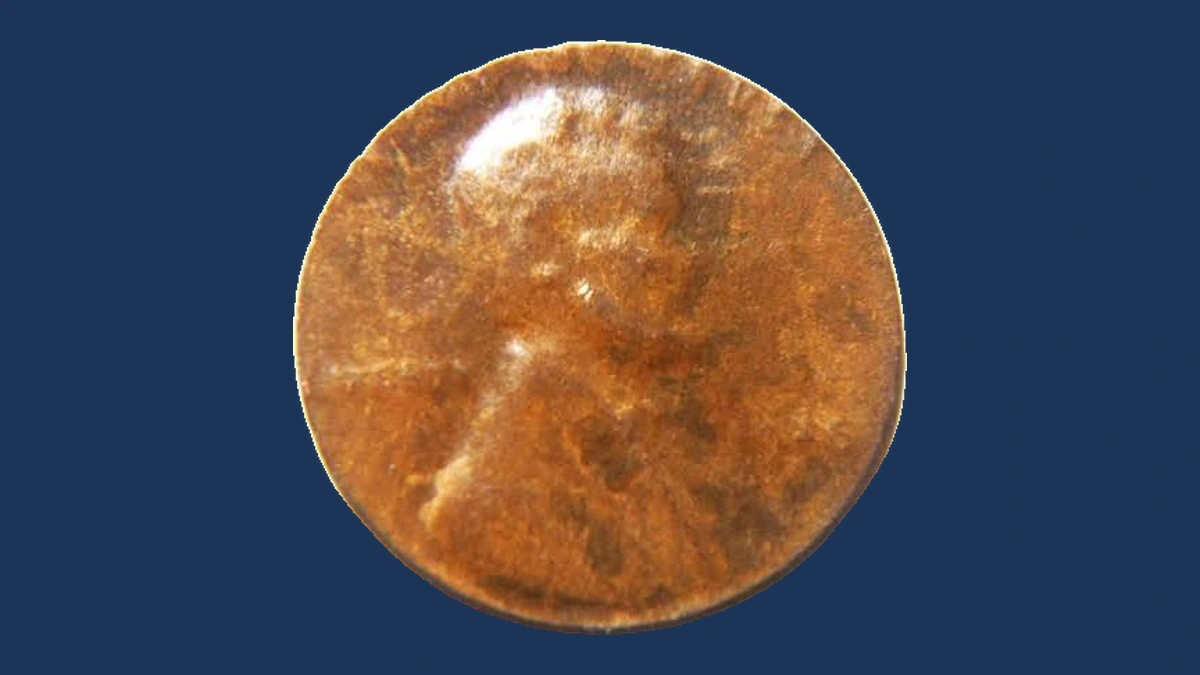
This penny contains more metal than the ordinary blank. The recorded example weighs 3.9 grams, compared with the usual 3.11 grams.
NGC described it as struck on a thick planchet, meaning a prepared coin blank thicker than normal. It was graded MS64 Red and Brown.
The added weight does not by itself identify a foreign denomination or prove an experimental striking. Those claims need evidence about the metal and the object used.
A normal-size copper cent can be unusually heavy because of its thickness. By contrast, solder, attached metal, or two joined coins can create a misleading heavy reading.
Estimated Value
The NGC MS64 Red and Brown 3.9-gram coin sold for $207 in January 2008. That older sale establishes a price for the actual thick-blank example.
Use an estimated $150–$1,000 for comparable identified pieces. A clear thickness difference and natural surfaces can support the stronger end.
Do not apply prices for foreign-blank rarities or experimental coins unless the piece is separately identified that way, beyond simply being heavy.
How to Identify
Weigh the coin on a calibrated scale, then weigh a normal cent as a check. The difference between 3.9 grams and the ordinary 3.11 grams should be easy to repeat.
Use calipers to record both thickness and diameter at several points. About 19.05 millimeters is the normal diameter, but a struck rim should not be mistaken for the thickness of the whole blank.
Inspect the edge with a 10× magnifier for a seam, added solder, or attached metal. Avoid taking measurements that press against a fragile or suspicious addition.
Weight and thickness should support each other. A natural thick edge without a seam is the next feature to examine after the heavy scale reading.
8. 1945 Lincoln Penny Doubled Die (Estimated Up to $1,200)
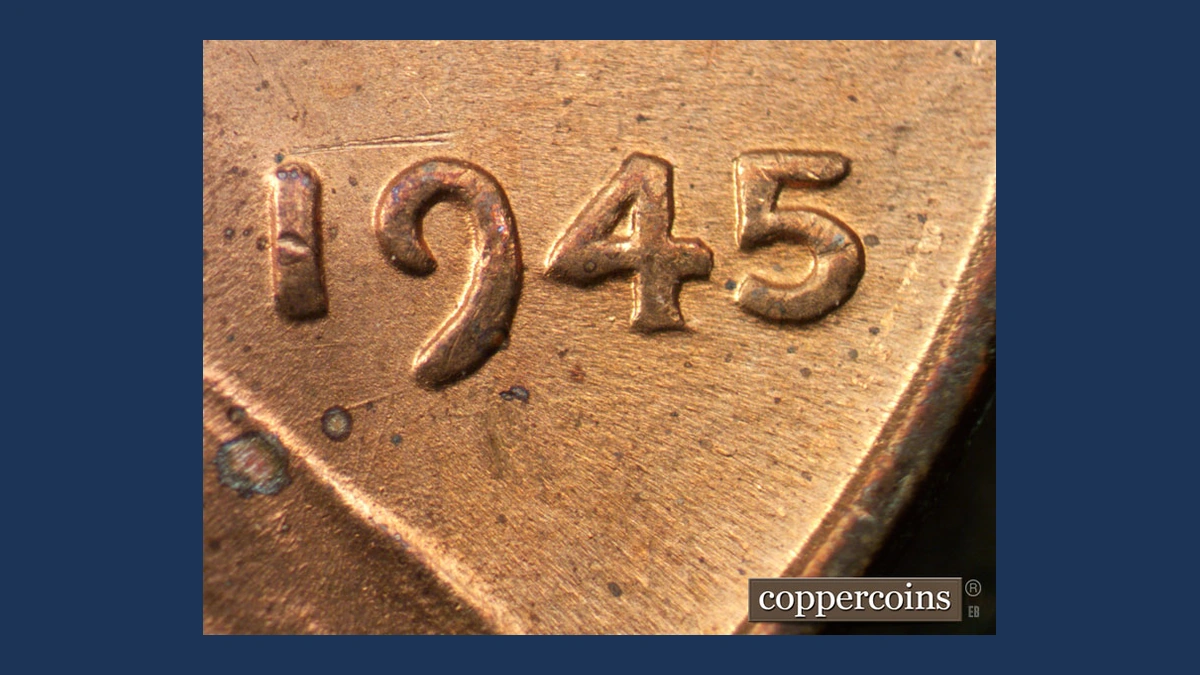
Some 1945 doubled dies show thick letters rather than a dramatic second date. Others add a separate eyelid, ear detail, or extra edge beside the wheat.
The doubled design was already present on the stamping tool. Every coin made with that tool could repeat the feature.
The Philadelphia FS-101 includes downward doubling around the date, LIBERTY, and parts of Lincoln’s portrait. Other Philadelphia, Denver, and San Francisco patterns affect different areas on either face.
A doubled reverse can show extra thickness or separation in the upper motto and wheat. It should not be identified from an unrelated doubled front.
Estimated Value
Estimate $5–$200 for minor identified doubled designs and $50–$1,200 for stronger named examples such as Philadelphia FS-101. Clear detail and original copper color can support higher prices.
As a same-series comparison, a 1949-S FS-101 in PCGS MS65 Red brought $188 in August 2017. It is a different date and pattern.
These ranges do not assign a large premium to ordinary thick lettering or flat strike doubling.
How to Identify
Choose the right face and mint before trying to match a pattern. No mintmark means Philadelphia, while D and S sit below the date.
For Philadelphia FS-101, examine the lower extra edges around the date and LIBERTY with a 10× magnifier. The Wexler photographs also show separate eye, ear, motto, and wheat varieties.
A scale and calipers can check the normal 3.11-gram weight and 19.05-millimeter diameter on loose coins. This doubling does not require a second strike or a different blank.
Flat shelves and stretched worn letters are common lookalikes. Match several doubled details in the same locations, rather than relying on one thick letter.
9. 1945 Lincoln Penny Double Strike, Including a Flipover (Estimated Up to $2,000)
A coin can return to the press upside down and receive Lincoln’s design over the earlier wheat side. The opposite face then receives wheat details over the earlier portrait.
This flipover double strike keeps traces of both faces together. The documented NGC MS65 Brown example was struck again inside the surrounding collar.
A separate PCGS AU58 coin moved sideways instead, with its second strike about 15% off center. Its overlapping designs tell a different movement story.
The first strike may survive only in fragments after the second blow. A complete second portrait is not required on both faces.
Estimated Value
The NGC MS65 Brown flipover example brought $675.63 in January 2016. Its unworn surfaces and surviving opposite-side details make it a useful example of this error.
Estimate $150–$2,000 across identified double strikes, including the shifted second strike. Readable dates and clear overlaps often attract stronger bids.
The separate PCGS AU58 example has slight wear, so its price should reflect both that condition and how well the second blow shows.
How to Identify
On the flipover, search for wheat or reverse lettering among the front design, and portrait remnants on the back. A 10× magnifier helps separate those older details from scratches.
For the 15% off-center second strike, instead follow the shifted date or portrait and the second design boundary. Both strikes should fit a possible movement of the same coin.
Measure a loose piece with calipers against the usual 19.05-millimeter cent and weigh it against 3.11 grams. Repeated pressure can change the outline without adding another coin’s weight.
A later pressed-together pair may leave reversed, sunken impressions. Opposite-face remnants or clearly displaced normal designs provide the direct evidence for these two different double strikes.
10. 1945 Lincoln Penny Brockage with a Broadstrike (Estimated Up to $2,500)
Backward, sunken lettering is the important clue on a brockage. A previously struck coin stayed between a new blank and a stamping tool, pressing its raised design into the fresh metal.
The transferred image reads in reverse because one coin acted like a stamp. It is different from an ordinary raised doubled design.
A Philadelphia 1945 example combines a front-side brockage with a broadstrike. NGC graded it MS62 Brown.
The wider outline and the mirror image describe two visible effects on that one coin. The available record does not establish that the mirror image covers the whole face.
Estimated Value
For this kind of identified wheat-cent brockage, estimate $200–$2,500. A large clear mirror image can attract more than a small weak patch.
The NGC MS62 Brown 1945 example provides the coin identity, while the range uses comparable copper-cent brockages. It is not a stated sale result for that particular piece.
How much backward design survives, the readability of the date, and surface damage all influence where a coin fits.
How to Identify
Try reading the odd lettering backward. Then tilt the surface under a lamp to see whether the image sinks into the coin rather than standing above it.
Inspect the impression with a 10× magnifier, checking how its edge meets the surrounding normal design. A coin pressed against another after leaving the Mint can create a misleading mirror image too.
Calipers should document the expanded outline against the normal 19.05 millimeters. A digital scale can check whether the original approximately 3.11 grams remains.
Professional examination helps distinguish the original strike from later pressing. The key close-up combines backward recessed lettering with natural strike flow where the impression meets the rest of the coin.
11. 1945 Lincoln Penny on a Wrong-Denomination Blank (Estimated Up to $15,000)
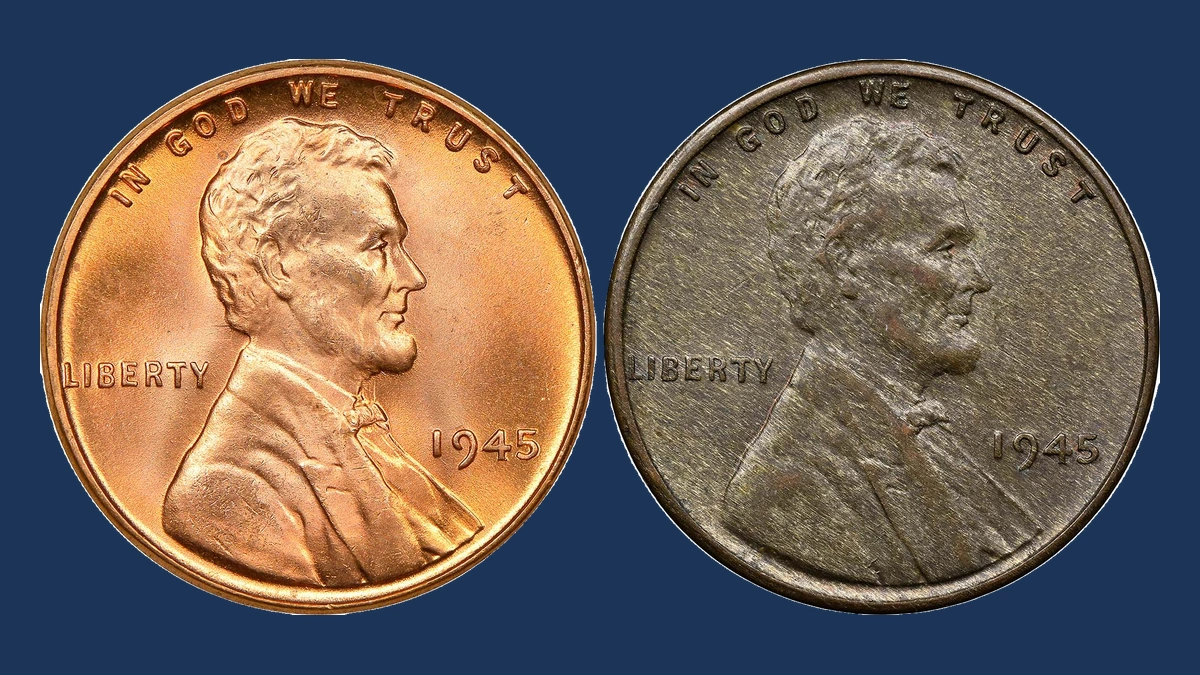
Lincoln’s design appears on several blanks meant for other coins. A smaller blank can crowd the lettering, while a different alloy changes the color.
Examples include a U.S. silver dime blank, Netherlands East Indies half-cent blanks, and a coin cataloged as a Netherlands 25-cent silver blank. The last coin’s mainland or colonial origin remains open.
Other reports identify Peru five-cent, Ethiopia one-cent and five-centime blanks. Their weights and metals differ.
Mike Byers also reports a Denver cent on a 75% silver Philippines ten-centavos blank. Its full date and portrait survive despite the different blank.
Estimated Value
The U.S. dime-blank NGC AU53 coin brought $3,240 in July 2021; the Peru NGC VF30 example brought $1,560 in January 2022. Both were circulated coins.
Estimate $500–$6,000 for comparable identified wrong blanks, and $5,000–$15,000 for the reported Philippines type. Byers cites a different 1944-D Philippines-blank cent at $7,800.
These figures keep each blank’s identity separate rather than treating every silver-colored penny as equally valuable.
How to Identify
Record the actual weight first with a precise scale. Published examples include the dime blank at 2.5 grams, Peru at 3 grams, and Ethiopia one-cent at 2.7 grams.
The reported Ethiopia five-centime pieces weigh 4.0 or 4.1 grams, so they should not be matched to the lighter one-cent example. The ordinary cent standard is 3.11 grams.
Use calipers to compare the outline with 19.05 millimeters, then inspect missing letters and the edge through a 10× magnifier. Plating and grinding can mimic an unusual blank.
A specialist can compare the metal composition without scratching it. Color or one weight reading cannot establish the country.
Match weight, metal, surviving design, and the correct mint together before assigning a specific foreign denomination.
12. 1945 Lincoln Penny Overstruck on a Silver Tenth Gulden (Estimated Up to $18,000)
The small silver coin beneath this Lincoln design had already been struck for the Netherlands East Indies. Its old letters and date partly survive the later cent strike.
Heritage cataloged the cent as (1945-S), placing the date in parentheses. The earlier coin is dated 1945-S, but the cent’s own 45 and mintmark fall outside the blank.
The NGC AU58 piece weighs 1.2 grams. Its original denomination was one-tenth gulden, a 15-millimeter coin made from 72% silver.
This is an overstrike on a finished foreign coin, rather than a cent struck on an unused foreign blank.
Estimated Value
The NGC AU58 overstrike sold for $7,050 in November 2013. AU58 describes slight wear, despite the unusual combination of two national designs.
Allow an estimated $5,000–$18,000 for a comparable professionally identified piece. The older sale anchors the range, while clarity of both designs and collector demand affect later prices.
The inferred cent date should remain part of its description when the coin changes hands.
How to Identify
Look inside ONE on the cent’s reverse. The earlier coin’s S appears within N, and the bottom curve of its 5 is visible within E.
Enlarge those details with a 10× magnifier or sharp photograph. They belong to the earlier coin and do not make the cent’s missing 45 or mintmark readable.
A scale and calipers can compare the recorded 1.2 grams and 15-millimeter foreign-coin size with a normal 3.11-gram, 19.05-millimeter cent. Keep the certified example in its holder.
Check both faces for a consistent overlap of the two designs. The old S within N and partial 5 within E offer the most direct places to recognize this specific overstrike.
13. 1945 Lincoln Penny with a Reported Silver-Bearing Alloy (Estimated Up to $30,000)
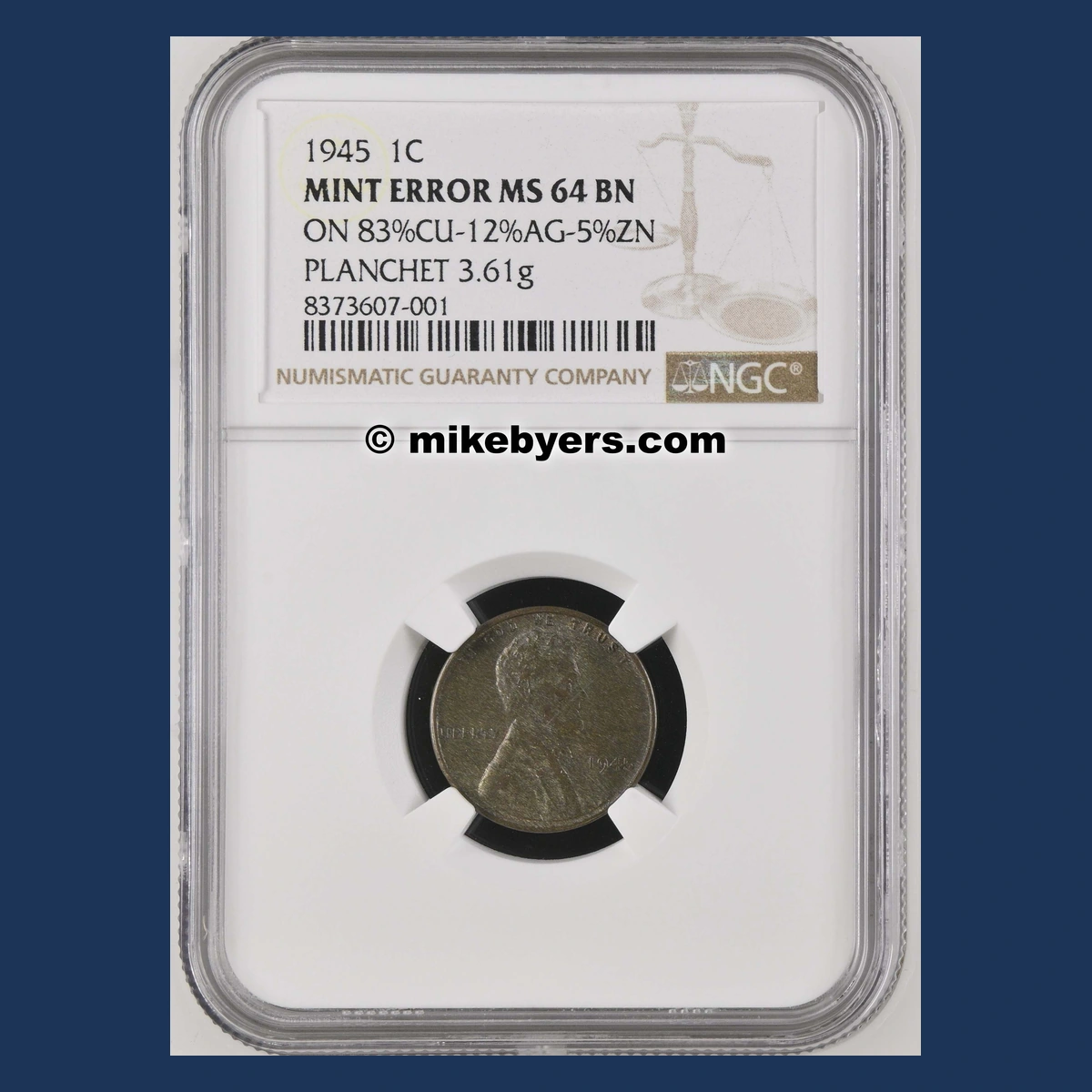
This gray-looking cent has a reported metal mixture of 83% copper, 12% silver, and 5% zinc. It weighs 3.61 grams rather than the usual 3.11 grams.
Mike Byers describes the NGC MS64 Brown piece as an unusual-alloy discovery. The silver is part of the reported mixture, not simply a bright appearance.
One proposed explanation involves mixing material intended for wartime nickels into the cent alloy. Another possibility raised by the seller is an experimental strike.
Neither explanation is established by the weight alone. The measurable metal difference is clearer than the story of how it occurred.
Estimated Value
The dealer listing asks $25,000 for the NGC MS64 Brown coin. That is an asking price, not a recorded completed sale.
An estimated $10,000–$30,000 places this reported unusual-alloy piece in a specialist market. Buyers would need the metal evidence and coin identity to agree before treating another gray cent as comparable.
The amount of silver by itself contributes little compared with the collectible appeal of the unusual composition.
How to Identify
The reported percentages require a metal test, not a visual guess. Professional X-ray fluorescence testing can examine the surface composition without cutting the coin.
Ask how the measurements address plating and whether several areas were tested. A thin silver coating can produce a misleading silver-colored appearance.
Check the documented 3.61-gram weight against the normal 3.11 grams using a precise scale, and record size with calipers against 19.05 millimeters. A 10× magnifier helps examine edges for added metal or alteration.
For a sealed coin, compare the grading record and test documents instead of opening the holder. The 12% silver finding, weight, and original-looking surfaces must support one another.
Conclusion
An extra letter edge, a thin flake, and a silver-colored blank need different checks. Start with the feature you can see, then use weight and size where they help.
Estimated prices extend from $3–$30,000, with the largest figures reserved for unusual identified pieces. An asking price is not a completed sale.
Preserve surfaces and attached metal, and compare the exact mint and error before assigning a value.