1948 Penny Error List with Pictures

Benjamin Franklin does not belong on a Wheat penny. Yet one 1948 cent received a half-dollar design over its original image and sold for $14,100 in January 2016.
That unusual piece leads to a useful question: did the extra feature come from the stamping tool, the blank, or another strike? This 1948 penny error list shows what to look for.
Estimated values span $2–$20,000. Work through the visible differences below before comparing a coin with the prices.
1. 1948 Lincoln Penny Lamination (Estimated Up to $250)
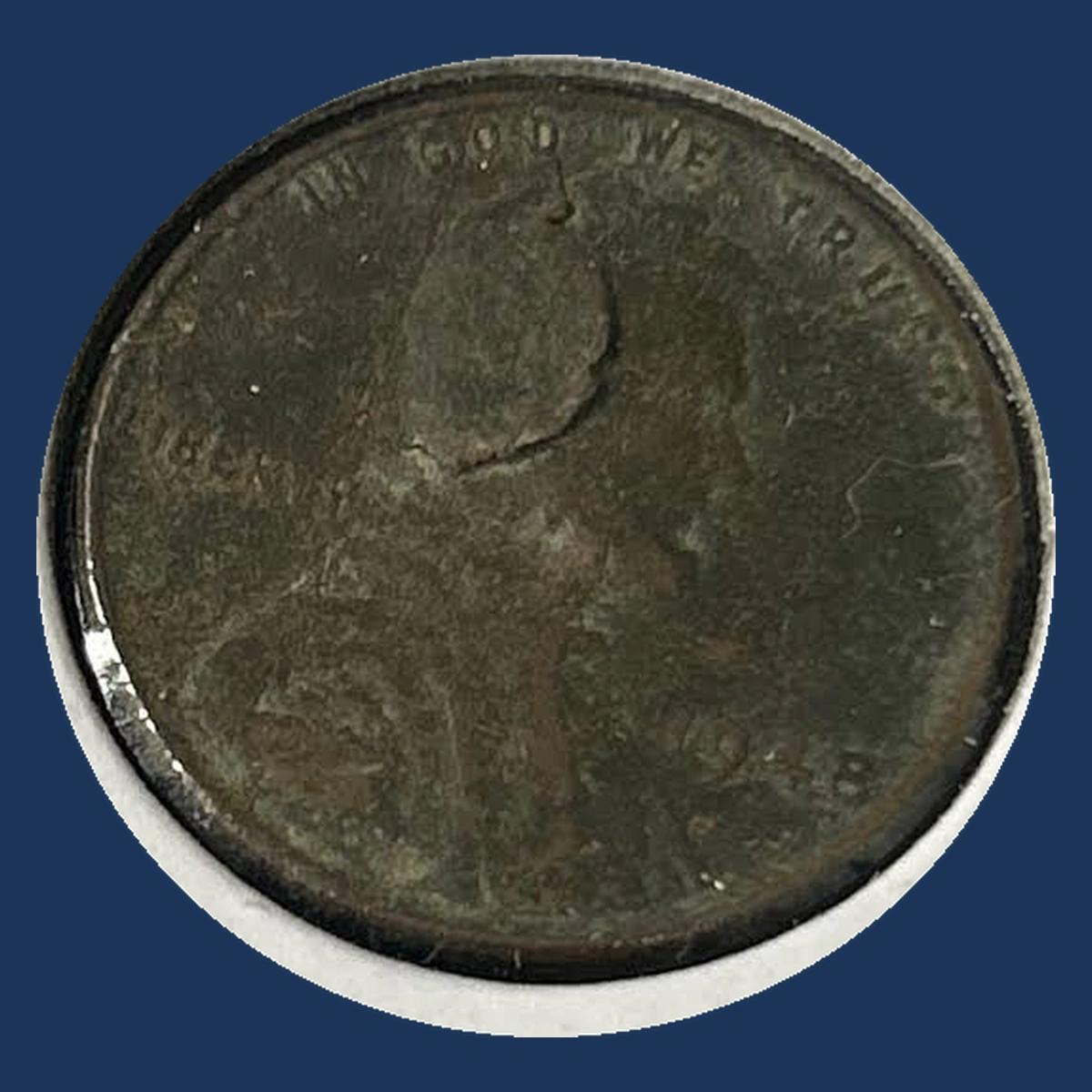
A ragged surface layer can loosen and fall away from a Wheat cent. This separation inside the alloy is called lamination.
Reports of Philadelphia 1948 examples describe front-side peeling. One shows a separation reaching from rim to rim; another has a large affected area on the right, near the date and TRUST.
Those descriptions concern separate examples. The paths of their missing metal should not be combined into one imagined shape.
A 1948 penny is copper alloy throughout. Its peeling surface does not expose the zinc center found in much later pennies.
Estimated Value
Estimate $5–$250 for a confirmed lamination, from a small worn flaw to a larger, clearly visible separation. The size and remaining design both matter.
A 1952-D front lamination graded NGC AU55 Brown sold for $35 in July 2013. It is a later Wheat-cent comparison in a lightly worn condition.
A large 1948 peeling area may attract more interest. Corrosion or a patch scraped away after minting does not receive the same error value.
How to Identify
Do not try to smooth the rough patch. Cleaning can erase the boundary that shows how a layer separated.
Under a 10× magnifier, follow any lifted edge into the solid surface. Photograph the date-side area on the reported right-side example, without expecting the same path on every coin.
A normal cent weighs about 3.11 grams and measures 19.05 millimeters across. Use a scale and calipers if the coin is safely accessible; missing flakes may reduce the weight.
Examine the smooth edge where the separation reaches it. Cuts tend to leave disturbed metal, unlike a natural seam through the alloy.
A thin surface layer lifting or separating along its own boundary is the feature to find.
2. 1948 Lincoln Penny Struck Through Material (Estimated Up to $300)
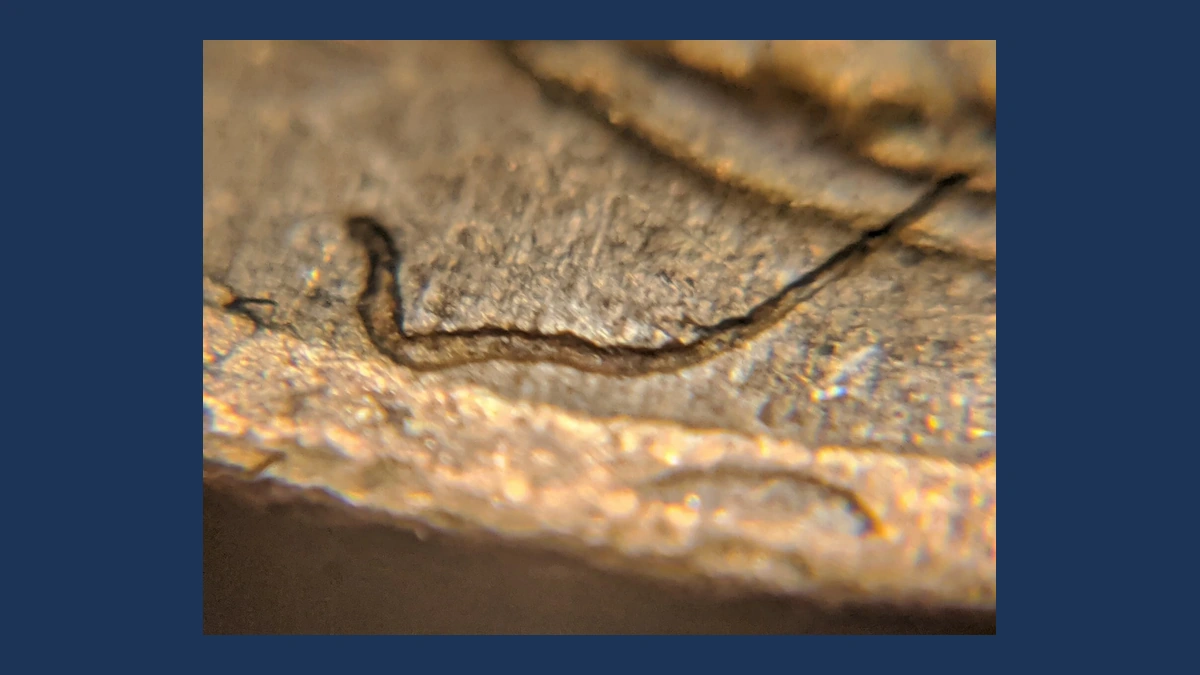
A sunken patch or missing detail can form when material blocks contact between a blank and the stamping tool. Collectors call this a struck-through error.
Reports include a no-mintmark 1948 coin with front and back effects, plus a San Francisco example. The exact material is not established for these pieces.
Do not expect a wire outline or cloth pattern simply because those objects can cause similar errors. Each coin needs its own visible shape.
This mechanism interrupts the design as it forms. A later gouge removes or moves metal after the design is already there.
Estimated Value
A seller listed an uncertified 1948 front-and-back struck-through cent for $16.50. The USA Coin Book listing calls it MS63, but that is the seller’s grade, not a grading-service result.
For confirmed examples, use an estimated $10–$300, depending on the affected area and preservation. The $16.50 figure is an asking price, not a completed sale.
A clear original impression is more appealing than a shallow weak patch with no convincing explanation.
How to Identify
Compare the weak area with nearby raised detail under side lighting. Material caught during striking may interrupt the design without leaving the sharp pushed-up lip of a later impact.
Check both sides separately, especially for a coin described as affected on front and back. Do not assume the two areas had the same cause from a distant photograph.
Scale and caliper readings can be compared with 3.11 grams and 19.05 millimeters. A struck-through coin can keep normal weight because the blank itself remained intact.
Look around the smooth edge and use a 10× magnifier to check for scraping or corrosion. The practical clue is an original blocked-design area, not just a worn letter.
3. 1948 Lincoln Penny Clipped Planchet (Estimated Up to $350)
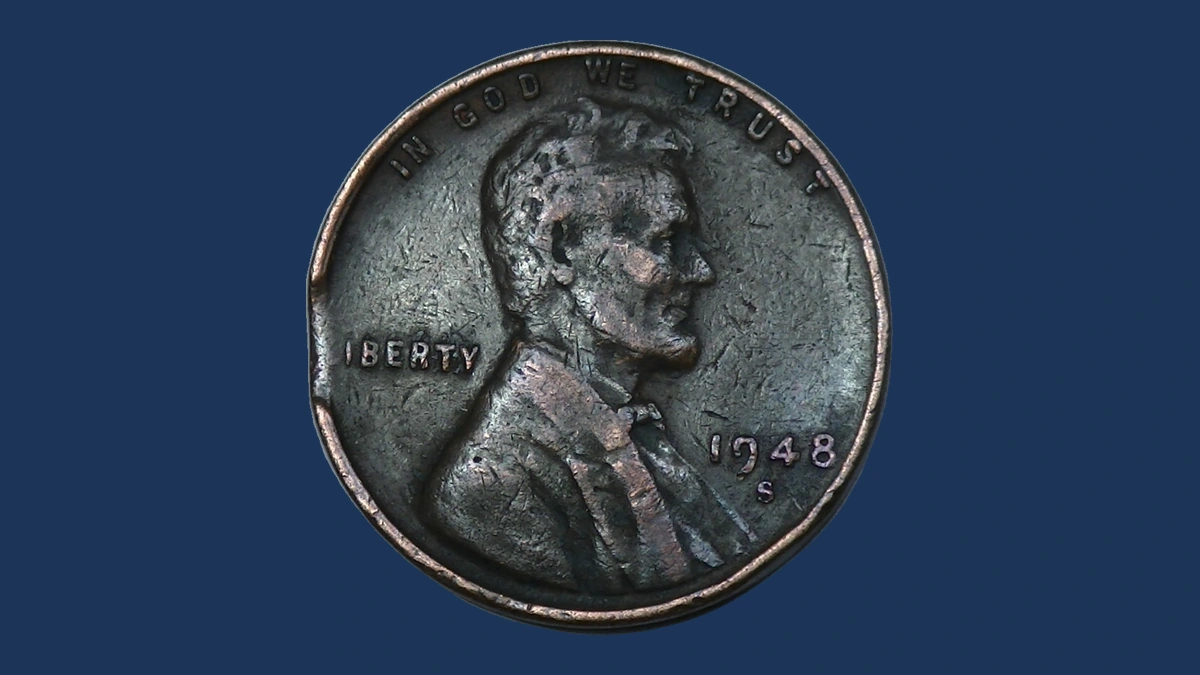
Part of the blank can be missing before any design reaches it. When the press strikes the remaining metal, the finished cent keeps that gap.
A blank is also called a planchet. Reports for 1948 include curved and straight clips, but they do not establish one mintmark for every shape.
A curved gap can resemble a bite, while a straight one follows a flatter boundary. The nearby rim or lettering may be weak because metal flowed toward the opening.
Someone cutting a finished penny can imitate the outline. The boundary must show the correct sequence.
Estimated Value
An estimated $10–$350 covers verified 1948 clips of different sizes and condition. A small gap in a worn coin belongs toward the lower end.
For comparison, a 1967 cent with a 13% straight clip brought $39 in July 2021. It has the later Memorial design, so the sale is not a 1948 transaction.
A larger original gap with a clear date may bring more. The percentage of missing metal alone does not determine the price.
How to Identify
Set the coin against a plain background and photograph its complete outline. Choose curved or straight comparison images that actually resemble its gap.
Use a magnifier where the missing area meets the rim. Saw marks, sharp burrs, or fresh cuts through completed letters suggest damage after minting.
The opposite rim sometimes shows related weakness, but that feature should support the gap evidence rather than replace it. Look at both sides.
Weigh the coin against the normal 3.11 grams and measure an intact span against 19.05 millimeters. Inspect the smooth surviving edge while handling it safely.
Letters and rim metal formed around an already missing section give a better answer than the gap’s shape alone.
4. 1948 Lincoln Penny Broadstrike (Estimated Up to $400)
The penny can spread wider than intended if the retaining ring around it fails to control the strike. That ring is called the collar.
The resulting error is a broadstrike. It leaves extra outward spread while the intended design remains on the coin.
Reports for 1948 include no-mintmark and Denver examples. Their exact outlines need comparison with the individual coins, since broadstrikes do not all spread evenly.
A smooth edge is not the error. Normal cents already have smooth edges, so identification depends on the expanded shape and its relationship to the complete design.
Estimated Value
For confirmed broadstrikes, an estimated $40–$400 is a useful range. Strong spreading and better preservation can support the upper part.
A 1946-S broadstruck Wheat cent sold for $89 in December 2024. It gives a same-series comparison with a different year and mintmark.
An oversized-looking photograph is not enough to apply that price. The cent’s actual outline and complete design must establish the error, while cleaning and later flattening reduce collector interest.
How to Identify
A normal Wheat cent makes a useful size comparison beside the candidate. Use calipers to record the outer width rather than estimating from a photograph.
The standard diameter is 19.05 millimeters. Weigh the coin too; an ordinary blank starts near 3.11 grams even when striking later spreads it wider.
Then read around the entire front and back. The design should fit inside the expanded metal, unlike an off-center strike that loses part of it.
Check the smooth edge with a 10× magnifier for joins or signs of later flattening. Do not remove a certified coin from its holder to measure it.
A complete design enclosed by an expanded original border points toward broadstriking.
5. 1948 Lincoln Penny Doubled Die (Estimated Up to $500)
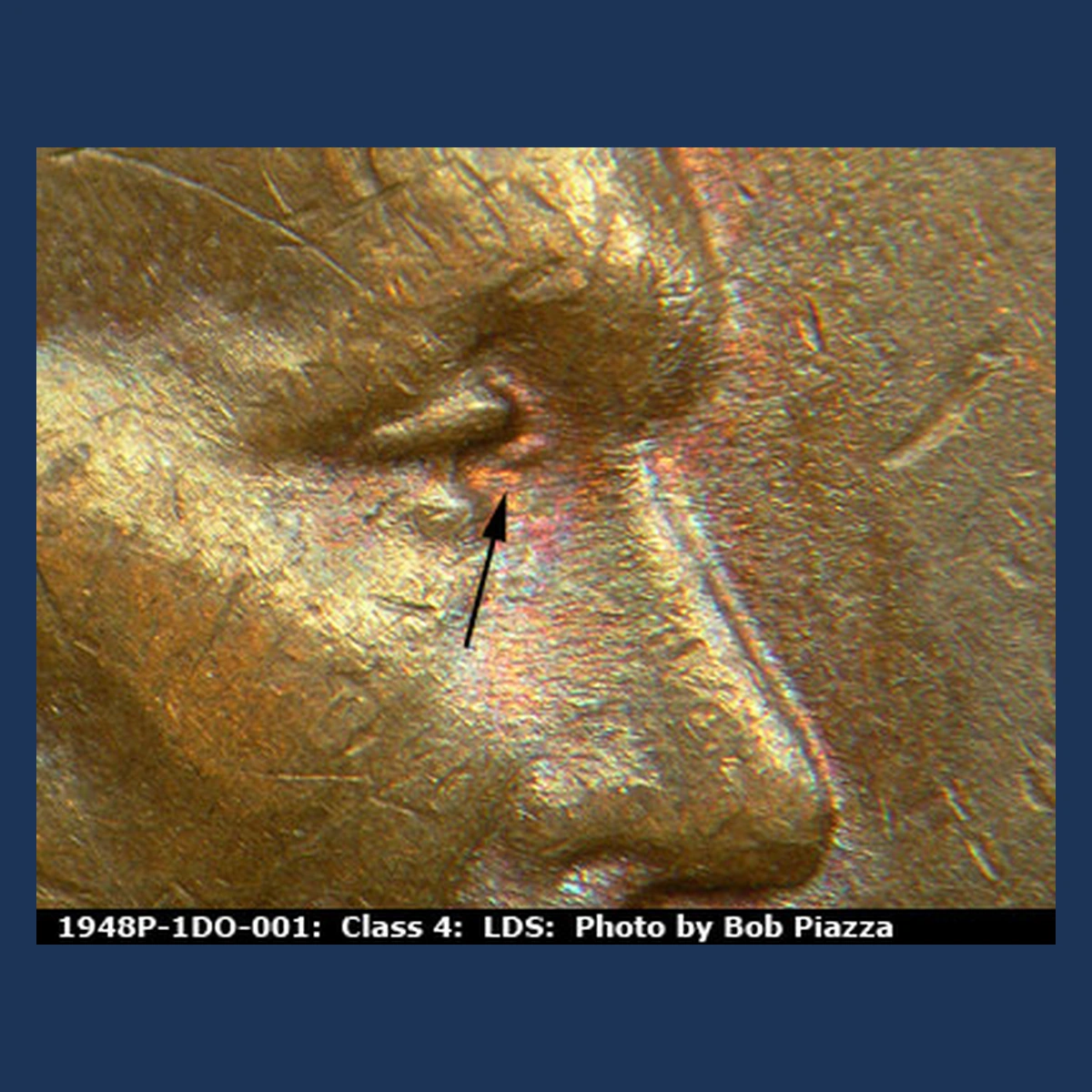
The first T in TRUST can show an extra part of its vertical stroke on a 1948-S variety. That feature comes from a repeated design in a die, the steel tool used to stamp coins.
Other reports describe an extra eyelid on Philadelphia cents and doubled LIBERTY on Denver pieces. Back-side doubling is also reported.
These are different places to check. A photograph of the San Francisco T does not prove a Denver or Philadelphia variety.
The effect repeats in the tool’s coins. It is different from slight movement that leaves flat shelves beside letters during striking.
Estimated Value
A sensible estimate for minor 1948 doubled features is $10–$500. Subtle examples belong toward the low end, with stronger matched varieties in better condition higher.
The range compares minor Wheat-cent doubled designs rather than treating every report as a major rarity. It is not a quoted 1948 auction result.
A seller’s general doubled-die label cannot establish the upper value. The coin needs a clear matching feature, a readable date, and a useful assessment of wear.
How to Identify
Find the mintmark before choosing a close-up picture. No letter means Philadelphia; D indicates Denver and S identifies San Francisco for this year.
On the cataloged S example, inspect the vertical stroke of the first T in TRUST. Look for an extra raised shape instead of a flat ledge.
Use the eyelid or LIBERTY only for the matching Philadelphia or Denver report. A back-side candidate needs its own back comparison, not a front feature borrowed from another coin.
With safe access, use a scale and calipers to check roughly 3.11 grams and 19.05 millimeters, then inspect the smooth edge. These are normal-size varieties.
The extra stroke at the correct letter and mint is the most useful close-up match.
6. 1948 Lincoln Penny Repunched Mintmark (Estimated Up to $500)
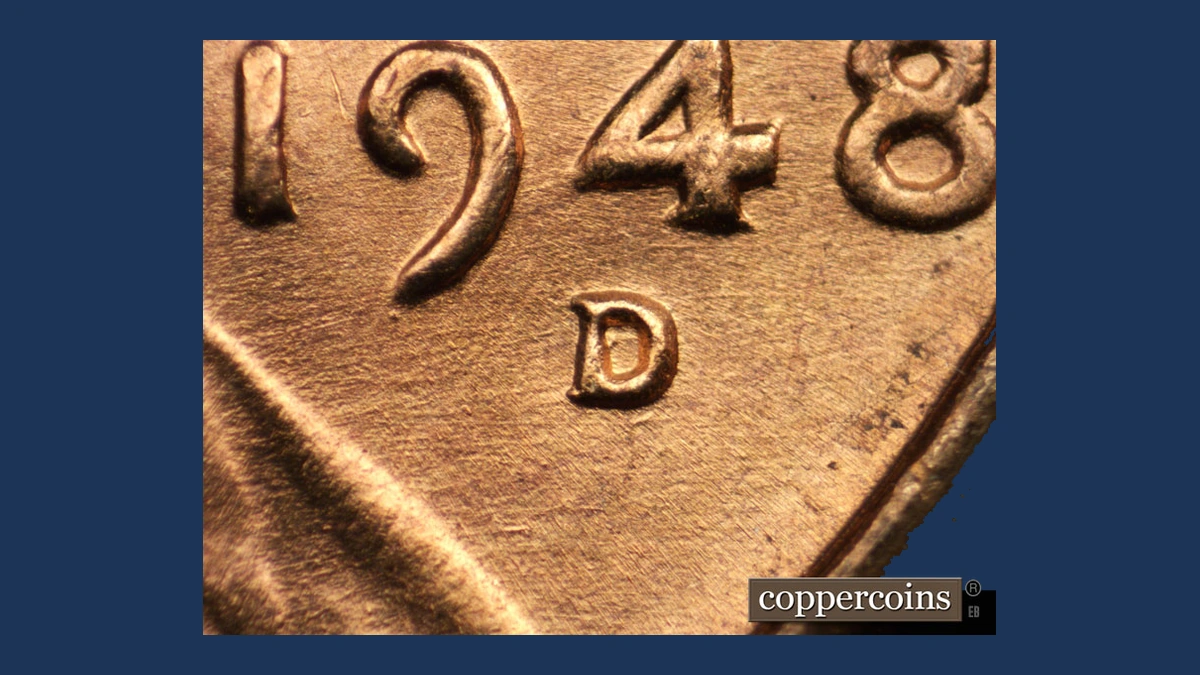
A tiny extra curve beside D or S can come from the way the mintmark was added. Workers punched the letter into the stamping tool by hand.
If one impression landed slightly out of place, another could leave part of the first showing. The finished pennies then carry that repeated letter shape.
San Francisco examples include reported extra S outlines in different directions. Denver repunching is reported separately.
One listed 1948-S coin combines a repunched S with doubled front detail. Its two features belong to the same coin and should not be treated as two separate specimens.
Estimated Value
Minor repunched mintmarks can be estimated around $5–$100. Stronger, closely matched examples in better condition may reach $100–$500.
These ranges compare similar Wheat-cent mintmark varieties. They do not claim a completed sale for the listed 1948-S combination or the reported Denver examples.
An extra curve that can be matched clearly is more useful than a thick-looking letter. When doubling elsewhere accompanies the mintmark, assess the entire coin instead of adding two full variety prices.
How to Identify
Enlarge the mintmark without sharpening the photograph so heavily that false outlines appear. A thick-looking letter alone does not establish repunching.
The coin should still have ordinary cent dimensions: about 3.11 grams and 19.05 millimeters, with a smooth edge. Record scale and caliper readings when accessible, leaving a sealed coin in its holder.
Return to the letter and trace its extra curve. A genuine earlier impression should resemble part of another D or S, not an isolated bump.
Choose comparison pictures with the same direction of extra metal. Check doubled front detail separately on a coin described with both features.
A second curve that fits an earlier letter outline is the close-up evidence to pursue.
7. 1948 Lincoln Penny Die Chips and Cuds (Estimated Up to $600)
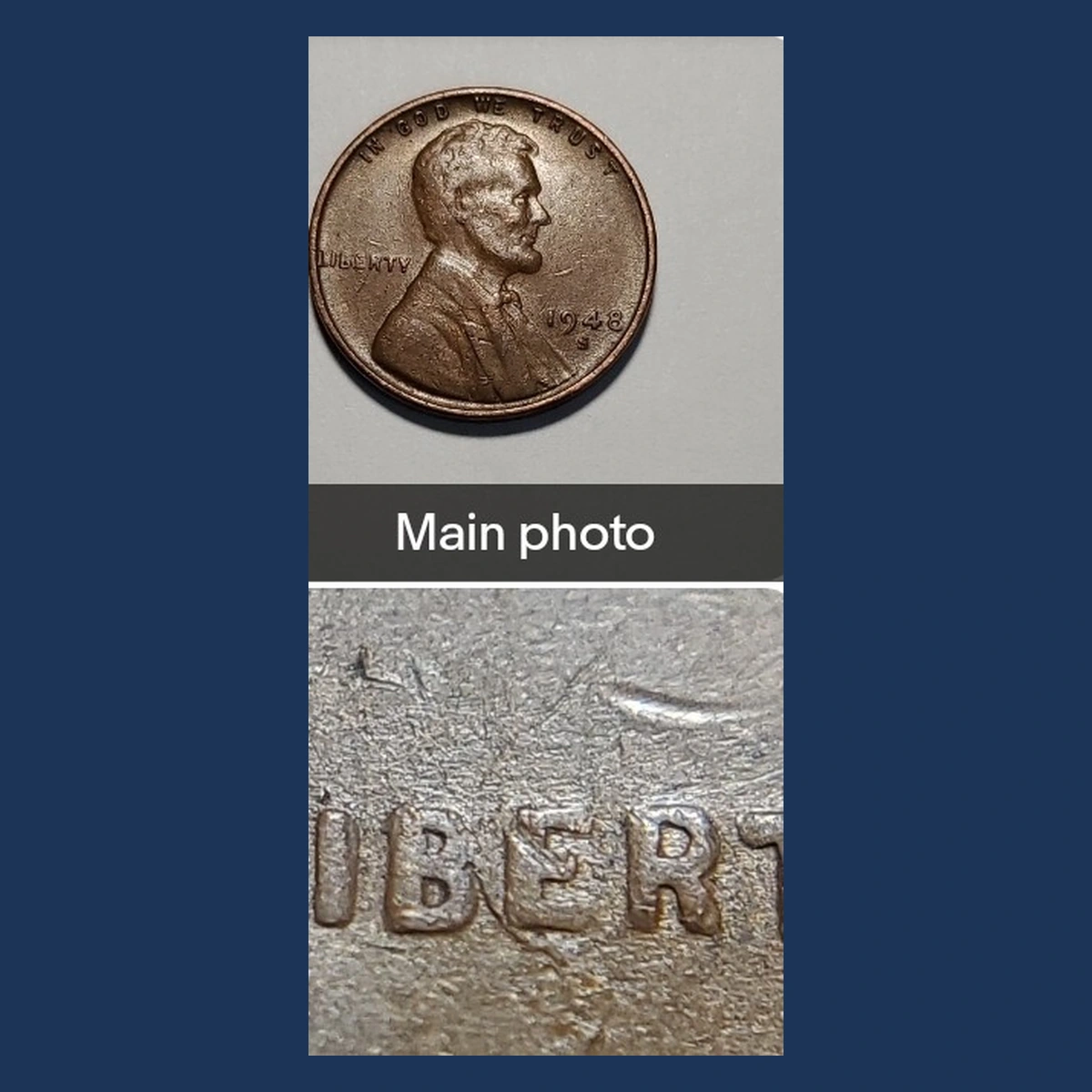
An extra raised stroke between B and E can make LIBERTY look misspelled. Collectors call this small tool-break feature a BIE.
A tiny piece breaks from the stamping tool, and coin metal fills the new gap. The extra shape is raised rather than scratched into the penny.
Reports for 1948 also include larger rim-connected breaks, called cuds. These replace part of the normal design with a raised patch extending to the border.
The two forms share tool breakage but look different. A BIE inside a word is not a cud at the rim.
Estimated Value
For a small BIE, estimate $2–$50. A confirmed larger rim-connected cud may fall around $50–$600, depending on size, clarity, and condition.
A 1977 cent with a cud brought $138 in May 2021. That later copper-alloy example has a Memorial back and is a comparison for the larger break type.
It is not a price for a tiny 1948 letter-space chip. Compare the area replaced by raised metal before choosing the appropriate range.
How to Identify
Added metal can imitate a raised Mint error. Before naming the patch, inspect it under side light for glue, solder, or a join.
A scale can compare the coin with 3.11 grams, while calipers check its width against 19.05 millimeters. Study the normally smooth edge and the opposite face for later squeezing.
Now locate the raised feature. If it sits inside LIBERTY, a BIE forms a bar between B and E rather than a separate stamped letter.
For a larger patch, trace its boundary with a 10× magnifier. A cud must connect to the rim, with normal detail missing from the raised area.
That border connection is the quick distinction between a cud and an interior chip.
8. 1948 Lincoln Penny Cracked Planchet (Estimated Up to $750)
This crack belongs to the coin’s metal, not the stamping tool. The documented 1948-S example has an opening at the edge near five o’clock.
A weakness in the blank can open under the pressure of striking. The result is a physical gap rather than a raised line copied from a cracked tool.
The coin appeared in an auction with an NGC MS66 description. That grade means unworn with few noticeable marks.
It was offered alongside a different 1947-S error. The other coin’s back-side struck-through feature should not be assigned to this 1948-S piece.
Estimated Value
An estimated $75–$750 covers authenticated 1948 cracked-blank cents, depending on the opening and the coin’s preservation. This range is for one coin.
The 2014 GreatCollections listing offered the 1948-S together with a 1947-S cent. Its $75 starting bid covered both pieces and was not the final sale price.
A sharp, original crack on a well-preserved coin merits a different comparison from a worn penny split or bent after leaving the Mint.
How to Identify
Do not flex the penny to test its crack. That could widen an original opening or turn an intact coin into a damaged one.
If safely accessible, weigh it against 3.11 grams and measure its width against 19.05 millimeters. A crack can leave nearly all the original metal present.
Place the front upright and examine the edge near five o’clock on the recorded S example. Photograph the same area from the back.
Use a 10× magnifier to look into the opening and along the otherwise smooth edge. Fresh saw cuts or bending marks suggest later damage.
The surrounding design should agree with a manufacturing split; an actual open seam distinguishes it from a raised line copied by a cracked tool.
9. 1948 Lincoln Penny Off-Center Strike (Estimated Up to $1,000)
Only a small part of the design reached one heavily misplaced Denver blank. Its strike was described as 85% off center, directed toward ten o’clock.
The 1948 date and D mintmark survived, giving the unusual shape a clear identity. ANACS graded this example AU55, meaning it has light wear.
Less extreme 1948 off-center strikes are also reported. Their mintmarks, directions, and amounts of missing design need to be checked individually.
An off-center strike leaves blank metal beside an incomplete image. It does not mean someone cut a section from an otherwise normal penny.
Estimated Value
The 85% off-center 1948-D example sold for $336 in January 2022. Its clear date helped identify it despite the small amount of design that remained.
Use an estimated $30–$1,000 for genuine 1948 off-center pennies across different shifts and condition. The upper end suits especially appealing, clearly dated pieces.
The $336 result is an individual sale, not a price for every extreme strike. Wear, cleaning, and damage to the blank area still affect what collectors pay.
How to Identify
The most useful part of the extreme Denver example is its surviving date and mintmark. Keep both visible in the full-coin photograph.
Now follow the edge of the struck area into the blank metal. The missing portion of the design should agree with the blank’s position on both faces.
A shifted front paired with a centered back may involve only one misaligned stamping tool. That needs a different explanation.
An intact blank normally starts near 3.11 grams and 19.05 millimeters across. Weigh it and record the altered outline with calipers, checking the smooth edge for cutting.
The matching blank area on both sides, together with the genuine 1948 date, makes the clearest initial check.
10. 1948 Lincoln Penny Overstruck by Franklin Half Dollar Dies (Estimated Up to $20,000)
Franklin’s portrait covers parts of an earlier Wheat cent on this remarkable error. The 1948 digits above his ear belong to that original penny.
The finished cent had entered a press fitted with half-dollar tools. It received their much larger design over the image already on its surface.
Only 19 remains visible from the half-dollar date. The cent’s complete year does not prove when the larger design was struck.
This is one coin with two denominations. It is different from a half dollar struck on an unused cent blank, which would lack an earlier penny design.
Estimated Value
The NGC MS64 Brown example realized $14,100 in January 2016 at Heritage Auctions. MS64 describes an unworn coin with some marks.
An estimated $10,000–$20,000 gives a working range for this exceptional authenticated combination. It is not a normal value for a 1948 penny.
The complete overlapping designs and their condition drive the comparison. A copper-colored half dollar or a coin pressed against another after minting does not share the same history.
How to Identify
Follow the two designs separately. Find the older cent date above Franklin’s ear, then distinguish it from the incomplete half-dollar date.
Use a 10× magnifier to look for surviving cent lettering beneath the larger design. Both sets of details should belong to the same continuous piece of metal.
The starting coin was a cent, normally about 3.11 grams and 19.05 millimeters wide. It should not be tested against a normal silver half dollar’s weight.
Record its weight and final outline when safely accessible, and inspect the edge for joining. Striking can change the outline, so do not demand an unchanged diameter.
A real earlier penny design beneath Franklin’s raised image is the essential distinction from an unused wrong blank.
Conclusion
Look closely at what the metal is doing: lifting, opening, spreading, or carrying a second design. Those differences separate several errors that can look similar in a small photograph.
Estimated values here range from $2 to $20,000. Most everyday finds belong far below the rare Franklin-over-cent example.
Save clear pictures of both sides and the edge. Preserve loose layers, keep certified coins sealed, and match the visible feature before using a price comparison.