1949 Penny Error List with Pictures

The shape of the 4 deserves a second look on some 1949-S pennies. A superb FS-101 doubled-design example sold for $3,487.50 at GreatCollections.
This 1949 penny error list explains that date feature alongside clipped edges, extra mintmark strokes, and displaced designs. Estimated values extend from $3–$4,000, with the small marks usually costing far less than the best-preserved examples.
Follow the visible clues below to decide which part of your penny needs closer inspection.
1. 1949 Lincoln Penny BIE Chip (Estimated Up to $50)
An extra upright shape can turn LIBERTY into what looks like LIBIERTY. The added bar sits in the gap between B and E.
It forms when a small piece breaks from the die, the steel stamping tool. Copper enters the new opening and becomes raised metal on the coin.
A 1949-S repunched-mintmark tool is documented with this chip after it had been used for some time. Other 1949 BIE reports do not necessarily come from that same tool.
The location gives the feature its nickname. The bar’s exact size and shape can differ among examples.
Estimated Value
An estimated $3–$50 suits identified BIE chips, with small worn examples at the affordable end. A strong bar on a clean, unworn penny is easier to display and can bring more.
This range compares similar wheat-cent chips rather than assigning a sale to the specific 1949-S tool. A repunched mintmark on the same coin may add interest.
The combined price still depends on the coin’s complete appearance.
How to Identify
Light the letters from the side so the gap between B and E casts a small shadow. A 10× magnifier will help show whether the bar rises naturally from the surrounding copper.
A scratch cuts into the surface, while dirt can sit loosely against a letter. Do not scrape the gap to test it.
Check a loose coin on a digital scale and with calipers against 3.11 grams and about 19.05 millimeters. A tiny tool chip should not produce a large change in either measurement.
An S below the date identifies San Francisco, but it does not prove a particular BIE tool. The useful starting feature is the raised bar joining the normal letter-space surface.
2. 1949 Lincoln Penny Enlarged Mintmark Report (Estimated Up to $75)
A mintmark that looks unusually large can catch the eye before any fine detail does. A year guide reports enlarged mintmarks on 1949 pennies, without fixing the report to D or S.
The visible claim is a larger-looking letter. It does not establish that a punch intended for another denomination was used.
Normal punch differences, worn tools, and later damage can all change how large a mintmark appears. They need to be separated before the feature receives an explanation.
The surrounding surface is useful because a squeezed or altered letter may show disturbed copper nearby.
Estimated Value
For a larger mintmark confirmed to result from an unusual mint-made tool feature, use an estimated $5–$75. This comparison range follows modest wheat-cent tool varieties, not rare wrong-punch records.
An unexplained large-looking letter alone does not establish that premium. A coin with ordinary punch differences or later damage should be priced for what it actually is.
Clear matched-scale photographs are more useful to a buyer than an unsupported “giant mintmark” label.
How to Identify
Photograph your coin beside a normal penny from the same year and mint at the same magnification. Different zoom settings can make identical letters look different in size.
Inspect the letter’s height and width with a calibrated image or measuring microscope. Calipers are better suited to checking the whole coin against its normal 19.05-millimeter diameter.
A digital scale should be near 3.11 grams on an intact coin. Use a 10× magnifier to look for flattened edges, pushed copper, or scratches around the letter.
Keep D and S comparisons separate because their shapes naturally differ. A genuinely wider letter should remain wider in a correctly scaled image, without evidence of later squeezing.
3. 1949-S Lincoln Penny Die Clash (Estimated Up to $200)
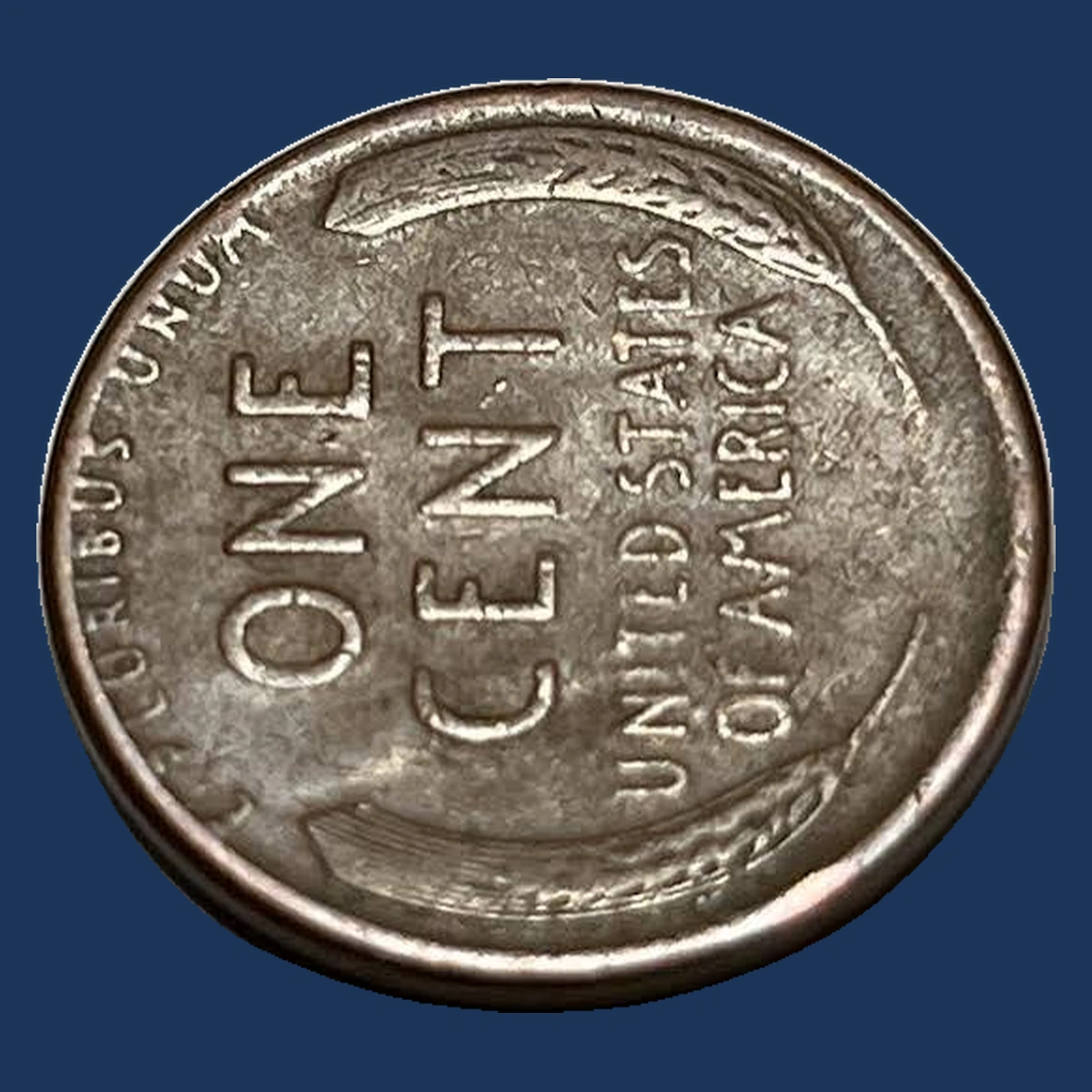
Faint lines in an open area can come from the design on the other side of the coin. This happens when the two stamping tools meet without a blank between them.
The contact damages the tools, which can pass traces of that contact onto later coins. Collectors call these die-clash marks.
Wexler records clashing at certain stages of several 1949-S repunched-mintmark tools. A coin may therefore show both an extra S stroke and a clash.
The line pattern depends on the particular tool and its condition. A throat line from one example should not be expected on every listed coin.
Estimated Value
Estimate $10–$200 for a clearly identified clash on a 1949-S wheat cent. A faint trace may add only a small amount, while obvious recognizable design transfer attracts more attention.
This is a comparison estimate for wheat-cent clashes. The repunched mintmark and coin condition can influence the final amount without making every clash equally valuable.
A close-up showing what the transferred line represents is useful when the mark is subtle.
How to Identify
Compare the suspicious line with the design on the opposite face. A clash should relate to something the other tool could have transferred, rather than an arbitrary scratch.
Use side lighting and a 10× magnifier to follow the line without cleaning the coin. Match the exact 1949-S example in the Wexler photographs, since tool wear can change the visible traces.
Clashing does not require lost metal, so a scale should stay near the usual 3.11 grams. Calipers should also show roughly the normal 19.05-millimeter diameter on an undamaged coin.
Do not identify the clash from the mintmark alone. Find a line whose shape and position agree with a feature from the opposite design.
4. 1949-S Lincoln Penny Curved Clip (Estimated Up to $300)
With the date upright, the missing curve on this San Francisco example lies near 6:30. It resembles a bite from the lower edge.
The incomplete outline began when a blank was punched from an area of metal that was already missing a section. The remaining blank then received the penny design.
NGC graded the recorded coin MS64 Brown, meaning no circulation wear with some marks and brown copper surfaces. The label describes a curved clip, not later cutting.
The nearby design and exposed edge help show when the metal went missing. A low weight alone cannot answer that question.
Estimated Value
The documented NGC MS64 Brown coin brought $124 in March 2026. It is a recent same-year example of what collectors paid for an identified curved clip.
Use an estimated $25–$300 range for comparable pieces. The size of the missing curve, surviving date, and overall surfaces affect demand.
A small worn clip and a dramatic unworn example need different prices, even though both share the same basic cause.
How to Identify
A scale will normally show less than the regular 3.11 grams when a genuine section of blank is missing. Record the actual weight rather than assigning the auction coin an unstated measurement.
Use calipers across the intact part of the coin, comparing it with the usual 19.05-millimeter diameter. Then turn to the missing curve with a 10× magnifier.
Look for filing lines or a saw-cut surface, and inspect the nearest design for natural fading or stretching. A weak rim opposite the clip can be helpful, but need not be obvious.
For this example, begin near 6:30 with the date upright. The most useful view shows how the struck design reaches the original missing curve.
5. 1949 Lincoln Penny Off-Center Strike (Estimated Up to $1,000)
Most of the blank remains without a design on the recorded 90% off-center Philadelphia penny. Only a small area reached the stamping tools.
A separate example was struck 50% off center toward 12 o’clock. It loses the upper motto and much of UNITED STATES OF AMERICA beyond the blank.
The two coins show different amounts of displacement and should not share one percentage label. Their grades differ too.
The 90% coin is NGC MS66 Red and Brown, with very little marking and mixed copper color. The 50% piece is MS63 Brown, an unworn coin with more noticeable marks.
Estimated Value
The NGC MS66 Red and Brown 90% off-center coin sold for $630 in July 2021. Its preservation helps explain why it can cost more than a modestly off-center worn cent.
Estimate $40–$1,000 across identified 1949 examples. A readable date and an appealing balance of design and blank area are valuable to collectors.
Compare the actual surviving design rather than treating the offset percentage as a simple price multiplier.
How to Identify
Check the date first on an extreme example, because very little design may survive. A holder’s description and matching photographs help when the visible area is small.
Examine both faces with a 10× magnifier, noting where the design ends and untouched blank copper begins. Ordinary wear cannot create that division.
On the 50% example, the upward displacement explains the missing upper lettering. Do not transfer that direction to the separate 90% coin.
Use a digital scale to compare with 3.11 grams if the blank is complete. Calipers can record the uneven outline against a normal 19.05-millimeter cent.
The clear dividing edge between struck design and untouched blank is the feature to follow around both faces.
6. 1949 Lincoln Penny Double Strike Report (Estimated Up to $1,500)
A second blow from the press can put another Lincoln portrait or date over the first. If the coin moves between blows, the designs may sit at different angles or positions.
A 1949 year guide reports double strikes without identifying one specific mint or complete example. The report supports checking this possibility, not assigning a precise offset to every doubled-looking coin.
An object blocking one face can make the repeat clearer on only the other side. Both faces do not have to preserve complete second designs.
This differs from a doubled tool, which repeats its own fixed design flaw.
Estimated Value
For a professionally identified copper wheat-cent double strike, use an estimated $100–$1,500 range. Strongly separated images with a readable year generally attract more interest than a small shift.
This is a comparison estimate for the reported 1949 category, not a sale result for an unnamed coin. Wear, damage, and how much of each blow remains visible can change the price.
A second recognizable date or portrait can make the error easier to sell.
How to Identify
Search for two positions of a major design feature, not just a thin extra edge beside one letter. A second portrait outline or displaced date can show movement between blows.
Take sharp photographs of both faces and inspect the overlaps with a 10× magnifier. Later pressure between two coins often produces reversed, sunken details rather than a normal second struck design.
A complete copper blank should remain near 3.11 grams on a digital scale. Check its outline with calipers against the regular 19.05-millimeter cent, allowing for spreading under repeated pressure.
One face may preserve less of the second blow. Identify a repeated feature whose position shows that the coin moved before it was struck again.
7. 1949 Lincoln Penny Repunched Mintmark (Estimated Up to $2,000)
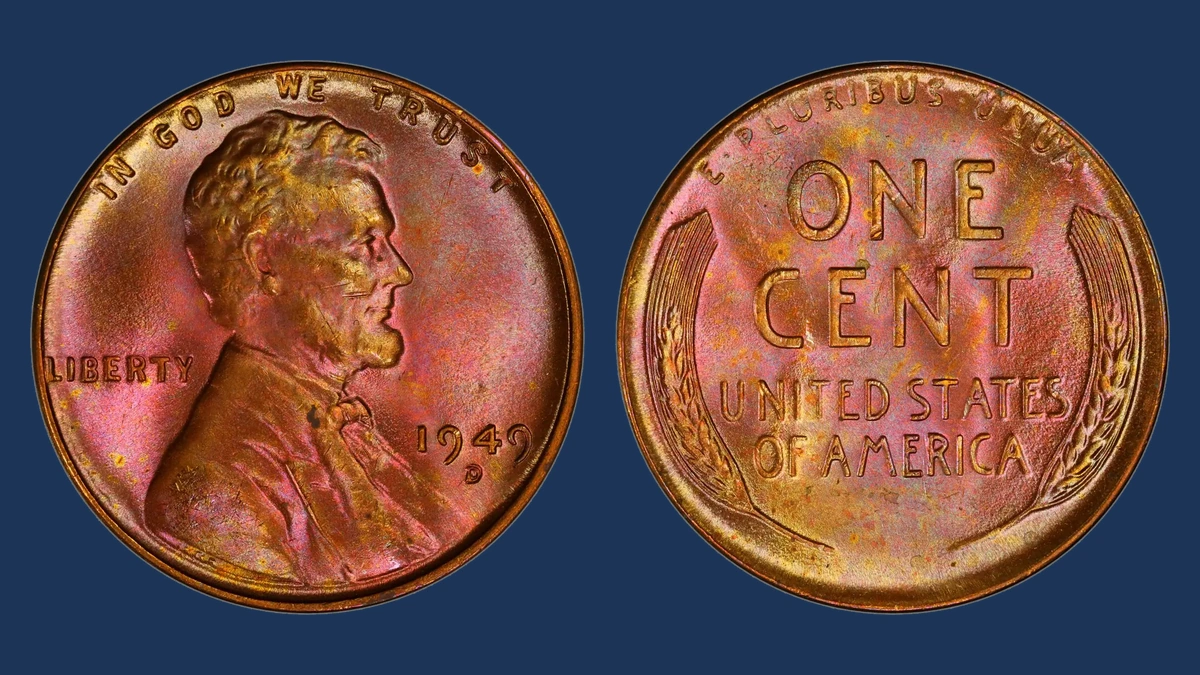
The Denver FS-501 can show more than a simple doubled D. Catalog descriptions identify three punch impressions, with an extra D toward the upper right and additional detail at the lower end.
Mintmarks were punched into the stamping tool separately at this time. A changed position or angle between blows left extra parts of the letter.
Other 1949-D and 1949-S patterns have their own directions, from small split ends to more obvious curved strokes. The number of catalog entries does not mean every pattern is dramatic.
A flat shelf or a damaged letter can imitate doubling without a second punch.
Estimated Value
PCGS lists a $949 auction result for a Denver FS-501 graded MS64 in June 2010. That is an individual sale, not the price of every extra D.
Estimate $5–$250 for modest identified repunched marks, with especially desirable certified examples extending toward $2,000. Strength, copper color, and preservation all matter.
San Francisco patterns need their own comparisons rather than automatically receiving the Denver variety’s premium.
How to Identify
The lower end of the mintmark is worth close attention on several Denver patterns. Split tips there can reveal another punch angle even when the rest of the D looks normal.
Use a 10× magnifier to trace those tips and any extra curved stroke. Compare with the appropriate catalog photograph, keeping the date upright so directions agree.
A scale and calipers should place an intact coin near 3.11 grams and 19.05 millimeters. Tool repunching does not create a smaller or lighter blank.
For FS-501, connect the upper-right D trace with the lower extra detail. Several separate pieces of the same letter provide a stronger match than one isolated bump.
8. 1949 Lincoln Penny Doubled Die (Estimated Up to $4,000)
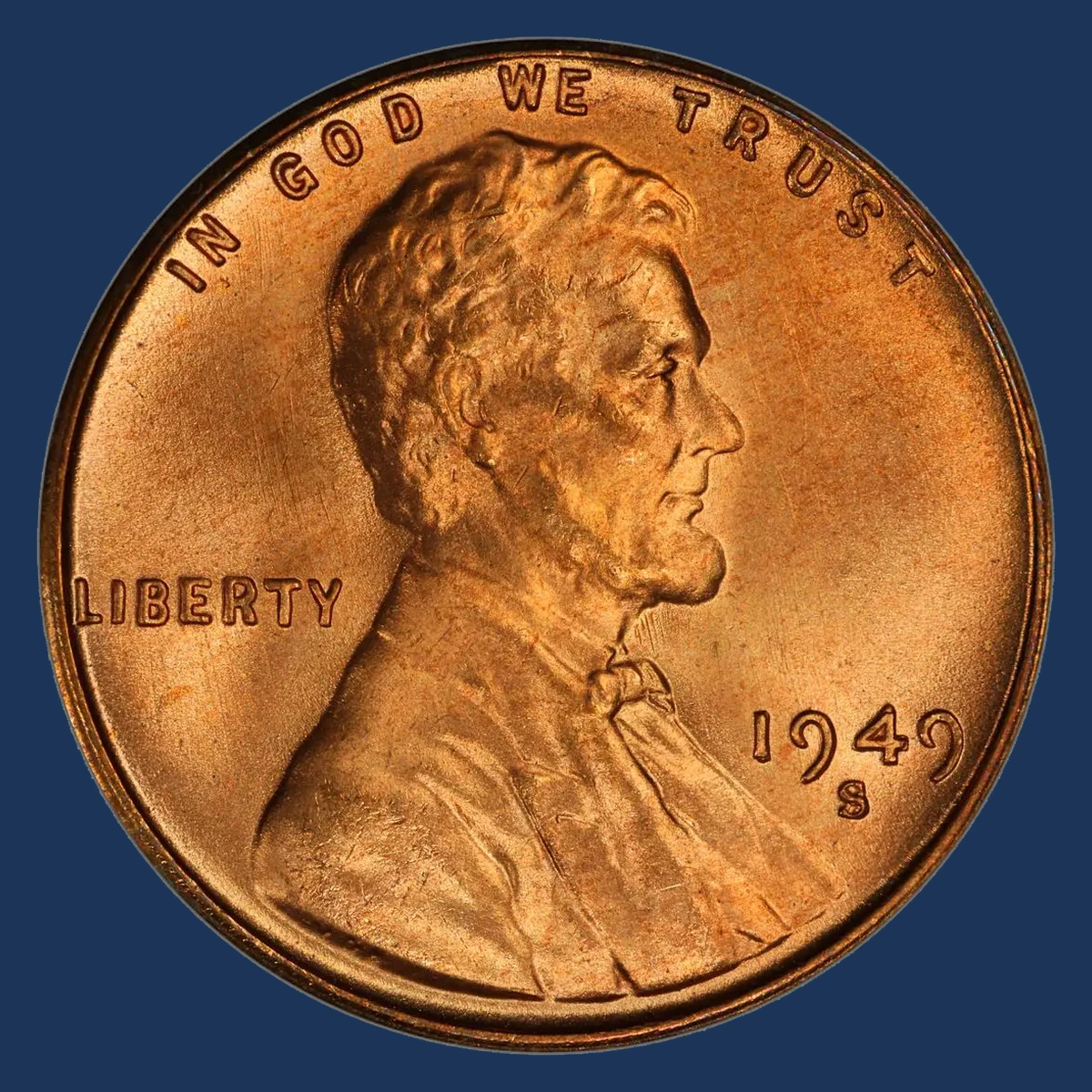
Two versions of the digit 4 overlap on some San Francisco doubled dies. A flatter top appears with traces of a pointed form beneath it.
The FS-101 is one such pattern, with doubling around 194 in the date. Other San Francisco tools can affect LIBERTY or TRUST.
Philadelphia and Denver front varieties include extra eyelids or strokes around the 4. A separate Denver reverse variety doubles PLURIBUS above ONE CENT.
Each pattern repeats a design flaw in its stamping tool. All are ordinary-strike pennies, since no specially made proof collector cents were issued in 1949.
Estimated Value
A PCGS MS67+ Red FS-101 brought $3,487.50 at GreatCollections, reflecting exceptional preservation and copper color. A PCGS MS65 Red example sold for $188 at Heritage in August 2017.
Estimate $25–$4,000 for FS-101 across condition levels. Minor eyelid, letter, or reverse varieties use a separate $5–$150 estimate.
The auction archive shows why a top-grade sale should not set the value of every doubled date.
How to Identify
Compare the date’s 4 with a normal coin under a 10× magnifier. On the San Francisco date varieties, look for the overlapping top shapes rather than general blur.
The mintmark position helps separate closely related San Francisco examples. Use the CopperCoins photographs instead of identifying FS-101 from the date alone.
For Philadelphia or Denver eye varieties, inspect the extra eyelid below or beside the main one. A scale and calipers can check the ordinary 3.11-gram, 19.05-millimeter copper coin without establishing the variety.
For the Denver reverse variety, turn to PLURIBUS in the small upper motto. Compare several extra letter edges instead of treating general blur as doubling.
Keep graded coins in their holders. Match the doubled 4 and the S position together before assigning the valuable FS-101 name.
Conclusion
For 1949 pennies, the date and mintmark often reward a careful look before the larger design does. Raised bars, curved gaps, and blank areas tell other stories.
The estimated $3–$4,000 range spans small affordable features and exceptional certified coins. Use a matching mint and error pattern when comparing prices.
Photograph both faces, keep the surface untouched, and let the actual shape guide your next check.