1953 Penny Error List with Pictures

A second D beside the mintmark helped one superb 1953-D penny bring $3,525 in January 2020. Its unusually fine condition was a big part of that price.
For most collectors, this 1953 penny error list begins with smaller purchases. Estimated values across the listed errors run from $5–$5,000, including doubled designs, cloth impressions, and coins made on foreign blanks.
Use the pictures and checks below to separate a small collectible feature from an ordinary mark.
1. 1953-D Lincoln Penny Curved Clip (Estimated Up to $200)
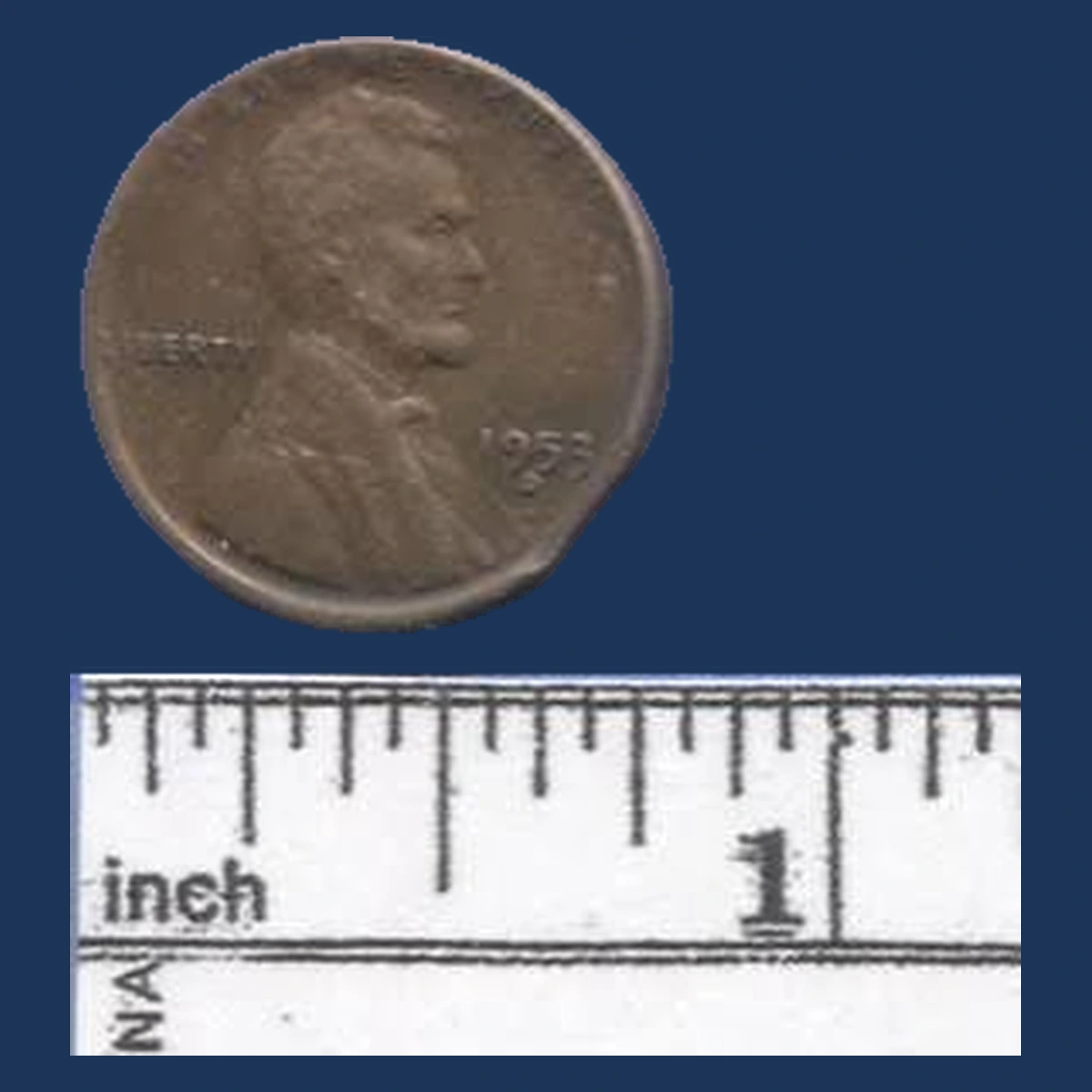
The curved gap in this penny begins with the metal blank, before any design is stamped onto it. The blank-cutting machine can overlap an area where another blank has already been removed.
A crescent-shaped section is then missing from the new piece. Striking can soften nearby letters as metal moves toward that gap.
The documented 1953-D example weighs 2.68 grams and was graded ANACS MS60 Brown. That means no circulation wear, but noticeable marks and a brown copper surface.
The lower weight supports missing metal. It cannot, by itself, distinguish a genuine clip from a later cut.
Estimated Value
The 2.68-gram ANACS MS60 Brown coin sold for $51 in March 2022. It gives a useful example of an affordable, clearly identified clipped wheat cent.
An estimated $20–$200 covers different clip sizes and states of preservation. Large, natural-looking gaps with readable dates can attract stronger interest.
Scratches or an altered edge can lower the value even when part of the original mint error remains visible.
How to Identify
Compare the missing curve with the rim on the opposite side. A weak opposite rim can help support a clip, although not every genuine example shows it clearly.
Inspect the gap through a 10× magnifier. Saw marks, filing lines, or a sharp cut through completed lettering suggest later damage.
Weigh the coin using a scale that reads hundredths of a gram. The documented 2.68 grams is below the ordinary 3.11-gram standard, but other clips lose different amounts.
Calipers can check an intact span against the normal 19.05-millimeter diameter. Avoid pressing into the missing edge.
Follow the nearest letters toward the curve and look for strike flow that ends naturally at the gap.
2. 1953-D Lincoln Penny Broadstrike (Estimated Up to $250)
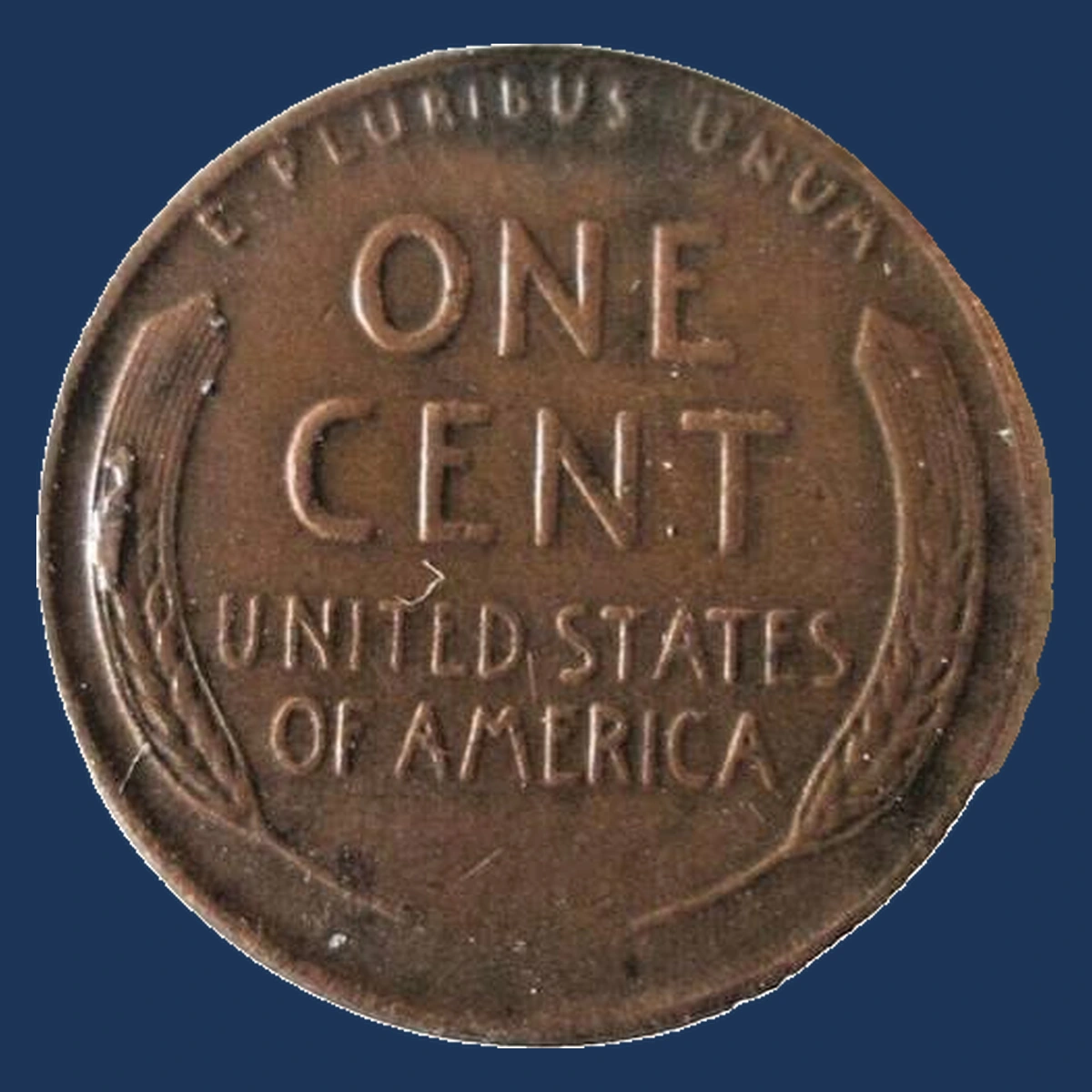
A wide penny can result when the metal spreads beyond the ring that normally controls its diameter. That ring is called the collar.
Without proper sideways support, the blank expands during the strike. Collectors call the result a broadstrike when the design remains complete.
A 1953-D example is recorded in an ICG MS61 Red holder. Its grade describes an unworn coin with marks, while Red refers to the remaining original copper color.
The broad outline is the mint error. A penny hammered flat afterward can also become wide, but its design and surface respond differently.
Estimated Value
Heritage sold the ICG MS61 Red example for $48 in January 2009. Use that older result as a starting point rather than a fixed current price.
Estimate $30–$250 for identified 1953-D broadstrikes. Obvious outward spread, readable lettering, and attractive surfaces can support the higher end.
A lightly expanded, heavily marked coin belongs nearer the lower end, even when its holder correctly describes the mint error.
How to Identify
Calipers can reveal the extra width even before you study the design. Measure several directions against a normal 19.05-millimeter cent because the outline may be uneven.
The original metal should remain, so a digital scale will usually read near the normal 3.11 grams. Extra width does not mean that the press added copper.
Now follow the lettering all the way around both faces with a 10× magnifier. Missing letters beside a blank crescent may indicate an off-center strike instead.
Look across Lincoln and the wheat for flattening, blows, or scratches from later hammering. Complete lettering within a naturally spread edge is the important combination for a broadstrike.
3. 1953 Lincoln Penny Tapered Blank (Estimated Up to $300)
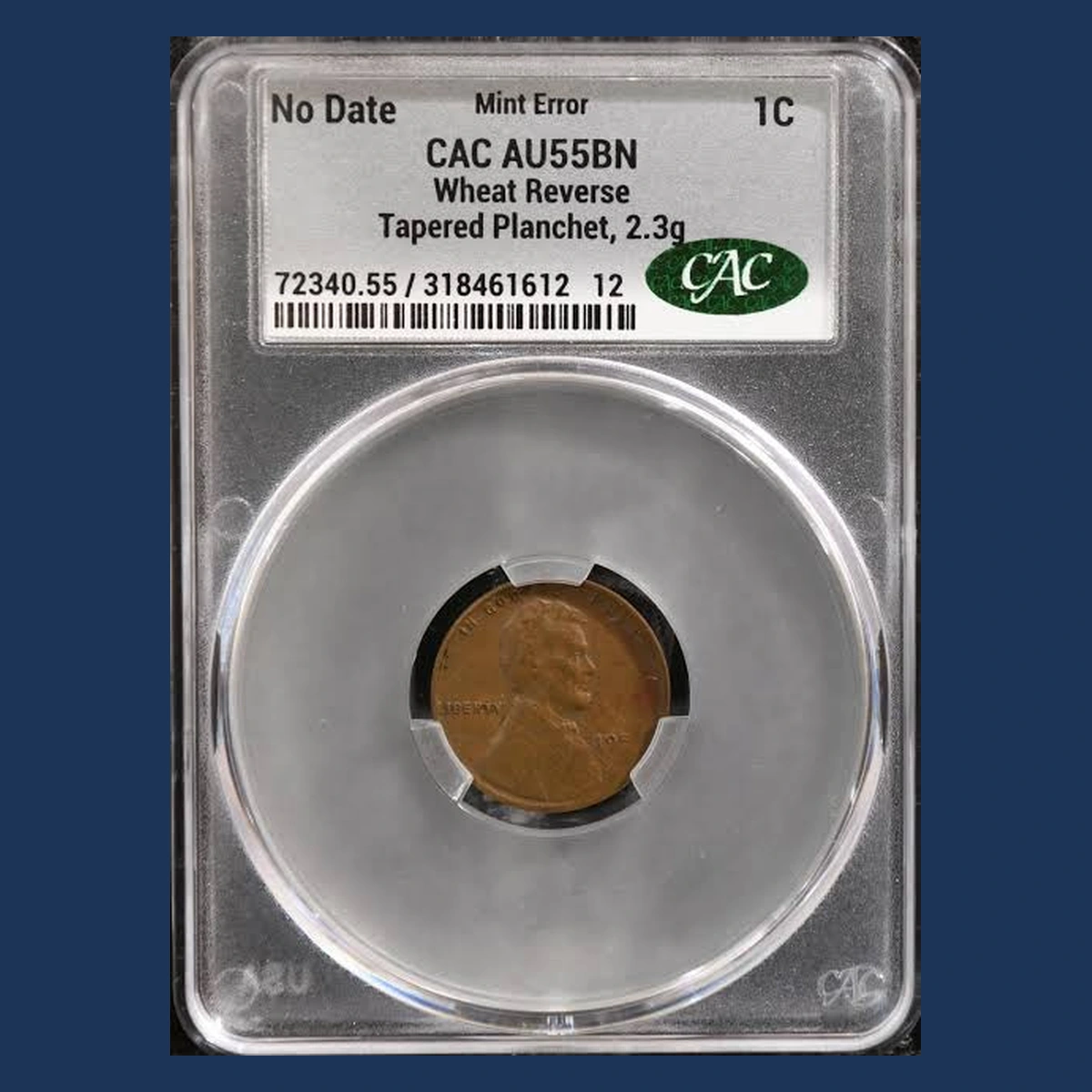
One side of a tapered blank is thinner than the other. The stamping tools may therefore leave a weaker design where less metal lies between them.
That gradual thickness change is the important feature. An oval outline alone does not identify the error.
A 1953 year article reports a tapered-blank example described as XF40, a grade indicating moderate wear with many details remaining. Its mint is not specified.
A true taper begins in the metal before the coin is struck. Grinding a finished penny can also make it thin, but removes or damages the surface.
Estimated Value
For an identified tapered copper blank, allow an estimated $40–$300. A strong thickness change that explains an obvious weak area is easier for buyers to appreciate.
This estimate uses comparable Lincoln cent tapered blanks. The reported XF40 description is not a confirmed sale price or a reason to assign the coin to Denver.
Wear can hide the original weak strike, while grinding marks can make a superficially similar coin worth much less.
How to Identify
A side view helps more than a picture taken straight down onto the date. Keep the coin level and compare the thickness at several points with calipers.
The thickness should change gradually toward the weakly struck area. Use a digital scale to compare its weight with the normal 3.11 grams, recording the actual reading.
A normal penny measures about 19.05 millimeters across, but diameter does not establish a taper. Examine both faces with a 10× magnifier for abrasive lines and rims ground down after striking.
Heavy circulation wear can hide detail without having anything to do with the original blank. Match a naturally thin edge with weak detail beside it and no grinding marks.
4. 1953 Lincoln Penny Off-Center Strike (Estimated Up to $600)
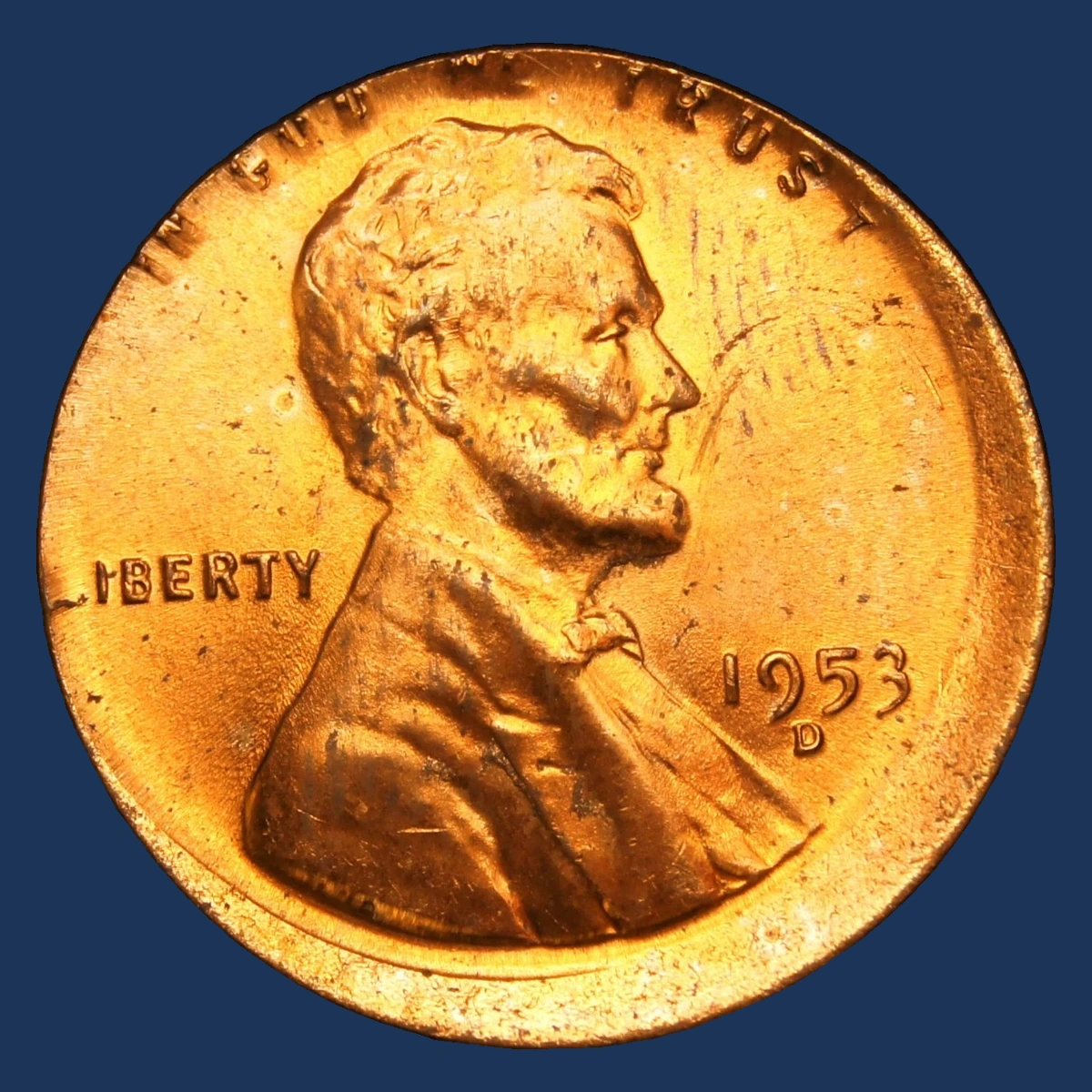
On the Philadelphia example, the date survives even though LIBERTY and IN GOD WE TRUST fall completely beyond the blank. The coin was struck about 55% off center toward 10 o’clock.
NGC graded it MS64 Brown, describing an unworn coin with some marks and brown surfaces. A large blank area remains beside the design.
A separate Denver example has both an off-center strike and later damage. Its ANACS description recognizes both conditions.
Damage does not erase a genuine mint error. It does mean that every unusual mark on that coin should not be blamed on the press.
Estimated Value
Estimate $30–$600 across worn, damaged, and attractive unworn 1953 off-center cents. A clear full date is especially helpful when so much of the design is missing.
For a recent same-series comparison, separate 1957-D MS63 off-center cents brought $139 and $234 in March 2025. Their offsets were 85% and 65%, respectively.
Those different-year sales show that a larger percentage does not automatically bring a larger price.
How to Identify
The Philadelphia example makes the relationship easy to see: a complete 1953 sits beside a largely unstruck area. Match the surviving design on both faces.
Examine the transition from design to blank copper with a 10× magnifier. Cutting or grinding a finished coin removes metal but cannot create untouched blank metal.
A scale should usually remain close to the normal 3.11 grams when the entire original blank survives. Calipers record its stretched outline, using 19.05 millimeters as the normal-cent comparison.
For the Denver coin, separate later scratches and other damage from the displaced strike. Do not copy the Philadelphia percentage or direction onto it.
Look for the readable date beside a smooth blank area and matching displacement on the other face.
5. 1953-D Lincoln Penny Struck through Cloth or a Retained Staple (Estimated Up to $1,200)
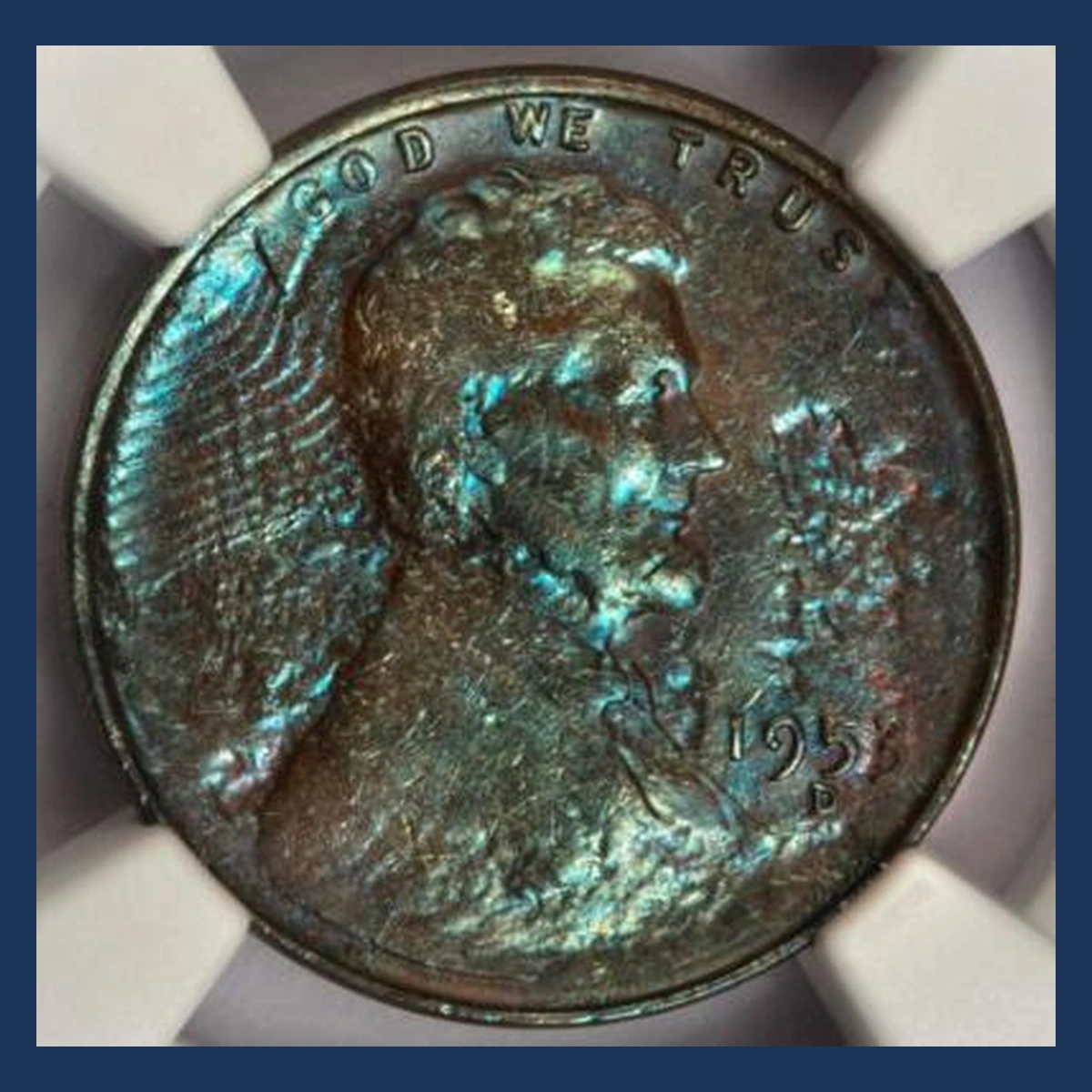
A cloth weave can leave a patterned depression when fabric gets between a blank and the stamping tool. The fabric blocks part of the normal design during the strike.
A 1953-D NGC MS63 example is reported with this cloth effect. The report does not establish that cloth remains on the coin.
A different Denver cent has a staple pressed into its reverse and still attached. NGC graded that piece AU53 Brown, indicating light wear.
Both belong to the struck-through family: something interrupted contact with the tool. One preserves a texture, while the other preserves the object itself.
Estimated Value
The retained-staple coin sold for $446.50 in January 2015. A separate 1961 staple error, NGC MS62 Brown, brought $576 in June 2023.
Use estimated ranges of $100–$800 for clear cloth impressions and $250–$1,200 for an intact retained staple. These ranges reflect different kinds of objects and visibility.
An untouched attachment can be important to value because removing it destroys part of what collectors want to see.
How to Identify
For the cloth report, use a 10× magnifier to find repeated crossing threads within the depressed area. Random scratches or corrosion usually lack a regular woven pattern.
Inspect both sides because the report does not name the affected face. Do not assume a loose fiber now on the coin caused the original impression.
For the staple, examine the reverse without moving the object. Look at how struck metal meets its edges rather than testing whether it can be pulled free.
A normal cent is 3.11 grams and 19.05 millimeters. Use a scale and calipers gently on loose pieces, or consult measurements for sealed coins.
The strongest clue is either a clear weave pressed into the surface or a staple trapped within the strike.
6. 1953 Lincoln Penny Doubled Die (Estimated Up to $2,500)
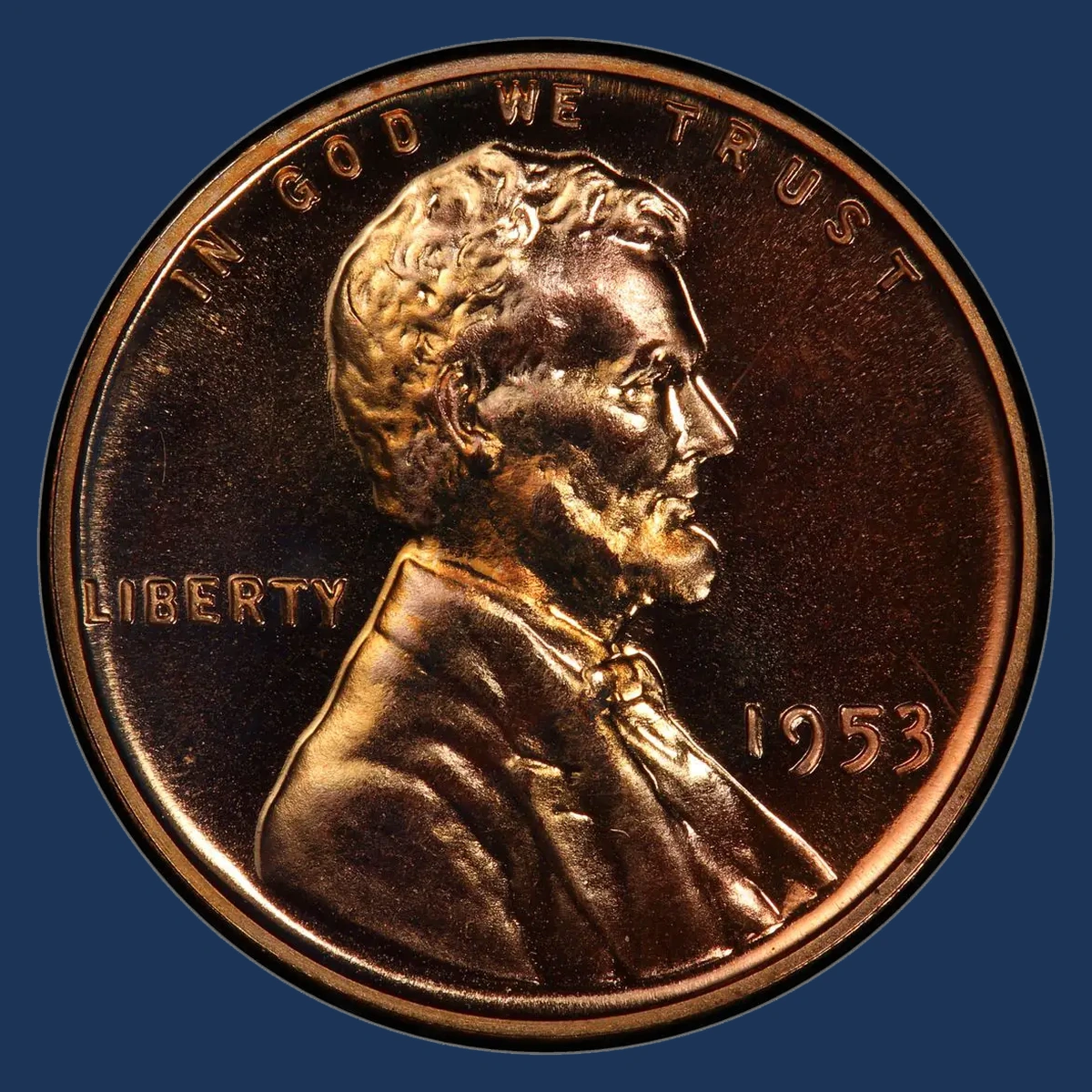
A doubled die carries extra design outlines before it stamps a penny. Some ordinary 1953 examples show another eyelid, while others have doubled lettering.
Proofs are specially made collector coins, with their own varieties. The Proof FS-101 shows doubling at 19 in the date, ERTY, and the eye.
A separate Proof back variety is strongest around the left Wheat ear and nearby motto. San Francisco ordinary back varieties have their own thickened lettering and Wheat details.
Philadelphia, Denver, and San Francisco front varieties also differ. A nearby catalog entry cannot supply missing identification details for another variety.
Estimated Value
A Proof FS-101 graded PCGS PR68 Red sold for $701.50 in April 2026. Estimate $75–$2,500 for identified examples of that front variety, depending on preservation.
The separate Proof back variety has an estimated $40–$400 range. Minor ordinary front varieties are roughly $5–$200, and modest San Francisco back varieties about $10–$150.
Keep each comparison with its proper mint and finish. A small eyelid feature should not inherit the Proof FS-101 price.
How to Identify
Choose the mint and finish before comparing tiny features. A shiny cleaned penny is not necessarily a Proof.
Use a 10× magnifier on 19 and ERTY for Proof FS-101. For the separate Proof back variety, inspect the left Wheat ear and motto, with a supporting vertical line above the second U in PLURIBUS.
Ordinary Denver front varieties can affect IBER or TRUST; several Philadelphia and San Francisco examples show another eyelid. Compare complete patterns in the Wexler photographs, including the ordinary San Francisco back varieties.
Flat shelves from movement during striking are a different effect. Use a scale and calipers against 3.11 g and 19.05 mm, and inspect the plain edge for alteration.
Keep graded Proofs sealed, and do not combine the markers of different tools into one supposed variety.
7. 1953 Lincoln Penny on a Silver Dime Blank (Estimated Up to $4,000)
The wrong blank can turn a wheat penny silver-colored and leave too little room for its design. A silver dime blank is smaller than the copper blank intended for a cent.
Examples exist from Philadelphia, Denver, and San Francisco. Their surviving letters and rim shapes differ.
The Denver PCGS AU58 coin shows a sharp date and mintmark, but only the bottom of IN GOD WE TRUST remains. Its stepped rim appears along the lower front and upper back.
Two thin test marks near 9 o’clock on that reverse are later damage. They are not part of the mint error.
Estimated Value
Two May 2022 sales provide useful comparisons: the Philadelphia PCGS AU55 example brought $1,080, and the Denver PCGS AU58 coin brought $1,560. Both grades describe lightly worn pieces.
An estimated $800–$4,000 covers identified silver-dime-blank cents across the three mints. Sharp dates and appealing surfaces support stronger prices.
The San Francisco example needs its own assessment rather than receiving the exact price paid for either of those coins.
How to Identify
The mintmark matters here. Check for D, S, or no letter below the date before choosing a photograph to compare.
Weigh a loose coin on a precise scale: the silver dime standard was 2.50 grams, versus 3.11 grams for the copper cent. These are standard weights, not individual measurements of all three auction coins.
Calipers can compare the reduced outline with a normal 19.05-millimeter penny. A 10× magnifier helps reveal silver plating over exposed copper at worn edges.
Also inspect both faces for an older dime design. Roosevelt or torch details would indicate an already struck dime, not an unused blank.
Check low weight and squeezed edge lettering together instead of trusting silver color alone.
8. 1953 Lincoln Penny Repunched Mintmark (Estimated Up to $4,000)
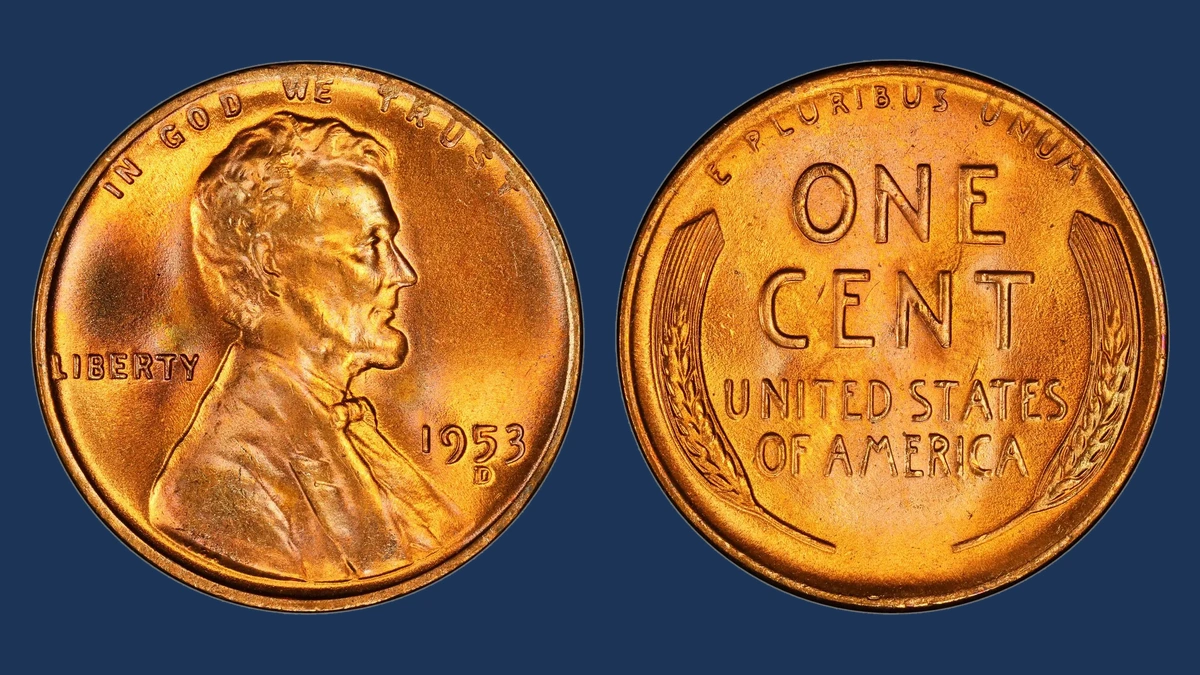
Some 1953 mintmarks have a small extra curve close to the main letter. One Denver pattern instead places a separate, tilted D southwest of the main mark, near Lincoln’s vest.
These differences began when a worker punched the mintmark into the tool more than once in different positions. The resulting coins repeat those positions.
The familiar Denver FS-501 shows an extra D toward the left. Other Denver and San Francisco examples point in different directions.
Two Denver doubled-eye patterns also share tools with repunched mintmarks. Their eye direction does not tell you which way the D was repunched.
Estimated Value
PCGS records a $3,525 sale for FS-501 in MS67 Red in January 2020. That unusually clean, unworn coin should not set expectations for a worn extra D.
More ordinary FS-501 examples in MS66 Red brought $149 and $420 in 2023. Estimate $5–$300 for typical identified repunched marks, with exceptional high-grade examples extending toward $4,000.
Both the particular mintmark pattern and overall preservation matter.
How to Identify
The wide southwest Denver example gives an unusual place to look: the front edge of Lincoln’s vest. Other repunched D or S shapes remain much closer to the main mintmark.
With the date upright, inspect the area using a 10× magnifier and compare the full shape with a matching catalog image. A raised lump is not enough to establish a second letter.
Weigh a loose coin on a digital scale and check its diameter with calipers against the normal 3.11 grams and 19.05 millimeters. Repunching the tool should not change those measurements.
Several varieties share a direction, so position alone cannot distinguish them. Trace the extra curved stroke until it forms part of a recognizable second mintmark.
9. 1953 Lincoln Penny on a Foreign Centavo Blank (Estimated Up to $5,000)
A blank intended for a foreign country can acquire Lincoln’s face if it reaches the cent press. Two different foreign-blank errors are recorded for 1953.
The Philadelphia example uses a brass Cuba centavo blank. Most of its design is centered, but the L of LIBERTY is missing and upper letters stretch toward the rim.
A separate Denver coin was identified as struck on an El Salvador centavo blank. ANACS graded it VF30, which means moderate circulation wear.
The countries identify different blanks. The brass description of the Cuba piece should not be copied onto the El Salvador example.
Estimated Value
The Cuba-blank cent, graded ANACS MS62, sold for $3,055 in September 2015. The El Salvador example brought $1,860 in July 2021 despite its VF30 wear.
Estimate $1,500–$5,000 for comparable identified foreign-blank pieces. Their appeal comes from the wrong blank as well as their condition.
An unusual tint alone cannot support those prices, and a normal penny should not acquire a foreign-country label from color.
How to Identify
For the Cuba piece, compare the missing L and stretched upper lettering with the auction photographs. The rest of the design is largely centered, so off-center appearance is not required.
Identify the Denver example separately. Its published description does not supply a measured weight or metal recipe to borrow for another coin.
Use a digital scale, calipers, and a 10× magnifier to record weight, size, and edge condition. Compare with a standard copper cent at 3.11 grams and 19.05 millimeters.
Metal testing and professional identification help distinguish a foreign blank from plating, chemical color, or an altered cent. Leave a graded coin in its holder.
Match the correct mint and reduced design before relying on the claimed foreign blank.
Conclusion
The mintmark, Lincoln’s eye, and the wheat ears are good places to begin a 1953 search. A misshapen or unusually colored coin needs an edge and weight check too.
Estimated values span $5–$5,000, with condition making a large difference even within the same error type. Keep proof coins separate from ordinary strikes when comparing prices.
For an attached object or unusual metal, preserve the surface and seek professional identification.