1966 Penny Error List with Pictures

An unused dime blank can become a penny with the wrong metal and too little room for its design. A 1966 example sold for $1,020 in July 2021.
The 1966 penny error list also includes thin split metal, missing edges, and a backward design struck over again. Estimated values run from $5–$5,000.
No mint letter is normal this year. Follow the visible feature below to see which checks matter for each kind of error.
1. 1966 Lincoln Penny Peeling Copper Alloy (Estimated Up to $250)
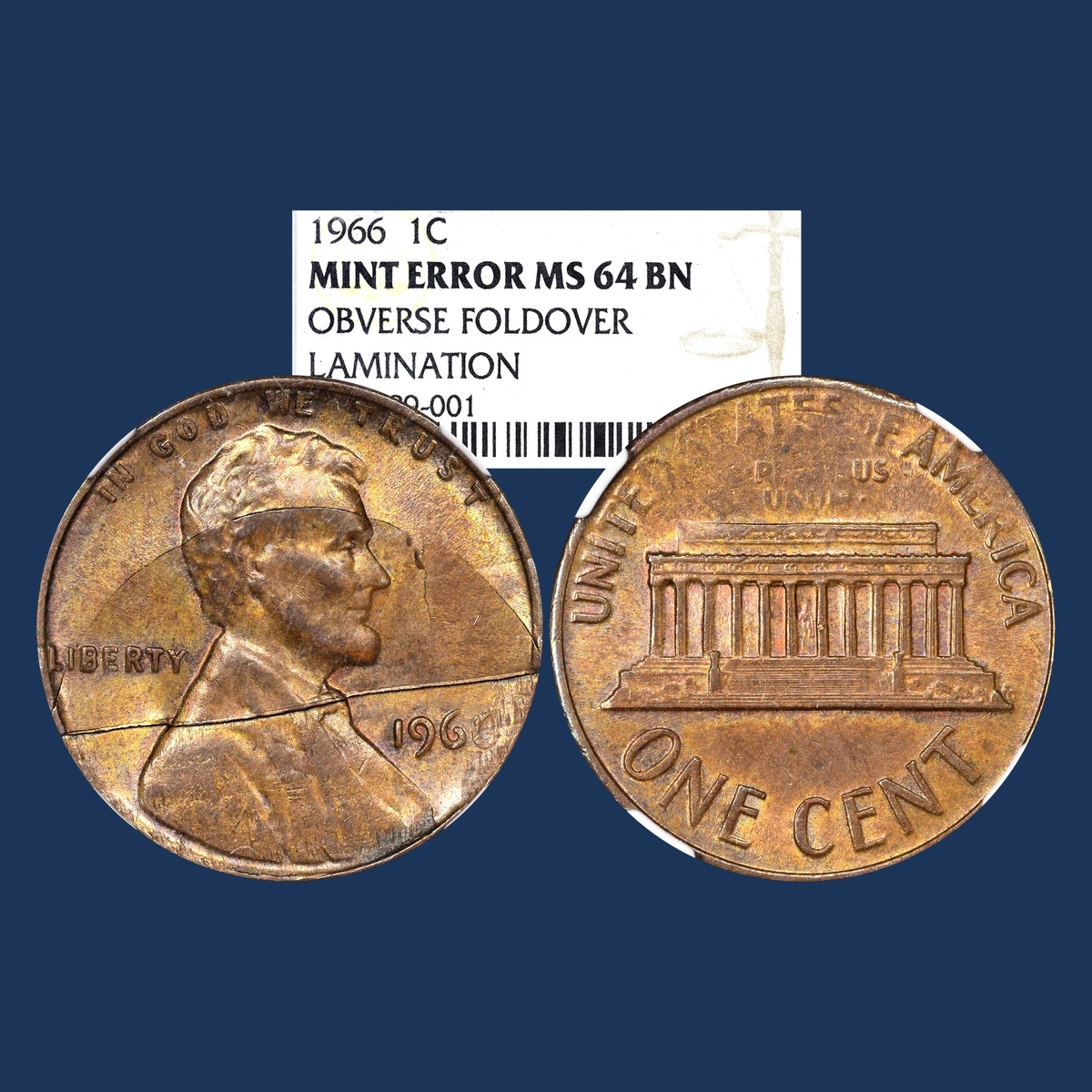
A thin piece of the penny’s surface can lift or peel away. The separation follows a weakness within the copper alloy rather than the outline of a stamped letter.
Collectors call this lamination. A 1966 auction example has the effect on its front, although its exact route needs comparison with the coin’s photograph.
A normal 1966 cent is copper alloy throughout. It does not have the thin copper coating and zinc center found on much later cents.
A rough patch therefore needs its own explanation. Scraping, corrosion, and a genuine separated layer can look alike in a distant picture.
Estimated Value
The NGC-graded 63 brown front-lamination example brought $61 in July 2021. Its grade describes an unworn coin with noticeable marks.
Estimate $5–$250 for genuine 1966 laminations of different sizes and visibility. A retained flap or clear boundary can make the original metal failure easier to understand.
The auction result belongs to that particular front-side example. A rough surface caused by corrosion has a different cause, while pulling off a loose layer can reduce the evidence and appeal.
How to Identify
If a flap remains attached, leave it as found. Bending it upward can break the connection that helps explain the original defect.
Use a 10× magnifier and low side light to follow the separation beneath the surface. Compare the exposed texture with scratches or scattered corrosion pits nearby.
A scale checks against the complete cent’s 3.11 g; attached metal may leave the weight nearly unchanged. Calipers can compare intact dimensions with 19.05 mm without pressing on the loose area.
Photograph the split on the front and any related boundary at the plain edge. The goal is to show a layer separating within the alloy, not merely a damaged spot.
2. 1966 Lincoln Penny Doubled Front or Back Design (Estimated Up to $300)
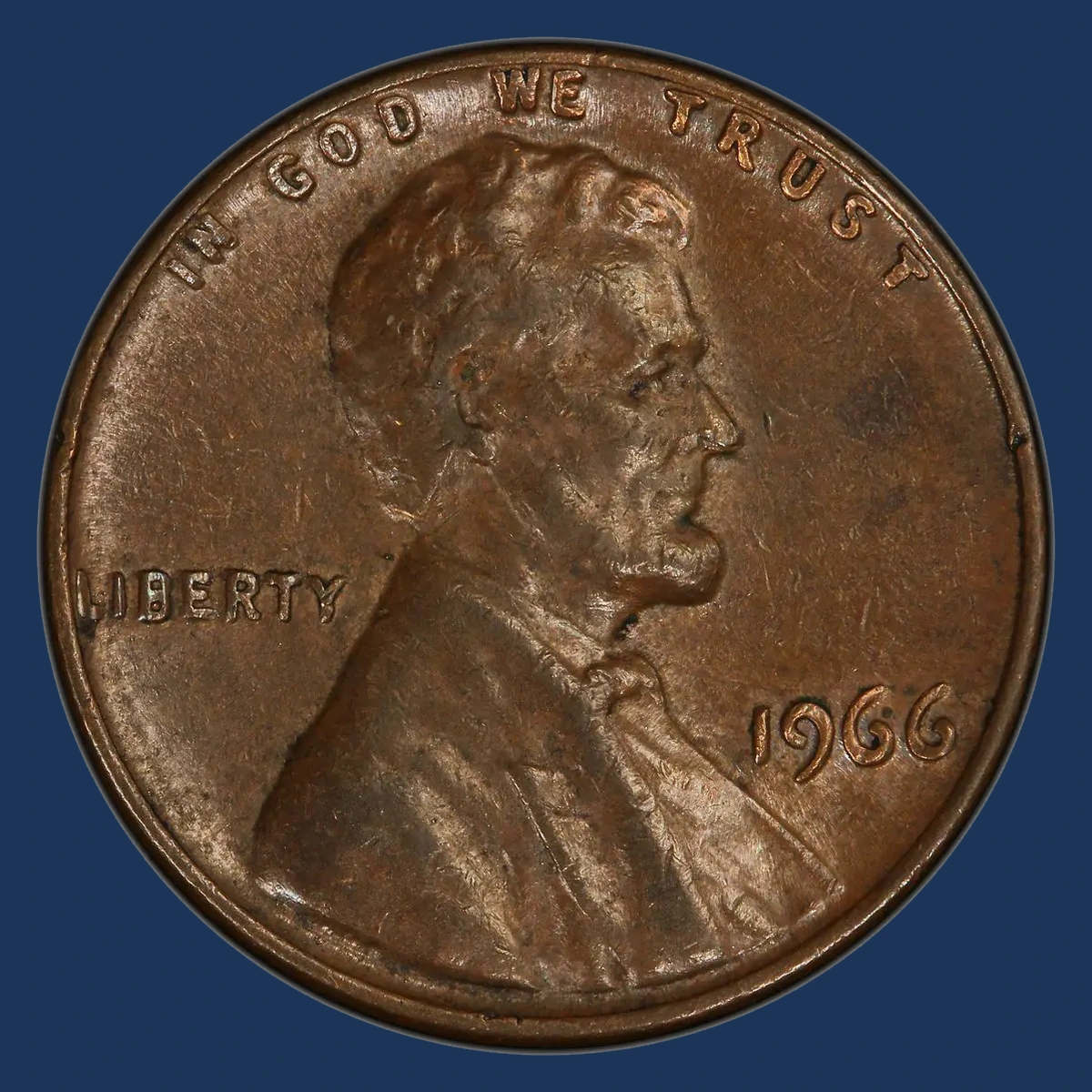
Two raised outlines can appear where a letter or digit should have one. A repeated design on the die, the steel stamping tool, can produce that effect on the coins it makes.
Reports for 1966 describe front doubling around the date and TRUST. Separate back reports concern ONE CENT and parts of the Memorial.
These reports do not assign examples to a tool or production finish. Special Mint Set coins were made for collectors, but a shiny surface alone does not establish that identity.
Flat shelves beside letters can have another cause. They do not automatically identify a doubled tool.
Estimated Value
For identified minor front or back varieties, estimate $5–$300. The actual repeated shape and its preservation are more useful than the general word doubled.
This range compares minor Memorial-cent doubled designs. It does not claim a recorded sale for an unnamed 1966 variety or assign the premium of a different year’s major doubled date.
Ordinary coins and Special Mint Set examples need comparisons with their own finish. A correct photographic match needs to come before a high grade or price.
How to Identify
Start with the affected word instead of assuming every 1966 doubled-looking cent is one variety. Inspect the date and TRUST for front candidates, or ONE CENT and the Memorial for back candidates.
A 10× magnifier can show whether the extra edge is rounded and raised. A low flat shelf beside a reduced letter suggests movement during striking instead.
Choose a comparison with the same production finish. Special Mint Set identity cannot be proved by the absence of a mint letter, which is normal for 1966.
Check a suspect basic coin with a scale and calipers against 3.11 g and 19.05 mm. Inspect its plain edge, then match the actual repeated design.
3. 1966 Lincoln Penny Curved, Straight, or Ragged Clip (Estimated Up to $350)
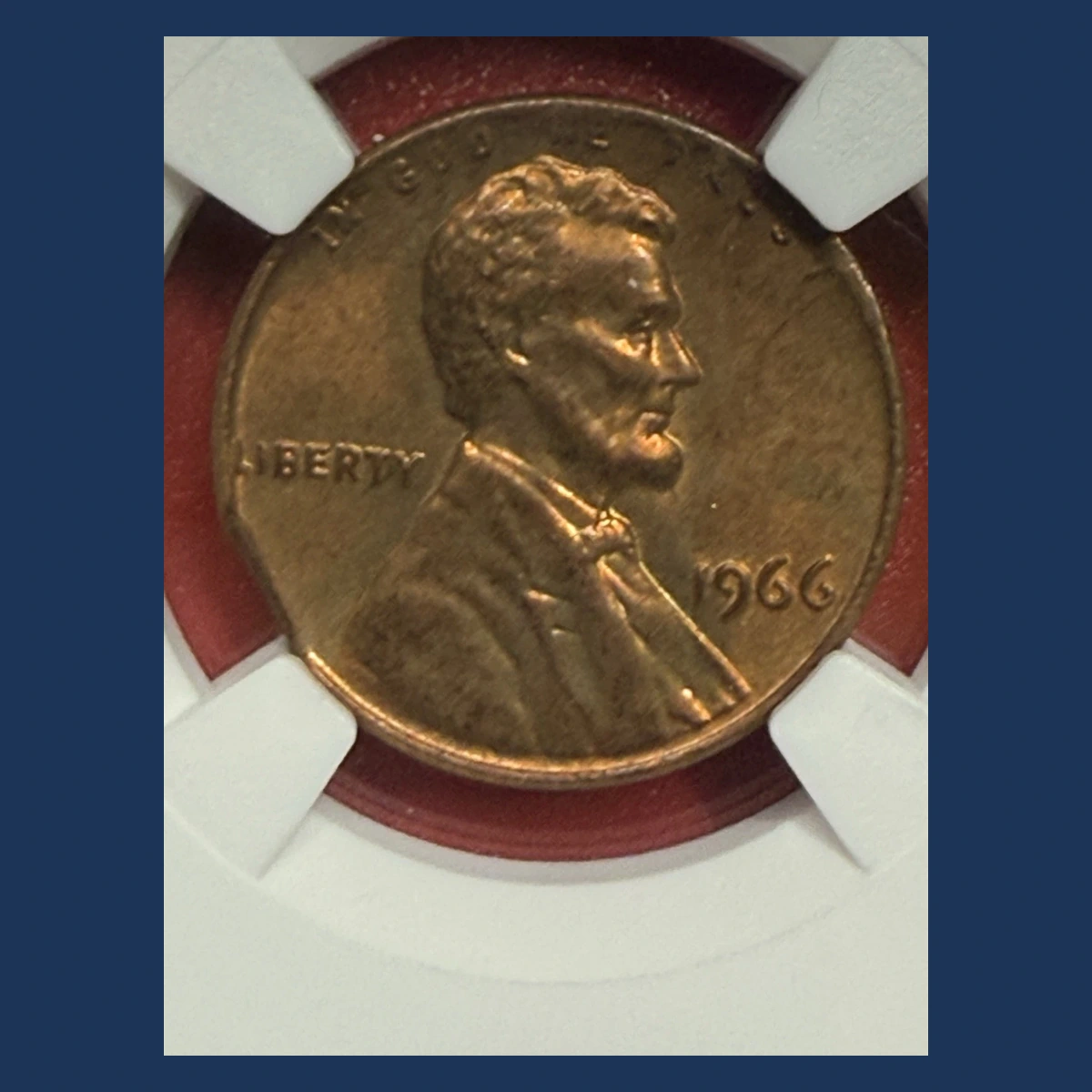
A bite-shaped gap begins when the blank is cut from an incomplete area of the metal strip. The press then forms the design on the metal that remains.
The documented curved 1966 clip weighs 1.8 g. A different straight-clipped coin weighs 2.6 g.
A ragged end clip is also reported for the year. Its irregular boundary should not be pictured as the same smooth arc seen on the curved example.
All three forms concern missing metal before striking. A later cut through a finished penny can imitate the outline, but changes its already formed letters and rim differently.
Estimated Value
Estimate $10–$350 across genuine 1966 clips with differing shapes, sizes, and condition. A readable date and original struck boundary help make a useful comparison.
A 1967 cent with a thirteen-percent straight clip sold for $39 in July 2021. A 1955 ragged clip brought $124 in March 2026, offering another shape-specific copper-alloy comparison.
Neither result is the price of the recorded 1.8 g or 2.6 g 1966 coin. Their separate weights and boundaries need to stay with their own photographs.
How to Identify
Use the full outline to choose the right comparison: curved, straight, or ragged. A weight reading cannot tell you which missing shape the blank had.
The curved example weighs 1.8 g and the straight one 2.6 g, versus a normal 3.11 g cent. Record a candidate’s own weight on a scale and compare an intact span with 19.05 mm using calipers.
At 10× magnification, inspect the gap where it meets the struck rim. Saw teeth and file marks differ from original metal shaped around a missing section.
Check the remaining plain edge and opposite rim for related weakness. That clue supports the boundary evidence but does not replace it.
4. 1966 Lincoln Penny Struck on a Split Blank (Estimated Up to $450)
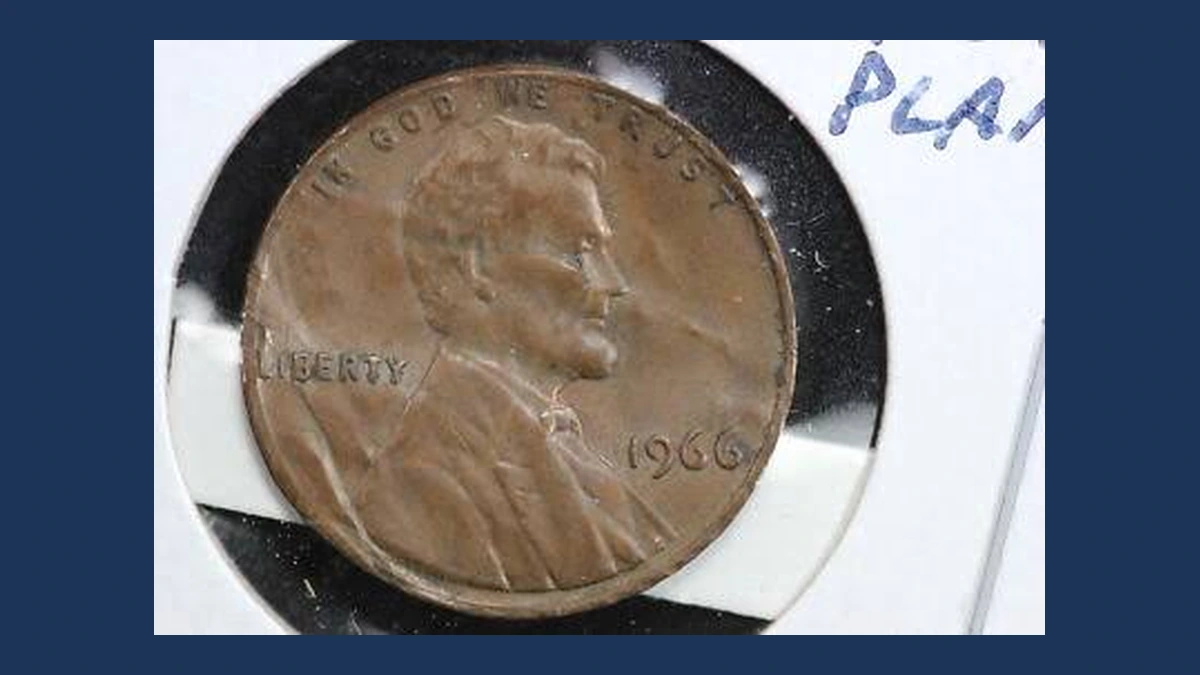
A weak layer can divide a metal blank through its thickness before the press strikes it. The remaining piece is thinner and lighter than a complete cent blank.
One 1966 example weighs 1.9 g. Its design is weak, and the upper-left part of the back has a separating metal layer.
NGC graded the coin 62 red and brown. That describes an unworn piece with noticeable marks and mixed copper color.
The thin blank helps explain the weak design. It is different from an ordinary full-thickness cent that received too little striking pressure, or a finished penny ground thin later.
Estimated Value
For an identified split-before-striking example, estimate $40–$450. Clear internal texture beneath struck design makes the sequence easier to see and compare.
A 1964 split-blank cent graded PCGS 60 brown sold for $53 in May 2021. That is a nearby copper-alloy comparison, not a sale assigned to the 1.9 g 1966 coin.
The weak design does not automatically mean heavy circulation wear. Assess the original split surface and any later damage separately when deciding where a specimen belongs within the estimate.
How to Identify
Compare the thin edge and surface texture before judging the shallow design as wear. The recorded coin weighs 1.9 g, so a precise scale can document how it differs from the normal 3.11 g.
Use calipers to record thickness and intact width against a standard 19.05 mm cent. Under a 10× magnifier, look for design impressed into the rough internal surface.
On the known example, inspect the upper-left back lamination without lifting it. The plain edge may help show how the remaining metal separated.
Grinding can lower both weight and thickness. The decisive evidence is an original separated surface that subsequently received the coin’s design.
5. 1966 Lincoln Penny Raised Tool Break (Estimated Up to $500)
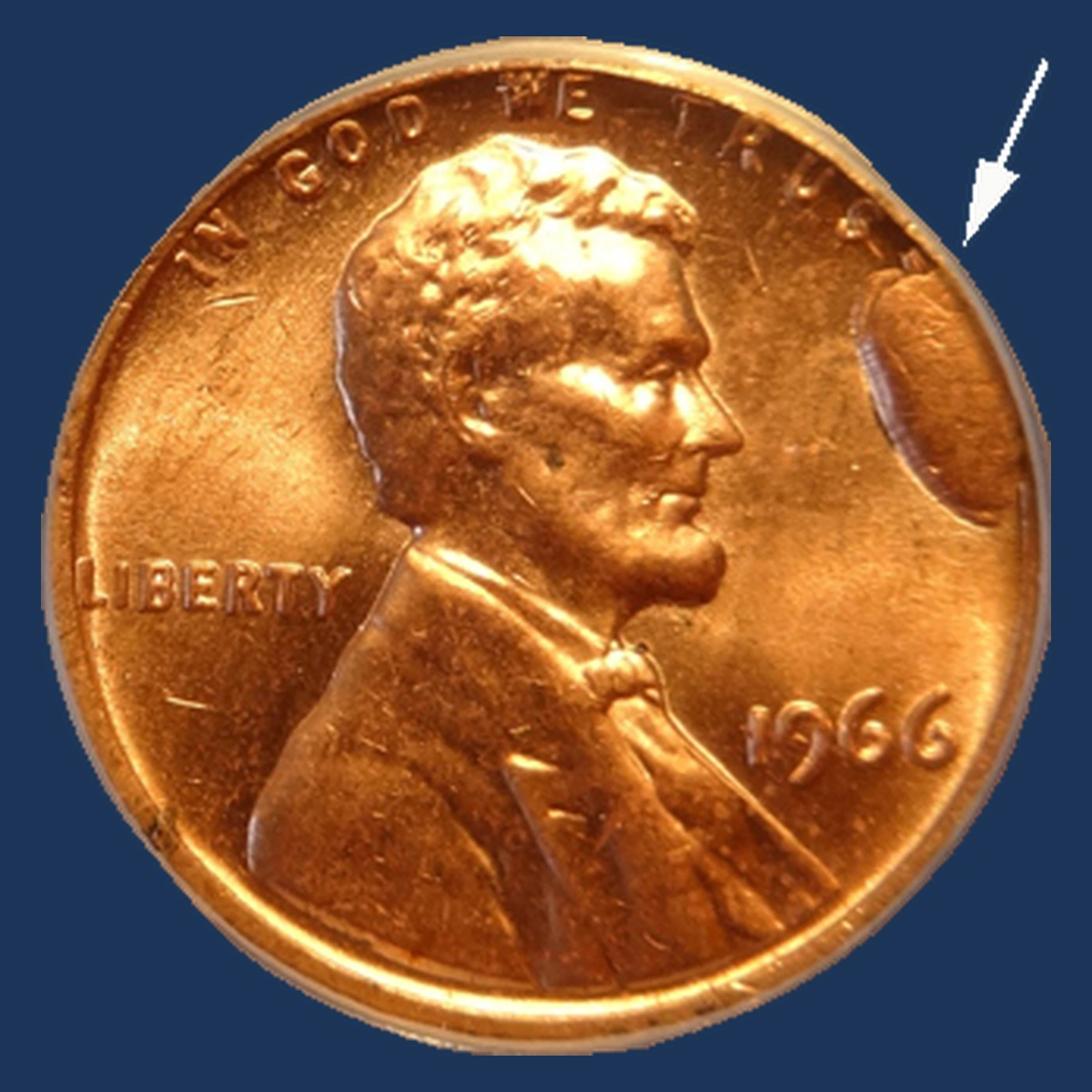
A piece can break out of the tool that stamps a penny. During the next strike, metal rises into that empty space instead of receiving normal design.
The result is a raised patch on the coin. It is not a hole cut into the penny itself.
A year report includes this type for 1966 without fixing the patch’s position. Its shape and connection to the rim must be checked on the actual example.
A rim-connected break is called a cud. An interior lump does not receive that name merely because a description says the tool was broken.
Estimated Value
Small original chips can be compared within an estimated $5–$40. Larger identified tool breaks can fit approximately $40–$500, depending on their size and effect on the design.
A 1977 cud graded PCGS 63 red and brown brought $138 in May 2021. That later copper-alloy example provides context for a rim break, not proof that the reported 1966 patch reaches its rim.
Check the actual shape before choosing the range. Dirt, solder, and pushed-up damage have different explanations.
How to Identify
Light the surface from the side and determine whether the patch rises above the surrounding metal. With a 10× magnifier, trace its complete boundary before deciding what to call it.
If it reaches the rim, compare it with a cud. If it remains inside the design, use an interior-break or chip comparison instead.
A scale and calipers check a normal cent’s 3.11 g and 19.05 mm when added material is suspected. Inspect the plain edge and opposite face for squeezing or attachments.
Do not scrape the raised area. Its original surface and relationship to the replaced design are more useful than an unsupported name in a listing.
6. 1966 Lincoln Penny Off-Center Strike (Estimated Up to $600)
A plain crescent can remain when the blank misses the center of the striking area. Part of Lincoln and the Memorial falls beyond the available metal.
The year’s reports include off-center 1966 cents without establishing one direction or percentage for every example. The surviving design must identify the actual coin.
The blank area still contains metal. It differs from a clip, where part of the disc was missing before the strike.
Both faces help explain the position. A front design shifted beside a normally centered back can instead point to one stamping tool being out of line.
Estimated Value
Use an estimated $15–$600 for genuine dated off-center examples. Clear original blank metal, readable year, and preservation make the most useful comparisons.
A 1965 cent struck forty percent off center brought $61 in July 2022. That neighboring-year copper-alloy result offers context without assigning the same percentage or price to a reported 1966 coin.
More displacement does not always bring more money. An identifiable smaller shift may interest a collector more than an extreme strike with most of its date missing.
How to Identify
Read the remaining year first and keep it in the photograph while examining the blank crescent. Under a 10× magnifier, follow the transition from stamped design to untouched metal.
Turn the coin over to see whether the back fits the same displaced blank. Do not infer a percentage from a shift visible on only one face.
A simple off-center strike normally retains roughly the original 3.11 g. Weigh it and use calipers to record the outline against the standard 19.05 mm.
Check the plain edge and crescent for grinding or cutting. An unstruck area should preserve original metal rather than a surface where someone removed the design.
7. 1966 Lincoln Penny Front Struck Through a Coin Cap (Estimated Up to $600)
Lincoln can appear faint while the Memorial remains much sharper. A coin stuck over the front stamping tool can block its direct contact with later blanks.
That stuck covering is called a die cap. As its metal thins and stretches, the tool’s design can pass through in a softened form.
A reported 1966 example has a faint front opposite a clearer back. The receiving cent need not be the cup-shaped coin that covered the tool.
Wear or polishing can also weaken a portrait. The whole pattern of detail is needed before a soft front is explained as a covered strike.
Estimated Value
Estimate $25–$600 for an identified front cap-strike receiver. The strength of the distortion and the condition of both faces guide the comparison.
A 1965 cent struck through a cap on its back sold for $61 in July 2021. That is a related mechanism on the opposite face, not the sale of the reported 1966 front-struck example.
A faint portrait alone does not justify the range. The covered appearance should be clear enough to distinguish it from wear or weak pressure.
How to Identify
Place front and back photographs beside each other under similar lighting. The reported relationship is a softened Lincoln design opposite a more clearly formed Memorial.
Use a 10× magnifier to look for stretched or blended design rather than worn high points alone. Polishing scratches crossing the portrait can reveal a different cause of missing detail.
A normal coin’s 3.11 g weight and 19.05 mm width provide basic checks with a scale and calipers. Follow the plain edge for squeezing or other later manipulation.
A deep raised cup is not required on this receiving coin. Concentrate on how one design formed through a covering while the other remained clearer.
8. 1966 Lincoln Penny One-Sided Member of a Two-Blank Strike (Estimated Up to $750)
Two blanks can enter the press together, stacked one above the other. Each outer face meets a stamping tool, while the inner faces press against blank metal.
The reported 1966 piece has Lincoln on the front and a blank-looking back. It represents one member of that two-blank striking event.
The description does not establish that the two pieces remain bonded together. A single blocked-face coin should not be illustrated as a joined pair without matching evidence.
Grinding can also erase a finished back. Original compressed texture and the surviving design help show whether the face was blocked during striking.
Estimated Value
For a genuine single member of a two-blank strike, estimate $75–$750. A preserved blocked face beside a readable normal front makes the unusual event easier to explain.
This range compares Lincoln cents struck against another blank. It is not a sale of the 1966 coin or an estimate for two pieces still bonded together.
Preservation and the clarity of the original surface guide the comparison. A penny with a back ground smooth later does not qualify for the same premium.
How to Identify
Photograph the blank-looking back before assuming the coin is thin or incomplete. A 10× magnifier should reveal original compressed metal instead of grinding grooves or polishing lines.
Compare that surface with Lincoln’s surviving front and follow both into the plain edge. Their relationship should fit one intact disc that was blocked from the back tool.
Use a scale and calipers to record the coin against the normal 3.11 g and 19.05 mm. Two blanks being struck together does not mean the surviving single piece should weigh like both.
Do not assume a matching partner is present. The blocked back and original front need to establish this coin’s own identity.
9. 1966 Lincoln Penny Blank with an Original Hole (Estimated Up to $1,000)
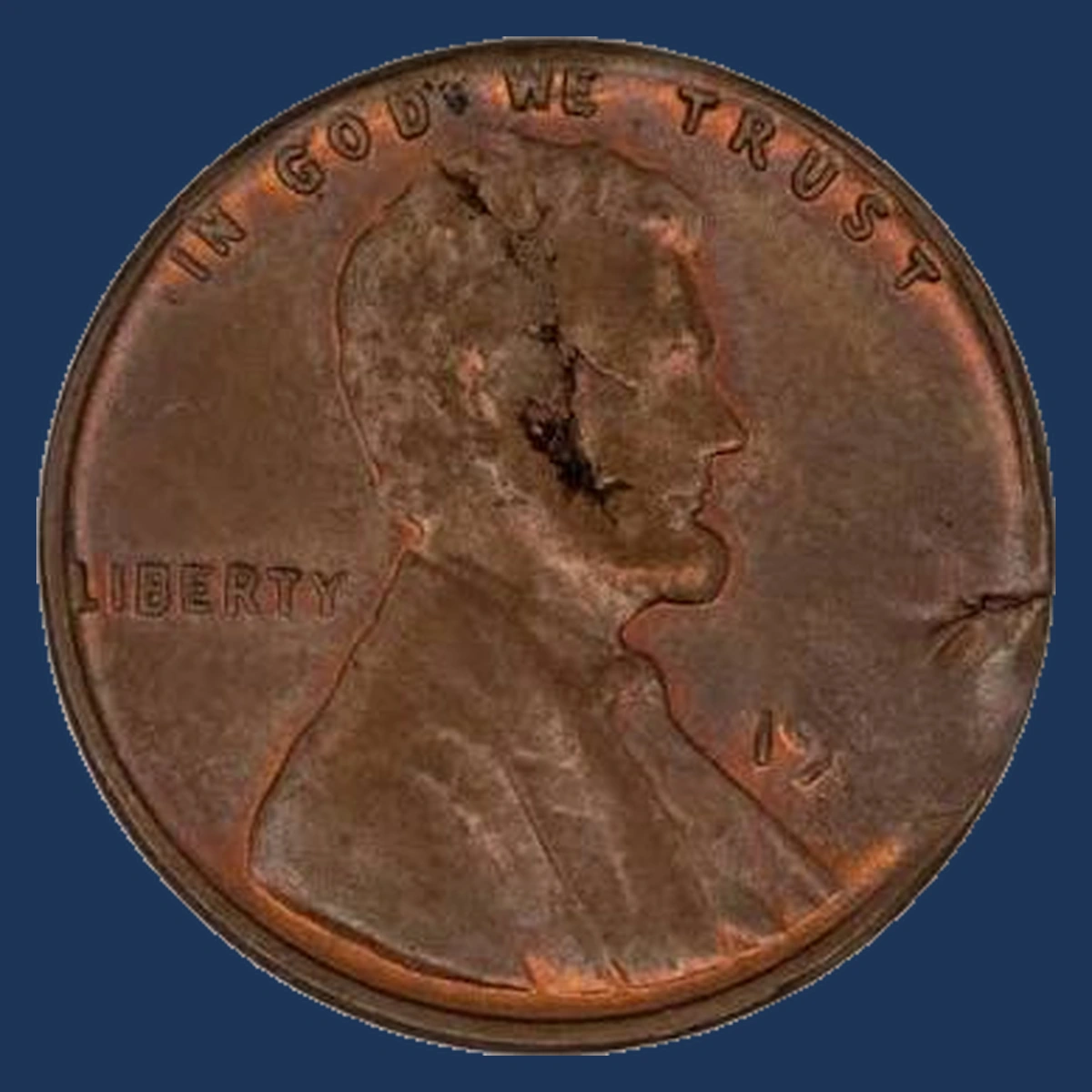
A hole can exist in the blank before Lincoln’s portrait reaches it. The press strikes the remaining metal, leaving the design to form around the opening.
An auction lists a 1966 example weighing 2.6 g. NGC graded it 65 brown, describing an unworn coin with relatively few marks.
The hole’s position must be checked on that actual piece. A general description cannot supply its shape or the letters nearest it.
A drilled penny has a different sequence: its design came first, and a tool removed metal afterward. The inside boundary can help separate those two histories.
Estimated Value
Estimate $100–$1,000 for an authenticated cent struck on an originally holed blank. The size of the opening and clear surrounding strike influence the comparison.
A 1960 holed-blank cent weighing 2.9 g sold for $228 in July 2021. That example provides a price reference, with its separate weight and year kept distinct.
The 1966 report records 2.6 g, not 2.9 g. A low weight or an obvious hole alone does not earn the premium without evidence of an original blank defect.
How to Identify
Study the hole’s inner wall under a 10× magnifier before concentrating on the missing weight. Repeated circular cutting marks or a sharp burr may show that a drill passed through a finished coin.
Follow nearby design toward the opening. Original striking around a preexisting hole affects metal flow differently from cutting across completed letters.
The recorded piece weighs 2.6 g, while a normal cent weighs 3.11 g. A scale and calipers record the candidate’s own figures against a standard 19.05 mm width.
Inspect the remaining plain edge too, and leave the opening unchanged. Clear photographs of the wall and surrounding struck design are more useful than enlarging the hole.
10. 1966 Lincoln Penny Matched Split-Metal Pair (Estimated Up to $1,200)
A split can leave related pieces that preserve more evidence together than apart. An auction records a 1966 matched pair and describes its first member as having a split front.
That member received an NGC 64 red-and-brown grade. It is described as unworn, with some marks and mixed copper color.
The short catalog description does not fully explain the other member or the timing of separation. Matching surfaces and their struck detail must establish that relationship.
This pair differs from two separate blanks entering the press together. Do not assume two complete halves of one penny without examining both pieces.
Estimated Value
For a documented matching split-metal pair, estimate $150–$1,200 for both pieces together. How well the separated surfaces match and how much design survives affect the comparison.
A 1960-D pair described with laminations sold for $228 in July 2021. That provides a related paired-metal comparison rather than a sale of the 1966 lot.
The estimate is not a price for each member. An unrelated second fragment does not create a matched pair simply because its date or color looks similar.
How to Identify
Keep both pieces together and photograph their faces and separated surfaces. Do not force them against each other to make a physical fit.
Under a 10× magnifier, compare the break boundaries, internal texture, and any corresponding struck detail. Their relationship needs to explain which surfaces were once connected.
Record each piece’s weight with a scale and its dimensions with calipers, without pressing on thin edges. A normal intact cent starts at 3.11 g and 19.05 mm, with a plain edge.
Use the complete certification description alongside the photographs. The abbreviated phrase split front cannot determine the other piece’s identity or prove exactly when separation occurred.
11. 1966 Lincoln Penny Struck on a Clad Dime Blank (Estimated Up to $2,500)
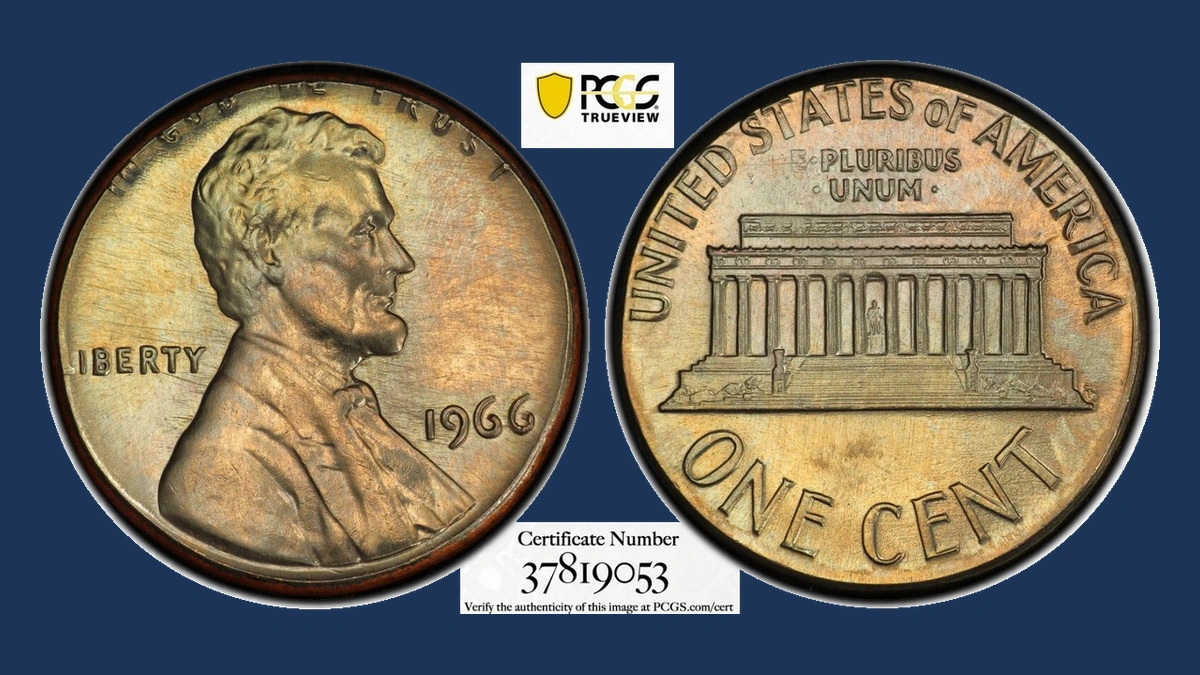
Outer cent lettering can run off a smaller silver-colored disc even when the design is near the center. The press received a clad dime blank instead of a cent blank.
Clad metal has pale outer layers around a copper core. It is different from a silver dime blank and from a normal copper-alloy penny.
The documented 1966 auction example was graded PCGS 66. That describes a well-preserved unworn coin with few marks.
No older Roosevelt or torch design is needed on this unused blank. Those features would instead indicate a finished dime that later received a cent impression.
Estimated Value
The documented clad-dime-blank cent sold for $1,020 in July 2021. Use an estimated $300–$2,500 across comparable authenticated examples with differing preservation and surviving design.
A nearby 1976-D clad-dime-blank cent brought $480 in December 2024. That later result illustrates a different individual coin, not a revised value for the 1966 sale.
The range requires the smaller layered blank to be established. A plated ordinary penny can look pale while keeping normal cent weight and metal beneath its coating.
How to Identify
Weigh the coin before interpreting its color. A clad dime blank normally starts at 2.268 g, compared with 3.11 g for a 1966 cent.
Calipers compare the smaller blank’s starting 17.91 mm with the cent’s usual 19.05 mm. Its final outline may spread during striking, so one diameter reading is not decisive.
Use a 10× magnifier along the edge to look for the copper core and pale layers. Do not require the grooves of a completed dime on an unused blank struck in cent equipment.
Then inspect both faces for cent design alone. Confirming the metal and original unused blank matters more than giving every silver-colored penny a wrong-blank label.
12. 1966 Lincoln Penny Cent Design over a Finished 1966 Dime (Estimated Up to $3,000)
An upside-down 1966 date can appear beside Lincoln’s head on this unusual coin. It belongs to an earlier Roosevelt dime, not a second ordinary cent impression.
The dime was already finished when the cent tools struck it. All four earlier digits remain readable, although the later strike flattened them.
On the back, part of the dime’s torch and nearby leaves survive around the Memorial steps. The two denominations share the same piece of metal.
This differs from an unused dime blank carrying only cent design. The older date and surviving dime features reveal the extra step in its production.
Estimated Value
The NGC-graded 65 example brought $632.50 in April 2011 at Heritage Auctions. Its grade describes an unworn coin with relatively few marks.
Estimate $500–$3,000 for identified 1966 cent-over-dime examples with varying clarity and preservation. The visible earlier date and recognizable older design help collectors understand the combination.
The actual result belongs to this finished-dime overstrike. It should not be presented as the price of the separate cent struck on an unused clad dime blank.
How to Identify
Rotate the front photograph to read the older date at Lincoln’s left. Its four digits should form 1966 independently of the normal cent date.
On the back, use a 10× magnifier around the Memorial steps to locate the older torch top and leaves. These features should fit the dime design rather than a collection of random scratches.
A clad dime starts near 2.268 g and 17.91 mm. Record the object with a scale and calipers, remembering that the later cent strike can spread it toward the cent’s normal 19.05 mm size.
Inspect the continuous edge for joining or plating. Both designs must belong to the same originally struck metal.
13. 1966 Lincoln Penny Retained Staple or Wire (Estimated Up to $4,000)
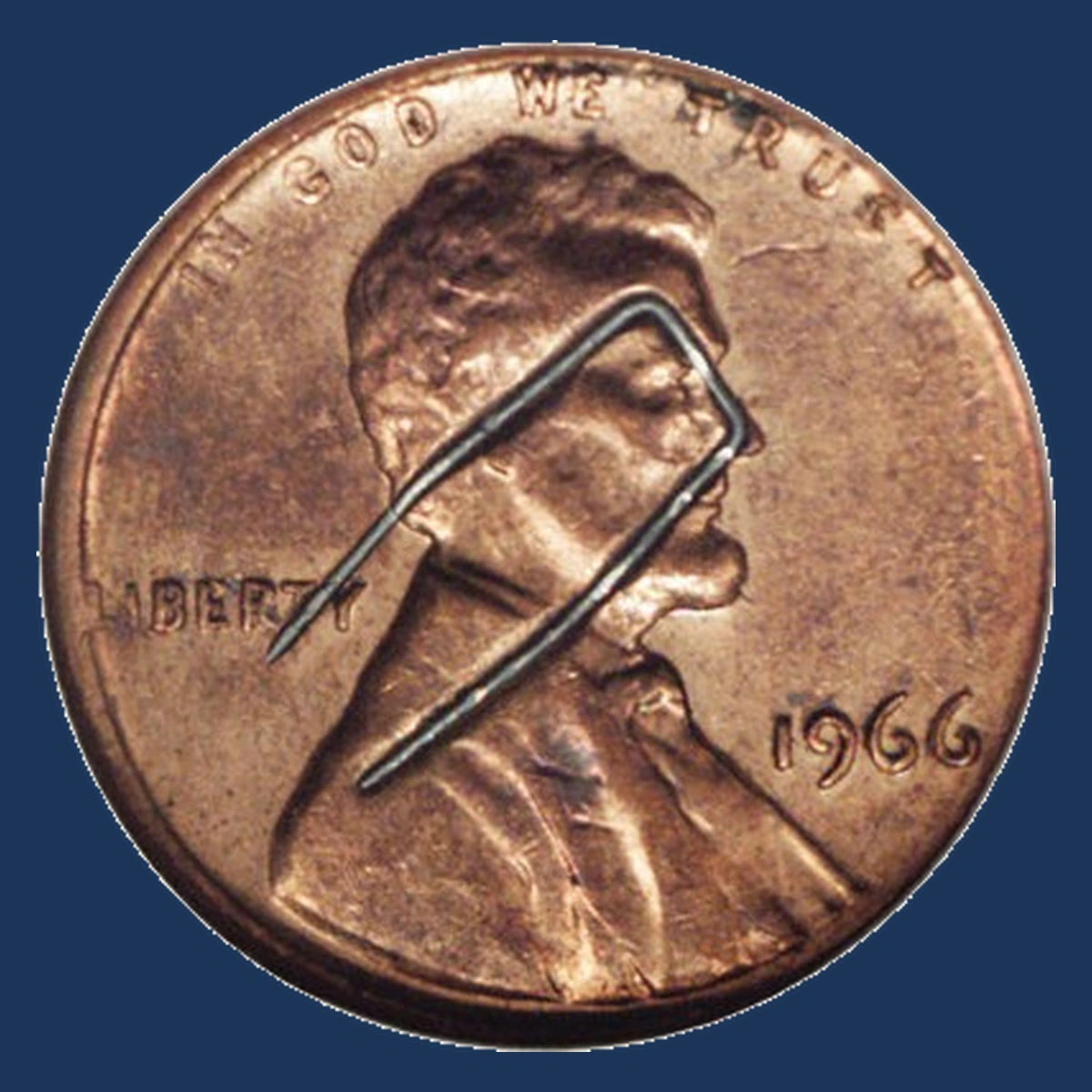
A thin piece of wire can become trapped between a blank and the stamping tool. The blow presses it into the metal and interrupts part of the coin’s design.
A year report describes retained staple wire on a 1966 cent. Its location and shape need to be matched to the actual specimen.
The object remains present, rather than leaving only an empty impression after falling away. That makes its contact with the coin important evidence.
An ordinary staple glued or pushed into a finished penny can imitate the idea. The surrounding struck surface must explain why the object belongs there.
Estimated Value
For an authenticated retained staple or wire, estimate $100–$4,000. Its size, visible effect on the design, preservation, and secure original contact create a wide range.
A 1963 cent with a retained staple brought $3,416 in March 2026. That documented copper-alloy example provides a recent comparison, not a sale or certification assigned to the reported 1966 wire.
The upper range requires convincing evidence. Later inserted metal or a glued-on staple has a different history and does not qualify for that comparison.
How to Identify
Leave the wire untouched and make clear photographs of its entire contact area. Do not pull an end upward to test whether it is attached.
A 10× magnifier can show how the original design meets the wire and how the surrounding metal moved around it. Look for fresh punctures, glue, or solder that could explain a later attachment.
Record total weight and dimensions with a scale and calipers if safe. The normal cent standard is 3.11 g and 19.05 mm, but an embedded object can affect the reading.
Inspect both faces and the plain edge before matching the reported case. A retained object needs an original striking relationship, not just a familiar staple shape.
14. 1966 Lincoln Penny Double Strike, Including a Mirror-Image Combination (Estimated Up to $5,000)
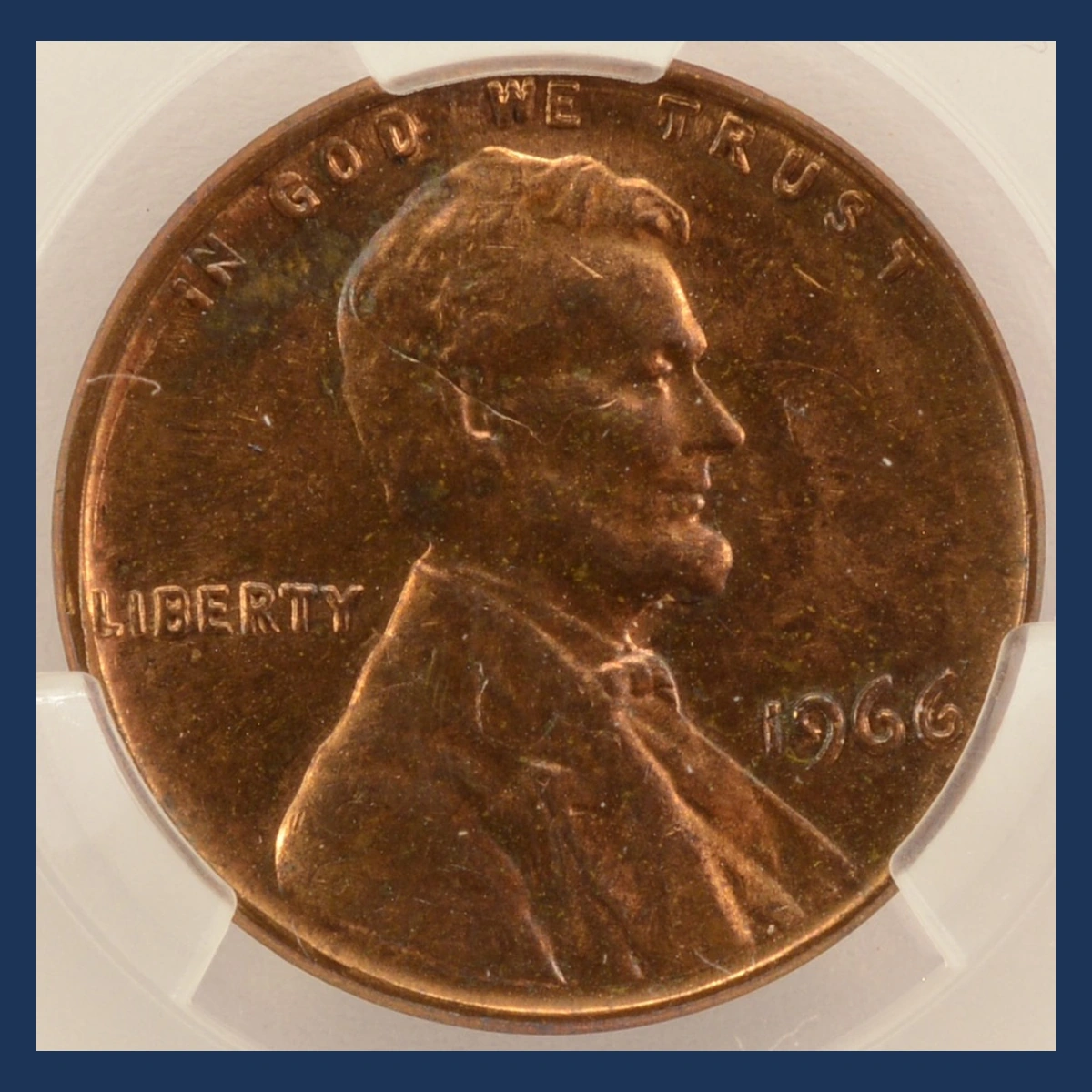
A cent can receive another impression after turning or moving in the press. The second strike leaves design in a different position from the first.
One 1966 combination began with a sunken backward copy of the front design on its back. Such a transferred mirror image is called a brockage.
The coin then rotated within the retaining ring and was struck again. A backward 1966 date remains beneath the later Memorial design, while the front shows turned repeated details.
The example is described by Mint Error News. It has a more specific sequence than a report of two cent strikes.
Estimated Value
Estimate $50–$1,000 for ordinary identified double strikes, and $500–$5,000 for an authenticated double-strike-and-brockage combination. The latter range is not a reported sale of the illustrated 1966 coin.
A 1973-D flipover double strike brought $1,320 in November 2020. That different sequence offers a copper-alloy multiple-strike comparison, while the backward first image on the 1966 piece needs its own assessment.
Clear surviving design helps explain the event. Two named effects still contribute to one coin’s overall value.
How to Identify
Begin on the back of the combined example and find the backward 1966 digits beneath the Memorial impression. Their recessed, reversed form differs from normal raised date doubling.
Next compare Lincoln and the lettering on the front under a 10× magnifier. Their changed angle should agree with the coin rotating before the later strike.
A normal copper-alloy cent weighs 3.11 g and measures 19.05 mm. A scale and calipers can document the piece, while the plain edge should be checked for later squeezing.
Trace the designs in sequence rather than calling every repeated mark a double strike. The surviving mirror date is what makes this combination different from a simple displaced repeat.
Conclusion
A pale color, low weight, or blank patch is only a starting clue. The metal, edge, and surviving design must explain the same event.
These 1966 penny errors have estimated values of $5–$5,000. Keep an unused dime blank separate from a finished dime, and a split pair separate from two blanks struck together.
Photograph both faces before enlarging a detail, and leave fragile layers or embedded wire untouched.