1979 Penny Error List with Pictures

A penny can leave the press as a cup, a thin split disc, or even a solid cluster of many discs. The remarkable 1979-D cluster sold for $10,925 in 2012.
A 1979 penny error need not be that dramatic to interest collectors. Smaller mint-mark and tool-break varieties sit at the affordable end of this guide’s estimated $2–$20,000 range.
The sections below explain what happened to the metal and which visible clues help identify each mistake.
1. 1979 Lincoln Memorial Penny Doubled Dies (Estimated Up to $150)
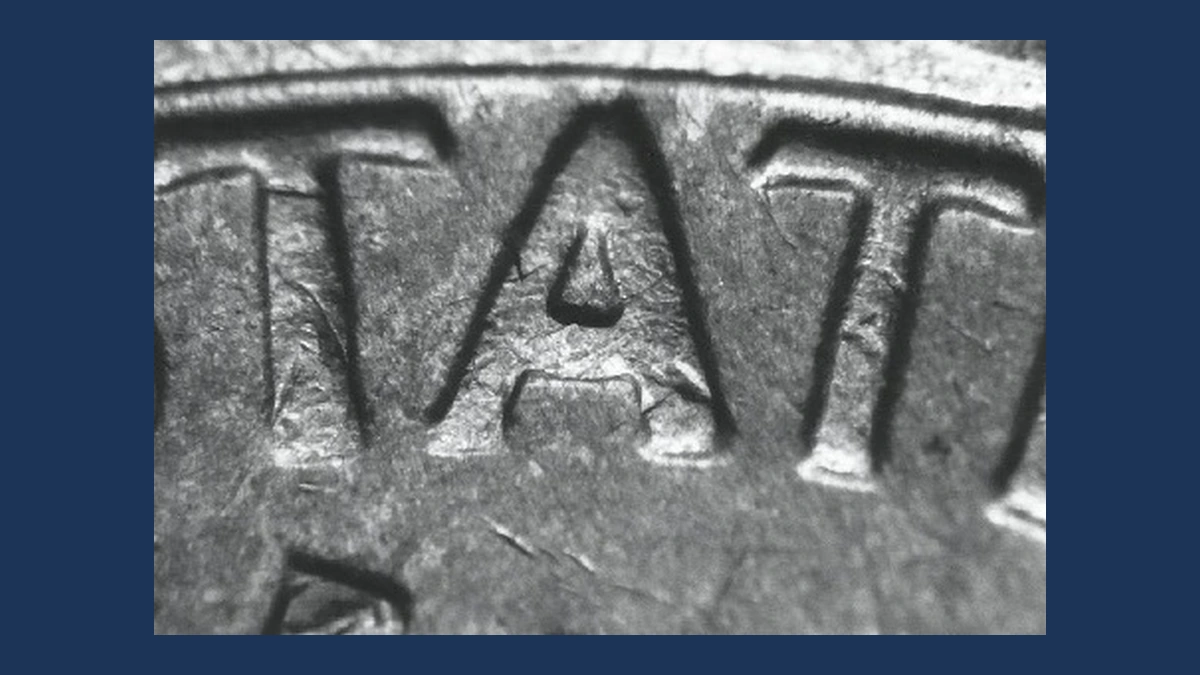
Thicker lettering and dots on the back can be the first clue on a 1979-D cent. A specialist catalog records a doubled design on the steel stamping tool used for this variety.
That tool is called a doubled die. Its repeated design differs from movement that flattens a letter’s edge during an individual strike.
Front-side doubling is also reported for Philadelphia and Denver, but a specific confirmed match is needed for those claims. Thick letters alone are not enough.
The normal spacing between A and M on this date is not an error.
Estimated Value
Estimate $2–$150 for confirmed minor doubled-die varieties of this date. This range follows similar Memorial-cent varieties rather than a verified auction record for each reported form.
A clear catalog match on an attractive coin supports more value than vague thickening. Front-side candidates should receive this premium only after their specific variety is established.
Ordinary wear of a stamping tool and flat strike doubling can both look unusual without creating the same collector demand.
How to Identify
For the cataloged back-side example, first confirm the D below the date. Compare the thickened letters and dots with the specialist photograph, then check supporting fine lines.
A 10× magnifier can reveal the short line extending from the lower third column toward the second column space. Such a line helps match the tool but is not itself the doubling.
Check the plain edge for squeezing. The normal copper-alloy cent is 3.11 g and 19.05 mm, which you can check with a scale and calipers.
Keep a front-side candidate separate until its own design matches a confirmed example. Do not substitute a BIE bar or a flat letter shelf.
Match the same mint’s extra design shape before assigning a doubled-die value.
2. 1979 Lincoln Memorial Penny Repunched D Mint Mark (Estimated Up to $150)
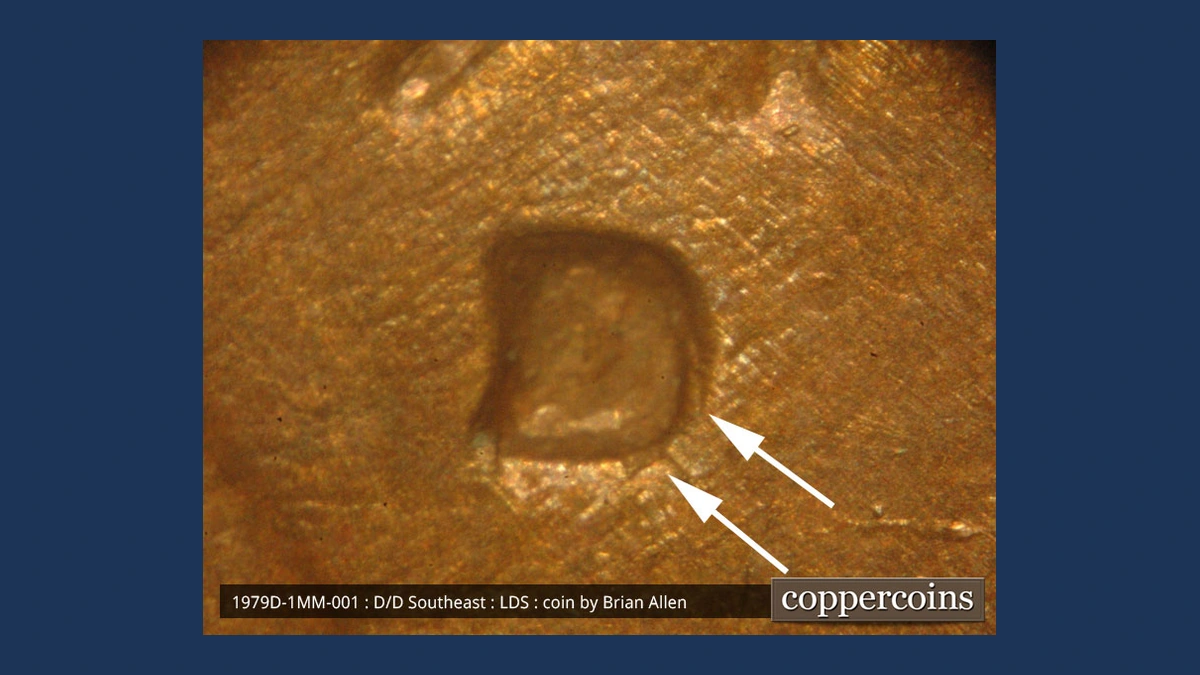
The D can have a forked end or a second outline beside its main shape. In 1979, a worker added the mint letter separately to the stamping tool.
A slight change in the punch position between blows could leave part of an earlier D visible. The resulting coins repeat that same repunched mint mark.
One variety has the extra impression toward the lower right. Two others show tilted or rotated overlaps.
A damaged punch can also leave an extra-looking edge. Three visible lines therefore do not automatically mean that the letter was punched three times.
Estimated Value
A useful estimate is $3–$150 for confirmed 1979-D repunched mint marks. Easy-to-see extra outlines on clean coins usually attract more interest than very close overlaps on worn pieces.
The range compares minor Lincoln-cent mint-mark varieties and is not a claimed selling record for all three cataloged forms. An exact variety match matters more than the number of lines a seller circles.
Damage to the punch does not automatically turn a D/D into a more valuable triple-punched variety.
How to Identify
Concentrate on the letter itself rather than the nearby date. A 10× magnifier should let you follow an extra upright, curved outline, or fork at a letter end.
Compare it with the three listed 1979-D patterns. Note both the direction and the shape of the extra part.
Inspect the surface around the D for hits that pushed metal against it. Check the plain edge and record weight and diameter with a scale and calipers, using 3.11 g and 19.05 mm.
Extra marks caused by a damaged punch need to be separated from a true earlier letter impression. A third edge alone proves neither a third punch nor greater value.
Trace a second recognizable D outline that agrees with one confirmed pattern.
3. 1979 Lincoln Memorial Penny Broadstrike (Estimated Up to $250)
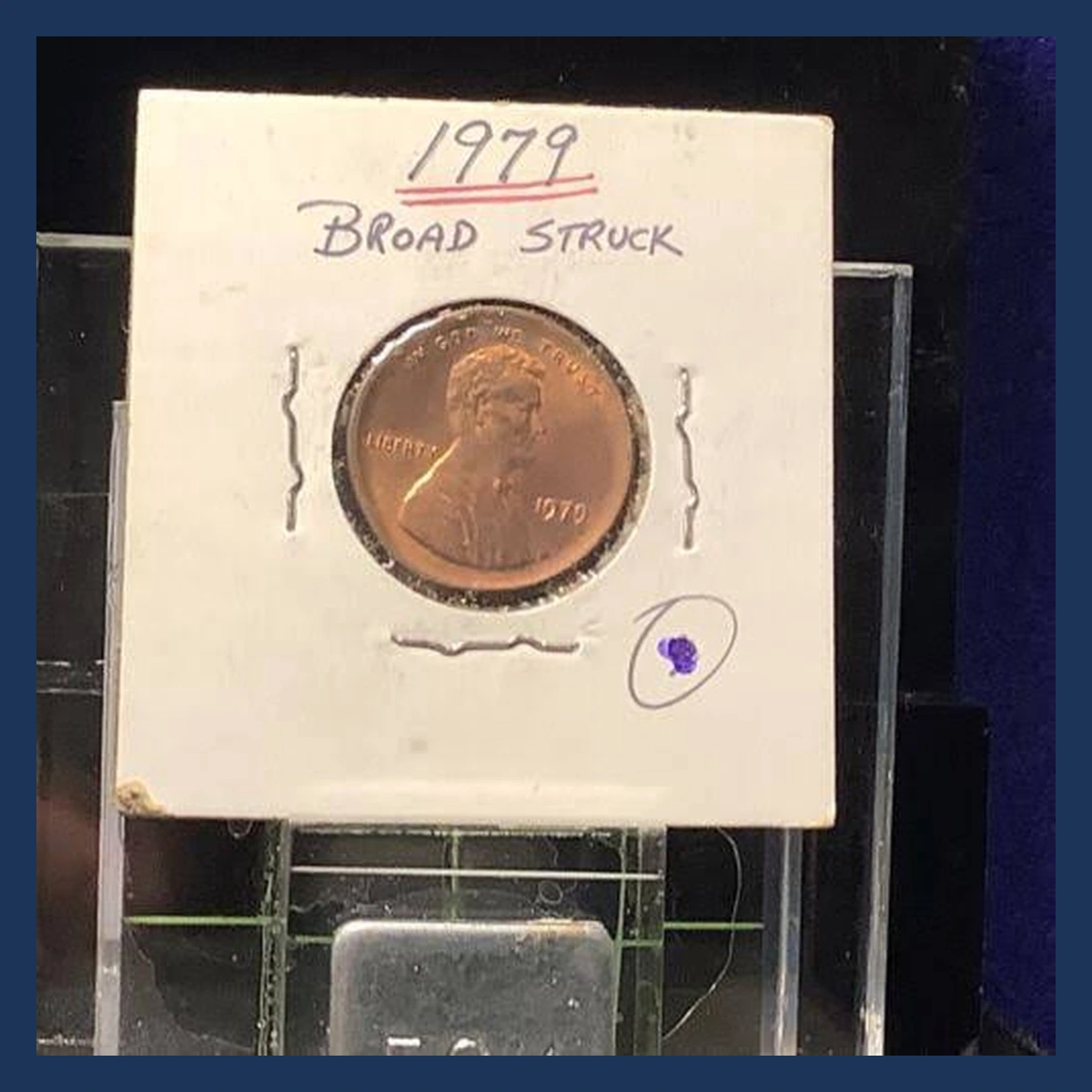
Extra metal surrounds a design that still fits on the coin. A broadstrike forms when the collar, the ring that normally limits the width, fails to contain the disc.
Philadelphia and Denver examples are reported for 1979. Their widened outlines should be compared individually because the spread need not be even.
The key is that the design remains complete. A coin with part of its design cut off beyond the edge may instead be off-center.
Later hammering can also widen a penny. That treatment usually flattens or damages details that an original broadstrike can preserve.
Estimated Value
Allow an estimated $15–$250 for ordinary 1979 broadstrikes. The amount of spread, surface condition, and visual appeal determine where an individual piece falls.
As a market comparison, a 1999 broadstruck cent graded PCGS MS65 Red sold for $67 in March 2023. That later coin uses different cent metal, so it is not a perfect physical match.
The comparison helps show the price level for this striking mistake, rather than supplying a sale price for the listed 1979 coins.
How to Identify
View the coin beside an ordinary cent so that both complete designs can be compared. Look for intact outside lettering within the extra margin.
Calipers help measure the spread beyond the normal 19.05 mm diameter. Take more than one measurement if the outline is uneven.
Weigh the loose coin against 3.11 g on a scale, since widening alone should not remove metal. A much lower weight needs another explanation.
Use a 10× magnifier along the plain edge and across the portrait. Hammer marks, crushed letters, and flattened high points can reveal later alteration.
Check that the widened area belongs naturally to the strike. The strongest simple clue is a complete design inside extra spread, without hammer damage.
4. 1979 Lincoln Memorial Penny Curved Clips (Estimated Up to $500)
More than one curved gap can interrupt the edge of a single penny. A reported 1979-D example has three such gaps and an off-center design.
These missing areas may result from the way metal discs are cut from a strip. A disc cut across existing holes can have incomplete edges before it is struck.
The number of gaps does not equal the number of strikes. All three can belong to one piece of metal.
An unusually shaped piece also needs comparison with leftover metal from the cutting process. Its whole outline determines whether the usual clipped-disc description fits.
Estimated Value
Estimated values range from $20–$500 for genuine clips through more dramatic combined examples. Several clear gaps and an off-center strike can make a coin more interesting than one small clip.
This is an estimate, not a verified selling price for the reported three-clip 1979-D coin. A 2021 straight-clip cent sold for $114 in September 2025, providing a simpler different-year comparison.
An unusual shape must first be identified correctly before its error premium can be judged.
How to Identify
Examine the entire outline before focusing on one gap. With three missing sections, consider whether the object began as a normal disc or as leftover metal between cutouts.
Use a 10× magnifier to inspect each boundary for original striking detail. Fresh cuts and file marks point to alteration after manufacture.
A scale should show less than the ordinary 3.11 g in keeping with the missing metal. Use calipers on intact areas against the usual 19.05 mm diameter.
Check the remaining plain edge and the off-center design separately. Do not assume every curved gap on a damaged penny came from the Mint.
Match the complete outline and naturally struck boundaries, with weight loss that fits the missing metal.
5. 1979 Lincoln Memorial Penny Struck Through Material or a Die Cap (Estimated Up to $500)
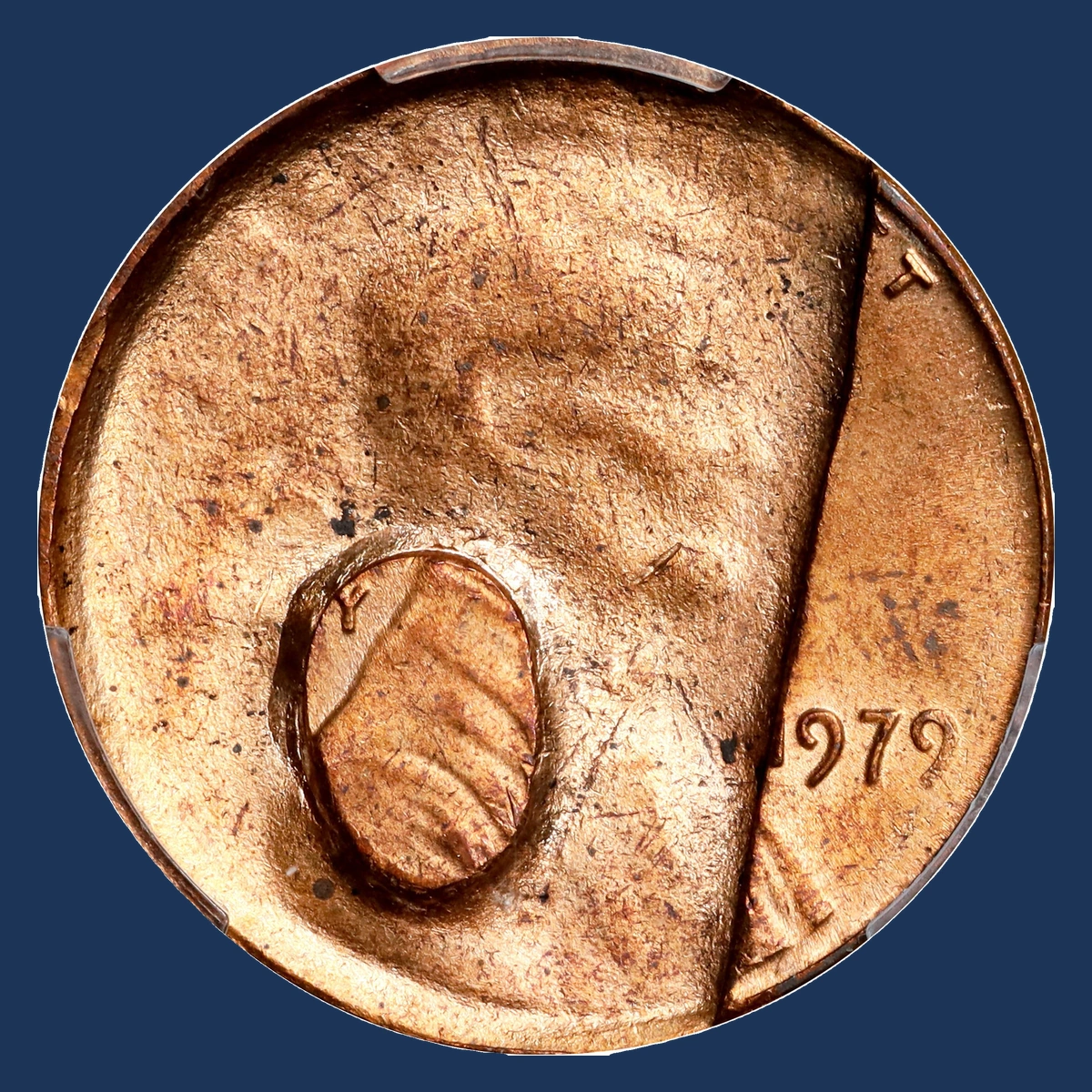
An impressed texture or a patch of missing design can show where something came between the disc and a stamping tool. Different objects leave different effects.
A reported 1979-D cloth strike has a narrow fabric impression across the front. Another report describes a Philadelphia coin affected on both faces.
A separate Philadelphia example was struck through a late-stage die cap. That cap was a previously struck coin stuck over the tool.
The cloth marks should be sunken impressions rather than raised woven material. The cap-struck coin is also different from the cup-shaped covering that caused its distorted design.
Estimated Value
Use an estimated $10–$500 range for confirmed examples, from small blocked details to clear cloth impressions or cap-related distortion. More recognizable patterns tend to attract more buyers.
A 1995 late-stage cap strike sold for $180 at Heritage in March 2025. It compares the cap-struck part of this group, not the separate cloth or two-sided obstruction reports.
The exact material, affected area, and preservation all matter. Surface damage should not be assigned an error premium.
How to Identify
Choose the visible feature to test: repeated cloth texture, an impression, or cap-related distortion. The type of obstruction cannot be decided from one weak letter.
Look through a 10× magnifier with light from the side. A cloth impression should sink into the surface, while scratches usually cut across the original design differently.
Examine both faces on a coin claimed to have two-sided obstruction. For a cap strike, compare the altered design with a confirmed example of that stage.
Check a scale against 3.11 g, calipers against 19.05 mm, and inspect the plain edge for squeezing. Never peel away retained material to investigate it.
Find an original impressed pattern or cap-related design change without later scraping that explains the same feature.
6. 1979 Lincoln Memorial Penny Brockage (Estimated Up to $1,000)
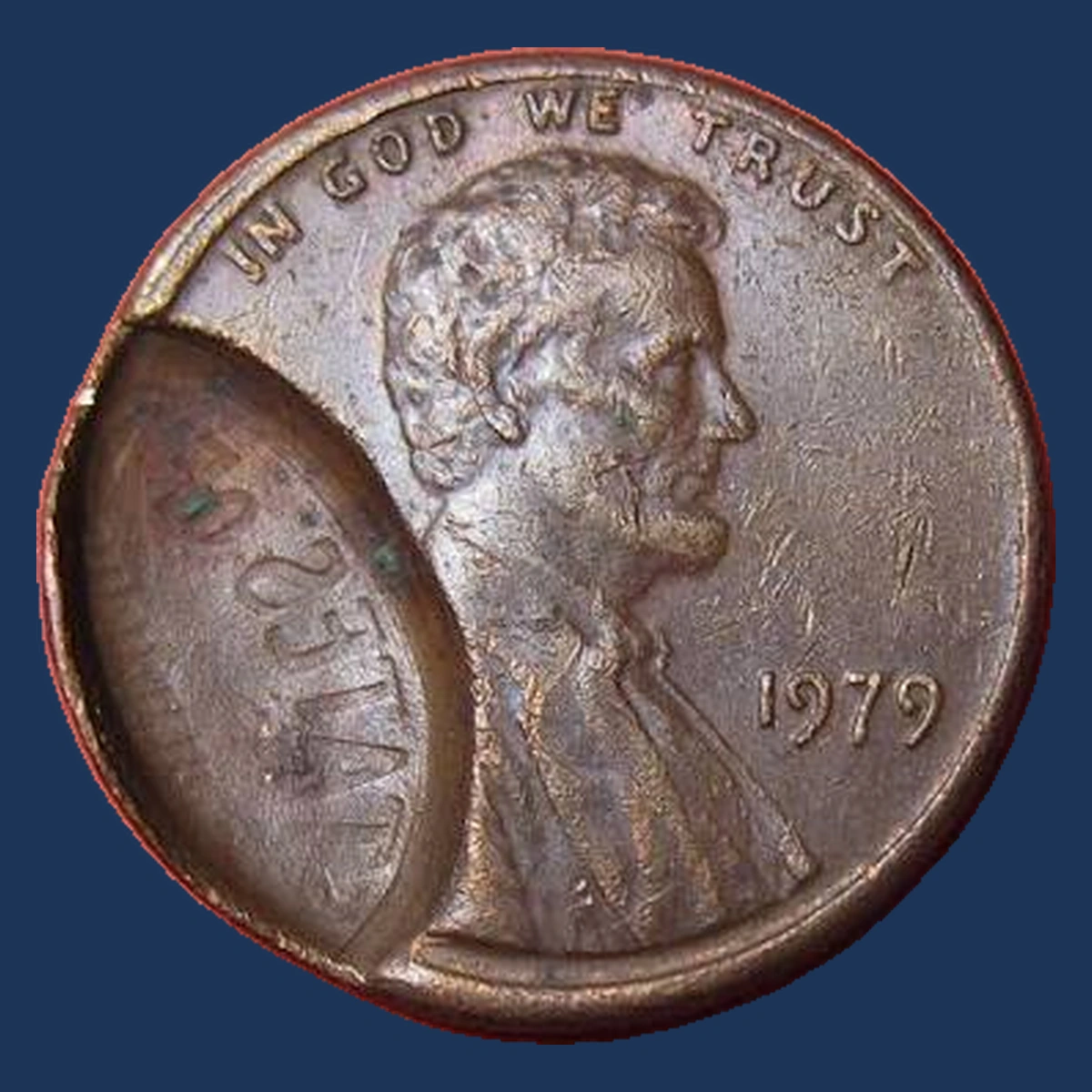
An image facing backward and sunk into the coin can result from a struck coin blocking a new disc. Collectors call the resulting impression a brockage.
The older coin acts as a stamp. Its raised details press into the fresh metal and produce a reversed copy.
A year-specific report lists a 1979 example, but a candidate still needs a clear match to the actual impression. A blank or worn face alone is not a brockage.
Later pressure between two finished coins can imitate the same basic appearance. The surrounding surfaces and metal flow must therefore support an original mint strike.
Estimated Value
For an authenticated 1979 brockage, estimate $100–$1,000. A broad, readable reversed image can be more desirable than a small, crowded patch.
This range compares Memorial-cent brockages and is not a verified sale price for the year-specific reported coin. The exact area, clarity, and condition need to be established before applying the estimate.
A later vise impression is damage, even when the reversed design is easy to see. It does not receive the same mint-error premium.
How to Identify
Read the unusual letters in reverse, or compare a photograph with a mirrored normal design. A genuine brockage should make visual sense that way.
A 10× magnifier with angled light can show whether the details are sunken. Raised normal letters beside them provide a useful comparison of height.
Inspect the other face and the plain edge for crushing from a vise. Two coins squeezed together after striking can leave a misleading backward impression.
Check a loose piece with a scale against 3.11 g and calipers against 19.05 mm. Any spread should be considered with the strike, not treated as proof by itself.
Look for a readable backward impression that belongs to an otherwise naturally struck surface rather than a crushed finished coin.
7. 1979 Lincoln Memorial Penny Split Blank Struck Twice (Estimated Up to $1,200)
The disc is thinner than it should be, yet it carries struck details and a second impression. The recorded 1979-D combination began with metal that split before reaching the press.
A split blank is part of an original disc that separated through its thickness. It can still receive a design afterward.
The reported coin was also struck twice, adding a separate striking error to the thin metal. The two effects should be examined individually.
A 1979 cent is made from copper alloy throughout. This is not a copper coating peeling from a zinc center, as on later cents.
Estimated Value
A combined split-blank and double-strike example can be estimated at $150–$1,200. The range is based on the added appeal of two visible manufacturing mistakes, not a verified price for the reported NGC coin.
For context, a 1979-D cent with a second strike 70% off-center sold for $660 in June 2025. That coin was not described as a split blank.
The comparison concerns the repeat strike only; the thin metal needs separate confirmation.
How to Identify
Weigh the coin before interpreting the doubled design. A disc split through its thickness should weigh substantially less than the normal 3.11 g, although no single target weight fits every split.
Use calipers to record its thickness and diameter against an ordinary 19.05 mm cent. Check the plain edge for a natural split surface rather than filing.
Under a 10× magnifier, look for details struck into the thinner metal. Then trace the two strike areas independently.
Grinding a finished coin thinner can reduce weight without producing an original split blank. Scratches from removed metal would argue against the error.
Confirm struck details on naturally thin metal, then identify the separate second impression.
8. 1979 Lincoln Memorial Penny Cuds, Cracks, and BIE (Estimated Up to $1,500)
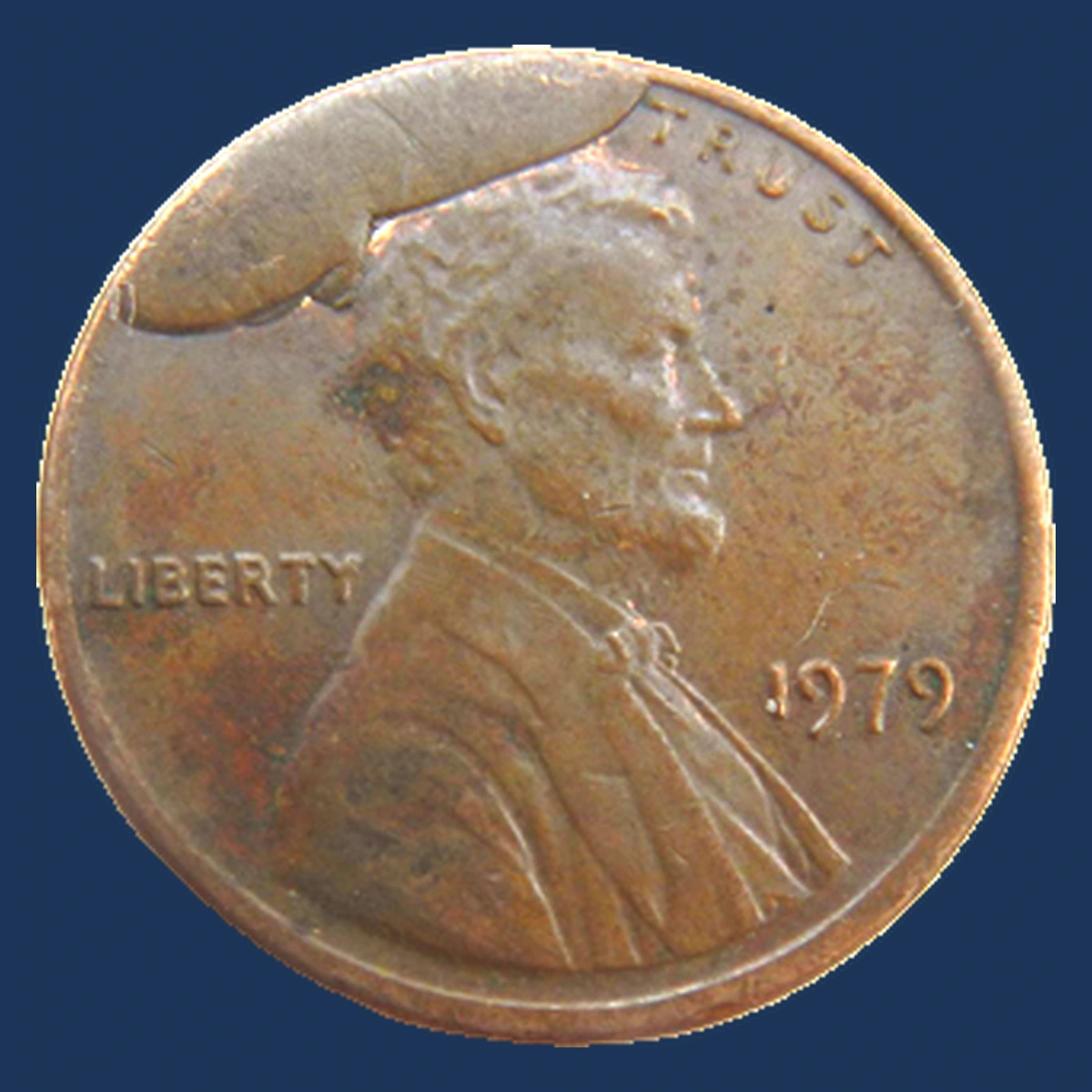
A raised blob can join the rim and cover part of the design. This is a cud, formed when an edge piece breaks away from the stamping tool.
Smaller tool failures leave thinner lines or tiny raised bars. A bar between B and E makes LIBERTY appear to contain an extra I, giving the BIE nickname.
Both Philadelphia and Denver tool-break examples are listed for 1979. Their outlines and positions vary.
One auctioned Philadelphia cud reached a much higher price than most small chips. Its result should not be transferred to every penny with a raised mark.
Estimated Value
The range is an estimated $2–$1,500, from modest BIE bars to large, attractive cuds. A 1979 Philadelphia example graded PCGS MS64 Brown sold for $1,020 on May 22, 2021.
That actual sale shows the potential of a desirable large break. It is not a price guide for all the different 1979 shapes.
A tiny line or chip is usually much more affordable. Size, eye appeal, and undamaged surfaces help explain the difference.
How to Identify
Check whether the raised area reaches the rim. A large connected blob is a different feature from a small internal chip or the BIE bar between letters.
Use a 10× magnifier to follow its boundary. Metal attached after striking may have a seam, while a rim hit can push normal metal inward.
Compare the complete shape with the same mint’s catalog photograph rather than choosing a number by year alone. For a BIE coin, focus directly between B and E.
Weigh against 3.11 g, measure with calipers against 19.05 mm, and inspect the plain edge. A damaged tool changes the design without adding material to the disc.
Follow the original raised metal into its rim connection or letter gap and rule out a dent or attached lump.
9. 1979 Lincoln Memorial Penny Die Cap (Estimated Up to $1,500)
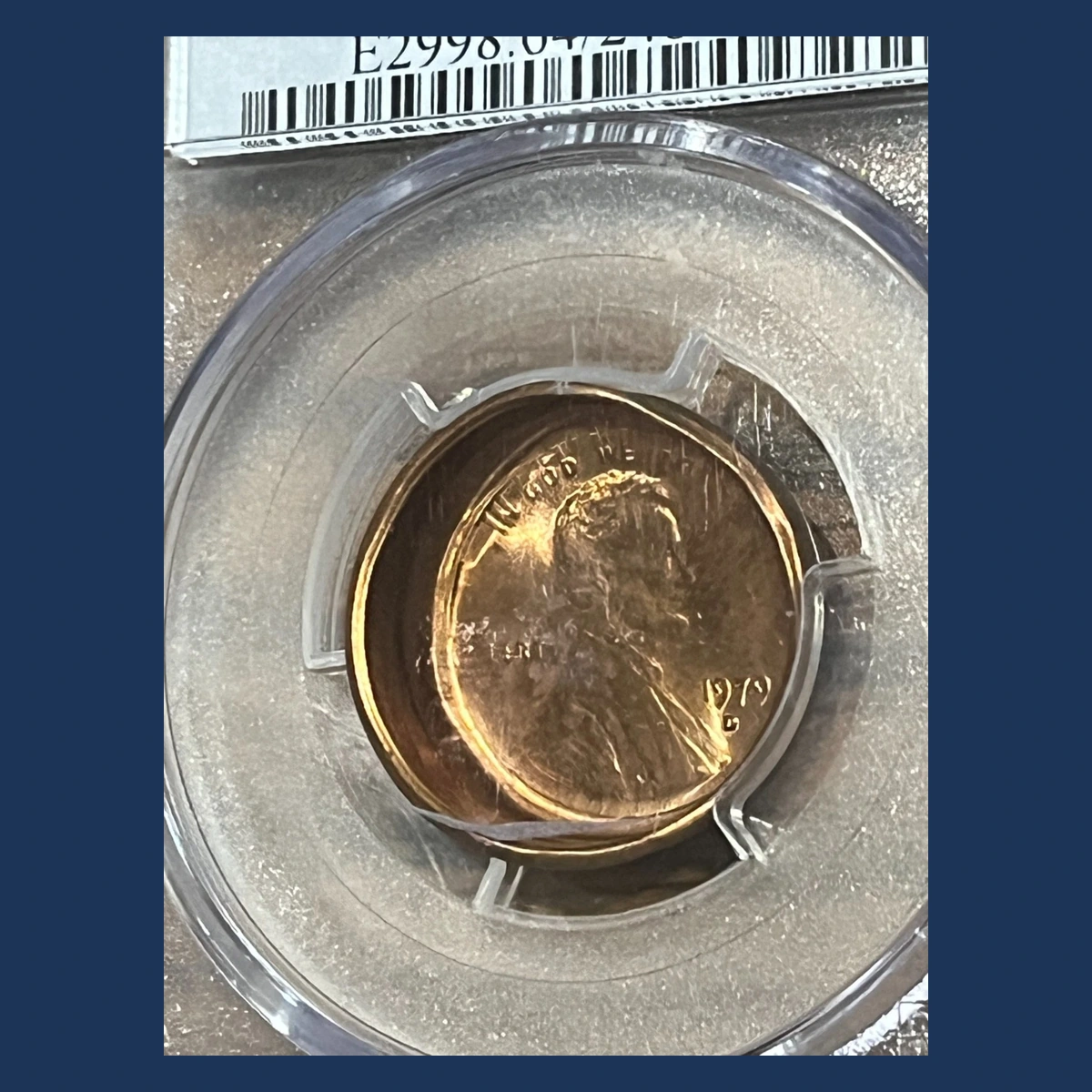
The penny has become a small cup. It stuck to one of the stamping tools while further blows pushed its metal around the tool’s side.
This object is the die cap itself. The coins subsequently struck through it can look quite different and need not be cup shaped.
Denver examples from 1979 include a deep cap on the portrait-side tool and a cap on the back-side tool. Another listed piece combines a cap with a double strike.
The affected side and remaining design vary by example. It is incorrect to assume every cap has one completely blank face.
Estimated Value
The deep front-side 1979-D cap graded PCGS MS64 Red sold for $329 on January 11, 2016. Estimate $150–$1,500 across ordinary caps through especially deep or complicated examples.
That sale is for one specific cap, not for the separately recorded back-side or double-struck pieces. Their shape and preservation can affect demand differently.
Deep intact walls and readable original details can be appealing. A rim bent upward with tools is simply damage.
How to Identify
Look at the coin from the side to judge the raised wall. Its shape should show metal drawn around a stamping tool, not a few folds pinched with pliers.
With a 10× magnifier, inspect the surviving portrait or Memorial details and the transition into the wall. Compare the same type of cap rather than any cup-shaped object.
Check remaining portions of the plain edge for gripping marks. Do not flatten the piece or press a tool into the cup.
A scale reading near the original 3.11 g can support a single-coin cap. Record width and height with calipers instead of expecting an ordinary flat 19.05 mm outline.
Find smoothly formed cap walls with original struck details, without bending or gripping damage.
10. 1979 Lincoln Memorial Penny Off-Center Strike (Estimated Up to $2,000)
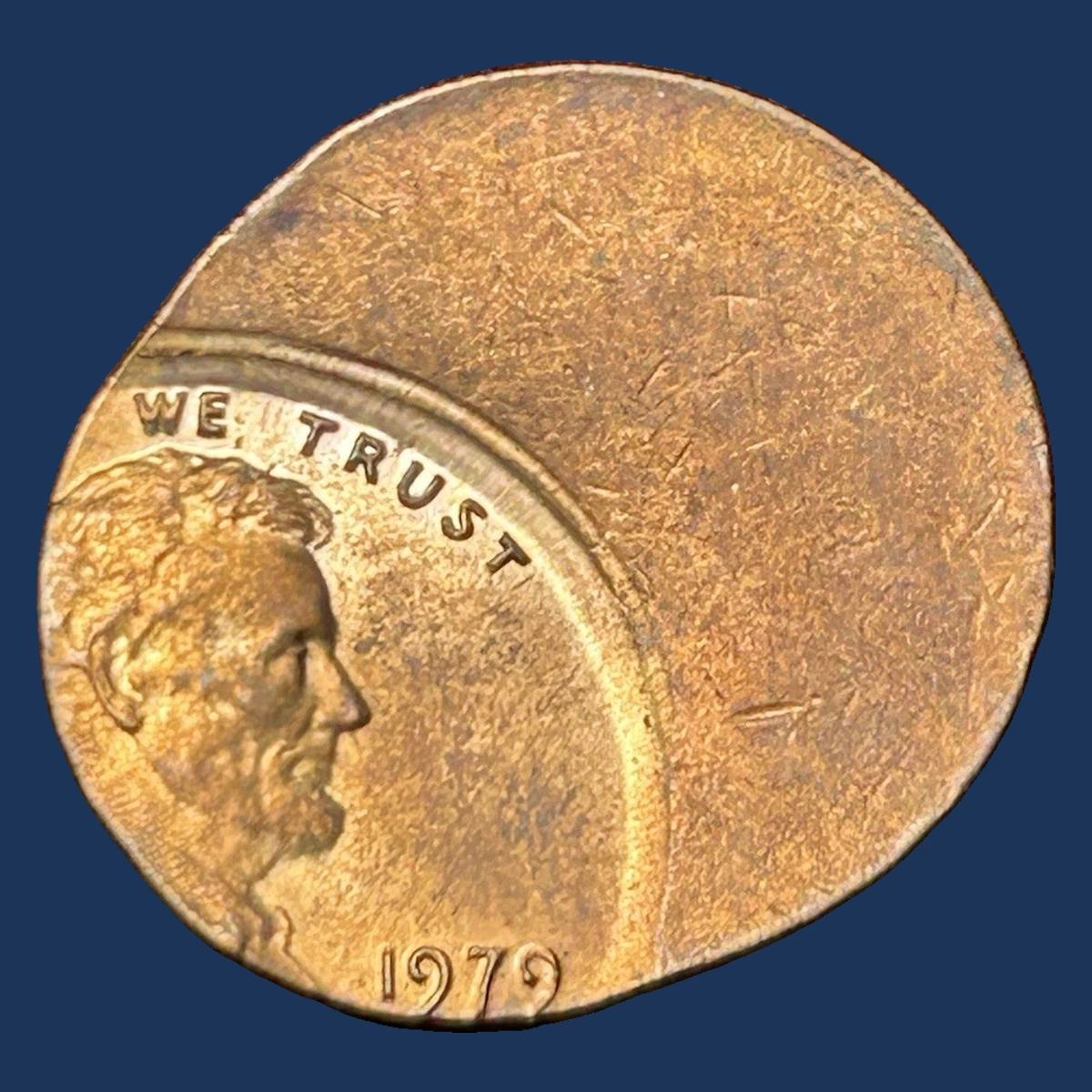
A blank area sits beside an incomplete coin design. The metal disc was not properly centered when the press struck it.
Reported Denver examples include shifts of about 35% and 70%. Philadelphia examples are also listed, along with a separate report of a San Francisco Proof.
A Proof is a specially made collector coin. A claimed S-mint error must have that finish and the correct mint letter, rather than borrowing the identity of a Denver piece.
Neither the regular filled S nor the clearer S used on 1979 Proofs is itself an off-center error.
Estimated Value
Ordinary circulation-strike examples have an estimated $20–$500 range. For a genuinely authenticated off-center 1979-S Proof, use a separate estimated $500–$2,000 range.
The Proof range compares scarcer collector-coin striking errors; it is not a verified sale result for the reported S example. The finish and error both need confirmation.
A readable date, visible mint letter, and attractive displacement improve appeal. Damage can reduce value even when the off-center strike is real.
How to Identify
Identify the mint and finish before comparing prices. Philadelphia cents have no mint letter, Denver has D, and a 1979-S candidate must be a Proof.
Use a 10× magnifier to examine the readable date and the boundary of the blank area. Confirm that part of the design runs beyond the edge on a genuine off-center strike.
Compare both faces so a one-sided tool shift is not mistaken for an off-center disc. Look along the plain edge for clipping or later cutting.
Check weight with a scale against 3.11 g and record the outline with calipers against 19.05 mm. Distorted shape does not establish a Proof finish.
Find the original blank area opposite missing design, then verify the date, mint letter, and finish together.
11. 1979 Lincoln Memorial Penny Multiple Strike and Saddle Strike (Estimated Up to $2,000)
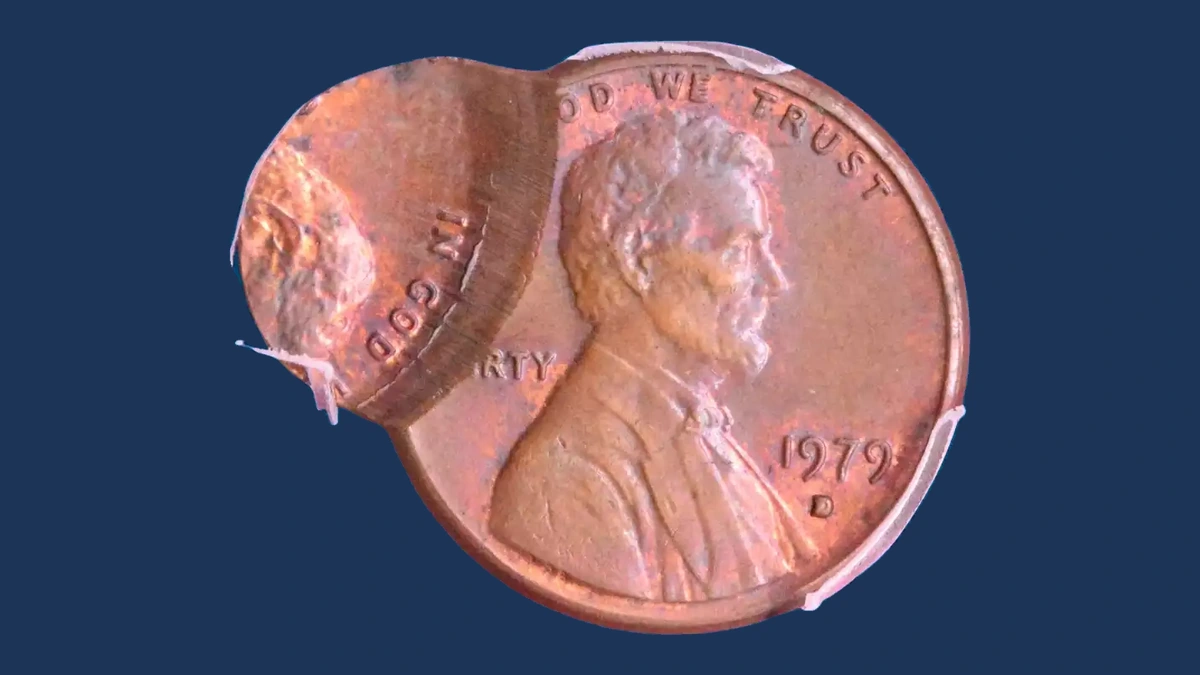
A second portrait or date can sit beside the first after a coin fails to leave the press. Moving between blows creates overlapping or separated struck areas.
Philadelphia and Denver double-struck examples are recorded for 1979. Their second strikes have different amounts of displacement, so those percentages describe separate coins.
A Denver saddle-shaped triple strike is also listed. A saddle error has a raised bridge of metal between struck areas.
The design impressions, rather than the bend alone, establish the striking history. Bending a finished penny into a saddle does not recreate the original pattern of blows.
Estimated Value
Estimate $75–$2,000 across ordinary double strikes and the more unusual saddle-shaped triple-strike form. In June 2025, a 1979-D second strike 70% off-center sold for $660, graded PCGS MS64 Brown.
That is an actual double-strike comparison, not a selling price for the separately listed saddle coin. The upper estimate allows for a more complex, clearly authenticated arrangement.
Readable dates, natural metal flow, and attractive overlapping designs help determine demand.
How to Identify
Follow each separate struck area before trying to count the blows. Repeated dates and portraits should belong to distinct impressions, not just flat ledges beside letters.
Use a 10× magnifier to inspect overlap boundaries. For the saddle form, examine the bridge between the struck areas and compare it with an authenticated example.
Look for later bending or pressure marks along the plain edge. A forced bend may distort a finished design without adding a new struck impression.
A scale comparison with 3.11 g checks the metal amount. Calipers can record the altered width and height relative to the normal flat 19.05 mm cent.
Trace the separate original impressions and, for a saddle, their natural connection across the raised bridge.
12. 1979 Lincoln Memorial Penny Wrong-Denomination or Foreign Blank (Estimated Up to $2,000)
The coin may have an unexpected color, weight, or lack of room around its design. A metal disc intended for another coin entered the cent press.
A Denver example was struck on a United States dime blank. Dime metal has silver-colored outer layers bonded around a copper center.
A separate Philadelphia example was identified as a Dominican Republic 10-centavo blank and weighed 2.7 g. That is a different piece and a different intended coin.
Lincoln’s design identifies the striking tools, not the disc’s original purpose. The metal and measurements must support the claimed denomination or country.
Estimated Value
Estimate $250–$2,000 for confirmed examples in this group. The Philadelphia cent on a Dominican Republic disc, graded NGC MS63, sold for $300 on November 27, 2019.
For a recent dime-blank comparison, a 2007-D cent graded PCGS MS66 brought $600 in March 2023. That later coin is not the recorded 1979-D example.
Clean surfaces, readable dates, and a well-established identity can improve prices. Silver color alone does not justify these values.
How to Identify
Weigh the coin and compare it with a normal cent before assigning a foreign country. The 1979 standard is 3.11 g, while a normal dime is about 2.268 g.
Use calipers against the ordinary 19.05 mm cent and 17.91 mm dime diameters. A wrong disc can spread during striking, so final width is not an exact blank measurement.
With a 10× magnifier, examine the edge and shortened outer design. A dime disc should show its bonded layers; the foreign-disc claim needs its own metal confirmation.
The reported 2.7 g weight does not identify Dominican Republic metal by itself. Do not scratch or chemically test the coin.
Confirm the metal, weight, and naturally limited design space against the particular wrong-disc identity being claimed.
13. 1979 Lincoln Memorial Penny Bonded Coin Cluster (Estimated Up to $20,000)
This error is a mass of joined metal rather than one thick penny. Several discs remained in the press and became bonded together under repeated blows.
The recorded Denver cluster is estimated to contain 33 or 34 discs. Its layers were pushed outward and upward as the mass grew around a stamping tool.
The count is an estimate, not a claim that every separate disc can be seen. Nor does it establish the exact number of blows.
Ordinary stacked pennies can imitate the rough silhouette. The important evidence lies in the joined layers and original struck designs throughout the cluster.
Estimated Value
The large 1979-D cluster realized $10,925 in August 2012 at Stack’s Bowers. An estimated $8,000–$20,000 range is reasonable for that scale of spectacular, authenticated error.
This estimate concerns the whole cluster. It should not be divided into a price per coin or applied to a small two-disc piece.
The number of joined discs, visible striking evidence, and overall appearance can produce large differences between individual clusters.
How to Identify
Inspect the mass as one object and do not try to separate its layers. That would damage the evidence of bonding during manufacture.
Use a 10× magnifier to follow exposed seams, compressed metal, and surviving struck details. Glue, solder, or simple stacking should not be mistaken for bonds made by the press.
A scale and calipers can record total weight, width, and height. The ordinary single-cent standards of 3.11 g and 19.05 mm are comparison points, not expected cluster measurements.
Check visible portions of the normally plain edges for later assembly. Do not convert total weight into an exact disc count.
Find continuous strike deformation and firmly bonded layers that belong to one original mint-made mass.
Conclusion
Estimated values here range from $2 to $20,000, reflecting everything from small letter-level differences to the large bonded cluster. An ordinary raised mark should not inherit the price of a spectacular auction coin.
Use the correct 1979 weight of 3.11 g, examine both sides, and preserve the surface. A precise match between the visible feature and its minting cause is the basis for a useful valuation.