1980 Penny Error List with Pictures

Two silver-colored 1980-D cents sold in 2025 had different starting blanks. The one identified as a silver dime blank brought $18,000 in August; the other was a lighter, unidentified silver blank.
Metal is only part of this 1980 penny error list. Folded blanks, repeated strikes, and broken stamping tools leave other visible clues.
Estimated values span $2–$25,000. Work through the examples below, remembering that a normal 1980 penny weighs 3.11 grams and uses copper-rich metal.
1. 1980 Lincoln Penny Grease-Filled Design (Estimated Up to $100)
Some letters can be weak even when the nearby portrait remains sharp. Grease or dirt inside the stamping tool can prevent metal from filling the usual design.
The tool is called a die. Material in its small recesses acts like a temporary filling, so the new penny receives less detail there.
A 1980 Philadelphia cent was reported with this effect in a contemporary coin publication. Grease can hide small details without changing the surrounding portrait.
Ordinary wear can also weaken letters. The surface around the affected area helps explain whether the design was blocked or worn away later.
Estimated Value
Minor blocked lettering can fit an estimated $2–$20. A larger, clearly original grease-filled area can reach approximately $20–$100.
A 2021-D grease-struck cent sold for $84 in September 2025. That newer Shield cent uses copper-coated zinc, unlike the copper-rich 1980 penny.
The comparison is about blocked design, not identical metal or condition. A faint letter alone does not guarantee the upper price, especially when wear could explain the same appearance on an otherwise ordinary coin.
How to Identify
Compare the weak letters with Lincoln’s high points under a 10× magnifier. General wear tends to affect other exposed design as well.
Look for original surface within the weak area. Scraping lines or rough corrosion can show that detail disappeared after the coin was made.
Start at a clear letter and move toward the weak area. Follow the boundary between sharp detail and the parts that failed to fill.
For an accessible coin, use a scale and calipers against 3.11 grams and 19.05 mm. Inspect the smooth edge for flattening.
Local blocked detail on an otherwise well-formed original surface is the useful grease-filled pattern.
2. 1980 Lincoln Penny Die Clash (Estimated Up to $150)
A stamping tool can receive a faint part of the opposite design if the two tools strike each other without a blank. Later pennies may carry those transferred lines.
This is a die clash. It does not mean the penny itself was struck once on each side by mistake.
A collector reported matching clash marks on 1980 Philadelphia cents from an original bag. Multiple coins can share the pattern because the same marked tools keep working.
The marks can be faint and incomplete. Compare each apparent line with a recognizable part of the opposite design before deciding what it represents.
Estimated Value
An estimated $5–$150 covers faint recognizable clashes through stronger, cleaner examples. The transferred design needs to be visible enough for another collector to understand.
The range compares similar Memorial-cent clashes, rather than a recorded sale of those bag coins. A repeated mark can occur on many pennies made by the same tools.
Stronger outlines may bring more interest than isolated faint lines. Random scratches or polish marks should not receive a clash premium simply because they repeat.
How to Identify
Check normal size and metal amount with calipers and a scale: 19.05 mm and 3.11 grams. The edge should be smooth.
Compare the unexpected lines with the design on the other face. A real clash should relate to recognizable portrait, lettering, or building shapes.
A 10× magnifier and low light can help follow a faint outline through the open surface. Avoid naming the line from a single short segment.
Inspect both sides, but allow for some marks being removed when a tool was polished. Scratches crossing unrelated areas need a different explanation.
The strongest clue is a misplaced fragment that actually matches part of the opposite coin design.
3. 1980 Lincoln Penny Repunched Mintmark (Estimated Up to $250)
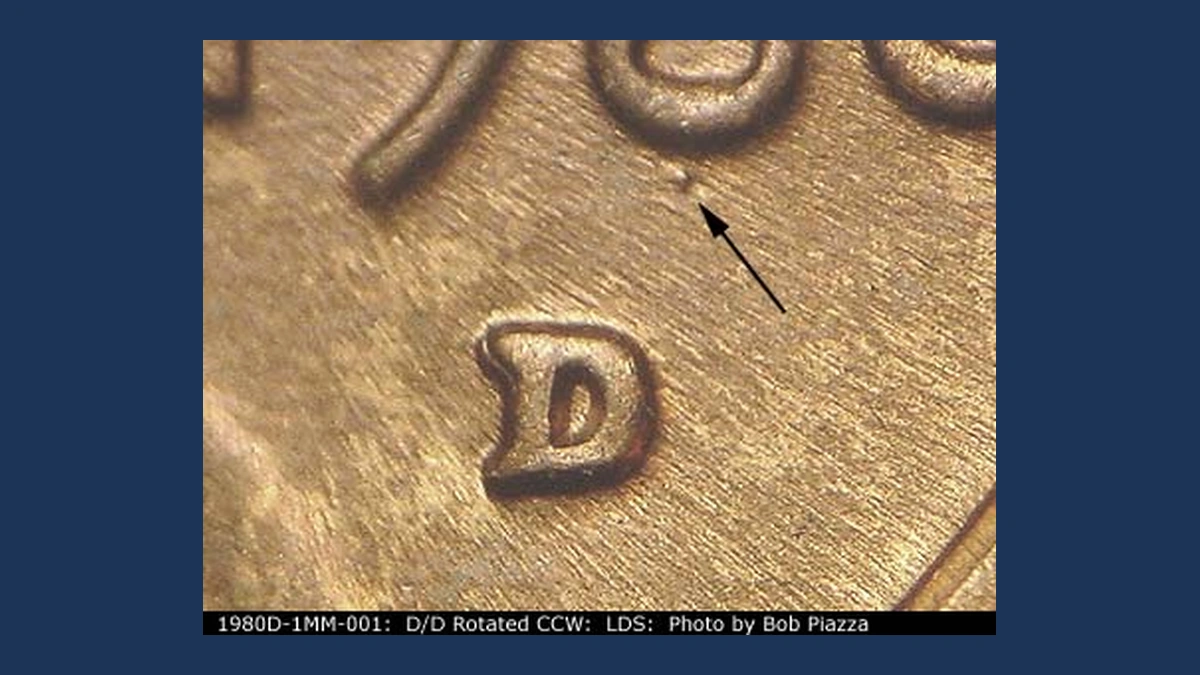
The mint letter can show a second partial outline even when the surrounding design looks normal. In 1980, letters were added separately to the stamping tool with a punch.
A shifted or slightly turned repeat of that punch could leave part of the first letter visible. Denver varieties include extra D strokes to the left and turned outlines.
A separate S report concerns specially made collector coins, called Proofs. Its letter pattern must not be borrowed from a Denver coin.
Some older D listings proved to be tool damage. Match the second letter’s shape before calling it repunched.
Estimated Value
For identified Denver varieties, estimate $5–$150. A confirmed S Proof repunch can be compared within approximately $25–$250, depending on separation and preservation.
The S amount is a conditional variety estimate, not a claimed sale or established specialist catalog number for the reported coin. Denver photographs do not verify an S.
A clear second letter stroke supports the comparison. Simply counting old catalog numbers, or treating a removed tool-damage listing as a rare repunch, does not establish a higher price.
How to Identify
Determine whether the coin has D or S before looking for repeated strokes. An S needs the correct collector-coin comparison rather than an ordinary Denver example.
Use a 10× magnifier around the complete letter. Follow extra curves or straight sections that could belong to another placement of the same punch.
An isolated bump is weaker evidence than a recognizable letter segment. Compare current photographs because some older listings have changed.
Both normal versions use 3.11-gram copper-rich blanks, about 19.05 mm wide with smooth edges. A scale and calipers can check a safely accessible coin.
The matching second-letter shape, attached to the correct mint and coin format, is what supports repunching.
4. 1980-D Lincoln Penny Broadstrike (Estimated Up to $350)
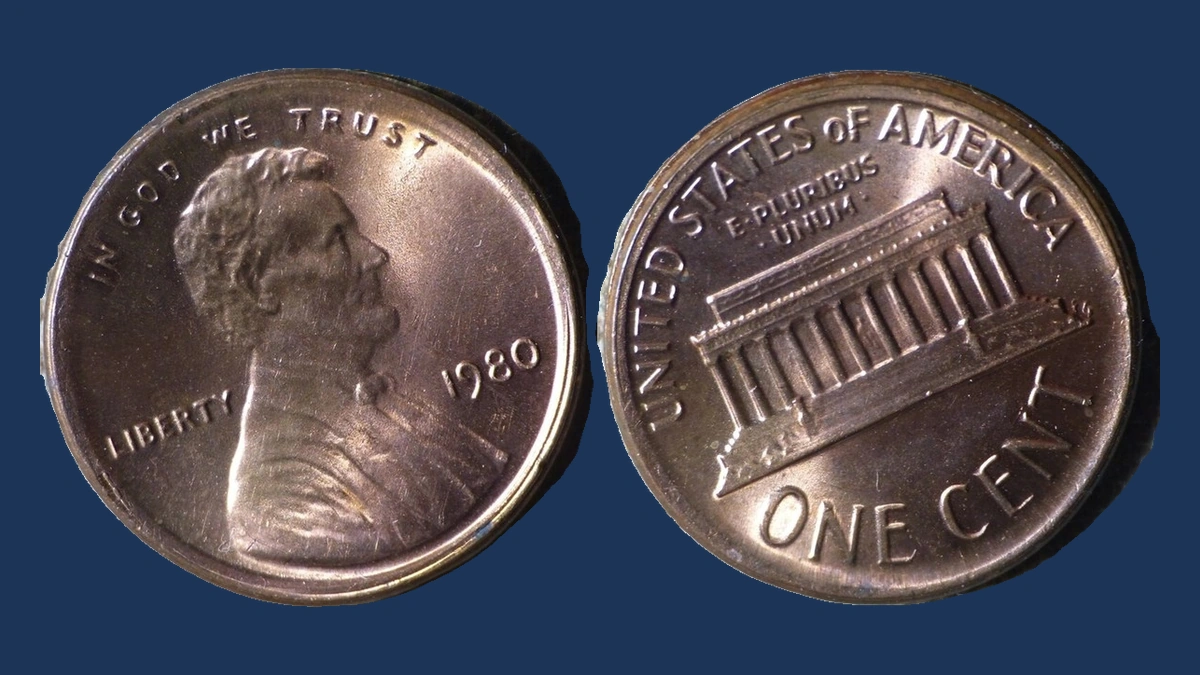
Extra width can surround a complete design when the blank spreads beyond its intended edge. The ring that normally restrains it, called the collar, did not provide its usual support.
The resulting coin is a broadstrike. A recorded 1980-D example was graded NGC MS63 Red and Brown.
That description means an unworn coin with marks and a mixture of copper-red and brown color. The color does not change its copper-rich alloy.
The complete design matters more than a wide-looking photograph. If the design runs off one side of the blank, an off-center strike is the more appropriate comparison.
Estimated Value
The NGC MS63 Red and Brown example sold for $57 on March 8, 2021. An estimated $20–$350 allows for different amounts of spread and preservation.
Red and Brown describes a mixture of surface colors. Compare another coin’s remaining copper-red color, marks, and visible spread before choosing the closest price.
Natural spreading with sharp remaining design helps the appeal. Later flattening can also increase diameter, but it should not receive the same premium as metal expanded during the original strike.
How to Identify
Check the outer lettering before reaching for calipers. A broadstrike retains the complete intended designs even though its border is enlarged or uneven.
Measure across several directions against the usual 19.05 mm. A scale should remain close to 3.11 grams if the original metal has not been removed.
Inspect the portrait and Memorial with a 10× magnifier for flattened high points. Later hammering tends to crush those details as it spreads the coin.
The edge is normally smooth, so an absence of grooves proves nothing. Look for tool marks instead.
Extra metal spread around a complete, naturally struck design is the visible combination that supports a broadstrike.
5. 1980 Lincoln Penny Doubled Front or Back Design (Estimated Up to $500)
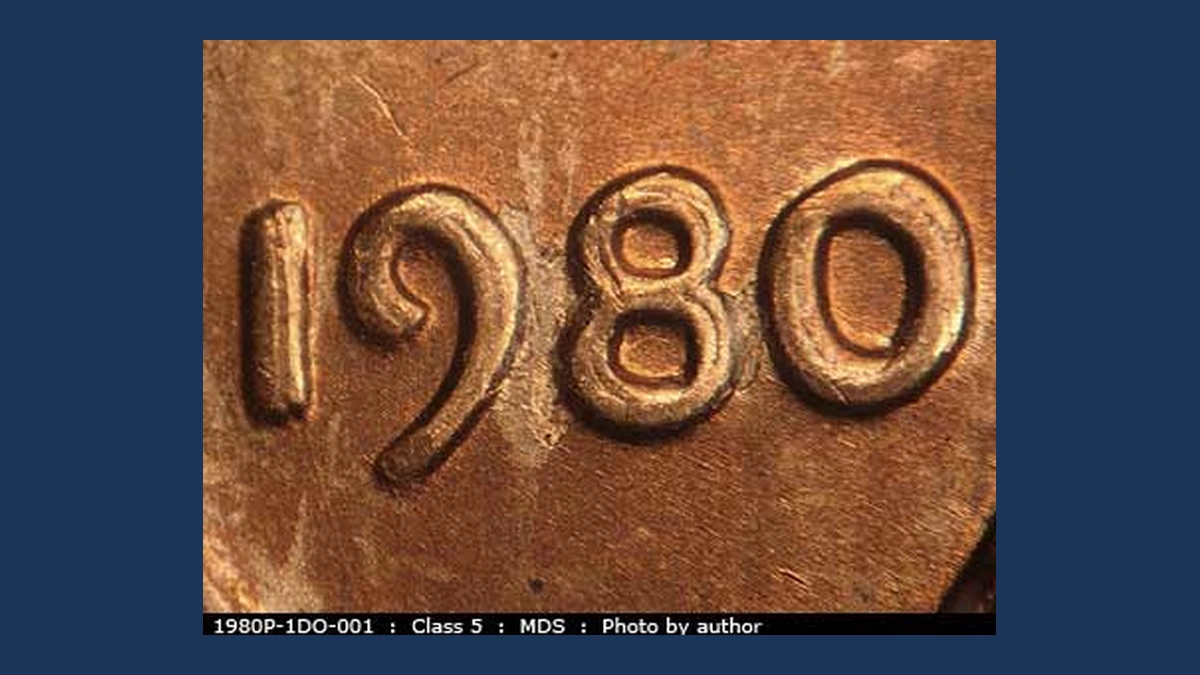
Repeated date edges and lettering identify one Philadelphia front-side variety known as FS-101. The chest folds, bow tie, and part of TRUST can also show repeated detail.
The extra design was already in the stamping tool. One strike could therefore transfer both outlines to a normal blank.
A different Philadelphia variety affects the back. It has a strong extra detail at the top of the sixth opening between the Memorial columns.
The two patterns belong to different comparisons. A coin need not show both, and tiny lines used to recognize a particular tool can change as that tool wears.
Estimated Value
Estimate $25–$500 for the recognized front variety across condition. The smaller back-side feature can be compared within approximately $5–$100.
PCGS records an eBay sale of $260 in May 2021 for a front FS-101 coin graded MS64 Brown. It was unworn with some marks and a brown surface.
That result belongs to the named front variety. It should not be assigned to every doubled-looking letter or to the separate ceiling detail on the back of a penny.
How to Identify
For the front variety, begin with the date and LIBERTY under a 10× magnifier. Match the added outlines to the same FS-101 pattern rather than generally thick letters.
For the back variety, count the spaces between columns from the left. Examine the upper part of the sixth opening for the repeated ceiling detail.
Flat shelves caused by movement during striking are different from extra design carried by a doubled tool. A scratch across a column is not another column.
Use a scale and calipers against 3.11 grams and 19.05 mm, and inspect the smooth edge. The decisive comparison is the same repeated shape in the same design location.
6. 1980 Lincoln Penny Cracks, Chips, and Cuds (Estimated Up to $500)
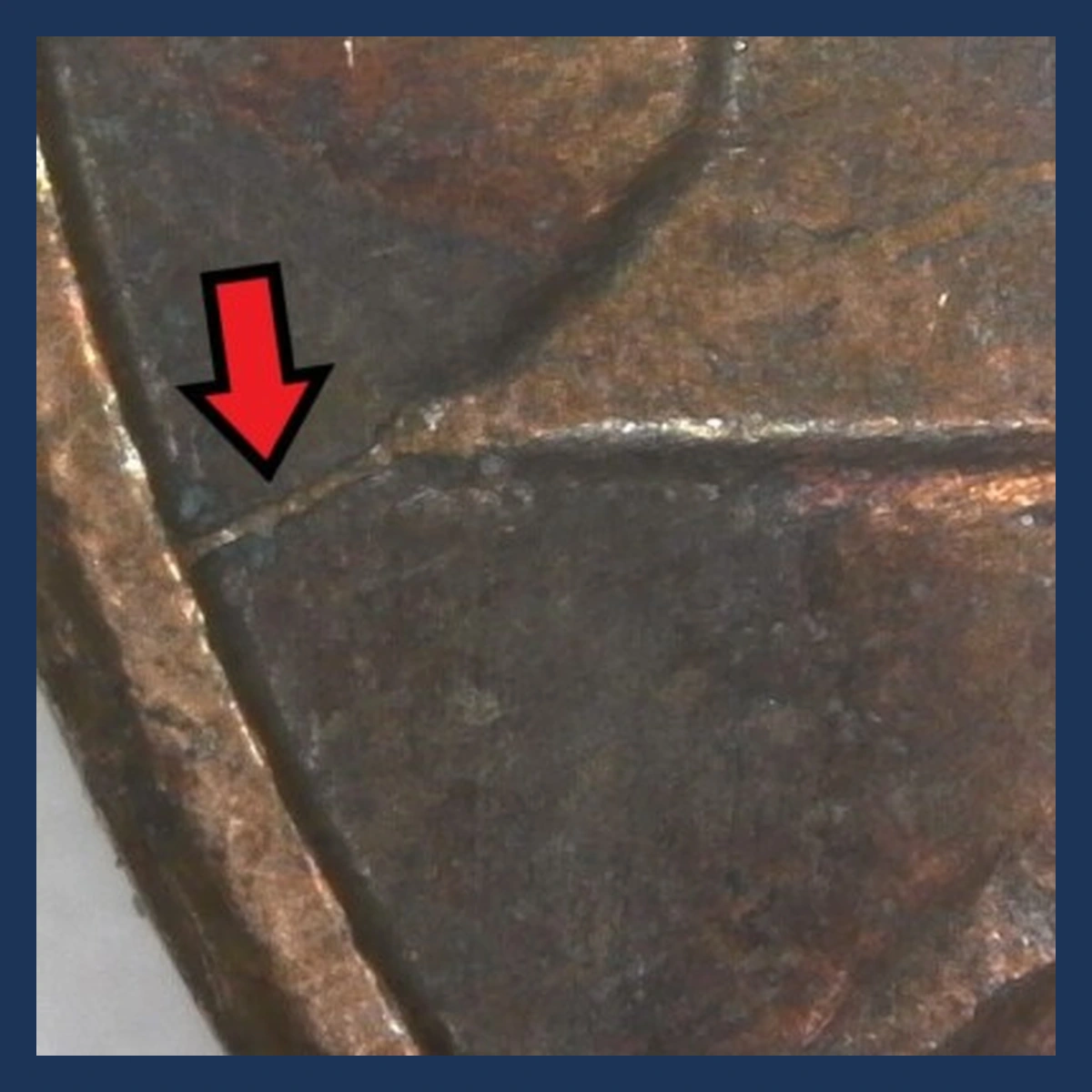
A raised line from Lincoln’s head toward the rim can resemble a spike. It comes from a crack in the stamping tool, rather than a cut into the penny.
Small missing pieces of the tool create solid raised blobs. A bar between B and E is called BIE; a larger break connected to the rim is called a cud.
Philadelphia and Denver examples include interior breaks and many rim shapes. Their precise positions vary.
One reported cud appears with distortion from a stuck coin covering the stamping tool. Examine both features on that penny together.
Estimated Value
Thin cracks and small chips can fit an estimated $2–$30. Clear larger cuds can fit approximately $30–$500, depending on size, position, and condition.
A 2021-D retained cud, where the broken tool piece stayed in place, sold for $186 in September 2025. Its zinc-centered metal and Shield design differ from 1980.
For a 1980 coin with additional cap-related distortion, value the complete piece once. Numerous catalog photographs do not mean every raised patch has the same rarity or price.
How to Identify
The normal penny is 3.11 grams and 19.05 mm with a smooth edge. Check those figures using a scale and calipers when safe.
Use side lighting to see whether a line stands above the surface. Scratches usually cut into it, though displaced metal can rise beside a cut.
With a 10× magnifier, follow the line or blob to its boundaries. A cud reaches the rim; an interior chip does not need that connection.
Look directly between B and E for a BIE. A bump elsewhere should be described by its actual position.
An original solid raised feature, placed correctly relative to the letters or rim, supports a damaged-tool explanation.
7. 1980-D Lincoln Penny Clips with or without Off-Center Striking (Estimated Up to $500)
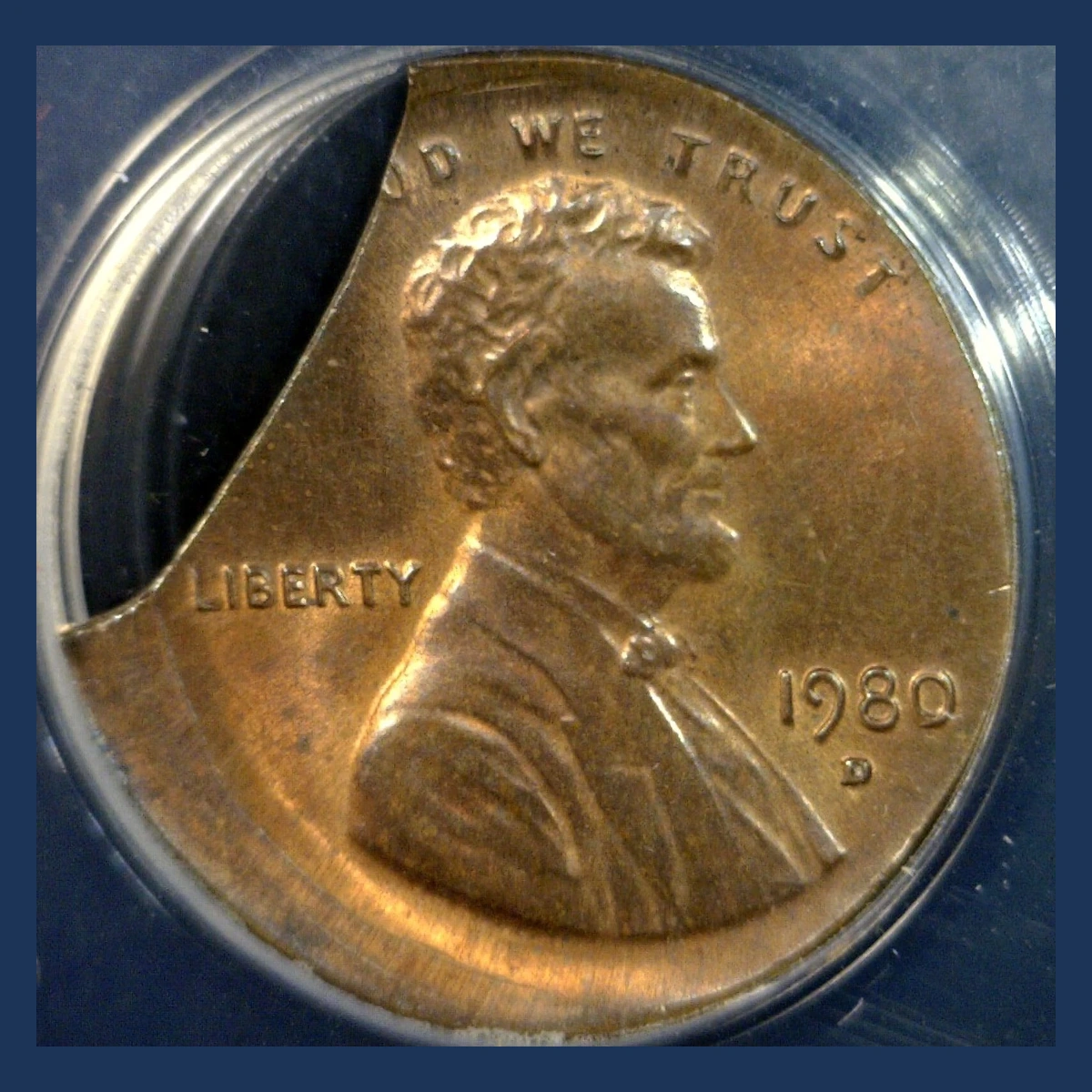
A clipped blank begins with missing metal, while an off-center strike begins with poor placement in the press. One penny can show both.
A recorded 1980-D example has a five-percent curved clip and an eight-percent off-center strike. Another has a straight clip with an off-center design.
A separate Denver penny has two curved clips listed at three percent. That figure should not be assumed to mean three percent missing at each gap.
The gaps interrupt the outline; the off-center area still contains blank metal. Keeping those boundaries separate makes these combined errors much easier to understand.
Estimated Value
The five-percent curved clip with an eight-percent shifted strike sold for $84 in December 2024. It was graded PCGS MS63 Red and Brown.
Estimate $15–$500 across original clips and more dramatic clip-and-strike combinations. Size, visible identity, and condition determine the closest comparison.
The $84 result is the total for one combined error. A plain clipped coin and a stronger combination should be judged separately, without simply adding full prices for each feature on the same piece.
How to Identify
First trace the actual outer edge. A clip removes a section of that outline, whereas plain off-center metal remains part of it.
Inspect each cut with a 10× magnifier for natural struck detail near the boundary. Later sawing or filing can create a gap without the same original rim formation.
For a double clip, count two gaps without assigning an unsupported percentage to each. Photograph both faces to show any shifted strike.
A scale should show less than 3.11 grams when enough metal is missing. Calipers compare surviving full widths with 19.05 mm, and the rest of the edge should be smooth.
The original cut boundaries must be established separately from the unstruck crescent.
8. 1980 Lincoln Penny Off-Center Strike (Estimated Up to $600)
Philadelphia examples include strongly displaced strikes as well as more modest ones. Denver coins also show the design pushed toward different parts of the edge.
The blank was not fully between the tools when they struck. Only the area they reached received Lincoln and the Memorial.
An eighty-percent example and a twenty-percent example therefore have very different amounts of surviving design. Those percentages describe individual coins, not separate minting processes.
The remaining date is especially important on a large shift. A nearly empty disc should not be assigned to 1980 simply because another coin has a similar outline.
Estimated Value
Use an estimated $15–$600 for genuine dated examples, with modest shifts generally toward the lower part. Attractive surfaces and enough surviving identity help stronger coins.
A fifty-five-percent off-center 1984-D cent brought $41 in September 2024. That later coin uses copper-coated zinc rather than the copper-rich blank of 1980.
The comparison shows why a large percentage does not guarantee a large price. A badly corroded or poorly dated piece can sell below a clearer example with a smaller displacement.
How to Identify
Weigh an accessible piece against 3.11 grams and measure its outline with calipers against 19.05 mm. Inspect the smooth edge for cuts.
Check the plain crescent for grinding or surface work. A shifted design on only one face can result from a different tool-alignment problem.
Turn the coin over and compare the missing areas. They should agree with one blank placed partly outside the striking space.
Find the date and any D before deciding how much design is missing. A 10× magnifier can separate faint digits from random marks on the plain metal.
Genuine untouched metal beside corresponding design loss on both faces provides the practical off-center check.
9. 1980 Lincoln Penny Struck Through a Die Cap (Estimated Up to $600)
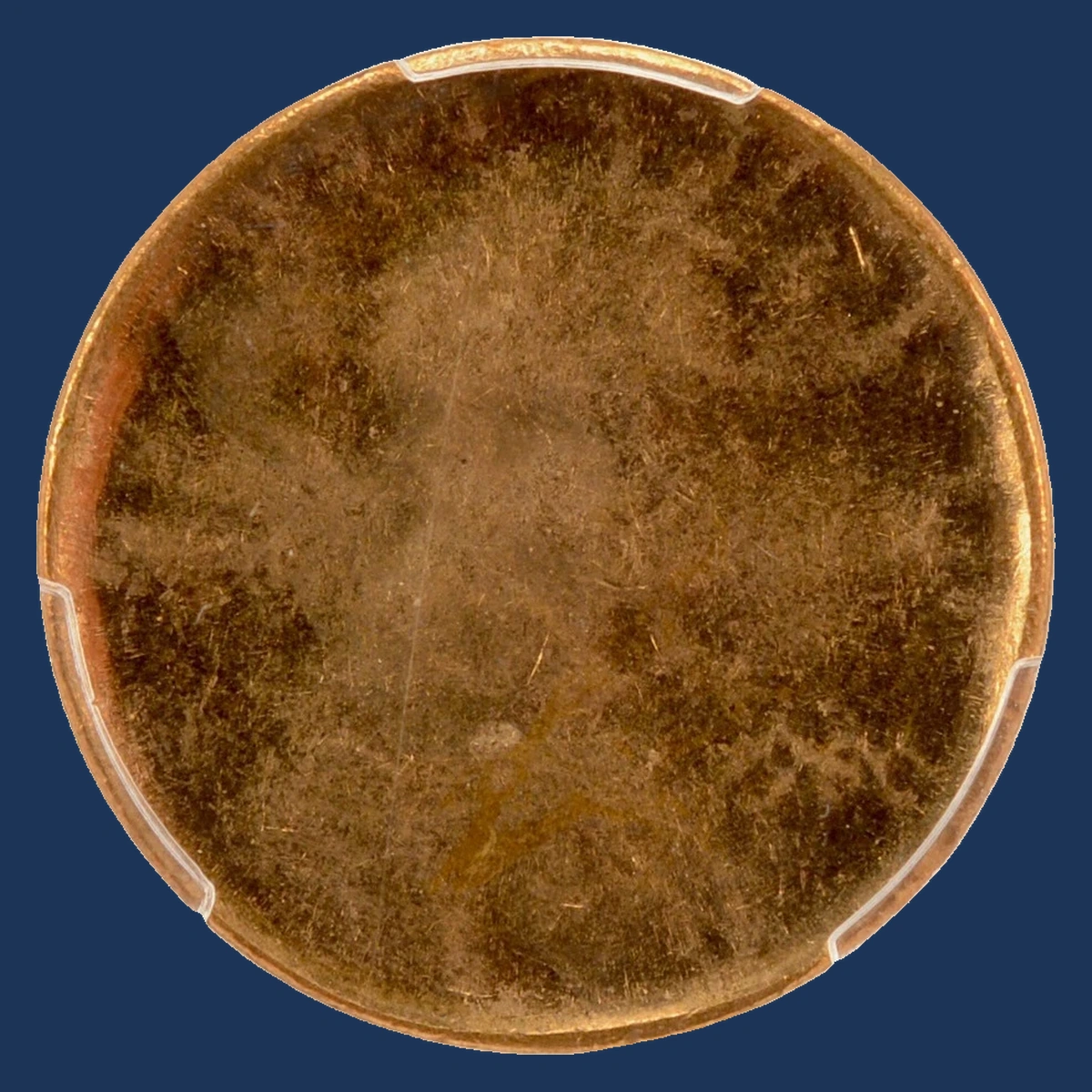
The penny in this example remained beneath another coin during striking. That earlier coin had stuck to a steel stamping tool and formed a covering called a die cap.
Repeated blows stretched the covering thinner. A new blank beneath it then received a softened or distorted version of the normal design.
The 1980 example is the receiving coin. It is not the cup-shaped piece that stayed attached to the tool.
Collectors call this a late-stage capped-die strike. Parts of the design can reappear through the thin covering, while other areas remain unusually weak.
Estimated Value
Allow an estimated $100–$600 for a genuine 1980 receiving coin with clear capped-die effects. The size and visibility of the affected area matter alongside condition.
The documented PCGS MS63 Red and Brown example was offered in a June 2014 auction. A separate ANACS MS63 Red example should be compared on its own merits.
This range estimates receiving-coin values. Prices for tall, cup-shaped die caps concern a different object and should not be transferred directly to this flat penny.
How to Identify
Begin with the coin’s overall shape. A receiving coin can remain relatively flat even though its design looks stretched or partly covered.
Normal 1980 cents measure 19.05 mm across and weigh 3.11 grams. Use calipers and a scale when the coin is safely accessible, and inspect its smooth edge.
Under a 10× magnifier, follow the transition from clear detail to softened or distorted design. Compare that pattern with a professionally identified capped-die example.
Ordinary wear usually affects exposed high points, while this striking problem changes how the design reaches the surface. A blurred area alone is insufficient.
Look for connected distortion from the covering coin, rather than assuming any weak portrait proves a die cap.
10. 1980 Lincoln Penny Brockage and Broadstrike (Estimated Up to $750)
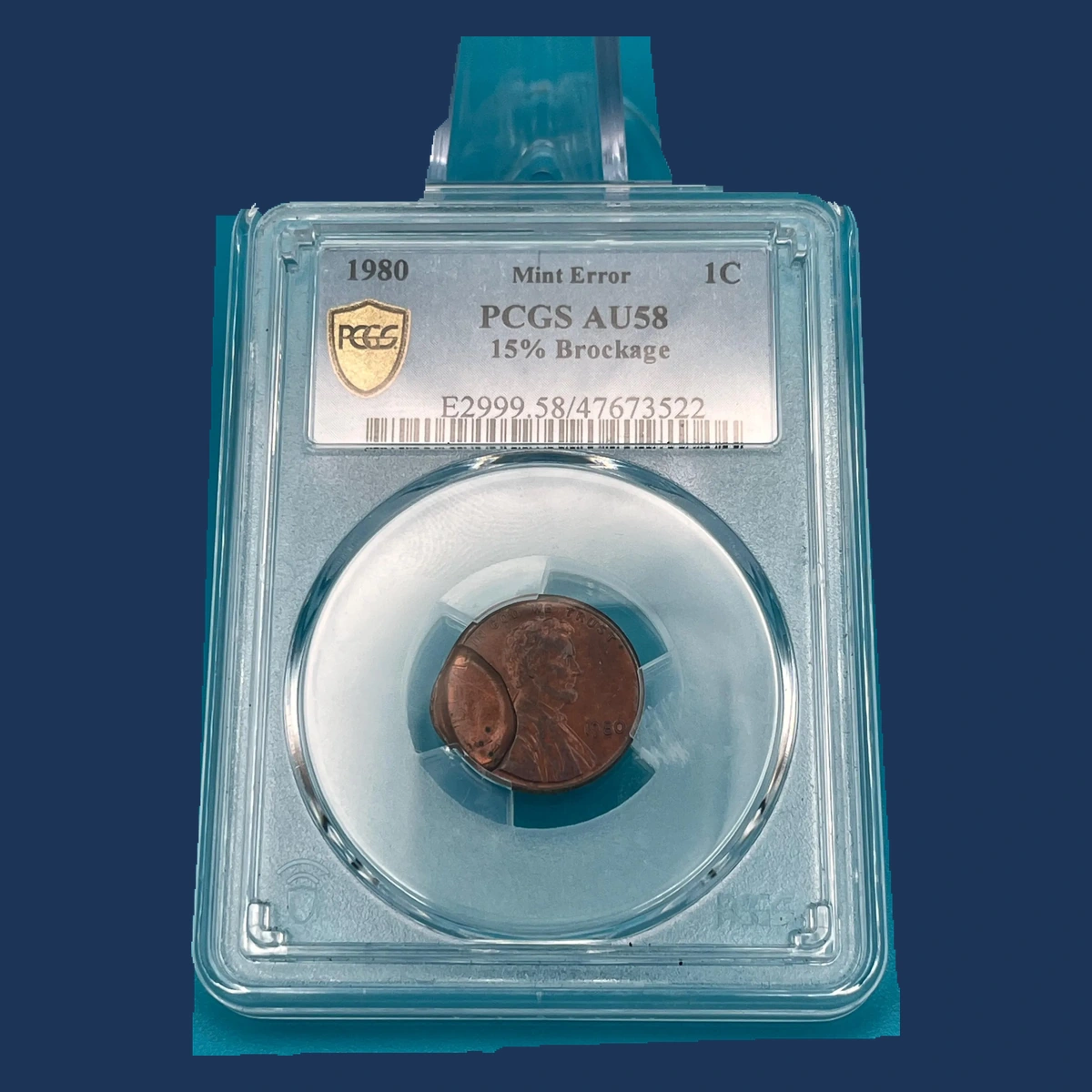
A normal cent has raised lettering. A brockage instead shows an inward impression with the design reversed, much like a stamp pressed into soft material.
It forms when a previously struck coin remains in the press and contacts the next blank. That coin transfers its design during the blow.
The recorded 1980 example combines a front brockage with a broadstrike. Metal also spread beyond its usual outline because the retaining ring did not hold it normally.
These two effects belong to the same penny. Its enlarged shape and reversed impression should be examined together.
Estimated Value
An estimated $150–$750 suits a genuine brockage combined with outward spreading, depending on the impression’s coverage and clarity. The documented 1980 example was graded NGC MS64 Red.
For comparison, an undated cent with a full front brockage sold for $192 in March 2025. That sale does not establish the date or metal of the comparison coin.
The 1980 penny receives one combined value. Separate prices for brockage and broadstrike should not be added together.
How to Identify
A safely accessible coin can be weighed against 3.11 grams. Calipers show how far it departs from 19.05 mm; inspect the smooth edge for later flattening.
Then trace the enlarged outline. A broadstrike spreads metal beyond the normal boundary rather than simply removing part of the design.
Read the unusual lettering in a mirror or reverse a clear photograph. A transferred brockage design should become recognizable when its direction is reversed.
Use a 10× magnifier to check that the impression sinks into the original surface. Raised, normally oriented extra letters suggest a different problem.
Reversed, sunken design on the expanded penny is the combination to match. Do not infer the percentage of brockage from the grade alone.
11. 1980 Lincoln Penny Elliptical Blank and Off-Center Strike (Estimated Up to $750)
This penny began with an oval blank rather than the usual round disc. It then received a strike about 90 percent away from the centered position.
Only a small section of the cent design reached the metal. Much of the unusual blank remained outside the stamping tools.
The recorded example was graded PCGS MS62 Brown. Its shape and striking position describe two events on one coin, rather than two separately priced pieces.
An ordinary penny bent or cut into an oval after leaving the Mint has a different history. Original striking detail along the unusual outline helps separate them.
Estimated Value
Use an estimated $150–$750 for the combined oval-blank and extreme off-center error. Clear original surfaces and recognizable design can make the unusual shape easier to appreciate.
The documented 1980 example appeared in a July 2022 sale. No realized amount from that listing is used here.
The estimate compares similarly unusual blanks and large off-center strikes. A lightly displaced round penny is a weaker comparison, even if both coins have some blank space beside the design.
How to Identify
Photograph the full outline before enlarging the small struck area. The blank’s oval shape must be assessed separately from the position of the design.
Calipers can record its longest and shortest widths; neither should be assumed to equal a normal cent’s 19.05 mm. A scale records its weight against the normal 3.11-gram starting point.
Inspect the edge with a 10× magnifier. Fresh cutting, filing, or flattened damage can explain an artificial oval.
No exact weight is established here for this example. Missing design alone also cannot establish the shape of the original blank.
The useful combination is an original oval outline with a small, genuine struck area near one end.
12. 1980-S Lincoln Proof Penny Rotated Back (Estimated Up to $750)
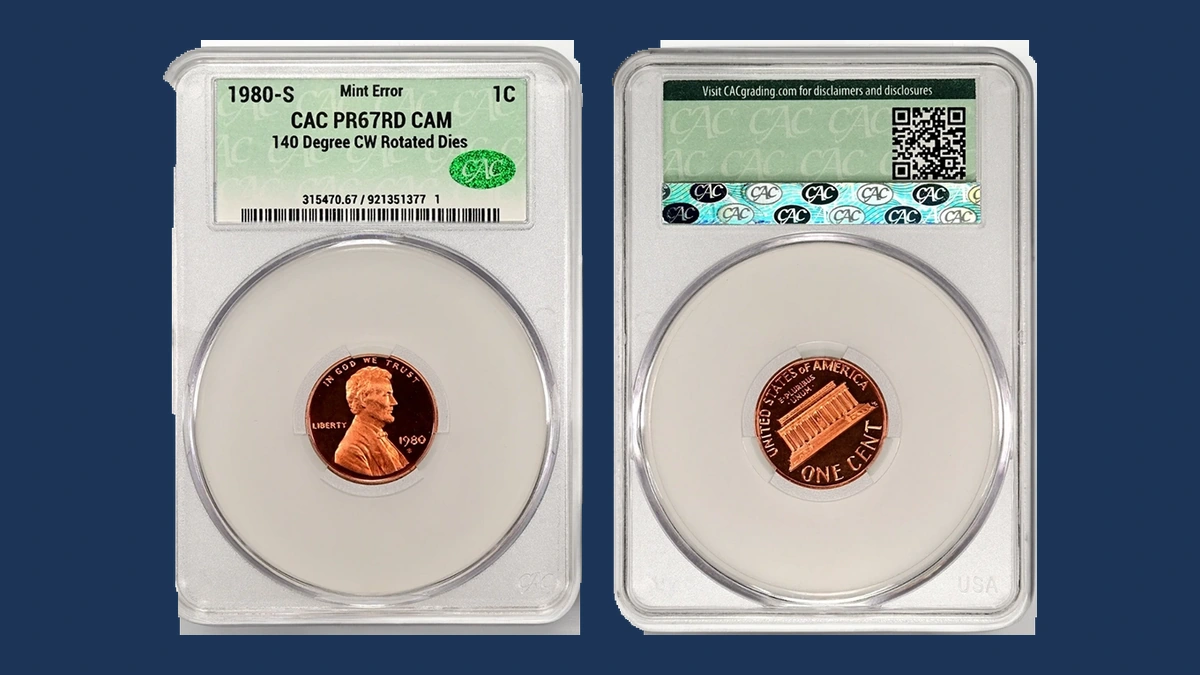
Hold Lincoln upright, then turn this penny over from top to bottom. The Memorial does not stand upright as it should.
The recorded San Francisco Proof has a back rotated about 130 degrees clockwise. Proof coins are specially made collector pieces, usually with reflective fields and sharply formed designs.
Rotation happens when one stamping tool sits at the wrong angle compared with the other. It changes the relationship between the faces rather than doubling either design.
The example was graded PCGS PR66 Red and Brown. Its color description concerns the surface, while the angle describes the error.
Estimated Value
The documented 130-degree example sold for $384 on July 5, 2022. That is a sale of the 1980-S Proof itself.
An estimated $100–$750 allows for differences in angle, surface quality, and visibility. A large turn is generally easier to demonstrate than a slight misalignment.
Proof surfaces can show scratches and fingerprints very clearly. The reported grade does not guarantee that another rotated coin has the same condition or deserves the same price.
How to Identify
Practice the top-to-bottom turn with a normal United States cent. Both faces should appear upright when the first face starts upright.
Repeat that movement with the suspected coin without twisting it sideways. A left-to-right turn creates the wrong comparison for this test.
The 1980-S example turns about 130 degrees clockwise from normal. Compare fixed points on the portrait and building, using photographs if the coin is sealed.
For an accessible piece, check 3.11 grams on a scale and 19.05 mm with calipers. The edge is smooth; examine the S and surrounding surface with a 10× magnifier.
A consistently tilted Memorial after the correct top-to-bottom turn demonstrates the rotation directly.
13. 1980 Lincoln Penny on a Clad Dime Blank (Estimated Up to $1,000)
A silver-colored penny can begin as a blank intended for a dime. The stamping tools still carry Lincoln and the Memorial, but the smaller disc cannot hold their complete design.
Two 1980 examples are recorded: a Philadelphia coin graded NGC MS64 and a Denver coin graded NGC MS65. Each was described at about 2.3 grams.
These are copper-nickel clad dime blanks, with outer layers surrounding a copper center. They are not the separate silver-blank errors.
An unused dime blank also lacks an earlier Roosevelt or torch design. Finding those shapes would point toward a cent struck over an existing dime.
Estimated Value
Estimate $250–$1,000 for genuine 1980 cents on clad dime blanks. Strong surviving cent details and attractive surfaces help a small blank show its unusual identity.
A 1981-D cent on a clad dime blank sold for $372 in September 2025. That nearby year provides a comparison, not a sale price for either documented 1980 coin.
The Philadelphia and Denver pieces remain separate examples. Their different grades should not be averaged into a supposed price for one coin.
How to Identify
Weigh the coin first when it is safely accessible. A normal copper-rich 1980 cent weighs 3.11 grams, while a standard clad dime blank is about 2.268 grams.
The recorded 2.3-gram weights fit that smaller blank much more closely. Calipers compare the outline with a normal cent’s 19.05 mm and a dime’s 17.91 mm.
Use a 10× magnifier around the truncated lettering and edge. A copper center between lighter outer layers supports clad construction.
Do not demand normal dime edge grooves from an unused blank struck by cent tools. Silver plating added to an ordinary penny also does not make it a dime blank.
Low weight, smaller size, and clipped-off cent design should agree.
14. 1980 Lincoln Penny Struck on a Metal Fragment (Estimated Up to $1,000)
This is a tiny piece of metal carrying a genuine coin impression. At 0.23 gram, it contains far less metal than a normal 1980 penny.
The irregular fragment was struck by cent tools and later graded NGC MS62 Red and Brown. The auction identified it as a 1980 example.
Its source is not established by its outline. A small fragment need not be a foreign coin blank or a piece cut from a completed penny.
The visible design and the way it meets the edges matter most. They help show whether the metal was already a fragment when struck.
Estimated Value
An estimated $200–$1,000 reflects the small size, recognizable striking detail, and unusual starting shape. Better-preserved design can help explain the piece to a buyer.
The recorded fragment appeared in a two-coin auction lot. A combined lot amount would not establish its individual price, so no part of that total is assigned here.
This estimate concerns an authenticated struck fragment. A piece cut from an ordinary penny after striking belongs to a different category and should not receive the same premium.
How to Identify
Use a scale precise enough to read hundredths of a gram. The recorded 0.23-gram weight is only a small fraction of the normal 3.11 grams.
Calipers document the fragment’s actual outline rather than expecting the normal 19.05-mm diameter. Handle such a small piece over a soft, secure surface.
With a 10× magnifier, follow the struck details to each irregular edge. Later cuts can slice through completed design and leave tool marks.
A normal cent has a smooth edge, but a fragment need not preserve that complete boundary. Do not expect the whole date to be visible merely because an auction assigned a year.
Original design flowing onto the tiny fragment’s shape is the key feature to compare.
15. 1980 Lincoln Penny Double and Triple Strikes (Estimated Up to $1,200)
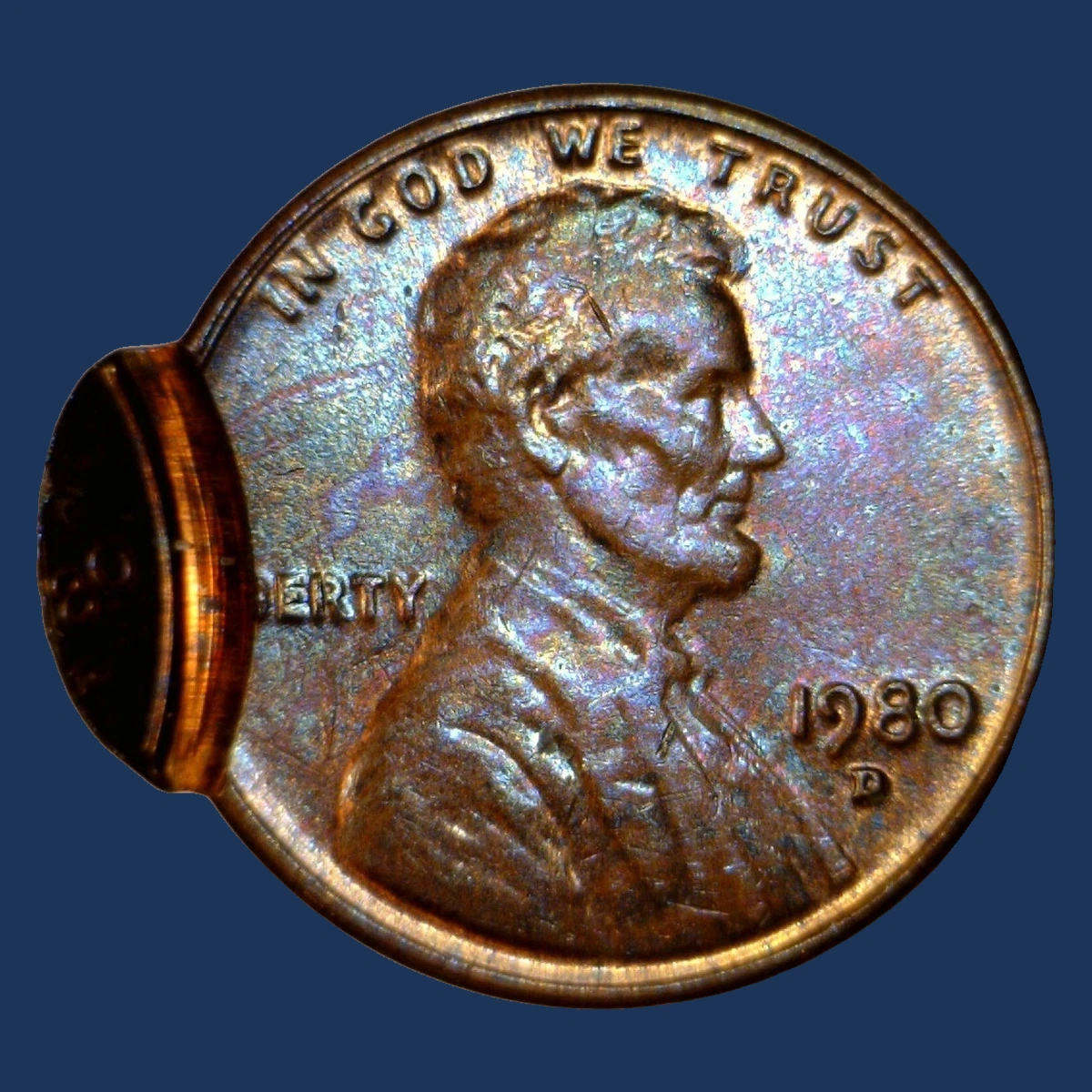
A coin can remain in the press and move before another blow lands. Several positions of the date, portrait, or lettering may then share its surface.
Recorded 1980 examples include a seventy-five-percent off-center second strike and a triple strike with all blows off center. Their movements are different.
Another coin has an eighty-percent off-center second strike with one face blocked. Its grading description also notes corrosion, which is later damage rather than another mint error.
These features should be read as separate examples. A price for a clean triple strike should not be attached to the corroded two-strike coin.
Estimated Value
Estimate $50–$1,200 across genuine double and triple strikes with different visible overlaps. Clear repeated designs and original surfaces support the stronger prices.
A 1979 cent with an off-center second strike brought $204 in September 2023. Its copper-rich metal makes it a closer material comparison than a later zinc cent.
The corroded 1980 example needs a reduction for its surface problem. More blows do not automatically mean more money when later strikes erase earlier detail or obscure the sequence.
How to Identify
Follow one recognizable feature from each striking position. A portrait outline or long piece of lettering is more useful than several unrelated tiny lines.
Use a 10× magnifier to inspect where the impressions overlap. Check the opposite face for the corresponding strikes or a blocked area.
Flat doubling along a letter does not establish another full blow. Corrosion can also create confusing edges and must be assessed separately.
A scale compares the metal amount with 3.11 grams; calipers record expansion from the normal 19.05-mm outline. Inspect the smooth edge without trying to flatten the piece.
Distinct, connected positions of the cent design provide the evidence for repeated strikes.
16. 1980 Lincoln Penny Foldover Strike (Estimated Up to $2,500)
The folded shape here formed in the coin press. A blank stood on edge and collapsed under the force of the strike instead of lying flat.
Collectors call the result a foldover strike. Parts of the cent design appear on metal that has folded back toward itself.
The documented 1980 example retains its full date and was graded NGC MS64 Red and Brown. It is distinct from other folded cents with incomplete dates or later zinc metal.
Bending a finished penny cannot recreate the same sequence. A genuine foldover preserves the relationship between the developing fold and the striking impression.
Estimated Value
This 1980 foldover sold for $1,020 on December 23, 2024. Its full date makes the year directly useful when comparing another example.
An estimated $600–$2,500 covers differences in shape, condition, and surviving design. An unusual fold is more appealing when the striking sequence remains understandable.
The sale is for the complete folded coin. Prices for separate, undated zinc foldovers should not be treated as another transaction involving this copper-rich 1980 piece.
How to Identify
Do not unfold the coin. Its shape contains evidence of how the blank moved when the stamping tools met.
Look along the fold with a 10× magnifier and gentle side lighting. Follow the design onto the bent metal instead of checking only the exposed flat face.
A safely accessible example can be weighed against the normal 3.11 grams. Calipers record its altered dimensions; a folded penny will not present the usual flat 19.05-mm circle.
Inspect the remaining smooth edge for later cutting or forced bending. A finished coin bent afterward may stretch or damage existing design at the bend.
The strongest feature is struck detail that fits the folded shape, with the complete 1980 date identifying this example.
17. 1980 Lincoln Penny Struck Over a Dime (Estimated Up to $3,000)
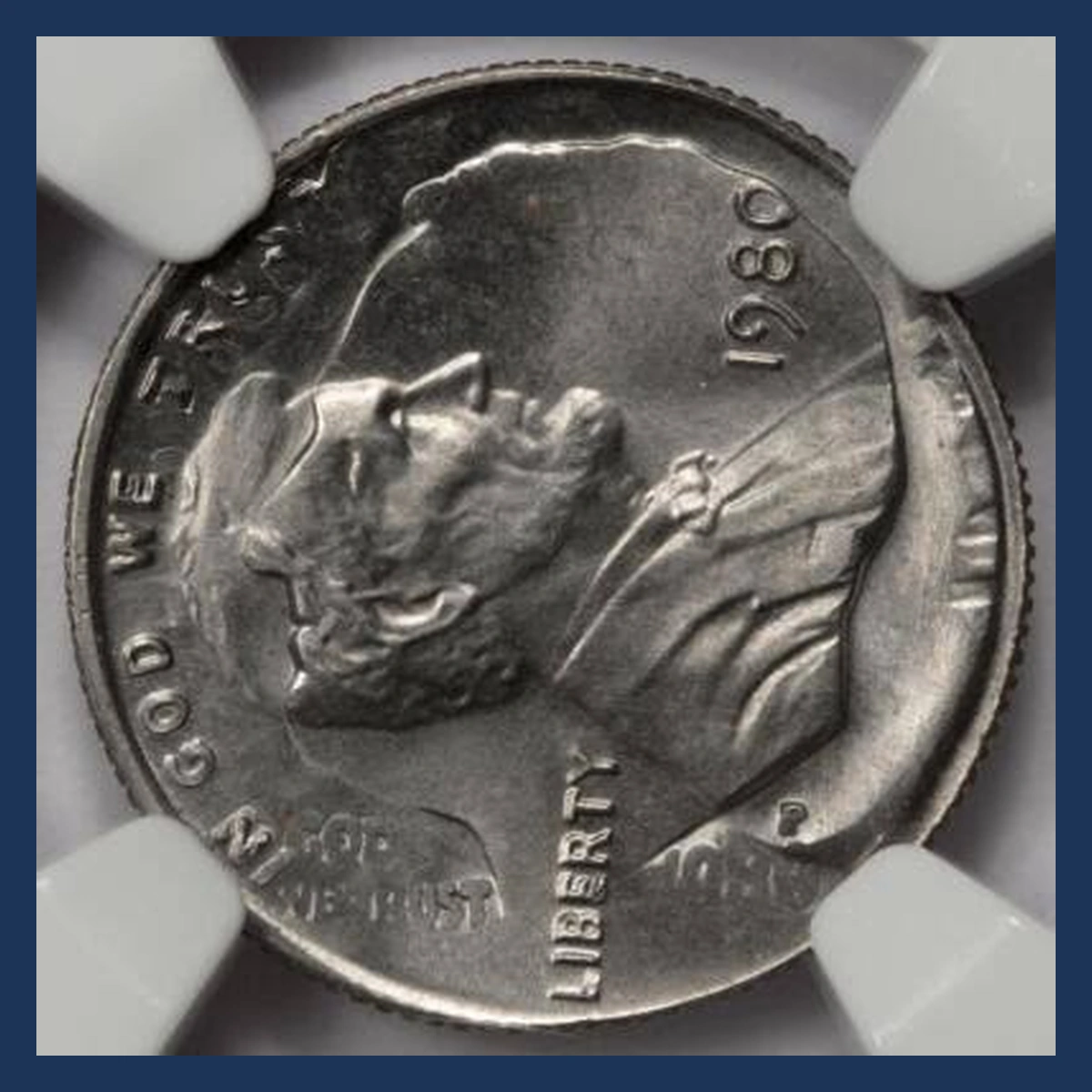
This error contains designs from two denominations. A finished dime entered a cent press and received Lincoln-cent details over its existing Roosevelt design.
One 1980 Philadelphia example, graded PCGS MS66, was struck over a 1980-P dime. The cent’s final date digit is missing, even though the dime date survives.
A separate ICG MS67 example combines the overstrike with a flipover event. Both dates are complete on that coin.
Those are different pieces. The extra turn in the second example changes the arrangement of surviving designs and must not be assigned to the first.
Estimated Value
The PCGS MS66 example sold for $1,380 on April 29, 2011. Another 1980 cent over a 1980-P dime, graded PCGS MS63, brought $1,920 in September 2025.
Use an estimated $700–$3,000 across clearly identified examples. Complete dates and readable designs from both denominations can strengthen interest.
The older and newer sales concern separate coins, not a price history for one specimen. The flipover example also needs its own comparison based on the extra visible strike.
How to Identify
Search for a recognizable Roosevelt or torch feature beneath Lincoln or the Memorial. Two complete designs need not survive, but isolated scratches do not establish a dime underneath.
Use a 10× magnifier to separate the two dates. A readable 1980 dime date does not automatically prove that every missing digit of the cent date can be seen.
The smaller dime begins near 2.268 grams and 17.91 mm, compared with a normal cent’s 3.11 grams and 19.05 mm. Check accessible coins with a scale and calipers.
Later striking can alter the outline and edge grooves. For the flipover example, compare both faces with its own photographs.
Recognizable designs from both denominations establish the overstrike.
18. 1980-D Lincoln Penny on a Silver Blank (Estimated Up to $25,000)
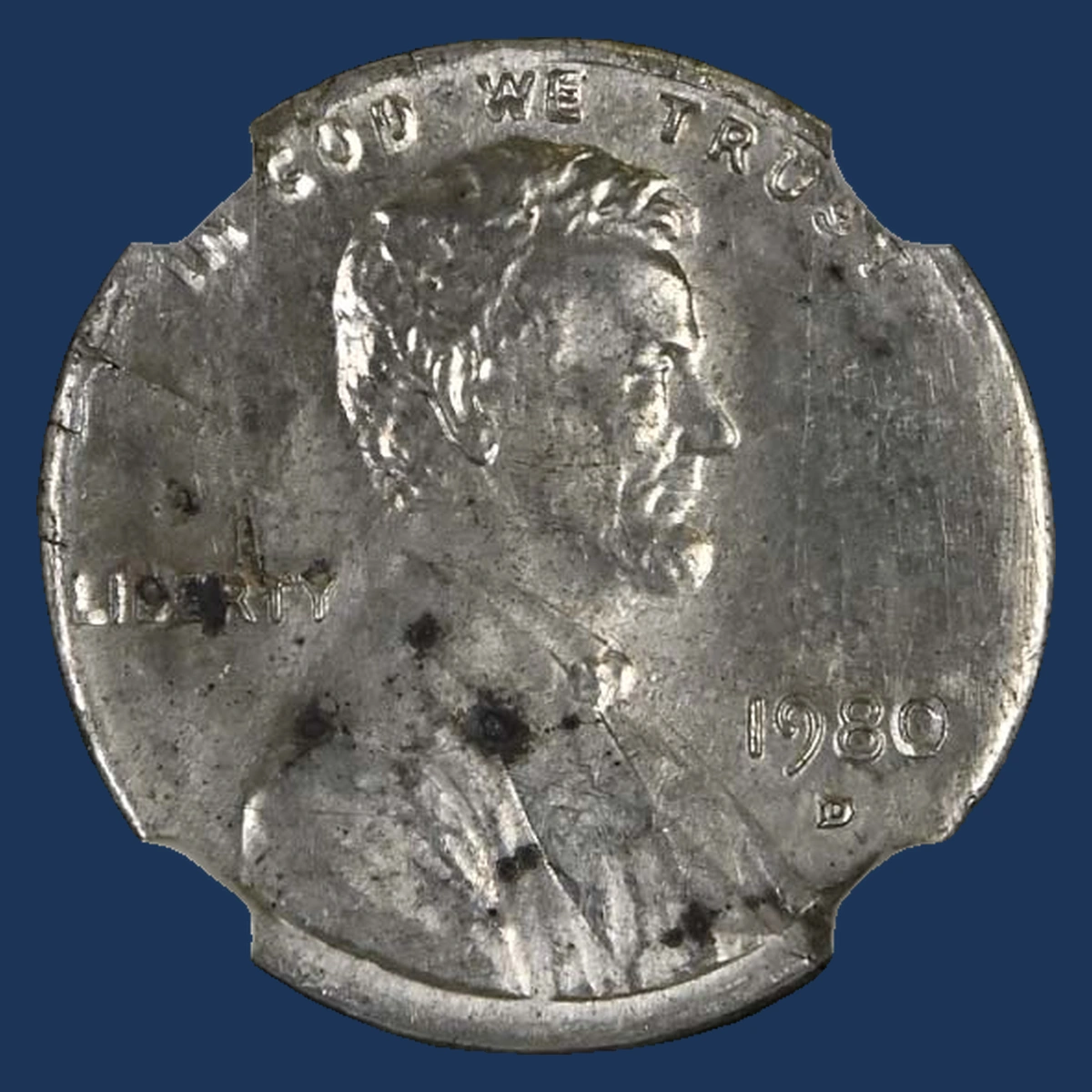
These silver-colored Denver cents did not begin with the same kind of blank. Their different weights are central to telling the examples apart.
One weighs 2.1 grams and was graded NGC MS62. It was identified as silver, but the original country and exact silver mixture were not established.
The other weighs 2.5 grams and was graded NGC MS64. Its blank was identified as a 90 percent silver dime blank.
Both received the 1980-D cent design on smaller metal. Neither should be confused with the copper-nickel clad dime-blank errors described earlier in this list.
Estimated Value
The 2.1-gram unidentified silver-blank cent sold for $6,300 on January 17, 2025. The separate 2.5-gram silver dime-blank cent brought $18,000 on August 28, 2025.
An estimated $4,000–$25,000 spans these rare silver-blank possibilities and differences in condition. Metal identification matters more than silver color alone.
The two sales do not show one coin rising in value. They establish different prices for different blanks, grades, and individual coins within the same year.
How to Identify
A normal 1980 cent weighs 3.11 grams and measures 19.05 mm across its smooth edge. Check accessible pieces with a precise scale and calipers before comparing the unusual blanks.
The 2.1-gram example has stretched lettering and unevenly complete rims. The 2.5-gram silver dime example also loses room near the outer lettering.
A 10× magnifier helps examine those boundaries, but it cannot determine silver content. Professional metal testing is needed to separate silver from clad metal or added surface plating.
Keep the two recorded weights separate. Do not identify the lighter blank as a particular foreign issue without supporting evidence.
Smaller size and unusual weight start the examination; verified metal content establishes which silver-blank comparison applies.
Conclusion
For 1980, weigh suspicious pieces against a 3.11-gram copper-rich cent. A later zinc penny provides the wrong starting comparison.
The estimated $2–$25,000 range includes small tool breaks, larger striking mistakes, and rare silver-blank coins. Match the actual metal and visible design before using an auction price. A missing piece, a folded blank, and a plain off-center area may all look unusual, but each preserves a different event.