1878 Morgan Dollar Error List with Pictures

The eagle’s tail is a useful starting point for the first Morgan dollar. Some 1878 coins show feather tips from an earlier design beneath the main tail.
Tiny details can matter elsewhere too: a specially made Proof with a doubled bow brought $19,975 in June 2016. That price includes the valuable Proof coin itself.
This 1878 Morgan dollar error list covers estimated whole-coin values of $75–$30,000. Read on to separate repeated designs, tool marks, and coins that shifted in the press.
1. 1878 Morgan Dollar Weak or Incomplete Tool Details
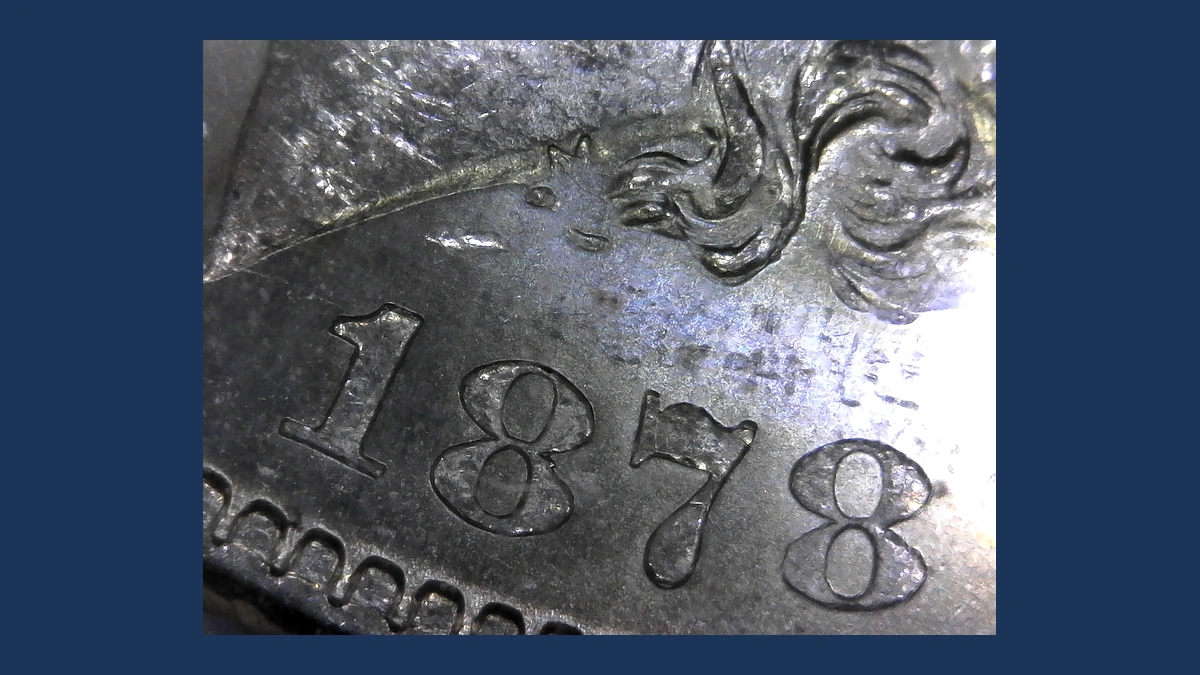
An ear or letter can look partly missing even where the nearby surface has little wear. Polishing the steel stamping tool can remove shallow details that would otherwise appear on the coin.
Philadelphia examples include Polished Ear and Polished LIB varieties, plus a Weak LIB variety. LIB refers to letters in LIBERTY on the band above Liberty’s forehead.
Other varieties have incomplete letters or date digits, including Broken N&M and Broken R&B. Those names describe particular shapes, rather than proving that every missing letter came from the same cause.
Estimated Value
Estimate $75–$1,500 for clearly identified ordinary examples, from worn coins through attractive unworn pieces. The amount concerns the complete silver dollar, including its condition and particular variety.
A small missing detail may add little to an otherwise common coin. A scarce, firmly matched variety with original surfaces can attract stronger interest.
Scrubbing the coin to make the feature clearer can reduce value. Brightness cannot replace preserved detail and a sound comparison with the correct variety.
How to Identify
Compare the weak feature with nearby details of similar height. Wear tends to affect exposed parts together, while tool polishing can leave one shallow feature weak beside sharper work.
For LIBERTY, inspect the band and remaining letter shapes under a magnifier. For an ear variety, compare its inside contours with an ordinary example of the same design.
Watch for rubbing, scraped silver, or long cleaning scratches across the coin. Those marks occur on the finished surface and do not establish a polished stamping tool.
Use the exact variety photograph for incomplete letters and digits. Match the shape of the gap and neighboring details, rather than treating any damaged letter as the named variety.
2. 1878 Morgan Dollar Tool Chips and Cracks
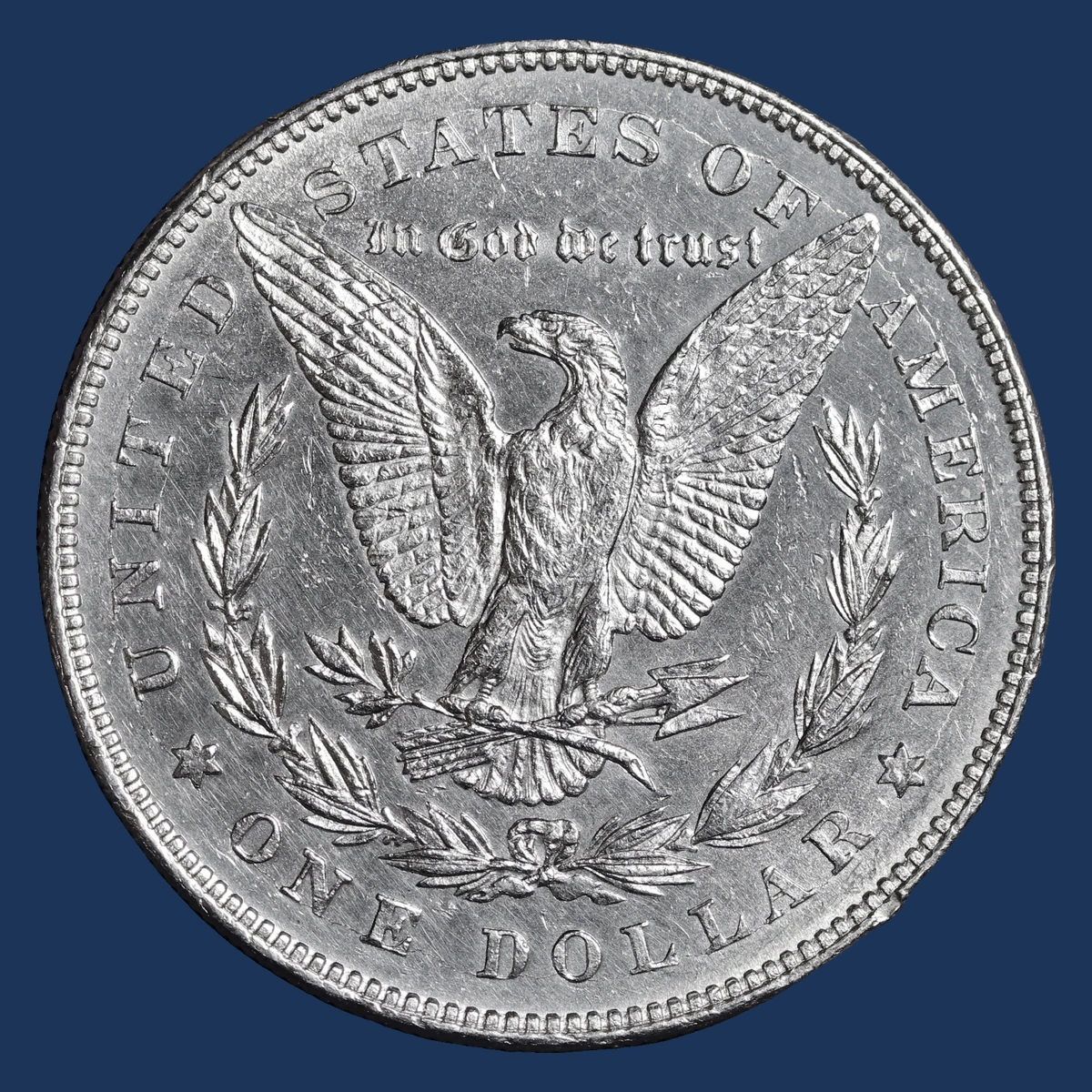
A small raised dot can appear where a piece of the stamping tool broke away. Silver flows into the opening during striking and leaves extra metal on the coin.
Philadelphia varieties include Face Chips, Chip in Ear, Eye Dots, and a chip beside the small border beads. Another has a crack across Liberty’s bonnet, or cap.
The names Dot on Ear and Flake on Ear describe marks used to recognize particular tools. A flake-shaped raised feature is different from a loose layer peeling off the finished dollar.
Estimated Value
For identified ordinary chip and crack varieties, use an estimated $75–$2,500. Small marks usually need a clear variety match before they add much to the coin’s underlying value.
The size of a bump is only one factor. Scarcity, visible detail, and the condition of both faces can matter more.
A collectible raised mark should be part of the original strike. Added solder, corrosion, and pushed-up silver from a blow do not qualify for the same premium.
How to Identify
Do not pick at a raised spot near the ear or eye. Begin with light from two directions to see whether the feature rises naturally from the stamped surface.
Compare its outline and exact location with the named variety. A different dot nearby does not establish the same tool.
For the Cracked Bonnet example, trace the narrow raised line across the cap with a magnifier. A scratch instead cuts a groove, even when its sides have small raised lips.
Inspect the surrounding silver for dents or disturbed texture. Damage that pushes metal upward should leave a corresponding depression or other signs of the blow.
The useful check is the whole pattern around the mark, including nearby letters and hair. Leave any truly loose material attached for expert examination.
3. 1878 Morgan Dollar Clashed Border Beads
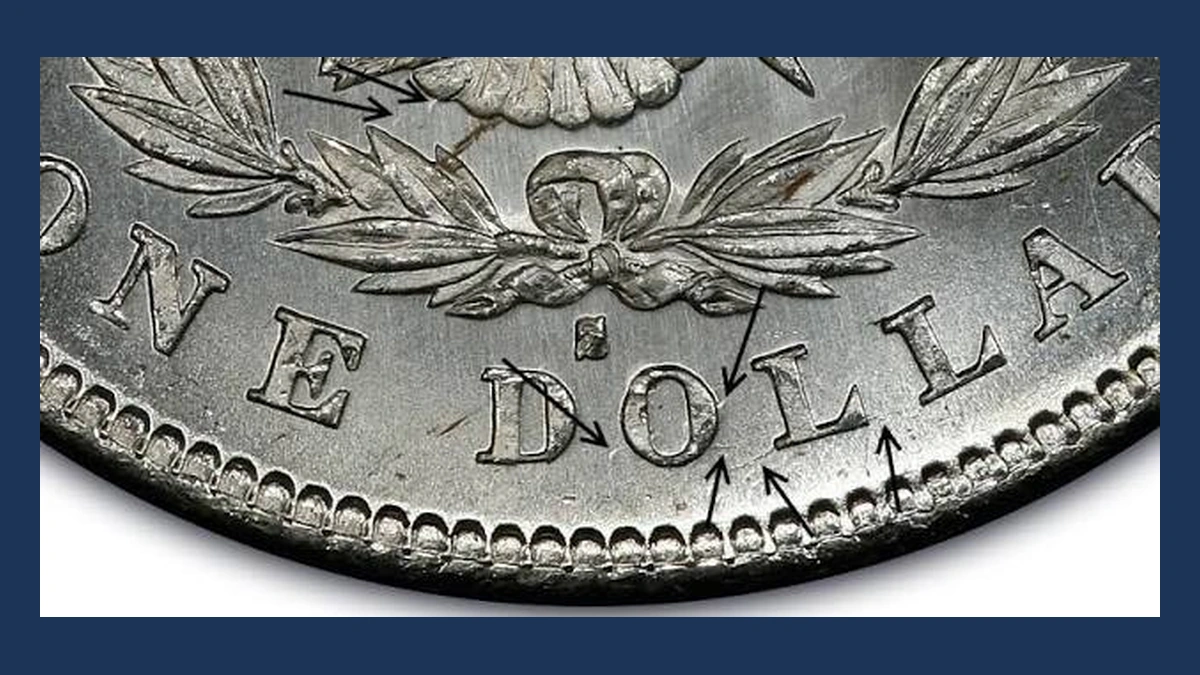
Small border-bead shapes can appear where the normal picture does not call for them. Collectors call these denticle clash marks; denticles are the short beads around the inside rim.
They form when the stamping tools meet without a blank between them. The impact transfers part of one tool’s design onto the other.
A later dollar then receives that unwanted detail along with its proper design. The San Francisco VAM-17A variety is listed for this feature.
The extra marks are not an extra strike on that dollar. The abnormal detail was already on the tool.
Estimated Value
Estimate $100–$3,000 for an authenticated 1878-S denticle-clash variety, depending on its preservation and the clarity of the transferred shapes. Worn, faint examples belong toward the lower end.
An attractive coin with a strong, recognizable pattern can appeal to variety collectors. Its value still includes the original silver dollar and its grade.
Compare matching varieties rather than any coin with marks near the rim. Repeated dents caused after minting do not carry the same collector value.
How to Identify
Locate the S below the wreath before selecting a comparison picture, since VAM-17A belongs to San Francisco. A different mint’s dollar needs its own variety identification even if marks appear near its border.
Find the repeated shapes shown in the variety’s photograph and compare their spacing with the normal rim beads. A tool clash should explain a copied pattern rather than just an isolated nick or random group of dents.
Tilt the coin to inspect the surrounding silver for disturbance from later contact. Compare both faces with the same variety photograph, matching the copied bead shapes and their relationship to the ordinary artwork.
4. 1878 Morgan Dollar Repeated Date Digits
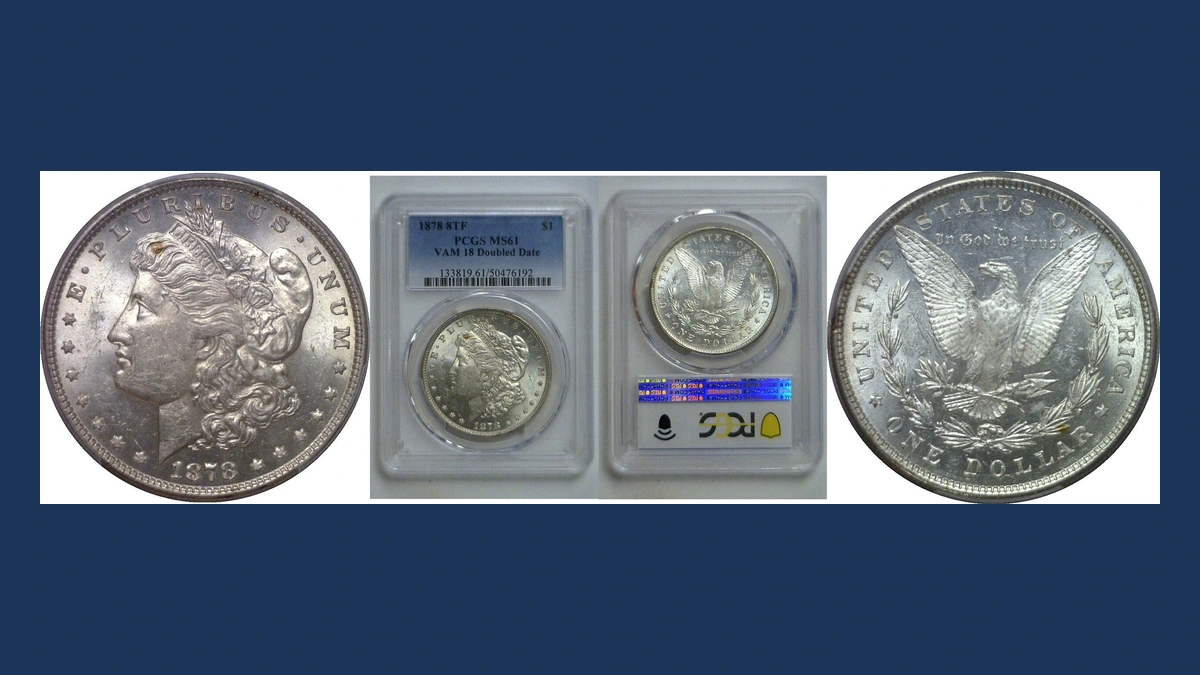
An extra edge beside a date digit can survive from an earlier placement of the date in the stamping tool. The second impression did not fully cover the first.
The seven-tail-feather VAM-170 variety is called Double Date. Eight-tail-feather VAM-18, VAM-19, and VAM-20 are separate Doubled Date varieties.
These are different date patterns, not four names for one coin. Their earlier curves and straight edges need separate comparisons.
An extra rim around a worn digit is not enough. Light reflecting from a rounded edge and movement during striking can both suggest a second outline.
Estimated Value
Use an estimated $100–$4,000 for identified repeated-date varieties in ordinary worn through attractive unworn condition. Clear separated digit remnants can make a variety easier to recognize and sell.
The seven- and eight-tail-feather designs need separate price comparisons. Neither the number of visible edges nor the shared phrase Doubled Date establishes an equal value.
An original surface and readable date support collector interest. Heavy cleaning, deep marks, or wear across the small extra details can lower the result.
How to Identify
Count the main tail feathers before choosing the date comparison, since seven- and eight-feather varieties use different tools. Place the candidate beside a photograph of VAM-170 or the appropriate eight-feather example.
Under a magnifier, follow each digit’s extra curve or straight stroke and compare its shape and position with that photograph. Do not assume that every repeated date points in one direction or has the same number of visible remnants.
Move the lamp to distinguish a real raised outline from glare that changes with the light. Check the neighboring digits too: a flat shelf from striking movement differs from earlier digit detail that matches the complete variety.
5. 1878 Morgan Dollar Lines and Other Unusual Tool Details
Raised lines in a wing or tiny spikes near Liberty’s eye can identify a particular stamping tool. A scratch or gouge in the steel can leave a raised copy on later coins.
Carson City has a Lines in Wing variety, while San Francisco has Torn Bonnet and several Lava Wing varieties. Philadelphia examples include lines in hair or lettering and a line beneath a date digit.
Names such as Spear Point, Stick Feather, and Wild Eye describe specific appearances. They are not proof that every similarly shaped mark has the same origin.
Estimated Value
Estimate $75–$5,000 for identified ordinary varieties in this group, allowing for large differences in scarcity, mint, and condition. A faint common tool line can add little beyond the dollar’s normal value.
An 1878-S Lava Wing VAM-50 graded PCGS AU53 sold for $111.63 in July 2013. AU53 indicates wear despite much surviving detail.
That sale does not price every Lava Wing or Carson City variety equally. Better preservation and a scarce, clearly matched pattern can support higher values.
How to Identify
Select the comparison by mint before zooming in: CC is Carson City, S is San Francisco, and Philadelphia has no mintmark. The marks sit below the wreath on the back.
For Lines in Wing, examine the eagle’s wing rather than a random line elsewhere. For an eye, bonnet, or lettering nickname, compare the exact feature shown in that variety’s photograph.
Check relief with a lamp held low. A raised line copied from a cut in the tool differs from a scratch dug into the coin.
Inspect nearby design details to confirm the match. A nickname describes an appearance; the full pattern distinguishes the named variety from wear, contact marks, or another tool.
6. 1878 Morgan Dollar Sixty-Degree Clockwise Rotation
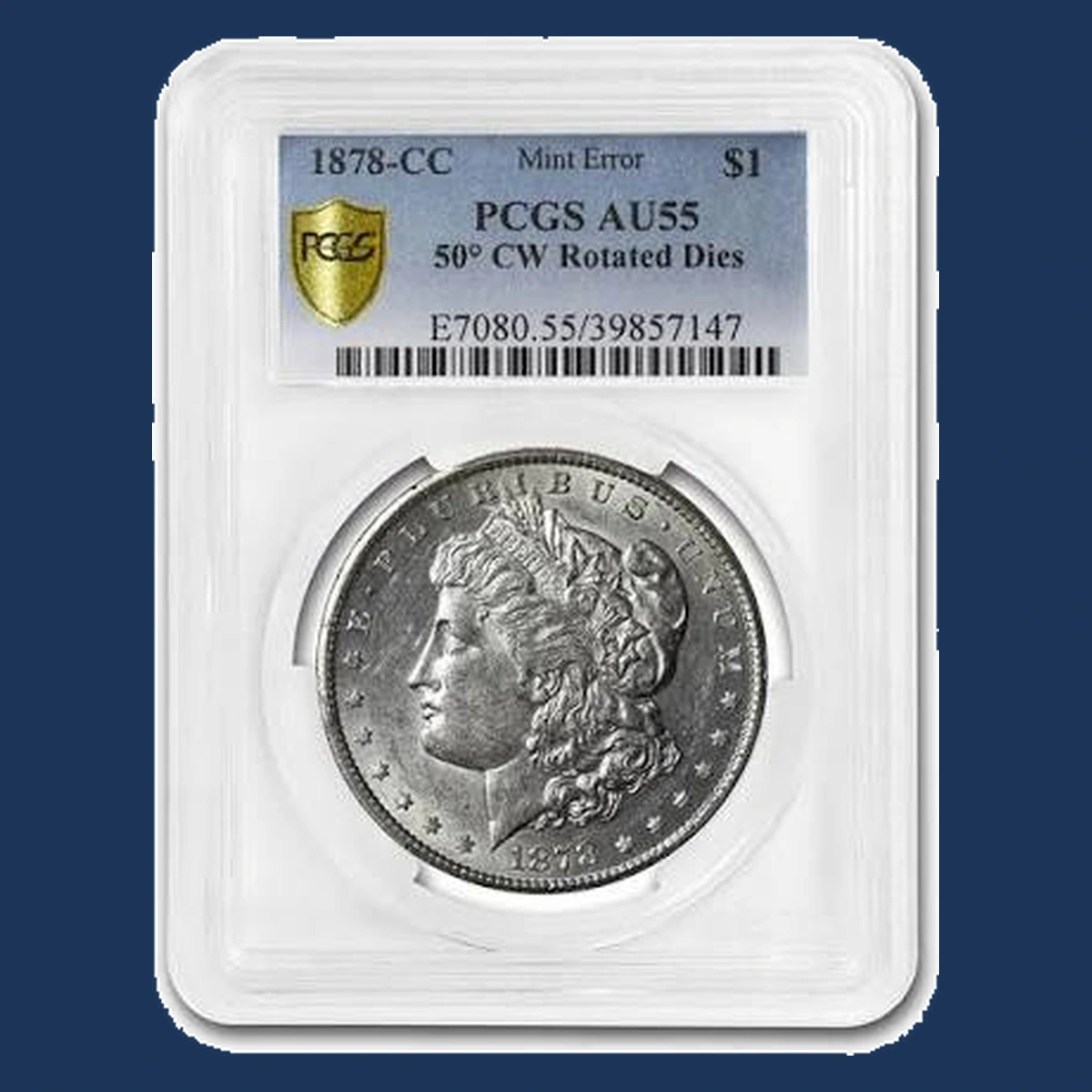
Turn the portrait upright and flip the dollar from top to bottom. On a normally aligned coin, the eagle also stands upright after that movement.
An 1878-CC example instead leaves the eagle sixty degrees clockwise from normal. PCGS graded the coin MS65, an unworn grade with relatively few distracting marks.
The change came from the position of one stamping tool relative to the other. It does not mean the coin spun between two strikes.
Other Carson City dollars have different rotation angles. An angle by itself does not select a particular VAM variety.
Estimated Value
The PCGS MS65 example with sixty-degree clockwise rotation sold for $1,955 in March 2006. For comparable authenticated 1878-CC rotation errors, estimate $250–$6,000 across worn through attractive unworn condition.
Carson City dollars already carry collector value without a rotation. The estimate covers the whole coin, rather than an amount to add to an ordinary CC price.
Visible wear, distracting marks, and the ease of demonstrating the actual angle all affect the likely result.
How to Identify
Use a normal dollar to practice the flip before testing the candidate. Hold Liberty upright and turn the coin from top to bottom without twisting it sideways.
Repeat the same movement with the CC dollar, keeping the turning axis fixed. A side-to-side turn or separately rotated photographs can create an apparent error where none exists.
If the coin is sealed, turn the whole holder and check whether the coin can move inside it. Do not open the holder merely to measure the angle.
Photograph both faces in those fixed positions. The eagle should end about sixty degrees clockwise from upright for the recorded example; its angle alone does not establish the VAM number.
7. 1878 Morgan Dollar Five-Percent Off-Center Strike
The lettering can remain complete on a mildly off-center dollar. The 1878-S example lost parts of the small rim beads instead, along the upper front and lower back.
Heritage described the PCGS MS62 coin as five percent off center toward one o’clock. The blank sat slightly out of position when the tools struck it.
This differs from an uneven broadstrike that keeps the entire intended design, including its border. Check the beads as well as the words.
The coin also has light surface marks and a small scratch below the second S in STATES. Those are later damage.
Estimated Value
This example sold for $4,025 in January 2004 at Heritage Auctions. Estimate $1,500–$8,000 for comparable authenticated first-year Morgan dollars with a small off-center strike.
The MS62 coin remains unworn but has visible surface marks. Its modest percentage does not prevent strong collector interest in this scarce dollar error.
Original edges, a readable date, and identifiable mint all matter. A larger blank margin alone does not establish greater value or confirm an off-center strike.
How to Identify
Begin with the border, not the lettering. On the recorded coin, all words remain intact while the upper-front and lower-back rim beads extend beyond the metal.
Compare both faces in the same orientation with the auction photographs. The slight shift toward one o’clock should explain the uneven margins and lost bead detail together.
Inspect the edge for filing or flattening that might have removed those beads after striking. A normal Morgan dollar is about 38.1 millimeters across, although an error’s outline needs its own measurement.
If all border beads and lettering survive, reconsider an uneven broadstrike rather than relying on the empty margin. The missing original border detail is the useful distinction on this particular coin.
8. 1878 Morgan Dollar Repeated Designs and Extra Tail-Feather Tips
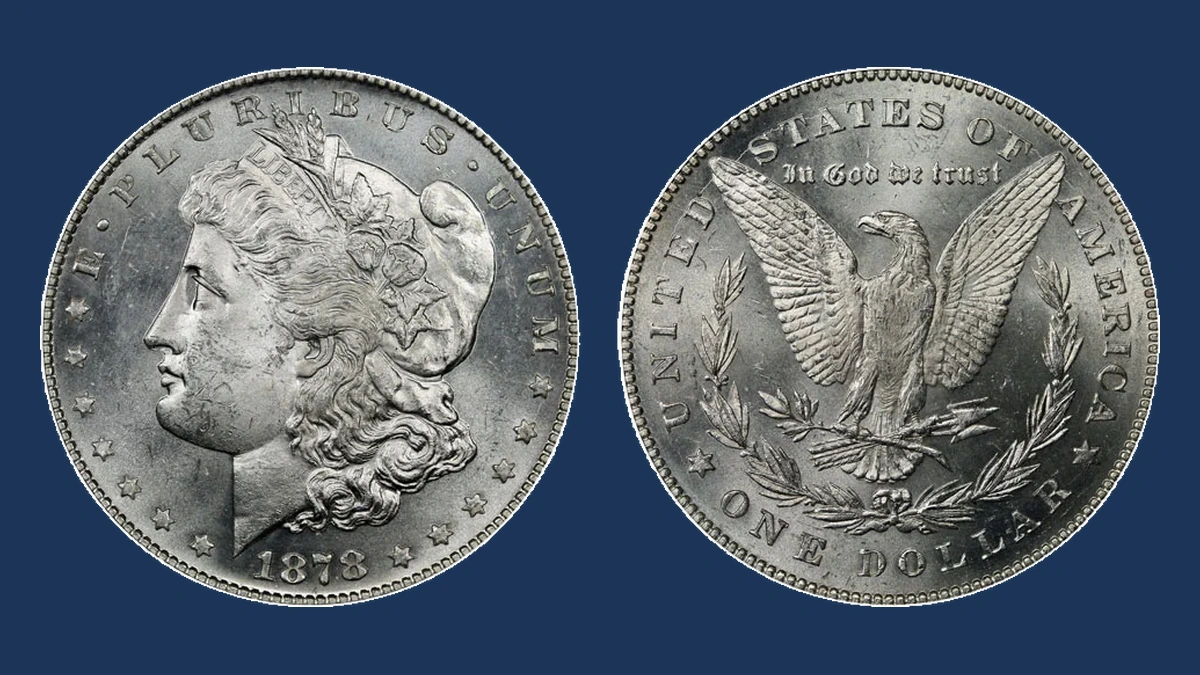
Seven main tail feathers can sit above tips left from an earlier eight-feather design. These 7/8 varieties record two designs impressed into the steel tool, which then stamped the coin.
Other tools carried repeated letters, blossoms, stars, eyelids, or eagle details. One blow copied the extra outlines, so the coin did not need to be struck twice.
The patterns differ by mint and tool. Carson City leaf doubling is separate from San Francisco’s repeated RIB letters in PLURIBUS.
Philadelphia Doubled Bow and Spiked Eye varieties also occur on specially made collector Proofs. Their finish needs its own comparison.
Estimated Value
Estimate $75–$15,000 for ordinary doubled-design varieties and $2,000–$30,000 for the listed collector Proof examples. Scarcity, preservation, and the particular pattern explain much of the spread.
PCGS records $19,975 for a Doubled Bow Proof in June 2016. Its Spiked Eye Proof listing records $16,200 in September 2020.
These are complete Proof-coin prices, not premiums for a small extra line. An ordinary worn dollar with similar-looking detail belongs in a different price comparison.
How to Identify
First separate ordinary coins from collector Proofs and record the mint. A shiny ordinary coin is not automatically a Proof.
For 7/8 tail feathers, look below the seven main feathers for remnants of earlier tips. Their number and position must match the selected variety; normal seven- or eight-feather designs alone are not errors.
On other candidates, compare the feature named by the variety: RIB letters, stars, blossoms, leaves, eyelids, or the bow beneath the wreath. Use a magnifier to follow the extra rounded outlines.
Keep Philadelphia and San Francisco RIB patterns separate, and use Carson City pictures for the CC leaf varieties. A flat shaved edge from striking movement differs from a fully formed repeated outline.
Check the neighboring letters or design details against that same photograph. One extra-looking edge cannot identify the complete variety.
Conclusion
A complete inscription does not rule out a small off-center strike, and extra tail-feather tips are different from a normal eight-feather design. Look at the whole coin before naming a tiny feature.
The estimated $75–$30,000 range includes worn varieties, attractive error coins, and valuable collector Proofs. Keep the mint, design, and finish matched when comparing prices, since a small tool mark alone does not explain a high Proof sale.