1900 Dollar Coin Error List with Pictures

Why would a New Orleans dollar show parts of a Carson City mintmark? The 1900-O/CC answers that question with an O punched over earlier CC letters on the stamping tool.
An exceptionally preserved example brought $52,875 in October 2015. Other 1900 Morgan dollar errors can be far more affordable, with estimated values here running from $60 to $60,000.
Compare the mintmarks, design details, and edge features below to see what separates these different mistakes.
1. 1900 Morgan Dollar Misaligned Front Design
An uneven front border can show that the portrait’s stamping tool sat out of line. The back may remain centered because its tool did not move in the same way.
The year report describes a circulated example graded Fine 15, meaning the coin has substantial wear but readable major details. Its exact mint needs to be checked on the actual dollar.
Compare both faces before calling this an off-center coin. A blank misplaced between both tools can shift both designs, while a misaligned front tool mainly changes the portrait side’s relationship to the rim.
Estimated Value
The year guide reports a Fine 15 example at $94, without identifying its sale date. Estimate $75 to $1,500 for authenticated front misalignments, from worn minor examples to stronger shifts on attractive unworn dollars.
A wider border alone is less compelling than a clearly displaced design paired with a centered back. Damage or heavy wear can obscure that relationship, making the feature harder to demonstrate and less appealing to a buyer.
How to Identify
Place straight-on photographs of both faces side by side, keeping the entire edge visible. A cropped or tilted photograph can make a centered design appear displaced.
Compare the distances from the outer letters and stars to the rim on opposite sides of the front. Then make the same comparison on the back to see whether the change affects one face or both.
Follow any missing or crowded front detail to the edge. A genuinely shifted tool changes where the design sits; filing or clipping removes metal instead.
The worn example’s grade does not identify its mint. Check the area above DO in DOLLAR before choosing a comparable specimen, and use both-face alignment as the main test.
2. 1900 Morgan Dollar Cracked and Broken Stamping Tools
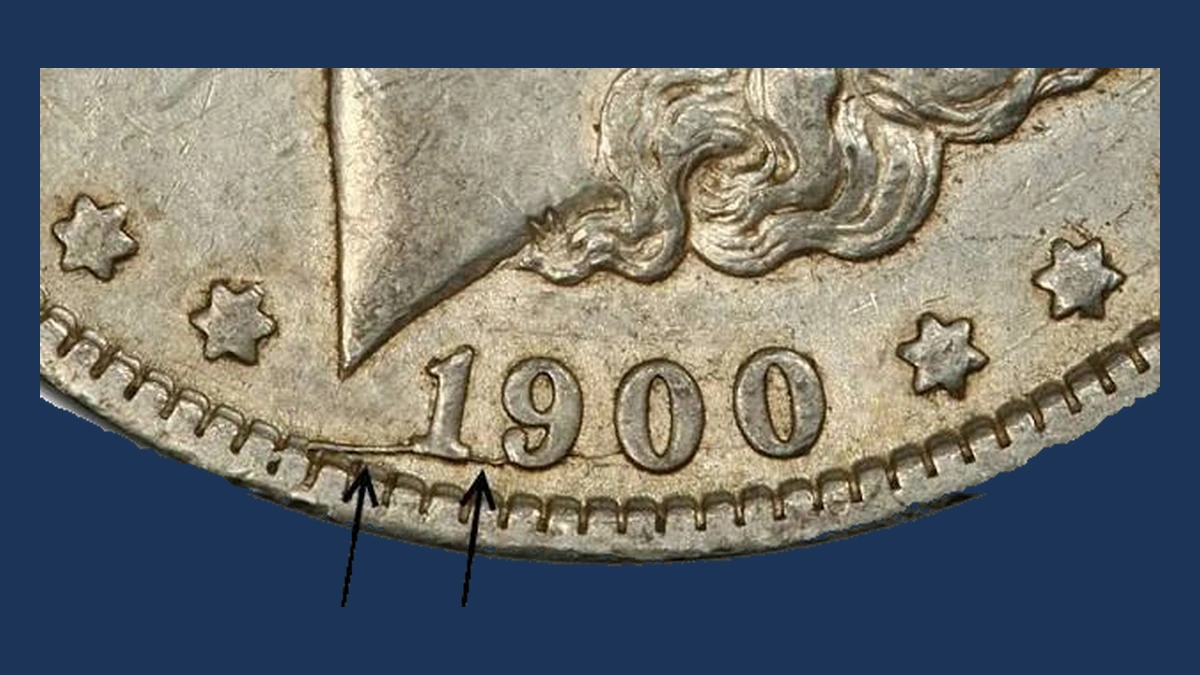
A crack in a die, the steel tool that stamps a coin, can leave a raised line on the finished dollar. A larger missing piece of the tool can leave a raised patch.
The New Orleans variety listed as VAM-29A has a front die break. A separate San Francisco report describes cracks above the date and around the stars on the right.
The high position of the S is only a supporting comparison for that reported coin. It is not itself a crack, nor does it prove that the mintmark was punched more than once.
Estimated Value
For authenticated examples in ordinary collectible grades, estimate $60 to $2,000. Thin cracks generally add less interest than an obvious raised break that can be seen without difficult lighting.
The different-date 1904-O Fishhook variety sold for $999 in July 2023, illustrating the market for a recognized small tool feature. That clash-related variety is not the same error; a 1900 buyer still needs the correct break, mint, and condition comparison.
How to Identify
Is the line above the surface or cut into it? Move a lamp across the coin and use a magnifier to answer that question before following the line’s route.
For the San Francisco report, examine the area above the date and the right-hand stars. Compare their raised lines with the same identified pattern rather than accepting any scratch near the date.
The New Orleans front break needs its own photograph. Its catalog name does not place it at the San Francisco coin’s location.
A larger raised patch should form naturally with the surrounding struck metal.
Look for dents, added metal, or crushed letters that might explain a bump afterward. The mintmark’s height can help match the coin, but the break itself must supply the evidence.
3. 1900 Morgan Dollar Foreign Material Impressions
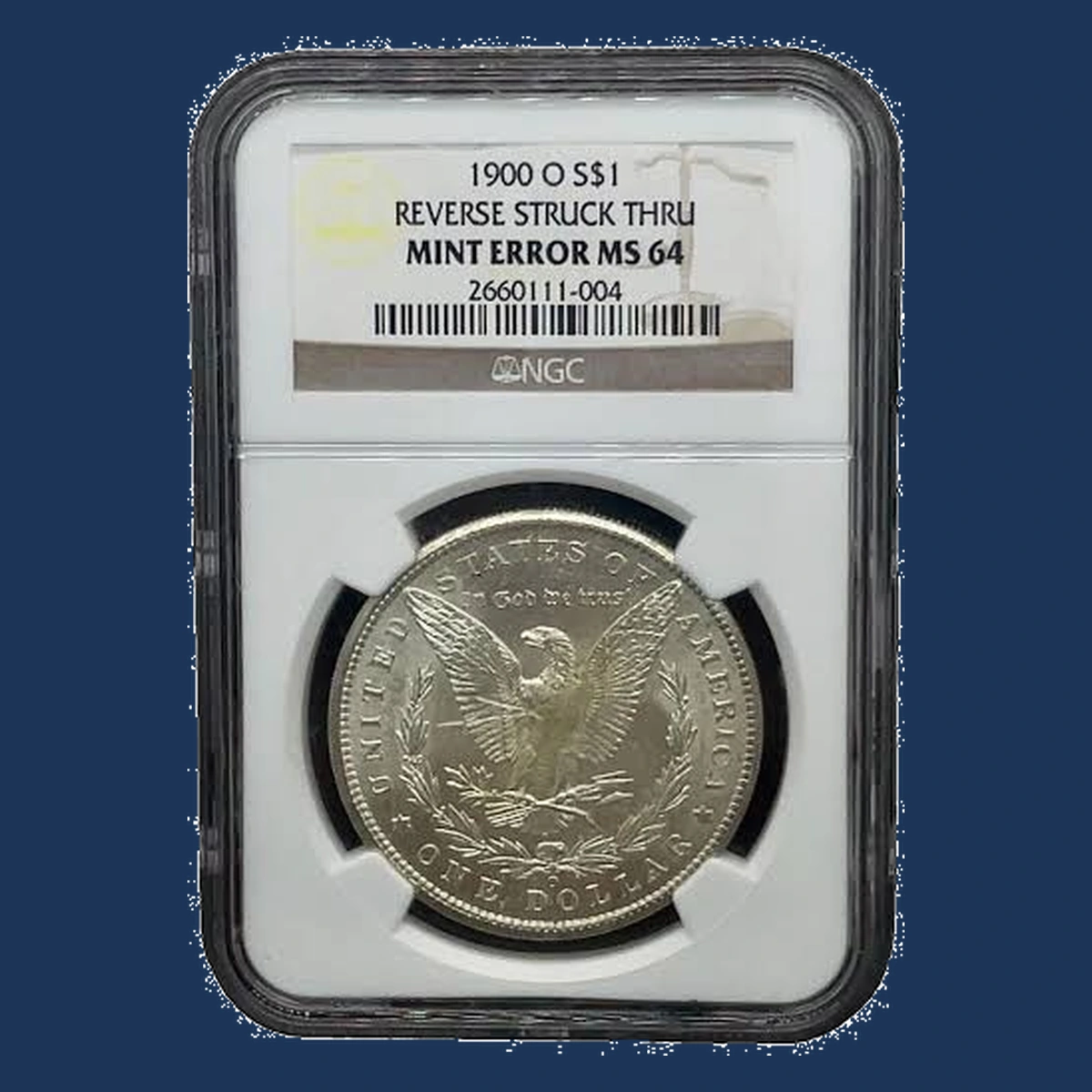
A piece of material can interrupt the design when it rests between a blank and the stamping tool. The coin may retain a depression or a weak patch where the picture was blocked.
The public year list includes this type of 1900 error without a settled mint or location. It does not establish separate specimens for every possible material, such as wire, cloth, or grease.
The surface must carry the explanation. A sharply outlined hollow and an area of soft missing detail can reflect different obstructions, while a later dent may imitate either at first glance.
Estimated Value
Estimate $100 to $2,500 for authenticated examples, with larger recognizable impressions generally attracting more interest. Original surfaces and a clearly readable date help support the comparison.
A 1923 Peace dollar with a front strike-through sold for $134 in March 2023. That later silver-dollar result shows an affordable example of the general mechanism, rather than a confirmed 1900 sale or a price for every kind of object that might block a design.
How to Identify
Choose a point where a letter or portrait detail meets the unusual patch and examine that boundary closely. The interrupted design should relate to the shape or coverage of the material that blocked it.
Use angled light to inspect the interior for texture, and compare its edges with the surrounding struck surface. A later impact may flatten a completed letter or push metal outward, leaving a different relationship.
Photograph both faces and the mintmark so a specialist can match the candidate with the right issue. The year list alone does not name an object or position, so describe the visible depression before calling it cloth, wire, or any retained material.
4. 1900 Morgan Dollar Overlapping S Mintmark Shapes
A single S can contain remnants of another S with a different width. Specialists have described this San Francisco feature as overlapping narrow and wide mintmark shapes.
The impressions were made in the stamping tool, so the finished dollar copies their combined outline. This is commonly called a repunched mintmark.
A narrow S on its own is a normal letter style and does not establish the variety. The important feature is the surviving second outline, which must be distinguished from wear, damage, or a flat extra edge caused during the strike.
Estimated Value
Use an estimated $100 to $3,000 for authenticated examples in circulated to moderately unworn condition. This comparison-based range includes the value of the complete San Francisco dollar, not a fixed fee for an extra curve.
Clear remnants and attractive original surfaces make the feature easier to show. A heavily marked or worn S may hide the overlap, while an especially well-preserved dollar can have substantial value beyond the small mintmark variety itself.
How to Identify
Start by comparing normal narrow and wide S shapes rather than assuming that one size must be wrong. Both letter styles occur in this period.
Find the S above DO in DOLLAR and enlarge its complete outline. Follow the top curve, middle, and lower curve to identify the main letter first.
Now look for remnants belonging to a wider or narrower S around that shape. The extra parts should fit a second letter, not form unrelated lumps or scratches.
Use photographs of the recognized overlapping-S variety to check the relationship. A high S or cracks on the front do not automatically connect this coin with a separately named cracked-tool variety, even though both can occur on San Francisco dollars.
5. 1900 Morgan Dollar Doubled Wings, Olives, and Stars
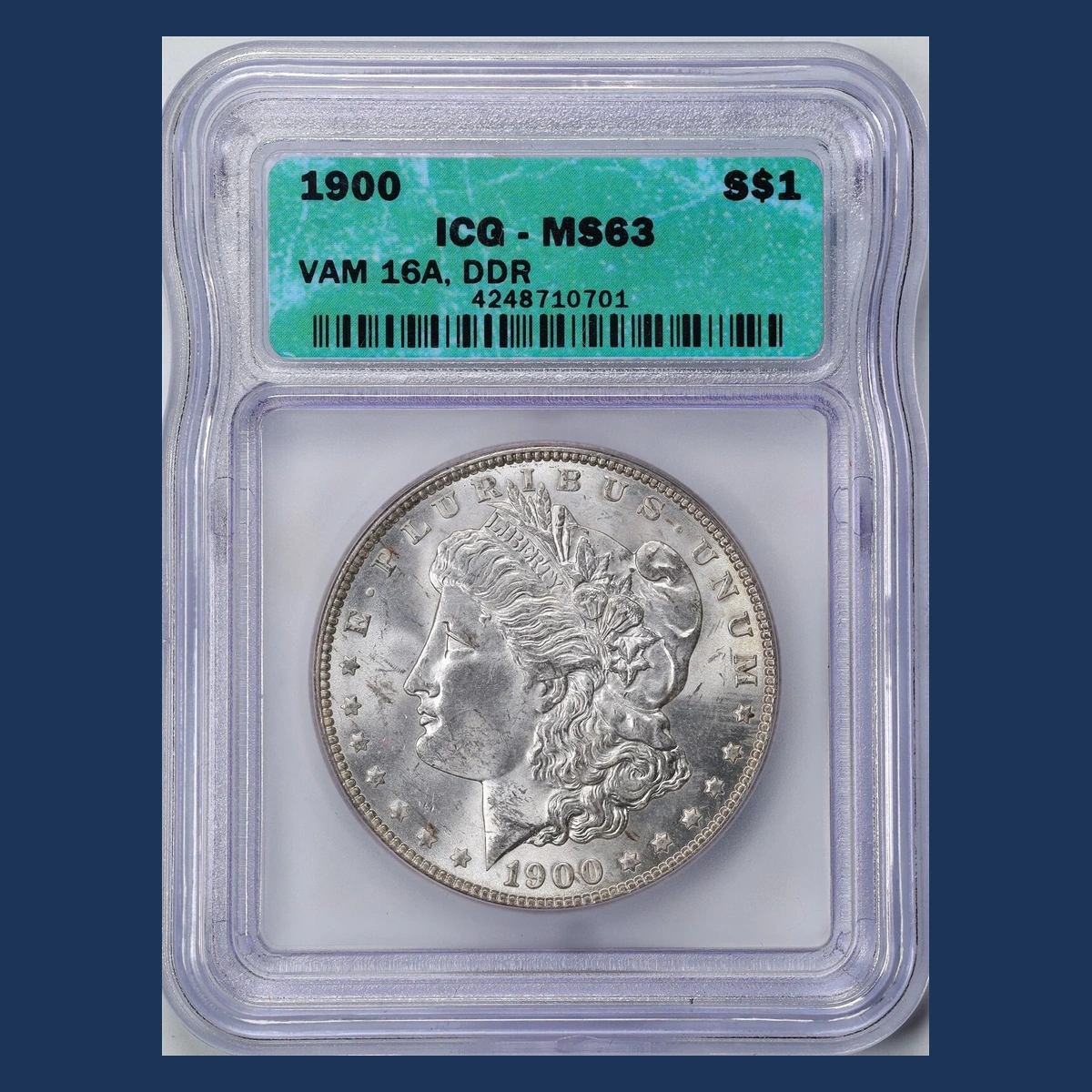
An extra olive shape or a doubled feather can be copied from a tool carrying overlapping designs. Some Philadelphia reverse tools received impressions from two different versions of the master design.
That mixture can leave the “Two Olive” appearance beneath the eagle. Other Philadelphia varieties have doubled wing details, while a New Orleans variety shows doubling on the front stars.
These are separate patterns rather than one coin with every feature. Normal differences between the two back designs also exist, so a different-looking wing by itself does not establish a doubled tool.
Estimated Value
Estimate $60 to $3,500 across identified varieties in ordinary collectible condition. Clear repeated shapes and strong preservation can raise a coin above the lower end.
For the Two Olive group, a PCGS MS66+ example brought $911 in December 2019. Greysheet’s auction index also lists an MS64 example at $149 in March 2022; both are unworn grades, but the cleaner high-grade coin makes a different price comparison from a more marked one.
How to Identify
For the Two Olive pattern, locate the olive held below the eagle and compare the extra raised contour with an identified example. Merely counting dark spots in a photograph can confuse reflections with actual shapes.
Next, compare the surrounding wing and arrow details with the same back design. A normal change from one master design to another is not enough; the doubled version must preserve overlapping features.
The wing-only Philadelphia patterns require their own close-ups.
On the New Orleans star variety, use the O mintmark to choose the right reference, then follow the stars’ raised tips. Do not transfer a Philadelphia wing location to that coin, or treat flat strike-related shelves as rounded duplicated design.
6. 1900 Morgan Dollar Partial Collar Strike
A dollar can spread unevenly when only part of its blank is held inside the collar. This metal ring normally controls width and forms the grooves around the edge.
The contained portion and the free portion can leave different levels, creating a step. The year reports include this error but do not establish one mint or a fixed position for the affected edge.
The useful evidence is the relationship between the step, grooves, and nearby rim. A flattened edge alone can come from later handling and does not explain how the blank sat during striking.
Estimated Value
An estimated $150 to $5,000 covers authenticated partial-collar examples, from modest edge steps to strikingly clear specimens in strong condition. The shape of the edge must remain visible for a useful comparison.
A recent different-dollar example combined an indent with partial collar contact: a 1971-D Eisenhower sold for $408 in August 2020. That later combined error is not a direct 1900 price, but illustrates the importance of judging the complete coin.
How to Identify
An edge photograph is essential here, so request several views around the dollar before judging a straight-on portrait image. A holder should stay closed while those photographs are taken.
Follow where the edge grooves end, weaken, or meet a different level. Compare that transition with the rim on both faces to see whether the metal spread partly outside the collar.
For a loose dollar, calipers can reveal differences across its width; the normal diameter is 38.1 millimeters. Weight near the normal 26.73 grams does not rule out a collar error, since metal can spread without being lost.
Look for hammered or ground grooves at the step. Such later damage changes a finished edge rather than showing the original transition between contained and free metal.
7. 1900 Morgan Dollar O over CC Mintmark
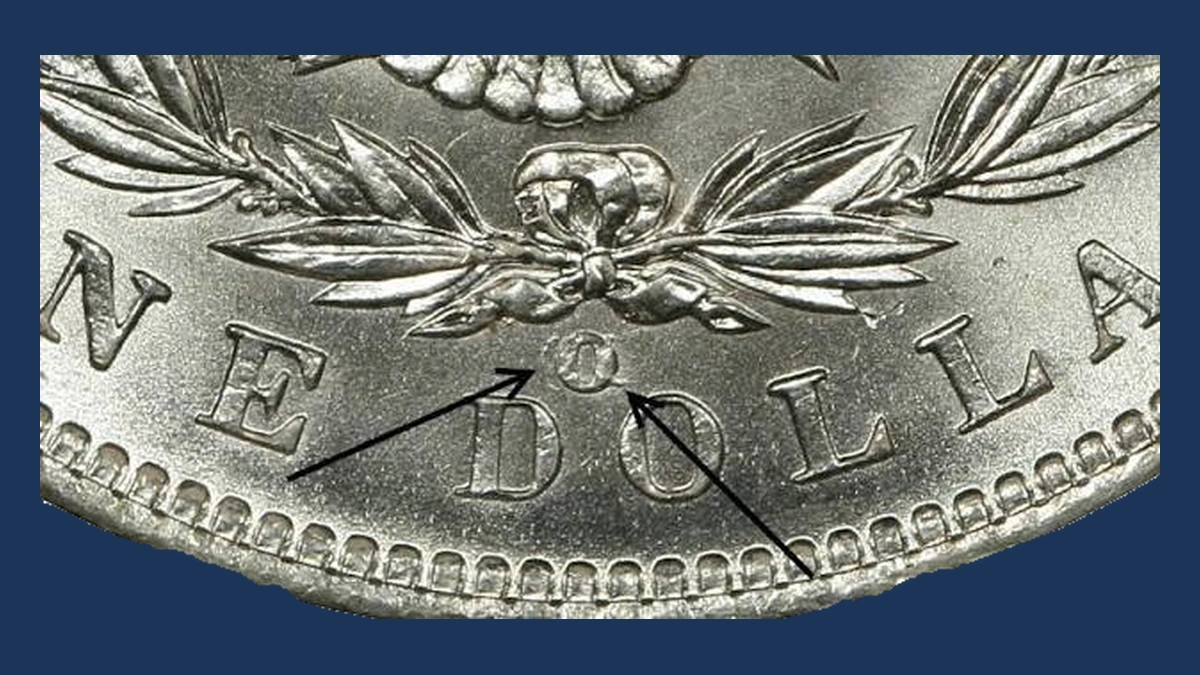
Curved remnants around the O can reveal an earlier CC mintmark underneath. A New Orleans mark was punched over those earlier letters on the back stamping tool.
The resulting dollar was made in New Orleans, not Carson City. There was no regular 1900-CC Morgan dollar issue.
More than one tool carried this overmintmark, and the surviving curves differ among examples. The feature is known as O/CC; it should not be confused with an O punched twice, an unusually small O, or damage that happens to leave a curved mark beside the letter.
Estimated Value
Ordinary circulated through attractive unworn examples have an estimated range of $75 to $10,000. Exceptional top-condition coins can reach an estimated $25,000 to $60,000.
PCGS records an MS67+ O/CC at $52,875 in October 2015. That unusually clean, unworn dollar is the high-condition comparison; the same small mintmark feature on a worn coin does not confer the complete value of that exceptional auction specimen.
How to Identify
The O is on the back, above DO in DOLLAR. Use a 10× magnifier to trace it and look for curved remnants of the earlier CC nearby.
Compare the complete mintmark with a documented O/CC example, including the shape and placement of each surviving curve. Different tools do not preserve every part equally, so one photograph cannot identify them all.
Check the surrounding metal for cuts, added material, or dents that could imitate a letter. The rest of the coin should also match an ordinary 1900 New Orleans dollar.
An extra curve is only the beginning of identification. Before assigning a specific variety, match the additional tool details in the same reference photographs, keeping normal O shapes and altered mintmarks out of the comparison.
Conclusion
The O/CC tells you about a changed mintmark, while a stepped edge points to a problem during striking. Doubled wings and olives require another kind of comparison.
Estimated whole-coin values range from $60 to $60,000. The exceptional $52,875 O/CC result should not overshadow affordable worn examples or modestly preserved varieties.
Photograph the feature and its surrounding design, then match the mint and condition before choosing a price comparison.