1892 Dollar Coin Error List with Pictures

Look at the edge of an 1892 silver dollar as well as its faces. A price guide reports a $3,350 sale in 2010 for an 1892-S with an uneven, partly grooved edge.
These 1892 Morgan dollar errors also include peeling silver, doubled designs, and a repunched CC. The examples below have estimated values of $60–$10,000, covering ordinary worn coins through selected better-preserved pieces.
Read on to see which features matter and why the mint letters change the price comparison.
1. 1892 Morgan Dollar Die Crack
A fine line standing above the front surface can come from a crack in the die. That is the steel tool used to stamp the design.
As pressure forced silver into the opening, each dollar received a raised copy of the crack. The coin itself did not have to split.
An 1892 Philadelphia example with a front crack appears in a published year guide. Small cracks are common on Morgan dollars and often add little value.
The line’s shape and its connection to the surrounding design matter more than its length alone.
Estimated Value
Allow an estimated $60–$1,500 for circulated to moderately graded unworn Philadelphia dollars with an identifiable crack. The year guide lists an example with light wear at an asking price of $69.
A thin line can add little or nothing to the normal coin price. A stronger, clearly visible break may attract more interest.
The upper range mainly requires a better-preserved dollar, rather than a common crack on a heavily worn coin.
How to Identify
To decide whether a line rises or sinks, photograph it with light coming from one side, then the other. A raised crack line casts its small shadow outside the line; a scratch has a recessed channel.
Follow the line across any letters or open background it touches. A tool crack can continue through several parts of the design without leaving scraped metal beside it.
Compare the surrounding surface with nearby untouched silver areas under a 10× magnifier. Loose dirt, corrosion, or a ridge beside a deep cut can mimic raised metal, so do not rub the line to test it.
2. 1892 Morgan Dollar Doubled Dies
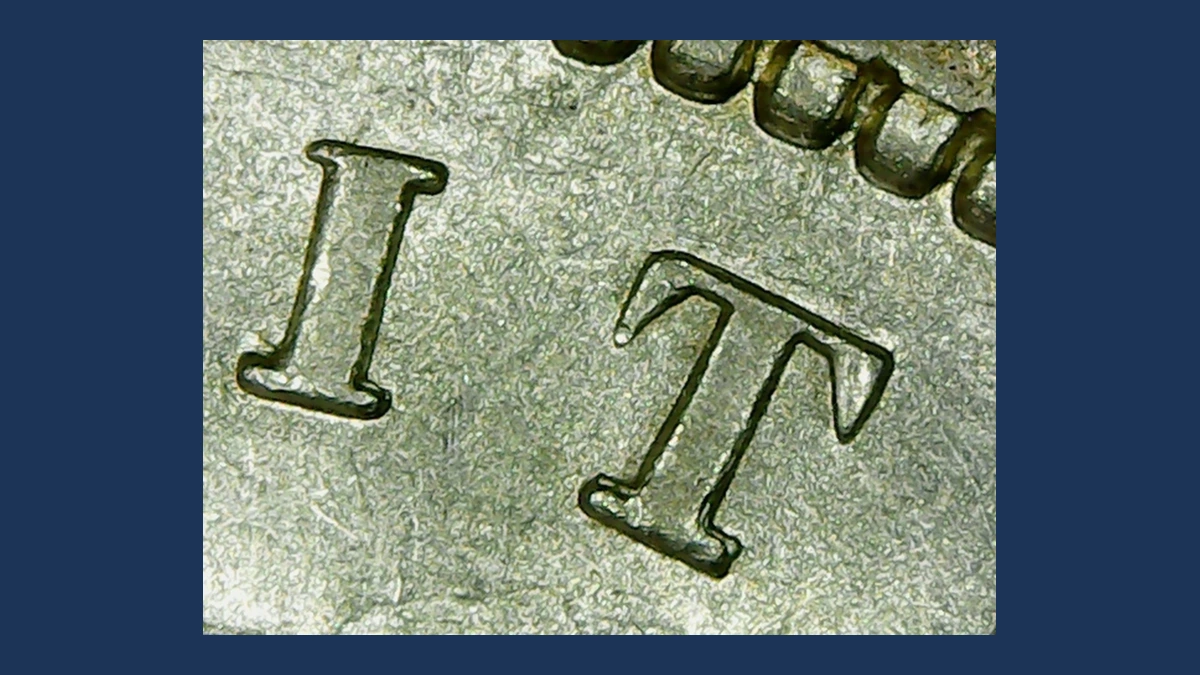
Liberty’s profile can show a second raised outline, while E PLURIBUS UNUM can carry three overlapping outlines. These are recorded features on a Philadelphia variety.
Other Philadelphia dollars show doubling on the back design. The front and back examples need separate photo comparisons.
A doubled die forms when design impressions do not line up during tool preparation. The finished die can then stamp the same extra outlines onto many coins.
This is different from a dollar receiving a second strike. A catalog number identifies the particular variety, not the number of blows.
Estimated Value
An estimated $100–$2,500 covers ordinary circulated through attractive unworn Philadelphia examples with clearly identified doubling. As a nearby-year comparison, an 1896 doubled-star dollar is reported at $349 in MS63, an unworn grade with visible marks.
That is a different date and feature, so it is only a modest-grade comparison. Strong detail and original surfaces support higher prices.
A blurry doubled-looking edge on a worn coin does not justify the top of this range.
How to Identify
Start with Liberty’s nose, lips, and chin, then move to E PLURIBUS UNUM above her head. Use a 10× magnifier to compare the extra outlines with an attributed 1892 front-doubling photograph.
A tripled letter should have repeated raised parts, not merely one wide, flat edge. Small notches at letter corners may help separate the outlines.
For a back-doubling candidate, use photographs of that back variety to locate the matching details. Do not assume the front variety must also have doubled eagle feathers.
Look at several features under the same light. If only flat, shelf-like edges appear, have the coin checked for movement during striking before buying it as a doubled die.
3. 1892 Morgan Dollar Struck Through Foreign Material
A patch of missing or pressed-in design may come from material caught in the press. It prevented the die from reaching the silver beneath it.
The resulting mark is called a strike-through. Its shape depends on the object or soft material that blocked the strike.
A dealer describes an 1892 Philadelphia dollar graded XF45 by NGC with a front strike-through. XF45 means a circulated coin with light wear and much detail remaining.
A separate New Orleans report places the error on the back. Neither description proves that an object remains inside the coin.
Estimated Value
Estimated prices are $100–$3,000, depending on the size, clarity, and effect of the impression. Coin Exchange NY listed the Philadelphia XF45 example at $180.94, an asking price.
The New Orleans back example was reported offered at $150. A distinct object outline can command more than a small area of weak detail.
For the upper range, look for an impressive error on a well-preserved coin, not merely a flat eagle’s breast.
How to Identify
Normal 1892 dollars can have weak central details. Compare an affected patch with the rest of the design before calling it a strike-through.
If both central areas are softly struck without a clear boundary, ordinary weak striking may explain the appearance. A trapped object can instead leave a localized outline or texture.
Check the mint letter to choose the right comparison: no letter for the reported Philadelphia front example, O for the New Orleans back report.
Inspect the patch with angled light for a scrape, sharp cut, or pushed-up metal. Those signs can point to later damage.
Ask for full-face photographs as well as the close-up. The surrounding design helps show whether a material blocked the strike or someone damaged an already finished dollar.
4. 1892 Morgan Dollar Peeling Silver
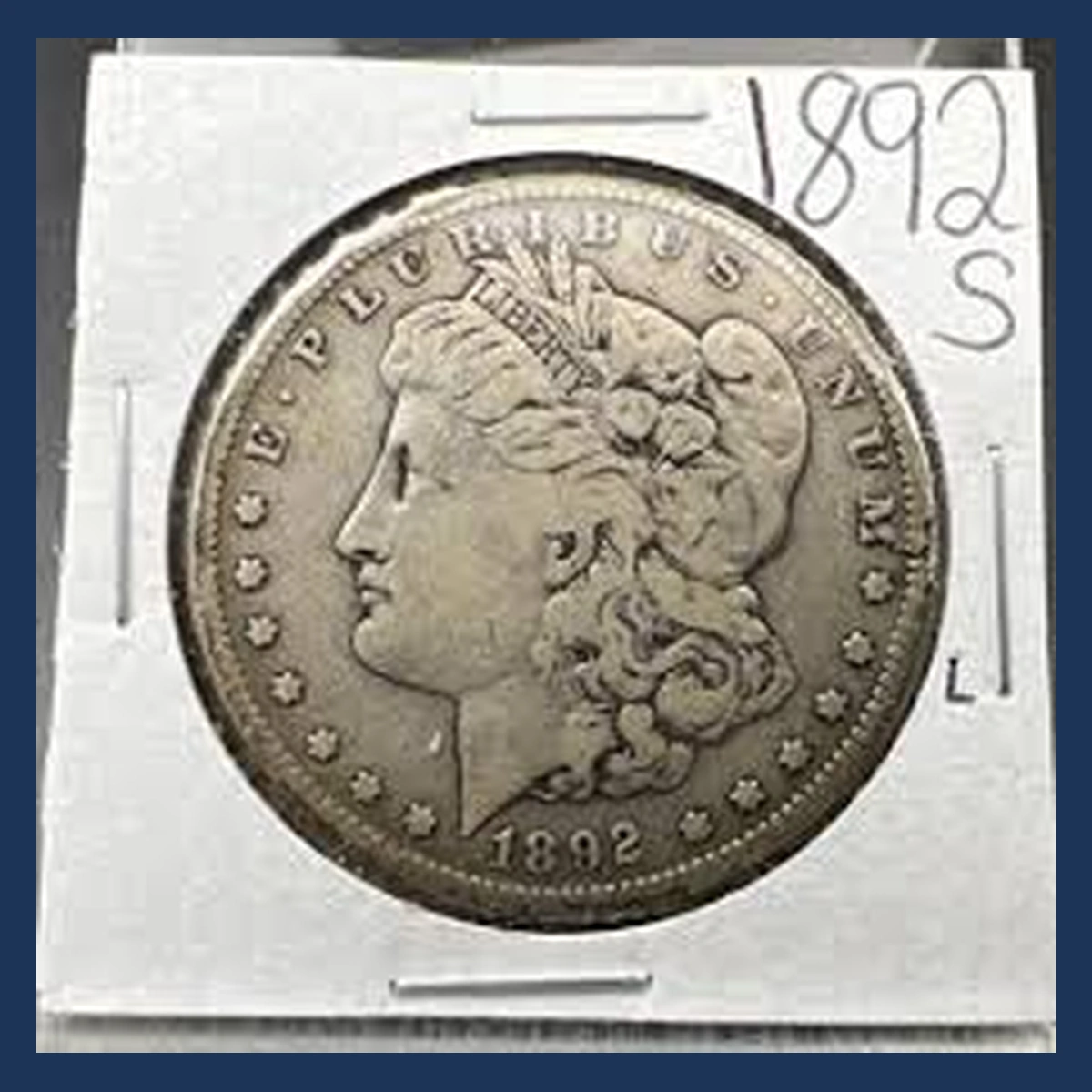
A thin flap or missing surface patch can reveal a weakness within the dollar’s metal. The peeling is called lamination.
Morgan dollars contain 90% silver and 10% copper mixed together. They do not have the sandwich-like layers found in modern copper-nickel dollars.
Impurities or poor bonding within the alloy can let a thin portion separate. A flap may remain attached, or it may fall away.
Lamination is reported on both 1892-O and 1892-S dollars. The visible defect belongs to the affected coin; a peeling example from one mint does not identify another.
Estimated Value
Use an estimated $100–$5,000 for circulated examples, with the mint and amount of wear setting much of the price. A reported 1892-O with a major lamination was offered at $354.
A San Francisco dollar with little wear can cost much more because that date is scarce in better condition. Its price is not simply a fee for the peeling metal.
Broad cleaning, scratches, or a removed flap can lower buyer interest.
How to Identify
Leave an attached flap alone. Lifting it can destroy the evidence that shows how the metal separated.
Look along the boundary for a thin sheet peeling away from the coin rather than a deep gouge cut into it. Some original design may survive on the flap or along the exposed area.
For a loose coin, a scale can help assess metal loss against the normal 26.73 g weight. A small surface flake may make little measurable difference.
Before comparing prices, read the O or S beneath the back wreath and photograph the wear on both faces. On this date, a lightly worn S dollar and an equally peeled O dollar can have very different values.
5. 1892 Morgan Dollar Partial Collar
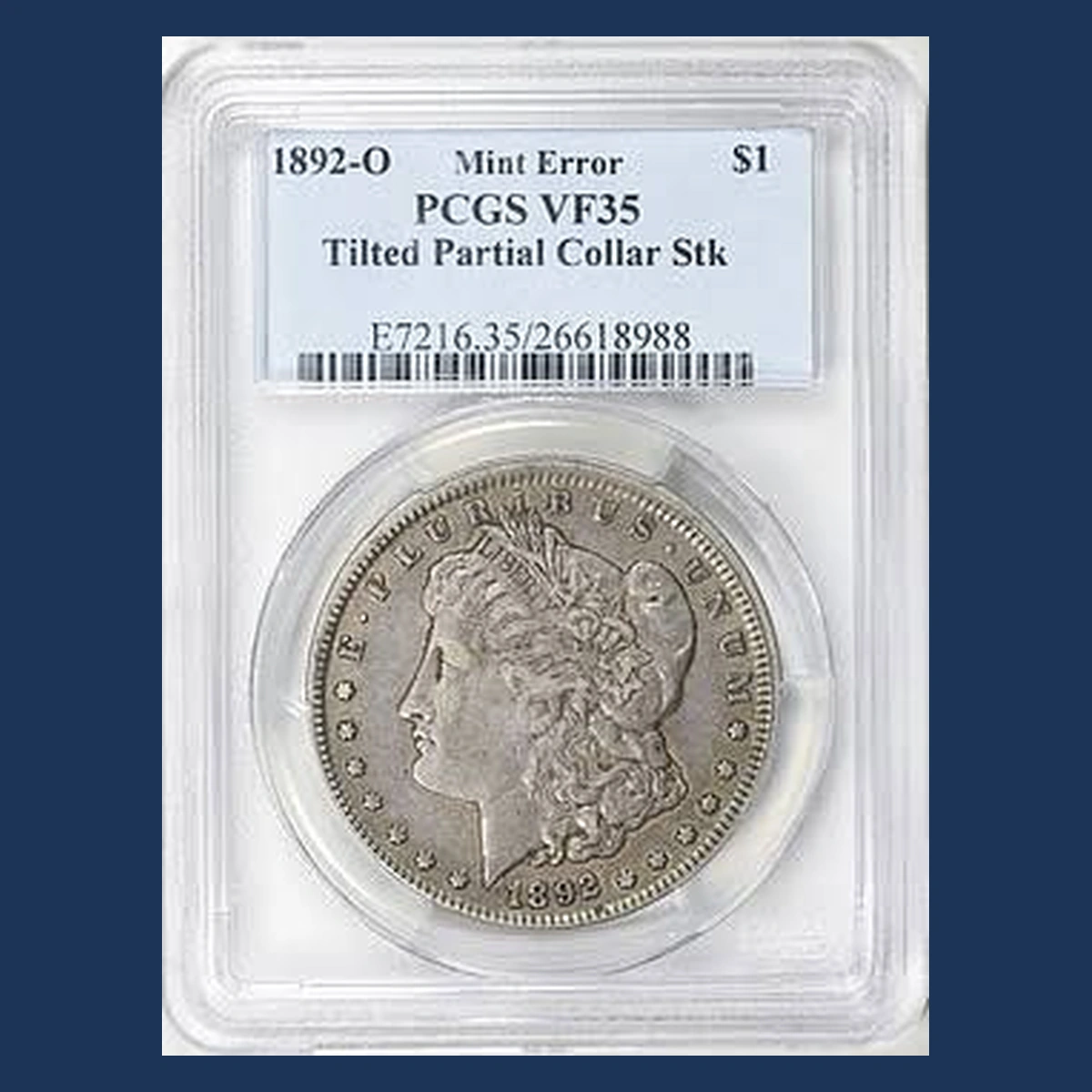
An edge that changes from normal grooves to a smooth expanded band can show partial contact with the collar. This metal ring normally controls the coin’s width during striking.
When the blank sits unevenly in the ring, one part can spread farther than another. The edge may develop a sloping step.
An 1892-O example is described as a tilted partial-collar strike. A separate 1892-S carries an AU Details grade.
AU means almost unworn, while Details flags a separate condition problem. That label should stay with the San Francisco example when its price is discussed.
Estimated Value
Estimate $200–$8,000 for circulated partial-collar examples, allowing for the large difference between New Orleans and San Francisco prices. A year guide reports an 1892-S AU Details sale of $3,350 in 2010.
GreatCollections also records a February 2018 sale of an 1892-O graded VF35, with moderate wear. Its public listing does not display the amount.
A pronounced intact edge step is more desirable than one obscured by dents.
How to Identify
Ask for side views that follow the entire edge, especially when the coin is in a grading holder. The front and back alone may conceal the change in groove depth.
Trace the boundary of the grooved band around the dollar. On a tilted example, its height can change gradually rather than staying level all the way around.
For a loose coin, calipers can compare the expanded area with the usual 38.1 mm diameter. Heavy edge grinding instead removes metal and leaves tool marks that need examination.
Keep ordinary edge dents separate from the wider stepped band. If the holder says AU Details, read the stated problem as well as the partial-collar description before choosing a price comparison.
6. 1892 Morgan Dollar Repunched CC Mintmark
The second C in the Carson City mintmark was first placed too low on one die. A later punch moved that letter upward, leaving traces of the earlier position.
Both outlines could then appear on dollars struck from the corrected tool. This is a repunched mintmark, rather than two separate coin strikes.
PCGS describes the corrected second C among the date’s varieties. The letters sit below the wreath on the back.
A low second C alone is not the full test. The remaining outline from the earlier punch is the important extra feature.
Estimated Value
For circulated through modestly graded unworn examples, an estimated $300–$10,000 is a practical whole-coin range. Carson City demand gives these dollars a higher starting point than many Philadelphia examples.
The estimate allows for the visible extra C and the coin’s condition. It does not treat ordinary Carson City prices as sales of this particular repunched variety.
Look for a clear lower remnant and attractive original surfaces before paying a strong variety premium.
How to Identify
Compare the height of the two C letters beneath the wreath, but do not stop at that first impression. The corrected variety needs a surviving lower outline attached to the second C, not merely uneven letter placement.
Enlarge the mintmark and match the lower curve against a photograph of the repunched example. Keep the first C in the frame so you can judge position and spacing together.
Check the surrounding silver for a seam, disturbed texture, or tool marks that could indicate an added mintmark. A valuable CC dollar with suspicious surface changes should go to a professional authentication service before a purchase.
Conclusion
Estimated prices for the examples discussed here range from $60 to $10,000. A small Philadelphia crack can be inexpensive, while a better Carson City coin starts from a much stronger base.
Keep the mint letters in view when comparing prices. The reported $3,350 San Francisco partial-collar sale does not value an ordinary New Orleans example.
Close photographs of the affected face and edge will make those differences much easier to judge.