1899 Dollar Coin Error List with Pictures

Look beyond the silver shine: this year’s mistakes can hide in the date, mintmark, or even a trapped piece of wood. One 1899-O Micro O graded PCGS MS66 brought $73,437.50 in June 2015.
The 1899 Morgan Dollar errors and major varieties below have estimated whole-coin values of $75–$75,000. Small marks and spectacular price records belong to very different condition levels.
Use the descriptions below to work from a visible clue toward the right identification.
1. 1899 Morgan Dollar Rotated Back Design
The eagle can appear tilted after you turn the coin over correctly. On a normal dollar, an upright portrait becomes an upright eagle when flipped from top to bottom.
An incorrectly turned stamping tool can change that relationship. Collectors call this a rotated die, with a die being the steel tool that stamps one face.
Rotated backs are recorded for 1899-O dollars, but no single angle defines every example. An angled photograph or a sideways flip can create a similar appearance without any minting error.
Estimated Value
Estimate $75–$1,000 for a genuine 1899-O rotated-die dollar, depending on the angle and condition. A small shift may add little to an ordinary coin’s price.
A pronounced turn is easier to recognize and generally attracts more interest. The amount should still reflect the entire coin, including wear, scratches, and cleaning.
This range assumes a measured rotation between the faces; a crooked photograph does not support an error premium.
How to Identify
A repeatable turn matters more than a crooked auction photo. Hold Liberty upright over a vertical guide on paper, then flip the coin top to bottom without moving your wrist sideways.
The eagle should now stand upright on a normal coin; a rotated back stays tilted after the same flip. Repeat the test several times, and turn the whole holder if the dollar is encapsulated.
Photograph each position without moving the camera, then use a protractor on the image to measure the angle. No magnifier is needed for this check, but the tilt must recur each time you flip around the same horizontal axis.
2. 1899 Morgan Dollar Peeling Silver from the Blank
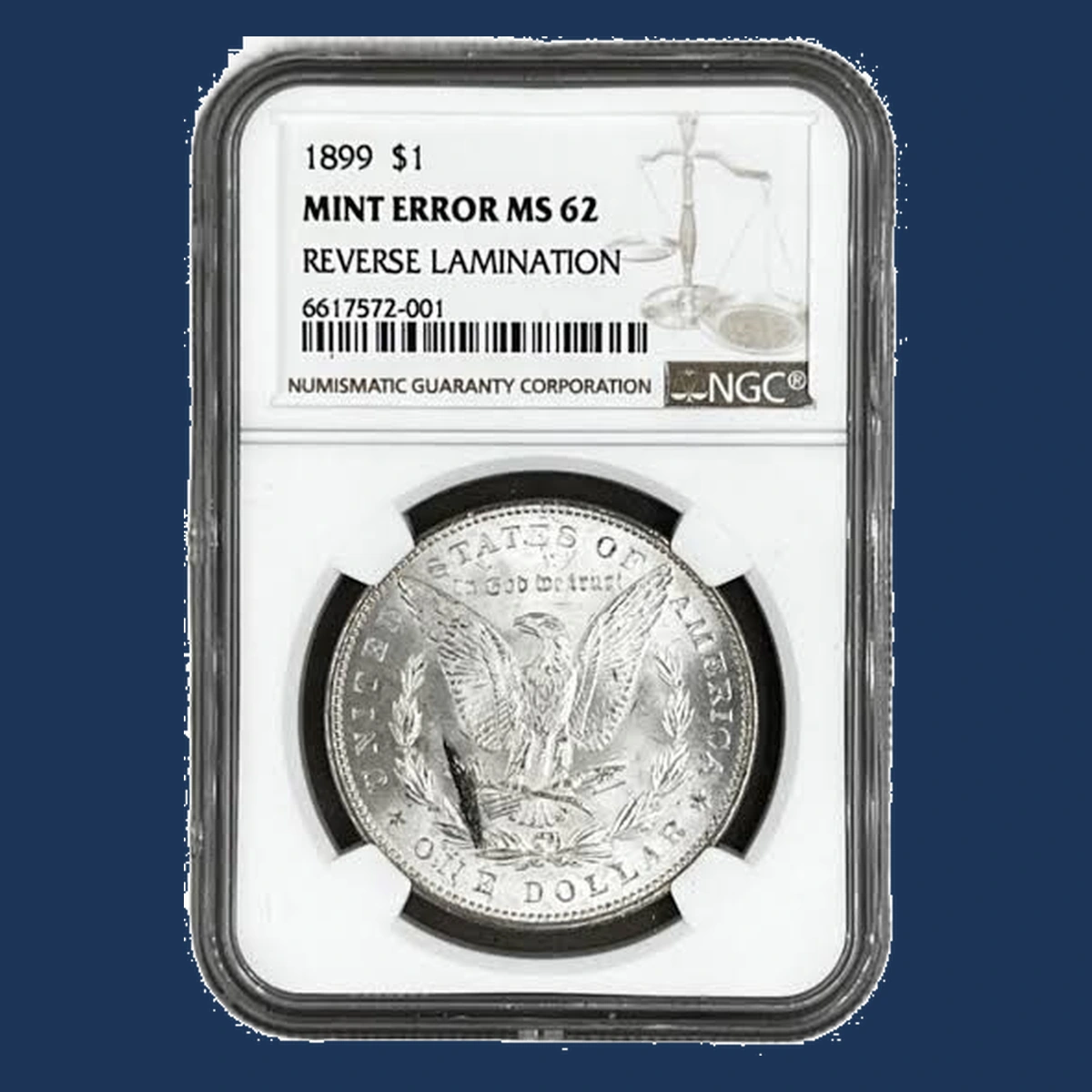
A loose flap or a shallow missing strip can show where the coin’s silver separated. Collectors call this lamination, meaning a layer within the metal has split or peeled.
The problem begins in the blank, the metal disc made before the design is struck. An impurity or weak bond can let a small section separate from the rest.
An MS64 example is reported for 1899 without a firmly identified mint, and a separate New Orleans coin has been discussed. Neither report establishes a complete split through the whole blank.
Estimated Value
The estimated whole-coin range is $75–$1,000 for an authenticated 1899 lamination. A small flake on an ordinary New Orleans coin belongs near the lower end.
A large, attractive peel or a scarcer mint can raise the price. As a different-year silver-dollar comparison, a 1923 Peace Dollar with front-side lamination sold for $84 in March 2024.
An intact flap may add interest, but pulling it away destroys the feature collectors would examine.
How to Identify
Do not touch a loose flap. First take angled photographs that show how the peeling metal joins the coin and whether any original design remains on it.
With a 10× magnifier, look into the exposed boundary rather than relying on its color. Lamination can reveal a layered break; corrosion more often eats into the surface irregularly.
Next check for scraping or tool cuts. A gouge made after minting can leave raised lips and marks across the surrounding design.
Weighing helps only when enough metal has gone missing to affect the normal 26.73 grams. Wear also reduces weight.
Follow the loose layer back into the original silver, leaving every attached piece in place.
3. 1899 Morgan Dollar Doubled Back Design
An extra raised outline on the back can come from a doubled stamping tool. This is called a doubled die: the tool carries the repeated detail before it touches the coin.
The New Orleans variety VAM-26 is reported with back-side doubling. VAM numbers identify particular tool combinations, rather than grades or prices.
The coin does not need a second strike to display these outlines. Flat ledges caused by movement during striking are a different effect, so a general impression of doubled lettering is not enough to name this variety.
Estimated Value
Use an estimated $100–$1,000 for an authenticated 1899-O doubled-back variety across ordinary worn and unworn grades. Stronger, easily matched details support more interest than faint extra edges.
The range values the whole dollar, not each doubled letter. An unusually high grade can account for much of the price even when the doubling is small.
Only apply the variety premium after matching the actual pattern; ordinary flat doubling does not earn the same estimate.
How to Identify
Find an authenticated VAM-26 photograph before deciding which back-side detail is important. Start by checking that both coins have the O mintmark, then compare the same area at equal enlargement.
Under a 10× magnifier, examine whether the second outline has its own rounded shape. A flat shelf that seems shaved from the main letter points toward movement during striking instead.
Continue the comparison into nearby details so one scratch or bump cannot carry the whole identification. Reflections may change when the lamp moves, while real relief stays in the same place.
Match the complete illustrated pattern rather than choosing a variety number because one letter appears doubled.
4. 1899 Morgan Dollar Spiked S Mintmark
A small projection from the S mintmark gives this reported variety its Spiked S name. The feature belongs to the letter beneath the wreath’s bow on the back.
Collectors identify the variety as VAM-4. The nickname describes its appearance, but it does not by itself prove that the S was punched twice.
A mark in the stamping tool can leave extra raised metal on a coin. Damage to a finished dollar can also distort the S, so the projection’s shape and connection to the letter need careful comparison.
Estimated Value
For a correctly identified Spiked S, allow an estimated $100–$1,500 across worn through modest unworn grades. The mint, remaining detail, and overall surfaces still drive much of the total.
The small projection should add a premium only when it matches the recognized variety. A bent or scratched mintmark receives no comparable reward.
High-grade 1899-S dollars can cost more for their condition alone, so do not attribute the entire price to this tiny feature.
How to Identify
Locate the mintmark beneath the bow before examining the suspected spike. Dirt beside the S can look attached in a photograph, especially when the light comes from only one direction.
View the area under a 10× magnifier and move the light around it. Check whether the projection is part of the struck silver and how it joins the letter.
A normal S of similar wear is a useful first comparison. Follow that with an authenticated VAM-4 image to establish the projection’s exact shape and position.
Do not guess the variety from a sharp-looking blob. The useful match is the projection together with the surrounding S outline.
5. 1899 Morgan Dollar Struck Through Wood
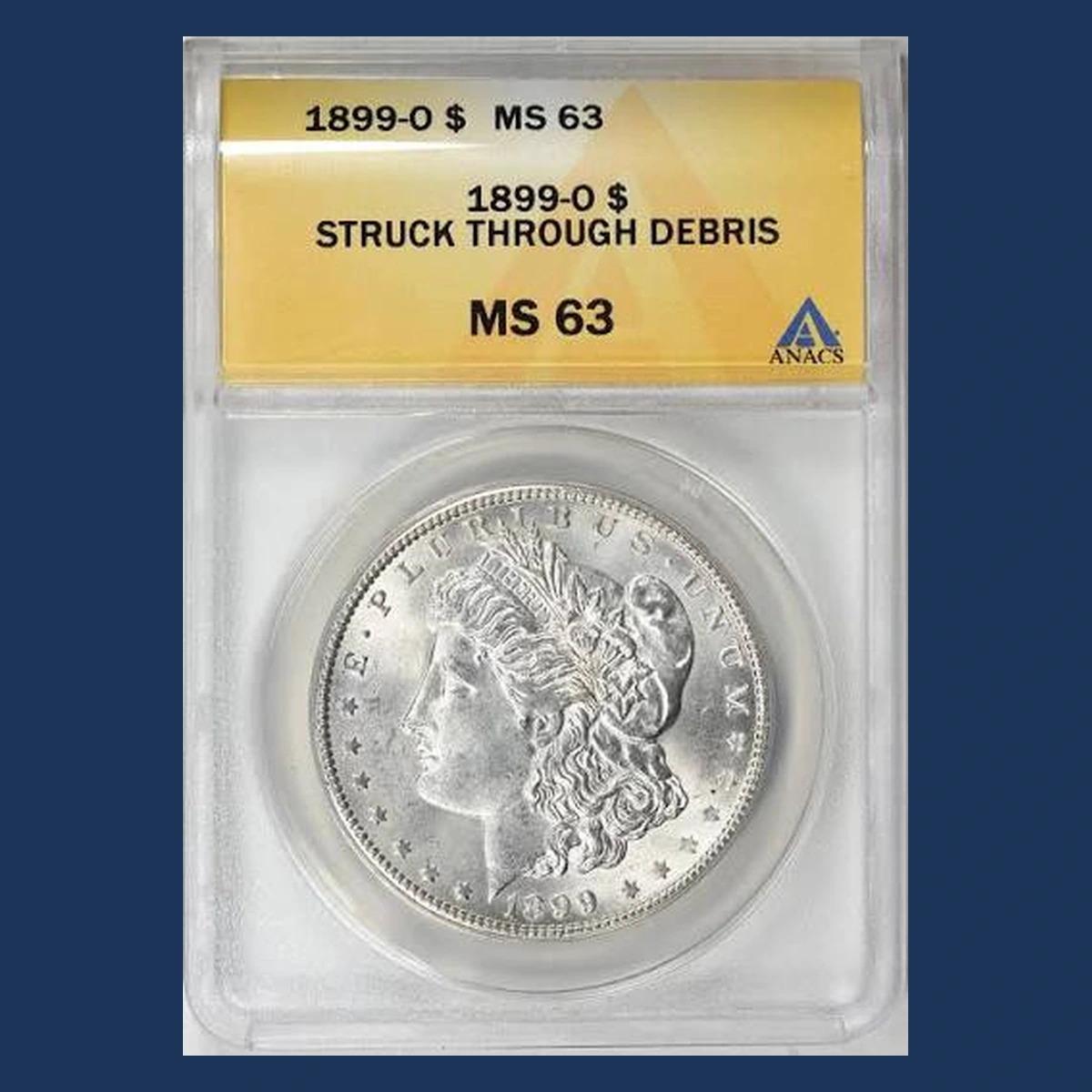
Part of a piece of wood remained on the back of a recorded 1899-O dollar. The coin was graded PCGS MS62, an unworn grade allowing noticeable surface marks.
The wood lay between the metal disc and a stamping tool. Pressure drove its shape into the silver and left some of the material behind.
This is a retained struck-through error: both the impression and part of the obstruction survive. Loose wood resting on an already finished coin is different, because it has not been pressed into the design during striking.
Estimated Value
The PCGS MS62 retained-wood example sold for $504 at Heritage on October 10, 2022. An estimated $250–$1,500 covers comparable genuine 1899-O examples with clear, intact features.
The surviving wood helps explain the hollow and can make the error more appealing. Its size and how securely it remains attached affect that interest.
A coin with the material removed should be judged on the impression that remains, rather than priced as an intact retained-object example.
How to Identify
Leave the material alone and compare the whole back with the recorded retained-wood example. Brown color is only a starting clue, since dirt, toning, and corrosion can look similar.
Angle the light across the depression so you can see how the silver meets the object. Under a 10× magnifier, the material should sit within an impression formed during striking, rather than simply rest over finished detail.
Check photographs from more than one direction before judging that boundary. The published description does not fix a clock position, so identify the wood through its embedded shape and connection to the struck silver instead.
6. 1899 Morgan Dollar Very Weak Strike
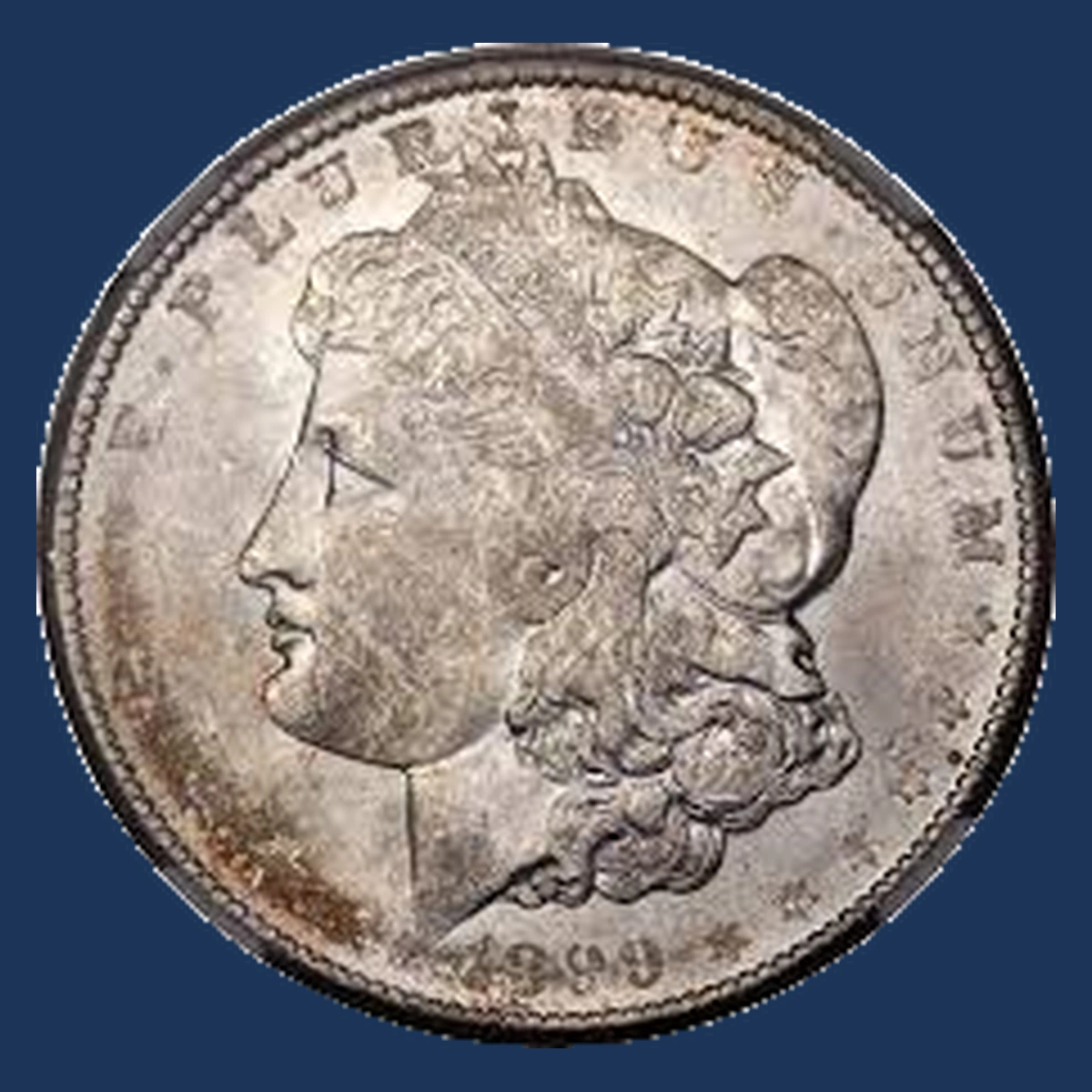
A very weak strike leaves the portrait, eagle, or lettering shallow without the flattened wear expected from long circulation. The silver may still retain its original surface shine.
Too little pressure or an unsuitable gap between the stamping tools can produce this appearance. The term die-adjustment strike is often used when collectors believe it happened while the press was being set.
Weak detail alone cannot establish that exact history. This 1899 category is a reported possibility without a fixed mint or certified example, so the coin’s surfaces must show a genuine striking failure.
Estimated Value
For an authenticated, substantial weak strike, estimate $200–$2,000 as a whole-coin value. This assumes much more than the soft central detail seen on many normal Morgan Dollars.
The upper part suits broad weakness with original surfaces and enough remaining design to identify the coin. A lightly struck center on an otherwise ordinary coin usually adds little.
Wear, polishing, or corrosion can erase details too, and those changes do not qualify for this error range.
How to Identify
Examine the shallow areas and the strongest details together. If the highest points are rubbed smooth while protected areas remain sharp, circulation wear may explain the appearance.
An ordinary New Orleans dollar can have weak central detail, so compare a normal 1899-O before assuming a major error. A genuine low-pressure strike may leave extensive shallow detail alongside undisturbed surface texture.
A 10× magnifier and angled light help distinguish that texture from polishing lines or rough corrosion. A normal weight near 26.73 grams can rule against major metal removal, but cannot prove press adjustment.
Judge the weak design together with the unworn surface underneath it, not weak lettering alone.
7. 1899 Morgan Dollar Broadstrike
An expanded outer border can show that the coin spread without normal restraint. The surrounding ring, called the collar, usually limits the diameter and forms grooves around the edge.
Without that control, pressure pushes the silver farther outward. This is a broadstrike, and its outline can be uneven even when the full design remains on the coin.
A New Orleans example is reported for 1899. The distinction from a partial-collar strike matters: a broadstrike escaped the ring’s restraint, while a partial-collar coin still had part of its edge held in place.
Estimated Value
An estimated $1,500–$8,000 applies to an authenticated 1899-O broadstrike, depending on its expansion and preservation. The entire coin, rather than the width of one border, determines the value.
For comparison across silver-dollar designs, a 1921 Peace Dollar broadstrike graded NGC AU58 sold for $7,762.50 in January 2009. That older sale is not a price record for 1899.
Clear spreading with attractive surfaces generally draws stronger interest than a damaged or barely expanded coin.
How to Identify
Measure a loose coin across several directions with padded calipers, taking care not to drag them across the silver. The normal diameter is 38.1 millimeters; an expanded coin may measure differently along different axes.
Then study the edge. Missing normal collar grooves and metal spread beyond the design support a broadstrike, while a step between grooved and smooth bands suggests partial collar.
Check both faces for flattening from later squeezing. A coin pressed after minting can grow wider while its design and edge suffer unnatural crushing.
Keep a holdered example sealed and use side photographs instead. Confirm outward flow from striking together with the edge that lacked normal ring restraint.
8. 1899 Morgan Dollar Off-Center Strike
The design sits high on this 1899-O dollar, close to 12 o’clock when the front is upright. A narrow unstruck crescent remains on the opposite side.
Heritage lists the PCGS XF45 coin as 5% off center, while noting that the full design remains visible. Its date clings to the edge.
That combination also calls for comparison with an uncentered broadstrike, where the complete design lies off to one side. The 2024 and 2025 auction listings describe the same coin, so they do not represent two separate discoveries.
Estimated Value
The recorded XF45 example sold for $3,360 at Heritage on August 31, 2025. Use an estimated $2,000–$10,000 for genuine 1899 off-center Morgan Dollars, with larger visible shifts and better surfaces tending higher.
The sold coin had circulated, yet its displaced design remained easy to recognize. A complete date and identifiable mintmark make comparison much easier.
An unrelated undated Morgan should not receive an 1899-specific price just because its error looks similar.
How to Identify
The recorded coin keeps its full date very close to the edge. Follow the border to the narrow blank crescent, using evenly lit photographs to see through the dark toning.
Compare both faces and the edge before choosing between an off-center strike and an uncentered broadstrike. A complete design can survive on a broadstrike even when its position is uneven.
Heritage and the listed holder identify this example as off center. Preserve that identification when comparing its sale, but do not treat a full design alone as proof of the mechanism.
Confirm the O beneath the wreath and match the high design, low crescent, and edge to the actual auction photographs.
9. 1899 Morgan Dollar Repunched Date
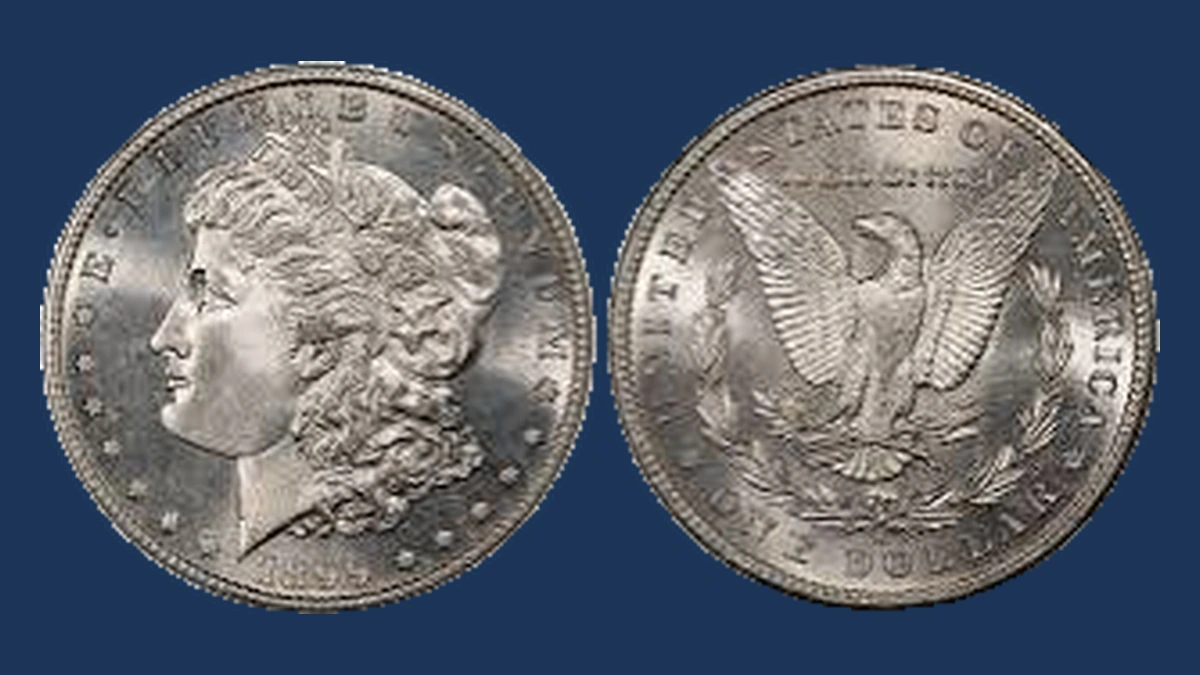
The last 9 has small extra outlines above and below it on the 1899-S VAM-7. That repeated digit is the main feature to seek, rather than doubling across Liberty’s whole portrait.
A worker punched the date into the steel stamping tool more than once, leaving slightly different impressions. Later coins copied the repeated outline.
Although collectors often call this a doubled date, it is a repunched date. The specific cause differs from a doubled die formed while the larger design was transferred to a tool, and from movement during the coin’s strike.
Estimated Value
Estimated whole-coin values range from $100–$15,000, spanning worn examples through exceptional unworn coins. Preservation accounts for much of the difference.
PCGS records an MS67 VAM-7 at $14,400 in November 2017. That high grade describes an exceptionally well-preserved coin, so the result is not a typical price for a small doubled digit.
A clear final 9 helps identify the variety even on a less expensive example, while cleaning and heavy marks reduce demand.
How to Identify
Confirm the S mintmark first. The VAM-7 date pattern discussed here belongs to San Francisco, not every 1899 Morgan with extra marks around its numerals.
Now place the final 9 under a 10× magnifier. Inspect its top and bottom for portions of an earlier punched outline rather than a flat shelf beside the entire date.
Compare an authenticated VAM-7 close-up at the same angle. Do not turn a nearby scratch into part of the digit or assume a worn bump proves the variety.
Lighting from opposite sides helps separate relief from shadow. The two locations on the last 9 provide the most direct pattern to match.
10. 1899 Morgan Dollar Micro O Mintmark
The O beneath the wreath is unusually small on these genuine New Orleans varieties. It stands out when compared with the ordinary larger O at equal magnification.
The name Micro O covers several tool combinations, including VAM-4, 5, 6, 31, and 32. Their small letters belong in one main category, but their other identifying details differ.
VAM-5 also involves wing lines, so the mintmark’s size alone does not choose the number. The accepted 1899 varieties should not be confused with counterfeit Micro O dollars bearing certain other dates.
Estimated Value
Allow an estimated $75–$75,000 for genuine 1899-O Micro O coins, from worn pieces to exceptional unworn examples. Most affordable circulated pieces sit far below the headline result.
PCGS records $73,437.50 for an MS66 example in June 2015. More recently, a VAM-31 graded AU53 sold for $288 in May 2024, while an MS64+ brought $20,400 that September.
These are separate coins and grades, showing how strongly preservation changes the whole variety’s price.
How to Identify
Choose a normal 1899-O for comparison, ideally with similar wear. Examine both mintmarks beneath the bow without changing the magnification; the whole small O should differ in size.
A worn ordinary O can look thin or incomplete. Under a 10× magnifier, compare its complete shape rather than only the surviving center.
Next use a photographed example of the claimed VAM number. The front and back must match that combination, and VAM-5 needs its own wing-line check.
Do not apply another date’s counterfeit rule to every 1899 Micro O. Still inspect the entire coin for an altered mintmark or copied design.
Match the small O and the additional variety features together before assigning a specific VAM number.
Conclusion
An unusual 1899 dollar deserves a careful look, but the reason for the mark matters. A small O, peeled silver, and a shifted design each require a different check.
The estimated whole-coin range here is $75–$75,000, with rare, well-preserved Micro O coins at the upper end. Match the mint and exact feature before applying a price, and never remove trapped material or loose metal.