1895 Dollar Coin Error List with Pictures

On an 1895-S dollar, part of a sideways S can hide beneath the upright mintmark. A VAM-4 example with reflective surfaces, graded MS65PL, sold for $14,400 in January 2018.
These 1895 Morgan Dollar errors also include a raised break line and reported peeling silver. Estimated whole-coin values range from $300–$20,000; the scarce dates contribute heavily to those prices.
Read on for the visible differences between a repeated mintmark, damaged stamping tool, and faulty metal.
1. 1895 Morgan Dollar Peeling Silver on the Back
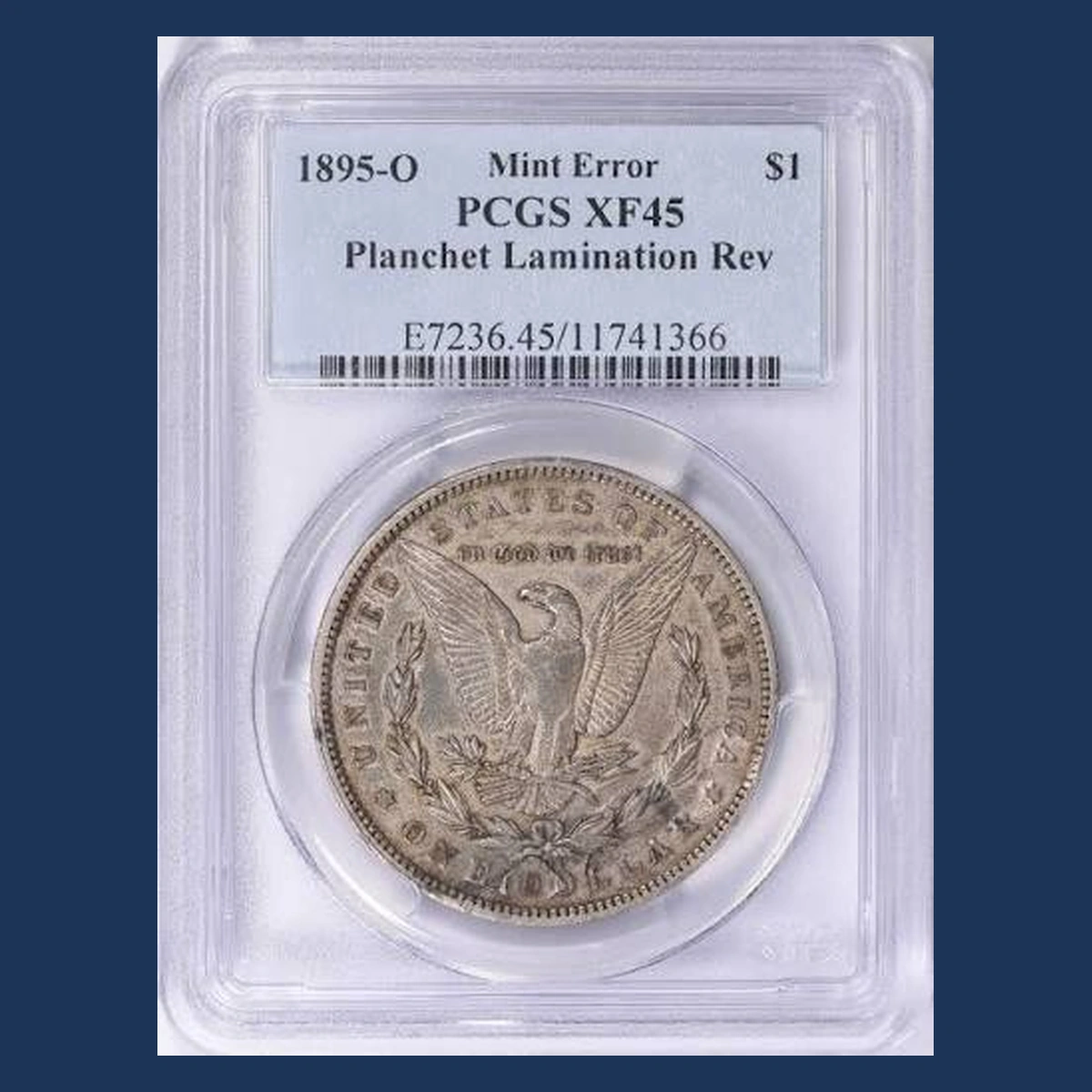
A peeling strip or shallow missing patch can show that the metal separated within the coin. This is called lamination, a local split between layers of the original metal.
The reported 1895-O example has the problem on the back. No single location around the eagle or wreath is established for the report.
Morgan Dollars contain 90% silver and 10% copper mixed together, rather than a modern bonded outer covering. A weak area or impurity in that metal can let a thin section loosen, sometimes leaving a flap attached.
Estimated Value
An estimated $300–$8,000 covers an authenticated 1895-O lamination across worn to lightly worn coins. The scarce New Orleans dollar accounts for much of this whole-coin value.
For perspective, an ordinary 1895-O graded AU58 brought $8,400 in August 2025. That was not a lamination sale and should not be treated as an error premium.
The peeling feature adds interest only when genuine; cleaning or later gouging may reduce the underlying coin’s value.
How to Identify
Keep any loose silver attached. A flap can preserve both its original design and the layered boundary that explains how it separated.
Look across the back under low-angle light, then use a 10× magnifier on the edge of the missing or lifted area. A natural layer should meet the original silver without a freshly dug channel.
Check nearby detail for scrape marks or displaced lips of metal. Corrosion can also remove silver, but usually leaves a different, eaten surface rather than a coherent peeling layer.
A weight below the normal 26.73 grams is only supporting evidence because ordinary wear also removes metal. Confirm the layered boundary itself before calling the patch lamination.
2. 1895 Morgan Dollar Raised Line from a Broken Die
A raised line through the D on the back identifies the reported VAM-1A break. The collector involved in its discovery described this feature on an 1895-S dollar.
A die is the steel tool that stamps a coin’s design. When its surface cracks, silver can enter the opening during a strike and form a raised line.
The coin itself need not be cracked through. This distinction matters because a split in the silver, a scratch cut after minting, and a raised line copied from a damaged tool have different causes.
Estimated Value
For an authenticated 1895-S VAM-1A, use an estimated $400–$10,000 across worn through lightly worn examples. This range includes the value of the scarce San Francisco dollar.
A recognizable break can interest variety collectors without creating a large automatic surcharge. Surface quality and remaining detail may matter more than the line’s apparent size.
Compare coins at similar wear levels, and do not apply exceptional unworn-dollar prices to an otherwise heavily circulated example.
How to Identify
Start at the D on the back and decide whether the line rises above the silver or cuts into it. Move a lamp from left to right; the changing shadow helps show the relief.
Under a 10× magnifier, follow the line beyond the letter and compare its route with a confirmed VAM-1A photograph. A random scratch through D does not establish the variety, especially if it tears or pushes nearby silver.
Check the S beneath the wreath’s bow and the full 1895 date before completing the match. The most direct test is the correctly placed raised break pattern on the correct year and mint.
3. 1895 Morgan Dollar Repunched S Mintmarks
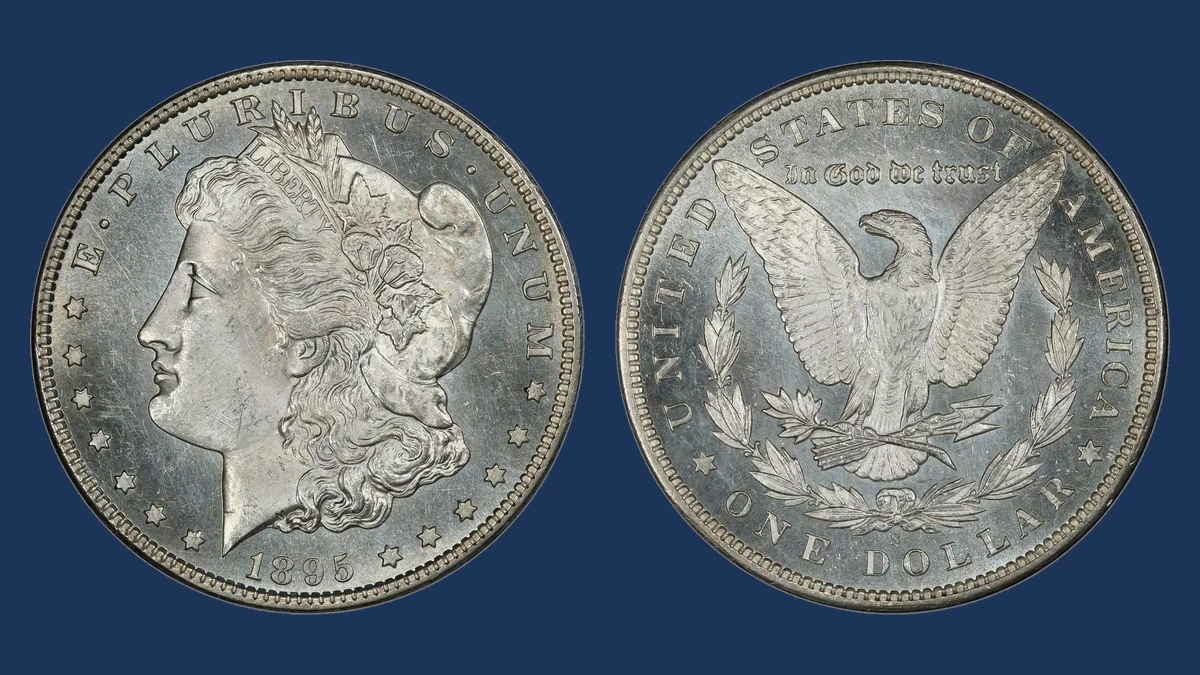
Extra curves inside or beside the S can reveal an earlier mintmark impression. Workers added the letter to the steel stamping tool with a small punch, sometimes making more than one impression.
VAM-3 has an S/S pattern associated with a curved dash. VAM-4 has remains of a sideways S beneath the final upright letter.
These are two forms of repunching, not two strikes on each coin. Their outlines differ, so a photograph of one variety should not be used to identify the other merely because both show extra metal around S.
Estimated Value
The estimated whole-coin range is $400–$20,000 for recognized 1895-S repunched-S varieties across worn to high unworn grades. Strong surface preservation explains much of the upper end.
PCGS records a VAM-4 MS65PL sale of $14,400 in January 2018. PL means reflective, prooflike surfaces on an ordinary production coin, not a specially made Proof.
That result concerns VAM-4 specifically and is not a routine price for every S/S coin.
How to Identify
Find the S under the wreath’s bow, then compare its extra curves with separate photographs of VAM-3 and VAM-4. The goal is to identify an earlier letter, not simply an uneven edge.
A 10× magnifier should show how the extra outline joins or passes beneath the main S. For VAM-4, the surviving curves must fit a sideways letter.
VAM-3 requires its own repeated-S and curved-dash pattern. Do not combine details from the two varieties into one imaginary mintmark.
A flat shelf from movement during striking will not reproduce a convincing earlier punched letter. Match the remaining curves to the correct variety photograph before assigning either number.
Conclusion
The key checks are small but distinct: extra S outlines, a raised break line, or a peeling layer of silver. Each points to a different stage of production.
Estimated whole-coin prices span $300–$20,000 for the examples and condition levels discussed here. Much of that value belongs to the scarce 1895-O or 1895-S dollar itself, so compare mint, wear, and surfaces before paying an added error premium.