1923 Dollar Coin Error List with Pictures

Two overlapping designs made one 1923 Peace dollar a very different coin from an ordinary silver dollar. That double-struck example sold for $18,000 in December 2022.
Other 1923 Peace dollar errors require a closer look at a leaf, a crack, or the edge. Estimated values range from $50 to $30,000 across the examples below.
Follow the visible clues to find out which kind of mistake you are examining.
1. 1923 Peace Dollar Peeling Metal
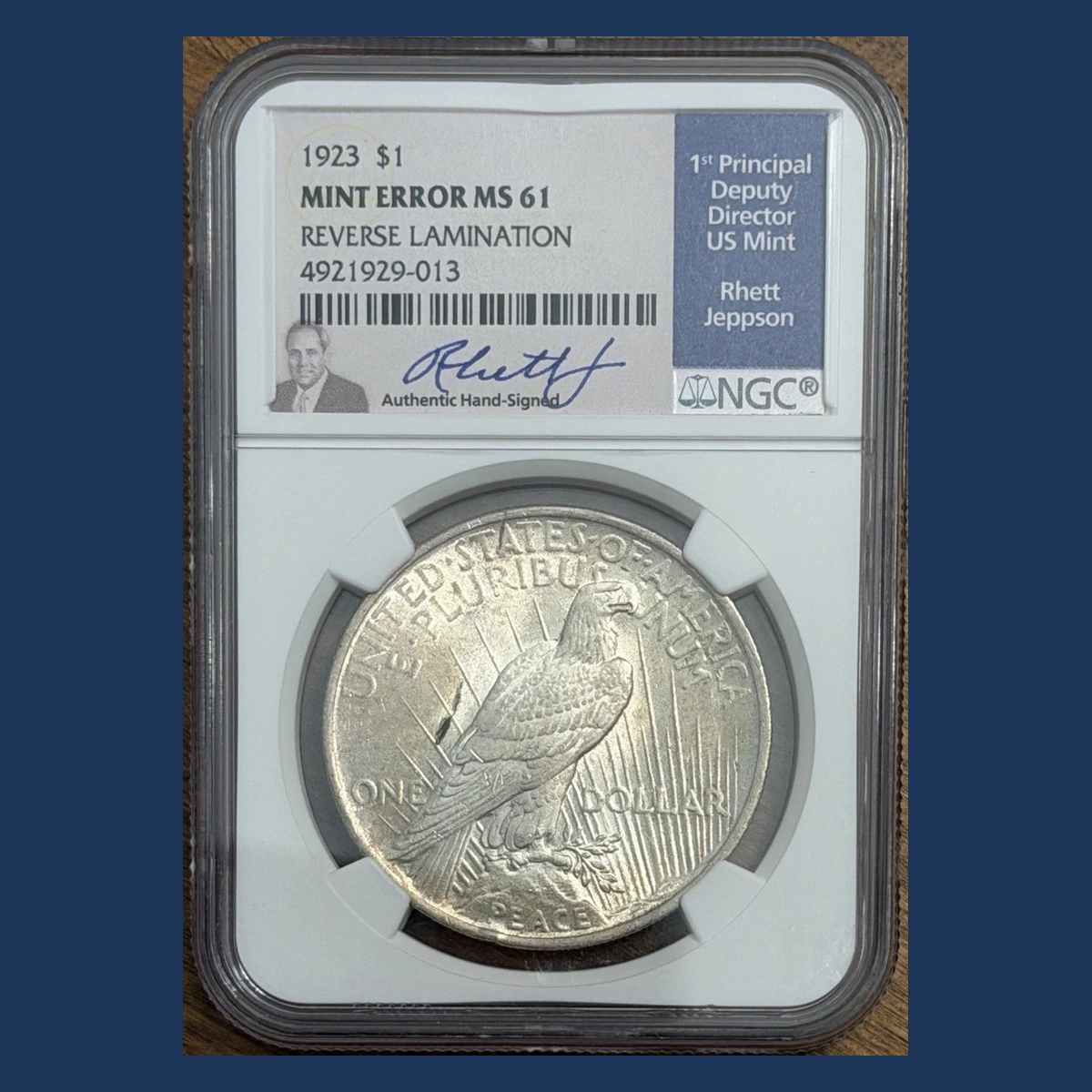
Peeling metal can expose an uneven patch beneath the design. The separation, called a lamination, starts within the silver alloy rather than with an object pressed into the coin.
Philadelphia examples have been described with peeling on the front or back. A separate San Francisco auction entry records a front lamination on a coin with light circulation wear.
A flap may remain attached, or a piece may already be gone. The shape varies with the weakness in the metal, so there is no single cheek or eagle mark that identifies every example.
Estimated Value
Estimate $75 to $1,000 for authenticated examples in circulated to moderately unworn condition. A June 2024 seller asked $220 for a slightly worn 1927-D Peace dollar with a reported lamination.
That different-year asking price gives a modest same-series comparison. A small flake usually adds less interest than a broad original peel, while attractive surrounding surfaces can help a buyer appreciate the error rather than simply notice damage.
How to Identify
An attached strip can break away if you lift it, so leave it exactly as it is. Photograph its boundary under low angled light, following any design that continues from the flat surface onto the loose metal.
An irregular layered opening supports separation within the blank, while parallel scrape marks may show later damage. Check both faces because Philadelphia examples are reported on either side, and compare the shape with a documented specimen.
The San Francisco entry concerns the front, but its exact position must come from that coin’s photographs. For a deep hollow without a remaining flap, examine the walls and surrounding letters for crushed metal before calling it a lamination.
2. 1923 Peace Dollar Clipped Blanks
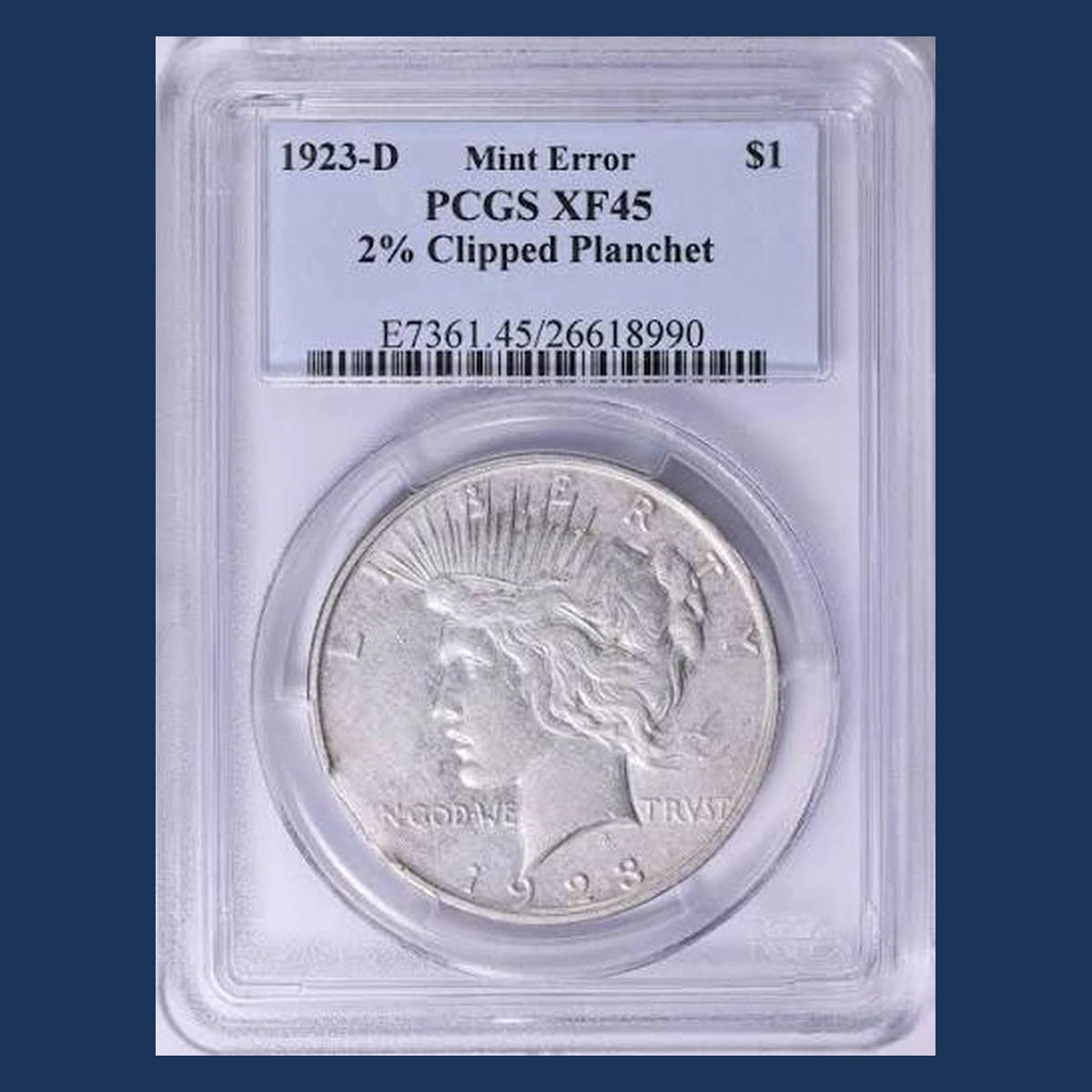
A missing section of the original blank can leave a curved or ragged edge on the finished dollar. These shapes reflect how the incomplete metal entered the blank-making process.
One photographed Philadelphia example has a curved gap near 4 o’clock. Auction listings also describe separate ragged clips and other clipped blanks, rather than one coin with every shape combined.
The design was stamped beside an edge that was already incomplete. That timing can affect the nearby rim and letters, helping distinguish a genuine clip from a piece cut away much later.
Estimated Value
An estimated $100 to $2,000 covers authenticated curved and ragged clips in ordinary collectible condition. A reported unworn 1927-D curved clip was advertised at $149 in 2020, providing a different-year asking-price comparison.
For 1923, the extent of the missing metal and the quality of the surrounding dollar drive the estimate. A readable date and naturally formed gap are more useful than a dramatic outline created by later cutting.
How to Identify
A normal loose Peace dollar weighs about 26.73 grams and measures 38.1 millimeters across. Record the candidate’s weight, but do not calculate a clip percentage from weight alone.
Now look inside the missing section with a magnifier. Saw grooves, sharp burrs, or scraped metal can reveal later removal.
Follow the rim as it approaches the gap. It may fade, and adjacent letters may stretch toward the missing metal.
The opposite rim can also be weak because of the incomplete blank. Its absence does not automatically reject a clip, especially on a worn coin.
Compare front, back, and edge photographs together. The reported 4 o’clock curve belongs to one example; a ragged clip needs its own matching outline and surface evidence.
3. 1923 Peace Dollar Design Interrupted by Foreign Material
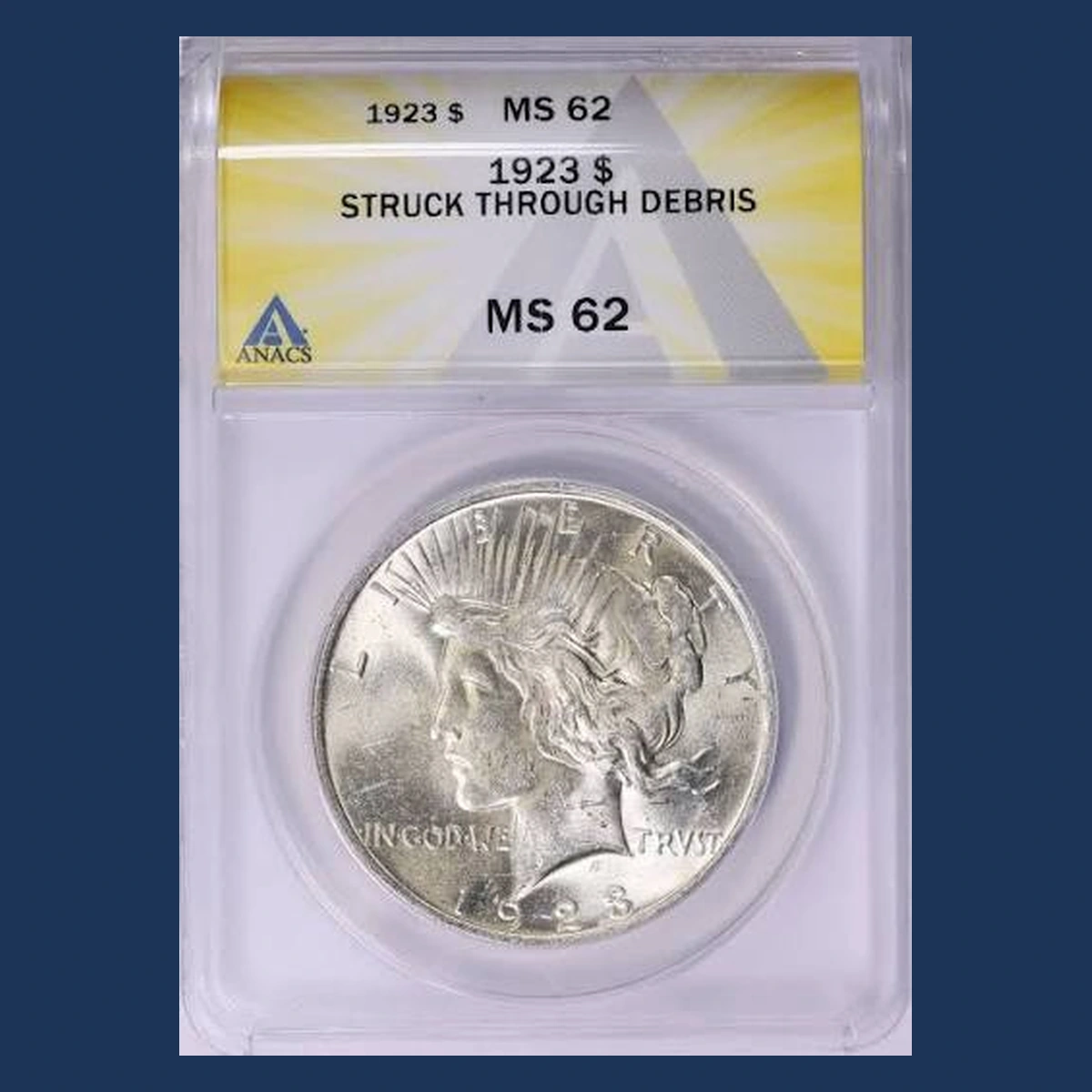
A patch of design can disappear when material gets between the blank and the steel tool that stamps it. The object presses into the surface while blocking part of the picture.
Philadelphia listings include front impressions, with one positioned near 6 o’clock. Denver has a back example, while San Francisco listings include a front example and separate pieces described as struck through metal.
The object’s identity cannot always be read from the depression. A hollow may preserve its outline without retaining the material or enough detail to identify exactly what entered the press.
Estimated Value
A Philadelphia front example graded MS62 by NGC sold for $134 in March 2023. MS62 describes an unworn coin with noticeable marks.
Estimate $100 to $2,500 across authenticated examples, allowing for the size and clarity of the interrupted area. A distinctive shape on attractive original surfaces can draw stronger interest than a shallow indistinct patch, particularly when the depression clearly explains how the design was blocked.
How to Identify
The Philadelphia front example near 6 o’clock offers a useful place to begin: follow where its normal design stops. A Denver back example needs a different photograph, not the same location transferred across the coin.
Trace the outline of the affected patch under angled light. Its shape should explain which parts of the picture were blocked.
Look inside for any surviving texture. A smooth hollow may reveal an outline without identifying the object that made it.
Now inspect the surrounding letters and rim for crushing. A later impact often flattens an already formed detail or pushes metal up along the hollow’s edge.
Compare that boundary with a documented strike-through of similar shape. Call the object metal, fabric, or grease only when its visible features or the specimen’s established description support that identification.
4. 1923 Peace Dollar Cracked Blank
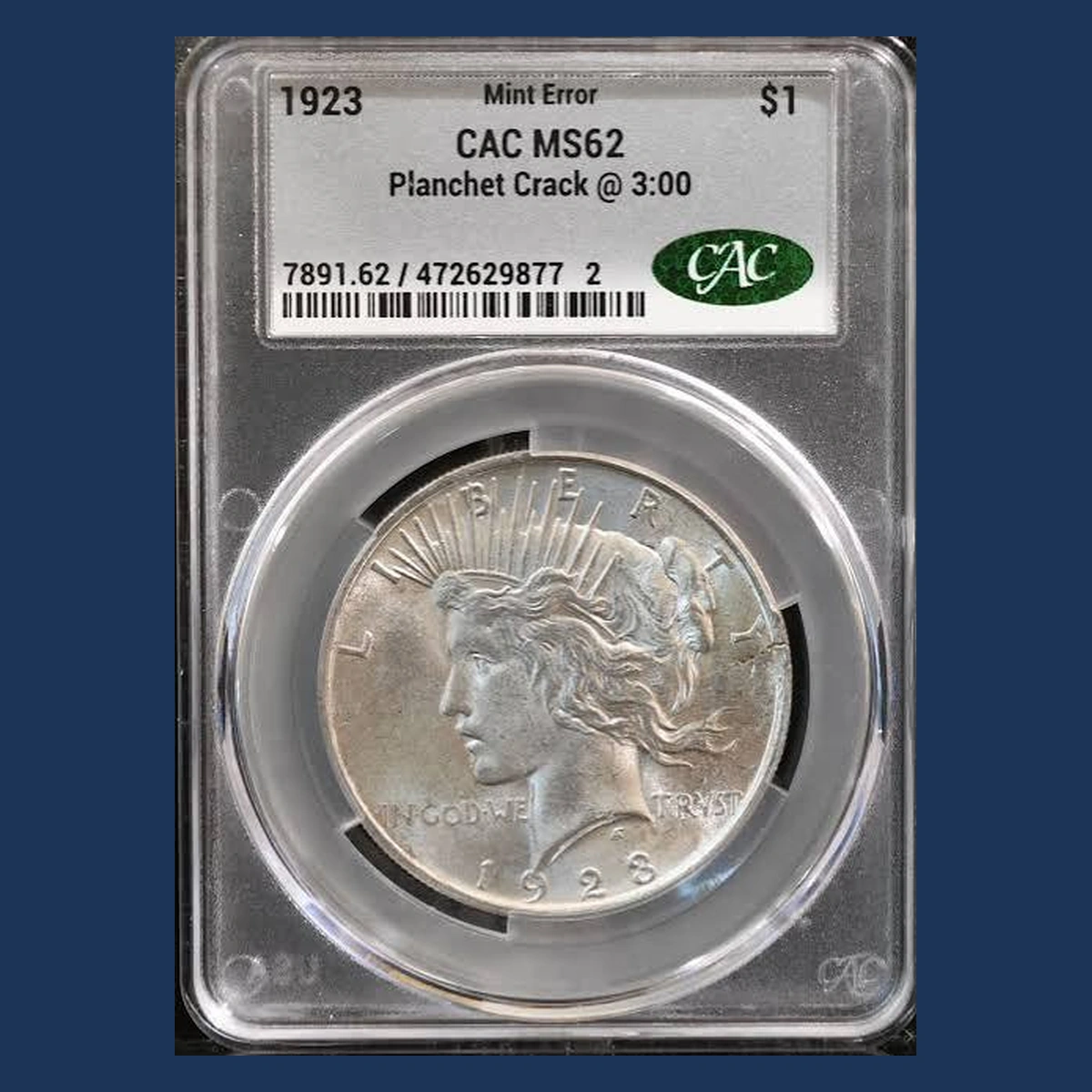
A real crack in the dollar’s metal is different from a raised line copied from a damaged stamping tool. The opening can reach the edge or continue across part of the surface.
Several Philadelphia examples are listed as cracked blanks. One NGC MS62 dollar has a crack near 9:30, while other examples have their own positions and lengths.
The weakness lies in the metal that became the coin. Pressure during manufacture can open that weakness, leaving a separation that must be distinguished from an edge broken or torn by later abuse.
Estimated Value
A PCGS MS64 cracked-blank dollar sold for $432 in March 2023. Its grade describes an unworn coin with some visible marks.
Use an estimated $150 to $3,000 for authenticated examples, depending on how large and clear the separation is. An attractive coin with a readily visible original crack can be more desirable than a heavily damaged piece, even when the latter has a much wider opening.
How to Identify
An opening and a raised ridge can look similar in a straight photograph, so illuminate the line from both sides. A true blank crack separates the coin’s metal; a tool crack instead leaves extra metal standing above it.
Photograph the edge where the opening begins, keeping the coin supported without trying to flex it. Follow the split onto each face and compare how the surrounding design meets it with the documented specimen’s photographs.
The 9:30 position belongs to one reported example and should not become a rule for every cracked dollar. Inspect the entry point for crushing, gouges, or tearing from a later blow before treating the separation as a manufacturing defect.
5. 1923 Peace Dollar Rotated Front and Back Designs
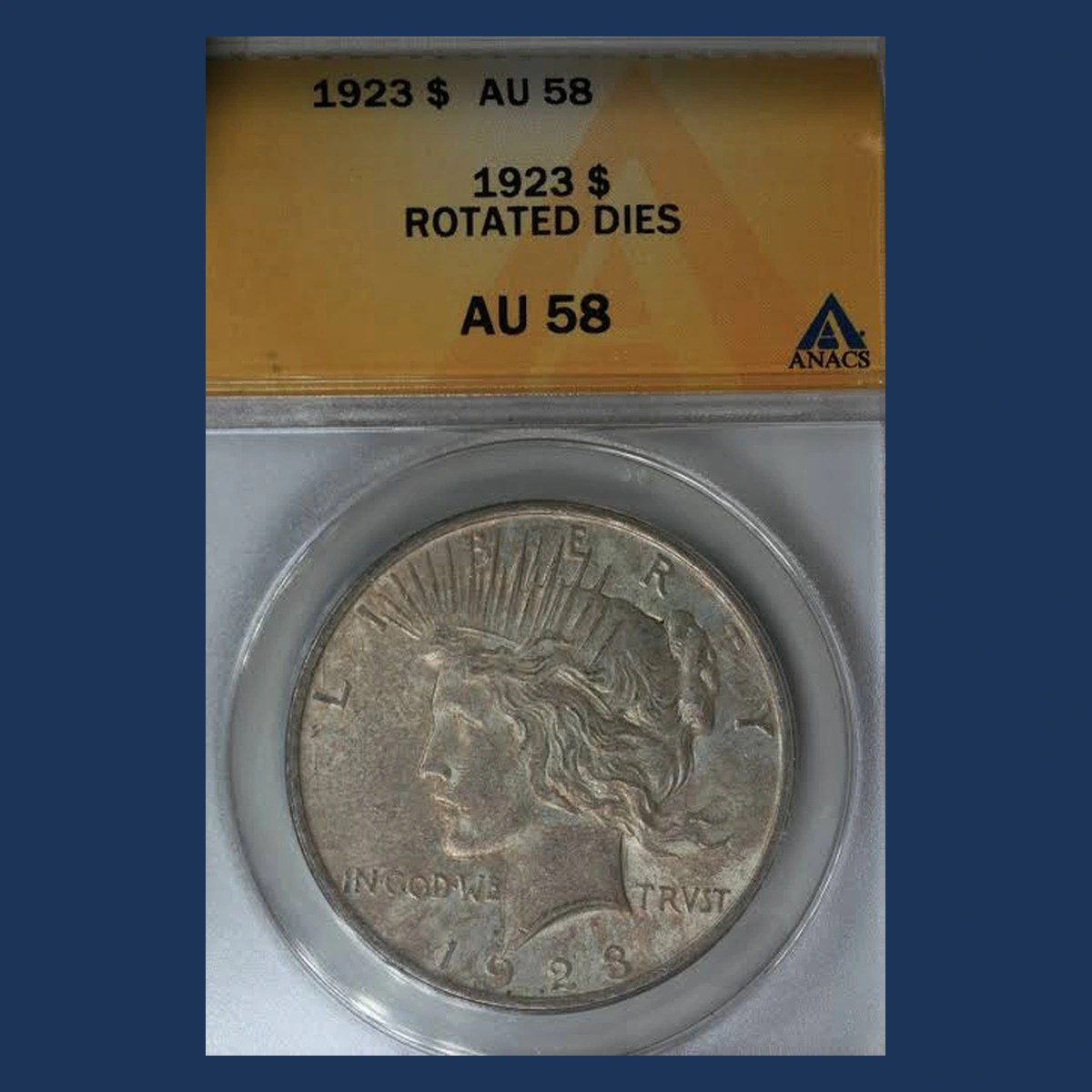
An upright portrait normally becomes an upright eagle when you flip a Peace dollar from top to bottom. A stamping tool turned out of position can change that relationship.
A dealer lists a Philadelphia dollar certified by NGC as MS63 with rotated designs. That means an unworn coin with visible marks, not a separate grade for the amount of rotation.
The angle must be measured on the actual coin. Reported angles from other examples should not be transferred to it simply because the date and mint are the same.
Estimated Value
Estimate $150 to $4,000 for authenticated rotated-design dollars, with larger clearly demonstrated rotations generally attracting more attention. Condition and the visibility of the two designs also affect the whole-coin price.
As a different-series comparison, a silver 1971-S Eisenhower Proof with medal alignment sold for $900 in January 2025. That specially prepared collector coin differs from a 1923 ordinary dollar, so its result illustrates the error market rather than an exact match.
How to Identify
Two separately straightened photographs cannot demonstrate a rotated design, even if each photograph is perfectly clear. Ask for a turning sequence or examine the actual coin so the relationship between its faces stays intact.
Hold the portrait upright and flip the coin directly over the top edge without twisting it sideways. A normal eagle finishes upright; compare the candidate’s final tilt with that result, using a normal coin to practice if needed.
If the dollar moves inside its holder, allow for that movement before judging a small angle. Describe which way the eagle tilts after the flip, and measure that specimen rather than assigning a number taken from another listing.
6. 1923 Peace Dollar Doubled Design Details
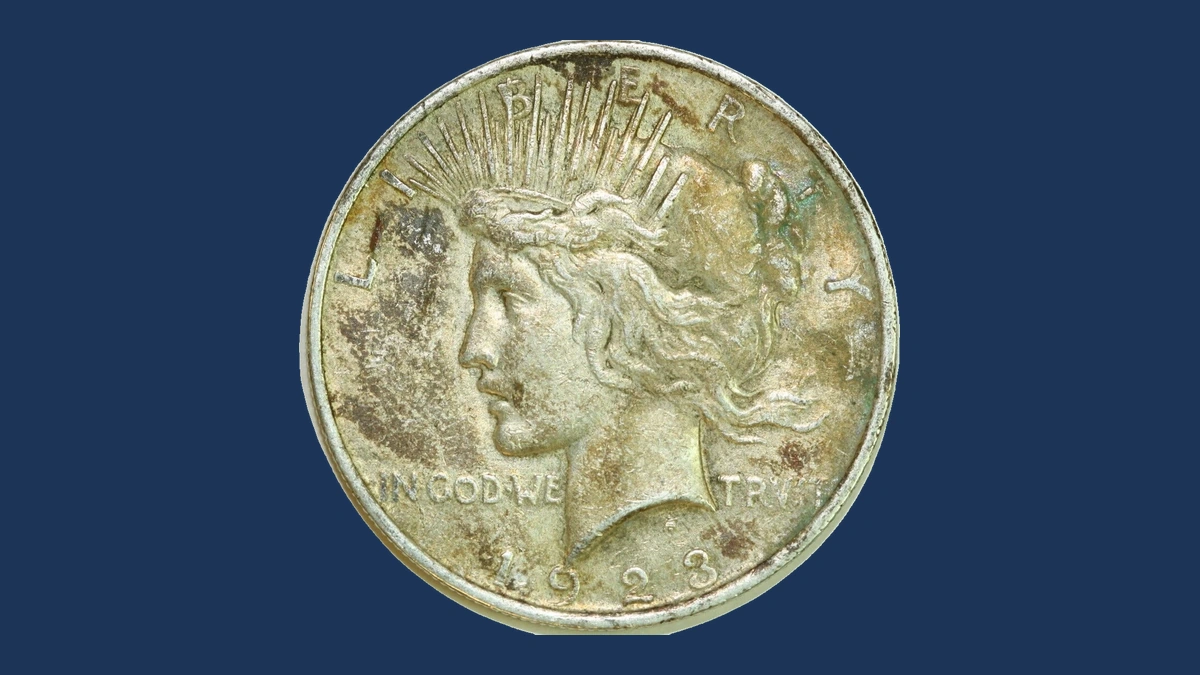
Two close raised outlines can appear when a stamping tool receives a doubled version of the design. This doubled die repeats the same small extra shapes on coins struck from it.
Philadelphia reports include doubled crown rays on Liberty’s head and separate doubling among the back’s leaves and lower rays. Denver examples show the effect on the eagle’s head, beak, and neck.
Doubling is also reported around TRVST without a settled mint assignment. The V itself is normal lettering for this design; it is not evidence of a misspelling or minting mistake.
Estimated Value
For identified varieties, estimate $75 to $5,000, from worn examples with modest doubling to strong patterns in attractive condition. Different locations and mints do not carry interchangeable premiums.
For context, a 1927 Philadelphia doubled-motto Peace dollar sold for $7,800 in February 2019. That different-year, especially well-preserved example shows how condition and a recognized pattern work together; it does not set the value of a faint doubled edge on a 1923 coin.
How to Identify
The eagle’s head is the useful starting point on a Denver candidate. Enlarge the beak and neck, looking for distinct raised edges that follow the original shapes.
For Philadelphia, select either the crown-ray or back-leaf comparison before beginning. Then follow the affected rays or leaves one by one, rather than searching the entire coin for any thick-looking detail.
The letters TRVST need a separate check. Their normal V is part of the design, and the reported doubling does not justify assigning that example to a mint without its identifying mark.
Flat shelf-like edges can come from movement during striking. Match the location and shape of raised separation to an identified variety, keeping reflections and ordinary overlapping design elements out of the comparison.
7. 1923 Peace Dollar Cracked, Broken, or Pitted Stamping Tools
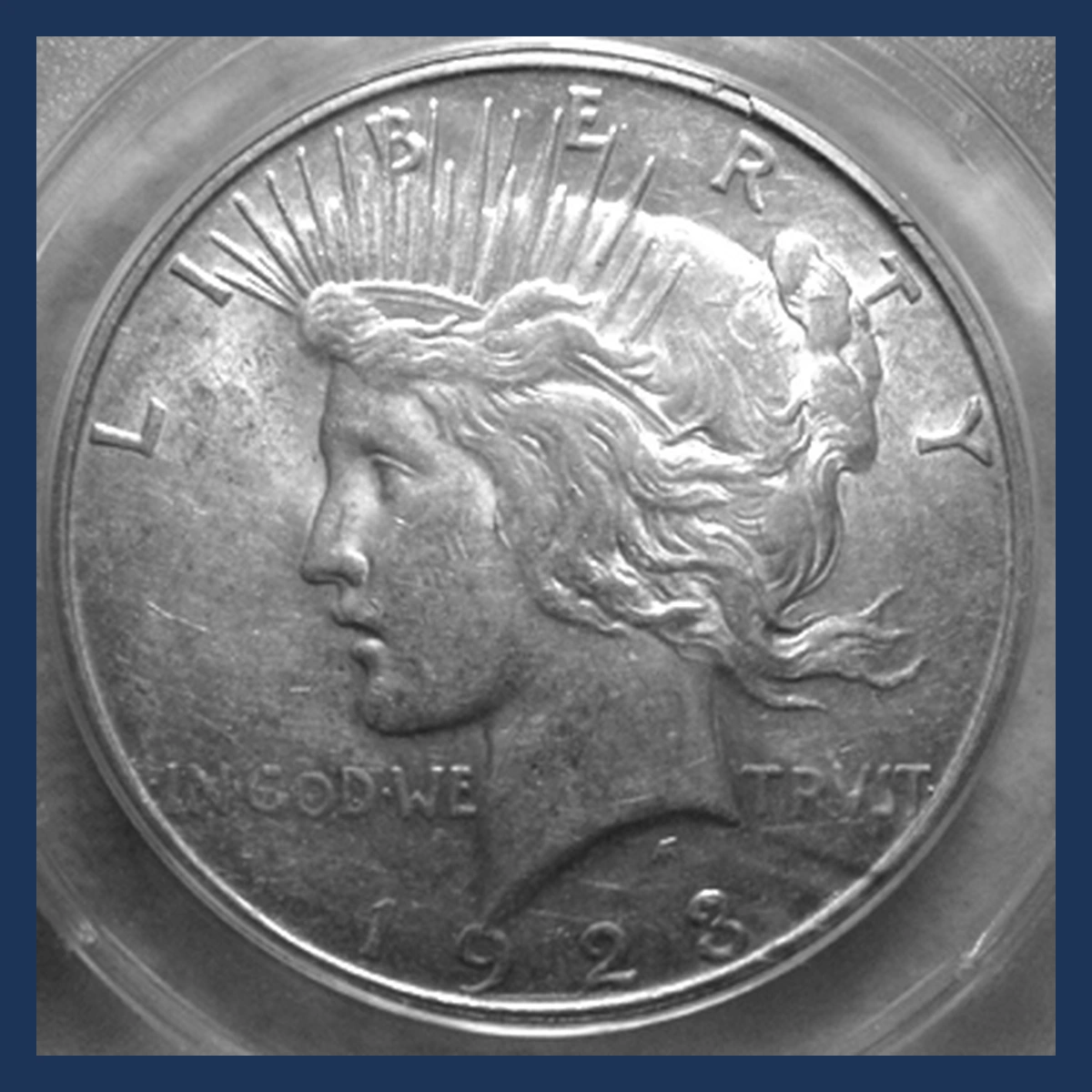
A raised line or blob can appear where the stamping tool breaks. Metal flows into the damaged area, adding a feature that was not part of the original design.
Reports include jaw and cheek lines, a tail beneath the O of DOLLAR, and a Denver back feature nicknamed Ponytail. A break inside the design is different from a cud, which reaches the rim.
A pitted San Francisco back tool can also leave raised rough texture. This tool damage differs from corrosion eating pits into the finished dollar, even if both surfaces look rough at first.
Estimated Value
Estimate $50 to $6,000 across identified minor cracks, larger breaks, and pitted-tool varieties in ordinary collectible grades. The most visible or sought-after patterns occupy a different market from a small incidental line.
The year guide reports a Tail on O example at $5,175, without identifying the sale date. Treat that as a reported comparison; originality, wear, and the exact raised shape still determine another coin’s appeal.
How to Identify
Raise and lower the light across the suspected line. A tool crack normally leaves a ridge above the surrounding surface, while a scratch cuts down into it.
Follow that ridge to determine whether it remains inside the design or connects to a larger rim-reaching blob. Only the latter shape fits the usual meaning of a cud.
Compare the jaw, cheek, and O features individually. A Denver Ponytail description needs a Denver comparison, not a Philadelphia photograph with a different nickname.
For the San Francisco pitted-tool report, concentrate on the rough background of the back. Tiny raised bumps can reflect pits in the tool; sunken holes in the coin instead suggest corrosion or other damage to the finished surface.
8. 1923 Peace Dollar Partial Collar Strike
An edge can develop a step when only part of the blank sits inside the collar. The collar is the metal ring that controls the coin’s width and forms its edge grooves.
Metal outside that ring spreads differently from the portion held inside it. The result can be easier to recognize from the side than from a straight photograph of the portrait.
A 1923-S dollar graded MS60 by ANACS is listed with this error. MS60 means unworn with substantial marks; the listing does not establish one specific clock position for the step.
Estimated Value
Allow an estimated $300 to $6,000 for an authenticated partial-collar Peace dollar of this kind. A strong original step and clear changes in the edge grooves can justify more interest than a barely visible edge irregularity.
For a recent broader comparison, a 1971-D Eisenhower dollar combining partial collar contact and an indent sold for $408 in August 2020. That different coin and combined error do not supply an exact 1923-S price.
How to Identify
Inspect the edge before spending time on the portrait. Rotate a loose coin carefully between edge views, or use photographs if it is already sealed in a holder.
Look for two levels: a portion held within the collar and a portion that spread outside it. Trace how the edge grooves change as you move around the circumference.
A hammered edge can also look stepped, but it often carries flattened grooves and crushed nearby design. Compare the rim on both faces for that later damage.
The normal dollar is 38.1 millimeters wide, so several caliper measurements can help on a loose candidate. The shape and groove transitions matter more than one wide measurement, and the reported specimen’s exact position must come from its photographs.
9. 1923 Peace Dollar Strike on a Type One Blank
Before striking, a blank normally passes through a machine that raises its border. A Type One blank has not received that preparation.
A Philadelphia dollar graded MS65 by PCGS is cataloged as struck on this kind of blank. It already carries the 1923 design, so it is a finished error coin rather than a blank silver disc with an assigned date.
Skipping the border-forming step can affect how metal fills the rim during striking. It does not by itself mean the Mint used the wrong metal, a smaller denomination’s blank, or an unusually light piece.
Estimated Value
The estimated range is $500 to $8,000 for an authenticated Type One blank strike, depending on condition and the strength of the visible rim evidence. The cataloged MS65 coin is an attractive unworn example.
This estimate places a scarce preparation error above many minor surface flaws. A buyer should still compare the complete rim and certified description, because a merely weak border on an ordinary coin does not command the same premium.
How to Identify
Start with the certified description and clear photographs of the complete rim. A faint border alone cannot show which preparation step the blank missed.
Trace the border around both faces and inspect the edge grooves. Compare these with a normal 1923 dollar of similar wear to avoid mistaking circulation flattening for the reported feature.
A loose normal silver dollar weighs about 26.73 grams and measures 38.1 millimeters across. Check those measurements when available, since Type One describes preparation rather than a different denomination or alloy.
Look for filed edges, crushing, or broad surface wear that could explain a weak rim afterward. A specialist must connect the rim’s formation with the blank type; the date by itself proves only which design was struck.
10. 1923 Peace Dollar Double Strike with a Displaced Second Blow
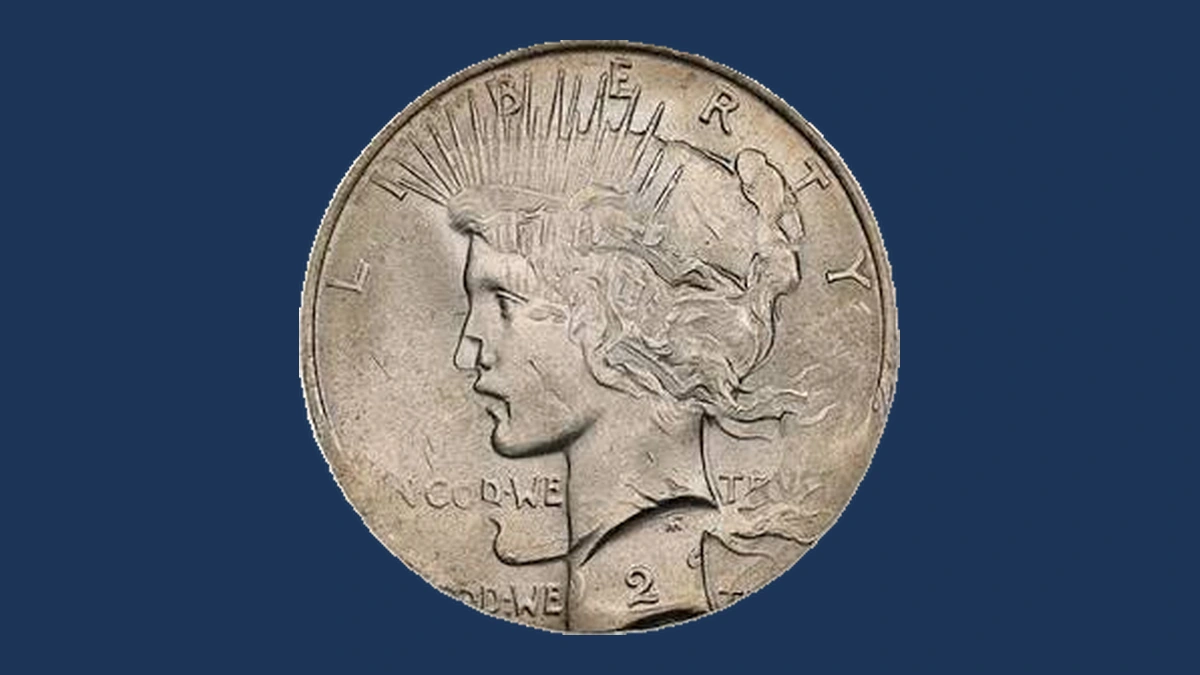
A dollar left in the press can receive a second blow after moving. Its earlier design remains partly visible beneath or beside the new impression.
The documented Philadelphia example has an off-center second strike and an NGC MS64 grade. That grade describes an unworn coin with some marks, while the extra strike describes its manufacturing error.
This movement affects the placement of a larger picture, not just the edge of one letter. The two sets of design and their overlapping boundaries explain the error without assigning an unreported direction or percentage to the second blow.
Estimated Value
The NGC MS64 double strike sold for $18,000 on December 21, 2022. An estimated $3,000 to $25,000 covers comparable authenticated examples of differing clarity and condition.
A readable original design and a clearly separated second impression make the sequence easier to appreciate. Cleaning, damage, or an indistinct second blow can reduce appeal, even though the coin still records two genuine trips between the stamping tools.
How to Identify
Find a recognizable part of the first design and follow its surrounding letters or border. Then locate the matching parts belonging to the second impression.
Use those two placements to map where the coin moved. The second strike can flatten or overwrite portions of the first, so not every detail must survive twice.
Inspect the opposite face for a relationship consistent with another blow, rather than isolated scratches that merely resemble letters. Photographs of both sides help separate overlapping struck shapes from later marks.
A doubled die repeats close details from one tool; it does not create two broadly displaced design boundaries. Compare the candidate with the actual auction images before estimating the second strike’s direction or the percentage that ran off the metal.
11. 1923 Peace Dollar Off-Center Strike and Weak-Pressure Combination
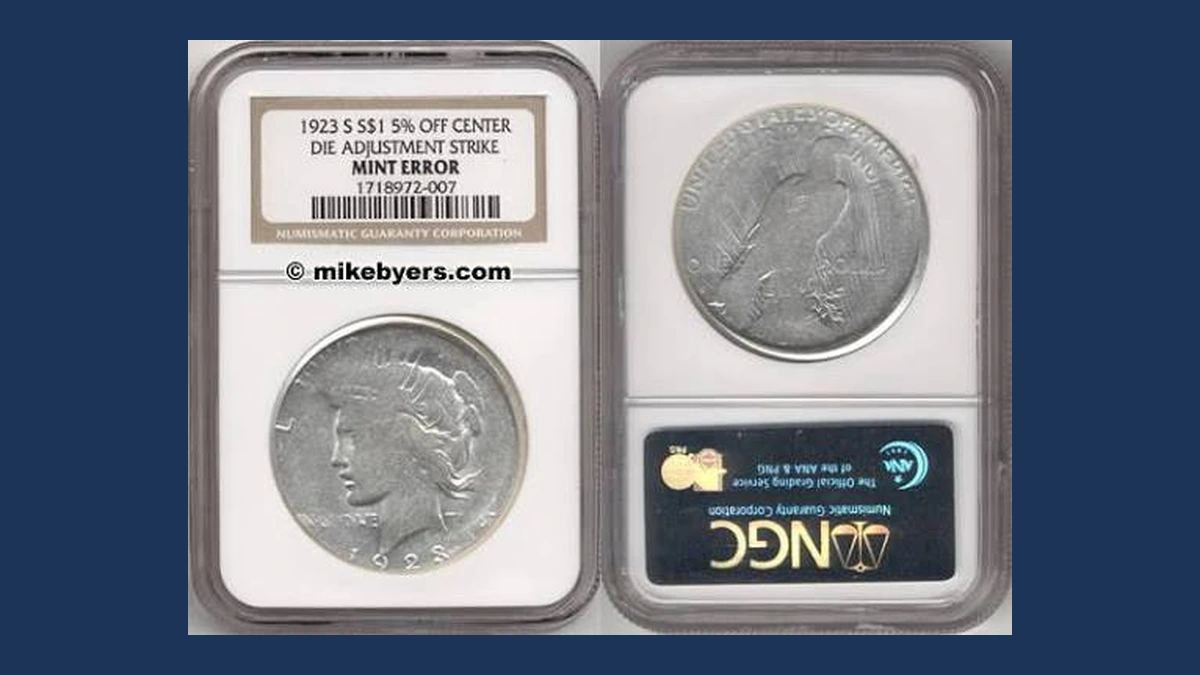
A shifted blank leaves some metal untouched while part of the intended design misses the coin. One unusual San Francisco example combines that displacement with a very shallow strike.
Mike Byers describes the S dollar as a die adjustment strike, made with low striking pressure. It was outside the collar and about 5% off center.
A separate year-guide report describes a Philadelphia 15% off-center dollar. The shallow S example and the Philadelphia report remain different coins; neither supplies every feature needed to identify the other.
Estimated Value
Estimate $1,000 to $30,000 for authenticated off-center Peace dollars, with the weak-pressure combination requiring its own specialist comparison. Clear identity, original surfaces, and obvious displacement support the higher end.
The confirmed $18,000 Philadelphia double-strike sale in December 2022 offers a major-error comparison from the same year. It involved two blows, so that price should not be transferred directly to a coin struck only once away from the center.
How to Identify
On the weak S example, separate shallow striking from wear before judging the shift. Look for original surface texture across weak details rather than smooth patches rubbed flat by circulation.
Then compare the design’s center with the outline of the blank. A true off-center strike leaves untouched metal on one side while the intended picture runs toward or beyond the opposite edge.
The S example also needs an edge view to show its relationship with the collar. Its 5% displacement belongs to that particular low-pressure coin.
For a reported Philadelphia example, check its own date, absent mintmark, and blank crescent. Do not borrow the S coin’s shallow appearance or pressure explanation merely because both dollars have a shifted design.
Conclusion
Extra raised metal points toward a damaged stamping tool, while a real opening can reveal a cracked blank. A second displaced picture tells a different story again.
Estimated values across these examples run from $50 to $30,000. The $18,000 double strike is a confirmed auction comparison, not a price for every doubled-looking letter.
Keep both faces and the edge visible in your photographs, and leave fragile metal untouched.