1880 Morgan Dollar Error List with Pictures

The date says 1880, but parts of 1879 can still hide beneath it. One exceptionally preserved Carson City 8-over-7 dollar sold for $84,000 in September 2019.
Not every 1880 Morgan Dollar error is that subtle: another famous coin lost much of its design in a 40% off-center strike. Estimated values across this list run from $75–$90,000.
Compare the visible feature below, taking care to match the mint and the actual coin’s condition.
1. 1880 Morgan Dollar Clash Marks
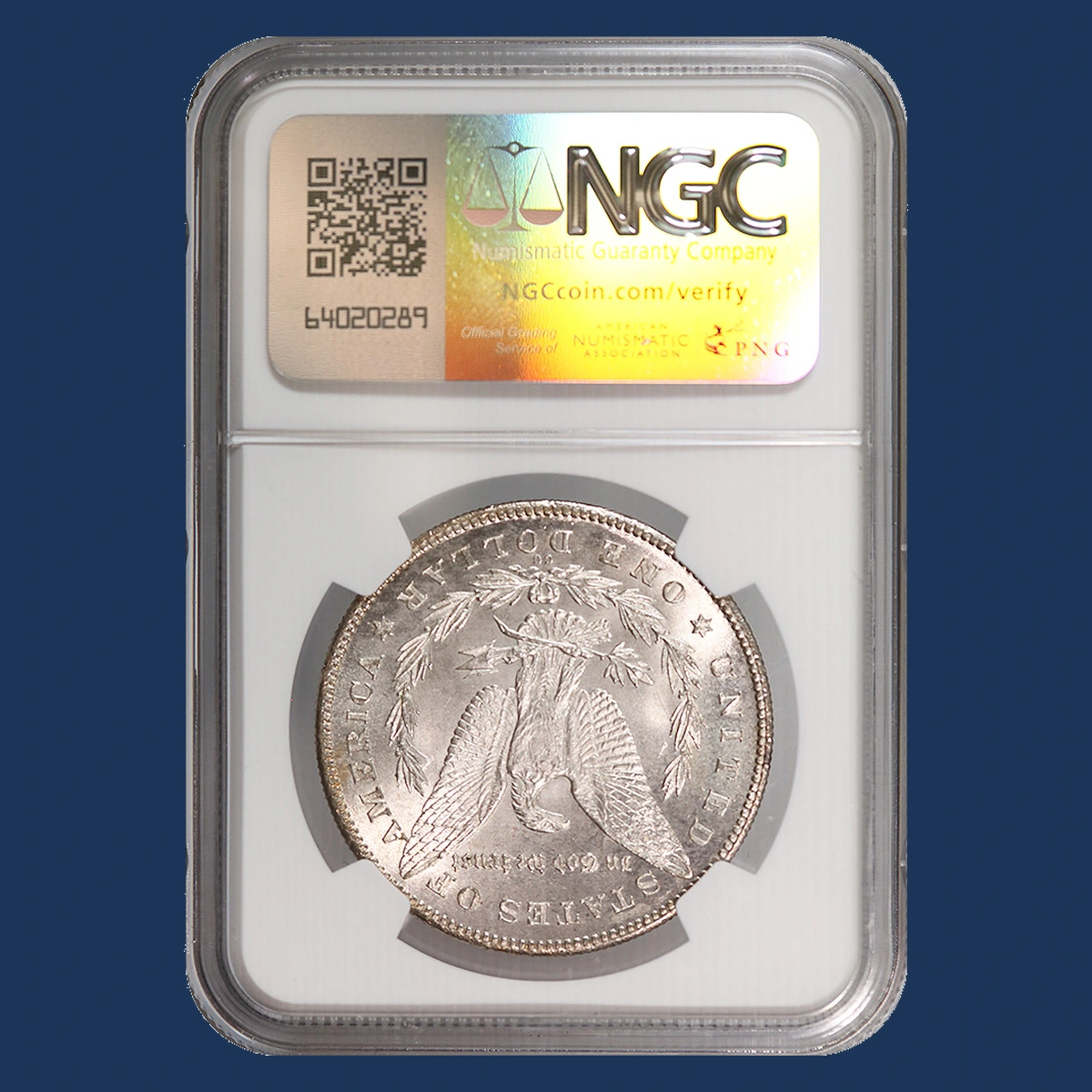
A faint extra line can represent part of the picture from the opposite face. When the two steel stamping tools hit each other without a coin between them, each can pick up marks from the other.
These tools are called dies, and their accidental contact is a die clash. Later coins receive the extra marks along with their normal designs.
An 1880 example has been reported in an ANACS MS63 holder. The mark must match an opposing design feature; random scratches and tool-polishing lines do not become clash errors just because they look unusual.
Estimated Value
Allow an estimated $75–$1,500 for a genuine 1880 clash error across ordinary collectible grades. A faint common clash may add little, while clear transferred detail can appeal to variety collectors.
A different-year comparison is an 1882-CC VAM-2A MS66, sold for $999 in February 2017. Its Carson City origin and higher grade must be allowed for when comparing an 1880 coin.
Original surfaces and a convincing design match matter more than the number of stray lines.
How to Identify
Ask what the extra line could represent before naming it. Compare the two designs and try to relate the mark to a recognizable part of the opposite face.
A 10× magnifier helps separate a struck feature from a later cut. Change the lighting to inspect its shape and check for disturbed silver beside it.
Photographs of a confirmed clash on the same year and mint provide a better test than a generic arrow diagram. The exact position changes with the tools involved, so one familiar line does not identify every clash.
Confirm that the extra feature fits the opposing design and the other marks on the same coin.
2. 1880 Morgan Dollar Detached Metal Layer
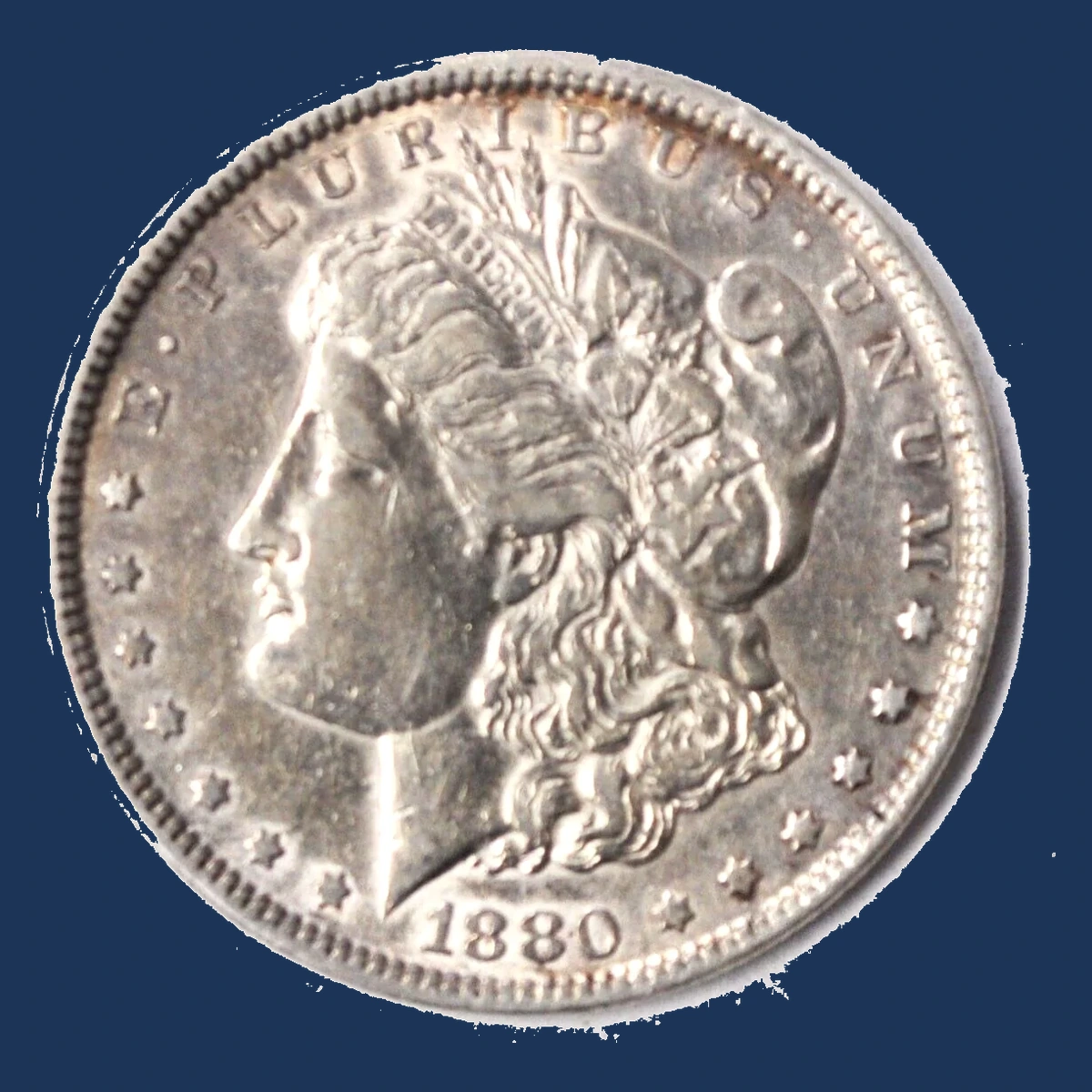
A thin piece of silver can peel away from the coin, leaving an uneven patch below the surrounding surface. This separation is called lamination and begins with a weakness in the original metal.
One 1880-S example was cataloged as Detached Lamination, AU58 Details, Cleaned. Its slight wear and later cleaning are condition issues, separate from the metal flaw.
The layer does not need to cover an entire face. A local patch can qualify, but a hollow created by scraping, corrosion, or an object during striking may have a different origin.
Estimated Value
Estimate $75–$1,500 for genuine 1880-S laminations, depending on preservation and how visibly the layer has separated. The recorded cleaned example needs comparison with other coins that have surface problems.
For a different year, an 1887 Philadelphia lamination graded NGC MS65+ sold for $162 in July 2020. Its higher grade did not automatically produce a large error price.
Larger natural peels may attract more attention, while cleaning can reduce the whole dollar’s appeal.
How to Identify
The recorded coin has two problems to separate: a lost silver layer and later cleaning. Start with the missing layer’s boundary rather than the overall shine of the cleaned surface.
Use light from the side to reveal the shallow step into exposed metal. A 10× magnifier can show whether that step follows a natural layer or a later scraping cut.
Look beyond the patch for cleaning lines. Their presence does not automatically explain why a piece of silver is absent.
Leave any surviving flap undisturbed. A significant loss may reduce the normal 26.73-gram weight, but weighing cannot identify the cause.
Trace the layered break itself instead of judging the entire coin from its surface brightness.
3. 1880 Morgan Dollar Repunched O Mintmark
A second curved outline beside the O can come from a mintmark punch entering the stamping tool twice. The two positions overlap, and later coins reproduce the combined letter.
This is a repunched mintmark, written O/O when both impressions are the letter O. The mark belongs beneath the wreath’s bow on the back of the New Orleans dollar.
A thick-looking O alone does not prove the error. Normal punch shape, reflections, damage, and movement during striking can also change its outline, so the extra curve must follow a genuine repeated-letter pattern.
Estimated Value
The estimated whole-coin range is $75–$2,000 for a genuine 1880-O/O across ordinary worn and attractive unworn examples. The exact repeated-letter pattern and condition determine the appropriate part of that range.
As a different-year comparison, an 1884-O/O graded NGC MS64 Prooflike sold for $256.20 in June 2026. Its reflective surfaces are a separate feature from the repeated mintmark.
A partly hidden or damaged O should not receive the same premium as a clear, correctly matched example.
How to Identify
Under a 10× magnifier, work around the inside and outside of the O instead of judging its overall thickness. An earlier punch impression should preserve a recognizable piece of the same curved letter.
Compare the extra curve with a confirmed 1880-O/O photograph, keeping the wreath’s bow in the frame to show orientation. Light from more than one direction helps expose a reflection that only looks like raised metal.
Do not scrape dirt from the mintmark or assign a direction from an unclear picture. The useful match is the position and shape of the earlier O relative to the main letter, not simply the presence of two bright edges.
4. 1880 Morgan Dollar Misplaced Zero in the Border
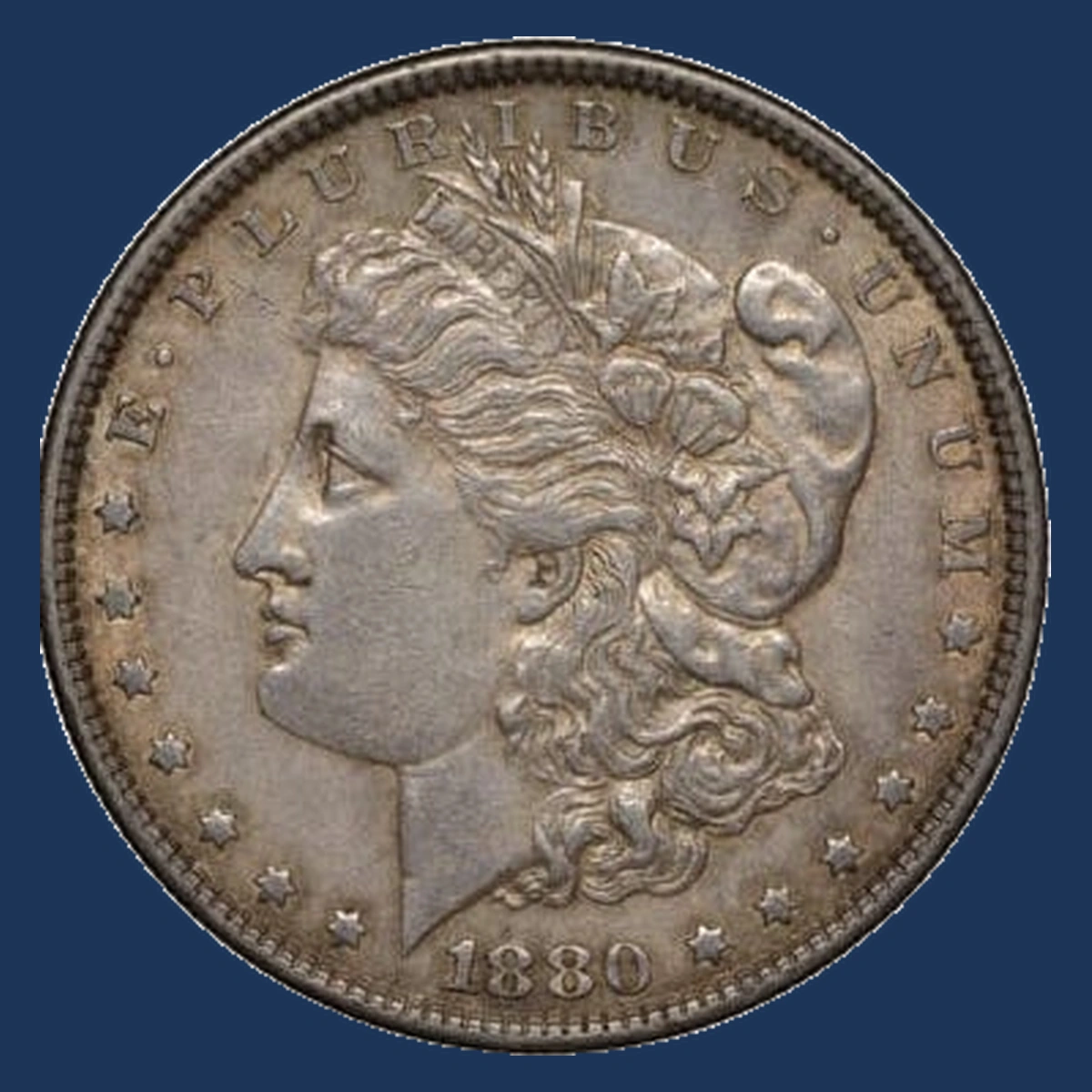
A small part of a 0 may appear among the border teeth beneath the date. A date punch placed too low on the stamping tool can leave this stray numeral shape before the date is punched correctly.
Collectors call it a misplaced date. The extra piece lies outside the intended date position rather than directly beneath a replacement digit.
That distinction separates the reported 1880 feature from the year’s overdates. A rounded border tooth, a chip, or damage can imitate a numeral, so its shape must be checked against a confirmed example.
Estimated Value
For a genuine 1880 misplaced-zero variety, estimate $75–$2,500 across ordinary collectible conditions. The exact mint, pattern, and preservation determine where a coin belongs within that range.
A different-year Carson City misplaced-date dollar, the 1882-CC VAM-2 in MS66, has a recorded $1,695 sale from August 2018. That is a high-grade CC comparison, not an 1880 transaction.
A recognizable digit remnant supports collector interest more strongly than an unexplained bump along the rim.
How to Identify
Examine the row of tiny border teeth below the date with a 10× magnifier. Follow their regular spacing until you reach the suspected curved interruption.
Compare the shape with part of a 0, looking for a coherent numeral arc rather than one rounded blob. Take a photograph that includes the full date and nearby border, since an isolated crop can hide the location.
Then establish the mint from the back and choose a matching authenticated example. Do not assume a Carson City or Philadelphia variety merely because another year has a misplaced digit.
A curve in the border must match a misplaced numeral there, not the older 7 or 9 beneath the intended date.
5. 1880 Morgan Dollar Curved Clip
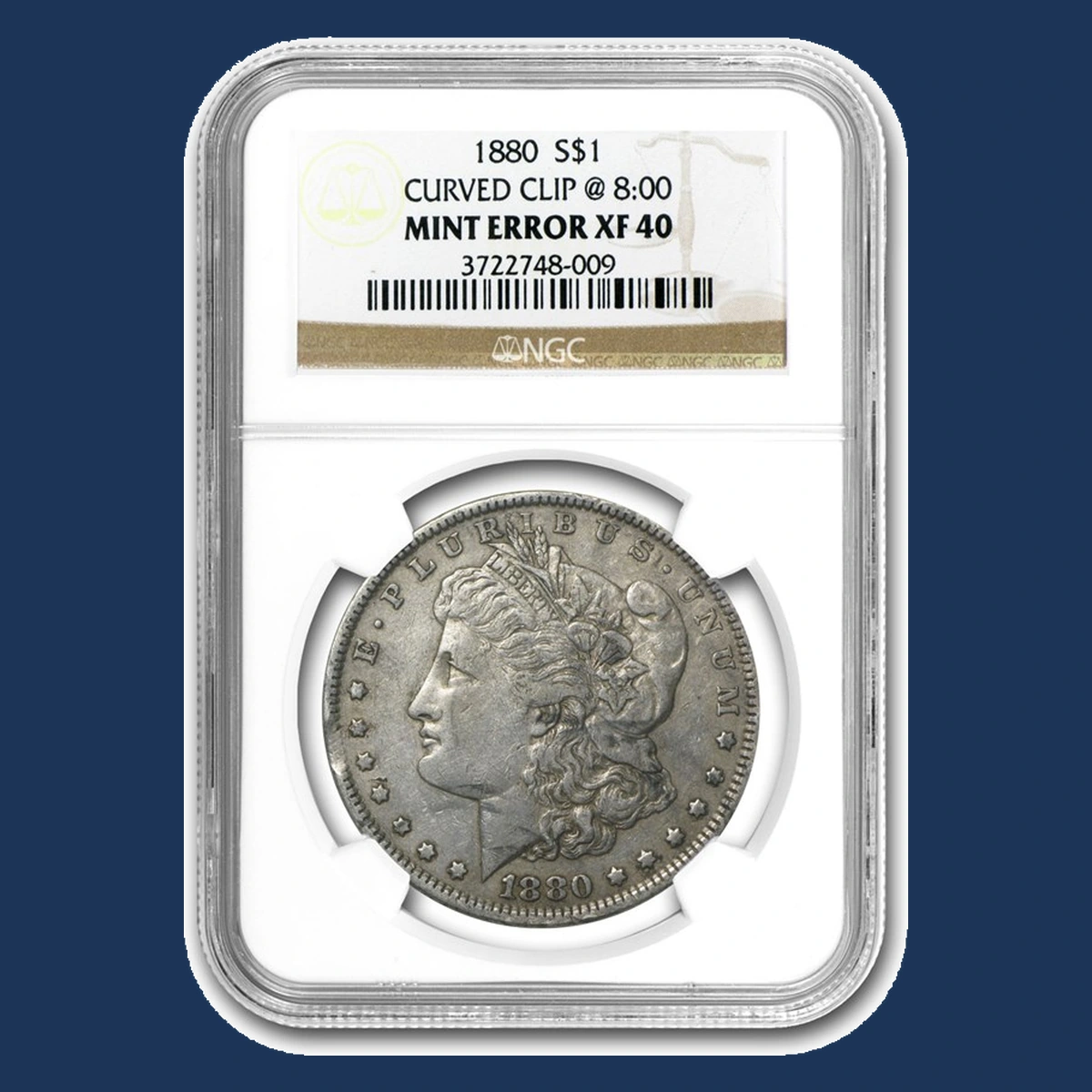
A curved bite from the rim can begin before the coin receives its design. The punch cutting blank metal discs overlaps an existing hole in the strip, leaving one disc incomplete.
When that disc is struck, the design forms around the missing section. APMEX lists an 1880 Philadelphia example graded NGC XF40, a worn coin with substantial detail remaining.
The shape must be original to minting, not a later cut. A weak area opposite the clip can provide supporting evidence, but its absence or presence alone does not settle whether the coin is genuine.
Estimated Value
An estimated $150–$2,500 covers genuine 1880 curved clips, from modest worn examples through more visible errors with better surfaces. The amount missing and the clarity of the original edge both matter.
The listed NGC XF40 coin provides a worn comparison in appearance rather than a current transaction price. Cleaner surfaces and a more dramatic clip can increase interest.
Deep file marks or later rim damage reduce appeal and may reveal that the missing section was created after minting.
How to Identify
A curved outline can be made after minting, so inspect the side of the gap before judging the silhouette. Under a 10× magnifier, look for cutting marks and examine both transitions into the struck rim.
Continue around to the opposite rim, where weakness can support an original clip. That clue may be faint, and its absence does not turn a genuine clip into damage.
Weigh a loose example against the normal 26.73 grams, allowing for wear and the visible amount missing. The most useful evidence remains the naturally formed ends and edge of the gap, since filing can lower weight just as a clip does.
6. 1880 Morgan Dollar Struck on Flawed Metal
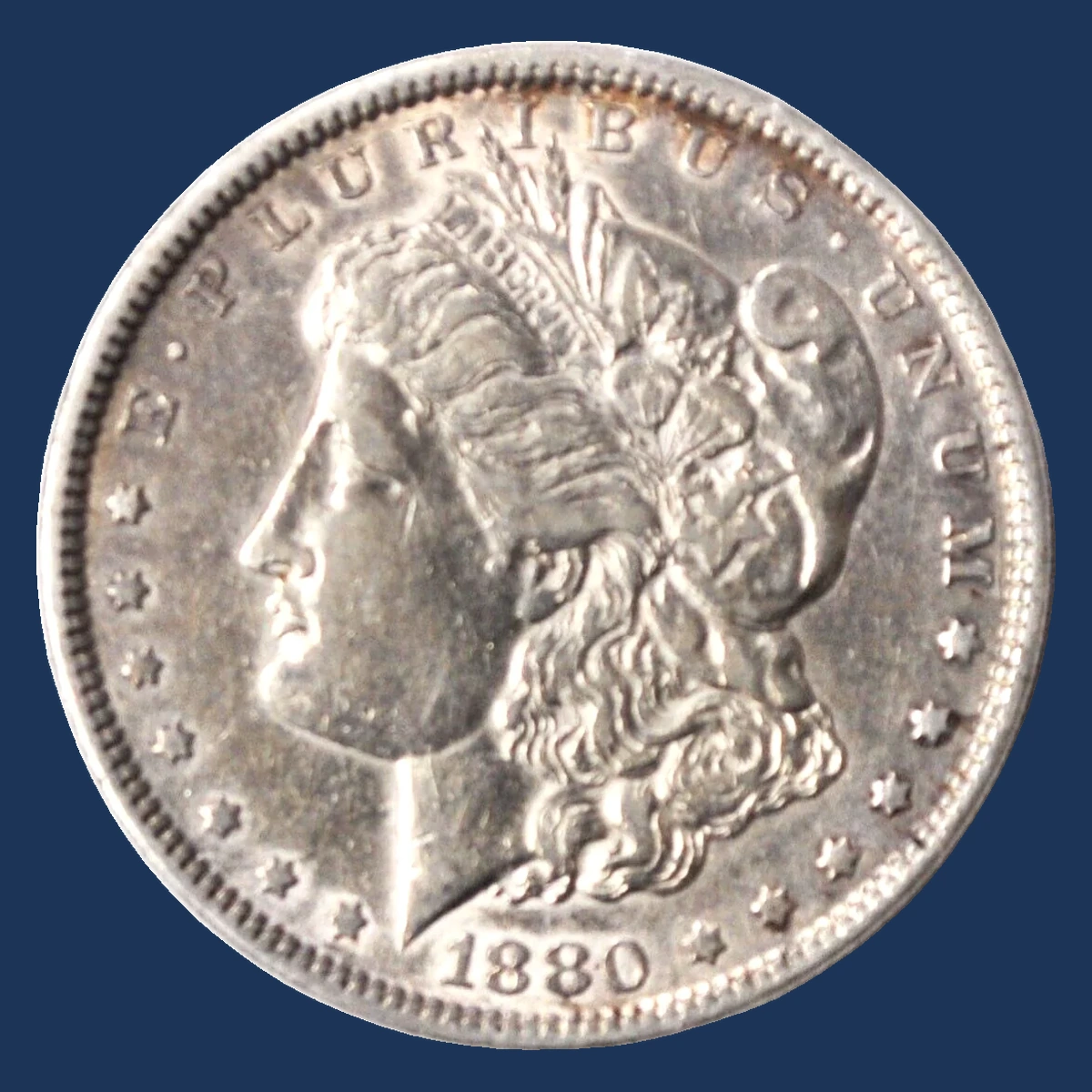
The metal disc can already contain a flaw when the stamping tools strike it. Design pressed into or across the irregular area can help show that the problem came before the finished coin.
A cataloged 1880-S AU58 example is described as struck on a defective blank. A blank is the prepared metal disc before it becomes a coin.
This is a separate specimen from the cleaned 1880-S lamination in the same catalog. Its general label does not by itself establish a curved clip, a full split, or any particular lost layer.
Estimated Value
Use an estimated $100–$3,000 for a genuine 1880-S dollar struck on visibly flawed metal. Small irregularities with little effect on the design generally attract less than large, clearly original defects.
Condition still matters: AU58 describes slight wear, not the size or rarity of the flaw. The range values the complete coin and its visible effect.
A broad label alone should not command the price of a dramatic split or another more specific error that the coin does not show.
How to Identify
Compare the suspect area with a clear design line leading into it. If the line follows the irregular surface, that can show the flaw existed before the tools impressed the design.
Inspect the boundary under a 10× magnifier for later cuts or crushed silver. Corrosion can also remove metal after striking, so a rough patch by itself proves little.
Check the opposite face for related effects on the design.
Use photographs of the actual AU58 coin rather than borrowing the separate lamination example’s missing-layer shape. The general label does not specify how every defect formed.
Look for design formed over the original irregularity, not merely an unusual texture beneath a grading label.
7. 1880 Morgan Dollar Partial Collar and Stepped Edge
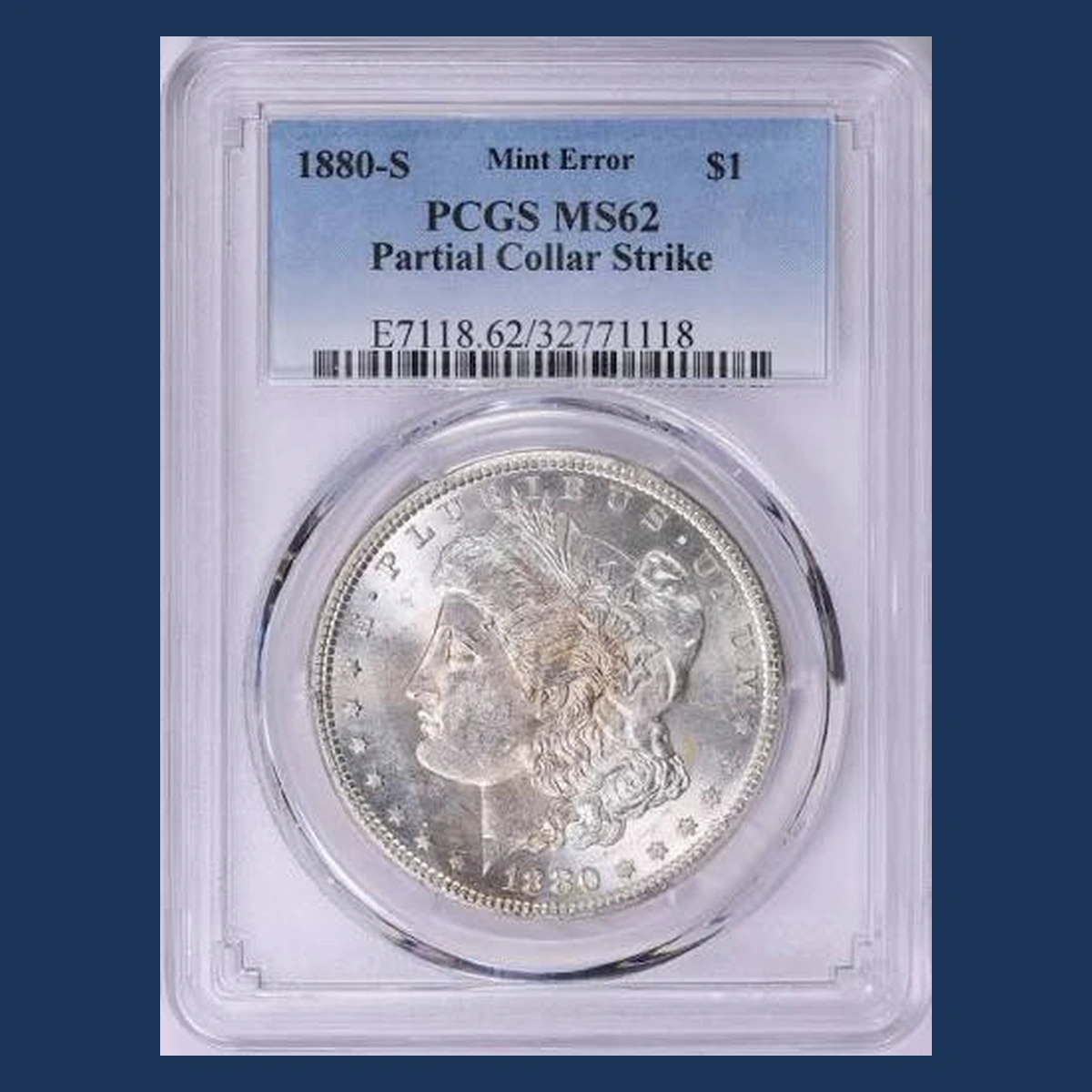
Part of the edge may carry normal grooves while another part forms a smoother band or step. The retaining ring, called the collar, failed to enclose the coin’s full thickness during striking.
The silver spread differently above and below the ring’s contact. This makes the edge more useful than the face for identifying a partial-collar error.
Examples are recorded from Carson City and San Francisco. The cataloged San Francisco piece has cleaned surfaces, but that condition problem is separate from the incomplete edge pattern and should not be mistaken for its cause.
Estimated Value
Estimate $200–$5,000 across genuine 1880 partial-collar dollars, allowing for mint, condition, and the strength of the edge effect. Carson City coins can have substantial value before the error is considered.
A different-year San Francisco example, an 1887-S PCGS AU50 tilted partial collar, sold for $252 in September 2019. That worn coin offers a lower comparison than a strong, well-preserved CC error.
Cleaning generally reduces demand even when the edge mistake is genuine.
How to Identify
Follow the grooved band around the edge and note where its depth or height changes. A step into a smoother section can show the boundary between silver held by the ring and silver that spread beyond it.
The holder may hide that transition, so seek an edge photograph before judging the faces. Inspect suspicious sections with a 10× magnifier for file marks or crushing that could have removed grooves later.
Confirm whether the coin is from Carson City or San Francisco, then use that example’s own photographs. The identifying feature is a naturally formed transition around the actual edge, rather than a broad-looking rim seen only from the front.
8. 1880 Morgan Dollar Struck Through an Object
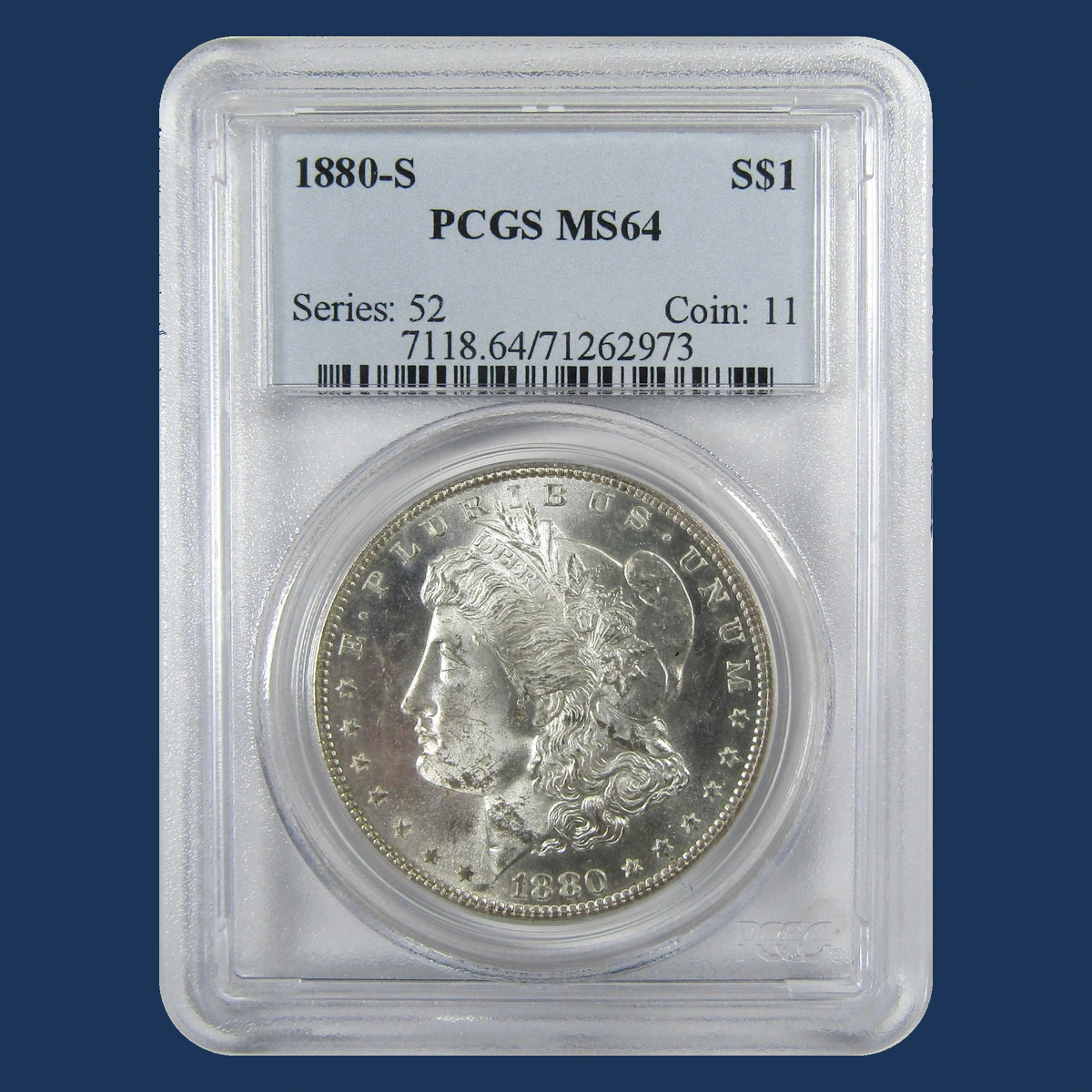
A depression can interrupt the front design when an object lies between the metal disc and its stamping tool. The obstruction prevents normal contact and leaves its own impression instead.
One 1880-CC example is described as NGC MS63 with a front-side struck-through error. Another documented 1880/79-CC has a minor impression near 6:30, and these should be treated as separate examples.
The shape alone does not identify the object as wire, wood, cloth, or grease. Each impression needs its own close-up, especially when an empty hollow is all that remains.
Estimated Value
An estimated $400–$6,000 covers genuine 1880-CC struck-through dollars, including the underlying Carson City coin value. Depth, size, original surfaces, and the clarity of the struck boundary affect collector interest.
An 1899-O Morgan with retained wood sold for $504 in October 2022. That different-year example has identifiable material still present, unlike an empty depression of unknown origin.
A small impression may add little, while a dramatic, authenticated obstruction can support a stronger whole-coin price.
How to Identify
Follow a normal design line until it reaches the hollow. Determine whether the line failed to form there or was later cut away with surrounding silver.
Light the depression from two directions and examine its sides with a 10× magnifier. A gouge may leave torn metal or a pushed-up lip instead of a struck interruption.
For the documented 1880/79-CC impression, compare the area near 6:30 with that coin’s photographs. Do not transfer that position to the separate MS63 example.
Preserve any attached material without touching it.
Check the coin’s own design boundary and surface, rather than naming a blocking object from a vaguely similar outline.
9. 1880 Morgan Dollar Broadstrike
The dollar spreads beyond its normal round border when the retaining ring does not hold the metal during striking. Collectors call this a broadstrike, and the complete design remains on the expanded coin.
An 1880-S example was cataloged in an ANACS MS60 Details holder with counting-wheel damage. That damage came from a machine handling the coin later, not from the failure of the mint’s retaining ring.
The two effects must be judged separately. An expanded original edge supports the minting error, while a machine-made scrape affects condition without explaining how the dollar spread.
Estimated Value
Allow an estimated $500–$8,000 for genuine 1880-S broadstrikes, depending on spread, original surfaces, and preservation. The counting-wheel damage on the recorded coin would reduce its appeal.
For a different-year comparison, an 1889-S uncentered broadstrike graded MS63 sold for $4,680 in September 2025. That coin has its own grade and edge shape.
A fully visible design and natural outward flow support a broadstrike value, while later flattening or scraping does not earn the same premium.
How to Identify
Measure a loose coin with calipers and compare its widest points with the normal 38.1-millimeter diameter. Then examine the complete edge to see whether the extra width comes from naturally spread silver.
The design should remain present despite the wider outline. If part of the intended design lies beyond the metal, compare an off-center strike instead.
Use a 10× magnifier to separate any counting-wheel scrape from the original expanded surface. A scrape alone cannot show that the retaining ring failed.
Weighing against the normal 26.73 grams can expose some altered coins, but a normal weight is not decisive. Confirm complete design within the naturally expanded edge.
10. 1880 Morgan Dollar Major Off-Center Strike
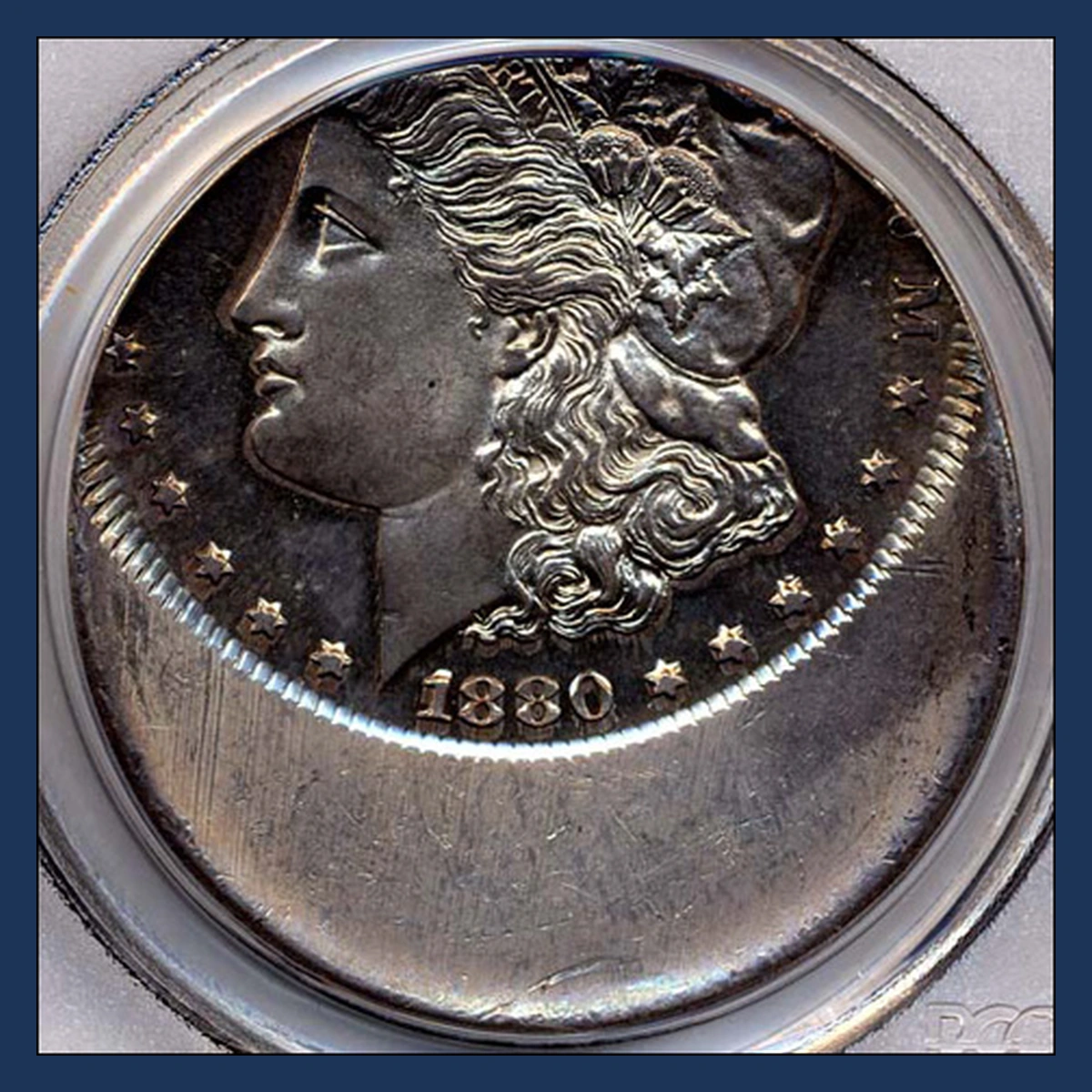
A large blank crescent sits beside a design that runs beyond the available metal. The disc was partly outside the stamping area, so both faces received incomplete impressions.
The famous PCGS MS63 example is 40% off center toward the upper edge. Its full date survives, but the mintmark area does not; PCGS attributes it to San Francisco from its appearance.
A separate unworn 1880-S example is recorded as 15% off center. The smaller displacement and surviving details belong to that coin, rather than another description of the 40% example.
Estimated Value
The PCGS MS63 dollar struck 40% off center sold for $72,000 on May 5, 2022. Estimate $5,000–$90,000 for substantial genuine 1880 off-center dollars across different amounts of displacement and preservation.
The full date and dramatic missing design make the recorded coin especially appealing. It is not a normal price for every minor shift.
The separate 15% example needs its own condition comparison; the larger coin’s auction result cannot simply be transferred to it.
How to Identify
On the 40% example, follow the date into the broad unstruck portion before looking for a mintmark. The area where the mintmark would normally appear is missing, so an S cannot be read directly.
Compare the top of Liberty’s head and the surviving eagle with the auction photographs. Much of the outer lettering is absent, while the central struck detail remains strong.
Examine the edge and design boundary for natural stretching of the silver. A damaged round coin or a fabricated copy may have a dramatic outline without the same striking relationships.
San Francisco remains the attributed mint. Use the full 1880 date and matching incomplete design to identify this specimen, rather than searching for an S that cannot survive.
11. 1880 Morgan Dollar Older Digits Beneath the Date
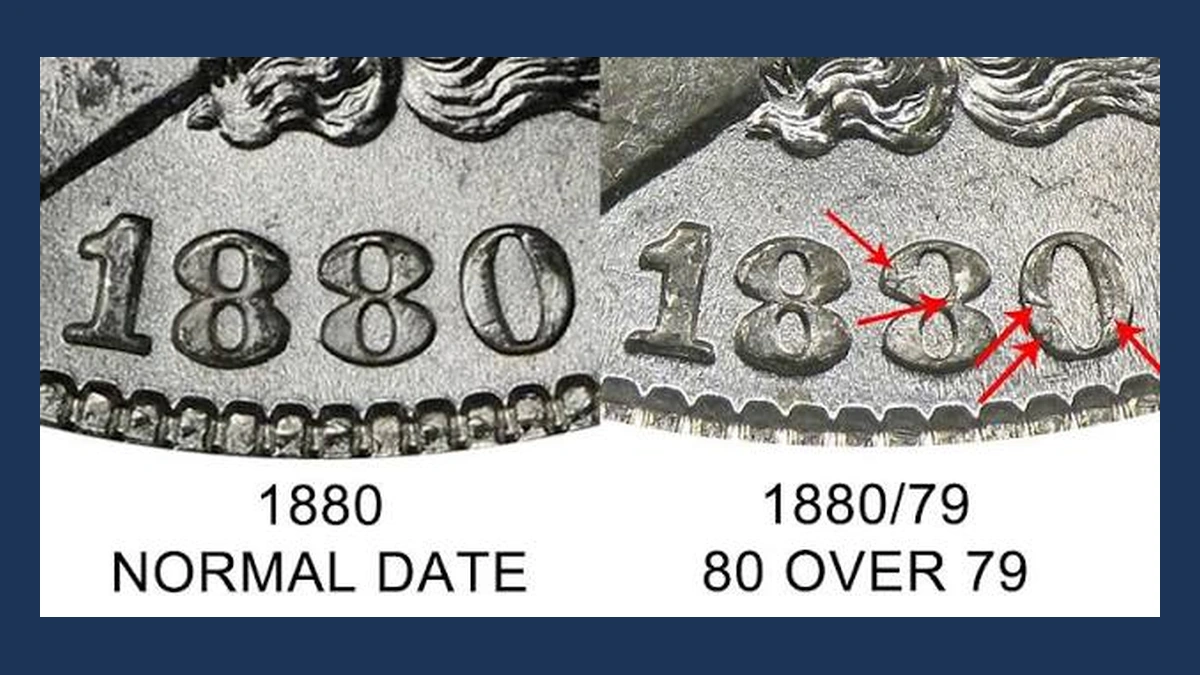
The second 8 or the final 0 can carry a piece of an older digit. Tools prepared with an earlier date were changed to 1880, but parts of a 7 or 9 remained visible.
These are overdates, including 8-over-7 and 0-over-9 patterns. Examples occur at Philadelphia, Carson City, New Orleans, and San Francisco, with different visible remnants on different varieties.
A dollar does not qualify merely because its date looks thick. The old numeral must match the correct mint’s recognized pattern, and not every overdate shows both old digits equally clearly.
Estimated Value
The estimated range is $75–$90,000, from ordinary worn overdates to exceptional high-grade Carson City examples. Mint, exact date pattern, surface finish, and condition all affect the whole-coin price.
PCGS records an 1880-CC 8-over-High-7 graded MS67+ at $84,000 in September 2019. A Philadelphia 8/7 graded MS65 brought $720 in April 2022.
Those widely separated results show why a generic overdate label cannot replace a specific identification and grade comparison.
How to Identify
Identify the mint first, then select photographs of that mint’s overdate. No letter means Philadelphia; O, S, and CC identify New Orleans, San Francisco, and Carson City.
With a 10× magnifier, examine the second 8 and final 0 for pieces belonging to a 7 or 9. Use the reference to decide which digit and which part of it should be visible.
Change the lighting to distinguish original raised detail from scratches, stains, or damaged edges. A partial old digit can be enough when its outline and position match the recognized pattern.
For CC varieties, also compare the back design when required. Match the old numeral itself before using an overdate price.
Conclusion
An old digit, a missing metal layer, and an expanded edge each call for a different check. Start with the feature you can actually see, then confirm the mint and the rest of the coin.
Estimated whole-coin values range from $75–$90,000. The spectacular auction pieces are exceptional examples, so compare ordinary finds with coins of similar condition and error strength before deciding what they might bring.