1964 Quarter Error List with Pictures

An eagle design intended for the next generation of quarters appeared on some 1964-D silver coins. A superb Type C example brought $8,400 in June 2023.
This 1964 quarter error list also covers coins with missing metal, extra strikes, and designs that landed on smaller blanks. Estimated whole-coin values range from $25–$10,000.
Read on to compare the coin’s metal, mint, and tiny repeated letters. Ordinary quarters, specially made collector Proofs, and different back designs need their own comparisons.
1. 1964 Washington Quarter Peeling Metal and a Split Blank
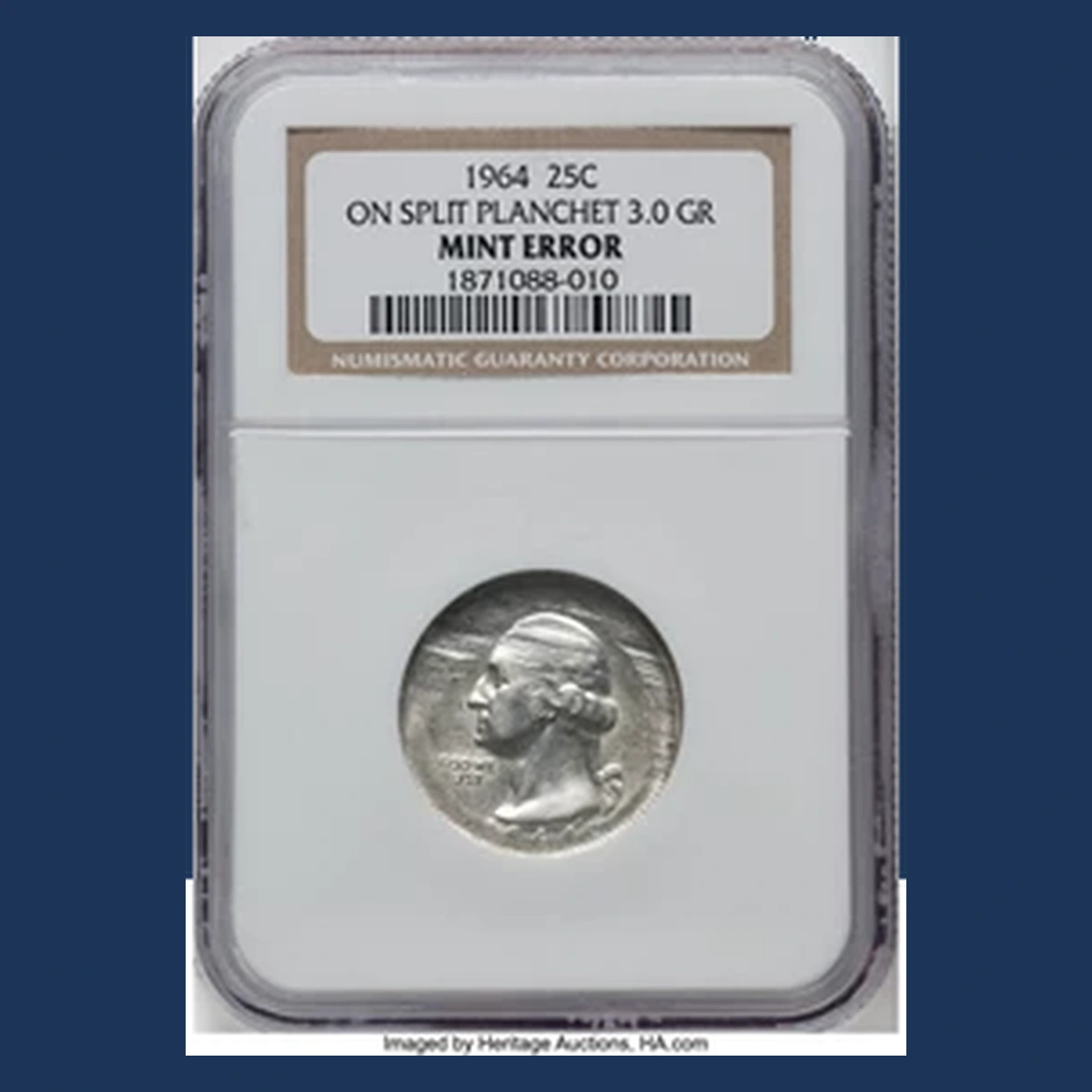
A thin patch can lift from a quarter, or a larger separation can divide its metal along a flat plane. Both begin with weakness within the original blank.
A Denver example graded NGC MS64 has peeling metal on the portrait side. This local separation is called lamination.
A different Philadelphia example was struck on a split blank and weighs 3 grams. Its surviving surface needs examination to establish when the metal separated.
The split could have happened before or after striking. Weight alone cannot settle the sequence; the exposed layers and any design on them are the useful clues.
Estimated Value
For authenticated local laminations and split-blank examples, estimate $25–$750. A larger, clearly explained separation can attract more interest than a small rough patch.
The Denver front peel and Philadelphia three-gram piece require separate comparisons because their surviving metal differs. Neither figure describes a quarter simply made on a smaller denomination’s blank.
Preserve attached flakes and any matching loose pieces. Removing them can change the original feature, while cleaning or scraping the exposed area can make its origin harder to assess.
How to Identify
Weigh the loose coin before comparing the two kinds of separation. A normal silver quarter weighs 6.25 grams, while the recorded split piece weighs 3 grams.
For a small peel, look along the thin layer under a lamp. Follow its edge into the intact surface without lifting it; the Denver MS64 example has this feature on the front.
A larger split needs a different inspection. Examine both flat faces and the edge for surviving design and exposed layers.
Design pressed into an exposed surface may help explain when it separated. Weight alone cannot establish whether the split happened before or after striking.
Look for grinding marks before calling a light coin split. A genuine layered boundary should not resemble silver filed away from an ordinary quarter.
2. 1964 Washington Quarter Cracks before a Rim Break
A crack can outline a piece of the stamping tool before that piece falls away. Coins made at that stage can preserve the normal picture within a developing boundary.
The catalog lists a Denver pre-cud as PC-25c-1964D-01. The name identifies a stage before a full rim-connected piece of the tool is missing.
A fully missing tool piece leaves a raised blank area. The pre-cud preserves an earlier stage of this failure.
Check the crack against the catalog photograph. A different raised line on a Denver quarter does not establish the same variety or stage of failure.
Estimated Value
Estimate $25–$800 for authenticated 1964-D pre-cud and related crack examples. A clear boundary with well-preserved surrounding design is easier to demonstrate than a faint line among scratches.
This range values the actual stage present on the coin. It does not give an early crack the premium of a larger, later break that the quarter does not show.
The coin’s condition still affects demand. Rim impacts and scraped ridges should be separated from original tool-crack features before using the estimate.
How to Identify
First compare the whole coin with the catalog photograph for PC-25c-1964D-01. This identifies a particular Denver crack, so a raised line elsewhere is not enough.
Under a magnifier, trace the crack toward the rim and examine the design inside its boundary. A pre-cud preserves detail that a fully missing tool section would leave blank.
Now move the lamp. A tool crack normally leaves a raised line, whereas a scratch has a sunken middle even if its edges stick up.
Check the rim from the side for dents or pushed metal. Match the crack’s complete path and the surviving design to the photograph before choosing this catalog number.
3. 1964 Washington Quarter Repunched D Mintmarks
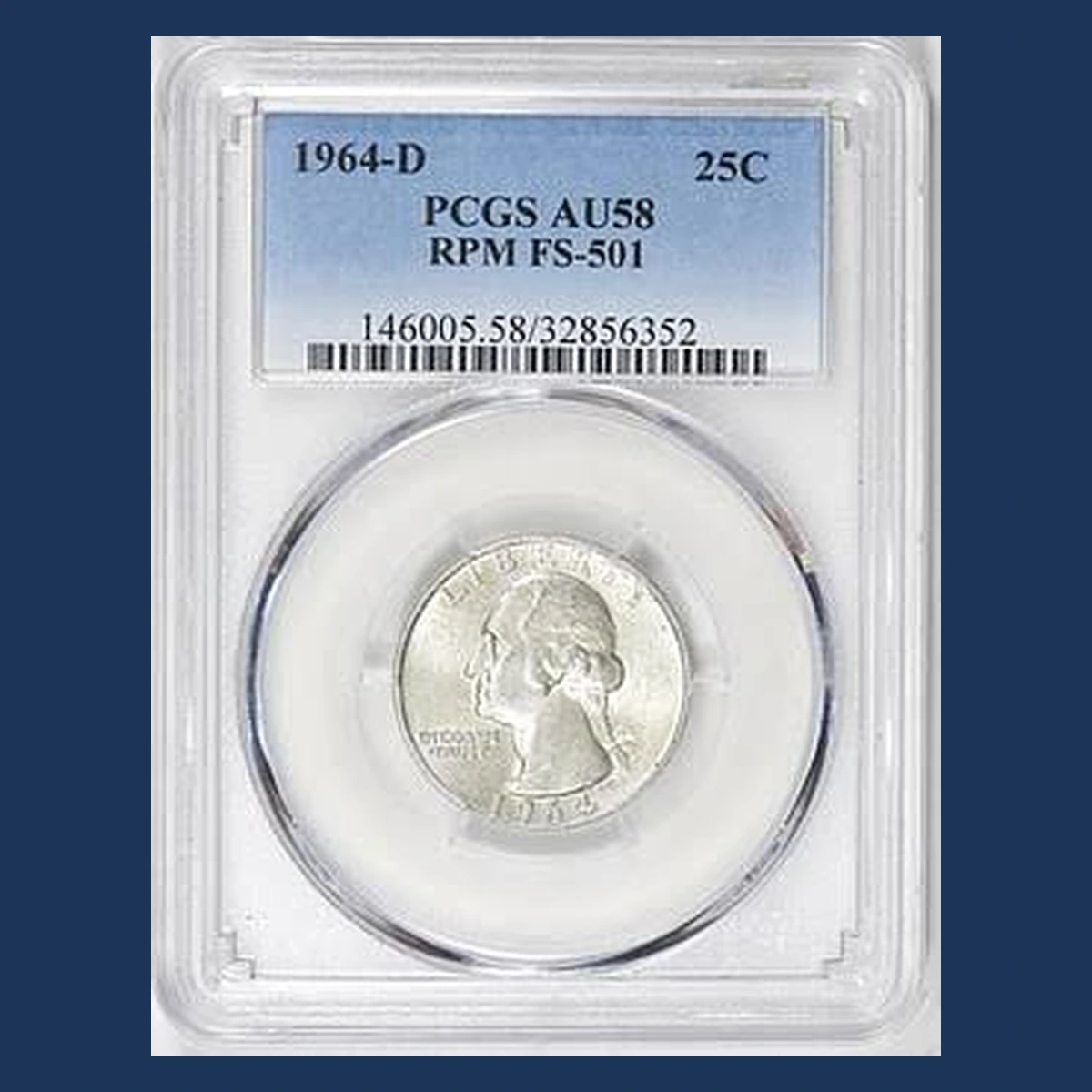
The small D sits below the wreath on the back of a 1964 quarter. Some Denver tools received that letter more than once, leaving overlapping impressions.
FS-501 has earlier detail above the main D, while FS-502 has it toward the right. Several other cataloged patterns show lower remnants or differently turned letter outlines.
These repeated letters were already in the stamping tool when the quarter was made. They do not represent multiple strikes on the whole coin.
Several varieties have earlier detail in the same direction. Compare the complete extra outline rather than choosing a name from direction alone.
Estimated Value
For genuine repunched mintmarks, estimate $25–$1,000 across ordinary worn through attractive unworn examples. Clear extra curves and a secure catalog match generally draw more interest than vague thickness.
The high end requires more than an extra speck beside D. Condition, strength of the earlier impression, and the particular variety all affect the whole-coin value.
A shared direction does not make two catalog numbers interchangeable. Flat shelves from striking movement and dirt inside the letter should not receive the same premium.
How to Identify
The D is below the wreath on the back. Place a magnifier over that letter and follow any extra curved outline, ignoring loose dirt and reflections.
For FS-501, look above the main D; for FS-502, look to its right. WRPM-005, also called FS-503, has its own pattern above the letter and needs a separate photo comparison.
Turned or lower remnants require different examples. WRPM-001 is especially complex, with several earlier D positions around the final letter.
A thick letter alone is not enough. Move the light to distinguish a rounded earlier outline from a flat, shelf-like edge caused by movement during striking.
Compare the complete D and nearby tool marks with the same catalog photograph. Direction alone cannot select between varieties that both show detail above the letter.
4. 1964 Washington Quarter Broadstrike on Ordinary and Type 1 Blanks
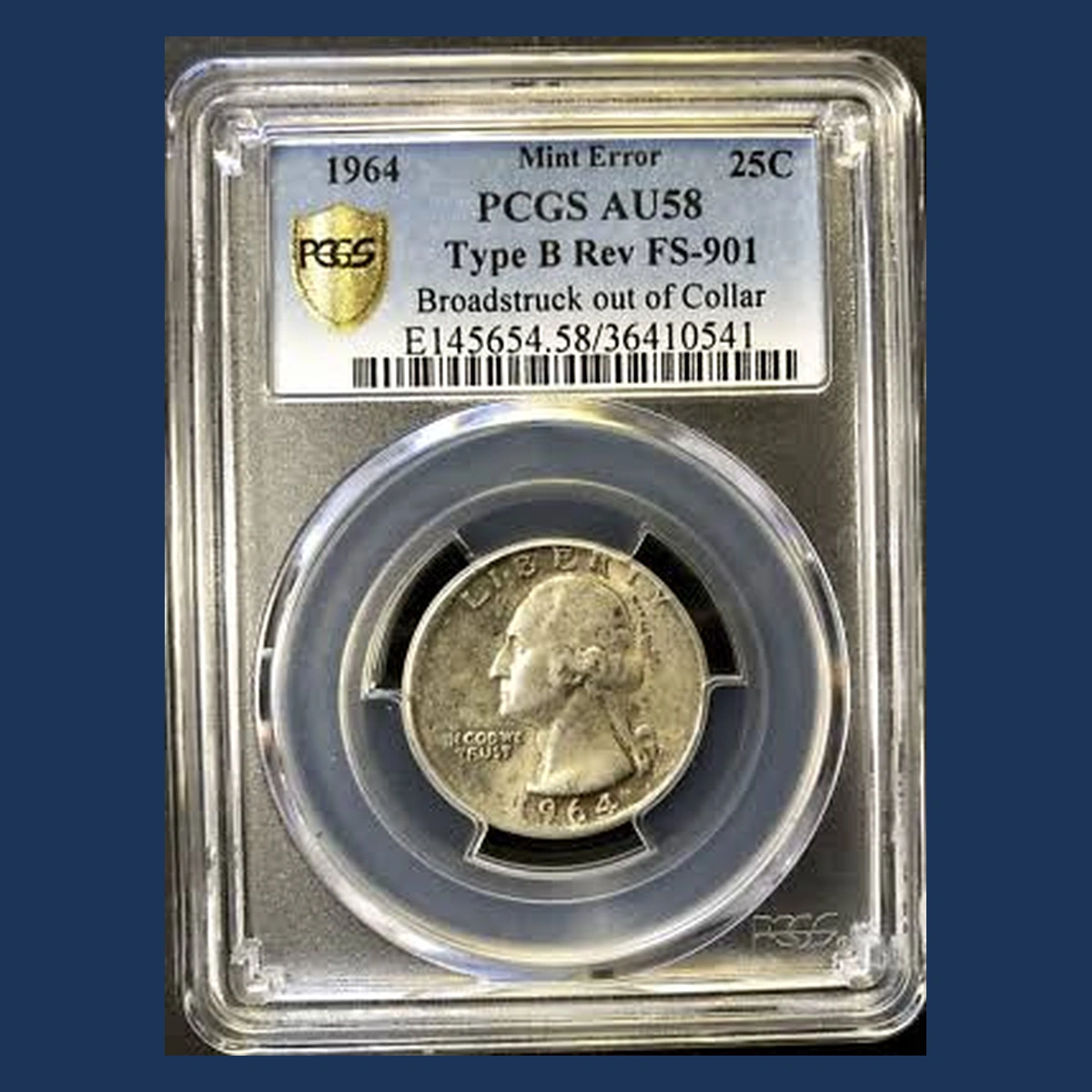
A quarter can spread outward when the surrounding collar does not hold it during striking. The collar normally controls the diameter and forms the edge grooves.
Philadelphia examples include a centered broadstrike, an uneven broadstrike, and a broadstrike on a Type 1 blank. The intended design remains on the metal despite the expanded outline.
Type 1 means the blank had not received a raised rim in the preparation step. It does not refer to the eagle’s Type A, B, or C design.
One coin also has a later rub on the back. That damage is separate from its original expansion.
Estimated Value
A broadstruck example with an unworn-details assessment and a back wheelmark sold for $204 in June 2025. The wheelmark is later surface damage, not another minting error.
Estimate $50–$1,000 for genuine 1964 broadstrikes, depending on the visible expansion and preservation. A clean original surface can be more appealing than dramatic spread accompanied by damage.
The separate uneven PCGS MS65 and Type 1 PCGS MS64 examples need their own comparisons. Their different labels do not make them the same coin.
How to Identify
Place a normal quarter beside the candidate and compare their outlines. An uneven border may be striking, but the key question is whether all the intended design remains.
Follow every outer letter around both faces, then examine the expanded metal beyond them. A broadstrike preserves the design; an off-center strike places part of it beyond the blank.
If the coin is loose, measure across several directions against the normal 24.3-millimeter diameter. Check the widened edge for natural spreading rather than filing or a rolled-over rim.
The Type 1 example needs a certified comparison to confirm its earlier blank preparation. Examine any wheelmark separately: a later rubbed patch does not explain the original expanded outline.
5. 1964 Washington Quarter Partial Collar on a Type 1 Blank
A step along the edge can form when only part of the blank sits within the retaining collar. Some metal stays restrained while the rest spreads.
The Philadelphia example was struck on a Type 1 blank and graded PCGS MS62. That grade indicates an unworn coin with marks.
Type 1 describes a blank whose rim had not been raised before striking. The edge therefore records both that preparation and the incomplete contact with the collar.
This is different from a full broadstrike, where the ring fails to control the blank’s outer edge. The surviving grooved section helps show partial contact.
Estimated Value
Use an estimated $50–$1,200 for a genuine 1964 partial-collar quarter with clear identifying details. A visible step and intact original grooves make the error easier to display.
The Type 1 preparation and partial collar are features of the same PCGS MS62 coin. Their names should not be converted into separate prices and added together.
A subtle edge change can cost less than a dramatic, attractive example. Later crushing or filing can reduce appeal even when some original collar evidence survives.
How to Identify
A top-down picture can hide the most useful feature, so hold the edge at eye level and turn the coin. Find the boundary between the grooved section and metal that spread beyond the collar.
Photograph the step from several angles, since a stain or shadow should not produce a real change in edge height. Under a magnifier, check for ground-down grooves or metal pushed over by later damage.
Compare the entire coin with the certified Type 1 example, including its edge and both stamped faces. That label concerns the blank’s unfinished rim before striking, not the eagle’s Type A, B, or C design.
6. 1964 Washington Quarter Underweight and Thin Blanks
A quarter-sized disc can weigh too little without being a smaller coin’s blank. The recorded Philadelphia examples include an underweight 4.8-gram piece with no grade stated in its listing.
Another quarter was made from metal rolled to dime thickness and weighs 5.2 grams. Its quarter-sized outline distinguishes it from a coin made on a small dime blank.
A tapered example weighs 5.3 grams and becomes thinner across part of its width. NGC graded it MS65, while the thin-stock coin received MS64.
These are different explanations for a light quarter. A low weight alone cannot choose between them.
Estimated Value
Estimate $100–$1,500 for authenticated underweight, thin-stock, and tapered-blank quarters of this year. A clearly demonstrated thickness difference and readable original design make the comparison more useful.
Thin-stock and tapered examples have different shapes despite similar weights. A convincing thickness change can attract more interest than a light coin with heavy wear.
Surface preservation and the strength of the physical evidence influence value. A worn, filed, or corroded quarter should not receive a blank-error premium just for being light.
How to Identify
Use a scale and calipers together for this test. A normal silver quarter weighs 6.25 grams, and the thin-stock example keeps a quarter-sized outline despite its lower weight.
View the edge from several directions without squeezing or bending the coin. Uniform thinness suggests a different problem from a gradual change across a tapered blank.
On a tapered candidate, compare the thinner region with the nearby stamped design. A bend can create a false impression of thinning in a photograph, so check the edge itself.
Look for filing, corrosion, or heavy wear that could explain lost weight. The recorded 4.8-gram coin is simply identified as underweight; that number alone does not prove thin stock or tapering.
7. 1964 Washington Quarter Defective Blank
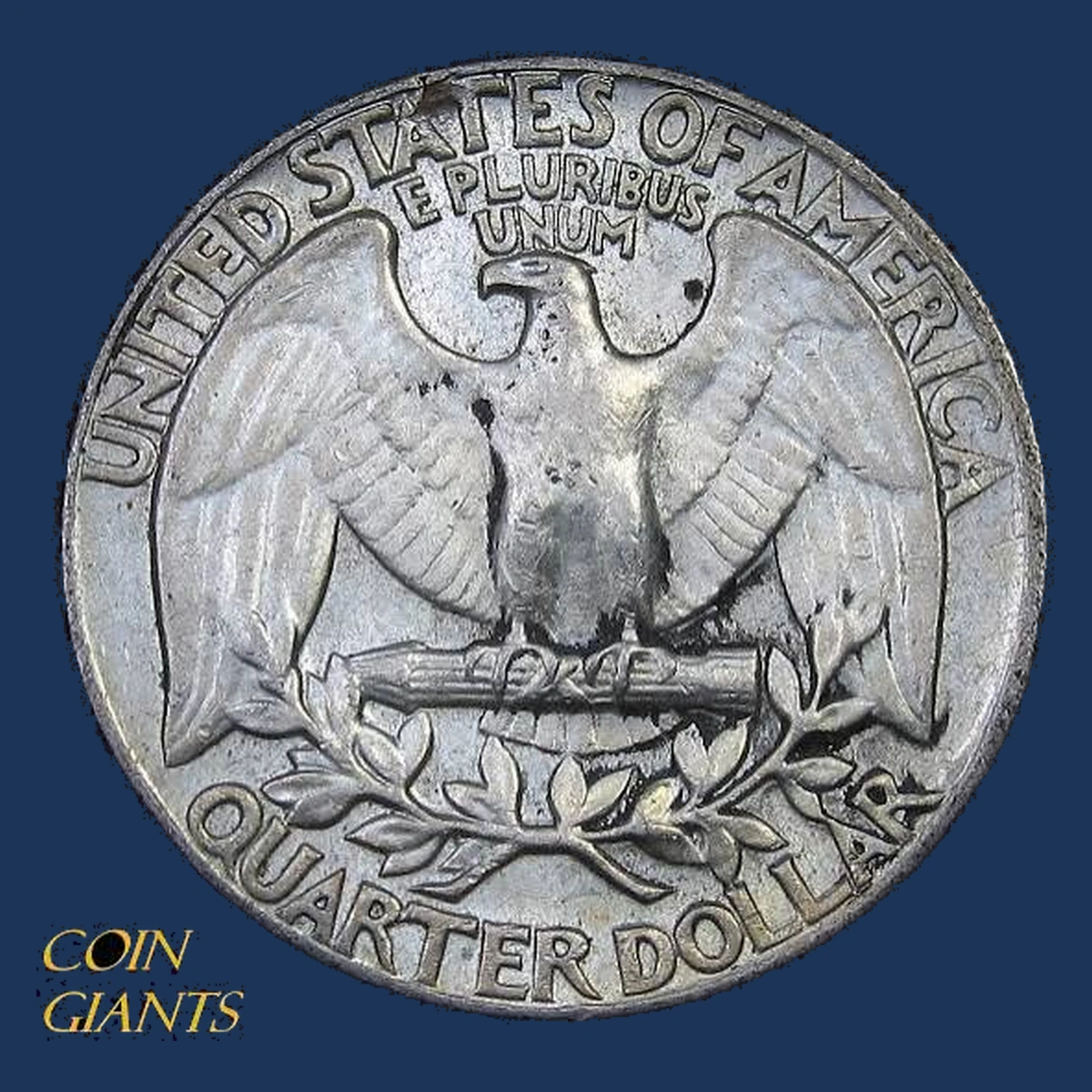
A blank can have a flaw that interrupts the surface during striking. Its shape depends on the defect rather than one standard error pattern.
Philadelphia examples include an NGC MS65 coin and two recorded MS64 examples weighing 5.8 grams. The two matching weights and grades may describe different coins.
The general name is defective planchet, meaning a flaw in the blank prepared for striking. Different flaws can leave quite different surfaces after the blow.
Examine the unusual patch itself before calling it peeling metal or trapped debris. A rough surface alone does not show which problem occurred.
Estimated Value
For a confirmed original blank flaw, estimate $50–$1,500, according to size, visibility, and remaining condition. An unusual surface needs a clear explanation before a meaningful error premium applies.
An MS65 coin generally has fewer distracting marks than an MS64 example. The flaw’s appearance also matters, beyond the coin’s weight or numerical grade.
Strong surrounding detail can make an original flaw easier to recognize. Scraping or corrosion after minting instead reduces the appeal of an otherwise ordinary silver quarter.
How to Identify
Before naming the flaw, inspect the design where normal metal meets the unusual patch. Low-angle light helps show whether the design formed across it or was cut afterward.
Photograph both faces and the edge. Keep the coin uncleaned so small surface clues remain visible.
With a magnifier, look for dragged metal, sharp tool cuts, or corrosion pits. These can explain damage that happened after the coin left the press.
For a loose coin, record its weight and diameter alongside the photographs. A matching 5.8-gram reading alone does not identify the same defect as either recorded MS64 example.
Leave attached material in place. The boundary between the flaw and the stamped design is more useful than exposing fresh metal underneath.
8. 1964 Washington Quarter One-Hundred-Fifty-Degree Clockwise Rotation
The eagle can point in an unexpected direction after an upright portrait is flipped from top to bottom. A turned stamping tool changes the normal relationship between the two faces.
A recorded 1964-D example has a one-hundred-fifty-degree clockwise rotation and PCGS MS64. It is an unworn coin with some visible marks.
The angle describes the back’s orientation relative to the front. It is not an off-center percentage or the movement between two separate strikes.
A loose coin turning inside a holder can mislead the comparison. The two faces must be checked through one controlled flip that preserves their actual relationship.
Estimated Value
Estimate $100–$1,500 for an authenticated 1964-D quarter with a rotation of this size. The clear change in orientation makes the feature easier to display than a tiny tilt.
The recorded PCGS MS64 coin provides an example in unworn condition with visible marks. Better-preserved surfaces and a clear demonstration of the angle can attract stronger collector interest.
A rotated photograph does not increase the coin’s value. The angle has to belong to the actual relationship between its two stamped faces.
How to Identify
Keep a holdered coin sealed and check that it cannot turn freely inside its holder. Movement there can imitate a change between the faces, even when the original designs have their normal relationship.
Practice with an ordinary quarter: hold Washington upright, then flip the coin from top to bottom without twisting sideways. The eagle should finish upright, giving you a normal example for a direct side-by-side comparison.
Repeat that exact motion with the candidate, keeping the same turning axis and leaving both photographs unrotated. Measure the eagle’s departure from upright; the recorded Denver example is turned one hundred fifty degrees clockwise.
9. 1964 Washington Quarter Eighteen-Percent Straight Clip
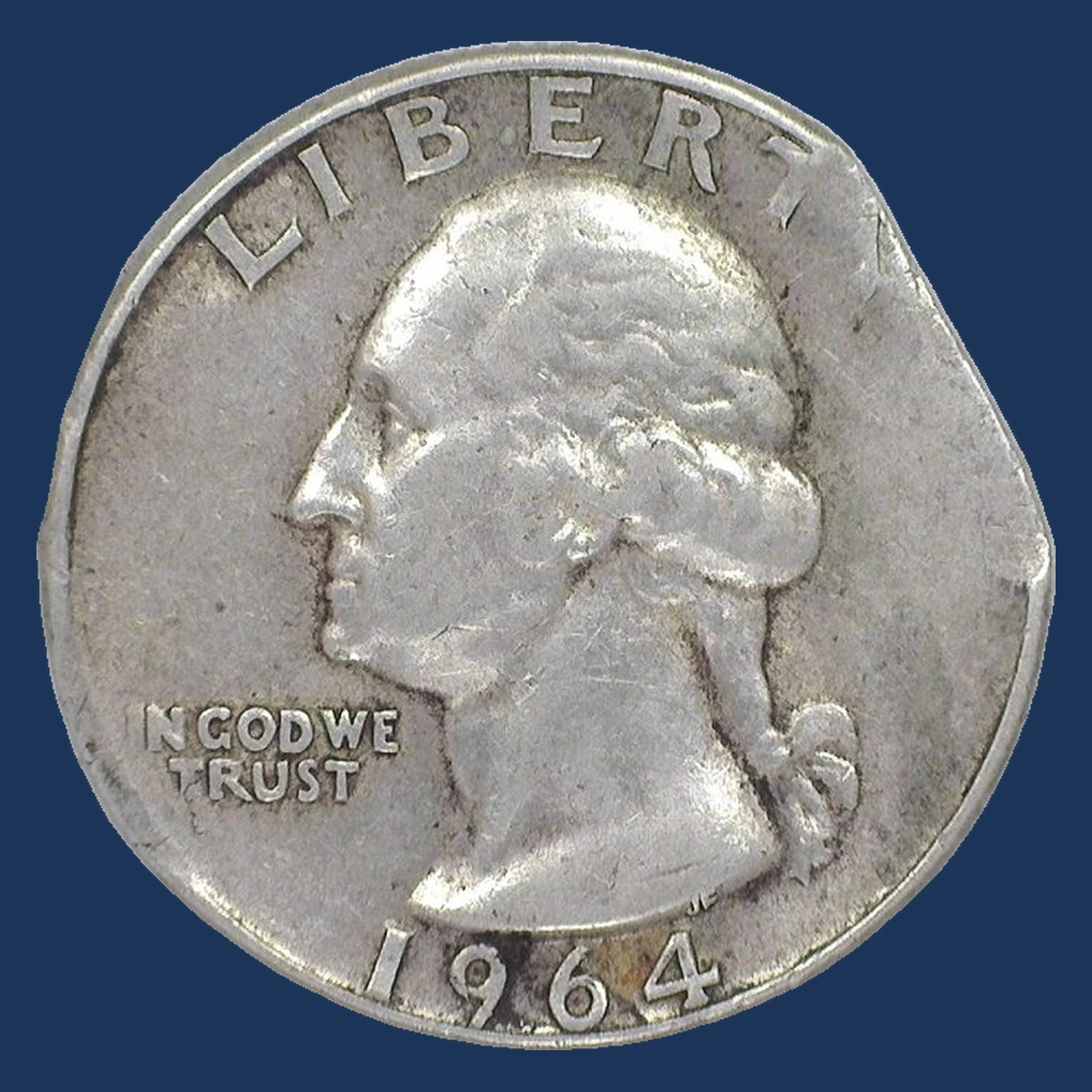
A straight portion missing from a blank can leave a gap at the quarter’s edge. The design is struck after the metal is already absent.
The Denver example has an eighteen-percent straight-end clip and a PCGS MS63 grade. That grade describes an unworn coin with visible marks.
A straight clip is different from the curved gap made when a cutting punch overlaps an earlier round hole. The shape reflects the blank’s position in the metal strip.
Later cutting can create a similar outline. The edge and the way nearby design formed are more useful than the gap’s straightness alone.
Estimated Value
For an authenticated 1964-D straight clip, estimate $75–$1,500, with size, visibility, and surface preservation affecting the result. A readable year and mintmark make the identity easier to demonstrate.
The eighteen-percent figure belongs to the documented MS63 coin. It does not establish a standard size or price for every straight missing section on a quarter.
Natural transitions into the struck edge and attractive remaining detail help collector appeal. A fresh cut through a finished coin instead damages its underlying value.
How to Identify
A straight missing edge deserves a close damage check first. View it from the side and inspect both ends for saw marks, scraping, or sharp burrs.
Next follow the nearby letters and border into the gap under a magnifier. Metal already missing before striking affects how these details form near the incomplete edge.
Look across the coin for a weakened rim. This can support a genuine clip, although it need not be equally clear on every example.
Weigh a loose coin against the normal 6.25 grams after examining the surface. A lower weight fits missing metal, but cutting and wear also reduce weight.
Concentrate on the transition from the struck rim into the gap. A straight outline by itself cannot distinguish a clipped blank from a cut coin.
10. 1964 Washington Quarter Unusually Weak Strike
Shallow designs can remain on a coin even when circulation has not rubbed them away. A weak blow may fail to press metal fully into the stamping tools.
A Denver example was cataloged by NGC as a die adjustment strike. That label refers to an unusually weak striking result associated with setting the press.
The name does not reveal the exact pressure. Examine the faint design and original surface together to distinguish it from other causes.
This appearance differs from a small area blocked by grease. Wear or later squeezing can also weaken details and must be considered.
Estimated Value
Use an estimated $100–$2,000 for an authenticated severe weak strike with a recognizable 1964-D identity. A broad contrast between shallow artwork and original surface can attract more interest than ordinary softness.
The range concerns a demonstrable striking error, not a claim that any poorly detailed quarter was a press test. The date and mintmark help establish which coin is being valued.
Heavy wear or damage can make the cause harder to see. Such problems reduce the appeal of an example.
How to Identify
Use a normal quarter to compare both faces before focusing on any faint letter. General weakness across protected areas is different from wear on the highest parts of the picture.
Tilt the candidate under a lamp and inspect the shallow details for original shine. Broad rubbed patches suggest circulation or later pressure rather than design that never formed fully.
Check the extent of the weak area. One small smooth patch may fit grease or another obstruction, while a weak blow can affect much more of the design.
Keep the date and D visible in your photographs. Compare the surface inside the faint details with the surrounding metal, rather than judging the cause from missing detail alone.
11. 1964 Washington Quarter Deep Struck-Through Impression on the Back
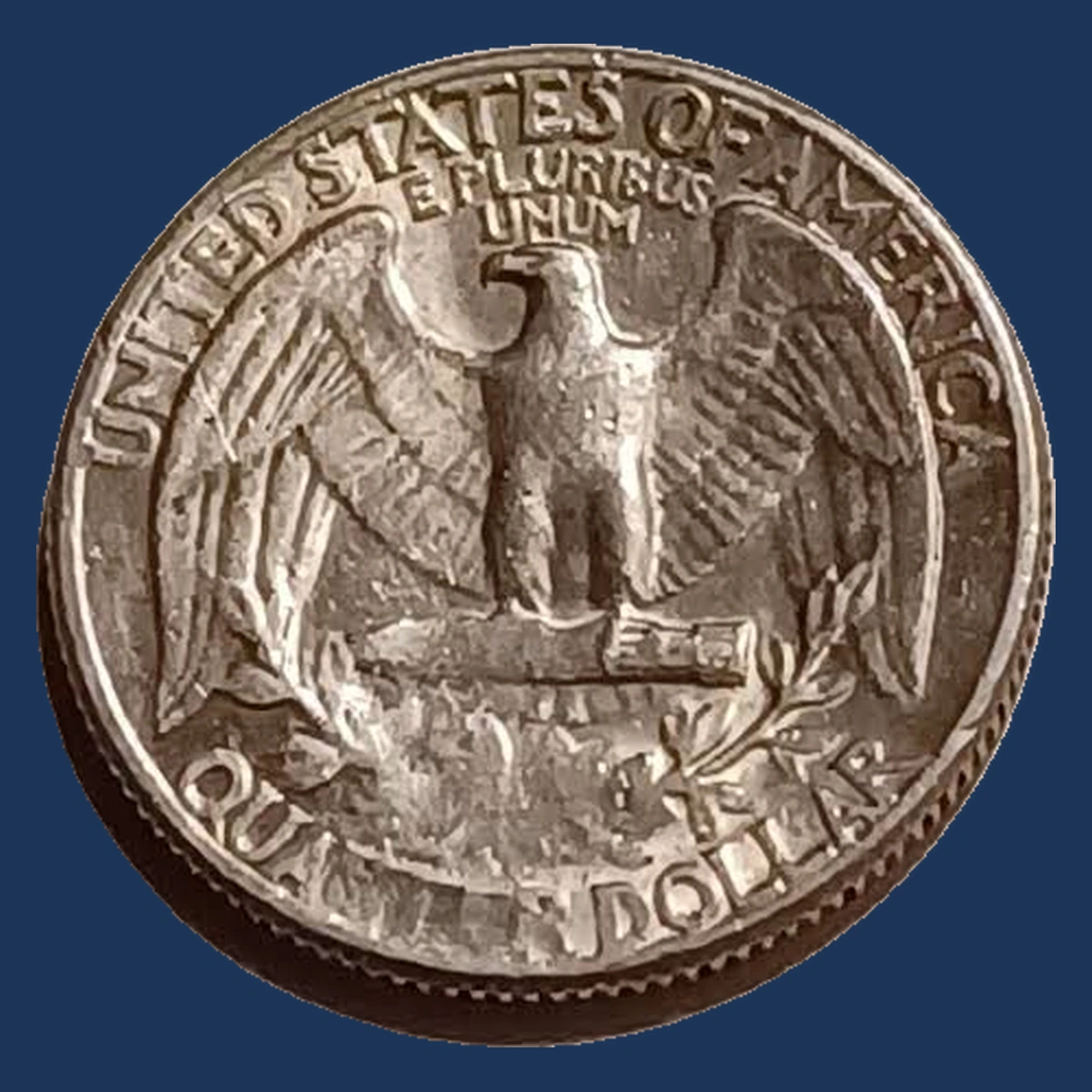
An object caught between the quarter and a stamping tool can leave a deep hollow in the design. The metal receives the obstruction’s shape where the picture should have formed.
A 1964-D example graded NGC MS64 has a deep struck-through impression on the back. The material that made this impression has not been identified.
Wire, cloth, and other objects can leave different textures. The hollow’s actual shape and boundary matter more than guessing the object from a dark photograph.
The depth alone also cannot prove a Mint error. A later gouge may remove metal from an already completed design.
Estimated Value
Estimate $100–$2,500 for an authenticated deep struck-through 1964-D quarter. A clear impression with sharp surrounding artwork can provide a stronger display than a patch.
The MS64 label supplies an unworn-condition comparison for the coin. Its size, depth, and preservation still need to be considered together when choosing a value within the range.
Without an identified retained object, do not price the coin as though a rare piece of material remains attached. The visible original impression is the feature being valued.
How to Identify
Inspect the inside of the hollow before deciding what caused it. A magnifier and light held to one side can reveal torn silver, tool cuts, or metal pushed into a lip.
Then trace an intact letter or eagle detail toward the boundary. A genuine obstruction can prevent that detail from forming while nearby parts of the design remain sharp.
Compare several points around the hollow instead of judging its depth alone. A later gouge cuts into a finished surface and may drag existing details out of place.
Leave any attached material untouched, and avoid naming it from its color in a photograph. Follow the interrupted design into the depression to assess how the impression formed.
12. 1964 Washington Quarter Forty-Percent Off-Center Strike
An off-center quarter has both untouched blank metal and design that misses the opposite edge. The blank was not fully positioned between the stamping tools.
The Philadelphia example was struck forty percent off center and graded PCGS MS64. Its large shift leaves substantial blank metal beside the picture.
That amount of displacement should not be confused with the angle of a rotated design. A percentage describes how much of the blank was outside the striking position.
An uneven broadstrike may look shifted while retaining the complete picture. The lost design and original unstruck area distinguish the off-center appearance.
Estimated Value
For authenticated 1964 off-center quarters, estimate $150–$3,000, allowing more for substantial shifts with clear dates and original surfaces. The forty-percent PCGS MS64 example provides a specific physical comparison.
A dramatic outline alone does not place a coin at the top of the range. Its design, identifying details, and condition all affect the price.
Later trimming or flattening can imitate parts of this appearance. A genuine error premium requires original unstruck metal beside the displaced design, not simply missing rim lettering.
How to Identify
Photograph the visible year together with the untouched crescent of blank metal. Both belong in the same view so a dramatic outline does not hide the coin’s identity.
Turn the coin over and check whether the design missed the blank in a matching way. A shifted picture on only one face, with the other centered, suggests a different positioning problem.
Inspect the boundary between struck and unstruck metal under a lamp. The original blank surface should join naturally to the portion that received the design.
Finally examine the edge where letters disappear. Filing can remove artwork, but it cannot create an untouched crescent beside the strike; complete lettering instead calls for a broadstrike comparison.
13. 1964 Washington Quarter Mirror Impression with a Large Broadstrike
An already struck coin can press a backward design into another blank. That sunken mirror impression is called a brockage.
The example has an expanded outline and a brockage covering about ninety percent of the front. Only a narrow strip near six o’clock received the normal front tool directly.
The affected area shows an enlarged backward eagle-side design with faint raised traces of Washington. The back lettering stretches strongly toward the rim.
PCGS graded it MS63 and placed 1964 in parentheses because the final two date digits are indistinct. The year is identified from evidence beyond a fully readable date.
Estimated Value
The attributed 1964 brockage and broadstrike sold for $329 in April 2013. Use an estimated $250–$3,000 for a comparable authenticated combination, depending on its appearance and preservation.
The two effects belong to one coin and one overall price. Its date attribution and the clarity of the mirror image are important parts of the comparison.
The catalog notes two thin test marks on the upper back. Those later marks are damage, not extra Mint-made features that add value.
How to Identify
Begin with the narrow front strip near six o’clock, where the normal front tool reached the coin. Compare that raised detail with the much larger backward eagle impression beside it.
Use side lighting to check that the mirror image is sunken. Faint raised Washington detail can also remain within the affected face.
On the back, follow the lettering stretched toward the enlarged rim. The mirror impression and spread-out outline are features of the same coin.
The final two date digits are indistinct, which is why its label gives the year as (1964). Keep that distinction when comparing a candidate rather than claiming a fully readable date.
Inspect the two upper-back test scratches separately. They cut the finished surface and do not explain the original sunken mirror design.
14. 1964 Washington Quarter Struck on Silver Dime or Nickel Blanks
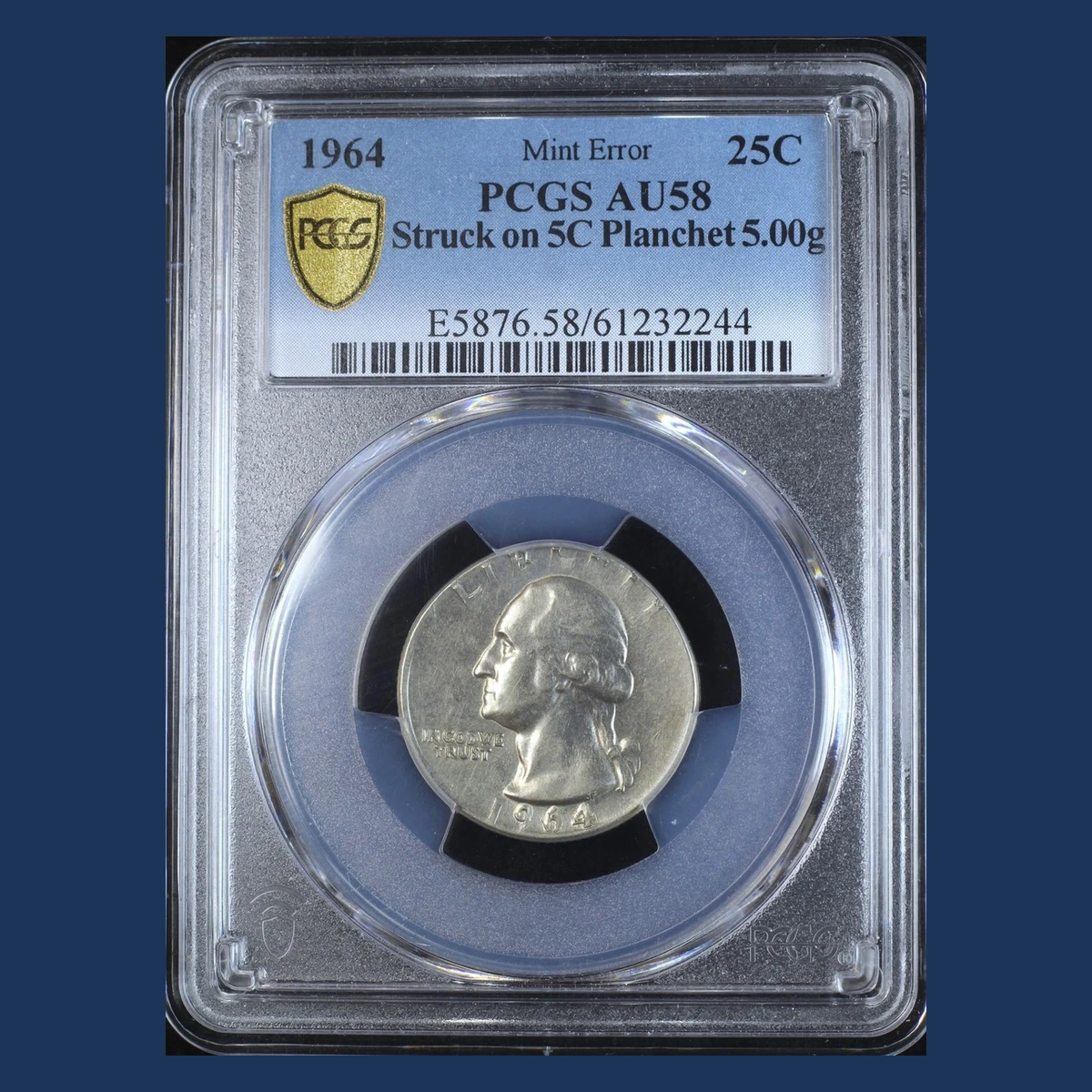
A small blank cannot hold the quarter design normally. Outer letters may run beyond its edge, while its weight and metal reflect the intended smaller coin.
Philadelphia examples are known on silver dime blanks and nickel blanks. Recorded weights include 2.5 grams for dime blanks and 5 grams for a nickel blank.
A Denver example graded NGC MS63 is attributed as 1964 in parentheses. Its full date must not be assumed readable.
These are different coins from the quarter-sized thin-stock example. A dime blank begins smaller in diameter, while dime-thickness stock describes the sheet used to cut a quarter blank.
Estimated Value
Estimate $250–$5,000 for authenticated 1964 quarters on these smaller blanks. Readable identity, original surfaces, and the particular blank influence the value.
A Philadelphia quarter on a dime blank, graded NGC MS66 and weighing 2.5 grams, brought $552 in July 2021. Other listed dime-blank coins have different grades and should retain their own identities.
The nickel blank’s different alloy and larger size need a separate comparison. A small-looking coin made by trimming a normal quarter does not earn a wrong-blank premium.
How to Identify
Weigh a loose candidate first. The normal silver quarter is 6.25 grams, compared with about 2.5 grams for a silver dime blank and 5 grams for a nickel blank.
Measure the diameter as well, allowing for spreading during striking. A smaller blank has less room for the quarter design, so examine how letters reach and run beyond its edge.
Check for filing that could have removed the outer design from an ordinary quarter. A nickel blank also needs its copper-nickel alloy identified, rather than the quarter and dime’s silver alloy.
Read the surviving date and mintmark carefully. The Denver MS63 dime-blank example has the year attributed as (1964); do not turn a partly missing date into four clearly visible digits.
15. 1964 Washington Quarter Doubled Designs on Ordinary Quarters and Proofs
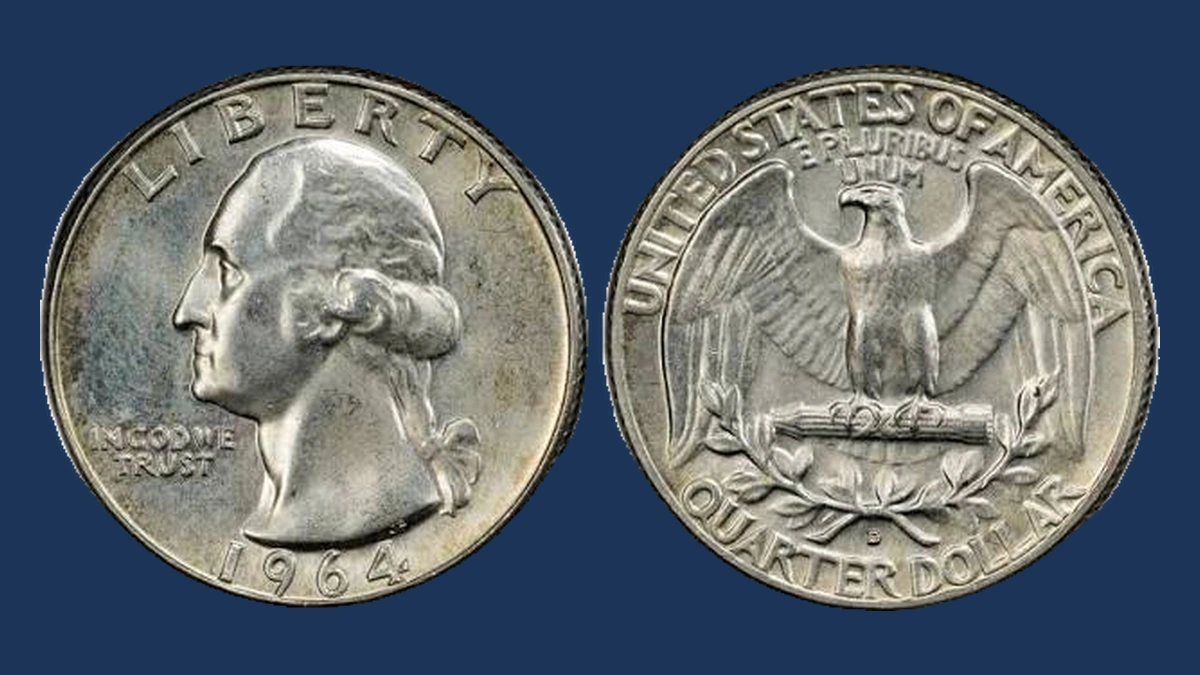
Extra rounded outlines can be part of the stamping tool itself. A single strike then copies that doubled design onto the quarter.
Catalogs list front and back patterns for Philadelphia and Denver, along with specially made Philadelphia Proofs. Their repeated letters, date digits, feathers, and leaves occur in different combinations.
Shared catalog numbers need care: ordinary Philadelphia FS-801 and Denver FS-801 describe different back patterns. A Proof numbered WDDO-001 is also separate from ordinary Philadelphia FS-101.
Choose a comparison with the same mint, finish, and pattern. A catalog number alone does not mean two coins share the same doubled details.
Estimated Value
For identified doubled-tool varieties, estimate $25–$5,000 across minor worn examples through strong patterns in excellent condition. The upper end requires a desirable variety and preservation to match.
The range is not a premium for every thick letter or repeated edge. Flat shelves from movement during striking differ from the detail inherited from a doubled tool.
Compare ordinary coins with their own mint and Proofs with Proofs. A matching number from another catalog does not establish the same pattern or price.
How to Identify
Identify the mint and finish first. On ordinary Philadelphia fronts, inspect LIBERTY, IN GOD WE TRUST, and the date; Proof patterns can instead show very close outward repetition at LIBERTY.
On Denver fronts, compare letter corners, the date, and the lower hair ribbon with the selected variety image. Some patterns affect several areas, while WDDO-014 concentrates on the top of 6.
For Philadelphia back doubling, compare the denomination, wreath, feathers, and motto. FS-801, FS-802, FS-803, and FS-804 require their own photographs.
Denver FS-801 strongly repeats back inscriptions and the lower wreath. Its WDDR-003 comparison is much more local: a single leaf above and left of Q.
Follow raised rounded outlines rather than flat shaved edges. The complete pattern matters more than the count of doubled-looking letters.
16. 1964 Washington Quarter Two Strikes with Spreading or Displacement
A quarter can shift or turn after its first blow and receive another design. The two recorded Philadelphia examples show different movements.
One PCGS MS64 coin first struck inside the collar, then received a broadstrike after turning roughly ninety degrees counterclockwise. That angle describes a turn between the designs.
Another MS64 coin has a ninety-percent off-center second strike and partial-collar features from the first blow. Its second strike points toward seven o’clock in the catalog’s illustrated orientation.
The matching number ninety does not make these the same event. One is a rotation angle, while the other is a displacement percentage.
Estimated Value
Estimate $500–$7,500 for authenticated 1964 double strikes of these kinds. Strong separation between recognizable designs and original surfaces make the sequence easier to appreciate.
The ninety-percent off-center example was not sold at Heritage in May 2007. Its dramatic second strike remains useful for comparison with other authenticated examples.
The collar marks, second strike, and expansion belong to one whole-coin valuation for each specimen. Their separate names should not be turned into additional prices that are added together.
How to Identify
The two examples require different checks. For the turned broadstrike, trace recognizable letters or portrait edges belonging to each strike before measuring the change between them.
The later design is roughly a quarter-turn counterclockwise from the earlier one. Inspect the expanded outline created when that second blow lacked normal collar restraint.
On the other coin, start with the small area reached by the second strike. Most of the blank missed that blow, producing the ninety-percent off-center description.
Then inspect the first strike’s edge: it had collar contact near five o’clock and spread near eleven. Keep the source photograph’s orientation when comparing those positions.
Use the surviving designs to distinguish a turn from a shift. Ninety degrees measures rotation, while ninety percent describes displacement.
17. 1964 Washington Quarter Different Back Tools: Type B and Type C
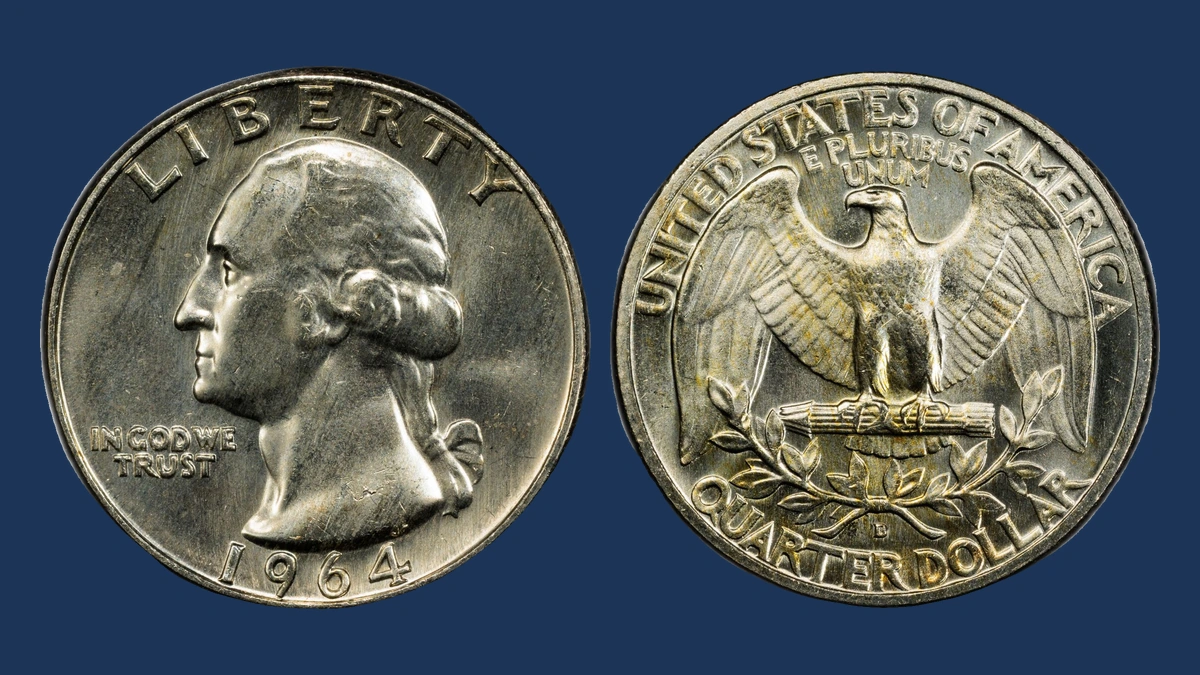
A back design normally associated with Proof production also appeared on ordinary Philadelphia quarters. This Type B combination has distinctive lettering and eagle-side details.
Denver’s Type C is different: a newer design associated with the coming clad quarters was used on a 1964 silver coin. The metal still remained ninety-percent silver.
Type B has a separately listed FS-901a variety. Compare its own photographs rather than assuming every Type B quarter has that more specific identity.
These are tool-combination varieties. A normal Proof with a Type B back is not automatically an error just because it shares that design.
Estimated Value
Estimate $25–$1,500 for identified ordinary Philadelphia Type B examples and $100–$10,000 for Denver Type C, spanning worn through exceptional unworn condition.
PCGS records a Type C MS66+ sale of $8,400 in June 2023. The exceptional grade helps explain that high result.
Minor wear, marks, and weak details put a coin in a different comparison. The rare-tool identification alone does not give an ordinary worn quarter the value of the best-preserved example.
How to Identify
First separate an ordinary Philadelphia coin from a specially made Proof, whose normal Type B back is not itself an error. Compare the mint and finish with the example being used before judging any tiny eagle-side detail.
On an ordinary Philadelphia candidate, inspect the gap between E and S in STATES under a magnifier. Type B shows clearer separation and stronger relief around E PLURIBUS UNUM than the usual Type A back.
For Denver Type C, find the D below the wreath and compare the sharper leaves and lower-relief design with a certified example. The new back design still appears on a ninety-percent-silver quarter, not a copper-nickel coin.
Conclusion
A repeated mint letter and an extra strike may both look doubled, but they leave different evidence. The same distinction matters between a thin quarter-sized blank and a smaller dime blank.
The estimated $25–$10,000 span includes very different conditions and varieties. Keep the actual mint, finish, weight, and surviving design together when comparing a coin; catalog numbers shared across different issues do not make their features interchangeable.