2010 Sacagawea Dollar Error List with Pictures

The five arrows on a 2010 dollar can remain perfectly clear while its entire edge inscription is missing. Other mistakes affect the shape, surface, or design itself.
These 2010 Sacagawea dollar errors have estimated values of $5–$3,500. A 2010 satin-finish missing-edge coin sold for $1,708 in May 2026; a different-year 2000-P off-center example reached $3,120 in April 2021.
Finish and error size matter. Use the following comparisons to check the feature you can actually see.
1. 2010 Sacagawea Dollar Improper Annealing
An unusually dark golden dollar can attract attention before any design mistake does. Annealing is the heating process that prepares a metal blank for striking.
Problems during that treatment can change the surface color, but ordinary tarnish can produce a similar appearance. Brown or black alone proves very little.
Improper annealing remains a reported possibility for 2010 rather than a confirmed example in this guide. The familiar 2001-P comparison belongs to another year, so its photographs cannot establish a 2010 mint error.
Estimated Value
A confirmed 2010 annealing error is estimated at $25–$200. This range follows comparable golden-dollar pricing, including a reported 2001-P example at $79.
The upper end suits an unworn coin with a clear production-related surface change. A small patch that is difficult to distinguish from tarnish has much less appeal.
Ordinary discoloration does not earn this premium. Cleaning a dark coin can also destroy the surface evidence that a specialist needs to examine.
How to Identify
Leave the color alone. Do not use polish, acid, or a cleaning dip to find out what lies beneath it.
Turn the dollar beneath a single light and watch how the shine travels across the dark areas. Preserved mint shine is useful evidence, but natural tarnish can also lie over an original surface.
Compare the high points with protected spaces around the letters. Powdery deposits, pits, and rough patches suggest a different problem from a simple production-related color change.
A photograph can record these differences without settling their cause. Have a specialist inspect the complete coin before paying an annealing premium; color and shine together still cannot prove when the change happened.
2. 2010 Sacagawea Dollar Weak or Partial Edge Lettering
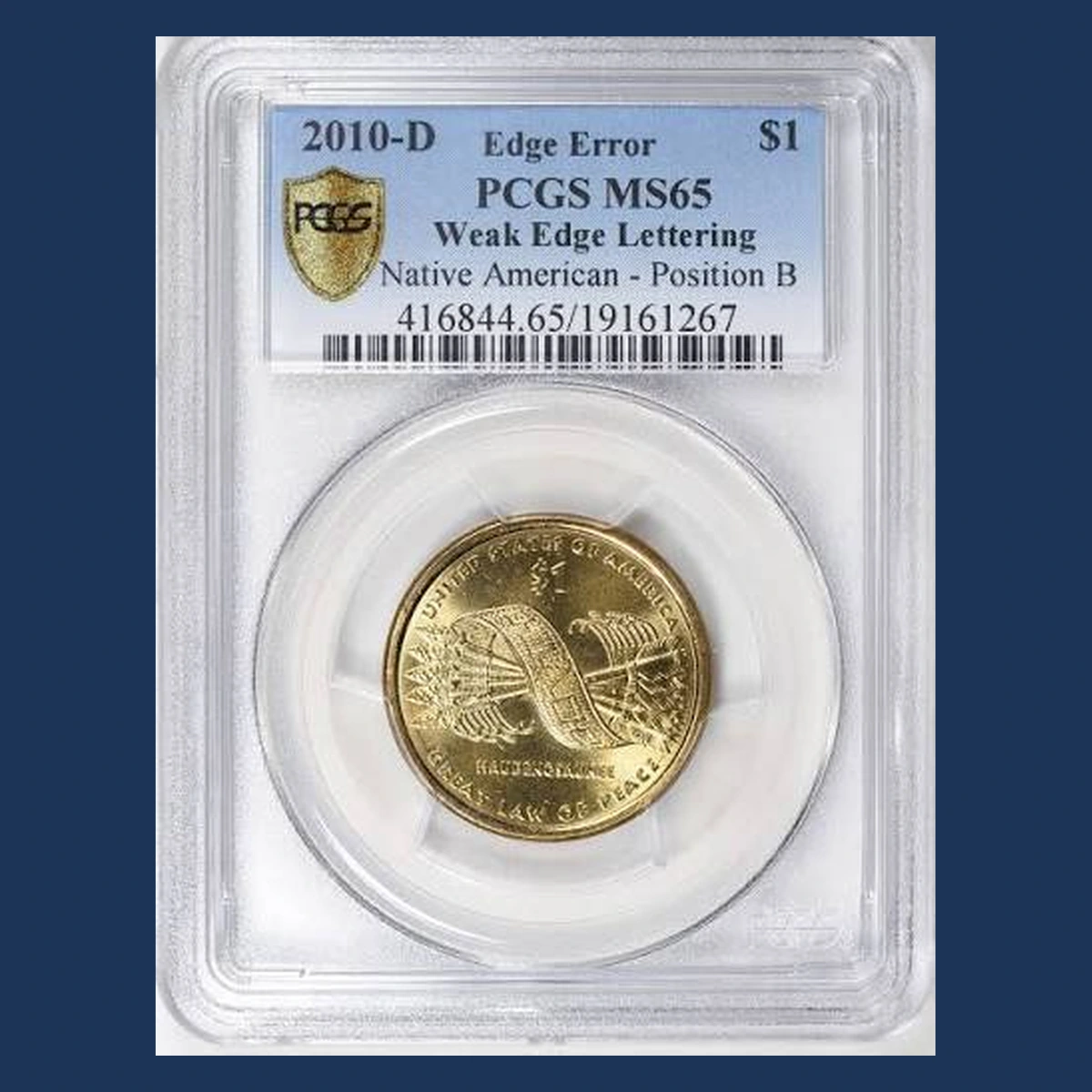
Some 2010 dollars retain only shallow pieces of their edge letters. Others have readable inscriptions interrupted by a completely blank section.
These related problems concern how the edge lettering was applied after the faces were struck. They are different from losing every inscription around the entire coin.
PCGS lists weak lettering for ordinary Philadelphia and Denver coins in both normal reading directions. It also lists partial lettering for a Philadelphia Position A example; the Denver partial-lettering report is less specific about its individual coin.
Estimated Value
Estimated prices of $10–$300 cover weak and partial lettering on ordinary 2010 dollars. Small differences in depth usually fall below a dramatic blank section.
The PCGS Native American price guide places ordinary weak-edge coins across a broad range depending on grade. These are guide figures, not a promise that every shallow letter adds substantial value.
Look for clear photographs and an accurate description of which letters survive before comparing a seller’s asking price.
How to Identify
Place a normal 2010 dollar beside the suspect coin with the edge inscriptions facing the same way. Position A and Position B are normal directions, so turning the words upside down does not create an error.
Compare one complete word, then move to the next section. Weak lettering leaves shallow strokes; a partial inscription has a genuinely blank stretch between surviving details.
Use angled light to check the bottoms of faint letters. A change in lighting should not turn an apparent blank stretch into a fully readable inscription.
Finally, inspect the borders beside that stretch for scraping or flattening. Record any readable P or D rather than assigning a mint from the direction of the words.
3. 2010 Sacagawea Dollar Broadstrike
A broadstruck dollar spreads farther outward than it should, yet keeps its complete design. The metal escaped the collar, the ring that normally limits a coin’s size during striking.
This error is reported for the 2010 Great Law of Peace design without a specific mint assignment. Its defining feature is expansion around the design rather than a missing part of the picture.
Edge lettering is a separate step on ordinary dollars. A blank edge by itself therefore cannot establish that a coin was broadstruck.
Estimated Value
Modern golden-dollar comparisons support an estimated $50–$300 for a genuine 2010 broadstrike. Slight spreading belongs near the lower end of that range.
A clearly enlarged outline with a complete portrait and back design is more desirable. Heavy contact marks, distortion from later pressure, or damage to the edge reduce the price.
The strongest examples make the expansion easy to see without relying on a seller’s measurements alone. An ordinary dollar with missing edge letters needs separate pricing.
How to Identify
For a loose coin, measure across several directions with calipers. The normal diameter is 26.5 millimeters, but a tiny difference by itself is not enough to call a broadstrike.
Now work around the design rather than the outer edge. Sacagawea’s portrait, the inscriptions, and the belt-and-arrows design should remain complete inside the expanded metal.
Check the profile for metal that spread during striking instead of a coin later squeezed flat. A normal blank weighs about 8.10 grams; extra width should not require extra metal.
If part of the design is cut off beside a bare crescent, examine the off-center section instead. The broadstrike decision rests on outward spread with the original design still present.
4. 2010 Sacagawea Dollar Missing Front Motto
IN GOD WE TRUST belongs on the front of a 2010 dollar, not around its edge. A report describes a Denver example missing this motto while the coin still carries other design details.
That is a different problem from missing edge lettering. The absent words must be examined on the face itself.
Weak striking or material blocking part of the steel stamping tool can suppress lettering. The reported coin’s cause is not established closely enough to name a particular substance or a specific damaged tool.
Estimated Value
An estimated $25–$350 applies to a genuine production error that leaves the front motto missing. The range depends on how completely the words disappear and how well the surrounding picture remains struck.
Compare prices with modern dollars showing blocked or weak design areas. A sharp contrast between absent words and clear nearby details is more appealing than general weakness across the whole coin.
Wear or polishing that removes the motto does not belong in this error price range.
How to Identify
Find IN GOD WE TRUST on a normal 2010 dollar first. Compare that exact area with the suspected Denver example, keeping both photographs at the same scale.
Look for the tops or bottoms of letters that survive. A few faint strokes can reveal whether the words gradually weaken or end abruptly.
Next follow the surrounding surface into the clear design. Polishing may leave fine parallel lines or a lower, flattened patch where lettering once stood.
Check nearby raised details for ordinary wear and inspect the back for broader striking weakness. A sharp back does not identify the precise cause, but it helps describe the problem accurately.
Keep the D edge letter in a separate photograph whenever it is readable. That preserves the reported mint identity without confusing the missing front words with an edge defect.
5. 2010 Sacagawea Dollar Doubled Edge Lettering
Two sets of words around the edge can cross or overlap each other. This happens when an ordinary dollar passes through the edge-lettering equipment an extra time.
The second pass is separate from striking the portrait and back design. It can affect the date and mint letter along with the other edge inscriptions.
Year-specific listings report this error for 2010 Philadelphia and Denver dollars. Their descriptions do not establish one exact spacing or direction, so each coin must be judged by the two sets of strokes it actually carries.
Estimated Value
A genuine 2010 doubled-edge dollar is estimated at $50–$500. Clearly separated inscriptions usually show the mistake better than a nearly overlapping second pass.
A useful different-design comparison is a 2007-P John Adams doubled-edge dollar graded MS66 that brought $288 in February 2022. MS66 describes an unworn coin with relatively few marks.
Readable words and an attractive surface support the upper part of the estimate. A single normal inscription in the opposite reading direction adds no such premium.
How to Identify
Draw two short rows on paper and copy the edge strokes into them as you rotate the coin. The aim is to follow two separate inscriptions, not merely count unusual-looking lines.
Choose a recognizable letter or digit from each pass. Check whether neighboring strokes continue at the same spacing, even where the two impressions cross.
Photograph a broad section as well as the clearest overlap. A narrow close-up can make one damaged letter look like a whole second inscription.
Keep reflections out of the comparison by moving the light while leaving the coin steady. Real recessed strokes stay in the metal; bright duplicate-looking lines can shift or disappear with the reflection.
6. 2010 Sacagawea Dollar Clipped Blank
A clipped blank starts with missing metal before the coin receives its design. One possible cause is a blanking punch overlapping a hole already cut in the metal strip.
The finished dollar then carries a gap in its outline. This differs from an off-center strike, where unused metal remains beside the displaced picture.
A clipped 2010 Great Law of Peace dollar is included in the year’s error reports. No particular clip percentage or mint letter is established for that report, and those details should come from the individual coin.
Estimated Value
An estimated $30–$500 covers small through substantial genuine clips on a 2010 dollar. The amount of missing metal and the survival of a recognizable design both affect demand.
Modest gaps are usually less expensive than a dramatic loss with attractive surfaces. A readable edge date or a clear belt-and-arrows design also makes the coin easier to identify.
Unstruck blank prices are not a minimum for this error. Buyers are paying for a struck coin with a genuine incomplete blank.
How to Identify
Look across the coin from the gap before examining the gap itself. The opposite raised border may be weak because the incomplete blank did not form a normal rim.
That weakness helps, but its absence does not automatically reject a clip. Use a magnifier to inspect the missing section for saw marks, repeated file lines, or displaced burrs.
Follow design details toward the gap and compare both faces. Metal flow and fading detail should make sense for an incomplete blank struck afterward.
For a loose coin, record the weight against the normal 8.10 grams. The loss should broadly fit the missing area, although a low weight alone cannot distinguish an original clip from later cutting.
7. 2010 Sacagawea Dollar Die Cracks and Rim Breaks
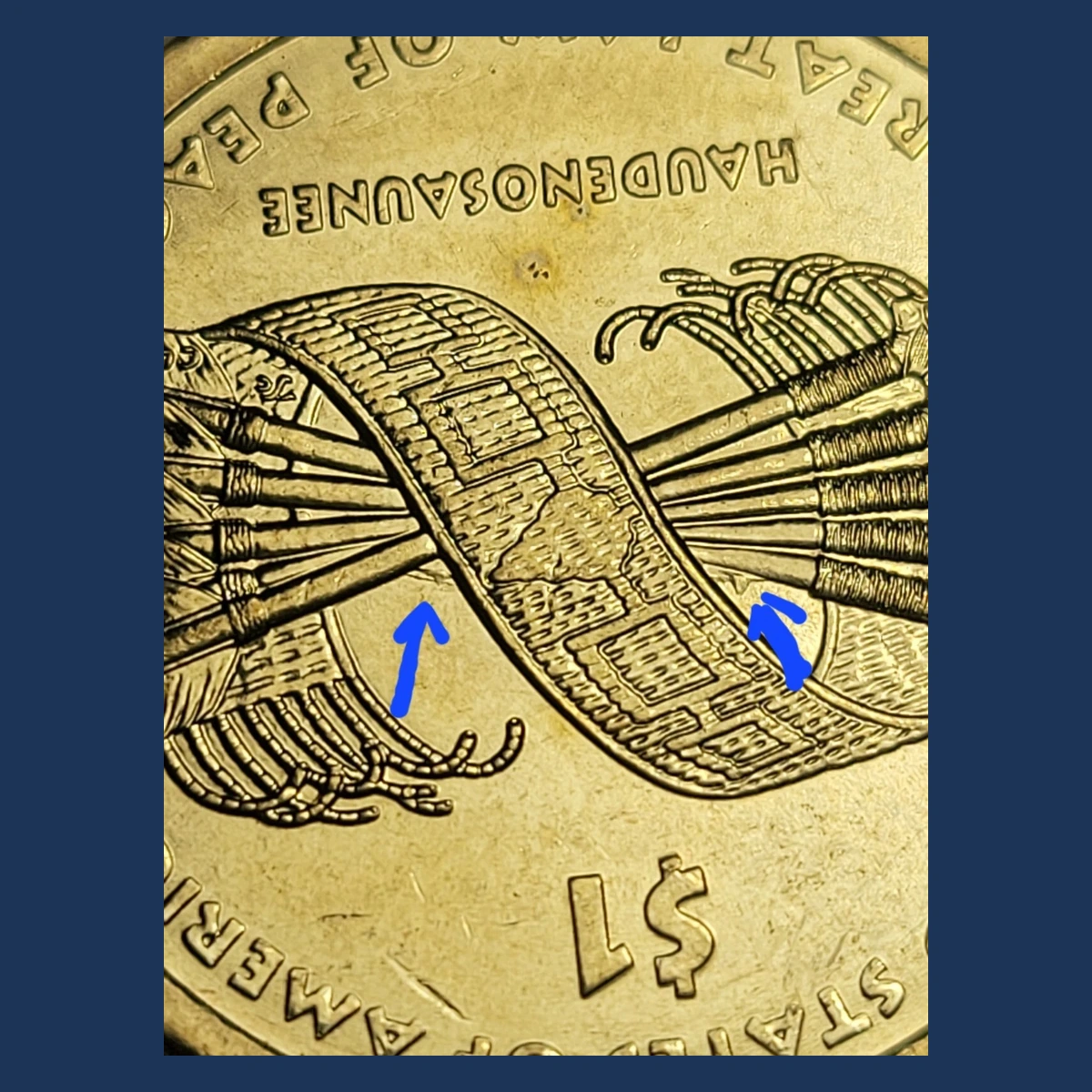
A thin raised line and a large raised patch can have the same starting point: a damaged die. A die is the steel tool that stamps the design onto a coin.
A crack lets coin metal enter the narrow opening, leaving a raised line. If a piece breaks away at the edge, a larger raised patch can join the rim; collectors call that a cud.
The 2010 reports include a Denver die crack and Philadelphia or Denver rim breaks. They do not establish an exact location for every example.
Estimated Value
Small die cracks may fit an estimated $5–$50, while clear rim-connected breaks can reach $50–$600. Size matters more than simply finding an extra line.
A year guide reports a 2010-D MS63 cracked-die coin at $555. That reported figure should be compared with the actual size and appearance of the break, rather than applied to every Denver crack.
Tiny marks visible only in an extreme close-up generally attract less interest than obvious raised metal interrupting the design.
How to Identify
Light the suspected line from one side, then from the other. Check whether its shadows show a ridge above the surface or a cut into it.
A scratch can push up metal beside a groove, so examine the center as well as the edges. Do not run a fingernail over the coin to test the height.
For a larger patch, trace its connection to the raised border. A cud should join the rim, with the normal design replaced by metal where the tool was missing.
Inspect the opposite face for any corresponding weakness, then photograph the entire affected side. A close-up should show how the line or patch meets real design details, not just an isolated lump.
8. 2010 Sacagawea Dollar Struck Through Material
A patch of the design may be weak or replaced by the shape of something that lay against the coin. Collectors call this a struck-through error because the stamping pressure passed through intervening material.
The 2010 error list includes this category without identifying one specific substance or mint. Cloth, wire, and grease explain possible forms; they are not three separately established 2010 specimens.
A wire-like object normally leaves a recessed impression rather than an added raised wire. Sometimes foreign material remains embedded in the coin after striking.
Estimated Value
Estimated values run from $25–$650 for genuine 2010 struck-through errors. A small weak patch is less dramatic than a distinct object-shaped impression.
Comparable modern golden-dollar pricing places larger, easily recognized impressions above minor blocked detail. Material still embedded from the strike can increase interest, provided it has been identified as part of the minting event.
Surface damage that merely resembles a missing design does not receive the same price. Shape, size, and condition should be visible in photographs.
How to Identify
If material remains attached, leave it in place and avoid pressing on it. Removing it can lose both the object and evidence of how it entered the surface.
For an empty impression, follow the boundary where the normal design stops. See whether the depression has a recognizable shape or texture rather than assuming every blank patch came from grease.
Compare the surrounding letters with those on the back. Clear nearby details help locate the interruption, although a normal back alone does not prove a struck-through error.
Look closely for scratches crossing the depression, rough corrosion, or metal pushed aside by a later impact. Photograph the transition from intact design into the affected area under low, sideways light.
9. 2010 Sacagawea Dollar Doubled Die
A doubled die repeats part of the design because the steel stamping tool already carried an extra image. The mistake develops while that tool is made, rather than from a dollar being struck twice.
The year’s reports include a Denver coin described as MS62, an unworn grade with noticeable marks. Other listings mention Philadelphia coins and doubling on either face.
The exact doubled feature is not established here for each reported example. In particular, doubled edge dates are a separate lettering problem and cannot prove a doubled face die.
Estimated Value
A working estimate is $25–$800 for a confirmed 2010 doubled die. Strong, recognizable separation generally brings more than a tiny extra contour.
A secondary year guide reports a Denver MS62 example at $730 in 2013. Treat that as a reported comparison, not an automatic price for a coin with doubled-looking letters.
A buyer needs a match to the same doubled design and an assessment of wear. Flat shelf-like doubling from movement during striking usually carries much less interest.
How to Identify
Select a normal dollar with the same mint letter and finish before comparing a suspected extra outline. Ordinary, satin-finish, and specially prepared Proof coins can look different under the same light.
Use a 10× magnifier on the feature that first caught your attention. Rounded separation or a split corner can be useful, but the complete shape needs comparison with a documented example.
Check neighboring details to see whether the effect follows the design. A flat ledge beside a letter may come from movement during striking instead of a doubled tool.
Do not use the edge date as the deciding feature. Keep face photographs separate from edge photographs so two different kinds of doubling are not mistaken for one error.
10. 2010 Sacagawea Dollar Peeling Surface Metal
A thin piece of the surface can lift or peel away while the rest of the dollar remains intact. Collectors often use lamination for this kind of separation within the metal.
A 2010-P report describes peeling on both faces. That does not mean the entire dollar split into two pieces or lost a complete outer layer.
The dollar has a copper core with golden-colored outer metal. Examination must show where the separation lies before it can be described as a fault within a layer or between layers.
Estimated Value
Minor genuine surface peeling can be estimated at $25–$150; larger or two-sided examples may reach $150–$1,200. How much original design remains affects the appeal.
The year guide reports a 2010-P MS62 coin with peeling on both faces at $1,050. Its two-sided appearance is more useful for comparison than the amount alone.
A detached piece can help explain the defect. Damage caused by prying at an otherwise normal surface should not receive a mint-error premium.
How to Identify
Protect a lifting flap from contact before trying to photograph it. Do not bend it back to expose more metal underneath.
Take one view of each face and a low-angle view of the raised edge. Look for design that continues onto the separated metal or ends where a piece is gone.
Inspect the exposed area for the layered structure without assigning every reddish patch to the copper core. Color alone can be misleading on tarnished golden dollars.
Compare the two sides separately, since their losses need not match in size or shape. A blister, a peeled layer, and an entire missing outer face are not interchangeable descriptions.
Tool scratches or folded metal around a forced opening need particular attention during professional examination.
11. 2010 Sacagawea Dollar Die Cap
A dollar that stays stuck to a stamping tool can gradually curl around it. Repeated pressure spreads and stretches the metal until the coin resembles a shallow cup or cap.
The 2010 report names a Denver die cap, described as MS65, an unworn coin with relatively few marks. The raised walls and distorted design belong to the stuck coin itself.
Other coins struck beneath that cap can develop different errors. A flat dollar with a blocked or distorted picture is not automatically the cap that caused it.
Estimated Value
An estimated $200–$1,500 covers a genuine 2010-D die cap, from early curling to a clearly developed cup. The depth and surviving design help separate those levels.
A year guide reports a Denver MS65 cap at $1,200 in 2021. That figure describes the reported cap, not every dollar with a distorted face.
Intact walls and a recognizable design are desirable. A coin bent into a bowl after leaving the Mint belongs outside this error range.
How to Identify
Study the side profile first, without forcing the coin flat. A cap should show metal drawn upward around a stamping tool, rather than a simple bend across the middle.
Follow the design from the flatter center into the rising wall. Stretching should fit the shape of the cup and the way the metal spread during repeated strikes.
Turn to the outer surface and record its remaining picture without demanding a particular backward image. Different stages can preserve different amounts of detail.
Look for pressure marks from later tools or sharp folds inconsistent with gradual expansion. Keep the edge date and D letter in photographs if they survive, and use the belt-and-arrows design to support the year.
12. 2010 Sacagawea Dollar Missing Edge Lettering
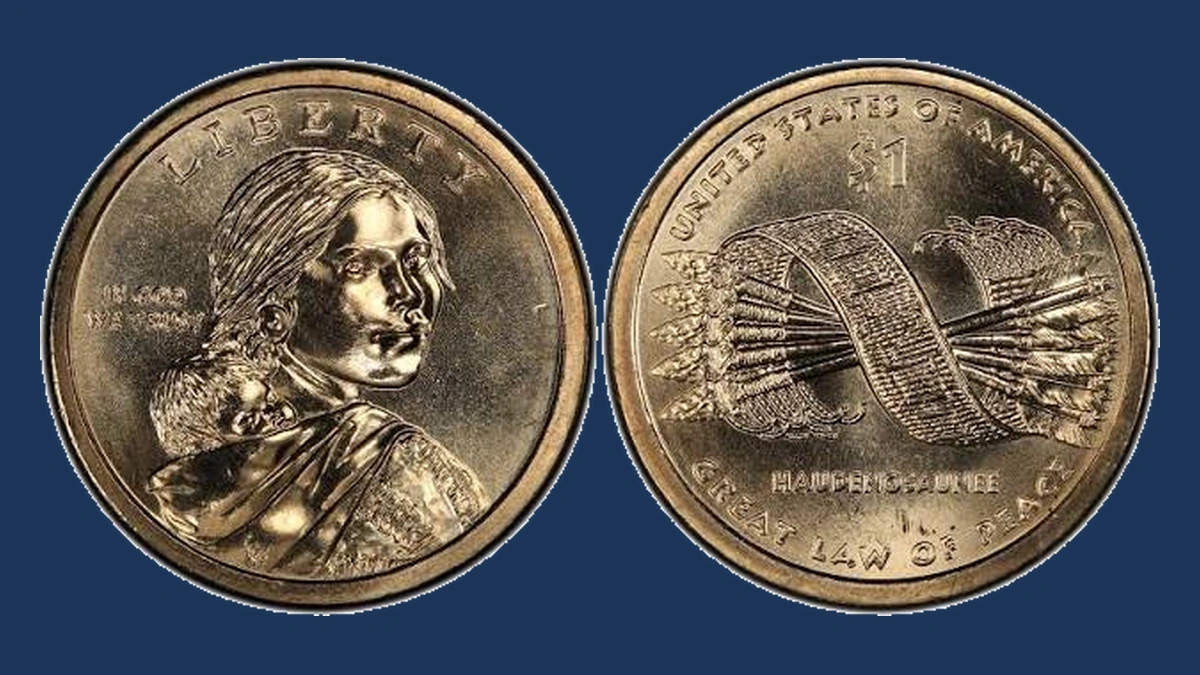
The Hiawatha belt and five arrows identify the 2010 design even when every edge letter is absent. Ordinary dollars can miss the separate step that adds the date, mint letter, and E PLURIBUS UNUM.
Examples also exist with the satin finish used for collector sets. Satin describes their softly textured surface, not an error.
NGC’s photographic discussion includes the 2010 design, and auction records distinguish special-finish examples. A signed label does not create another mint error, and an absent mint letter should not be replaced by a guess.
Estimated Value
Allow about $50–$650 for ordinary missing-edge examples and $300–$2,000 for satin-finish collector coins. Condition can move individual coins substantially within those bands.
NGC records a 2010 satin-finish PCGS MS67 example at $1,708 in May 2026. The same category also includes an MS66 sale at $575 in May 2012.
Those are different auction entries. They show why a collector-set coin should not be priced from an ordinary dollar alone.
How to Identify
Establish the finish before comparing prices or photographs. An original set or a reliable grading label can help distinguish satin-finish coins from ordinary ones; keep sealed packaging intact.
Then examine the entire circumference in overlapping photographs. Missing edge lettering means no date, mint letter, or motto strokes anywhere, not merely one empty section.
The front still normally carries IN GOD WE TRUST. Its presence does not disprove the edge error.
For a loose coin, compare its 8.10-gram standard weight and 26.5-millimeter diameter with the actual measurements. Also inspect for filing, smoothing, or rounded borders because an altered coin can remain close to normal size.
Use the belt and five arrows to confirm the year when the edge cannot provide it.
13. 2010 Sacagawea Dollar Off-Center Strike
An off-center dollar has a picture pushed toward one edge and unused metal beside it. Part of the design falls outside the blank because the blank was not correctly positioned between the stamping tools.
A year-specific report describes a 2010-P coin as 35% off center on the front. The back must also be examined before separating a displaced blank from a shifted face tool.
The Great Law of Peace design can establish the year even if edge lettering is absent. Losing the edge date does not automatically make the coin unidentifiable.
Estimated Value
Estimated values range from $300–$3,500 for genuine 2010 off-center dollars, with the strongest examples retaining a recognizable annual design. Small displacement and heavy damage generally bring less.
A different-year comparison is the 2000-P dollar struck 50% off center that sold for $3,120 in April 2021. Its eagle back and earlier plain-edge format differ from the 2010 issue.
The reported 35% front displacement should be judged from both faces before using an off-center price comparison.
How to Identify
Put the front and back photographs next to each other. Mark where the design ends and where the bare crescent begins on each face.
If only the front picture is shifted while the back remains normally centered, consider a misaligned stamping tool instead. A blank positioned off center normally affects the placement of both designs.
Check whether the outer metal is still present beside the truncated picture. A clip removes metal; it does not leave a broad unused crescent.
Find the belt-and-arrows details that identify 2010, then record any remaining edge inscriptions. Examine the bare area for later grinding or flattening, and keep the entire outline visible when estimating how much of the strike missed the blank.
Conclusion
The errors covered here range from a thin raised line to a dollar with much of its design displaced. Their estimated values span $5–$3,500.
For 2010, the Hiawatha belt and five arrows establish the design even when the edge date is gone. Keep ordinary coins and satin-finish collector coins separate when comparing prices.
Photograph fragile surfaces and unusual shapes without pressing, scraping, or trying to repair them.