1857 Quarter Error List with Pictures

A three-percent shift was enough to put one 1857 quarter in a dealer’s inventory at $550. That was an asking price for a worn coin with a plugged hole and cleaning.
This 1857 quarter error list also includes a raised line beside Liberty’s hand and faint marks from a Flying Eagle cent tool. Estimated whole-coin values run from $75–$4,000 across the conditions below.
Look closely at the hand, eagle, and outer edge as you work through each example.
1. 1857 Liberty Seated Quarter Smoking Liberty Die Gouge
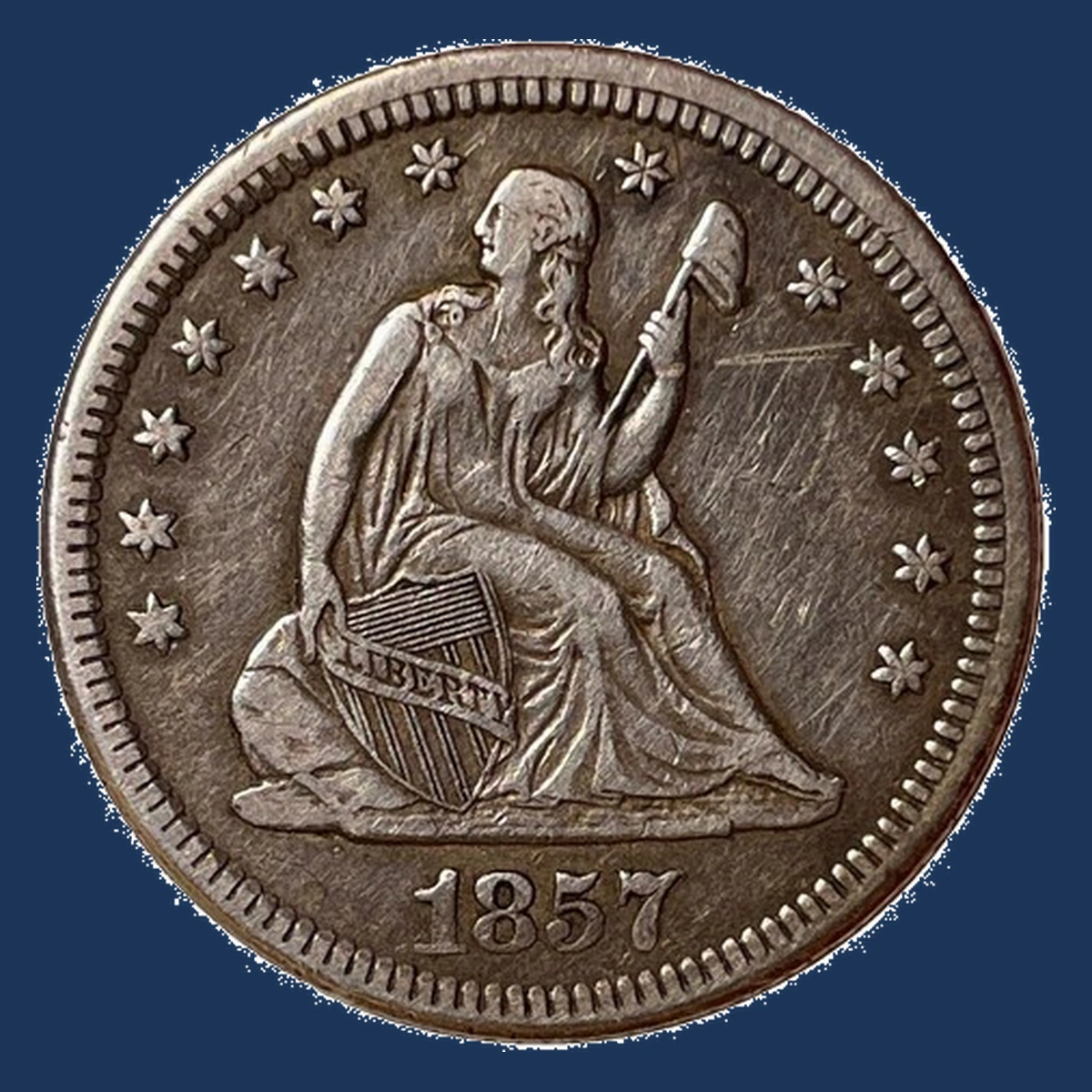
A short raised line beside Liberty’s left hand gives this variety its Smoking Liberty nickname. The mark resembles something held in the hand, but it was not part of the intended design.
A gouge cut into the die, the steel stamping tool, created the extra line. Silver entered that recessed cut during striking and emerged as a raised mark on the coin.
The variety is called FS-401. Gerry Fortin’s 2022 auction catalog described a lightly worn PCGS AU55 example with this diagonal gouge.
It is a tool mark, rather than a cigarette added to the artwork.
Estimated Value
Allow an estimated $75–$1,000 for recognizable examples from heavily worn condition through the lower unworn grades. Preservation of the thin raised line matters more than the nickname alone.
The specialist Top 25 quarter guide lists $150 at VF20 and $500 at AU50. These are guide values for original, problem-free coins, not auction results.
Cleaning, scratches across the hand, or wear that nearly erases the projection can lower a coin’s appeal.
How to Identify
With a 10× magnifier, find Liberty’s left hand and trace the short diagonal projection. Include the hand in your photograph so the line’s position remains clear.
Now move the lamp to the opposite side. A raised line casts a changing shadow beside itself, while an ordinary scratch forms a cut below the surrounding surface.
Examine both ends for disturbed silver. A later scratch can push up narrow ridges, so a raised edge alone does not establish a Mint-made gouge.
Compare the line’s shape and attachment to the hand with an identified FS-401 quarter. The match should be the same short diagonal feature, not a random line elsewhere on Liberty.
2. 1857 Liberty Seated Quarter Three Percent Off-Center Strike
Only a small part of the design is lost on the 1857 quarter offered by Sullivan Numismatics. Its PCGS label identifies a three-percent off-center strike.
The blank sat slightly outside its proper position when the tools struck it. That placement shifted the design toward one edge and left unused space opposite.
This particular coin received a Fine Details grade, showing considerable wear and additional problems. A hole had been plugged, and the dealer also described cleaning and minor damage.
Those later changes are separate from the original off-center strike. They affect the coin’s condition and price.
Estimated Value
Sullivan Numismatics listed the damaged Fine Details coin at $550. The listing is an offer to sell, not proof that a buyer paid that amount.
For a small, clearly identifiable 1857 off-center strike in circulated condition, estimate $300–$1,500. An intact coin with original surfaces is a stronger comparison than a plugged and cleaned example.
Greater displacement or substantially better preservation would need a different comparison.
How to Identify
Begin with the complete design on both faces. Look for original lettering or detail running beyond the edge, with a small unstruck area on the opposite side.
A wide border by itself is not enough. If only one face is displaced, consider a misaligned stamping tool rather than a misplaced blank.
On a loose coin, use a scale and calipers to compare with the normal 6.22 grams and 24.3 millimeters. A repaired hole can alter the measurement, so inspect for a plug boundary under magnification as well.
Turn the coin slowly to separate the displaced design from scratches and cleaning lines. Confirm the missing design and opposing blank area before judging the size of the shift.
3. 1857 Liberty Seated Quarter Flying Eagle Cent Die Clash
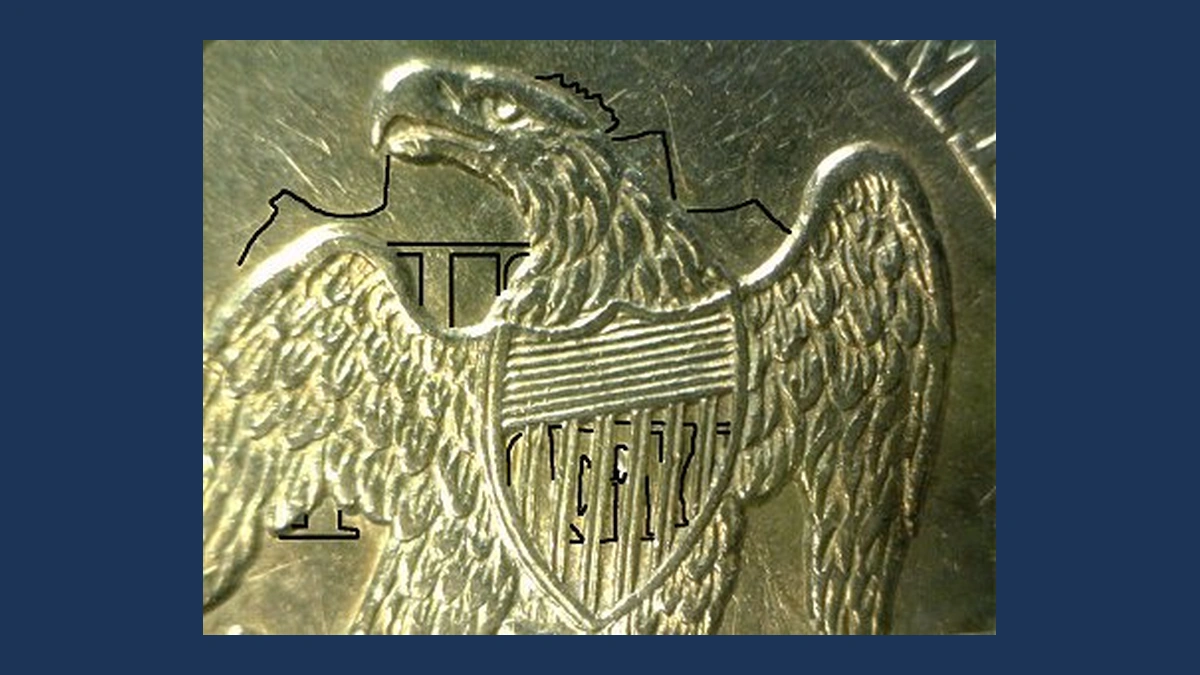
Faint extra shapes around the eagle connect this quarter to a different denomination. They came from contact between a quarter reverse tool and the reverse tool for a Flying Eagle cent.
When stamping tools meet without a blank between them, one can leave marks on the other. Those marks can then appear on coins struck afterward.
This quarter variety is known as Briggs 6-F or FS-901. It carries shallow traces of the cent’s reverse design, including parts of its wreath.
The quarter was not struck on a cent. Its silver blank and normal quarter design remain.
Estimated Value
The specialist Top 25 price guide places this clash at $450 in VF20, $800 in EF40, and $2,000 in AU50. Those figures describe increasingly better-preserved coins, not individual sales.
An estimated $150–$4,000 covers identifiable worn examples through the lower unworn grades. Strong clash marks can make a noticeable difference between coins with similar wear.
A faint, poorly matched trace should not receive the same premium as a clear example.
How to Identify
Let light skim across the eagle side while gently tilting the coin. Check above and below the eagle’s left wing, then just to the right of its neck.
The shallow marks may appear at one angle and fade at another. Try a magnifier after locating them, rather than relying on one bright overhead photograph.
Compare their shapes with the Flying Eagle cent’s wreath and a known FS-901 quarter.
Greg Johnson’s illustrated study includes drawn lines to make the clash easier to see. Those lines are explanatory additions, so distinguish them from the unaltered coin photograph.
Dirt and heavy wear can hide the small traces, but cleaning can harm the surface. A matching group of faint transferred shapes around the wing and neck supports identification.
Conclusion
Estimated values of $75–$4,000 cover three very different 1857 quarter features. The raised hand line is small, the cent clash can be faint, and the off-center example has a visibly shifted design.
Condition matters throughout. Keep a plugged hole or cleaning separate from the Mint-made feature, and compare the actual marks before choosing a price range.