1842 Half Dollar Error List with Pictures

An 1842 proof with extra date strokes sold for $38,400 in January 2020. A proof is a specially made collector coin, and its rarity matters far more than a small repeated number.
These 1842 half dollar errors have estimated values of $150–$45,000 across different mints, date sizes, and coin types. Other clues hide in Liberty’s skirt or appear as raised patches and lines.
Read on to match the complete coin before comparing its unusual detail.
1. 1842 Liberty Seated Half Dollar Rim Cud Above STATES (Estimated Up to $700)
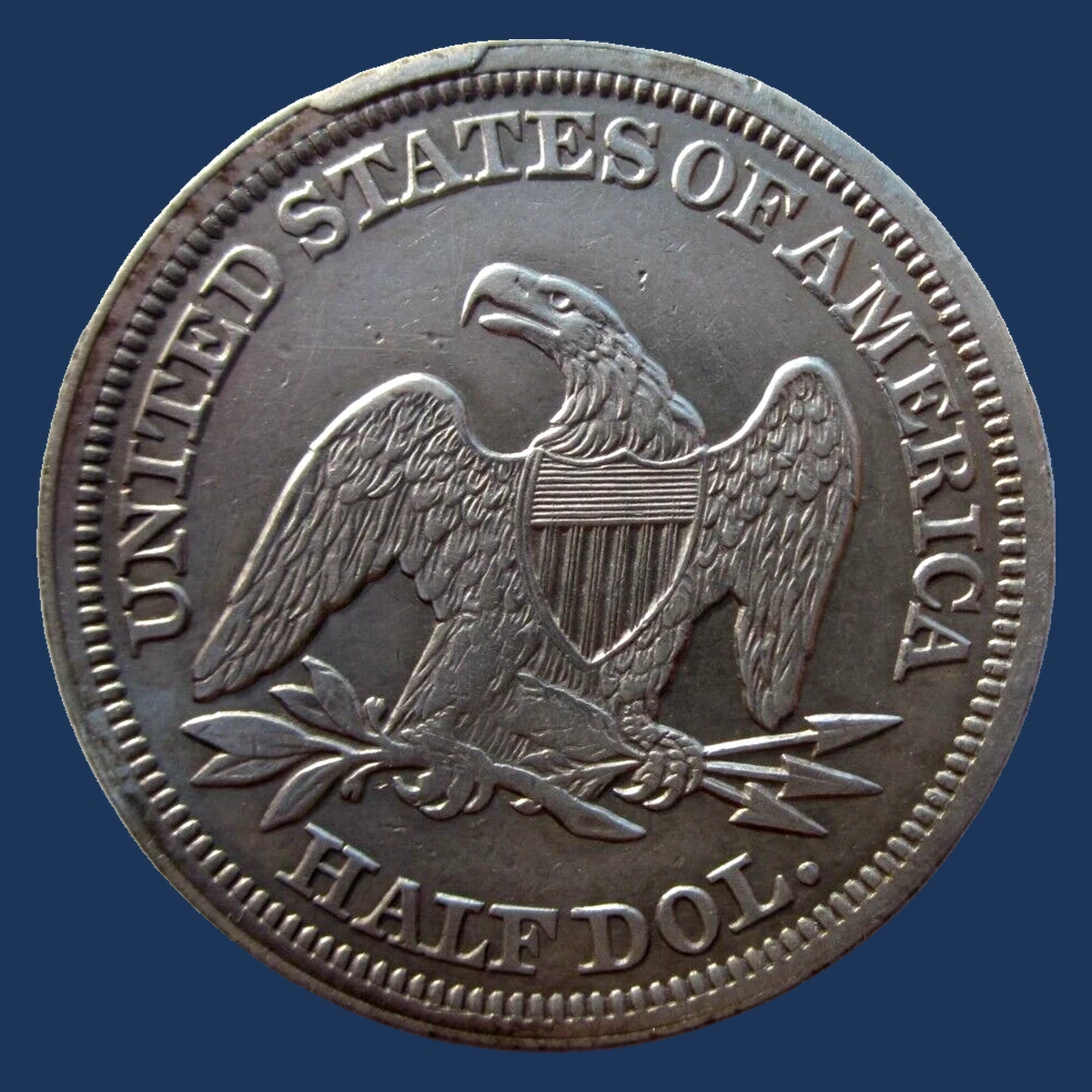
Above TAT in STATES, a raised patch joins the rim on this Philadelphia variety. The coin has a Small Date and the large-letter back design called Reverse of 1842.
The patch is a cud. It formed when a piece broke from the edge of a die, the steel stamping tool.
Silver filled the empty space during striking. The resulting lump is part of the struck coin, rather than something attached later.
Specialist Bill Bugert records this as a familiar feature of the matching tool pair. A prominent patch therefore does not automatically make the coin extremely rare.
Estimated Value
Estimate $150–$700 for circulated through lightly worn examples with a clear cud. An ANACS AU55 Small Date, Reverse of 1842 sold for $292.80 in June 2026.
AU55 means light wear. That recent record provides a comparison for the coin type, without separately pricing the cud.
An older AU55 explicitly described with the TAT patch brought $287.50 in 2001. Those whole-coin results show why similar-looking cuds can have different values depending on remaining detail and surface condition.
How to Identify
First match the Small Date front and large-letter back; the rare Small Letters combination is a different coin. Then use a 10× magnifier above TAT to see whether the patch is raised and connected to the rim.
Compare its boundary with the known example and inspect the grooved edge for repair or impact damage. A dent compresses existing metal, while a cud replaces design where part of the tool was missing.
A scale and calipers can check a loose coin against 13.36 g and about 30.6 mm, allowing for wear. The clearest match is the rim-connected patch above TAT on that specific Small Date, large-letter combination.
2. 1842 Liberty Seated Half Dollar Rim Clip (Estimated Up to $1,200)
A gap at the rim reflects missing blank metal on the Rippere Collection example. GreatCollections identifies this Medium Date half as an ANACS AU50 rim clip.
AU50 means light wear. The blank was incomplete before the design was impressed.
The surrounding silver then received its normal strike, leaving transitions where the design and rim approached the gap. A later cut can make a similar outline but different boundary marks.
The listing does not state a clip percentage or clock position. Those details must come from the individual Philadelphia coin’s photographs, rather than another example of a clipped half.
Estimated Value
Estimate $350–$1,200 for a genuine Medium Date rim clip with attractive circulated through lightly worn detail. The March 2025 AU50 listing supplies a certified example but no sale price used here.
An 1832 Capped Bust half with a minor rim defect sold for $263.25 including premium in July 2025. Its ANACS XF45 grade indicates more wear.
That different-design comparison helps frame a modest flaw. Stronger preservation or a more visible gap supports the higher estimate.
How to Identify
Inspect both ends of the gap with a 10× magnifier. The struck rim and edge grooves should meet a boundary formed before the coin received its design.
Saw marks, filed surfaces, and abrupt cuts through finished detail suggest later removal. Examine the exposed wall as well as the outline.
Weakness on the opposite rim can help, but a small clip may not show it clearly. A scale records the remaining weight against the normal 13.36 g.
Use calipers across intact spans against roughly 30.6 mm and inspect the surviving grooved edge. Start with natural struck transitions at both ends of the gap, rather than its missing-piece shape alone.
3. 1842-O Liberty Seated Half Dollar Rotated Dies (Estimated Up to $2,500)
A collector recorded an 1842-O whose back sat about 70 degrees counterclockwise from normal alignment. The 2007 report described the coin as Very Fine, meaning noticeable wear.
The table did not name its date-size subtype. Its angle should not be assigned to another New Orleans half merely because both have O mintmarks.
Rotation concerns how the two stamping tools faced each other. It does not require a second impression or an unusually shaped coin.
Liberty can look normal and upright. After a controlled top-to-bottom flip, the eagle’s tilted position reveals the difference between the two faces.
Estimated Value
For circulated common subtypes, estimate $200–$900 for a substantial rotation. A scarce Small Date coin can instead fall around $1,000–$2,500.
The reported Very Fine example has no assigned date size, so that needs to be identified before choosing a range. Ordinary 1854-O lightly worn sales at $342 and $720 offer nearby-series context.
Those were another year, subtype, and condition. They are not sales of the reported 70-degree coin or a fixed price for each degree of tilt.
How to Identify
Hold Liberty upright beside a fixed top mark. Flip the coin from top to bottom without twisting it, then observe the eagle’s position.
Use a protractor or an aligned image grid to measure the tilt. Separately straightened photographs cannot show the relationship between the faces.
Find O below the eagle and identify the date size independently. The angle does not decide which subtype you have.
A 10× magnifier can reveal edge tampering; use a scale and calipers against 13.36 g and about 30.6 mm for a loose coin. A sealed example can use recorded measurements.
The direct check is the same counterclockwise tilt after each carefully repeated top-to-bottom flip.
4. 1842 Liberty Seated Half Dollar Doubled Die Reverse (Estimated Up to $3,500)
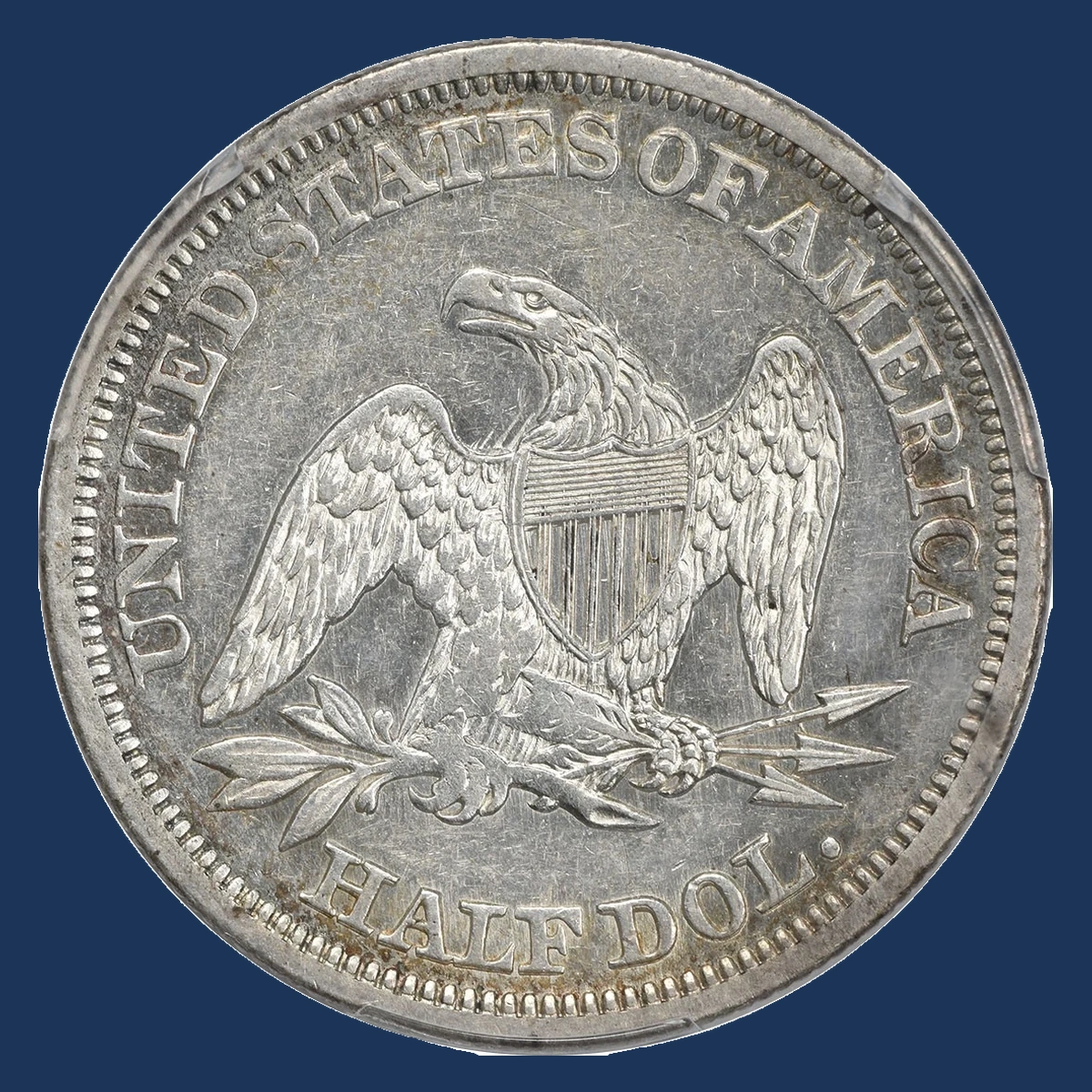
Extra outlines appear across several parts of this back design. The reported doubling involves inscriptions, denomination letters, the eagle’s head, an upper wing area, and the shield’s horizontal lines.
It belongs to Philadelphia’s Small Date coin with large back letters. Those ordinary design labels identify the coin before its extra outlines are examined.
The doubling was already in the stamping tool. Each coin it made could repeat the same arrangement of extra details.
A single thick letter is weaker evidence. Several areas should match the known pattern, rather than combining unrelated bright edges or marks from wear.
Estimated Value
Estimate $1,500–$3,500 for an attractive, clearly identified example with light to moderate wear. A report of the 2006 Jules Reiver sale gives an AU55 result of $1,600 before the buyer’s fee.
Adding the stated 15% premium makes the total $1,840. That distinction matters when comparing it with prices that already include fees.
The sale supports a specialist range for this variety. Clear repeated details and original surfaces determine how closely another coin matches the lightly worn AU55.
How to Identify
Compare several areas with Bugert’s Philadelphia photographs, using a 10× magnifier on the lettering, eagle, and horizontal shield lines. The strongest-looking spot alone is not enough.
Rounded repeated shapes differ from flat shelves made during striking or reflections that change with the lamp. Keep the Small Date front and large-letter back connected in full photographs of the same coin.
A scale should be compared with 13.36 g, and calipers with about 30.6 mm; inspect the grooved edge for alteration. The most useful quick match is corresponding extra outlines in both the letters and horizontal shield lines, rather than one thick character.
5. 1842 Liberty Seated Half Dollar Misplaced Date (Estimated Up to $4,000)
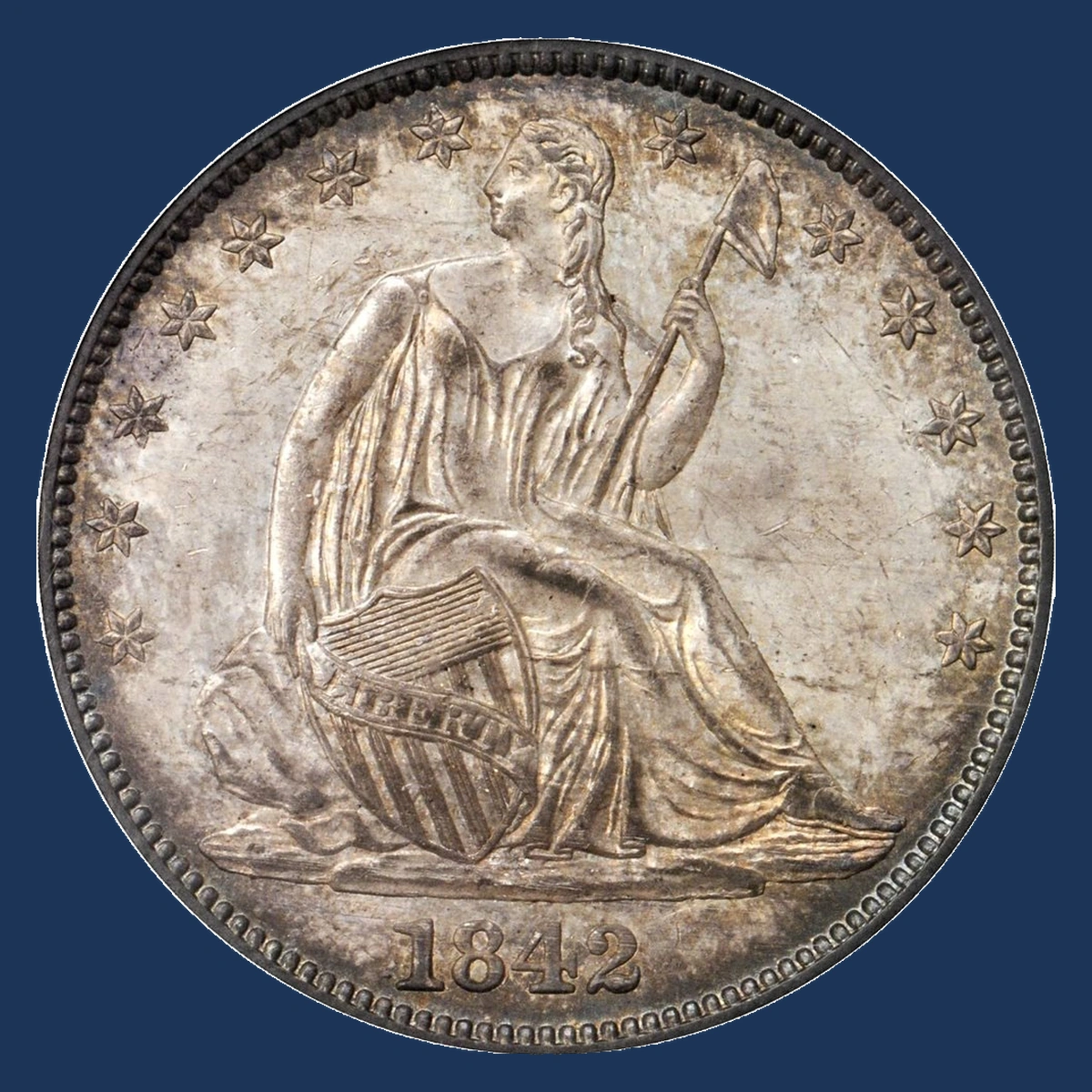
A number fragment can hide among Liberty’s skirt folds, away from the normal date. The Philadelphia Medium Date variety also has a reported remnant near the shield point.
A date punch landed in the wrong place while the stamping tool was being prepared. Coins made with it copied the remaining piece among the nearby design.
The MS64 PCGS CAC example sold in 2013 also carries extra strokes beside its normal date. MS64 means no circulation wear and few marks.
These features show different punch positions on one tool. They do not require the finished coin to have been struck twice.
Estimated Value
The 2013 Stack’s Bowers MS64 CAC sale brought $2,702.50. That one price includes the misplaced number, the repunched date, and a back crack.
Estimate $300–$900 for matching circulated examples and $2,000–$4,000 around the cited MS64 condition. The ranges separate visible variety detail from preservation.
Finding an extra number piece does not make a worn half equivalent to the auctioned coin. Its wear, marks, and full set of matching details still matter.
How to Identify
Scan the skirt lines and the area just right of the shield point with a 10× magnifier. Keep the normal date in the photograph so the stray shape retains its location.
Compare that position with a known Medium Date example. An ordinary fold, nick, or clash trace can resemble a short number piece when cropped too closely.
Move the light to see whether the shape remains raised and stable. Philadelphia coins have no mint letter; confirm the matching back design too.
A scale and calipers can check 13.36 g and about 30.6 mm on a loose coin, with a grooved edge. Look first for a recognizable number fragment in the documented misplaced position, not an unexplained extra line.
6. 1842 Liberty Seated Half Dollar Die Cracks (Estimated Up to $40,000)
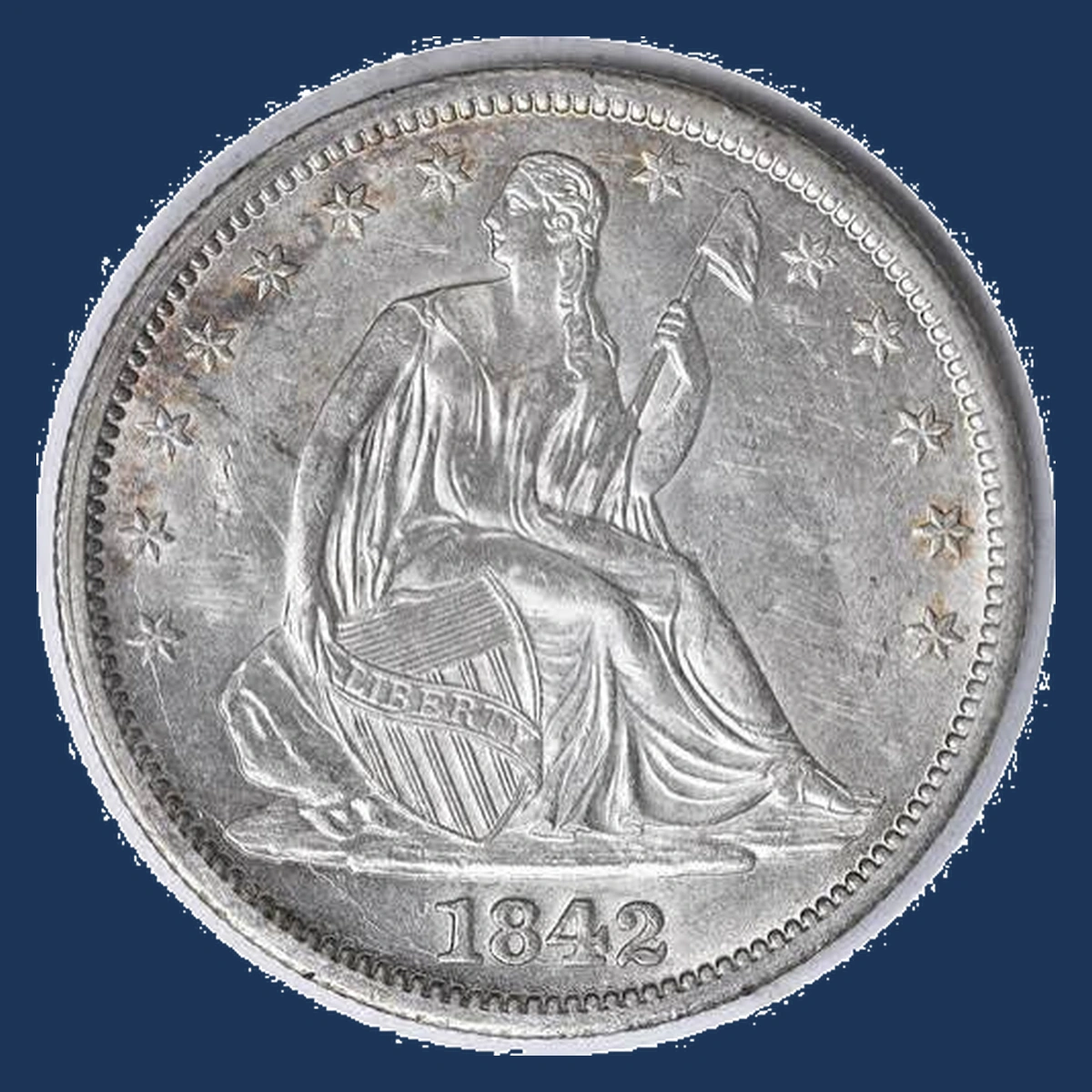
A short raised line between A and L in HALF marks the New Orleans Small Date, Small Letters example. Its back uses the older design called Reverse of 1839.
Philadelphia’s Medium Date coin shows another route. Its crack crosses the branch and stem, then continues toward the claw, wing, and UNITED.
These are separate stamping tools with separate cracks. The landmarks should not be combined into one imagined pattern.
In both cases, silver entered a split in the steel and formed a raised ridge. A scratch usually cuts down into the finished coin instead of adding that ridge.
Estimated Value
The 1842-O Small Date, Small Letters PCGS MS62 sold for $35,250 in January 2014. Estimate $25,000–$40,000 for that scarce coin type at such high preservation.
MS62 means no circulation wear but noticeable marks. The crack alone does not explain the price.
The separate Philadelphia Medium Date MS64 sold for $2,702.50 in 2013, supporting a $2,000–$4,000 comparison around that grade. Mint, date size, and back design must stay attached to each result.
How to Identify
For New Orleans, find the low O and inspect between A and L in HALF. A 10× magnifier and side lighting should reveal a raised line.
For Philadelphia, follow its branch, stem, claw, and wing toward UNITED instead. Do not move those landmarks onto the New Orleans coin.
Check the date size and back lettering together, then inspect the grooved edge for repair. A scale and calipers should be compared with 13.36 g and roughly 30.6 mm on a loose example.
Use existing measurements for a sealed coin. The direct distinction is an unbroken raised route matching the correct coin type, rather than a cut that happens to cross similar letters.
7. 1842 Liberty Seated Half Dollar Repunched Date (Estimated Up to $45,000)
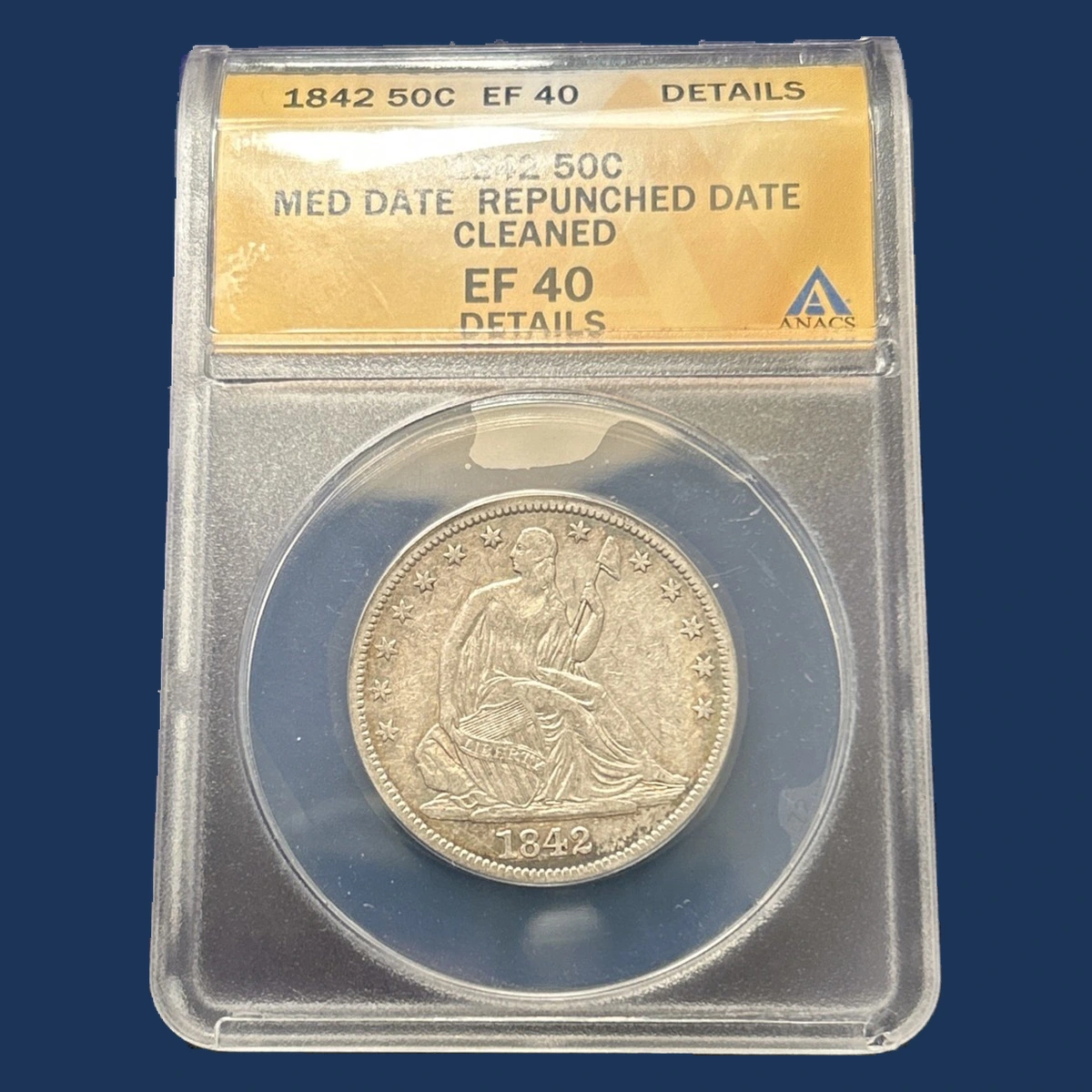
The earlier number pieces point in different directions on these two coins. The ordinary Philadelphia Medium Date example shows repunching to the right.
The Small Date proof instead has a lower remnant, strongest at 2. Its special collector manufacture makes it a different comparison.
Both patterns came from placing the date punch more than once in the stamping tool. The surrounding portrait need not be doubled.
The coin itself also need not have received a second strike. Match the exact number shape and direction to the correct example, rather than treating every doubled-looking 1842 date as the same variety.
Estimated Value
Estimate $300–$4,000 from circulated through MS64 Medium Date examples. The $2,702.50 MS64 CAC sale provides the documented better-condition comparison.
A separate Small Date PR64+ PCGS CAC proof sold for $38,400 in January 2020, supporting a $30,000–$45,000 proof range. PR64+ describes a well-preserved proof with some marks.
The scarce collector-coin identity dominates that result. It should not be applied to an ordinary worn half just because its date also has extra strokes.
How to Identify
Identify the date size and coin type before enlarging the numbers. On an ordinary Medium Date coin, compare the rightward extra strokes; on the Small Date proof, examine beneath 2.
Use a 10× magnifier to see whether the extra raised piece follows a real number shape. A flat shelf or glare along an edge can look doubled without repeating a punch.
The complete surface and design must support proof identification, not the date alone. Calipers and a scale can check a loose unworn coin against about 30.6 mm and 13.36 g.
Inspect the grooved edge too. The quickest match is the correct extra number piece in the correct direction for that proof or circulation example.
Conclusion
Estimated values span $150–$45,000 because these 1842 halves include ordinary circulated coins, scarce combinations, and rare proofs. A crack or extra number cannot be priced without identifying the whole coin.
Start with the mint, Small or Medium Date, back lettering, and proof status. Then compare the raised patch, repeated detail, or tilted back with the right example, keeping full photographs beside every close-up.