2002 Penny Error List with Pictures

A silver-colored cent helped a 2002-S Proof set, specially made for collectors, bring $6,612.50 in May 2003. That was the price for all ten coins together, with the unusual cent as the highlight.
This 2002 penny error list starts with much smaller finds, including extra lines and tiny raised lumps. Estimated values run from $2 to $8,000, depending on the error and condition.
Look through the examples below to see which details deserve a closer look.
1. 2002 Lincoln Memorial Penny Die Cracks, Chips, and BIE (Estimated Up to $300)
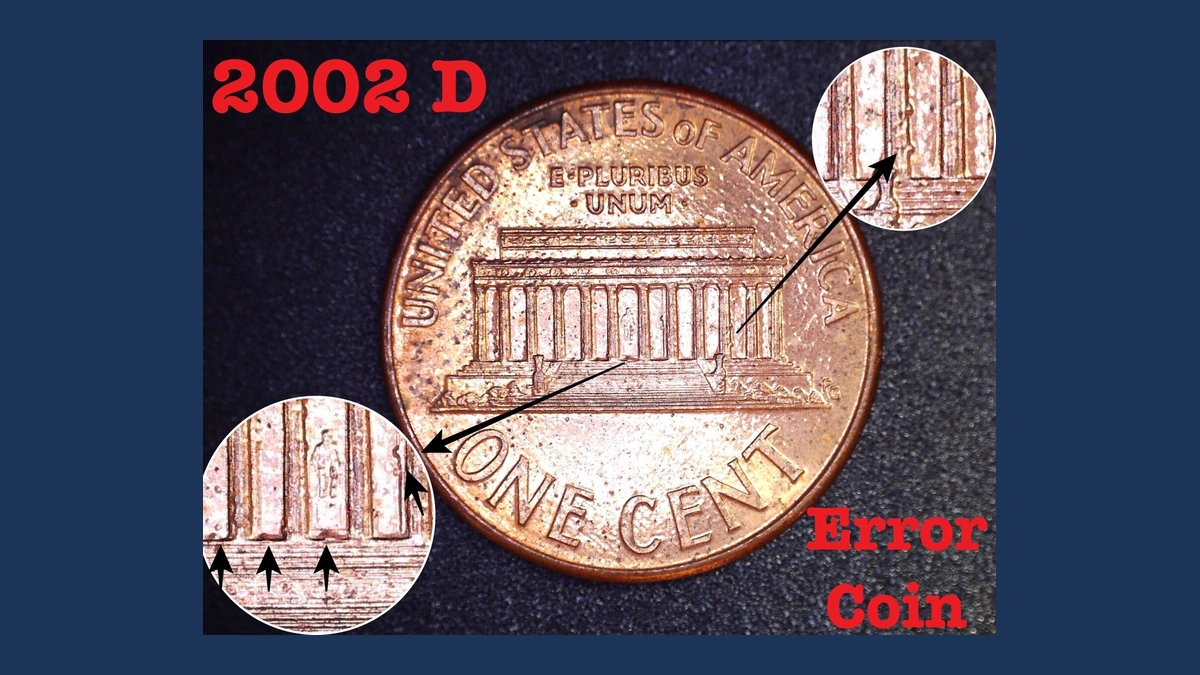
A thin raised line across Lincoln’s forehead can come from a crack in a stamping tool, called a die. Metal entered the crack when the tool pressed the design into the coin.
Other recorded lines cross the Memorial’s columns or roof. A broken piece of the tool can leave a larger raised lump instead of a thin line.
The BIE nickname describes a small lump between the B and E of LIBERTY. It is not an extra letter deliberately added to the design.
These locations describe different examples, rather than a checklist that every affected penny must pass.
Estimated Value
Allow an estimated $2–$300 across small cracks, clear BIE chips, and larger confirmed breaks. Fine lines usually sit near the bottom of that range.
A broad raised area connected to the rim can attract more interest than a tiny mark visible only under strong magnification. It needs its own evidence of a broken tool.
Do not price every forehead line as a major break. Size, visibility, and original surfaces make the practical difference.
How to Identify
Light the coin from the side and check whether the line stands above the surface. A scratch usually cuts into it, though displaced metal can rise beside the cut.
Use a 10× magnifier on the forehead, Memorial, or LIBERTY area that matches your candidate. For BIE, the raised feature belongs specifically between B and E.
Inspect the plain edge for impact damage, and look for corrosion around any unusual lump. Avoid scraping it to see whether it comes off.
A loose normal cent should be close to 2.50 g and 19.05 mm across. A scale and calipers can expose major alteration, but cannot prove a tiny crack.
The key is a raised feature continuous with the struck surface.
2. 2002 Lincoln Memorial Penny Doubled Dies (Estimated Up to $300)
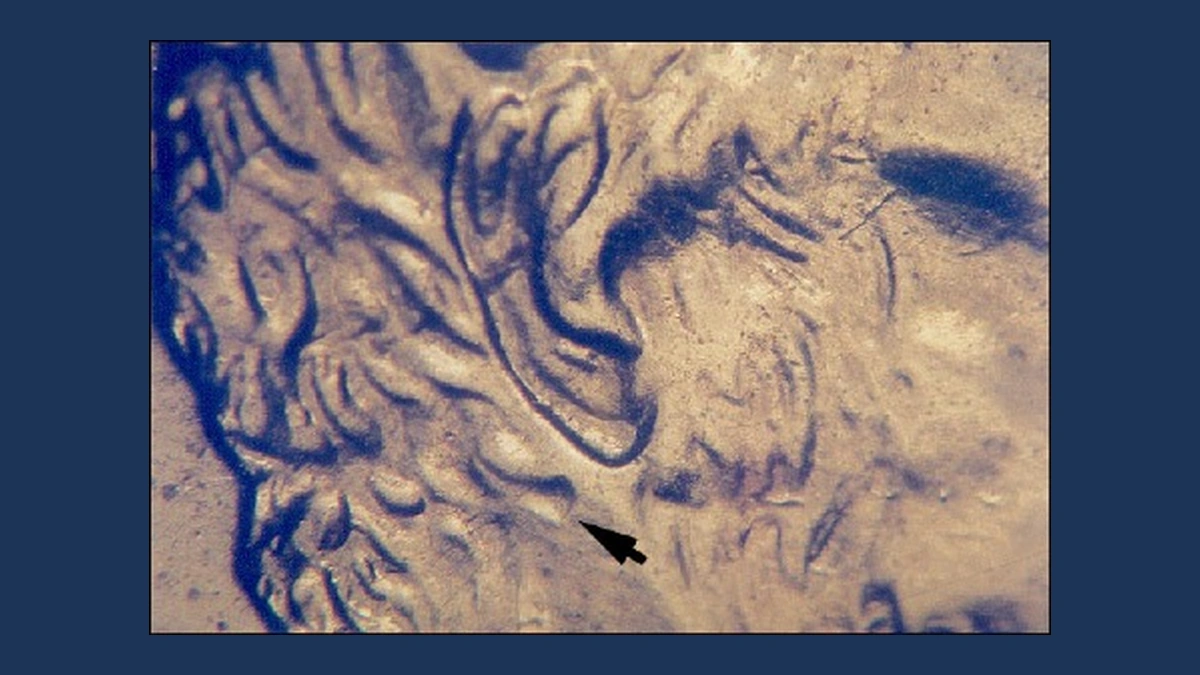
An extra curve below Lincoln’s ear is one place to begin. Another front-side variety adds hair detail near the neck instead.
A doubled die has repeated detail in the stamping tool itself, so it can place the same extra shape on many coins. The penny does not need a second strike.
On the back, Philadelphia examples show extra detail around the Memorial’s middle columns or the small seated statue. A separate Denver pattern affects E PLURIBUS UNUM and its nearby dot.
These are different patterns. A coin with an extra ear shape does not also need doubled columns.
Estimated Value
An estimated $5–$300 covers minor doubled details through clearer, well-preserved examples. The visible size of the extra design matters more than a long catalog number.
This is an estimate for the reported 2002 varieties, not a claimed auction record. Tiny column features belong toward the lower part unless a specific variety has stronger collector demand.
A flat ledge beside a letter is a different effect. It should not receive a doubled-die premium simply because it looks doubled.
How to Identify
Choose one area to inspect with a 10× magnifier: the ear, neck hair, middle columns, or Denver motto. Compare that area with the correct mint’s photographs in the 2002 doubled-die catalog.
Look for an added shape that matches the photographed pattern. Flat, shelf-like edges caused by movement during striking do not establish the same variety.
Check the date and any D below it before using a comparison. Philadelphia cents normally have no mint letter, while an S identifies a collector Proof issue.
For a loose coin, use a scale and calipers to compare 2.50 g and 19.05 mm. Examine the smooth edge and plating for damage.
Match one complete local pattern, rather than collecting unrelated extra marks.
3. 2002 Lincoln Memorial Penny Clipped Planchet (Estimated Up to $350)
A missing arc can begin before the coin receives its design. The metal disc, called a planchet, was cut from an area that overlapped an earlier hole in the sheet.
A straight missing section can have a different cutting origin. Reports for 2002 include curved clips and a straight-edged example described as an S Proof.
The shape alone cannot establish that identity. A finished penny can also lose metal through cutting or heavy damage.
An original clip may affect how the nearby rim forms. Check the missing section together with the remaining design and edge.
Estimated Value
For a genuine clip, use an estimated $20–$350. The upper end is for a clear, attractive error with stronger collector interest, rather than every missing edge.
As a recent comparison, a 2021 cent with a small straight clip sold for $114 in September 2025. That different-year ordinary strike does not price a 2002-S Proof directly.
Clip size, remaining date, and confirmation of the coin’s finish matter. A later cut has no comparable mint-error premium.
How to Identify
Examine the missing edge with a 10× magnifier before judging the percentage absent. Look for a natural transition in the struck design and rim rather than fresh cutting ridges.
A weak area on the opposite rim can support a clip attribution. Its absence alone does not rule one out.
Compare the surviving outline with a normal 19.05 mm cent using calipers. A scale should show less than the usual 2.50 g if a meaningful piece is missing.
For a claimed S Proof, confirm the S and the original collector finish independently. Normal smooth edges are expected on cents.
The useful test is whether the missing metal and surrounding strike formed together.
4. 2002 Lincoln Memorial Penny Broadstrike and Partial Collar (Estimated Up to $400)
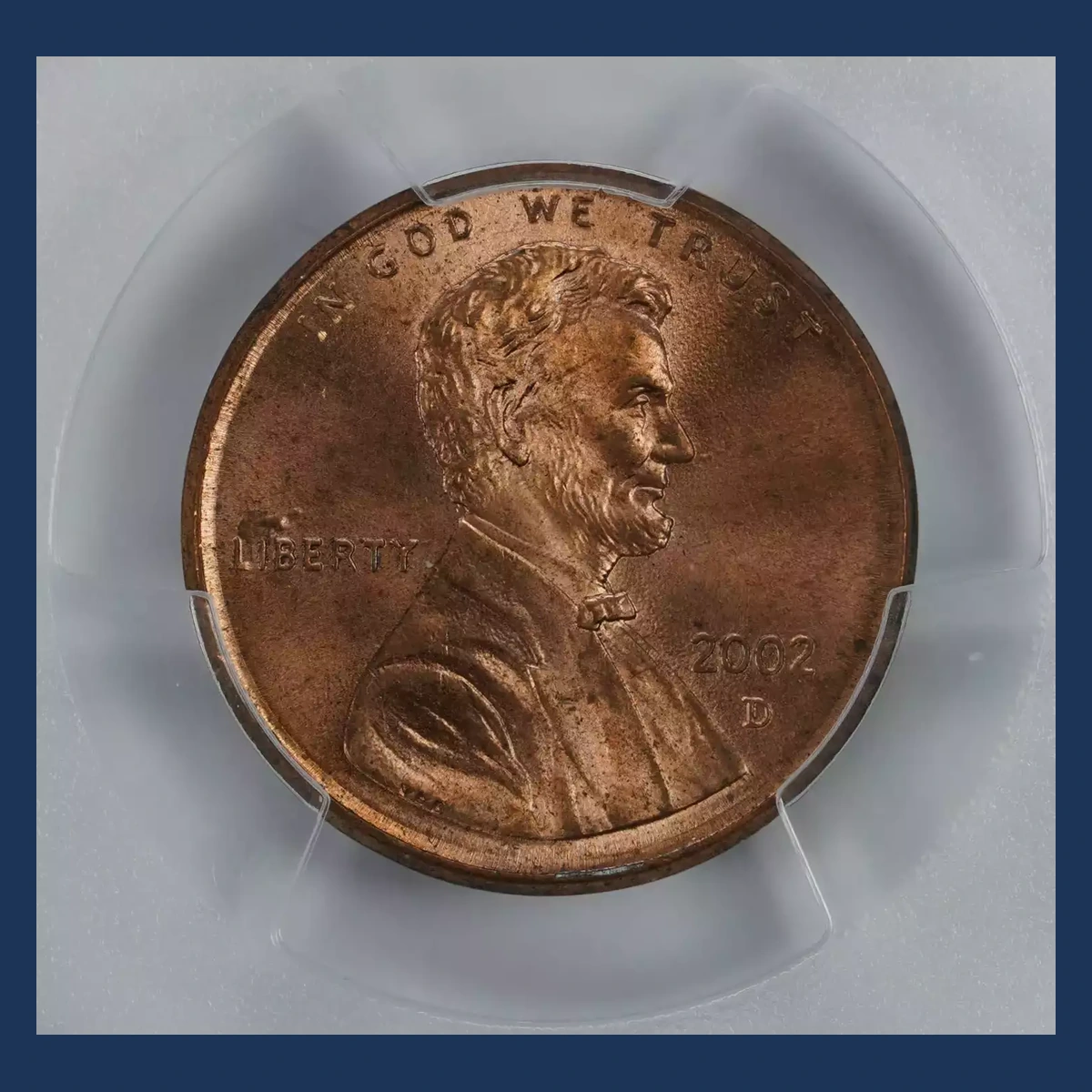
A penny can spread outward when the ring around it fails to hold the metal normally. That retaining ring is called a collar.
A broadstrike keeps the main design on an enlarged surface. A partial collar affects only part of the coin’s thickness and may leave a step around the edge.
A cataloged 2002-D example was described as a broadstrike with slight partial-collar involvement. Those observations refer to the same coin, rather than two separate finds.
The face and side views answer different questions. A wide-looking penny needs both before its edge problem can be identified.
Estimated Value
An estimated $20–$400 covers mild spreading through stronger authenticated collar errors. Clear expansion and an attractive original surface help a piece stand out.
A 1999 broadstrike graded MS65 Red sold for $67 in March 2023. MS65 describes an unworn coin’s condition, while Red refers to its remaining copper color.
That nearby-year sale is a comparison. The 2002-D combination should be valued as one coin, without adding separate broadstrike and partial-collar prices together.
How to Identify
Check whether the outer letters remain present even though metal extends beyond the usual rim. Missing design with a blank crescent points instead toward an off-center strike.
Use calipers to compare the widest part with a normal 19.05 mm cent. Inspect the side at several angles for a genuine change in edge level.
A 10× magnifier can reveal scrape marks from later flattening or edge work. A normal cent already has a smooth edge, so missing grooves prove nothing.
Weigh a loose example against 2.50 g to see whether metal was removed. Do not bend or flatten it for measurement.
Look for expanded original design and an edge shape that fits incomplete restraint.
5. 2002 Lincoln Memorial Penny Struck Through Material (Estimated Up to $500)
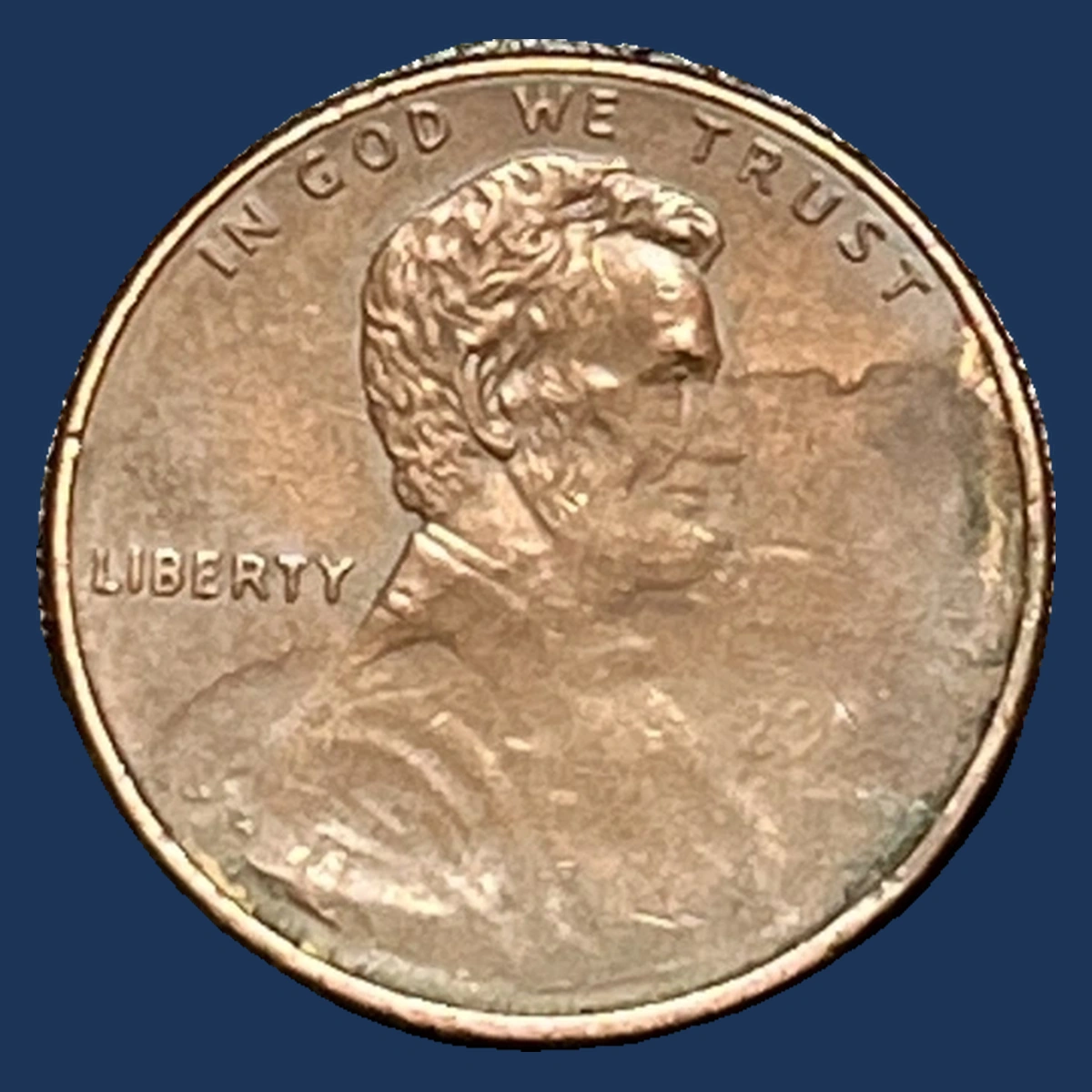
A piece of material caught between the tool and the coin can block part of the design. The resulting mark is called a struck-through error.
A 2002-S Proof has been listed with a front-side struck-through error and a PCGS PR68 Deep Cameo grade. Proof means a specially made collector coin; Deep Cameo describes strong contrast between the raised design and mirrorlike background.
A Denver grease-filled example is separately reported. Grease can soften or erase details without leaving the same outline as a solid object.
These reports should not be combined into one coin or one exact mark.
Estimated Value
Use an estimated $10–$500 for confirmed examples, with slight missing detail near the low end. A bold impression on a well-preserved Proof can bring more.
A 2017-D ordinary cent with a front-side struck-through error sold for $228 in March 2025. It offers a recent comparison for a visible mark, not a direct valuation of the 2002-S Proof.
The affected area and original finish deserve more attention than the dramatic wording on a seller’s label.
How to Identify
Follow the edge of the affected area under a 10× magnifier. Look for design blocked during striking rather than lettering scraped away afterward.
A later dent often pushes metal outward beside the impact. Grease-filled detail can be weak without that raised damage border.
Compare the whole coin with another of the same finish, especially for an S Proof. Do not assume every blank patch came from grease or assign an object shape without visible evidence.
If loose, compare 2.50 g on a scale and 19.05 mm with calipers. Check the smooth edge for signs of later pressure.
A convincing example shows how the original strike was interrupted at that location.
6. 2002 Lincoln Memorial Penny Off-Center Strike (Estimated Up to $600)
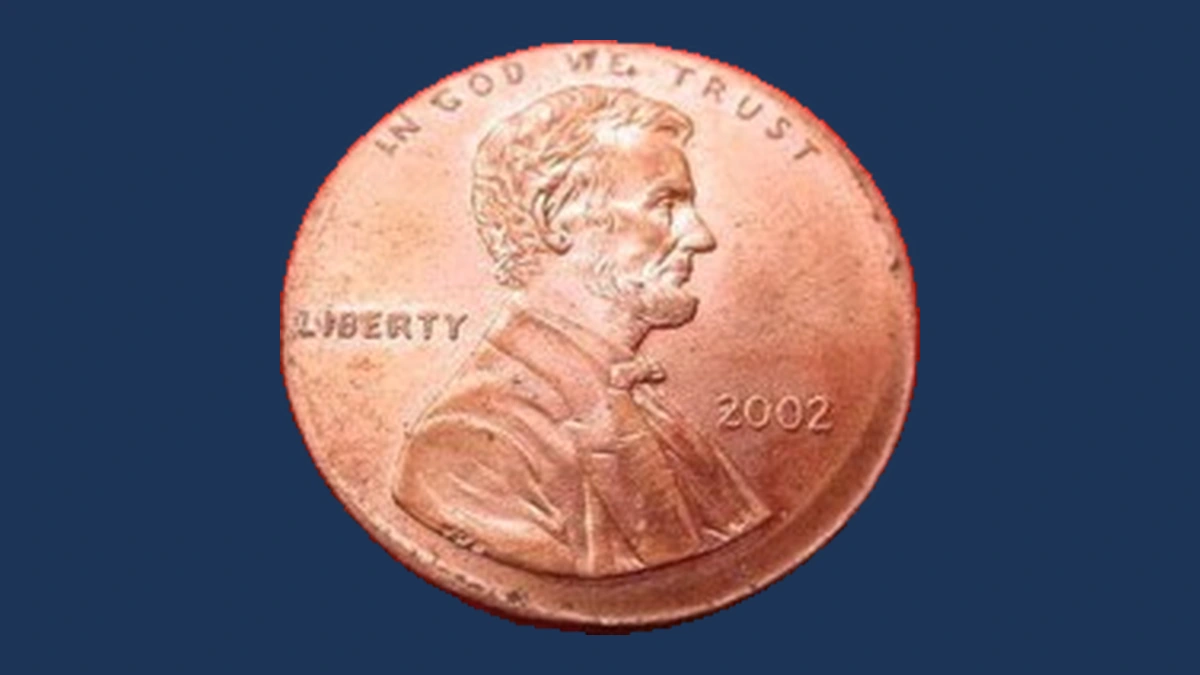
Part of the design disappears beyond the edge while an unused crescent remains on the other side. The blank was out of position when the tools struck it.
A published 2002-D example is described as about 50% off center. The visible date and D help establish which year and mint produced the remaining design.
The percentage describes the missing portion of the normal design, not missing metal. Most of the original blank may still be present.
A slightly misplaced front tool is different. It can shift one face without creating matching off-center placement on both sides.
Estimated Value
Estimate $15–$600, depending on how far the design moved and how clearly the date survives. A readable date is especially useful on a large error.
A small 4% off-center 2006 cent sold for $39 in March 2025. That nearby-year result illustrates the lower end rather than setting the price of a half-off 2002-D.
Original color and an undamaged blank area help. A dramatic outline alone is less useful if the year cannot be read.
How to Identify
Begin at the date and D, then trace the boundary where the struck design ends. A 10× magnifier can help separate faint digits from marks in the blank metal.
Turn the coin over to see whether the back design is displaced consistently. Use the whole coin to locate which side lost its design.
Compare the blank’s outline with a normal 19.05 mm cent using calipers. A scale can check whether it remains close to 2.50 g despite the shifted design.
Inspect the plain edge for clipping or later cutting. Those remove metal instead of simply moving the design.
Find a real unstruck crescent beside a displaced design, with compatible placement on both faces.
7. 2002 Lincoln Memorial Penny Missing Copper Plating (Estimated Up to $800)
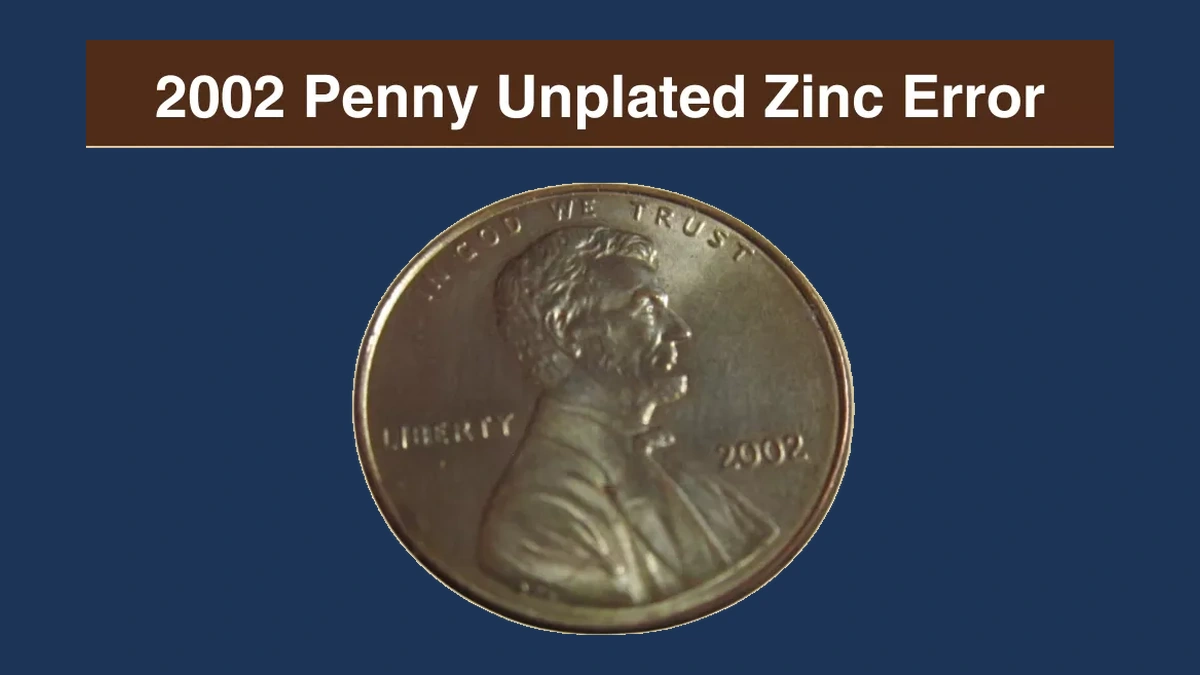
A normal penny hides a zinc center beneath a thin copper coat. If the coat is absent or incomplete when the coin is made, gray metal can remain visible.
Both fully gray and partly copper-colored 2002 cents have been reported. These appearances belong in the same broad plating category, but each coin needs its own examination.
Gray color also has common later causes, including removed copper, added coating, and corrosion. A nearly normal weight does not settle the question.
The important distinction is how the surface formed. Color alone cannot show whether copper was missing before the strike.
Estimated Value
For confirmed mint-made missing plating, estimate $25–$800. Clean surfaces and a clear explanation of the missing coat support the stronger prices.
A certified 1995 unplated cent sold for $660 in January 2023, while a 1995-D example brought $180 that March. Those nearby-year comparisons had different condition grades.
A partly gray 2002 cent should not automatically receive either amount. Chemical stripping, corrosion, and added silver-colored coating do not qualify for the same premium.
How to Identify
Look at the gray area and any copper boundary with a 10× magnifier. Search for pits, roughness, peeling, or residues that might explain later surface damage.
Inspect the letters inside the gray area as well as the open background. Avoid scraping the edge to expose the center.
Use a scale for a loose piece and compare it with the normal 2.50 g. Calipers should show an outline near 19.05 mm unless another error also occurred.
The normal edge is smooth, and a copper-free edge alone is not proof. A specialist can examine the metal and surface more closely.
Treat the gray color as a starting clue, then establish that the missing coat is original.
8. 2002 Lincoln Memorial Penny Double Strike with Rotation (Estimated Up to $1,000)
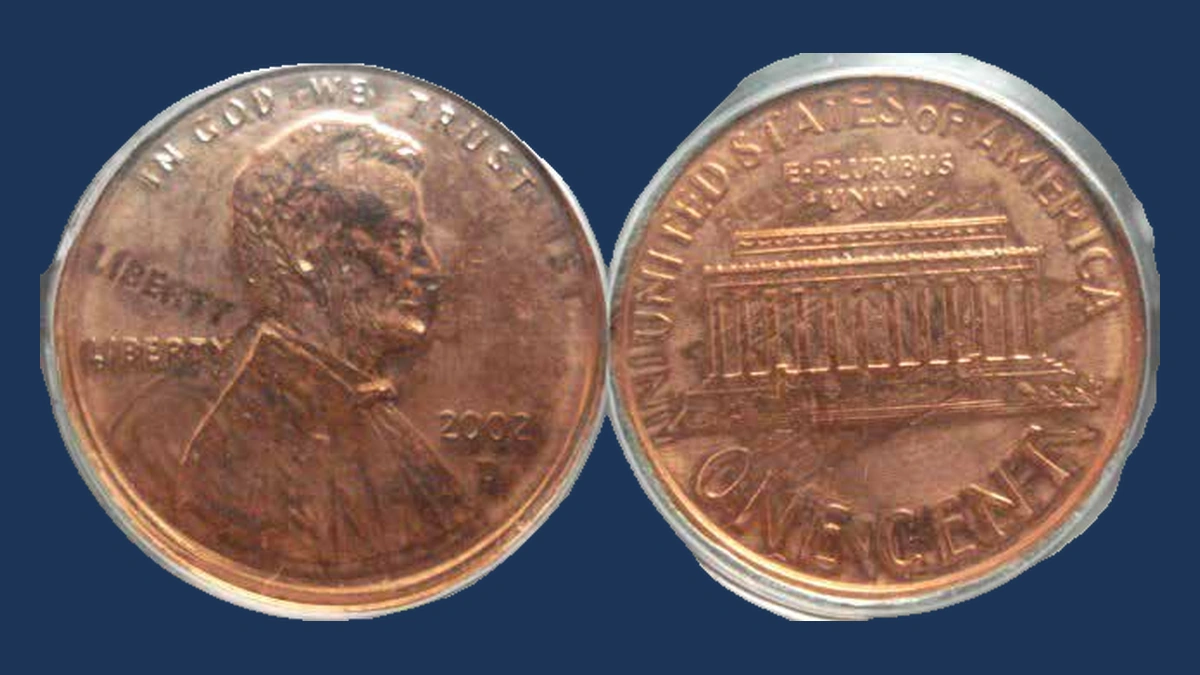
Two sets of cent details can cross at a right angle on the recorded 2002-D example. The coin turned about 90 degrees between strikes.
The second blow placed another design over the first instead of simply adding a narrow edge beside a letter. Parts of the earlier design may have been flattened or covered.
The published example carries a PCGS MS64 Red grade, meaning an unworn coin with remaining red copper color. That grade describes condition rather than the number of strikes.
The report does not establish the collar’s position. A quarter-turn by itself does not answer that question.
Estimated Value
Allow an estimated $100–$1,000 for an authenticated example with clearly separated strike positions. The amount depends on how much of both designs remains readable.
A 2000 flipover double strike sold for $408 in March 2025. Its different movement makes it a broad repeated-strike comparison, not an identical match to the 2002-D quarter-turn.
A second visible date can help, but it is not essential when other strong details establish both strikes. Minor flat doubling is a different category.
How to Identify
Find a recognizable letter or portrait feature from each strike and mark their directions in a photograph. A 10× magnifier helps trace the weaker design beneath the stronger one.
Check both faces for compatible overlap. Later squeezing between other coins can add impressions that do not fit a genuine second strike.
Use a scale to compare a loose piece with 2.50 g. Measure the changed outline with calipers against a normal 19.05 mm cent, without assuming every double strike expands.
Inspect the plain edge for tool marks and damage. Do not claim the ring was engaged or absent unless the coin provides that evidence.
The defining clue is two distinct struck-design positions roughly a quarter-turn apart.
9. 2002 Lincoln Memorial Penny Large Reverse Indent (Estimated Up to $1,200)
Another metal disc can cover most of a penny as it is struck. It leaves a broad pressed-in area where the normal design could not form.
A listed 2002-D example has an indent covering about 90% of the back, also called the reverse. The same coin is about 5% off center toward 9 o’clock when viewed from the front.
The catalog describes it as ANACS MS65 Red. The overlapping object’s denomination is not established by that description.
An indent does not require a readable mirror image. That would point toward contact with an already designed surface instead.
Estimated Value
An estimated $100–$1,200 suits an authenticated large indent, with stronger prices for a clear outline and well-preserved surfaces. The amount values the whole coin.
The off-center portion of the reported 2002-D adds context, but it should not receive a separate price added to the indent. Both features formed on one object.
This range is a comparison-based estimate for modern cent indents. It is not a claimed selling price for the old inventory listing.
How to Identify
View the back under angled light and trace the boundary of the broad depression. A 10× magnifier can show where surviving design meets the blocked area.
Check the front for the reported small displacement toward the left, or 9 o’clock. Keep that viewing direction separate from the back’s orientation.
Look for later crushing, sharp tool cuts, or displaced metal that does not fit the strike. Do not assign a denomination to the overlapping disc from size alone.
A loose cent can be compared with 2.50 g on a scale and 19.05 mm using calipers. Examine the smooth edge as part of the whole shape.
Confirm a broad blocked-design area that belongs to the original strike.
10. 2002 Lincoln Memorial Penny Die Cap (Estimated Up to $1,500)
A coin that sticks to a stamping tool can start taking on a cup shape. Later blows stretch its sides while it remains attached.
This object is called a die cap because it covers the tool like a small cap. A 2002-D example has been reported with an MS65 condition grade.
The cap itself differs from a flatter coin struck beneath one. On that second coin, the cap blocks the normal tool design rather than becoming the coin’s raised walls.
A bent penny can imitate the outline. The stretched original design needs to support the cap-shaped structure.
Estimated Value
Estimate $100–$1,500 for a confirmed cap, depending on its depth, remaining design, and condition. A dramatic but damaged shape may be less desirable than a cleaner example.
A 2000 front die cap graded MS64 Red sold for $312 in June 2025. That nearby-year result provides a recent comparison without assigning the same grade or shape to the 2002-D report.
Artificially cupped coins do not belong in this range. The original strike history must support the shape.
How to Identify
Examine the cup’s interior and sides together with a 10× magnifier. Look for continuous stretched metal and surviving design rather than a sharp bend forced through finished lettering.
Do not pull the sides outward or press the coin flat. Those changes can destroy the evidence that makes a cap identifiable.
For a loose specimen, weigh it against 2.50 g and record its shape gently with calipers. The starting cent was 19.05 mm across with a plain edge.
Identify the cap’s side from the surviving interior design, not from an unsupported label. A sealed coin should remain in its holder.
Look for a struck design that stretches naturally into the cap walls.
11. 2002 Lincoln Memorial Penny Cent Struck Over a Dime (Estimated Up to $4,000)
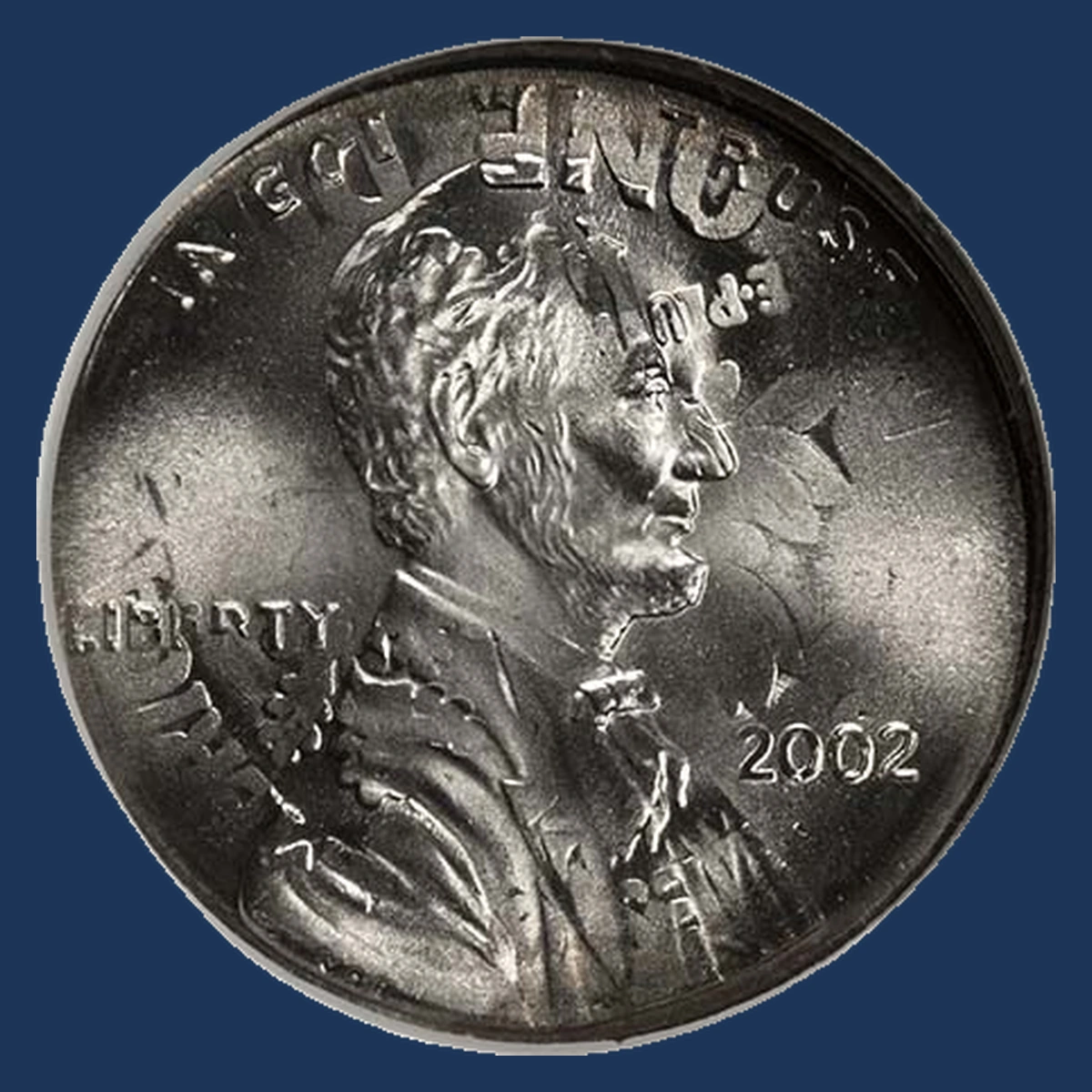
A trace of Roosevelt or the dime’s torch beneath Lincoln’s design points to a different starting object. Here, a finished dime entered the cent press.
A published 2002 example carries an NGC MS67 grade. Its earlier dime design separates it from a cent struck on an unused dime blank.
The two face values make this a double-denomination error. The original dime’s year and mint need to be read from the specimen rather than borrowed from other illustrated coins.
Both sets of designs may be partly flattened. Even small surviving dime details can explain what happened when they are clearly recognizable.
Estimated Value
For an authenticated cent over a dime, use an estimated $800–$4,000. Clear evidence of both denominations and strong surface preservation help support the higher amounts.
A 2001 cent struck over a 2001-P dime sold for $1,320 in September 2025. Its MS66 grade and different year make it a comparison, not the price of the published 2002 MS67 example.
The value depends on the actual combined design. Two unrelated coins pressed together later do not qualify.
How to Identify
Start by locating one unmistakable dime feature underneath the cent design. A 10× magnifier can help follow Roosevelt’s outline, torch detail, or surviving dime lettering.
Photograph both faces and separate the older design from the newer strike. Do not invent an underlying date where the remaining marks cannot show it.
A scale can compare the loose coin with a clad dime’s normal 2.268 g, rather than the cent’s 2.50 g. Calipers can record expansion from the dime’s original 17.91 mm diameter.
Inspect the edge for surviving or distorted dime grooves and for seams that suggest assembly.
Confirm a genuine earlier dime design beneath the later cent strike, supported by the metal and edge.
12. 2002 Lincoln Memorial Penny Proof Cent on a Dime Blank (Estimated Up to $8,000)
A silver-colored cent can stand out sharply inside a copper-colored Proof set. In this error, the cent tools struck the wrong unused metal disc.
A 2002-S example appeared in a ten-coin set sold in 2003. The auction described the cent as ungraded by a certification service and thought the disc was a clad dime blank.
Another listing describes an NGC PR66 Cameo example weighing about 2.3 g. These records should not automatically be treated as the same coin.
A blank has no earlier dime design. Normal repeated blows used to make Proof coins are also not separate double-strike errors.
Estimated Value
An estimated $3,000–$8,000 reflects the unusual Proof format and wrong metal. It applies to an authenticated example, not any gray cent.
The 2003 ten-coin set brought $6,612.50 on May 31. That total cannot be quoted as a separate cent sale.
Its PR66 Deep Cameo description was the auctioneer’s assessment, not a PCGS grade. A recent $600 sale of a 2007-D ordinary dime-blank cent is a different production format.
How to Identify
Confirm the 2002 date, S, and original Proof finish before comparing the metal. Proof coins are specially prepared collector pieces, rather than ordinary cents made shiny by polishing.
Use a 10× magnifier to examine the outer letters and the edge. A clad dime blank has bonded outer layers around copper, unlike a normal cent’s copper-coated zinc.
For a loose piece, compare its weight with 2.268 g and its starting diameter with 17.91 mm. A normal cent is 2.50 g and 19.05 mm.
An unused dime blank has no previously struck torch, portrait, or edge grooves. Do not open an original set just to measure it.
Confirm wrong blank metal together with genuine Proof cent designs.
Conclusion
Estimated values of $2–$8,000 cover very different finds, from a small raised chip to a Proof cent on the wrong metal. Most unusual-looking pennies belong near the modest end, if they are mint errors at all.
Start with the shape, then examine the design and metal. Keeping those clues separate makes it easier to tell a shifted strike from a damaged edge, or a wrong blank from missing copper.