1992 Penny Error List with Pictures

The small gap between A and M can matter more than a badly misshapen coin. One 1992 Close AM penny brought $25,850 at auction in January 2017.
That rare back design is only one part of this 1992 penny error list. Other examples have copper bubbles, missing design, or even a dime underneath Lincoln.
Estimated values run from $2 to $30,000, depending on the type and condition. Use the comparisons below to learn what changed and where to look.
1. 1992-D Lincoln Penny Wavy Steps (Estimated Up to $50)
The Memorial steps can look wavy instead of straight. Short lines may also seem to trail away from the normal design.
This Denver variety was once listed as a doubled back design. Coppercoins later removed that listing and placed it with trail varieties.
The change matters when comparing photographs. Wavy lines are not the same feature as an extra partial column between two normal columns.
The coin still carries a manufacturing variety worth examining. It should be described by its step pattern, without promising the stronger doubling seen on other pennies.
Estimated Value
Use an estimated $5–$50 for a clear, matching wavy-step example. This is a modest variety estimate, not a recorded auction price for this exact Denver coin.
A close photograph of the steps is particularly useful before buying. General wear around the building is much less convincing.
The upper end suits a sharp, attractive example with the correct pattern. An expensive doubled-die label should not replace a comparison of the actual lines.
How to Identify
Find the D below the date, then turn to the building. Under a 10× magnifier, follow the steps across the base rather than starting with the roof.
Compare a normal 1992-D penny beside it. Look for repeated waviness and small extensions tied to the design, not random scratches across it.
A die is the steel tool that stamps a coin. This variety concerns the pattern left by that tool, so the coin should retain ordinary dimensions.
On a safely accessible example, use a scale and calipers to compare with 2.50 grams and 19.05 mm. Check the smooth edge too.
The key comparison is the same uneven step pattern on another identified example.
2. 1992 Lincoln Penny Blistered or Peeling Copper (Estimated Up to $75)
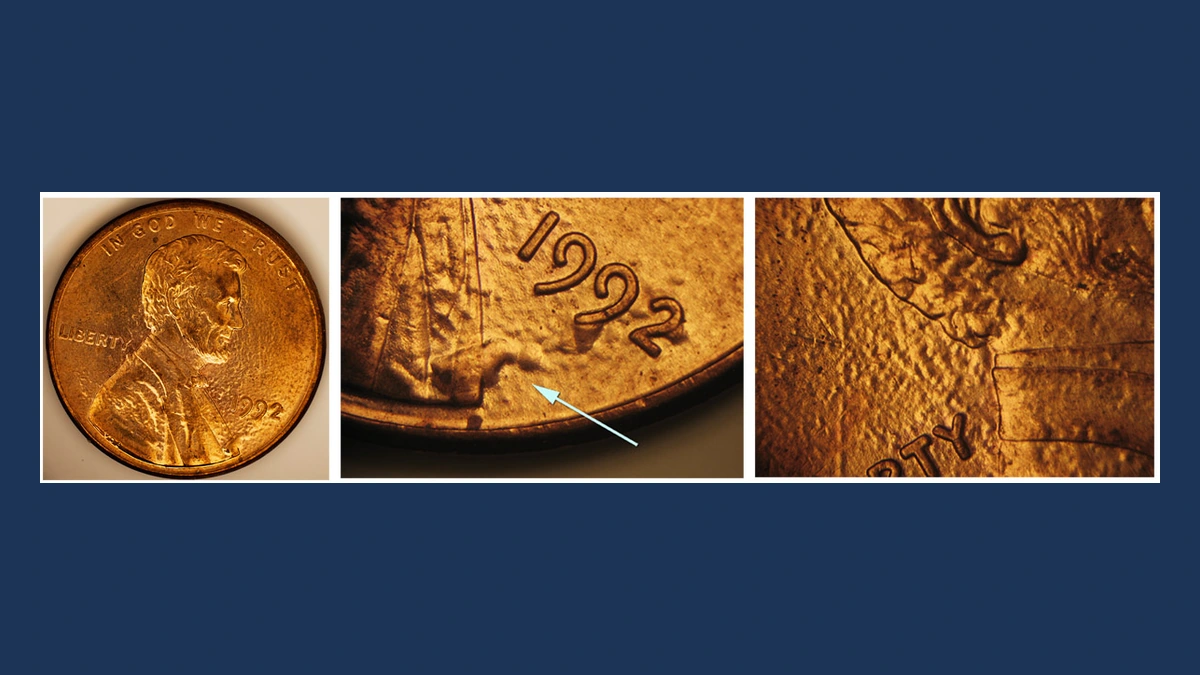
Copper is only a thin skin on this penny. When that skin lifts, it can form a bubble or pull away from the zinc underneath.
A photographed 1992 example has round and oval blisters. Its largest irregular bubble crosses Lincoln’s coat and reaches below the date.
Peeling copper is also reported for the year. Although sometimes called lamination, this involves the coating rather than a thick layer inside a solid copper coin.
These shapes differ from a solid bump made by a chipped stamping tool. Pressing a bubble can damage the very feature being examined.
Estimated Value
Small mint-made bubbles or peeling patches can fit an estimated $2–$20. Larger, clearly visible defects on otherwise attractive pennies can reach approximately $20–$75.
Those amounts compare minor coating problems on modern zinc cents. They are not sales assigned to the photographed 1992 blister.
Preserved copper around the defect helps explain what happened. Heavy corrosion or later chemical damage can destroy that evidence, and a larger bare area does not automatically deserve a higher price.
How to Identify
Use light from the side to see whether the copper forms a rounded shell. Keep your fingers and tools away from the raised area.
The pictured blister reaches from the coat into the open area below 1992. Other bubbles on that coin are smaller and more rounded.
For peeling, inspect the thin copper edge and the zinc beneath with a 10× magnifier. Rough eaten-away metal suggests corrosion rather than a clean lifted skin.
Weigh an accessible coin against 2.50 grams and measure against 19.05 mm using calipers. Inspect its normally smooth edge for coating loss as well.
A thin lifted copper skin identifies the coating problem; a thick solid ridge needs a different explanation.
3. 1992 Lincoln Penny Doubled Designs (Estimated Up to $150)
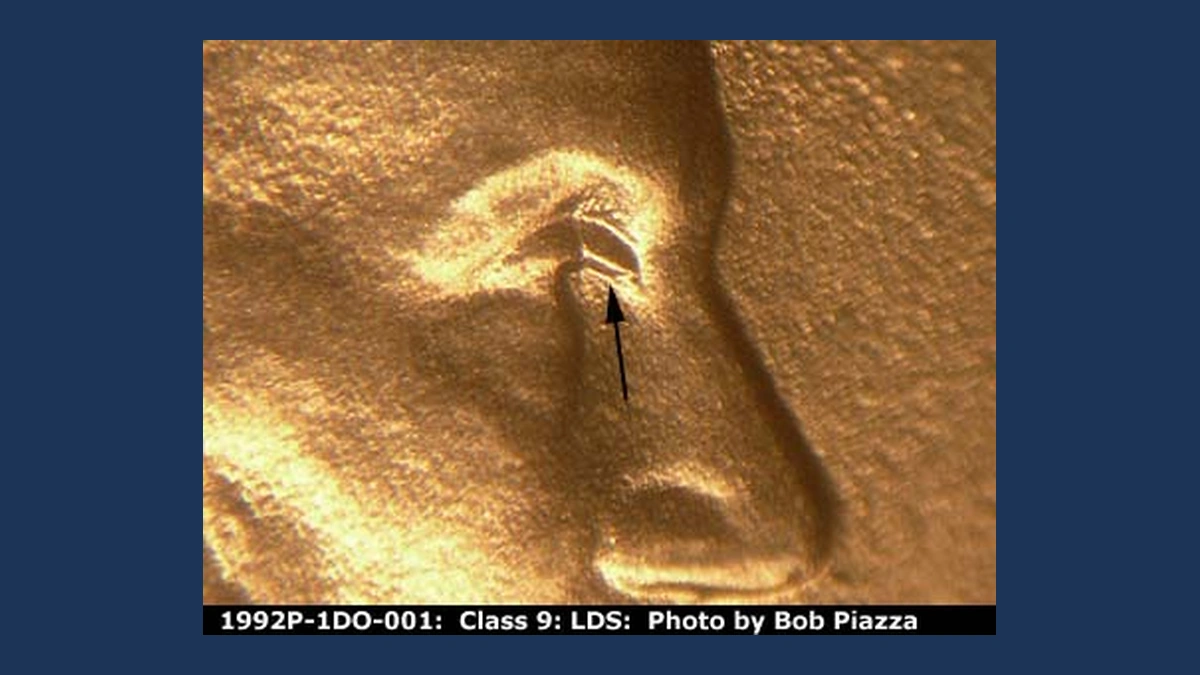
Look between the Memorial columns, not just at the date. Several 1992 varieties show extra pieces of columns or repeated parts of Lincoln’s tiny statue.
Other examples have thicker, split lettering on the front or back. A doubled die carries these repeated details before it stamps the coin.
Philadelphia and Denver examples have different patterns. One Philadelphia variety repeats a knee beside the statue’s feet; some Denver coins repeat lettering in ONE CENT.
The extra-eyelid variety needs separate treatment within this comparison. Specialists disagree whether its raised feature came from doubling or a mark in the tool.
Estimated Value
Minor identified doubled designs can be estimated at $5–$50. Stronger, sharp examples can fit approximately $50–$150, using comparable small Lincoln varieties.
These are estimates, not verified sales for every listed column pattern. An unworn coin with a clear feature is easier to compare than a worn photograph.
For the disputed eyelid alone, use a more modest $2–$30 estimate. Its appearance should not be priced as proven doubling simply because an older listing used that name.
How to Identify
Philadelphia coins have no mint letter; Denver coins have D. Choose the correct comparison before checking the date, motto, or building.
With a 10× magnifier, examine the statue and the gaps between columns. Match the actual extra shape rather than combining features from several different varieties.
Front doubling can thicken the date, LIBERTY, and IN GOD WE TRUST. Flat shelves from strike movement and pale split copper lines are common lookalikes.
The disputed eyelid bump does not confirm the separate lettering variety. Keep its raised eye detail distinct.
A scale, calipers, and an edge view should show the ordinary 2.50-gram, 19.05-mm, smooth-edged cent. A matching repeated letter corner or partial column is the useful finding.
4. 1992 Lincoln Penny Die Clash (Estimated Up to $150)
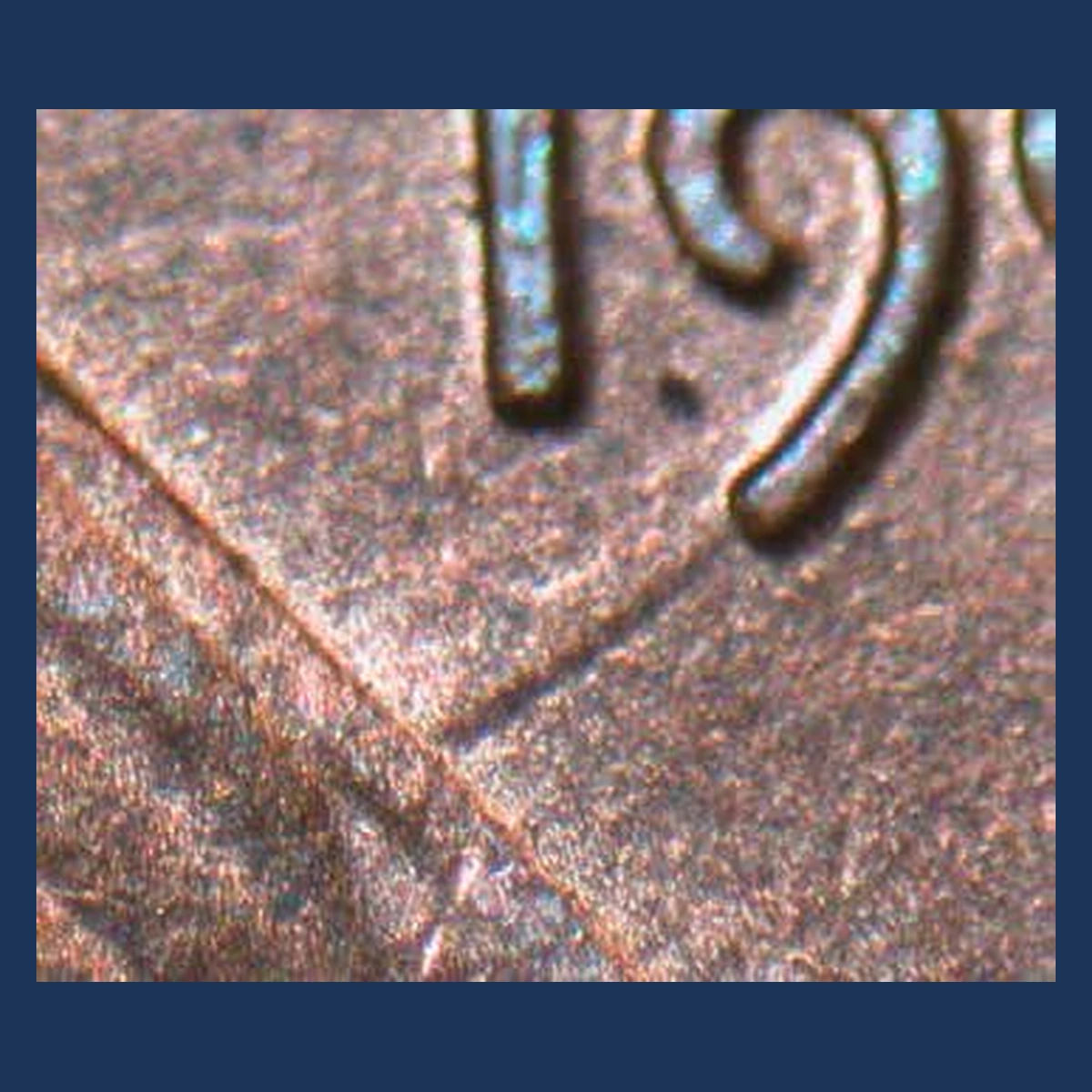
A few building lines beside Lincoln’s head can come from the other side of the coin. They are not necessarily a second strike.
The two stamping tools can hit each other when no blank is between them. Each may pick up part of the opposite design.
Later pennies then carry those faint transferred shapes. Known 1992 examples range from small traces near the neck to several shifted sets of lines.
One variety mainly shows the effect on the back after the front tool was replaced. Therefore, a matching mark on both faces is not always present.
Estimated Value
Faint but identifiable clash marks can fit an estimated $5–$30. Stronger transferred shapes or several clear sets can support approximately $30–$150.
The estimates compare modern Memorial-cent clashes; they do not assign a sale to each catalog number. Visibility is more useful than the number of arrows on a photograph.
A well-preserved coin may show more of the transferred design. Polishing of the stamping tool can remove parts, leaving a genuine but less dramatic example.
How to Identify
An ordinary 1992 penny should measure about 19.05 mm and weigh 2.50 grams. Check with calipers and a scale when safely accessible, then examine the smooth edge.
Now look behind Lincoln’s head and around his neck using a 10× magnifier. Building-like lines should correspond to parts of the Memorial on the opposite design.
On the back, check the columns, base, and nearby letters for faint portrait shapes. Several displaced outlines can reflect repeated tool contact rather than repeated blows on this coin.
Do not reject a back-only example just because the front looks normal. The useful clue is a recognizable piece of the opposite design in the correct position.
5. 1992 Lincoln Penny Curved Clip (Estimated Up to $150)
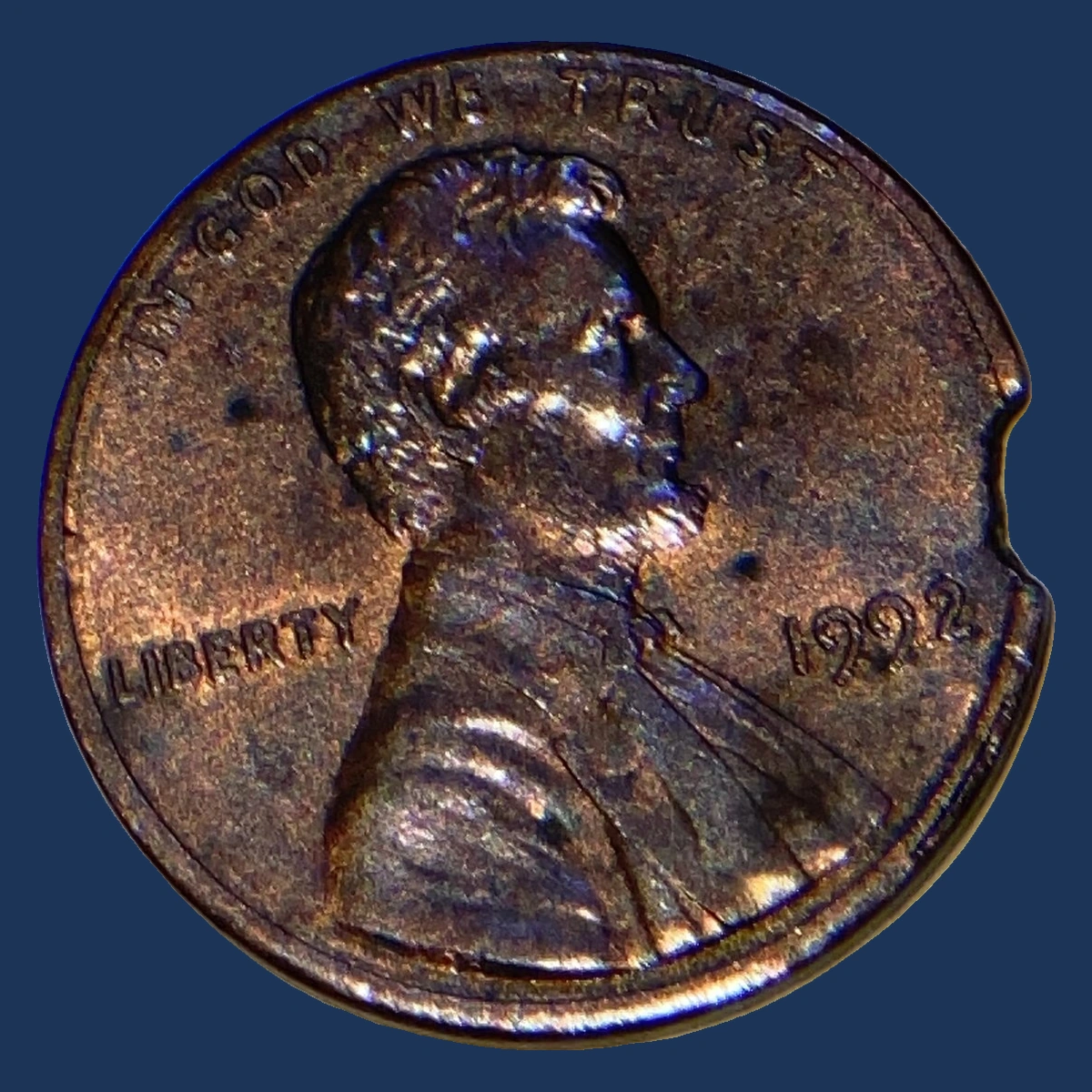
A curved piece can be missing before Lincoln is stamped onto the metal. This begins when a blank is punched from a sheet too close to an earlier hole.
The punch cuts an incomplete disc. Later striking leaves a penny with a curved gap rather than a complete circle.
Curved clips are reported for 1992, without one fixed mint or gap position applying to every example. The missing area needs its own close examination.
This is different from the unusual matching pair of pieces described later. That pair was cut apart during striking, after the blank had been made.
Estimated Value
For a genuine curved clip, estimate $10–$150. Smaller gaps on worn coins belong nearer the lower end; a clear original cut and readable date help stronger examples.
A 2021 cent with a five-percent straight clip sold for $114 in September 2025. It offers a recent small-clip comparison, although its cut shape and back design differ.
That sale is not evidence of a particular 1992 location or percentage. Later cutting does not qualify for this range.
How to Identify
Follow the missing curve with a 10× magnifier. Look for original metal at the cut rather than saw marks or a freshly filed surface.
The rim may be weak on the opposite side, but that clue alone does not prove a clip. Study how nearby lettering and the rim approach the missing area.
A scale should show less than the normal 2.50 grams when enough metal is absent. Use calipers along the surviving full width to compare with 19.05 mm.
Examine the rest of the normally smooth edge and retain a clear view of 1992. The curved gap must show that metal was missing before the design was struck.
6. 1992 Lincoln Penny Cracks, Chips, and Cuds (Estimated Up to $250)
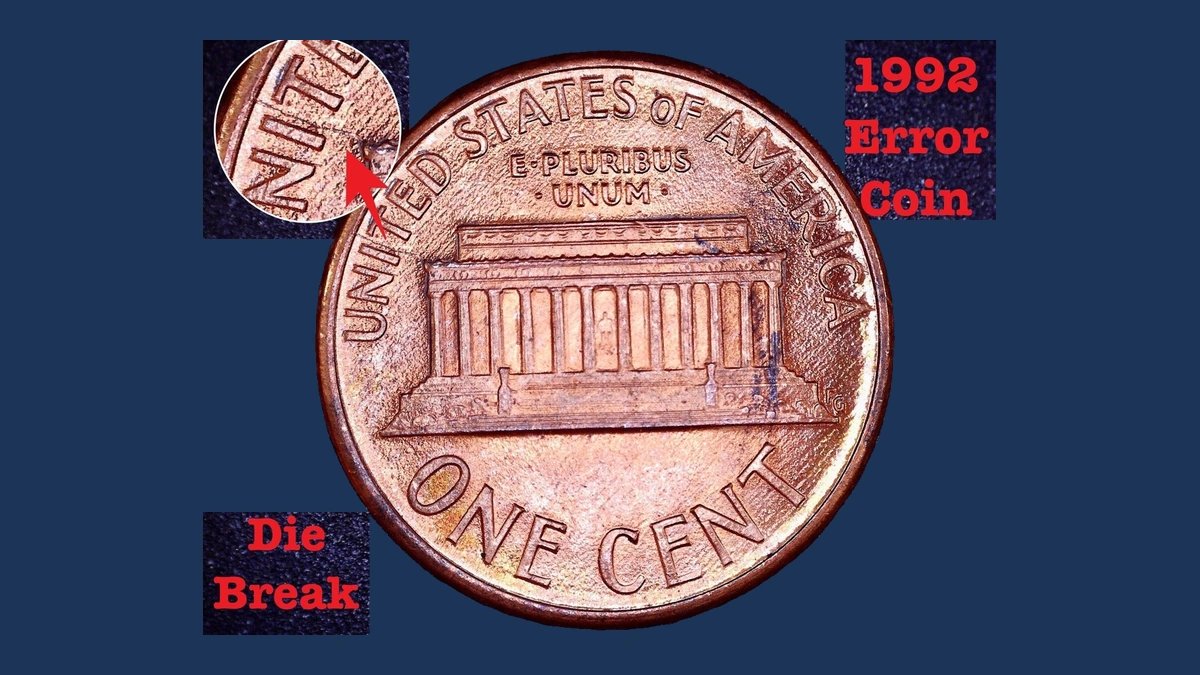
A thin raised line can grow into a much larger patch when a stamping tool breaks. Small missing pieces leave blobs; an edge-connected break is called a cud.
The 1992 examples include narrow rim breaks and a larger patch reaching into the left side of LIBERTY. Other coins have interior bumps or lines across the back.
Tiny letter-gap chips also occur. A bar between B and E earns the nickname BIE.
Chips near L, I, or TY are different shapes, even though the same general process produced them. They should not all be called BIE.
Estimated Value
Fine cracks and small letter chips can fit $2–$25. Larger raised patches can be estimated at $25–$250, depending on their size and the coin’s condition.
For comparison, a 2021-D retained cud sold for $186 in September 2025. On a retained cud, a cracked piece of the tool remained in place.
That newer Shield cent illustrates demand for a visible break, not a sale of the 1992 examples. A tiny TY chip should not receive the same price.
How to Identify
Start with the edge if a large patch is present. A cud reaches the rim; an isolated interior bump does not.
For a BIE, locate B and E in LIBERTY and inspect the space between them. Compare chips near other letters by their actual positions.
A 10× magnifier and low light show whether a line rises above the surface. Scratches usually cut into it, while copper bubbles can look rounded and hollow.
Check ordinary size and weight with calipers and a scale: 19.05 mm and 2.50 grams. Inspect the smooth edge without scraping any raised feature.
The original raised line or solid patch, connected to the right part of the design, separates tool damage from a random surface mark.
7. 1992 Lincoln Penny Struck Through Material (Estimated Up to $300)
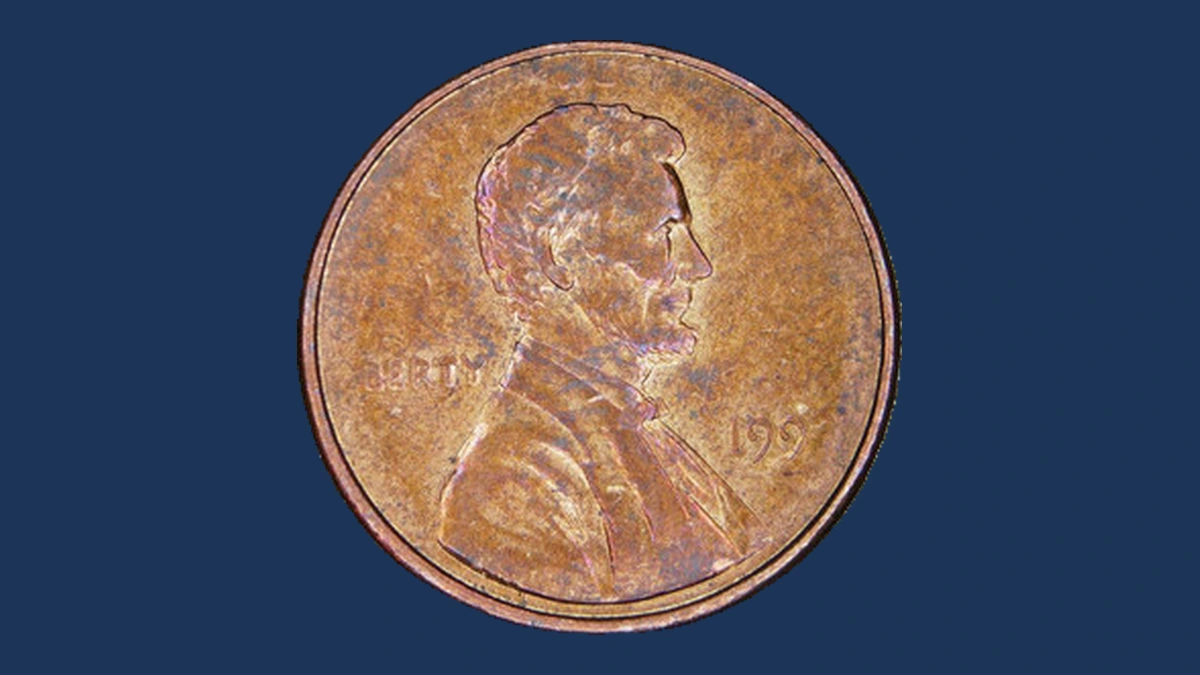
An object between the blank and a stamping tool can keep the design from reaching the metal. Collectors call this a struck-through error.
A certified 1992 Philadelphia example has the effect on the front. Its listing does not identify the object, so the mark should not be called a wire or cloth impression.
Grease is another possible obstruction. A collector reported a minor 1992 example with weak detail and signs of tool wear.
That report is separate from the certified coin. Neither description means that every weak letter on a 1992 penny was blocked by grease.
Estimated Value
Minor grease-related weakness can fit an estimated $5–$30. A clear, larger struck-through depression on an attractive coin can fit approximately $30–$300.
A 2021-D grease-struck cent sold for $84 in September 2025. It provides a recent comparison with a different back design, not the price of the reported 1992 coin.
Depth, visibility, and original surfaces affect the estimate. An ordinary worn letter or a dent made after minting should not be priced as the same error.
How to Identify
Compare the affected area with nearby sharp detail. An obstruction can interrupt one place while leaving the surrounding design well formed.
Use a 10× magnifier to examine the depression’s border. A later hit may shove metal into a raised lip or flatten existing detail.
For weak lettering, check whether wear affects the rest of Lincoln too. Do not name a missing word unless it can actually be seen on this coin.
The normal smooth edge, 2.50-gram weight, and 19.05-mm diameter remain useful checks with a scale and calipers. Keep certified coins sealed.
A local gap in an otherwise sharp struck design is the starting clue; the shape should also support an obstruction rather than later damage.
8. 1992 Lincoln Penny Broadstrike (Estimated Up to $350)
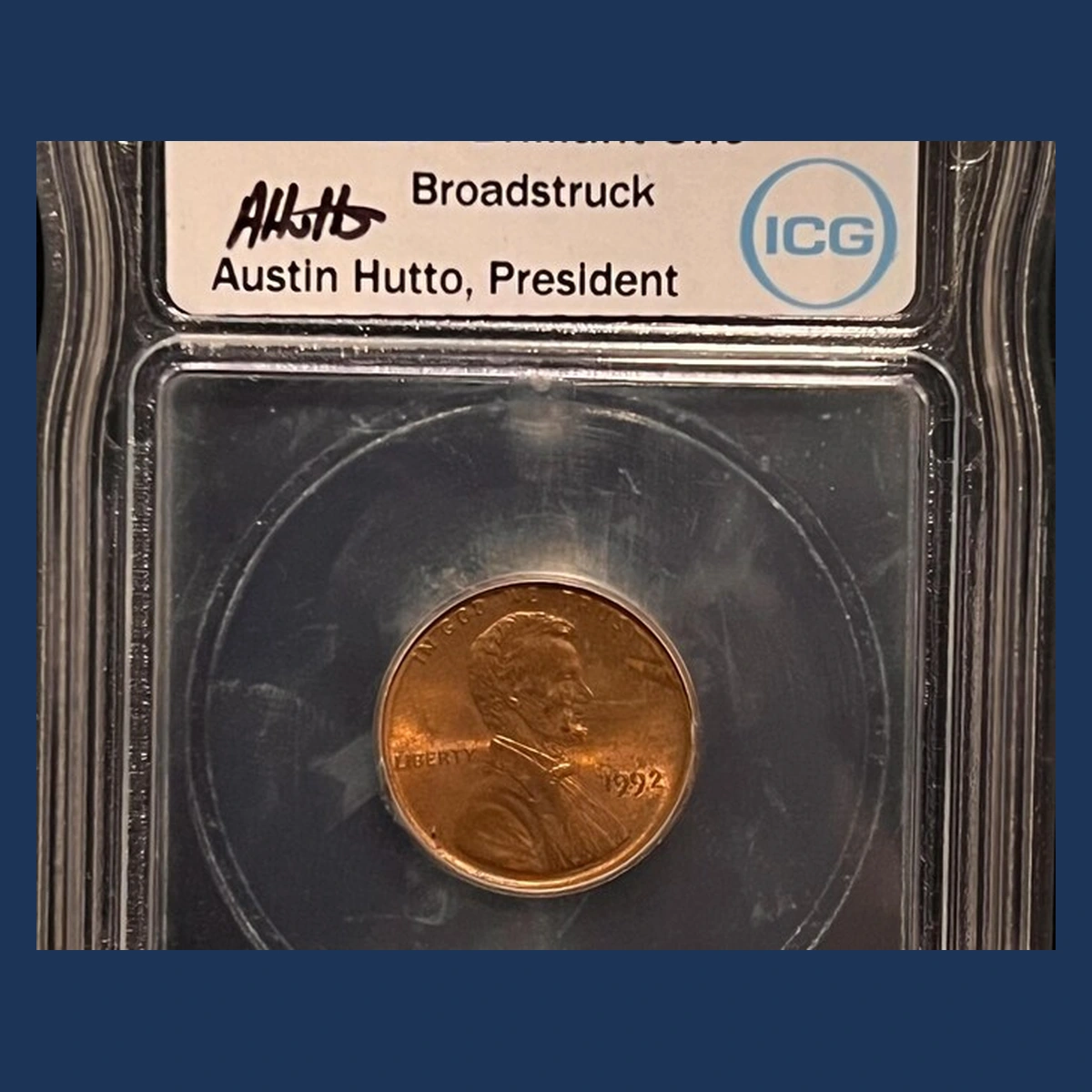
The whole Memorial can remain visible even when the penny looks too wide. That combination points toward a broadstrike.
A metal ring normally restrains the blank during striking. Without that restraint, metal spreads outward and the border becomes wider or uneven.
A certified 1992 Philadelphia example has been offered with this error. It retains the cent design instead of losing part of it beyond the blank.
An off-center strike can also leave extra plain metal, but cuts off some design. A coin flattened afterward may be wider too, so width must be checked together with the surviving detail.
Estimated Value
An estimated $20–$350 covers modest to stronger broadstrikes with original surfaces. The spread should be clearly visible, while the lettering remains part of the original strike.
A 1999 Memorial-cent broadstrike graded MS65 Red sold for $67 in March 2023. That means an unworn coin with few marks and its original copper-red color.
The same-design comparison is useful for ordinary examples. More dramatic expansion or exceptional preservation can change the result, so the 1999 amount is not a fixed 1992 price.
How to Identify
Place a normal penny beside the suspected broadstrike without rubbing their surfaces. Compare the outer border, then check that the date and back lettering remain complete.
Calipers can measure the expanded outline against the usual 19.05 mm. A scale should remain near 2.50 grams because spreading does not itself remove metal.
Look closely at Lincoln and the Memorial with a 10× magnifier. Later crushing tends to flatten these raised details rather than create a naturally expanded struck border.
Inspect the smooth edge for signs of hammering or filing. An uneven outline can still be genuine.
The strongest clue is extra width around a complete, naturally struck design.
9. 1992 Lincoln Penny Off-Center Strike (Estimated Up to $500)
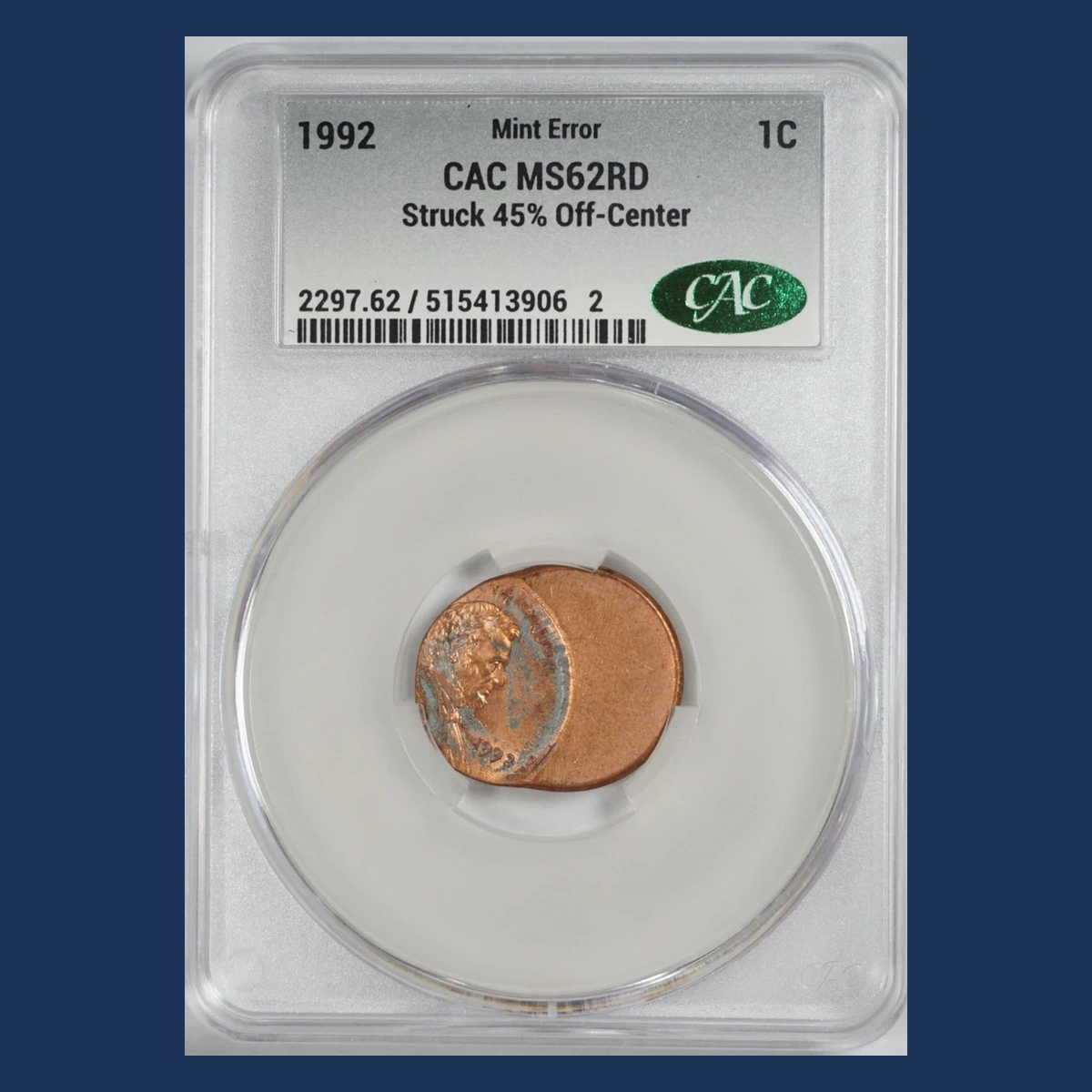
A penny can miss much of the stamping area and still keep its date. One recorded 1992 Philadelphia example is seventy percent off center.
Other certified coins have different amounts of displacement. They are separate examples, not different measurements of the same penny.
The error occurs because the blank sits partly outside the space between the tools. Only the metal caught between them receives the design.
The remaining plain area is still part of the original blank. This makes the shape different from a curved clip, where a section of metal is missing altogether.
Estimated Value
Genuine examples can be estimated at $20–$500. The upper part favors a dramatic shift, a readable date, and well-preserved surfaces.
A small four-percent off-center 2006 Memorial cent sold for $39 in March 2025. It offers a recent comparison for a modest displacement, not the value of the much stronger 1992 example.
A high percentage alone does not set the price. Enough original design must remain to identify the year, and damage can reduce the appeal.
How to Identify
Keep the complete outline in the photograph. A close crop can hide whether the plain area is original blank metal or a missing section.
Check both sides for design loss at the same side of the coin. A shift confined to one face needs a different explanation.
With a scale, compare an accessible coin to the normal 2.50 grams. Record several widths with calipers against the usual 19.05-mm diameter; striking may change the outline.
Use a 10× magnifier along the smooth edge and the transition into the design. Look for scraping that might have removed lettering.
Original plain metal beside matching design loss on both faces is the useful combination, especially when 1992 remains readable.
10. 1992 Lincoln Penny on an Unplated Blank (Estimated Up to $500)
Not every gray penny was made from the wrong metal. The normal zinc center can look gray when its copper coating is absent.
Certified unplated 1992 cents are reported from Philadelphia and Denver. A Denver example was labeled at 2.4 grams, below the normal coated coin’s weight.
The error concerns a blank struck without its usual copper skin. It is different from a copper bubble or a patch that later peeled away.
Chemicals can also remove copper from a finished penny. Therefore, gray color and low weight need to be considered alongside the original surface.
Estimated Value
For a professionally identified unplated example, estimate $75–$500. Condition and how clearly the original zinc surface survives both affect the price.
A 1996-D unplated cent sold for $129.25 in November 2014. That older result concerns the same copper-coated zinc coin type, but is not a sale of either 1992 specimen.
The upper estimate is for stronger, attractive examples rather than every gray coin. Chemical stripping after minting does not carry the same manufacturing-error premium.
How to Identify
The recorded Denver coin weighs 2.4 grams; that is a specimen measurement, not a rule for every unplated penny. Compare an accessible example with the normal 2.50 grams using a scale.
Calipers should also check its size against 19.05 mm. Study both faces and the normally smooth edge under a 10× magnifier.
Look for intact fine detail in the gray metal. Pitting, rough eaten-away areas, or damaged copper remnants can point to later chemical treatment.
Do not scrape the surface to test its color. Leave certified examples inside their holders.
A professional finding that the original blank lacked copper is more persuasive than a gray photograph or a small weight difference.
11. 1992 Lincoln Penny Double Strike (Estimated Up to $800)
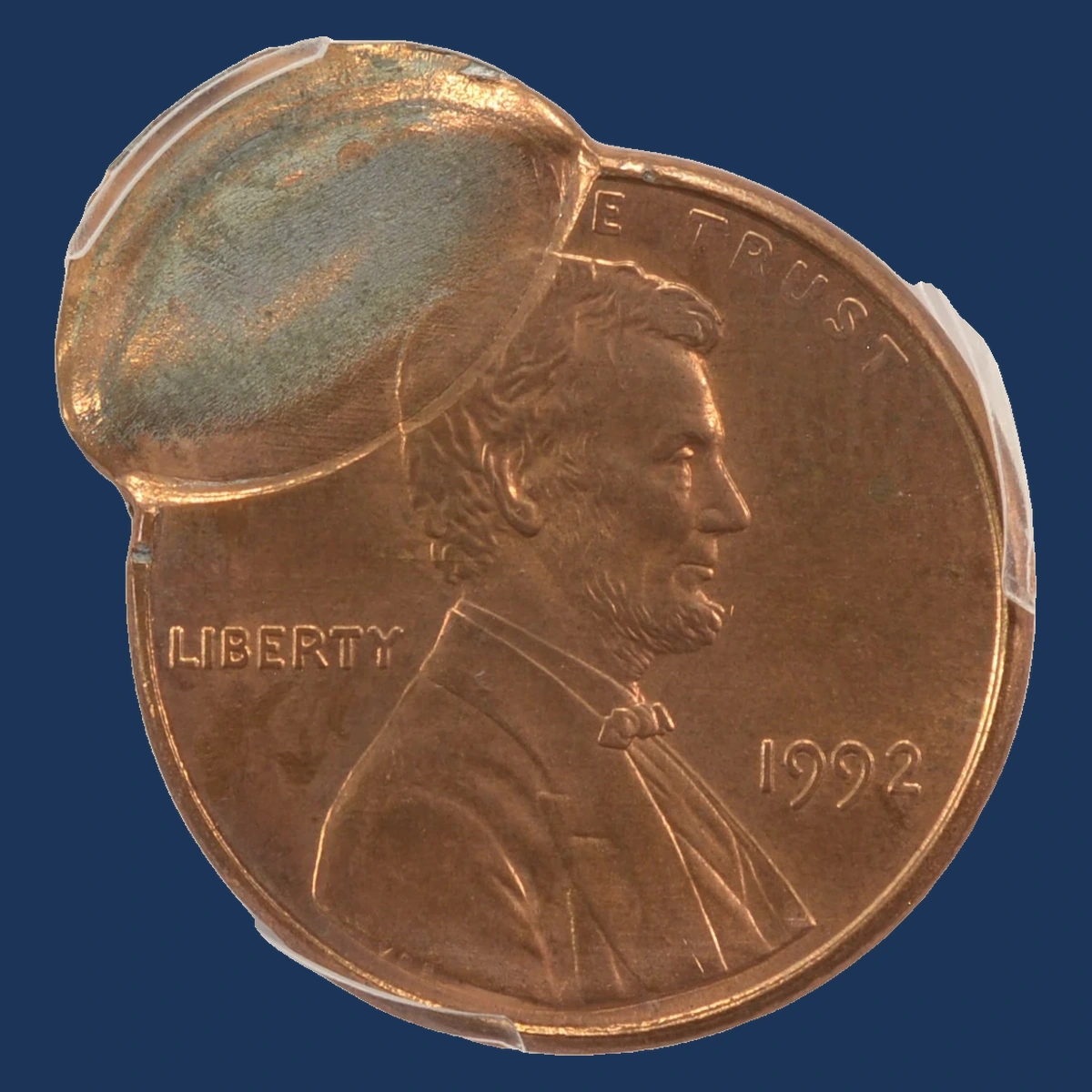
Two sets of Lincoln-cent details can mean the same coin received two blows. It failed to leave the striking area normally and moved before the next blow.
A Philadelphia example has a second strike seventy-five percent off center. A separate Denver coin has its second strike ninety percent off center.
Another 1992 example also shows stretching from a blocked face during the second strike. Metal moved sideways, making the affected area longer.
That stretched shape belongs to a compound striking error. It is not evidence that every oval penny was struck twice at the Mint.
Estimated Value
Estimate $100–$800 for genuine double strikes across different amounts of separation and condition. Clear repeated design and an identifiable date make the comparison stronger.
A 1979 cent with an off-center second strike sold for $204 in September 2023. Its copper-rich metal differs from the coated zinc used in 1992.
The stretched 1992 example is one coin with several connected effects. Its price should reflect the whole piece rather than adding separate charges for doubling, displacement, and stretching.
How to Identify
Start by locating two groups of the cent design. Follow a repeated rim, portrait, or lettering far enough to show the direction of the second blow.
A doubled die repeats smaller features within one design; it does not create two widely separated striking areas. A second outline made by squeezing coins together also needs to be excluded.
Check the smooth edge with a 10× magnifier. Use a scale against 2.50 grams and calipers against the ordinary 19.05 mm, allowing for expansion.
On a stretched example, compare both faces for the blocked area and sideways metal movement. Connected repeated cent details are the essential evidence for two genuine strikes.
12. 1992 Lincoln Penny Chain Strike (Estimated Up to $1,000)
Two blanks can touch inside the striking area. As they expand, their adjoining edges press against one another and leave a contact boundary.
This is called a chain strike. The name refers to contact between neighboring pieces, not a chain-shaped mark on the surface.
A 1992 Philadelphia example was cataloged as ninety percent off center with a chain strike. The auctioneer estimated its condition; it was not in a grading-service holder.
The contact mark is the important extra feature. A very large plain area alone establishes neither a chain strike nor the presence of another blank.
Estimated Value
A genuine, clearly identified chain strike can be estimated at $150–$1,000. This range compares dramatic modern-cent striking errors with visible contact from another blank.
It is an estimate rather than a recovered sale price for the ninety-percent 1992 example. That coin’s catalog condition was also an auctioneer’s opinion, not a service-assigned grade.
Readable identity and a convincing contact boundary matter most. An ordinary off-center penny should stay in its own price comparison when no neighboring-blank contact is present.
How to Identify
Examine the boundary that would have met the neighboring blank. It should fit metal being pressed together during the strike, rather than a later dent in the edge.
Use a 10× magnifier and photographs from both sides. The relationship between this boundary and the surviving struck area matters more than the percentage off center.
The normal starting penny is 2.50 grams and 19.05 mm. A scale and calipers can document the altered coin without expecting a regular circle.
Inspect the remaining smooth edge for later tool damage. Preserve any visible date.
The extra contact boundary beside the off-center design is what separates a chain strike from a lone misplaced blank.
13. 1992 Lincoln Penny Die Cap (Estimated Up to $1,000)
A deep cup is far more than an unusually high rim. A coin can take this shape after sticking to one of the stamping tools.
Further blows press it against incoming blanks. Its metal spreads and rises around the tool, gradually forming a cap.
A 1992 Philadelphia cent has been certified as a deep front-side die cap. This is the actual stuck coin, rather than a later coin struck through it.
That distinction helps explain its shape and value. A normal penny bent into a bowl afterward does not carry the same mint-made pattern of spreading and repeated pressure.
Estimated Value
Use an estimated $200–$1,000 for an authenticated cap, with depth, surviving design, and condition guiding the comparison. A strong cup shape is easier to appreciate than slight curling.
A 2000 front-side cent cap graded MS64 Red sold for $312 in June 2025. It was unworn with some marks and retained copper-red color.
That recent Memorial-cent sale gives a useful comparison, not a transaction for the 1992 cap. Later bending can imitate a cup without creating a genuine cap.
How to Identify
Look into the cup and around its walls without trying to straighten them. Check how the original design stretches across the changed surface.
A 10× magnifier helps reveal bends, squeezed edges, or fresh tool marks made after minting. A genuine cap needs a shape and surface consistent with repeated striking.
The original blank should have been near 2.50 grams. Use a scale when safe; calipers can record its present width and height against the normal 19.05-mm flat diameter.
The smooth edge may have stretched into the wall. Keep a certified cap in its holder.
The continuous flow from struck center into rising walls is the feature to compare with an authenticated cap.
14. 1992 Lincoln Penny Struck on a Dime Blank (Estimated Up to $1,200)
The pale metal and crowded design can draw attention first. A dime blank is smaller than a penny blank and uses a different metal structure.
A 1992 cent graded PCGS MS66 was struck on a dime blank and recorded at 2.3 grams. That grade describes an unworn coin with very few marks.
The blank had not yet been made into a dime. It therefore carries no earlier Roosevelt portrait or torch beneath the cent design.
Another certified 1992 example has a different grade. Its measurements must be checked separately rather than borrowed from the 2.3-gram coin.
Estimated Value
The 2.3-gram example sold for $540.50 on June 11, 2017. An estimated $300–$1,200 allows for different conditions and how much of the cent’s identity remains visible.
The Heritage result concerns a real 1992 coin on an unused dime blank. It is not the price of a cent struck over a finished dime.
Those two errors can look similar from a distance. Surviving older dime details place a coin in the cent-over-dime comparison instead.
How to Identify
Begin with weight and metal rather than the color alone. A normal dime blank is about 2.268 grams, while a normal penny is 2.50 grams.
A scale can test an accessible coin; calipers compare its size with 17.91 mm for a dime and 19.05 mm for a penny. The cent strike can spread the smaller blank.
Check the edge for copper-nickel outer layers around a copper center. An unused dime blank does not already carry the grooves of a finished dime.
Under a 10× magnifier, search both faces for older Roosevelt or torch details. Identified dime metal with only the cent design supports a wrong-blank error.
15. 1992 Lincoln Penny Matching Strike-Clip Pieces (Estimated Up to $1,500)
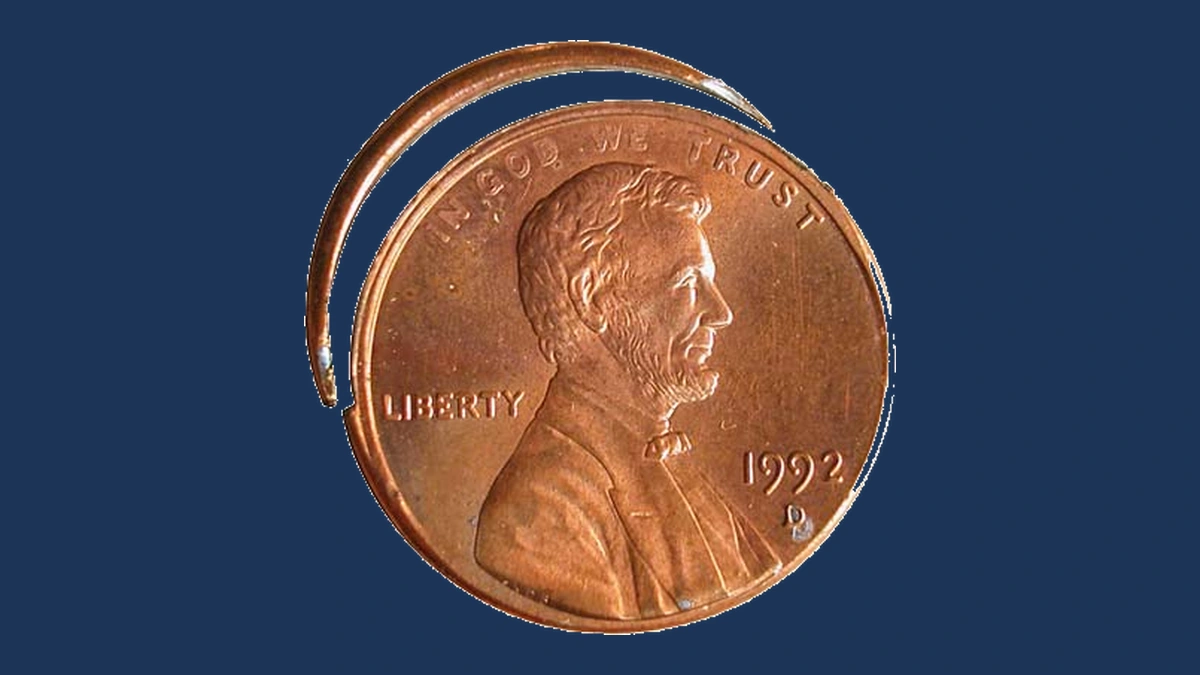
The unusual feature here is not just a missing section. Two surviving pieces fit together as parts of the same 1992 penny.
One piece is elliptical and carries the strike. The other is a plain crescent.
Mike Diamond described the coin being sheared between the descending stamping tool and the raised collar ring. The cut happened during striking, rather than when blanks were punched from a sheet.
That timing separates a strike clip from the curved blank clip described earlier. Keeping both matching pieces preserves evidence that a single cut coin cannot show as clearly.
Estimated Value
For an authenticated matching pair, use an estimated $300–$1,500 for both pieces together. This is an estimate for a dramatic paired mint error, not a recorded sale of Diamond’s example.
The matching break adds information beyond an ordinary clipped penny. Both surfaces and the fit between the pieces affect the appeal.
Do not value each fragment as a complete separate error coin. A pair cut apart after minting also needs to be excluded before this range applies.
How to Identify
Photograph the two pieces together without forcing their edges. Their outlines should account for one original blank, with the struck portion and plain crescent clearly visible.
Examine the cut under a 10× magnifier. Its relationship to the struck design must fit shearing during the blow, not sawing through an already finished penny.
A scale can compare their combined weight with the usual 2.50 grams. Calipers help document the reconstructed outline against 19.05 mm, allowing for metal movement.
Inspect the surviving smooth outer edge and keep the fragments separate from adhesives. Matching cut surfaces joined to the correct struck and unstruck areas are the evidence that makes this pair distinctive.
16. 1992 Lincoln Penny Struck Over a Dime (Estimated Up to $2,000)
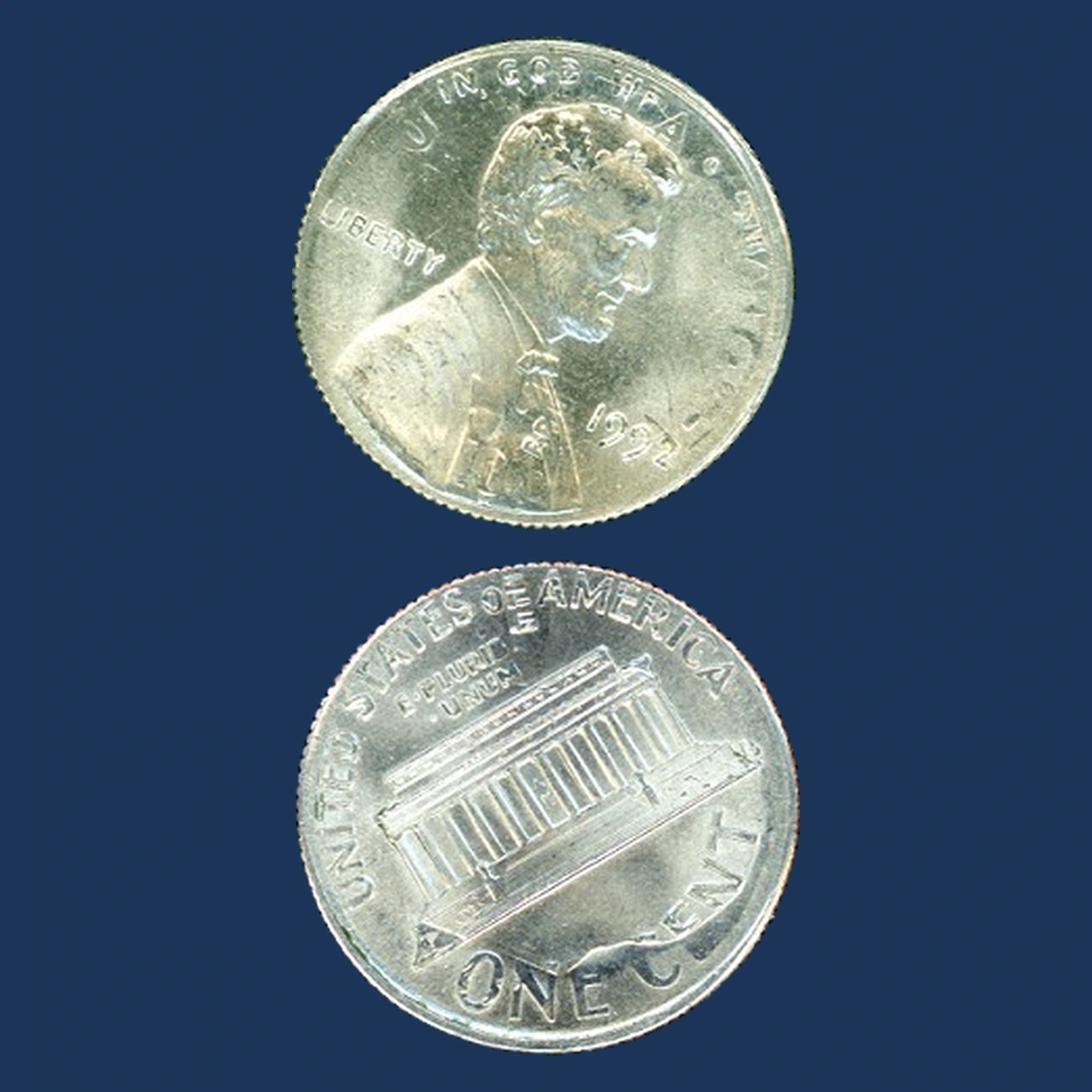
Two different coin designs share the same metal here. A finished dime entered a cent press and received Lincoln’s portrait and the Memorial.
Philadelphia examples include a cent struck over a 1992-P dime. A Denver example was labeled as a 1992-D cent over a 1992-D dime.
On the Denver coin, Roosevelt’s outline appears above Lincoln’s ear and the dime’s D lies near Lincoln’s shoulder. The dime date itself was flattened away.
The labeled year must therefore not be described as clearly readable underneath. Other cent-over-dime examples need their own surviving details checked before assigning a bottom-coin year.
Estimated Value
The Denver example sold for $747.50 in May 2011, graded NGC MS66. A more recent 2001 cent over a 2001-P dime brought $1,320 in September 2025.
Using those comparisons, estimate $600–$2,000 for a clearly identified 1992 cent-over-dime error. Both prices concern finished dimes struck again, rather than unused dime blanks.
Visible parts of both designs increase the appeal. The later sale supplies a recent comparison, but its different date should remain clear when judging a 1992 coin.
How to Identify
Look for Roosevelt before searching for a second date. On the Denver example, his outline survives above Lincoln’s ear even though the dime’s date does not.
The dime’s earlier mint letter can also appear away from its usual place. Do not mistake that shifted D for an extra cent mintmark.
Check for other dime lettering or torch detail with a 10× magnifier. Its normal starting weight is 2.268 grams and diameter 17.91 mm, compared with the cent’s 2.50 grams and 19.05 mm.
A scale, calipers, and an edge view can support the identification; the cent strike may alter the dime’s grooves. Recognizable original dime details beneath Lincoln distinguish this from a cent on an unused blank.
17. 1992 Lincoln Penny Close AM (Estimated Up to $30,000)
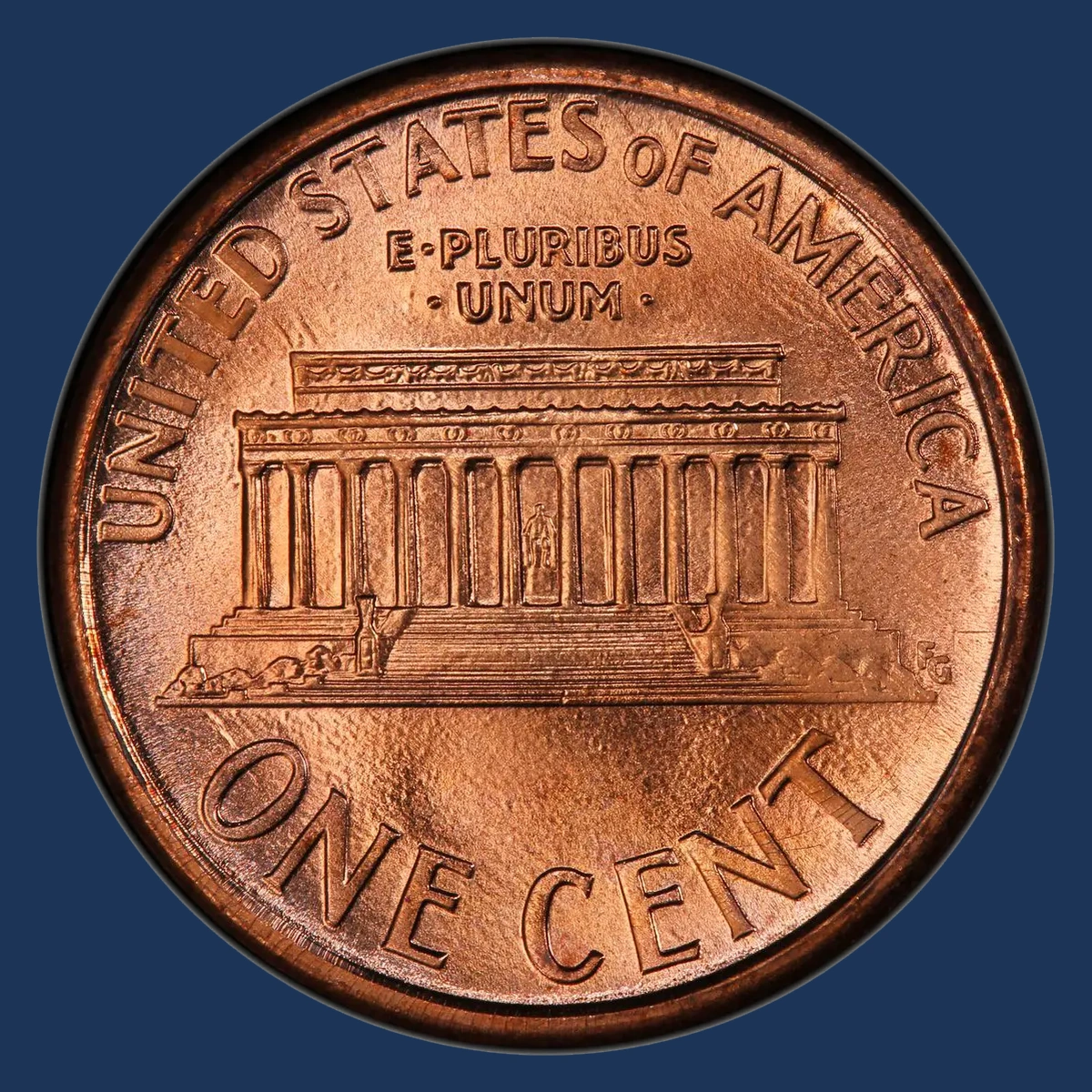
The rare change is on the back: A and M nearly meet at their bases. Normal 1992 pennies leave a wider gap there.
The Close AM design was intended for 1993. A few Philadelphia and Denver cents received that design while still carrying 1992 on the front.
This is a whole back-design change, not simply two letters pushed closer by damage. The small FG initials also sit farther from the Memorial.
Close AM is normal on 1993 cents, so the date matters. A normal later penny cannot stand in for this scarce 1992 combination.
Estimated Value
A Philadelphia Close AM graded MS67 Red brought $25,850 in January 2017. That is an exceptionally well-preserved unworn coin with copper-red color.
Estimate roughly $1,000–$30,000 across authenticated examples and conditions. Philadelphia coins generally command stronger prices; Denver examples can also reach five figures.
A Denver MS65 Red brought $14,100 in 2014. The Philadelphia auction record belongs to that particular high-grade coin, not every penny with a narrow-looking letter gap.
How to Identify
Check the date first: it must read 1992. Record whether the coin has D or no mint letter before comparing prices.
Under a 10× magnifier, inspect the bases of A and M in AMERICA. Then move to FG beside the building; the initials should be farther from the Memorial than on the normal 1992 design.
The G also lacks the older design’s small upper projecting stroke. Wear or squeezed letters should not replace this complete design comparison.
A scale and calipers should find ordinary specifications near 2.50 grams and 19.05 mm, with a smooth edge. Nearly touching AM bases together with the correct FG placement provide the practical first check.
Conclusion
Begin with the actual shape of the change, rather than the most exciting name. A copper bubble, repeated column, and broken-tool bump can look surprisingly similar in a small photograph.
This year’s estimated range runs from $2 for minor features to $30,000 for exceptional Close AM coins. For that rare design, check both AM and FG; for larger striking errors, keep both faces and the edge in view.