1906 Half Dollar Error List with Pictures

A tiny mark beside PLURIBUS appears on a 1906-S half dollar that sold for $82,250 in 2016. Its extraordinary condition explains the price; the small minting flaw is only one feature.
For 1906 half dollar errors, start with the mint letter below the eagle. Different reports concern Denver, New Orleans, San Francisco, and Philadelphia.
Estimated whole-coin values range from $75 to $90,000, with that top bracket reserved for exceptional preservation. Read on to find the checks that fit your coin’s mint.
1. 1906-D Barber Half Dollar Rotated-Die Error (Estimated Up to $350)
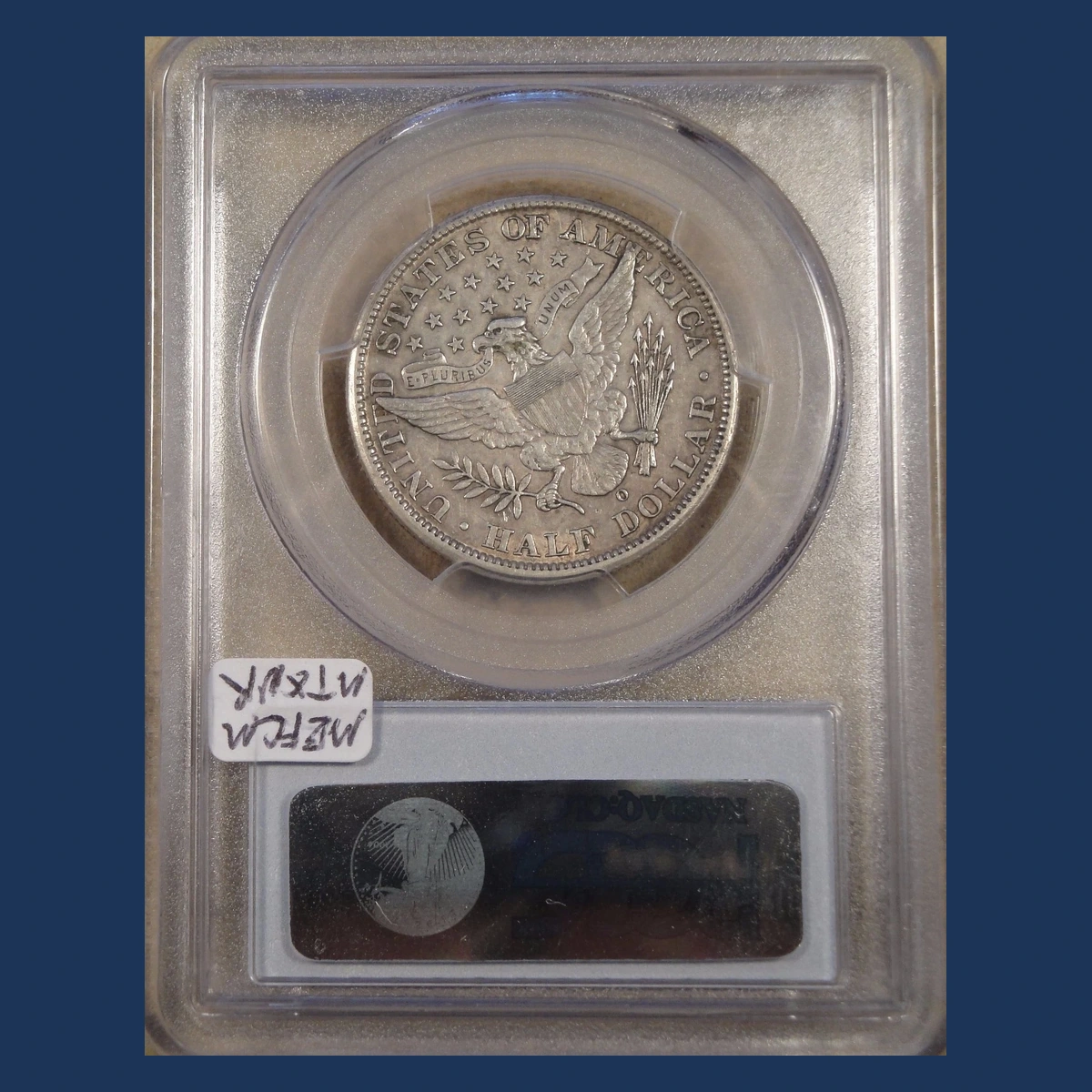
The eagle ends up sideways after a normal flip. A Barber Coin Collectors’ Society survey reports a worn 1906-D whose back is rotated 90 degrees clockwise.
That is a quarter turn. The dies, the steel tools that stamp coins, were out of their normal alignment with each other.
Both designs can still be centered and complete. Rotation concerns their relative angle, not a second portrait or missing part of the design.
The measured report belongs to the Denver coin. A separate informal 1906-O account gives a percentage without a clear measuring method, so it does not establish the same angle.
Estimated Value
An estimated $100–$350 suits a worn Denver example like the survey coin. For comparison, a 2000-P Kennedy half with a 75-degree rotation sold for $79 at Heritage in March 2025.
That newer coin was graded MS61, meaning unworn with noticeable marks. The estimate allows for the older silver Barber coin and larger reported angle; it is not a recorded sale of the 1906-D, and damage can reduce its appeal.
How to Identify
Set Liberty upright and flip the coin top to bottom without turning it sideways. A normal U.S. coin should show the eagle upright after that movement.
Photograph the starting and finishing positions against a fixed reference. Repeat the flip to check that your fingers or the holder have not introduced the tilt.
Under a 10× magnifier, verify the D below the eagle and inspect the edge grooves. Use a digital scale and calipers when safely accessible, comparing with the original 12.50 grams and 30.6 millimeters.
For the society’s reported example, the eagle should finish a quarter turn clockwise each time. That repeatable angle, rather than a slanted photograph, identifies the reported rotation.
2. 1906-O Barber Half Dollar Mumps Die-Bulge Error (Estimated Up to $450)
Liberty’s neck looks swollen on some 1906-O half dollars. Collectors nickname the bulge ‘mumps,’ and NGC includes this date among New Orleans examples with that feature.
NGC connects the swelling with damage to the die and suggests improper hardening as one possible cause. The altered tool then stamped the raised shape into the coin.
The nickname describes the portrait’s appearance. It does not mean anything grew inside the silver.
Wear can flatten detail, and a blow can push metal sideways. Neither automatically creates the documented neck shape, so the whole outline needs comparison with a known example.
Estimated Value
Estimated values of $75–$450 cover worn coins, from heavily circulated to lightly worn. An ordinary 1906-O guide gives about $69 for VG8 and $340 for XF45, providing condition context.
Those figures are guide estimates, not sales of confirmed mumps examples. The range allows modest interest in a clear bulge.
Scratches, wear, and surface quality still matter. Unworn coins need price comparisons at their own condition level.
How to Identify
Compare Liberty’s neck with a normal Barber portrait under the same light. Slowly tilting the coin should keep a real bulge visible as the highlight moves across it.
Check for O below the eagle’s tail. The normal coin has edge grooves, weighs 12.50 grams before wear, and measures about 30.6 millimeters; use a digital scale and calipers when safely accessible.
The NGC explanation provides the comparison for this swollen-neck feature. A 10× magnifier can reveal seams, added material, or a sharp lip from an impact.
A matching neck bulge with the original surface continuing smoothly across it supports the variety. A lump or dent with disturbed surrounding metal needs a different explanation.
3. 1906-D Barber Half Dollar Misplaced-Date Error (Estimated Up to $700)
The small border teeth beneath the date are the place to look. A society survey lists a misplaced-date report for a 1906-D half dollar.
A worker could accidentally press a date punch into the wrong part of the die. Later coins would then carry a stray digit fragment away from the correctly placed date.
That is a misplaced date. It differs from repeated strokes immediately beside the normal numerals.
The survey does not name the extra digit. A curved mark among the teeth still needs comparison with a confirmed example; its general resemblance to a numeral is not enough.
Estimated Value
A verified, worn Denver misplaced date has an estimated $150–$700 range. Ordinary 1906-D guide values run from about $110 in F12 to $570 in AU58, spanning well-worn through nearly unworn coins.
The extra allowance depends on a clear digit fragment. One example reported in a survey does not mean only one exists, and that report is not a sale; it cannot establish a rarity premium by itself.
How to Identify
Include the date and the border teeth in one sharp photograph. Keeping the whole arrangement visible helps show where an extra shape sits relative to the correct digits.
Verify D on the back and check the half-dollar size. When safely accessible, calipers and a digital scale should support about 30.6 millimeters and 12.50 grams; also inspect the edge grooves.
Use a 10× magnifier and change the light direction around the suspected fragment. Dents, cuts, or pushed metal can distort an ordinary border tooth.
A raised numeral-shaped fragment matching a documented Denver half dollar is the relevant clue. A similar mark on a dime, or an unexplained curve in the border, cannot identify this variety.
4. 1906 Barber Half Dollar Repunched-Date Error (Estimated Up to $1,000)
Here the extra strokes stay close to the proper date. The society lists repunched-date reports for Philadelphia’s 1906 half dollar, including both worn and unworn examples.
A date punch used twice in slightly different positions could leave overlapping impressions in the die. Coins made from it could show parts of the earlier digits beside the final ones.
This is called a repunched date. The listing does not specify which digit is affected or the direction of the extra impression.
The actual shapes still need to match. Thick edges from wear or movement during stamping can look doubled for other reasons.
Estimated Value
Estimate $150–$1,000 for a confirmed Philadelphia example, from moderately worn through lower-grade unworn condition. An ordinary Philadelphia coin graded PCGS MS62 sold for $630 at Heritage in 2023.
That sale provides a normal same-year comparison. It does not show a separate amount paid for a repunched date.
Clear earlier-digit traces may interest collectors, but condition explains much of the range. The society’s reports describe coins rather than prices paid.
How to Identify
The society’s listing places these reports under Philadelphia. Check beneath the eagle for the absence of a mint letter before comparing date shapes.
Inspect the edge grooves and use a digital scale and calipers on accessible coins against about 12.50 grams and 30.6 millimeters. Then photograph all four date digits together.
Under a 10× magnifier, examine their margins for extra raised strokes. A flat shelf may come from movement during stamping, while a recessed cut may be later damage.
Matching parts of earlier numerals beside the final date provide the useful evidence. Simply counting doubled-looking edges does not establish a repunched date.
5. 1906-D Barber Half Dollar Off-Center Strike Error (Estimated Up to $3,000)
The design on a documented 1906-D leans toward the lower right. Heritage described it as struck 3% off center toward 3:30, using a clock face to state the direction.
PCGS graded the coin AU58, meaning almost unworn. Sharp details and little wear made the small shift easier to examine.
The blank, or metal disc, was not centered beneath the dies. The design approached one edge while leaving more room on the other side.
A wide rim in one photograph cannot explain the whole event. Both sides help separate an off-center blank from one misaligned stamping tool or a damaged edge.
Estimated Value
The PCGS AU58 example sold for $2,185 at Heritage on February 26, 2005. An estimated $1,500–$3,000 suits an authenticated coin with similar condition and visible displacement.
This is an older auction comparison, not a current sale quote. Clear border differences and original shine help the subtle shift stand out; a heavily worn or damaged example needs comparison with coins in that lower condition.
How to Identify
Photograph both sides straight on and include the complete outline. The cataloged coin’s 3:30 direction places the shift toward the lower right.
Look for compatible movement on both sides rather than measuring just one thick rim. If the opposite design is centered, one die may have been misaligned instead.
Verify the D, inspect the edge grooves, and check accessible coins with calipers and a digital scale against 30.6 millimeters and 12.50 grams. A 10× magnifier can reveal filing, compression, or deliberate edge reshaping.
Two-sided displacement toward the cataloged direction is the useful match for this small error. An uneven rim alone does not show that the blank was off center.
6. 1906-S Barber Half Dollar Strike-Through Error (Estimated Up to $90,000)
A small mark interrupts the area near the end of PLURIBUS. On the exceptional Shireman 1906-S, the published account relays Heritage’s description of a strike-through, possibly from a thread.
A strike-through happens when something lies between the die and blank during stamping. It can leave a depression or block part of the intended design.
The possible thread is an explanation for the mark, not a claim that a fiber remains in the coin. The actual object is not established.
This small feature appears alongside extraordinary preservation. Even a superb collector coin can keep a visible trace of a minting interruption.
Estimated Value
The Shireman PCGS MS68 coin sold for $82,250 in January 2016. An estimated $70,000–$90,000 applies only to a similarly exceptional, nearly flawless unworn example.
A small strike-through on a worn 1906-S instead has an estimated whole-coin range of $125–$500. Those are very different condition levels.
The historic price covers the superb coin. It does not assign a separate amount to the tiny mark near PLURIBUS.
How to Identify
Find PLURIBUS on the ribbon at the back and examine the area near its end. Compare with the reported Shireman close-up rather than assuming any small depression has the same cause.
Confirm the 1906 date and S below the eagle’s tail. Check the edge grooves and, when safely accessible, use calipers and a digital scale against 30.6 millimeters and 12.50 grams.
Under angled light and a 10× magnifier, inspect how the mark meets the surrounding design. A scratch can leave a continuous cut with pushed-up edges; wear usually affects nearby high points too.
The localized interruption with naturally stamped margins is the feature to match. Its appearance should be checked before deciding whether a thread caused it.
Conclusion
Keep the mint letter in every set of photographs. Denver’s date and alignment reports, New Orleans’ swollen neck, Philadelphia’s extra date strokes, and San Francisco’s small interruption are different comparisons.
Estimated whole-coin values span $75–$90,000, but the highest figures belong to extraordinary condition. The tiny mark beside PLURIBUS does not turn an ordinary worn half dollar into the Shireman coin; visible features and preservation must be considered together.