1909 Half Dollar Error List with Pictures

Liberty’s swollen jaw explains the nickname Mumps on one 1909-O half dollar variety. An unworn NGC MS65 example sold for $2,702.50 at Heritage in November 2002.
An upside-down S is much smaller but also worth checking. This guide to 1909 half dollar errors covers that mintmark, the swollen portrait, and a reported raised crack.
Estimated ranges run from $150 to $3,500 for the conditions described. Read on to match the visible shape before comparing prices.
1. 1909-O Barber Half Dollar Reported Die Crack (Estimated Up to $400)
A narrow raised line may show where a die cracked. The die is the steel tool that stamps the coin’s design, and silver can enter a crack during striking.
The resulting ridge rises above the surface. It differs from a scratch cut into the finished coin.
The reported 1909-O example needs a same-year photograph to establish its exact path. A crack on another date cannot supply that missing detail.
This feature differs from the wide swelling at Liberty’s neck discussed later. A line and a broad bulge can both start in a damaged tool, but they leave different visible shapes.
Estimated Value
Estimate $150–$400 for a circulated example with lightly worn XF detail and a modest raised crack. The range covers the whole coin, not an extra charge for the line.
A regular 1909-O with PCGS XF Details and scratches sold for $192 at Heritage in June 2025. Its sale offers a same-year condition comparison.
That auction coin was not identified as the crack variety. Better surfaces and a clearer genuine ridge would strengthen the comparison.
How to Identify
Move the light across the suspicious line while looking through a 10× magnifier. A scratch may have raised edges too, so inspect its center for a groove.
Follow the whole feature. It should form a raised ridge rather than a cut with rough banks or material stuck to the surface.
Include the 1909 date and O below the eagle in photographs. A scale and calipers check the normal 12.50 grams and 30.6 millimeters, allowing for wear; the edge has ridges.
Do not assign a path from a different date. A photographed 1909-O carrying the same raised line is the direct comparison needed to establish this reported feature.
2. 1909-S Barber Half Dollar Inverted S Mintmark (Estimated Up to $750)
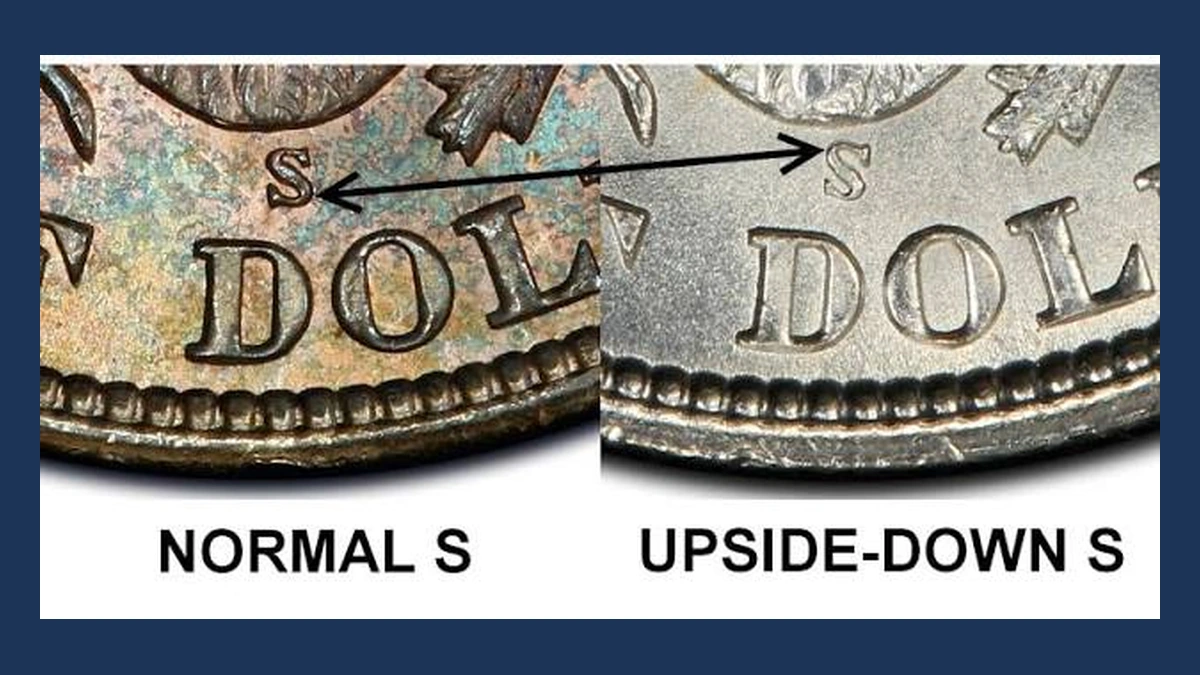
Turn an S upside down and it still looks much like an S. The unequal top and bottom curves give away the inverted mintmark on this variety.
Collectors identify it as 1909-S FS-501. The S was punched upside down into the back stamping tool before coins were made.
The letter did not spin during the strike. Its reversed shape was already part of the tool.
Compare the complete letter with the normal punch style. A repeated edge, worn curve, or thick-looking S can have another cause, so none alone proves that the mintmark is inverted.
Estimated Value
An estimated $150–$750 covers roughly Fine through About Uncirculated examples, from considerable wear to only light wear. The inverted shape must remain recognizable.
GreatCollections records $230.62 for PCGS Fine 15 in August 2025. PriceCharting records a PCGS AU50 example at $625 from an April 2026 eBay transaction.
Both are circulated comparisons for the variety. Clean surfaces and remaining detail affect where another example fits within the range.
How to Identify
Put a normal S beside the suspected inverted S, with both back designs upright. Use equally sized images so the upper and lower curves can be compared fairly.
A 10× magnifier should show the letter’s ends and full outline. Shadows or rubbed areas should not supply a curve that is actually missing.
Check the 1909 date and look around the mintmark for cuts or signs of later alteration. The normal half dollar weighs 12.50 grams before wear and measures 30.6 millimeters with a scale and calipers.
The edge should have ridges. The quickest check is whether the whole S matches the normal style turned upside down.
3. 1909-O Barber Half Dollar Mumps Die Swelling (Estimated Up to $3,500)
Liberty’s neck and jaw look fuller than usual on the Mumps variety. The name describes that swollen profile, rather than a doubled letter or a thin raised line.
Part of the stamping tool’s surface sank as it deteriorated. Silver filled the extra space, making that area of the portrait stand higher.
NGC discusses this feature on 1909-O half dollars. New Orleans struck them during the mint’s final year of coin production.
The swelling lies within the portrait. It does not join the rim like a cud, the raised patch caused when a tool’s edge breaks away.
Estimated Value
Heritage sold an NGC MS65 example with pronounced Mumps for $2,702.50 on November 23, 2002. This is a historical sale of the feature, not a recent quotation.
Estimate $2,200–$3,500 for a similarly preserved coin. MS65 is an unworn grade with strong overall appearance.
Much of the value comes from that condition. A worn 1909-O with the same swelling should not automatically receive the price of this high-grade example.
How to Identify
Use a normal 1909-O portrait to compare the neck and underside of the jaw. Low side lighting shows the broader rise better than a bright reflection over the cheek.
Check the whole coin as well: O below the eagle, a ridged edge, and a normal diameter of 30.6 millimeters. A scale checks the original 12.50 grams, with calipers for diameter.
Now examine the swollen area through a 10× magnifier. Added metal can leave a seam or different texture; an impact can leave a dent with pushed-up edges.
The raised area should belong naturally to the stamped portrait. Matching its neck-to-jaw shape with the documented Mumps profile provides the clearest immediate check.
Conclusion
Estimated values for these examples range from $150 to $3,500. An inverted S changes a letter’s proportions, Mumps changes Liberty’s profile, and a die crack leaves a raised line.
The high Mumps estimate applies to an unworn coin comparable to the 2002 sale. For any example, confirm the year, mintmark, and visible shape before using its condition to choose a price comparison.