1897 Half Dollar Error List with Pictures

A small shift and a large missed strike should not share one price. The forty-percent off-center 1894 half that sold for $7,800 in 2022 is a different comparison from the reported three-percent 1897-S.
The 1897 half dollar errors here include a flawed blank, a possible repunched date, and two striking errors. Their estimated ranges total $100–$3,500 for the worn conditions discussed.
Use the checks below to compare what actually happened to the metal.
1. 1897-O Barber Half Dollar Reverse Planchet Flaw (Estimated Up to $300)
The back of one 1897-O half has a flaw in its metal blank. Its front has scratches and dents made later.
The owner reported a PCGS Fine Details result with a planchet-flaw label. A planchet is the prepared metal disc used to make the coin; Fine Details describes a worn coin with a condition problem.
Those words identify the broad blank flaw without explaining its exact form. They do not prove that a layer peeled away or that a piece was clipped out.
The later scratches need a separate explanation. Not every mark on the coin began at the Mint.
Estimated Value
For a worn Fine Details example with a visible blank flaw and other damage, estimate $100–$300. The original defect and later scratches can affect value differently.
An ordinary 1897-O in PCGS Fine 12 sold for $294 in May 2026. That is a same-date condition comparison, not a sale of this flawed coin.
Some collectors like original mint defects. Clear scratches can still lower the price, so the error does not cancel the damage.
How to Identify
Examine the back before judging the scratches on the front. A magnifier and light from the side can show how the flawed metal meets the struck design.
The owner’s account separates the reported blank problem from later damage. Keep that distinction when comparing the photographs.
Include the O below the eagle and the full date. The normal unworn weight is 12.50 grams, the diameter about 30.6 millimeters, and the edge has grooves.
Use a scale and calipers when safely accessible. A small flaw may barely affect either reading, so the actual back-side feature and matching grading description are more useful than normal weight alone.
2. 1897 Barber Half Dollar Repunched-Date Candidate (Estimated Up to $500)
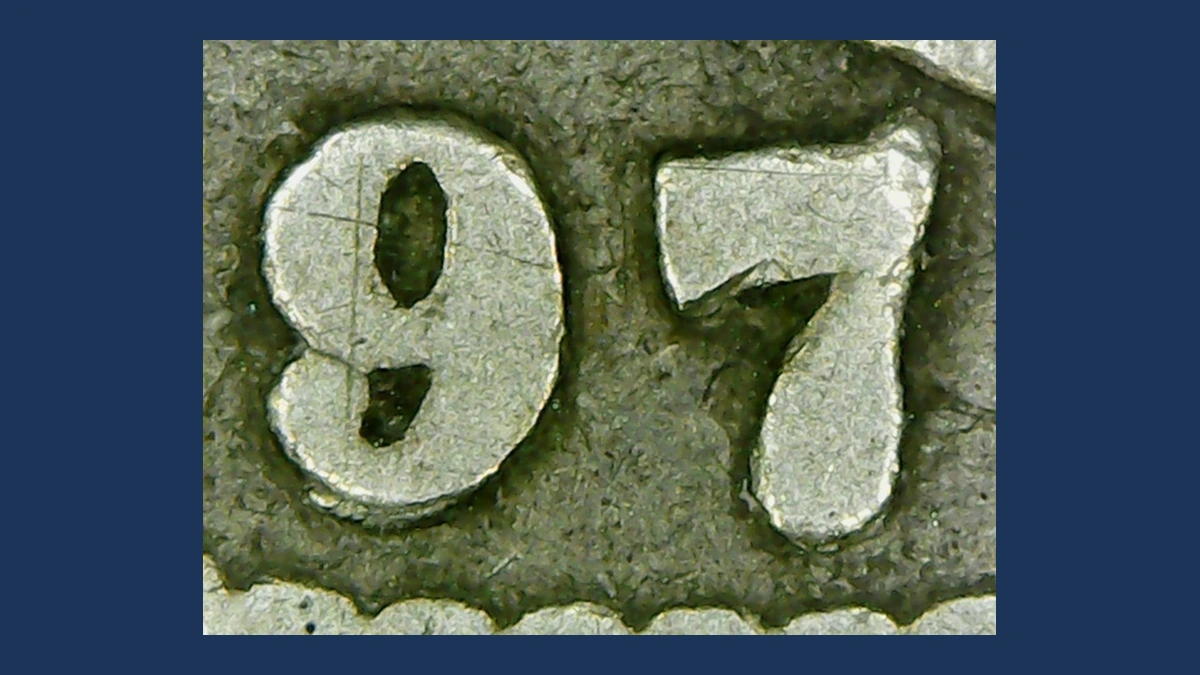
An extra curve beside a date number could be part of an earlier punch. A genuine repunched date preserves that earlier position beside the final number.
The change happened in the die, the steel tool that stamps coins. Later strikes could pick up the extra detail already present on that tool.
The 1897 candidate has no confirmed mint or specific number position here. All four digits need inspection, along with the mintmark on the back.
Thick-looking numbers alone do not establish the variety. A recognizable earlier stroke is needed before a coin can be compared with an identified repunched date.
Estimated Value
A correctly identified worn example around Fine to Very Fine has an estimated $150–$500 range. Those grades describe worn coins with increasing amounts of detail.
The $294 sale of a normal 1897-O Fine 12 offers a whole-coin comparison. It does not establish an extra value for repunching.
The upper estimate needs a clear earlier number impression and suitable condition. Wear, reflections, or a flat doubled-looking edge should not be priced as a confirmed date variety.
How to Identify
Photograph all four date numbers straight on. Keep nearby surface detail sharp so you can judge whether an extra curve belongs to a second punch position.
A magnifier may reveal part of a rounded stroke or a small end of a number. Move the light to rule out reflections before accepting the shape.
Flat shelves can come from movement during striking, and scratches cut into the metal. Neither alone provides an earlier date impression.
Record the actual mintmark or its absence. A safely accessible scale and caliper check can use 12.50 grams and about 30.6 millimeters, with a grooved edge.
The useful confirmation is the same extra number shape on an identified coin of the same year and mint.
3. 1897-S Barber Half Dollar Off-Center Strike (Estimated Up to $3,000)
The shift is small: an older catalog describes a three-percent off-center 1897-S half toward seven o’clock. It should not be pictured like a coin missing most of its design.
Even a small off-center strike needs evidence on both faces. The design and blank margin should show that the metal disc sat in the wrong place.
The 1984 catalog gives the direction and percentage for this example. They belong to that coin, rather than every unusual 1897-S rim.
Another reported coin spread outward while keeping its design. That broadstrike is different and needs a separate outline comparison.
Estimated Value
Estimate $1,200–$3,000 for a genuine small off-center example with a readable date and mint. A 1900-O five-percent example is offered at $2,450 in PCGS XF Details, a worn condition with a problem.
That is another year’s asking price. The 1894 forty-percent example sold for $7,800 in December 2022.
Its much greater shift explains why that actual sale is not a direct price for the modest 1897-S error.
How to Identify
Hold the portrait upright and inspect the border near seven o’clock. A magnifier should show where the actual struck detail stops, rather than just an uneven rim.
Turn the coin over and examine the matching area. If only one face is shifted, one die may have moved while the blank remained correctly placed.
Keep the S below the eagle and the date visible. A normal unworn half weighs 12.50 grams and measures about 30.6 millimeters.
Use a scale and calipers when safely accessible, and inspect the edge grooves for cuts or impacts. The cataloged direction is useful only when it agrees with genuine displacement on both sides of the same coin.
4. 1897-S Barber Half Dollar Uncentered Broadstrike (Estimated Up to $3,500)
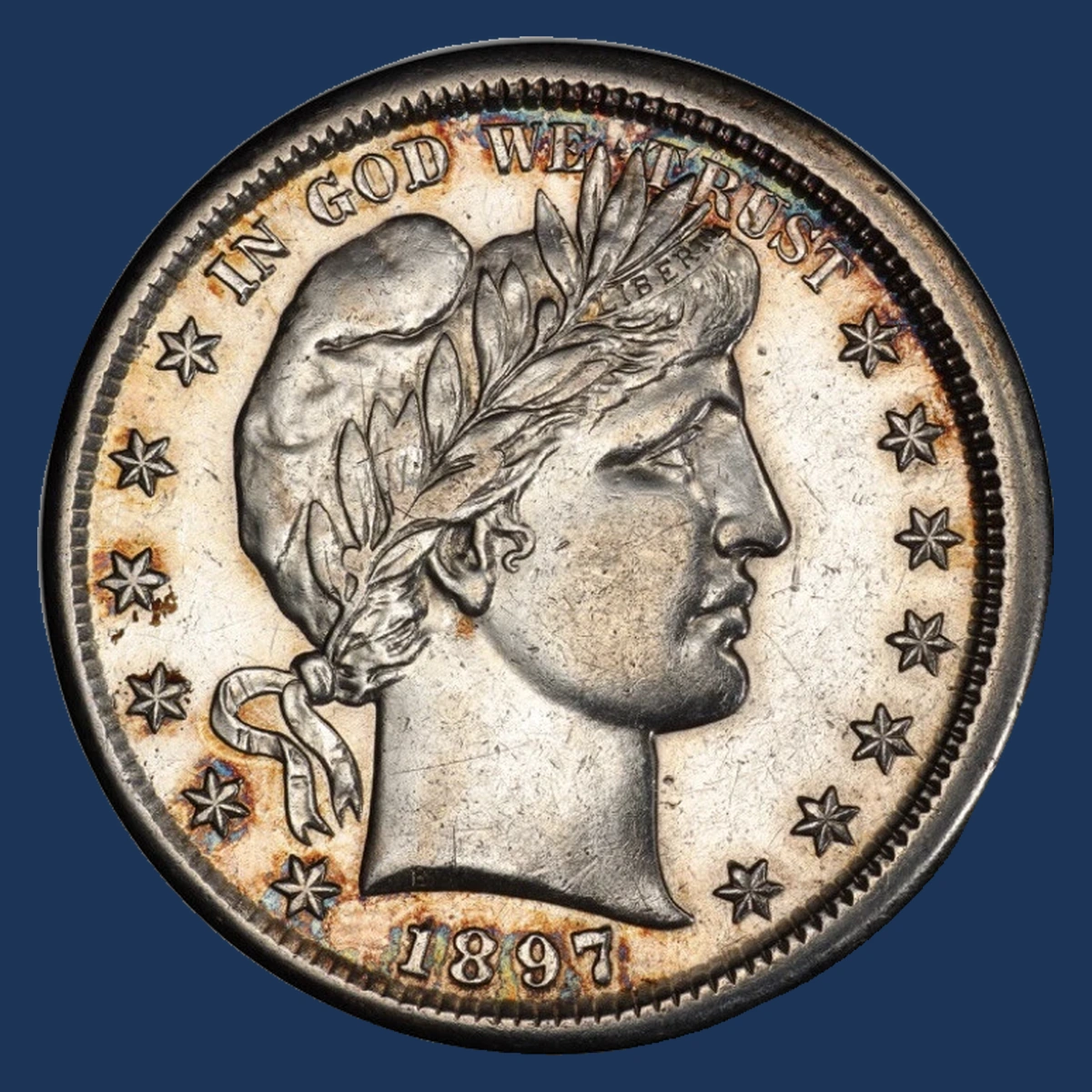
The full design can sit off to one side inside a wider, uneven border. That combination describes an uncentered broadstrike rather than a design cut off by an off-center strike.
The collar is the metal ring that normally controls the coin’s width. Without its proper restraint, the blank could spread outward during striking.
Al’s Coins advertised an 1897-S example graded ANACS AU55, meaning light wear. Mint Error News also illustrates a broadstrike of this date and mint.
Look for retained design and genuine expansion. The three-percent figure from the separate off-center example does not describe this coin.
Estimated Value
Al’s Coins asked $1,750 for its AU55 in 2007. An asking price is not a completed auction sale.
For a comparable lightly worn example, the working estimate is $1,750–$3,500. Surface quality and how clearly the coin expanded affect the comparison.
An older Barber guide lists $2,500–$3,000 around XF and AU condition. That gives context for the estimate, but the individual coin still needs its own assessment rather than an automatic price from the label.
How to Identify
Follow the design around both faces. If the major details remain inside a wider outline, the extra border may come from broadstriking.
The illustrated ANACS AU55 listing offers a dated comparison. Use a magnifier to inspect the edge for original striking effects rather than later flattening.
Calipers can measure the width in several directions against the normal 30.6 millimeters. A safely accessible scale reading should be compared with the usual 12.50 grams.
The edge normally has grooves, but faulty collar contact can change them. An authentic broadstrike spreads existing metal; the complete design within uneven expansion is what separates it from an off-center coin missing part of the impression.
Conclusion
Missing design and extra border space are not the same clue. The two 1897-S reports show why the whole outline matters more than one attractive close-up.
Across the conditions discussed, estimated prices run from $100–$3,500. Old dealer prices remain asking figures, and the possible repunched date still needs a matching earlier number shape; a label should follow the visible evidence, not replace it.