2006 Quarter Error List with Pictures

A hole through a quarter usually suggests damage, but one 2006 North Dakota design was struck on a steel washer. That 2.6-gram coin brought $8,625 at auction in August 2011.
This 2006 State Quarter error guide covers estimated values from $2–$12,000, including much smaller flaws on the five state designs. Read on to compare extra bison details, clipped blanks, exposed copper, and misplaced letter impressions.
1. 2006 Washington State Quarter Raised Cracks and Extra Lumps
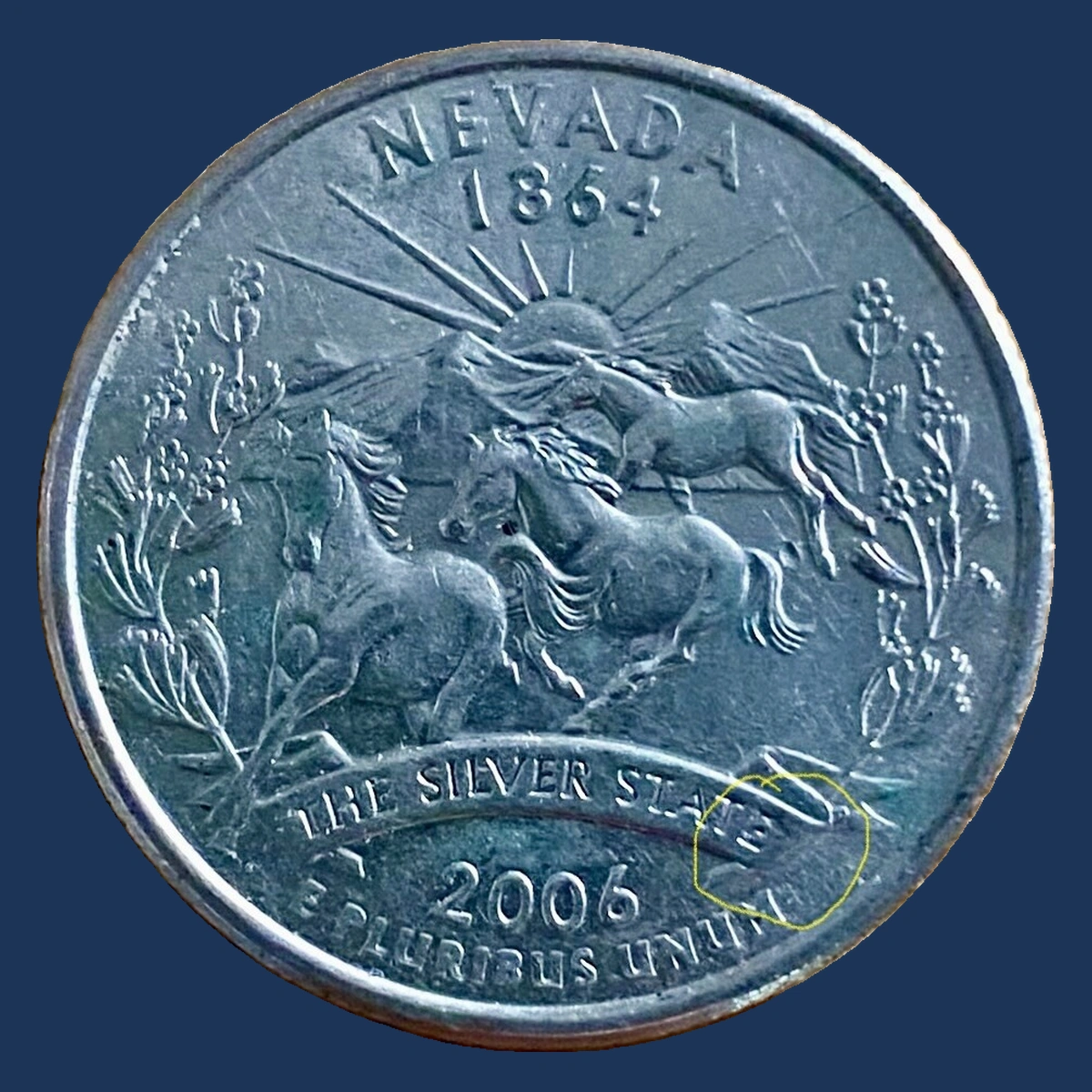
A small lump beneath North Dakota’s leading bison can look like an extra leg. It is reported as a chip in the stamping tool, rather than an extra leg added to the design.
Other reports include Nevada horse and sagebrush marks, Nebraska raised lines, and South Dakota wing or wheat-area features. Each belongs to a different state design.
A narrow tool crack makes a raised ridge on the coin. A larger missing piece can leave a broad patch instead.
Colorado also has a rim-break report. An interior lump should not be called a cud unless it connects to the rim.
Estimated Value
Small genuine cracks and chips are estimated at $2–$30 on ordinary clad coins, made from bonded metal layers. Larger rim-connected breaks can fall around $30–$200.
A different-year 1970-D nickel with two cuds sold for $63 in October 2022. That comparison does not establish a fixed price for an extra bison leg or horse-area chip.
The mark’s size, clarity, and condition matter. An interesting nickname alone does not turn a small lump into a major error.
How to Identify
Compare the coin with the same state design before looking for extra metal. On North Dakota, examine the space beneath the leading bison between its front and back legs.
Use a 10× magnifier to separate a raised lump from a dent that pushed nearby metal upward. For a claimed Colorado cud, trace the patch to the rim and inspect the adjoining edge grooves.
An ordinary loose clad quarter should remain near 5.67 grams and 24.26 millimeters on a scale and calipers. A naturally struck raised patch replacing detail supports tool damage, while a cut or impact crater points to a later cause.
2. 2006 Washington State Quarter Doubled Ears and Other Design Details
An extra rounded outline near Washington’s ear can suggest a doubled design on the stamping tool. Nebraska and South Dakota reports include this type of ear detail.
North Dakota reports also concern LIBERTY, the motto, and the earlobe. Colorado has a separate doubling report without one established location here.
These examples should not be combined into a single pattern. The exact state and affected detail need a matching comparison.
Flat shelf-like edges can come from movement during striking rather than a doubled tool. The report’s use of “double” does not settle which process produced a particular coin.
Estimated Value
For genuine identified tool doubling on ordinary clad examples, estimate $15–$300. Clear, recognized patterns on attractive coins can bring more than weak or unexplained thickening.
A matching close-up helps show the size and shape of the extra detail. Wear may merge the outlines, and scratches through the affected area can make a promising coin harder to identify.
Mechanical shelves generally attract little special value. A thick-looking earlobe alone should not be priced as a confirmed doubled design.
How to Identify
Confirm the state and the 2006 striking date before examining the ear. The earlier date above the scene records statehood, so it does not identify the minting year.
With a 10× magnifier, compare the Nebraska or South Dakota extra ear outline with the appropriate example. North Dakota lettering reports need their own close-ups.
A loose ordinary clad coin should be near 5.67 grams on a scale and 24.26 millimeters with calipers. Inspect the grooved edge for squeezing or alteration.
Trace the repeated shape rather than judging one thick point. A rounded design remnant matching the right variety supports the claim, while a flat ledge beside the feature does not.
3. 2006 Washington State Quarter Blistered or Peeling Surface Layer
A smooth bulge on Washington’s side can reveal a weak bond beneath the surface. The outer layer may lift without the entire layer falling away.
Nebraska has a report of this blistering or separation. It concerns the layered metal already intended for a quarter, not a different coin blank entering the press.
An ordinary quarter has a copper core bonded between copper-nickel outer layers. A local failure can leave a pocket or peeling boundary in one surface.
Heat applied later can blister coins. The raised area must be examined as a metal defect rather than accepted from its appearance alone.
Estimated Value
A genuine mint-made blister or local layer separation on an ordinary clad Nebraska quarter is estimated at $20–$350. The size, surface quality, and clarity of the defect affect its value.
A local pocket affects part of the surface. Losing an entire outer layer changes the whole face and calls for a different comparison.
Do not press or open the blister to test it. Damage caused while examining it can reduce both its value and the evidence of its original condition.
How to Identify
Leave the raised pocket intact and examine it through a 10× magnifier. Look for a natural boundary beneath the outer layer rather than a sharp impact rim around a dent.
Compare both faces and the edge for burns, discoloration, or other signs of later heating. Such treatment can create misleading bubbles.
Weigh a loose ordinary clad coin against 5.67 grams on a scale. A sealed blister may change the shape without removing enough metal to reduce weight.
Calipers should compare an intact diameter with 24.26 millimeters, without pressing the raised area. Follow any separation toward the grooved edge; a natural bonding failure needs more evidence than a bulge alone.
4. 2006 Washington State Quarter Expanded Strikes and Partial Ring Contact
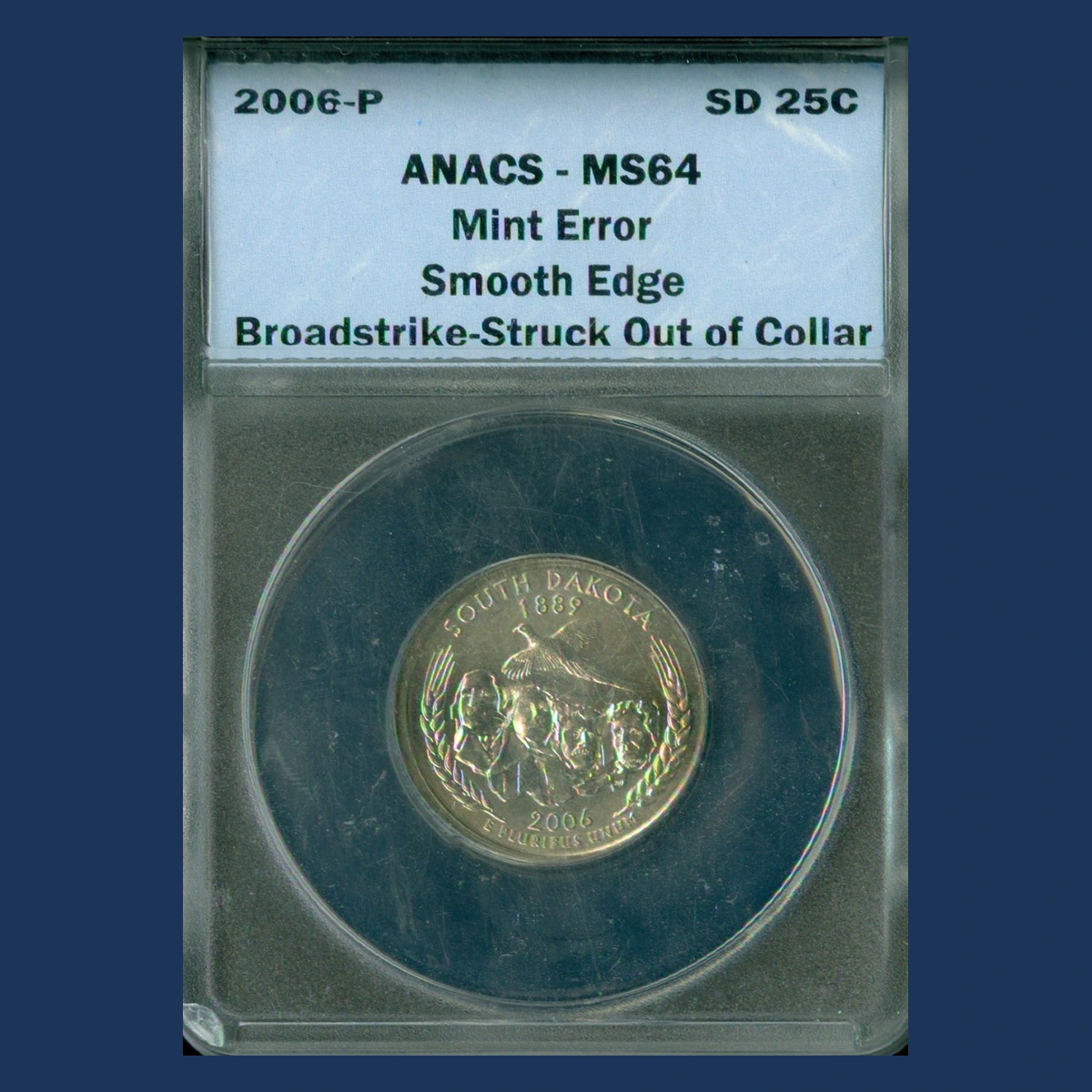
A quarter can spread wider when the retaining ring fails to hold it fully during striking. The design may remain complete even when it sits unevenly inside the enlarged border.
Nevada has a reported uncentered broadstrike with an ungrooved edge. Colorado has a separate expanded example with only part of the edge showing grooves.
That Colorado appearance can reflect partial contact with the retaining ring. The two coins should not be described as having identical edges.
The ring, or collar, normally limits the blank’s diameter. Its missing or incomplete restraint explains the extra spread without requiring a second blow.
Estimated Value
Estimate $40–$400 for genuine expansion or partial-ring errors on ordinary clad examples. A wider, clearer error on an attractive coin supports the upper part of that range.
For comparison, a 1990-P nickel with partial ring contact sold for $99 in June 2025. The different denomination and edge shape limit how directly that result can price a Colorado quarter.
The Nevada broadstrike also needs its own assessment. Later hammering or filing should not receive the same error premium.
How to Identify
Inspect the edge first with a 10× magnifier. Nevada’s reported lack of grooves and Colorado’s partial grooved band are different observations, so compare each with its own example.
Use calipers in several directions against the normal 24.26-millimeter diameter. Extra width can be uneven when the design sits off to one side.
A complete ordinary clad blank should still weigh near 5.67 grams on a scale. Expansion spreads the metal rather than adding any.
Check both designs for hammer damage. Complete, naturally struck pictures inside widened borders support a broadstrike.
A natural step between grooved and spread metal instead helps identify partial ring contact. Filed grooves or flattened details call for a damage explanation.
5. 2006 Washington State Quarter Off-Center Strikes
A blank crescent beside a cut-off picture can show that the metal entered the press off center. Both faces then record the blank’s misplaced position.
Nebraska has a report of a roughly 40% shift. Nevada, Colorado, and South Dakota also have reports without a shared measured percentage or direction here.
Those numbers must stay with their own examples. A state’s normal design can also make an uneven photograph look misleadingly dramatic.
A single wide border on one face may come from one misplaced tool instead. Compare both faces before deciding that the entire coin was struck off center.
Estimated Value
Genuine off-center ordinary clad quarters are estimated at $50–$500. Readable dates, clearer shifts, and original surfaces can support stronger prices.
A 1999-P Georgia quarter struck 40% off center sold for $192 in December 2024. That different-year example is a comparison, not a sale record for the reported 40% Nebraska coin.
The amount of shift does not determine value by itself. A readable state design and a correct explanation of both faces are also important to buyers.
How to Identify
Read the state name and the 2006 date on the surviving back design. The earlier statehood date does not tell you when the quarter was struck.
Compare the unstruck areas of both faces under a 10× magnifier. If only one design shifts, investigate a misplaced stamping tool instead.
A complete ordinary clad blank should remain near 5.67 grams on a scale. Calipers can compare its outline with 24.26 millimeters, allowing for uneven metal spread.
Inspect the edge grooves where the design reaches blank metal. Grinding or hammering can leave a misleading missing area.
Matching untouched metal and corresponding cut-off designs on both faces provide the useful first test for a genuinely off-center blank.
6. 2006 Washington State Quarter Repeated Strikes on a Nevada Quarter
A second blow can leave another position of the horses, lettering, or border on a Nevada quarter. The coin must move or turn between strikes for the extra impression to become clear.
The first picture may be flattened or partly covered where the later strike lands. Both faces should show changes that fit the same sequence.
The Nevada report does not establish an exact offset percentage, direction, or certified grade here. Those details need to follow the actual example.
This differs from small doubled details carried by a stamping tool. One doubled-looking letter alone does not prove a repeated strike.
Estimated Value
For a confirmed repeated strike on an ordinary clad Nevada quarter, estimate $100–$600. Clear separate impressions and attractive condition support stronger prices.
A different-year 2001-P dime with a second strike 75% off center sold for $114 in October 2021. The Nevada report does not inherit that dime’s shift percentage or grading details.
The estimate concerns a complete coin with a proven second strike. Mechanical doubling or unrelated damage should not receive the repeated-strike premium.
How to Identify
Start with the two sides together rather than one doubled-looking horse. The proposed second strike should explain corresponding changes to Washington’s face and the Nevada scene.
An ordinary loose clad coin starts near 5.67 grams and 24.26 millimeters on a scale and calipers. More blows can spread its outline without adding or removing the original metal.
Under a 10× magnifier, follow a recognizable design element through its first and second positions. Check where the later blow flattened or covered the earlier detail.
Inspect the edge grooves and readable date for consistency with that sequence. Two naturally struck positions that agree across the coin support repeated striking more clearly than an isolated doubled outline.
7. 2006 Washington State Quarter Missing Outer Layers
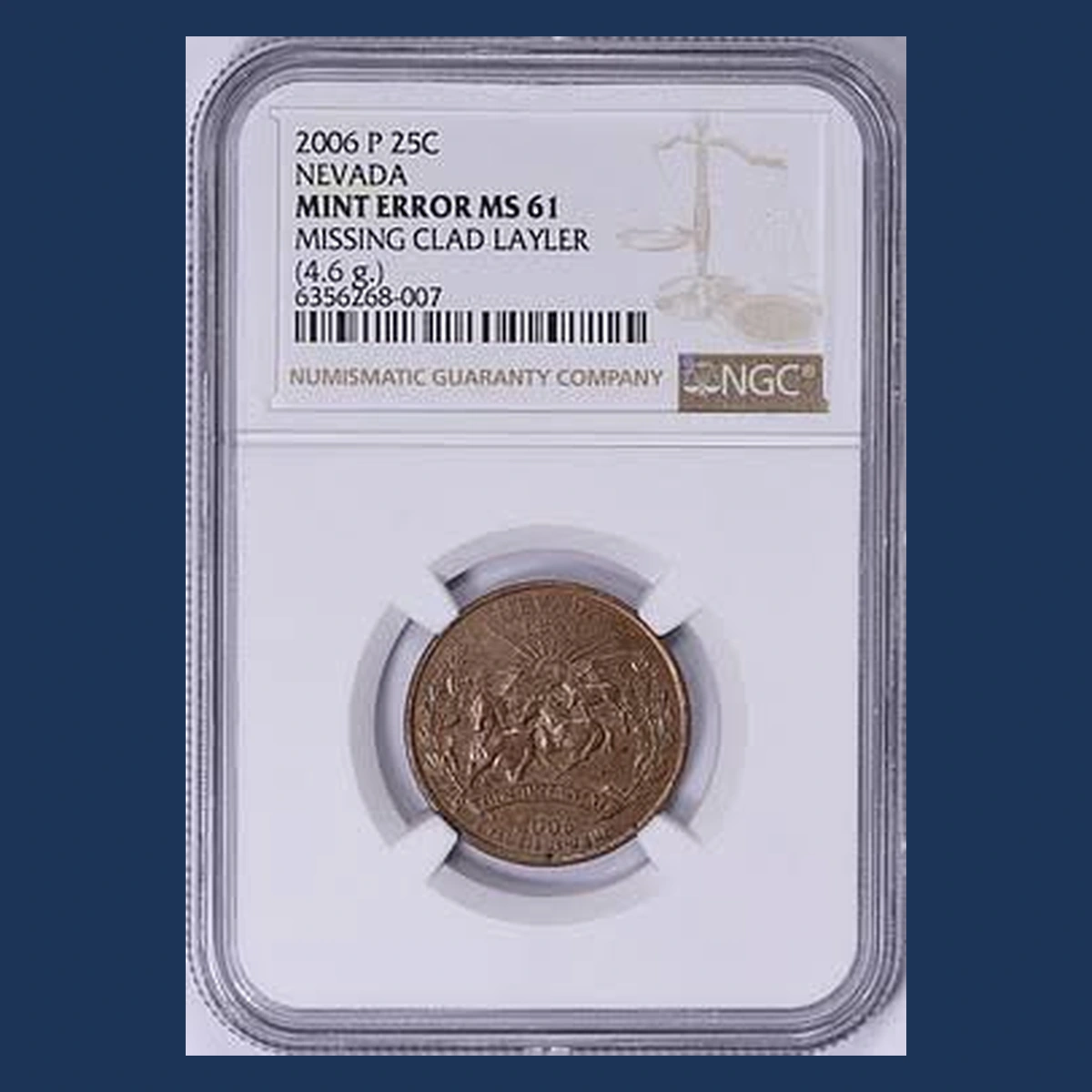
A copper-colored surface can appear where a quarter’s outer layer is absent. Ordinary quarters have copper-nickel faces bonded to a copper core.
Reports cover Nevada, South Dakota, Nebraska, and North Dakota. Colorado includes a local irregular exposed-copper area rather than automatically a whole missing face.
One North Dakota back-layer report gives a 4.6-gram weight. A different satin-finish collector example lacks the front layer and should not inherit that measurement.
Satin coins were specially made for collectors, and 90% silver Proofs use a different construction. Odd color alone does not prove any of these coins lost a layer before striking.
Estimated Value
Estimate $30–$200 for a genuine localized outer-layer defect and roughly $100–$700 for clear whole-layer loss on an ordinary clad coin. Collector finishes need their own comparisons.
A 1999-D Connecticut quarter missing its back layer sold for $149 in December 2024. That different-year result cannot price every state or both North Dakota finishes identically.
Weight and the layer boundary must support the diagnosis. Staining, plating, or chemical stripping after minting should not receive this premium.
How to Identify
Identify the coin’s finish before testing the missing layer. The North Dakota satin collector coin and the ordinary back-layer example are separate pieces.
Weigh the actual loose coin against the clad standard of 5.67 grams. The reported 4.6-gram reading belongs only to its own North Dakota example.
Calipers should compare diameter with 24.26 millimeters. Silver Proofs use a different alloy and should not be diagnosed as copper-core clad coins.
Inspect the exposed area and grooved edge with a 10× magnifier. Look for a natural layer boundary rather than plating, chemical stripping, or a scraped patch.
The extent of that boundary should fit the measured metal loss. A copper-colored surface by itself cannot establish a missing outer layer.
8. 2006 Washington State Quarter Clipped and Oval Blanks
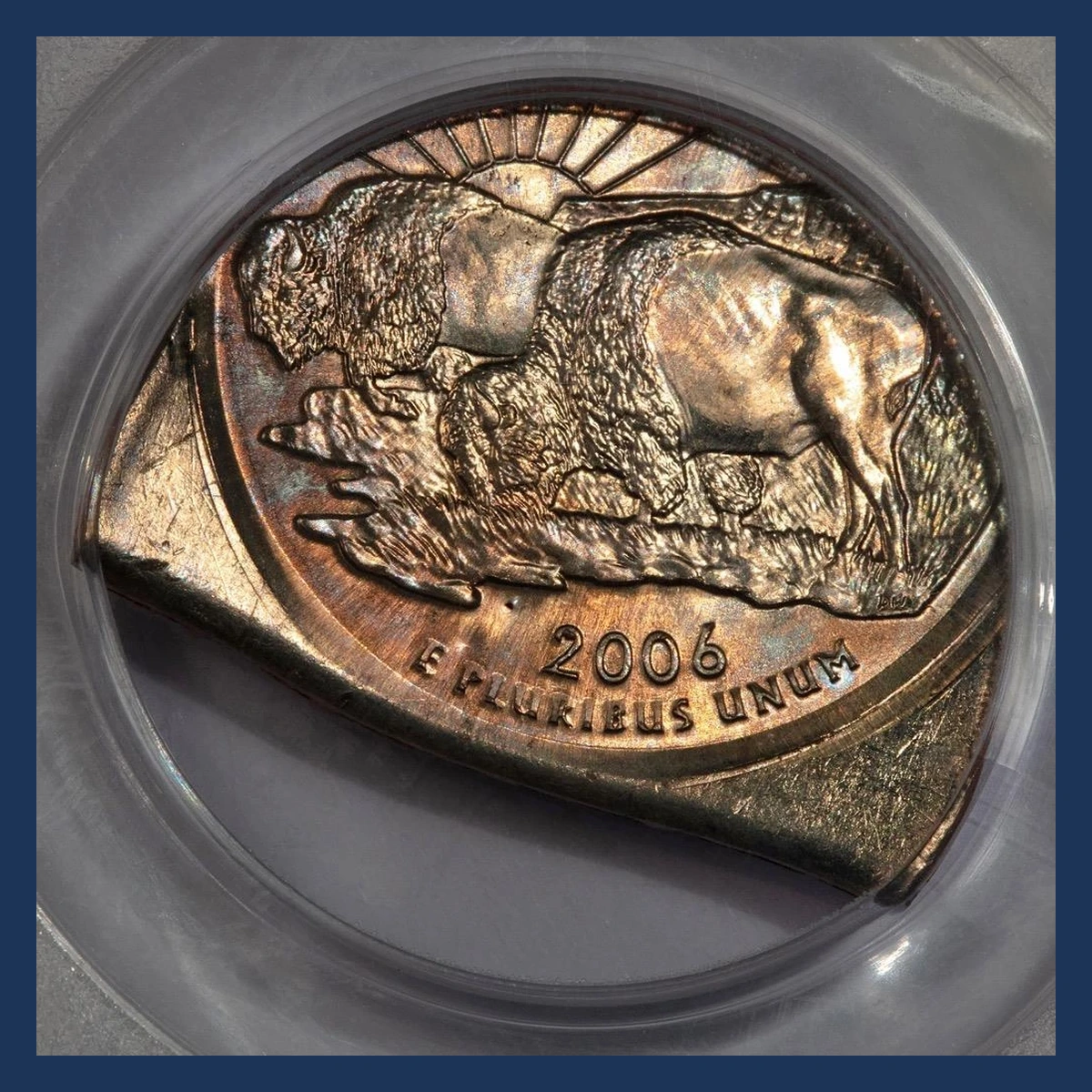
A blank with missing metal can produce a curved bite, a straight cut, or an oval finished coin. These shapes begin before the quarter receives its design.
Nevada reports include a 4% clip near 9:30 and separate multiple-clip examples. Cataloged oval blanks include North Dakota, Colorado, Nebraska, and South Dakota.
The Colorado oval example weighs 4.6 grams, while the Nebraska example weighs 4.9 grams. Those measurements belong to different coins.
Another North Dakota report combines a 33% straight missing section with a 30% off-center strike. Its missing metal and displaced design are two features of one compound error.
Estimated Value
Estimate $30–$250 for smaller genuine clips and roughly $150–$900 for strong oval blanks or clearly combined errors. These ranges concern complete ordinary clad coins.
A 1999-D Pennsylvania quarter with overlapping clips sold for $74 in December 2024. Its shape is different from the 2006 oval and straight-cut examples.
The North Dakota combination should receive one whole-coin price rather than separate premiums added mechanically. The size of the gap, original surfaces, and the clarity of the strike all affect demand.
How to Identify
Compare the whole outline with a normal quarter before naming the clip. Oval blanks, a straight missing section, and Nevada’s smaller curved cuts are different shapes.
Record the actual weight with a scale and dimensions with calipers against 5.67 grams and 24.26 millimeters. Colorado’s 4.6-gram and Nebraska’s 4.9-gram examples do not provide measurements for other coins.
Use a 10× magnifier on missing boundaries and surviving edge grooves. Natural cut-and-break surfaces differ from filing or later sawing.
For North Dakota’s compound error, inspect the straight missing section separately from the blank areas caused by the displaced strike. The same coin must show both features before that combined identification applies.
9. 2006 Washington State Quarter Blocked Strikes and Dropped Letter Impressions
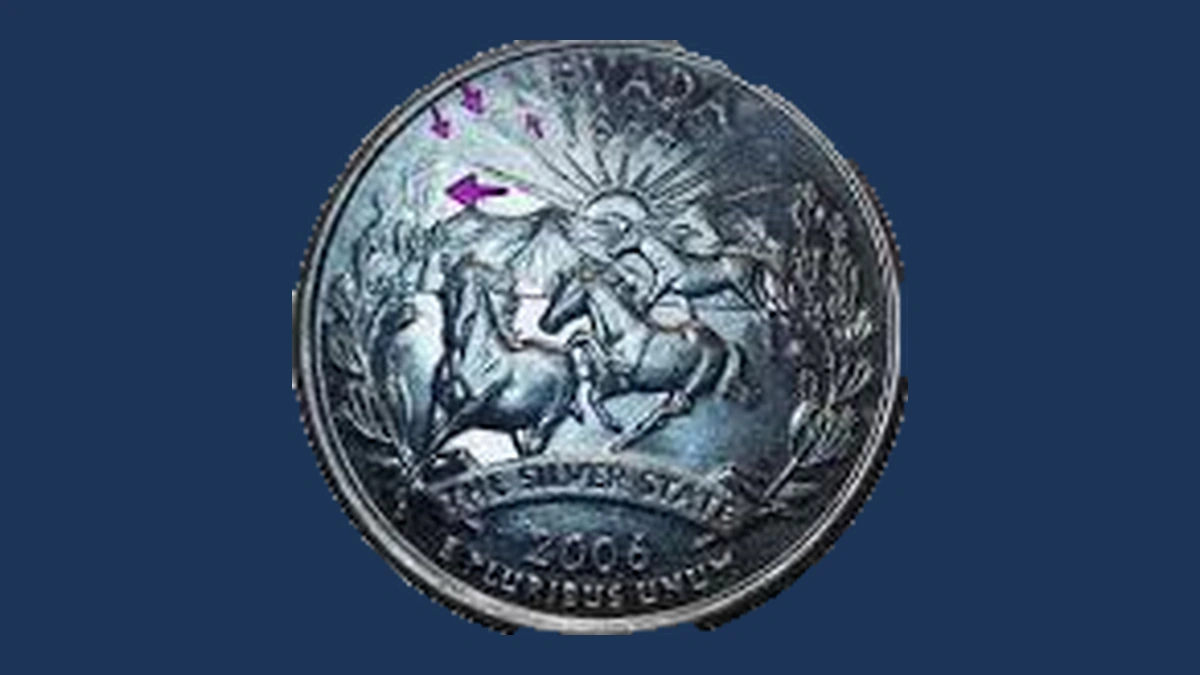
An object between the blank and the stamping tool can leave a depression or prevent part of the design from forming. Nevada, Nebraska, and South Dakota have reports of this type.
North Dakota also has letter-shaped impressions. Packed material can fill a letter in the tool, fall out, and be pressed into another part of a coin.
A Denver example has a recessed Y on the front. A Philadelphia report describes a recessed R below and left of Washington’s neck.
These are sunken displaced letters, not raised doubled-tool details. Their letter shapes make this a distinctive form of struck-through error.
Estimated Value
Ordinary small blocked-strike errors are estimated at $10–$250. Clear dropped-letter impressions can reasonably fall around $200–$1,200, depending on condition and legibility.
The North Dakota Denver dropped-Y coin sold for $780 at Heritage on October 6, 2021. PCGS graded it MS65, meaning unworn with relatively few marks.
The separate Philadelphia R and other states’ blocked areas need their own assessments. The Y result should not be assigned automatically to an ordinary weak letter.
How to Identify
View the unexpected letter under a 10× magnifier with the light coming from the side. A dropped Y or R should sink into the face instead of rising as a second design outline.
Compare it with the intended lettering. The Philadelphia R lies below and left of the neck, while the Denver Y belongs to a separate example.
Weigh and measure a loose ordinary clad coin against 5.67 grams and 24.26 millimeters using a scale and calipers. A pressed filling need not remove metal.
Inspect the other face and grooved edge for later impact damage. An undamaged surrounding surface and a naturally pressed letter-shaped depression support a dropped filling more than a scratched outline does.
10. 2006 Washington State Quarter Designs Struck on the Wrong Metal Piece
The North Dakota design appears on an oval steel washer with an off-center hole. This Philadelphia example weighs 2.6 grams and is magnetic, unlike an ordinary quarter.
Part of the rim survives on the left, while the smaller metal piece cuts off some right-side design. PCGS graded it MS62, an unworn grade.
Nevada has a separate report of a quarter design struck on a dime blank. That smaller bonded-layer blank is entirely different from the washer.
Both involve the wrong object entering the quarter press. Neither should be confused with drilling or shrinking a normal quarter afterward.
Estimated Value
The North Dakota steel-washer coin sold for $8,625 at Heritage on August 11, 2011. A reasonable estimate for a comparable authenticated piece is $6,000–$12,000.
The Nevada dime-blank type is more modestly estimated at $500–$2,500, subject to a correct blank identification. Its reported mechanism does not inherit the steel washer’s exceptional price.
These ranges describe different whole coins. A drilled hole or low weight alone cannot establish either error.
How to Identify
Measure a loose candidate with a scale and calipers before judging its missing design. A normal quarter is about 5.67 grams and 24.26 millimeters, while a clad dime blank starts near 2.268 grams and 17.91 millimeters.
The washer is different again: its recorded weight is 2.6 grams and its steel responds to a magnet. Its hole existed before striking, rather than being drilled through a finished quarter.
Use a 10× magnifier on the hole, outer boundary, and edge. Neither a small dime blank nor the washer must carry complete quarter-style grooves.
Match the design’s natural fit to the metal object. Tool marks from drilling or cutting a normal quarter defeat that explanation.
Conclusion
The estimated $2–$12,000 spread reflects the difference between minor tool damage and an unusual object struck as a quarter. Each range concerns a whole coin, not separate prices to add for every abnormal feature.
Check the actual 2006 date rather than the statehood year, then compare the correct state design. Preserve original surfaces and record weight and size before deciding whether an unusual appearance is a valuable minting error.