1997 Quarter Error List with Pictures

A quarter made on nickel metal can be worth far more than its face value. A 1988-P nickel-blank quarter sold for $852 in October 2021; this comparison is from a different year.
This 1997 quarter error list covers doubled details, missing metal layers, unusual clips, and wrong blanks. Estimated prices run from $2–$2,500, depending on the confirmed error and condition.
Look closely at the edges and pictures as you explore the examples below.
1. 1997 Washington Quarter Doubled Design Details
Two raised edges on a letter can attract attention before you notice anything else. A doubled die is a stamping tool that carries a doubled part of the design.
Coins made with that tool can repeat the same extra detail. Reports for 1997 cover both the front and back, without a specific mint or tool pattern established.
The front checks include the motto and lettering; the back checks include letters and parts of the eagle design. These are search areas, not proof that every thick letter is valuable.
Estimated Value
For a confirmed doubled-tool variety, a working estimate is $5–$300. Strong, clearly separated details and an unworn surface would support the higher end.
The range does not assign a premium to every reported 1997 example. Flat doubling caused by movement during the strike usually has much less collector interest.
A recognized match matters more than dramatic lighting. Small blurred details can be difficult to separate from wear, so an attractive photograph alone should not set the price.
How to Identify
Pick one letter with an apparent second edge and change the lighting. Look for rounded, raised separation rather than a bright reflection that disappears.
Follow that feature into nearby letters or artwork. A repeatable arrangement is more useful than unrelated thick spots scattered across the coin.
Flat, shelf-like ledges can come from movement during striking. Worn tools can also make letters look wider without creating a valuable doubled design.
Photograph the date, mintmark, and both faces clearly before comparing individual close-ups. A variety specialist can then match the actual pattern instead of applying another year’s name to a similar-looking mark.
2. 1997 Washington Quarter Raised Cracks and Rim Breaks
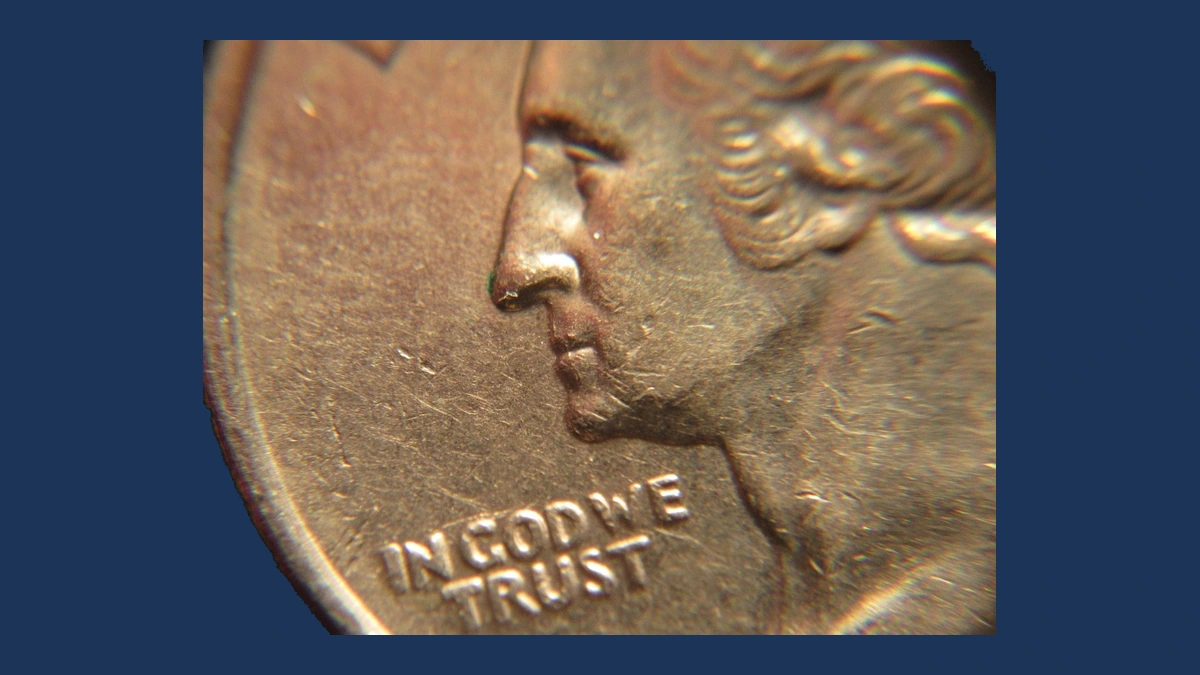
A fine raised line can appear when metal fills a split in the stamping tool. As the tool wears further, the line may become longer or more noticeable.
A piece breaking away at the tool’s edge can leave a larger raised patch connected to the coin’s rim. That patch is called a cud.
The 1997 report does not establish one exact path or mint. Judge the physical line or patch rather than expecting a particular mark on Washington or the eagle.
A scratch cuts into an already finished coin.
Estimated Value
Small genuine raised cracks may bring about $2–$25. A larger, clear rim break can raise the estimated range to $25–$300.
The amount of missing design helps explain that difference. A thick patch replacing letters is usually easier to appreciate than a tiny line visible only under strong magnification.
These estimates apply to original mint-made features. A cut, dent, or added lump has a different cause and does not earn the same error premium.
How to Identify
For a large raised patch, find its connection to the rim first. A cud replaces part of the design there, while an isolated interior lump has a different shape.
Use a magnifier to follow any thin line running away from the patch. Turn the lamp sideways so shadows reveal whether the line rises above the surface or cuts into it.
A scratch may cross letters, but a raised crack can also run through normal design. Crossing a letter alone therefore does not distinguish the two.
Photograph the whole affected face before moving closer. Include the rim connection and the raised surface together so the close-up shows what was actually replaced.
3. 1997 Washington Quarter Struck-Through Marks
A small object or soft material can interrupt a coin’s picture while it is being stamped. The result may be a shallow impression or an area of weak detail.
This is called a struck-through error because the tool presses through the unwanted material. Grease can soften detail, while a firmer object can leave a clearer outline.
The 1997 report does not identify the material or affected face. A particular hole or line therefore needs its own examination.
Later dents, scratches, and corrosion can also remove detail, but they form after the original picture.
Estimated Value
The practical estimate runs from $10–$1,000, with the upper end reserved for a large, convincing impression on a well-preserved coin. Small areas of weak detail belong near the lower end.
Shape, size, and surviving design provide the useful comparisons. An obvious foreign-object impression attracts different interest from a slightly blurred letter.
A retained object would need to remain physically present. Do not price an empty depression as a coin still holding the material that caused it.
How to Identify
Compare the affected patch with the nearest normal letters or feathers. Identify what is weak, what is missing, and where the change begins.
Examine that boundary under light from several directions. A later impact can flatten finished design and push metal aside; corrosion often leaves a rough or pitted surface.
A smooth interruption made during striking should fit the way the surrounding picture formed. Its appearance alone may not reveal whether grease or a solid object was involved.
Keep both faces in your photographs and avoid scraping inside the impression. An error specialist can evaluate the untouched boundary much more reliably than a cleaned or enlarged mark.
4. 1997 Washington Quarter Missing Outer Metal Layer
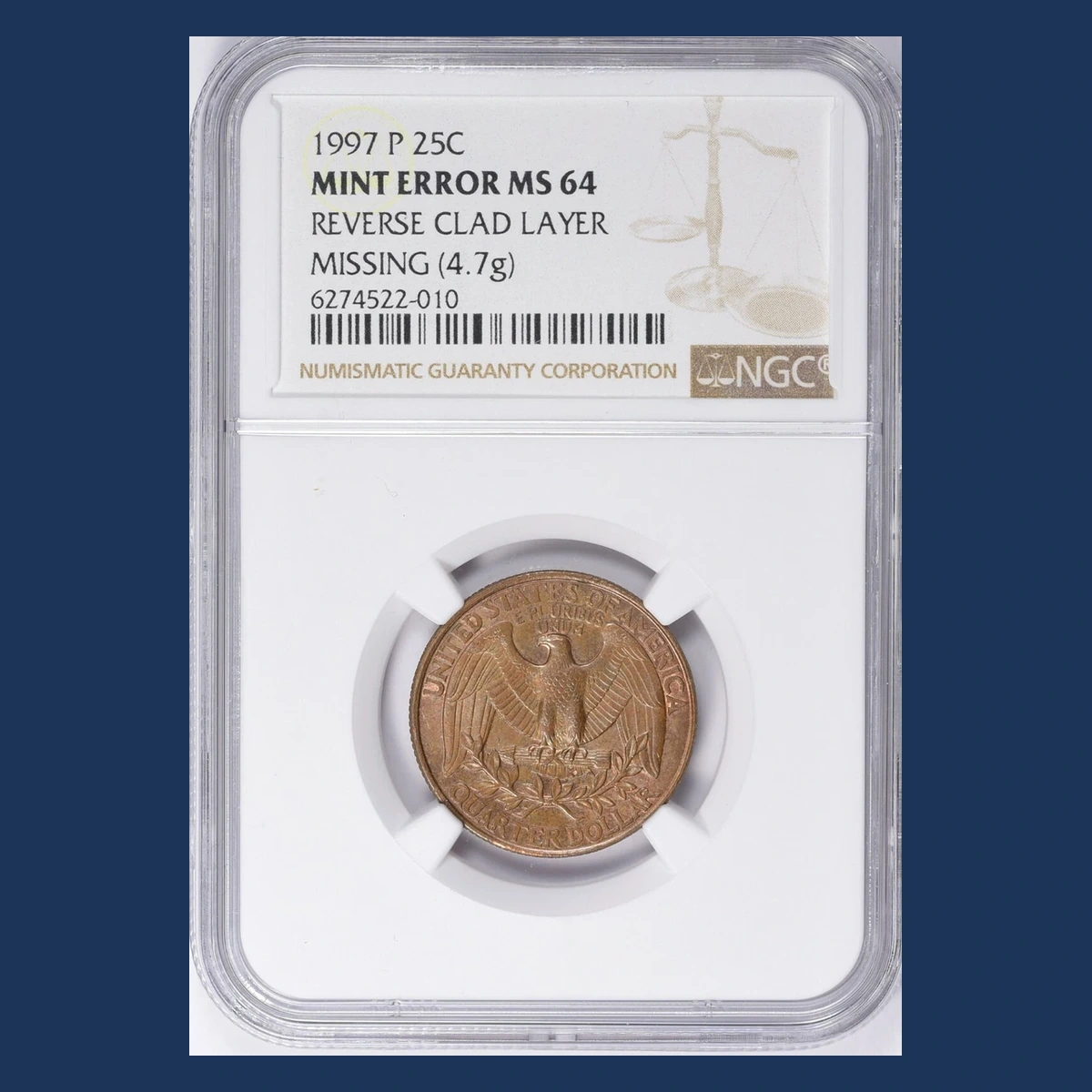
A brown face on a clad quarter may be exposed copper rather than ordinary toning. The coin normally has pale outer layers bonded to a copper center.
One 1997-P report describes about 80 percent of the front layer missing. A Denver example combines front-layer loss with a curved clip near eight-thirty.
A separate back-layer example was graded PCGS MS63, but its mint is not established here. These coins do not all have the same missing face.
The 1997-S silver Proof, specially made for collectors, is a different normal material. It should not be judged as a clad quarter.
Estimated Value
Allow roughly $50–$1,000 for genuine partial or complete outer-layer loss. A large, clearly struck copper surface generally makes a stronger comparison than a small patch.
The Denver coin’s clip is part of the same object. Its combined appearance can influence the total value, but two separate price ranges should not be added together.
Brown paint, chemical damage, and normal toning do not qualify. Original surface detail and proof of actual metal loss are the basis for this estimate.
How to Identify
Brown color by itself proves little. On the Philadelphia example, find where exposed copper meets the surviving pale layer across the front.
Look closely at that border under a magnifier. Staining can cross an unbroken surface, whereas missing metal leaves a genuine interruption in the outer layer.
A loose coin can be checked with a scale against the normal clad weight of 5.67 grams. Reduced weight supports metal loss, but chemical stripping can also make a coin lighter.
Turn the coin over before deciding which face lost metal. Copper showing only along the normal edge is expected.
The Denver combination also needs its curved clip near eight-thirty. Compare that notch and the exposed front copper on the same coin.
5. 1997 Washington Quarter Clipped Blanks with Unusual Edges
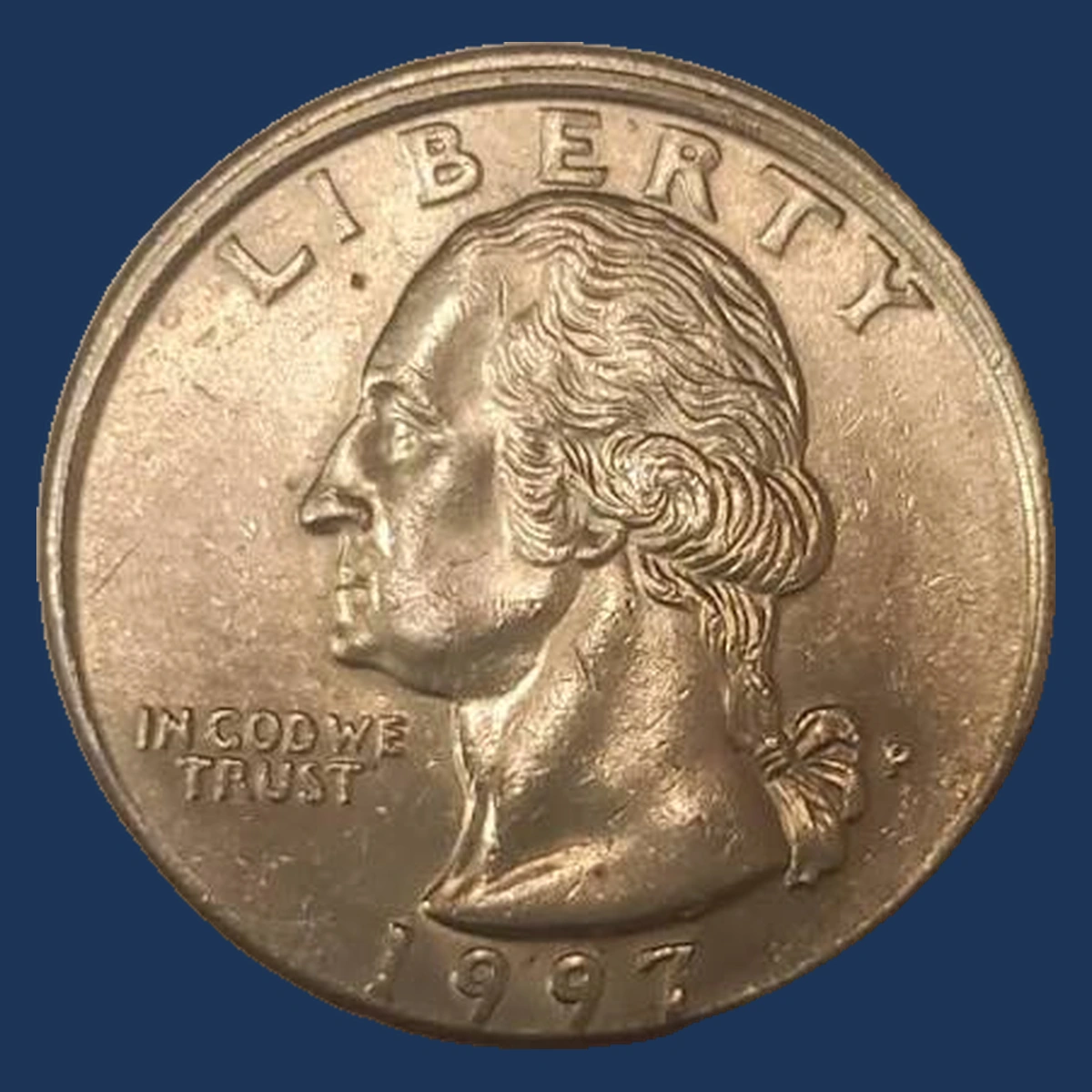
A curved bite or straight missing section can start before a coin receives its design. The metal blank was cut from an incomplete area of the strip.
A 1997-P example has a 31 percent curved clip and a stepped edge from partial contact with the collar, the ring that controls coin size.
Another Philadelphia coin has a 21 percent straight end clip and spread outward without normal collar support. That spread is called a broadstrike.
The older three-clip, off-center claim remains separate and needs confirmation; it does not describe either of these two coins.
Estimated Value
Simple authentic clips may fall around $25–$300. Large clips with a convincing stepped edge or broadstrike can extend the estimated range to $300–$1,500.
The percentage describes missing metal, not a direct price multiplier. Preservation, size, and how clearly the combined features show all affect collector interest.
Price each coin as one object. The Denver clip with front-layer loss discussed above is another combination, and the unconfirmed three-clip report should not inherit the documented examples’ grades.
How to Identify
Compare the two Philadelphia examples as separate coins: one has a large inward curve, and the other has a straight missing end. Under a magnifier, examine where the original rim approaches each opening.
Fresh cutting marks or squeezed metal suggest a later alteration rather than an incomplete blank. For the 31 percent curved clip, turn the coin sideways and find the step between the restrained and expanded edge.
The 21 percent straight-clip example instead spread without normal collar support. Check the remaining picture around its wider outline; a separate off-center claim requires a shifted design with an unstruck area beyond it.
6. 1997 Washington Quarter Off-Center Strike with Press Scrapes
This Philadelphia quarter combines a small design shift with unusual scrapes. A compressed lip appears on the front’s right side near two-thirty.
Some disturbance affected the blank before or during stamping. Other scrapes cross newly formed details, showing that contact continued after the picture appeared.
The sequence is described as trans-strike damage: damage spanning the strike itself. It is different from assuming every scratch was made later in circulation.
The exact machine part responsible is not established. The coin’s connected pattern, rather than a guessed piece of equipment, provides the useful evidence.
Estimated Value
A confirmed 1997 example with this combined pattern has an estimated range of $150–$1,500. This is a comparison range, not a recorded sale of the illustrated coin.
Its interest comes from the relationship between the shifted picture, compressed metal, and scrapes. A minor off-center strike alone would not explain the whole example.
Clear original surfaces preserve that sequence best. An ordinary scratched quarter cannot receive the same estimate merely because some marks happen to point in a similar direction.
How to Identify
Start with the raised or compressed lip near two-thirty, then trace the disturbed metal toward the blank crescent. Keep the entire front visible during this comparison.
Look at the last letters of LIBERTY and the lighter scrapes across Washington and the nearby background. Compare marks crossing finished detail with disturbed areas that affected the strike.
The opposite border near DOLLAR can help show how the metal was compressed. Study both faces as one event, not as unrelated close-ups.
Mike Diamond’s illustrated explanation provides the specific comparison. Matching that sequence is more useful than guessing the machine part from one scratch.
7. 1997 Washington Quarter Struck on the Wrong Metal Blank
The quarter design can land on metal intended for another coin. This creates a mismatch between the large picture and the blank receiving it.
Two 1997-P nickel-blank examples were cataloged as ANACS AU58, a grade showing slight wear. A dime-blank example graded NGC MS66 weighs 2.2 grams.
A separate NGC MS64 coin weighs 4.66 grams and was attributed to a foreign blank. It has strong central detail, weaker borders, and a rose-colored edge.
That foreign attribution does not establish a country or exact alloy. Color alone cannot supply either answer.
Estimated Value
For genuine 1997 wrong-blank quarters, estimate $150–$2,500, depending on the metal, surviving design, and condition. A securely identified unusual blank can bring stronger interest.
As a different-year comparison, a 1988-P quarter on a nickel blank graded NGC MS66 sold for $852 in October 2021. That result is not a sale of either 1997 AU58 coin.
The 4.66-gram foreign-blank example was unsold in its May 2004 auction. No winning price is implied for that listing.
How to Identify
The dime-blank example offers a starting point: its measured weight is 2.2 grams, with the quarter picture crowded onto smaller metal. Compare the cropped outer letters with the parts of the portrait and eagle that remain.
Use a scale and calipers on a loose coin. A standard nickel blank weighs 5 grams, but neither reported AU58 coin has that measurement confirmed.
A nickel blank lacks the copper-colored center visible at a normal clad quarter’s edge. The foreign example has a rose-colored edge and weighs 4.66 grams.
Keep those different possibilities separate when requesting metal testing from a specialist. Inspect for filing around the edge before treating any small, light quarter as a wrong-blank error.
Conclusion
For 1997 quarters, the shape and surface explain more than an unusual color alone. A clipped edge, missing layer, or design struck on the wrong blank each tells a different story.
The errors discussed here have estimated values of $2–$2,500. Keep the date and mintmark visible in photographs, and protect the original surface before seeking an error specialist’s opinion on a valuable candidate.