1981 Quarter Error List with Pictures

An extra date can tell a much bigger story than a thick letter. A 1981-D quarter struck again after flipping over sold for $7,200 in August 2020.
This 1981 quarter error list follows misplaced impressions, damaged stamping tools, and unusual metal blanks. Estimated prices range from $5–$12,000, with the highest band reserved for a matching two-coin error pair.
Start with the feature you can see, then compare its shape with the examples below.
1. 1981 Washington Quarter Raised Cracks and Unusual Mint Letters
A thin raised line may cross the portrait, lettering, or date without following the normal design. A cracked die, the stamping tool, can leave that extra ridge on a coin.
Year guides also describe filled mint letters beside Washington’s neck. A broken part inside a tool’s letter can leave extra raised metal where an opening should be.
These reports do not establish an exact crack route or named variety. Each specimen needs its own comparison.
A faint mint letter is a different appearance. It may reflect blocked detail or a weak strike rather than extra metal filling the letter.
Estimated Value
For genuine minor cracks or filled-letter tool defects, estimate $5–$250. Small, common-looking features often attract only modest premiums.
The estimate requires original raised metal and a convincing mint-made explanation. Dirt inside a P or D, or a letter flattened by a later hit, should not receive the same treatment.
A larger, well-defined break can be more interesting than a tiny line. The exact pattern matters more than an unusual nickname attached to a blurry close-up.
How to Identify
Look at the suspected crack before zooming in on the mint letter. Trace whether the line rises above the surrounding portrait or lettering, then change the light to check its height.
A cut below the surface suggests a scratch. Metal pushed up beside a scratch can look bright, so inspect the groove between its edges as well.
For the P or D beside Washington’s neck, distinguish a raised filling from a shallow letter. Dirt or shadow inside the opening can look solid without being extra silver-colored metal.
Use a magnifier without scraping the surface.
A matching raised line or filled letter on another confirmed example is useful, while a weak letter needs a different explanation.
2. 1981 Washington Quarter Doubled Front and Back Details
Philadelphia WDDO-001 shows extra outlines toward the coin’s center on LIBERTY and the date. A weak raised dot beside the upper part of the final 1 helps identify it.
These features come from a doubled stamping tool. They are different from a coin receiving two widely displaced strikes.
Another catalog lists Philadelphia DDO-001, but a match to WDDO-001 has not been established. Compare the actual repeated shapes before treating catalog names as different varieties.
Denver front doubling and back doubling are also reported. Their identification depends on their own repeated outlines, rather than the small Philadelphia dot.
Estimated Value
An estimated $10–$400 applies to identified doubled-design varieties in commonly collected condition. Clear repeated outlines on original surfaces are easier to demonstrate than faint thickness on worn letters.
The range is a whole-coin estimate for a correctly matched variety. A second catalog name for the same pattern would not add another premium.
Wear, cleaning, and flat strike doubling can make a weak example difficult to compare. Match the actual pattern before using a variety price.
How to Identify
The Wexler photographs give a specific starting point for Philadelphia WDDO-001: inward spread on LIBERTY and the date. Under magnification, follow the extra outlines toward the center of the coin.
Find the weak raised dot to the upper right of the final 1 next. That small companion mark helps distinguish this pattern from a letter made wider by wear or movement during striking.
The reported back doubling calls for a different search through E PLURIBUS UNUM, the denomination, and eagle feathers. Keep several letters visible together and compare their repeated raised outlines, rather than accepting one flat shelf beside a letter.
3. 1981 Washington Quarter Letter Tips Repeated on the Rim
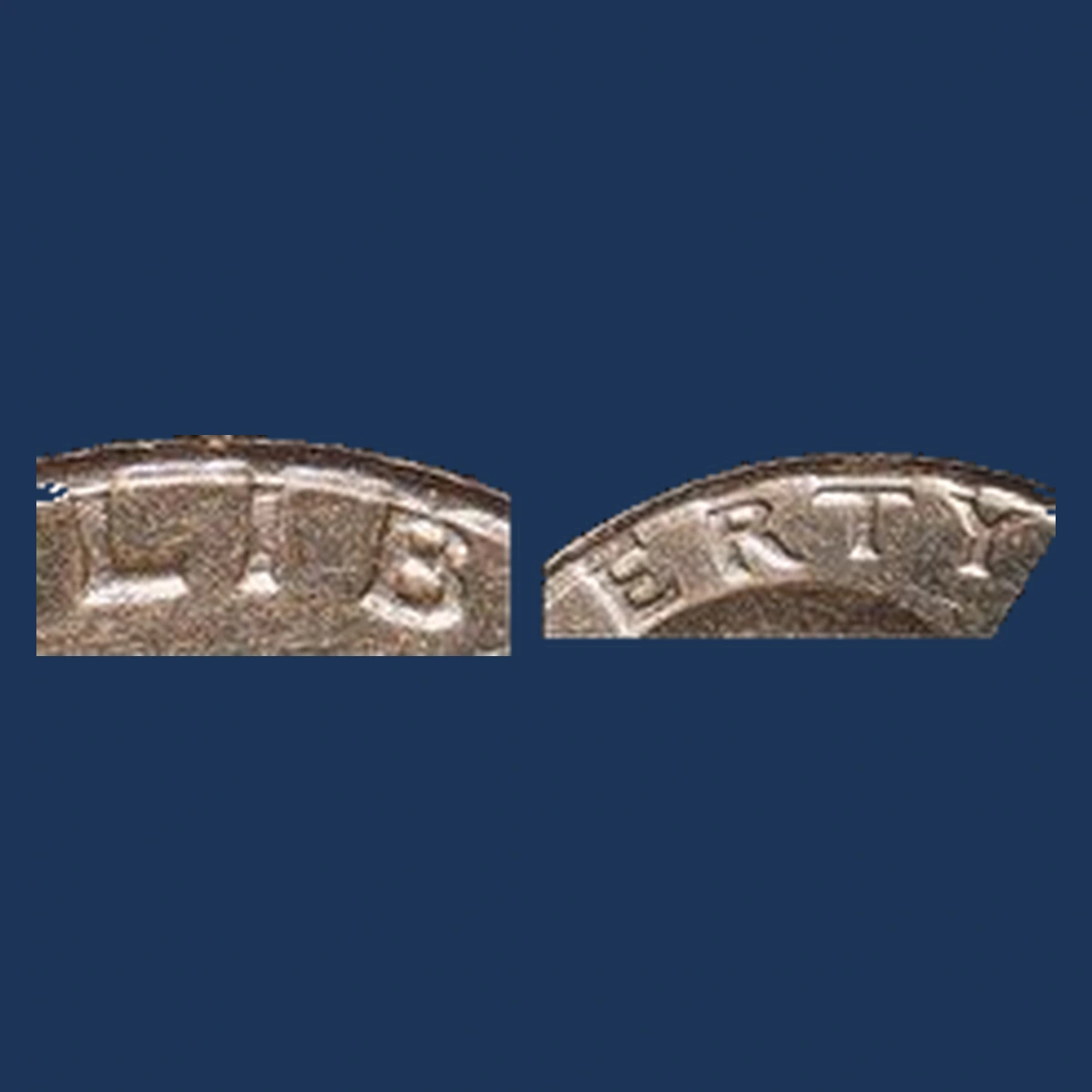
Parts of LIBERTY appear again on the raised rim of a Philadelphia example. This is a local rim duplication, not a complete second portrait or a conventional doubled-tool variety.
Error specialist Mike Diamond examined the coin directly after photographs had suggested a different explanation. The letter tips and tiny outward-flowing lines were copied onto the rim.
The spaces between the repeated tips were flattened by the tool’s surface. Separate sliding marks appear below BERT.
That combination records unusual contact during striking. It needs to be compared as a whole rather than reduced to one thick letter.
Estimated Value
Estimate $50–$500 for a confirmed comparable rim-duplication error. The documented examination supplies an identification example, without a completed sale used here.
Clear letter tips and preserved surrounding surface provide more convincing evidence than a rough or damaged rim. Later flattening can obscure the tiny features that distinguish this appearance.
This estimate does not use rare doubled-die prices. The repeated rim detail and sliding marks describe a different event, even though both can make letters appear more than once.
How to Identify
Begin above LIBERTY, where the upper tips repeat on the rim itself. Compare their spacing with the letters directly below them.
In the spaces between the tips, look for the flattened rim surface and copied fine outward lines described in Diamond’s examination. These small relationships distinguish the example from random rim damage.
Next inspect the lower edges of BERT for the separate sliding effect. Photograph the upper rim and lower letter edges under the same lighting.
A straight-on photograph can hide height and texture. Have the physical coin examined when the tiny rim features cannot be resolved clearly enough to match the documented example.
4. 1981 Washington Quarter Partial-Collar Strike
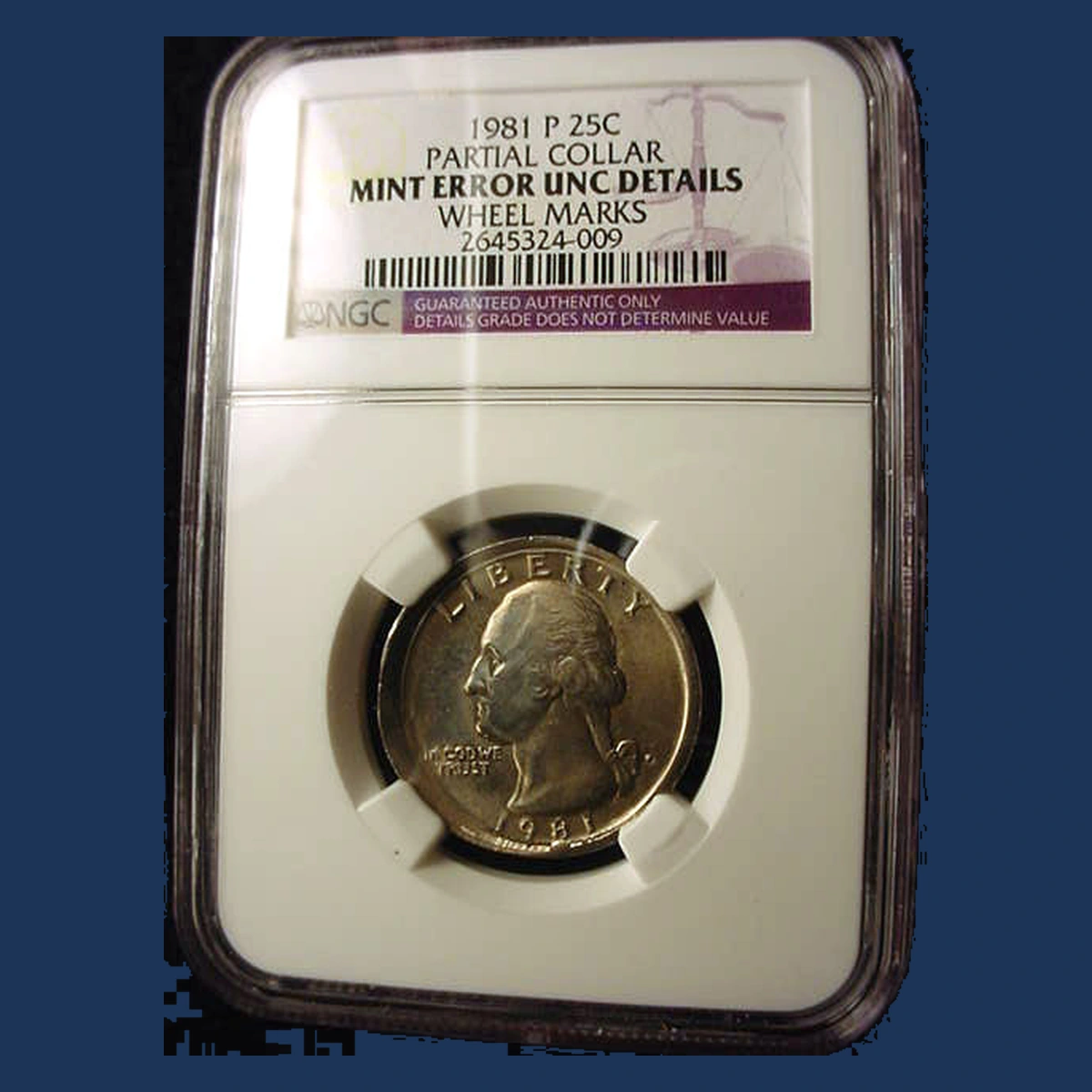
The ring surrounding a quarter blank normally controls its width and creates the grooves around its edge. That ring is called the collar.
If only part of the blank sits correctly inside it, the edge can develop a step. One portion is held while another expands differently.
A 1981-P example was cataloged by ANACS as AU Details with a net XF40 assessment because of damage. Its original mint error and later damage were both recorded.
Its edge needs to be viewed in profile. Later squeezing can damage the same area and make the original step harder to judge.
Estimated Value
For a genuine partial-collar 1981 quarter, estimate $20–$500. A clear original edge step on an otherwise attractive coin offers a stronger comparison than an extensively damaged specimen.
The cataloged example’s net grade reflects its problems as well as its wear. It should not be presented as a clean, problem-free coin with the same number.
Edge shape is the main attraction here. A normal quarter with grooves worn or filed away does not automatically belong in this price group.
How to Identify
Hold the edge at eye level and turn the coin slowly through a full circle. Look for a step between the portion restrained by the collar and the metal that expanded beyond it.
A magnifier can show surviving grooves beside that change in height. Photograph the edge in profile so the step remains visible, then inspect the nearby front and back for crushed or squeezed details.
A quarter flattened after striking may have damaged grooves and a distorted rim. Compare how the edge, grooves, and adjoining design formed together, keeping the known specimen’s later damage separate from the original stepped shape.
5. 1981 Washington Quarter Defective Bonding on the Back
The eagle side of one Philadelphia quarter has a defect in its clad covering. The coin was cataloged as having defective cladding on the reverse.
Cladding means the outer metal layers bonded to a copper center. A failed bond or irregular outer layer can affect only part of a face.
The recorded specimen weighs 5.6 grams and was graded NGC MS63. That grade describes an unworn coin with visible marks.
A local defect can leave much of the normal covering intact. A whole missing layer or a raised flap would have a different visible outline.
Estimated Value
Estimate $30–$600 for authenticated local cladding defects on a 1981 quarter. The size and clarity of the affected area influence how readily collectors can understand it.
A recorded NGC MS63 back-cladding example sold for $312 in June 2023. Its actual 5.6-gram weight helps keep that specimen separate from the lighter whole-layer-loss example below.
Color alone is a poor price comparison. A coin with ordinary discoloration should not receive the same premium as an original defect in bonded metal.
How to Identify
Find the boundary between the affected covering and normal metal on the eagle side. Take one photograph of the full reverse, followed by a close-up of that transition.
Examine any place where the irregularity reaches the edge. The visible layers can help connect the face defect with the coin’s construction.
Leave a loose flap alone.
For a loose candidate, a scale records its actual weight; the documented example weighs 5.6 grams. A sealed coin should stay in its holder while you check available measurements.
Look for torn, scraped, or corroded metal at the boundary and have a specialist assess the bond. An uneven original covering needs to be separated from metal removed after minting.
6. 1981 Washington Quarter Reported Thick Blank
A thick metal blank can produce a heavier quarter even when the design looks familiar. The important clues are its thickness, composition, and weight together.
A historical error-coin trading table lists a 1981-P example weighing 6.75 grams. It describes XF condition, meaning visible wear, and separately notes a front scratch.
The listing identifies thick metal, without naming a foreign blank. Extra weight alone does not establish which country or denomination the blank was intended for.
The scratch is later damage unless evidence shows otherwise. It should not be used to explain the blank’s extra metal.
Estimated Value
For an authenticated thick-blank example of this kind, estimate $50–$750. Accurate measurements and confirmed metal composition are more useful than a claim that the coin simply feels heavy.
The 6.75-gram coin is worn and scratched, making it a weaker comparison for a pristine example. Surface damage can reduce interest even when the original extra thickness is demonstrated.
A heavier coin can also be altered after minting. Added plating or attached material needs to be excluded before assigning this error premium.
How to Identify
Compare the thickness around several parts of the edge rather than measuring only a raised rim. A normal quarter weighs about 5.67 grams; the reported 6.75 grams is a separate specimen measurement.
Check the scale with a known reference and photograph the result alongside the coin. Do not confuse packaging weight with the weight of the metal.
Then examine the faces and edge for added coatings, seams, or attached material. A metal test can help establish whether the heavier blank has the expected composition.
Inspect the front scratch separately from the edge measurements. The evidence for a thick blank is excess original metal, not a damaged surface or a heavy feel in the hand.
7. 1981 Washington Quarter Broadstrike
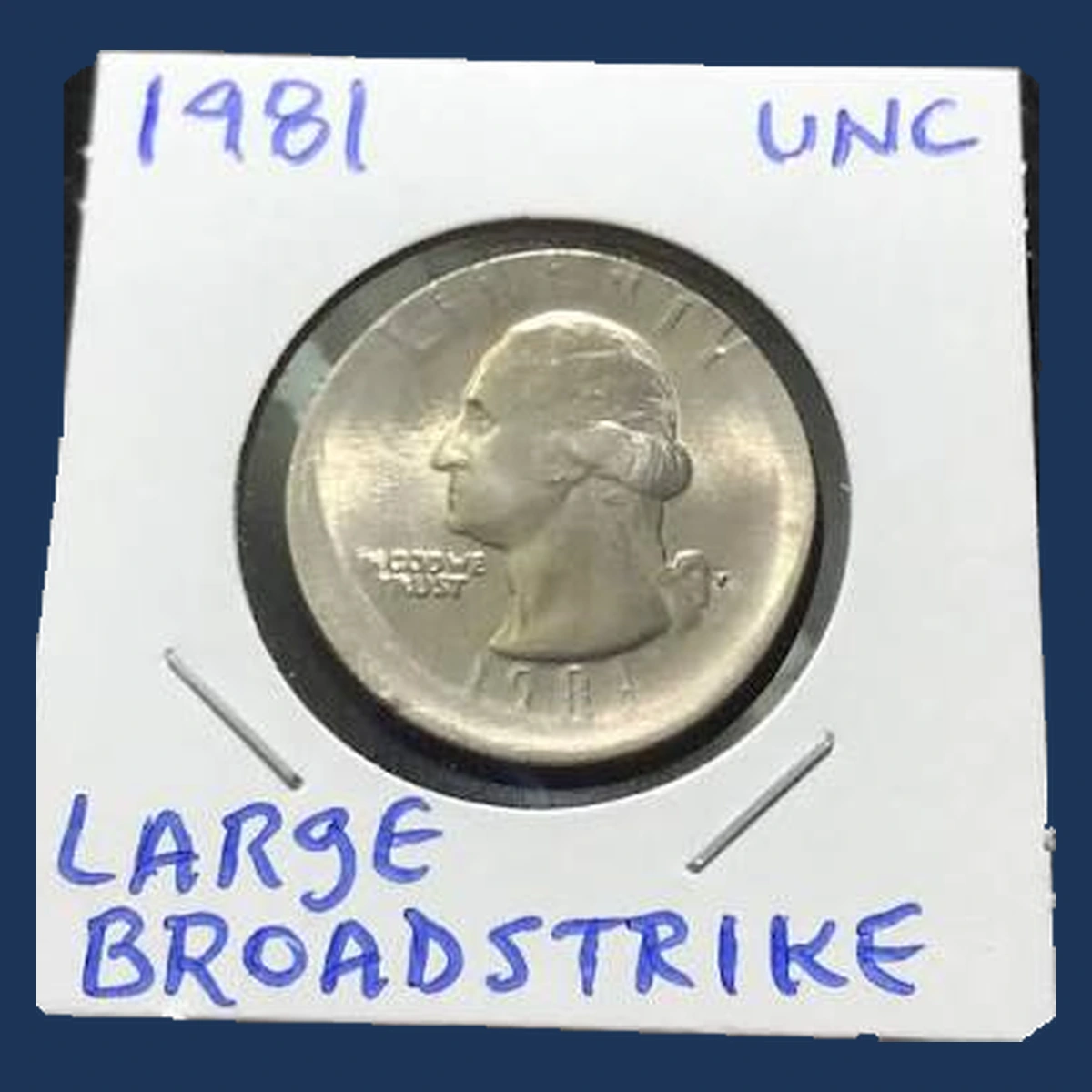
A quarter can spread outward when its surrounding collar fails to hold the blank. If the complete design remains on the metal, the result may be a broadstrike.
The outside border can be uneven even when no intended lettering is missing. That differs from an off-center strike, where part of the design falls outside the blank.
A year guide reports this type for 1981 without identifying a mint or specimen. Each candidate therefore needs its own edge and design checked.
The matching two-coin pair later in this guide includes a broadstruck piece. Its additional features belong to that specific pair.
Estimated Value
Use an estimated $25–$800 for a genuine ordinary broadstrike. Clear expansion with well-preserved design usually gives collectors more to compare than a barely altered outline.
This estimate concerns the general unrestricted-strike type. It does not borrow the much higher pair price from a quarter struck over a finished nickel.
Examine the complete coin when judging a listing. A smooth edge produced by wear or grinding is not enough to explain why the metal expanded during the original strike.
How to Identify
Check the complete outer design first, including LIBERTY and every letter around the eagle on the other side. A broadstrike retains the intended design even if the surrounding metal has spread unevenly.
Measure a loose coin with calipers across several directions and compare with the normal diameter of about 24.3 millimeters. Different readings can show uneven expansion, but an oversized outline alone does not prove the cause.
Inspect the edge and letters for later hammering or squeezing. The expanded border should fit an original unrestricted strike, while design genuinely missing beyond an unstruck crescent points instead to an off-center placement.
8. 1981 Washington Quarter Missing Clad Layer
Copper-colored metal can cover most of one face when a quarter loses an outer layer. The loss also reduces its weight.
A Philadelphia example was cataloged at 4.73 grams and graded ANACS MS62 Brown. The text identifies missing cladding but does not say which face is exposed.
Denver examples are also mentioned in year reports. A Denver coin would need its measurements and photographs to show how much covering is missing.
A brown surface by itself can come from toning or other changes. A genuine missing layer needs evidence that metal is absent, not simply that its color looks different.
Estimated Value
Estimate $50–$1,200 for authenticated missing-layer 1981 quarters. The extent of the loss, remaining design, and overall condition help determine the closest comparison.
The documented Philadelphia coin weighs 4.73 grams, substantially below a normal quarter’s approximately 5.67 grams. Its MS62 grade describes an unworn surface with noticeable marks.
A nearly complete exposed face can be easier to appreciate than a small irregular patch. Scraping away the outer metal later does not create the same mint error.
How to Identify
Weigh a loose candidate on a checked scale before deciding what its brown color means. A normal quarter is about 5.67 grams; the documented Philadelphia missing-layer coin is 4.73 grams.
Then compare both faces in the same light. Is one face largely copper-colored while the other retains its pale covering?
Inspect the edge for the remaining outer layer and exposed copper center.
Under magnification, follow the boundary for scraping, chemical roughness, or peeling added after the design was struck. Original design on exposed copper helps show how the surface formed.
The catalog does not name the Philadelphia coin’s affected side, so use its photographs for that match. The color, lost weight, and original surface must support the same explanation.
9. 1981 Washington Quarter Strike from a Covered Tool
A coin stuck over a stamping tool can interfere with the next blank’s design. The trapped covering spreads or changes as further pieces pass through.
A Philadelphia example was cataloged as a capped-die strike with an NCS Uncirculated Details assessment. The holder also noted improper cleaning.
The affected coin is different from the die cap itself. The cap is the stuck object that covers the tool and obstructs later strikes.
Compare both faces to find the distorted or missing detail. The opposite face can help show how an obstruction affected the strike.
Estimated Value
Estimate $100–$1,500 for genuine covered-tool strikes of comparable appearance. The amount of distortion and the remaining recognizable design are important price factors.
PCGS’s auction record lists the cleaned NCS example at $633 in July 2009. Uncirculated Details means its design has no circulation wear, but the cleaning prevents a normal numerical grade.
Cleaning remains relevant even when the mint error is genuine. A sharp, untouched example should be compared with similarly preserved coins rather than with the damaged surface alone.
How to Identify
Find the transition from recognizable design into a soft or distorted area, then compare the opposite face. Photographs of both sides are needed to judge which part of the strike was obstructed.
Blocked detail or weak pressure can also leave a faint patch, so examine how the surrounding design changes. A covered tool can spread or distort the picture as the trapped covering changes shape.
Check the holder’s description and keep its cleaning notation with the coin. Fine cleaning lines are a separate surface problem; ask a specialist whether the original distortion matches a covered-tool strike rather than ordinary weakness.
10. 1981 Washington Quarter Off-Center Strike, Sometimes with a Clip
A blank that misses its proper position receives only part of the quarter design. An unstruck crescent remains beside the shifted impression.
Year guides report Philadelphia and Denver examples. A cataloged Philadelphia coin combines a ten-percent off-center strike with a sixteen-percent curved clip.
The clip is metal missing from the original blank. It is separate from the crescent of metal left present but unstruck.
CACG graded that combined-error coin MS65, indicating an unworn surface. Its description supplies both percentages, but not a clock position for either feature.
The missing section and unstruck crescent show different changes to the same metal.
Estimated Value
The ten-percent off-center and sixteen-percent clipped example sold for $159 on June 29, 2026. Both features belong to that one CACG MS65 coin.
For genuine 1981 off-center strikes, estimate $25–$2,000. The amount of displaced design, readable date, and surface quality help explain the broad range.
A clip can add visual interest without guaranteeing a high price. Do not add two separate full-coin estimates just because the same quarter records two parts of the production accident.
How to Identify
Lay out photographs of both faces and identify the blank crescent first. Across from it, some intended artwork should run beyond the edge of the metal.
Now inspect the curved gap independently. Its wall and adjoining rim need to show that this metal was already absent when striking occurred.
Measure the displacement and the curved gap separately. The confirmed coin is ten percent off center with a sixteen-percent clip, but another example can have a different combination.
Examine the outer edge for later cutting or hammering before measuring the feature. A weak rim opposite a clip can help, but the strongest comparison combines the natural missing section with the original off-center design on the same coin.
11. 1981 Washington Quarter Front Die Cap
A metal cup can begin as a coin that fails to leave its stamping tool. Further contacts spread its metal around the tool and raise its sides.
The stuck object is called a die cap. A Philadelphia 1981 example was specifically cataloged as an obverse, or front, die cap.
NGC gave it an Uncirculated Details assessment and noted cleaning. It retained unworn details, but the altered surface prevented a normal numerical grade.
A deeper wall can make the cup shape easier to see. The exact number of blows cannot be read simply from the height of that wall.
Estimated Value
An estimated $300–$3,000 applies to genuine 1981 front die caps of this general kind. Wall development, recognizable design, and preservation all influence their appeal.
The recorded specimen has a cleaning qualification, which should stay with any price comparison. A Details assessment is not interchangeable with a problem-free numerical grade.
A shallow cap and a strongly developed cup may draw different interest. The estimate requires original minting evidence, since a finished quarter can be bent into a curved shape afterward.
How to Identify
Use a side view to show the height of the wall, then photograph the front design remaining at the base. Those two views explain the shape better than one overhead picture.
Examine the expanding metal for stretched design rather than sharp bends from later force. Check the opposite surface for evidence of repeated contact.
Compare the surviving impressions rather than guessing a strike count from the cup’s height. Keep the holder’s cleaning qualification with any photographs of the piece.
Do not flatten a cap or press it into a standard coin opening. A correctly fitted holder protects the raised wall while an error specialist compares its shape with a genuine stuck-coin example.
12. 1981 Washington Quarter Wrong Denomination or Foreign Blank
The same quarter design can look very different when pressed onto the wrong metal blank. A small blank loses outer lettering; another country’s similar-sized blank may look almost normal.
Philadelphia cent-blank and nickel-blank examples are documented. The cent example graded NGC MS64 Red-Brown weighs 3.1 grams.
A PCGS MS62 dime-blank coin is shifted toward two o’clock, with its mint letter outside the metal. Its mint cannot be assumed.
A Philadelphia quarter on a Dominican Republic twenty-five-cent blank has slightly weak high points. Its ANACS AU53 grade indicates some wear, not the identity of its metal.
Estimated Value
Estimate $150–$4,000 across these authenticated wrong-blank types. The blank’s identity and the surviving quarter design matter more than color alone.
The 3.1-gram cent-blank MS64 sold for $960 in April 2018. A different nickel-blank MS63 example appears in PCGS’s record at $322 in July 2008.
The Dominican-blank AU53 brought $178.25 in January 2003. Each sale belongs to its specific coin; the foreign example is not automatically the most expensive type.
How to Identify
A quarter picture on a small blank may lose its mint letter altogether. On the documented dime-blank coin, the design shifts toward two o’clock and the mint letter lies beyond the metal.
Compare the whole outline rather than naming its mint from the date.
For a copper-colored candidate, check its weight on a scale and its size with calipers. The recorded cent-blank example weighs 3.1 grams, while a normal 1981 quarter is about 5.67 grams.
Look for any older Jefferson or Monticello details on a suspected nickel blank. Their presence means a finished nickel was struck again.
The similar-looking Dominican blank needs a specialist’s metal and measurement check; faint high points alone cannot establish its origin.
13. 1981 Washington Quarter Struck over a Finished Coin
A finished nickel can pass through quarter tools and acquire a second denomination’s design. Parts of its original picture may survive beneath Washington and the eagle.
A Philadelphia quarter struck over a 1981 Jefferson nickel was graded PCGS AU58. The old nickel was flipped relative to the quarter design.
Traces of Monticello appear on Washington’s side, while parts of Jefferson’s design remain on the eagle side. The designer’s initials FS here are not a variety catalog number.
A year guide reports a Lincoln-cent overstrike. That requires surviving Lincoln or Memorial details, unlike a quarter struck on an unused cent blank.
Estimated Value
The confirmed quarter-over-1981-nickel example sold for $990 in March 2023. Its AU58 grade indicates slight wear.
Use an estimated $500–$6,000 for authenticated comparable double-denomination errors. Strong surviving host-coin details make the combination easier to identify and display.
The reported Lincoln-cent version needs that same physical evidence before this conditional range applies. A quarter struck on an unused cent blank is a different object, so its auction price cannot be presented as a confirmed Lincoln overstrike sale.
How to Identify
Find OF on the quarter’s back and inspect above it for the older FS initials and clothing lines. The original nickel date remnants appear below D STAT.
On Washington’s face, look above IN for RICA from the older nickel design. Other reported traces include EP and building detail near three o’clock.
Match several of these remnants before calling a small quarter a double-denomination error. A blank intended for a nickel has no old nickel picture to survive.
The separate Lincoln claim needs recognizable Lincoln or Memorial details in the same metal. Keep it distinct from the certified nickel example and do not infer the nickel host’s mint from the quarter’s P.
14. 1981 Washington Quarter Flipover Double Strike with an Indent
This Denver quarter turned over before it was struck again. Both strikes left a date and mint letter, with the second date appearing more sharply.
The accident involved more than a simple extra blow. During the first strike, another object left a partial indent across the lower back.
For the second strike, another blank stood between this coin and the eagle-side stamping tool. That obstruction changed what could form on the coin.
PCGS graded the surviving piece MS64, meaning unworn with visible marks. The two strikes and their accompanying contact features describe one complex specimen.
Estimated Value
The PCGS MS64 flipover example sold for $7,200 on August 15, 2020. That result covers its two strikes and the indent together as one complex error coin.
Estimate $2,000–$10,000 for an authenticated comparable error with a clear sequence of flipped strikes and contact features. Ordinary minor doubling is not a similar price comparison.
Both readable dates and strong surviving detail help explain this example’s appeal. Later damage or a less understandable overlap can reduce it.
How to Identify
Put full photographs of both faces side by side and locate each date-and-D combination. Find which older picture lies beneath the sharper second date, remembering that the coin turned over between strikes.
Trace the partial indent across the first strike’s lower back separately from the area blocked during the later blow. These marks must fit the same sequence as the two dates, rather than simply look crowded or doubled.
Compare each overlap with the original auction images and ask an error specialist to explain the contacts. Later pressure between finished coins can leave transferred pictures, but it must not be confused with the original flipped-strike sequence.
15. 1981 Washington Quarter Matching Nickel-Overstrike and Double-Strike Pair
Two surviving coins sometimes preserve their connection to one striking accident. This Philadelphia pair combines a quarter design over a finished Jefferson nickel with a separate double-struck quarter.
The nickel-host piece was broadstruck, meaning its metal expanded without normal restraint from the surrounding ring. Older nickel details remained part of the identification.
The companion received two strikes. The pair was cataloged together by Heritage with an NGC MS64 description.
The nickel’s date is not identified in that description. Older nickel traces and the two coins’ contact marks are the useful clues to their shared accident.
Estimated Value
The matching pair sold together for $6,600 on March 20, 2023. That was the total for both coins.
For an authenticated comparable pair, estimate $3,000–$12,000. The relationship between the pieces contributes to its appeal, alongside their individual features and preservation.
The $990 sale of a separate nickel overstrike does not price either member of this set. Keep the pair intact when making comparisons, because separating it can remove the physical evidence that explains its shared history.
How to Identify
Keep both holders together and identify the member carrying traces of the Jefferson nickel. Its older design belongs beneath the quarter impression, unlike the repeated quarter pictures on the other piece.
Next inspect its expanded border for the broadstrike.
Photograph the companion’s two impressions separately, including the areas where they overlap. Each coin should match its own description before you try to explain their connection.
Compare contact boundaries in photographs at the same scale without pressing the coins together. A matching curve is useful only when the nearby designs also agree.
Have a specialist check those relationships on both actual coins. The visible contact marks should explain why these two pieces belong together as a pair.
Conclusion
The estimated $5–$12,000 range covers tiny tool defects through a matching pair of coins. A doubled letter, a repeated complete portrait, and a second denomination tell different stories.
Preserve both faces, the edge, and any certification details in your photographs. Keep matching coins together, and have unusual metal identified before comparing prices.
A small blank with no older design is different from a quarter struck over a finished coin.