1978 Quarter Error List with Pictures

A 1978 quarter can carry more than Washington’s portrait: one later received the design of a 1979 dollar. That two-denomination coin brought $10,200 at auction in November 2025.
Closer to pocket change, 1978 quarter errors include missing metal layers, extra strikes, and coins made on the wrong blanks. Estimated values run from $2 to $15,000, including that unusual dollar connection.
Read on to learn which details matter and how to separate Mint errors from damage.
1. 1978 Washington Quarter Filled D Mint Mark
The tiny opening inside the D can appear filled with metal. This reported 1978-D feature is often called a “Blob D.”
One possible cause is a broken piece of the die, the steel tool that stamps the coin. If its small central post breaks, metal can fill the new hollow during striking.
A filled letter does not identify that cause by itself. Wear or later damage can also close the opening, while grease more often makes a letter weak or incomplete.
Estimated Value
Allow an estimated $2–$25 for a clearly visible, genuine Mint defect inside the D. Small filled letters usually attract less interest than broad cracks or large missing pieces of metal.
As a different-denomination comparison, a 1970-D nickel with two raised rim breaks sold for $63 in October 2022. That larger error helps explain why a tiny filled D belongs in a much lower range, even on an attractive quarter.
How to Identify
Locate the D beside Washington’s lower portrait before using a 10× magnifier. A normal 1978 Philadelphia quarter has no mint letter, so an empty mint-mark area is not this error.
Tilt the Denver coin slowly and watch the center of the D. Raised metal should remain joined to the letter, rather than looking like loose dirt or a scratch pushed inward.
Do not scrape the opening clean. Compare it with an undamaged D under the same light.
Photograph the D together with nearby portrait detail, so its location remains clear. Check whether the filled area rises smoothly from the original surface without cuts or displaced metal around it.
2. 1978 Washington Quarter Repunched D Mint Mark
A second curved outline near the D can suggest that the mint-mark punch landed twice. The reported 1978-D example places the extra impression toward the lower left.
Mint workers still punched mint letters into individual working dies during this period. Two overlapping impressions could then appear on every coin made by that tool.
The name repunched mint mark describes this small letter feature. It does not mean the quarter itself received two strikes, and a flat ledge beside the D is not enough to prove it.
Estimated Value
A confirmed 1978-D repunched mint mark has an estimated value of $15–$100. Clear separation, little wear, and an established match to another genuine example support the upper end.
This estimate covers a small mint-letter variety rather than a large striking error. Compare it with the $99.88 paid for a different 1978-D heating error in August 2015, while remembering that color errors and repunched letters attract different buyers.
How to Identify
Only a Denver D fits this report. An S belongs to the specially made collector coin called a Proof, while Philadelphia quarters have no mint letter.
Place a 10× magnifier over the D and follow its lower-left outline. Look for part of a second recognizable letter rather than a bright reflection beside the first.
Change the light before deciding that the line is real. A scrape can imitate one short curve without following the whole letter.
Follow the extra curve toward the D’s upright stem. A consistent second-letter shape is more useful than a thick spot at only one corner.
Compare the extra outline with a confirmed example photographed at the same angle, checking that both follow the D’s curved shape.
3. 1978 Washington Quarter Peeling Metal
A thin flap or rough patch can appear where a strip of metal separates from the surface. Collectors call this peeling a lamination error.
Weakness inside the metal allows a shallow layer to lift or break away. A small peeled patch differs from losing an entire outer layer across one face.
Reports include this type for 1978, but they do not establish one fixed location or mint for every example. Follow the actual break on the coin rather than expecting the same shape beside a particular letter.
Estimated Value
Small confirmed peeling errors have an estimated value of $10–$150. A loose, barely visible flake sits near the low end, while a large attached flap can be more appealing.
For comparison, a 1911 Liberty Head nickel with front-side peeling sold for $51 in January 2023. That different coin provides a modest peeling-error comparison, while a 1978 quarter’s size, remaining design, and condition determine where it fits within this estimated range.
How to Identify
An attached flap offers the clearest place to begin. Leave it in place and use a 10× magnifier to trace where it joins the coin.
The separation should follow a thin layer, with an irregular boundary and surviving design nearby. A deep gouge instead removes metal from above and may leave pushed-up ridges along its sides.
Check both faces and the edge before using a scale or calipers. Normal quarter dimensions are 5.67 g and 24.26 mm, although a missing flake can lower the weight.
The grooved edge may remain largely intact. Look beneath the loose edge without lifting it, and compare the layered break with the sharp cut marks left by a tool.
4. 1978 Washington Quarter Broadstrike on an Unconfined Blank
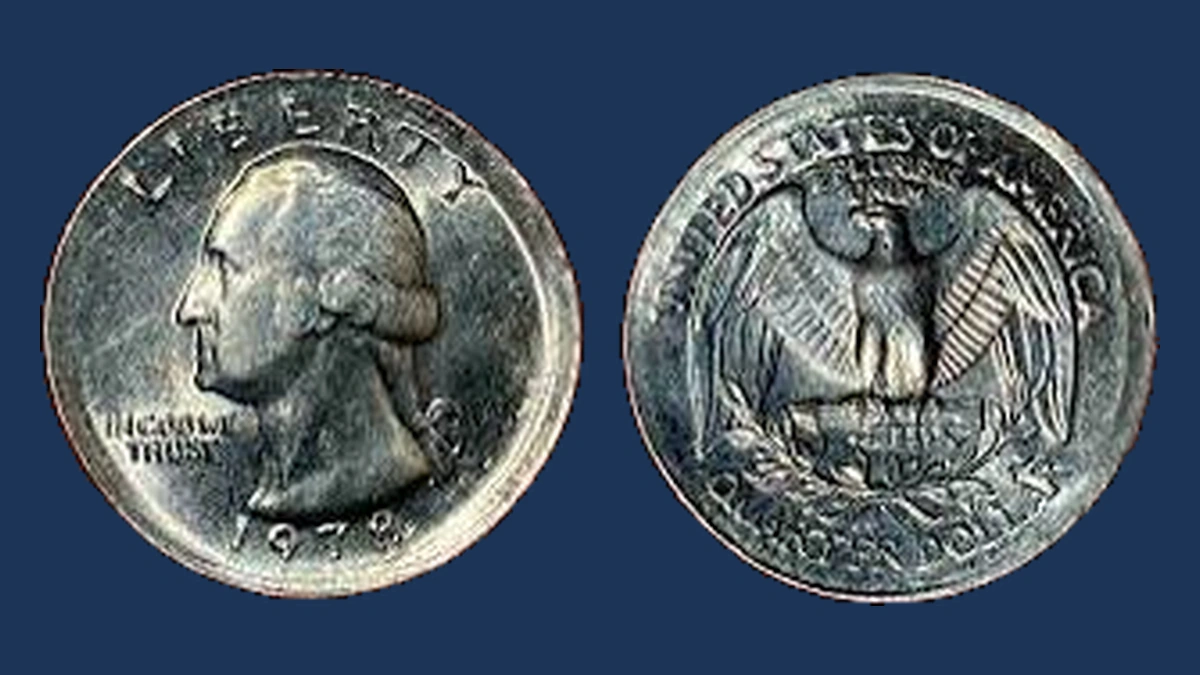
The portrait and lettering can sit inside a coin that spreads too far outward. A broadstrike happens when the surrounding steel ring fails to hold the metal at its normal size.
An early catalog illustrates a Philadelphia example made on a Type I blank. This means the metal disk had not received its raised starting rim before the design was struck.
The catalog’s P describes Philadelphia; no P appears on ordinary 1978 quarters. Denver broadstrikes are also reported, but their appearance must be checked on the individual coin.
Estimated Value
Estimate $30–$175 for an ordinary 1978 broadstrike, depending on size, condition, and how clearly the widened edge shows. A documented Type I blank can add interest when its identity is supported.
Two different 1990 Philadelphia broadstrikes sold together for $101 in July 2021. That total applies to the pair, not to each coin, and offers a lower-priced comparison for less dramatic quarters with similar outward metal spread.
How to Identify
Use calipers across the widest and narrowest parts, comparing both with a normal quarter’s 24.26 mm width. A broadstrike can spread beyond this size, but a large outline alone does not establish the error.
Examine the whole design under a 10× magnifier: Washington, the date, and the outer lettering should remain on the metal. On the edge, look for missing or incomplete grooves rather than file marks, rolled metal, or a rim flattened afterward.
The metal normally remains present, so weigh the loose coin against the 5.67 g standard. To distinguish a broadstrike from an off-center strike, check that the outer design survives inside the spread metal instead of ending at a cut-off boundary.
5. 1978 Washington Quarter Unusual Color from Heating
A 1978-D quarter can show unusual copper-colored or blotchy surfaces even though its metal layers remain present. Heating before striking can change the surface when the process goes wrong.
This heating step, called annealing, softens metal so it can take the design. Heritage cataloged an NGC MS66 example as improperly annealed, meaning it was graded as an unworn coin.
Color is only the first clue. Natural toning, chemicals, and later exposure to fire can also change a quarter’s appearance without creating a Mint error.
Estimated Value
The 1978-D example sold for $99.88 at Heritage in August 2015. An estimated $40–$200 suits comparable confirmed heating errors, with original surfaces and clear identification carrying much of the value.
Attractive color alone does not earn that price. Wear, scratches, or evidence of later burning reduce appeal, while a well-preserved coin with a reliable grading description is easier to compare with the recorded sale than an unexplained dark quarter.
How to Identify
Turn the coin under neutral white light and compare its front with its back. Do not clean a dark area to see whether it becomes silver-colored.
A normal 1978 quarter has bonded outer metal layers over a copper center. Those layers should remain present on a heating error, unlike a coin with a whole face of exposed copper.
With a 10× magnifier, examine the original shine between letters and look for corrosion or heat blisters. A scale should read near 5.67 g, while calipers should show roughly 24.26 mm across the grooved edge.
Correct measurements cannot prove the cause of color. Match the intact surface and layer structure to a professionally identified heating error before paying an error premium.
6. 1978 Washington Quarter Doubled Lettering
Small extra outlines around front lettering can point to a doubled die. In this case, the steel stamping tool already carried a doubled design before it struck the quarter.
Year-specific reports mention Philadelphia and Denver examples, including lettering and date features. The exact pattern must be established for the particular coin rather than combining every reported doubled area into one variety.
This is different from a second blow against an already struck coin. It is also different from shallow, flat doubling caused by movement during the strike.
Estimated Value
Use an estimated $20–$250 for a confirmed 1978 doubled-die quarter with readable separation. Minor doubling belongs near the bottom, while stronger features and an unworn surface support more interest.
A different variety, the 1990-S Proof FS-101 doubled die, sold for $360 in March 2020 in PCGS PR68 Deep Cameo. That specially made collector coin is a comparison, not a direct price for the reported 1978 Philadelphia or Denver varieties.
How to Identify
Set a normal 1978 quarter beside the candidate and compare the same letters under a 10× magnifier. Start with LIBERTY, IN GOD WE TRUST, and the date, but do not assume all three must be doubled.
Rounded extra outlines or split corners are more useful than a thin, flat shelf. Move the light so that shadows cannot create a false second edge.
Take one photograph of the entire date and another of the suspected doubled letters. Keep both under the same light, so the positions can be compared with a pictured example.
An isolated thick letter can result from wear to the stamping tool. Find a documented example whose doubled details match your coin at the same points before naming a specific variety.
7. 1978 Washington Quarter Stepped Edge with an Indent
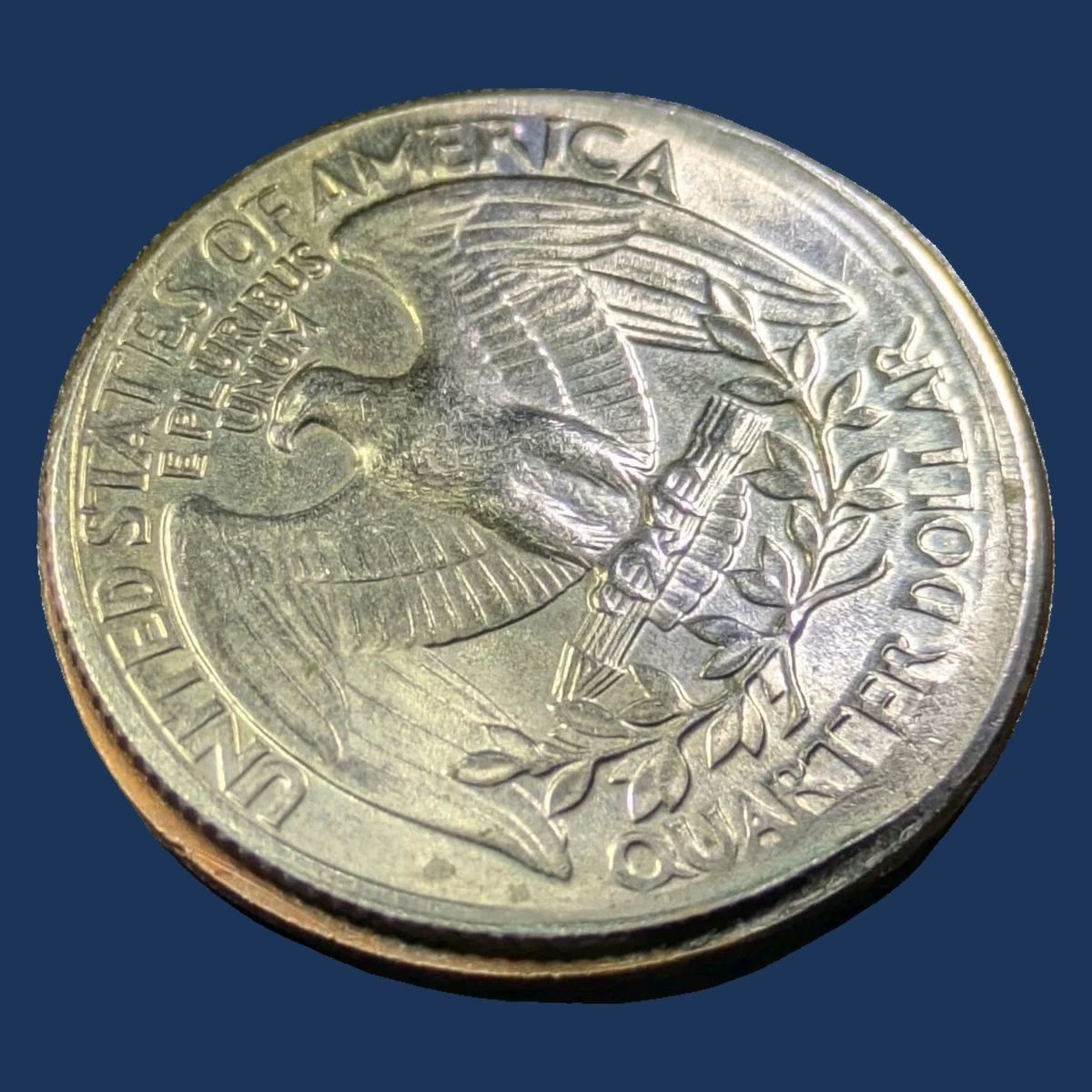
One cataloged 1978 quarter combines two visible problems: a stepped edge and an indentation. ANACS graded that coin MS63, an unworn grade.
The step forms when only part of the blank sits inside the surrounding collar, the steel ring that controls width. Metal outside the ring spreads farther than the portion held within it.
An indent is a hollow left when another object blocks part of the design during striking. Both features occur on this example, but the catalog does not specify the hollow’s face or position.
Estimated Value
The combined partial-collar and indent coin sold for $11 in October 2004. That old result illustrates one sale rather than a current ceiling for every comparable quarter.
A present estimated range is $25–$300, depending on the depth of the hollow and the clarity of the edge step. As a later comparison, a 1990-P nickel with a partial collar sold for $99 in June 2025, with its different denomination kept in mind.
How to Identify
Inspect the edge first, rotating the coin slowly rather than viewing it only from above. A genuine collar step separates a narrower section from metal that spread beyond the ring.
The normal quarter’s 24.26 mm diameter provides a caliper comparison, though the expanded section can exceed it. Use a scale to compare the weight with 5.67 g, since a blocked strike normally leaves the metal present.
Next find the depressed area under a 10× magnifier and check whether the design fades or stops inside it. Check the surrounding grooves and surface for later squeezing, hammer marks, or a sharp impact lip.
The two features must be visible on the same coin. Follow the edge step around the piece, then locate the hollow within its struck surface.
8. 1978 Washington Quarter Three Curved Clips
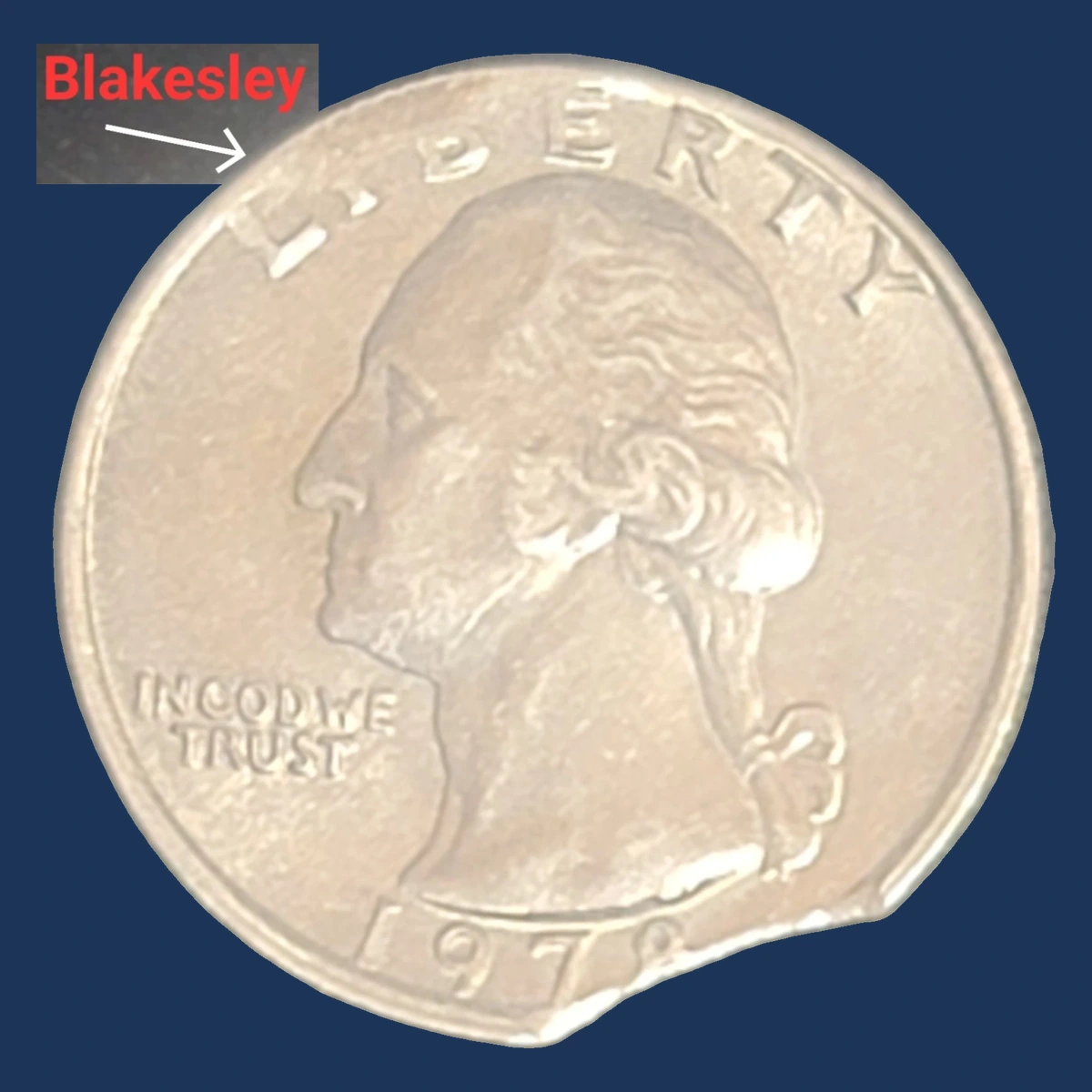
Three rounded gaps interrupt the outline of the recorded 1978 example. PCGS graded this quarter MS64, and its catalog describes an 18% triple curved clip.
These gaps begin before the design is struck. When the machine cuts a blank from metal strip that overlaps earlier holes, parts of its circumference are already missing.
The 18% figure describes the combined clipping, not three separate 18% losses. One coin with three gaps is still one clipped-blank error, and each gap must be checked for natural shaping rather than later cutting.
Estimated Value
The PCGS MS64 triple-clip quarter sold for $180 in March 2025. An estimated $60–$350 covers similar genuine 1978 clips, with three clear curves and an intact date making the error easier to appreciate.
Smaller gaps or heavier wear generally bring less. A large total loss can add interest, but it does not automatically outweigh condition, clean surfaces, and a convincing match between the missing areas and the surrounding struck design.
How to Identify
Count the curved gaps without treating each one as a separate coin. Their combined effect should agree with the catalog’s overall 18% description.
Use a scale to look for weight below the normal 5.67 g, but do not assign an exact target from that percentage alone. Measure surviving opposite edges with calipers against the normal 24.26 mm diameter.
A 10× magnifier can reveal softened lettering or a weak rim near a genuine gap. The remaining edge normally has grooves, while the clipped curves should not show fresh saw teeth or file strokes.
Damage can remove weight just as clipping does. Trace where each curve meets the struck rim and look for natural metal flow rather than a sharp cut through finished letters.
9. 1978 Washington Quarter Missing Outer Metal Layer
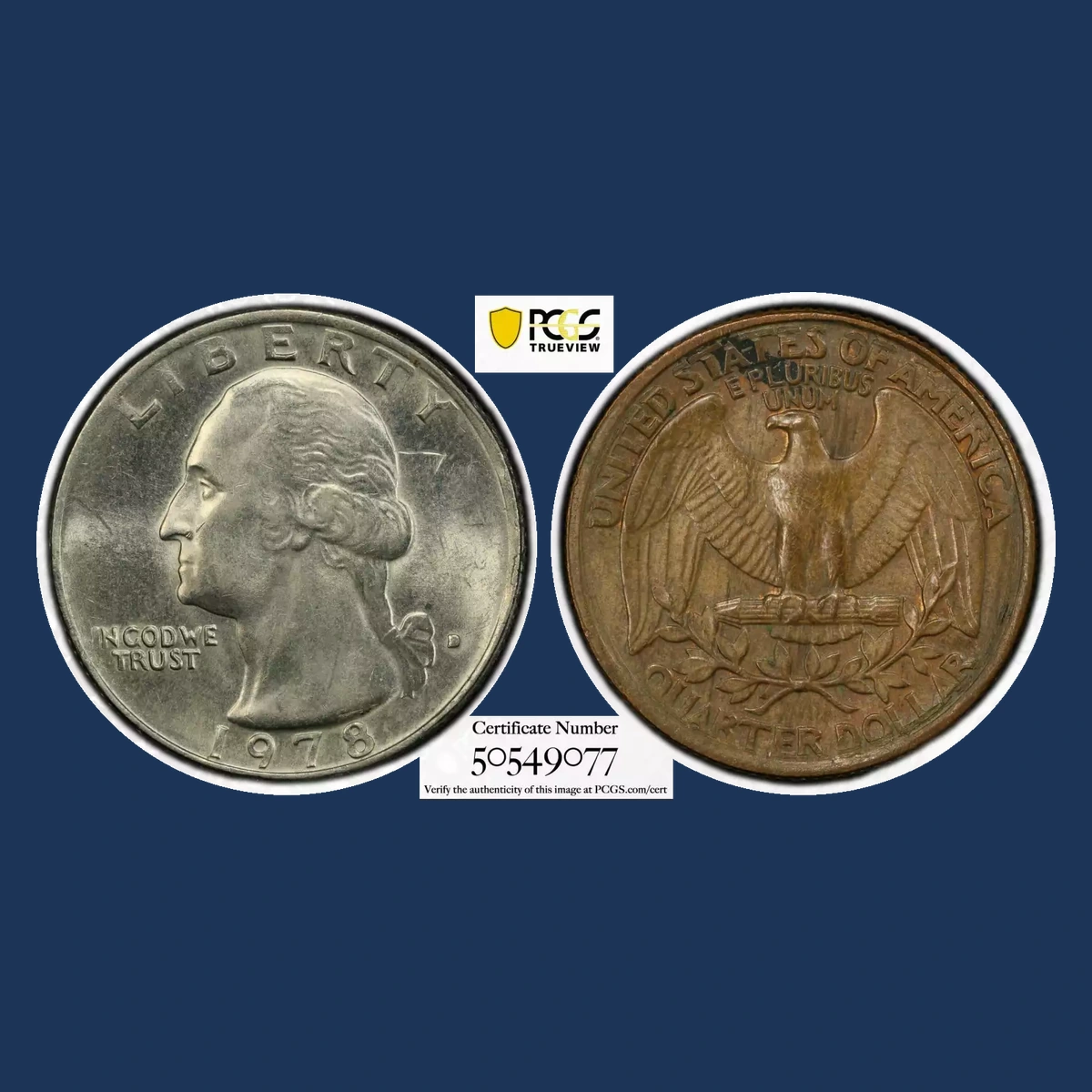
A whole copper-colored face can appear when a quarter loses one of its silver-colored outer layers. The coin is clad, meaning its different metal layers are bonded together.
A Philadelphia front-layer example was graded PCGS MS61. Another Philadelphia coin, graded PCGS MS65, lost its back layer and weighs 4.63 g.
A Denver front-layer example is also reported. These are separate coins, so the 4.63 g measurement belongs only to the recorded back-layer piece, not to every 1978 quarter that shows exposed copper.
Estimated Value
A Philadelphia front-layer coin graded PCGS MS61 sold for $240 in July 2022. Estimate $100–$500 for comparable 1978 missing-layer errors, allowing for wear, which face is affected, and the quality of the remaining surface.
The back-layer example’s 4.63 g weight helps identify its construction rather than setting its value. An intact, clearly struck copper face generally presents better than a scraped or corroded surface, even when both look brown.
How to Identify
Compare a loose coin with the ordinary 5.67 g standard on a scale, then check its diameter with calipers. The recorded back-layer coin weighs 4.63 g and should still be near the normal 24.26 mm width.
Inspect the edge layers with a 10× magnifier, checking where the silver-colored outer metal meets the exposed copper. The original edge grooves may survive, but brown color alone could come from staining or later treatment.
The recorded back-layer example shows the kind of construction to compare with your coin. Look across the eagle for design struck directly into the copper, with no scraping, pitting, or added coating over the surface.
10. 1978 Washington Quarter Partly Open Metal Layers
A gap can open at the edge while part of the coin’s layered metal remains attached. Collectors call this a clamshell split because the layers resemble a shell beginning to open.
The recorded 1978 Philadelphia example has a partial split on the back and was graded PCGS AU50. That grade describes a coin with light circulation wear.
This error differs from a small surface flake or a completely missing layer. The opening shows a deeper separation within the layered coin, while an attached section still holds the pieces together.
Estimated Value
An estimated $100–$500 suits a confirmed partial clamshell split, depending on its size and stability. A visible opening that preserves the date and recognizable design is usually more appealing than a crushed or damaged split.
For a related but different 1978 layer failure, a front-layer-missing quarter sold for $240 in July 2022. That sale provides context for separated metal, while the attached flap and depth of a clamshell opening need separate consideration.
How to Identify
Do not test the opening by bending it. A partly attached layer can break off, changing the error and reducing its appeal.
Hold the edge toward the light and inspect the opening with a 10× magnifier. Follow the separation toward the part that remains attached, checking for a natural layered boundary rather than a saw cut.
Weigh the coin with a scale and compare it with 5.67 g. The weight can remain near normal if the separated metal is still present.
Calipers can compare its width with 24.26 mm, but avoid pressing against the loose layer. Examine the edge grooves beside the opening and the back design above it.
The clearest check is an edge view showing an attached metal layer opening away from the rest of the quarter.
11. 1978 Washington Quarter Off-Center Strike
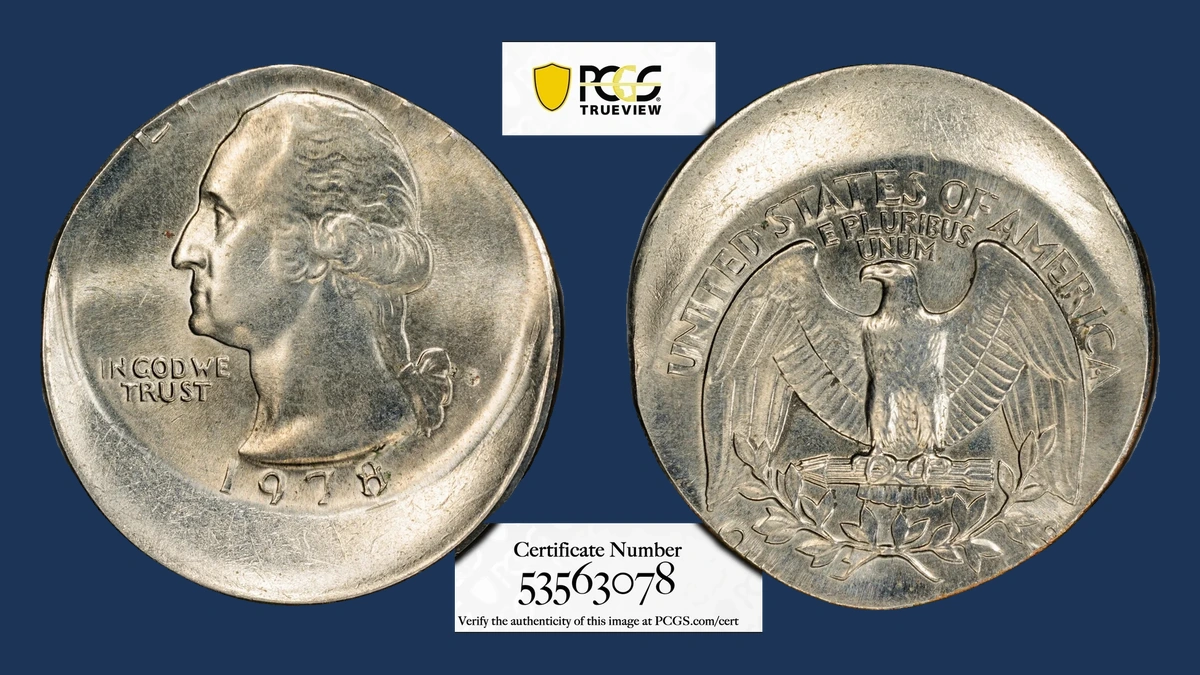
Washington’s portrait can shift toward one edge, leaving a blank crescent opposite it. The blank was out of position when the stamping tools came together.
A recorded Philadelphia example is 10% off center toward ten o’clock, and separate coins show roughly 30% displacement. Early catalogs also list 20%, 35%, and 60% examples.
A Denver 20% example appears in year-specific reports. These different amounts describe separate coins rather than stages in one coin’s life, and the missing design should agree with the stated degree of displacement.
Estimated Value
Estimate $40–$600 for genuine 1978 off-center quarters, with the visible date and amount of displacement strongly affecting price. Small shifts usually sit toward the lower end.
A 30% off-center NGC MS63 example sold for $57 in May 2006. A different 15% off-center MS64 coin brought $154 in September 2025, showing why preservation and the individual auction matter alongside the percentage printed on a holder.
How to Identify
First decide whether the date can actually be read. If the mint-mark area is missing, do not identify a coin as Philadelphia merely because no D is visible.
Turn it over and compare the displaced design on both faces. A blank crescent with missing outer lettering supports an off-center strike; a shifted rim on just one face calls for a different explanation.
For a loose coin, a scale should show roughly 5.67 g because the metal was displaced rather than removed. Calipers help compare the remaining outline with 24.26 mm, while a 10× magnifier reveals edge grooves and possible cuts.
Look for struck design ending naturally at the metal boundary. The unstruck crescent and lost design should account for each other across the two sides.
12. 1978 Washington Quarter Two Strikes
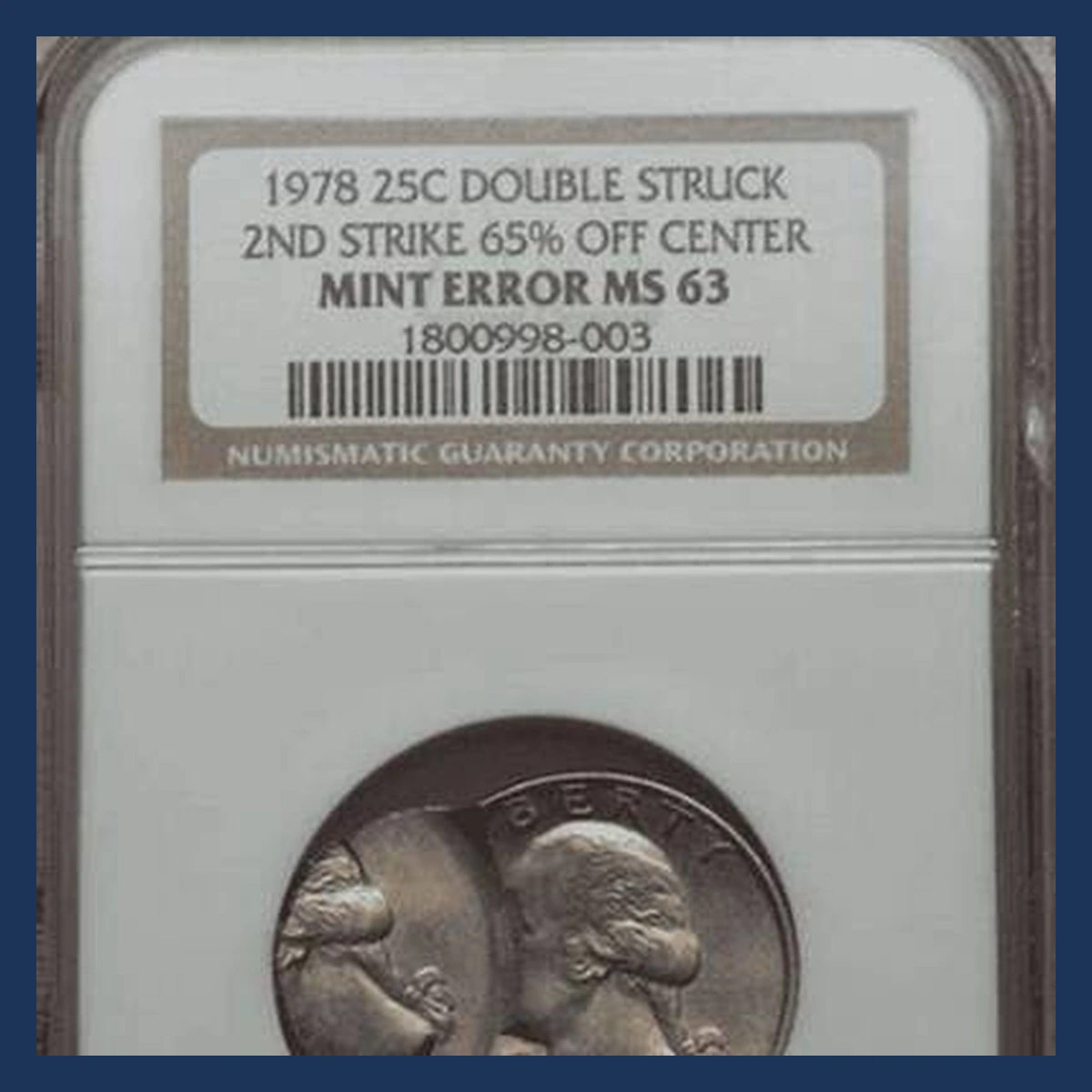
Two versions of the design can survive when a quarter stays in the press for another blow. One recorded example received its second strike about 65% off center.
Another type turned between strikes while remaining inside the surrounding ring. That coin can retain a round outline even though its design appears twice at different angles.
The offset example shows two dates, with the second only partly visible in one auction description. The rotated example requires close inspection of overlapping details instead, so a wide, two-lobed shape is not essential for every double strike.
Estimated Value
A rotated, in-collar NGC AU58 example sold for $198 in July 2022. An offset NGC MS63 double strike sold for $488.75 in January 2008, with part of the second date visible.
An estimated $150–$900 covers comparable 1978 double strikes. Strong separation and readable dates can add appeal, while confusing overlap, heavy wear, or later damage can lower the price even when the coin clearly received two blows.
How to Identify
Compare the positions of repeated letters before judging the outline. On a round, in-collar example, a second set may be rotated around the center without a large blank crescent.
Use a 10× magnifier to follow several related details through the overlap. Their positions should fit one second strike, rather than a collection of scratches or isolated flat shelves.
For the offset type, inspect where the later strike flattens parts of the first design. A scale should remain near 5.67 g; calipers may show an outline wider than the normal 24.26 mm.
Edge grooves can be interrupted where the coin escaped the ring. Find a connected second design on the coin, with letters and portrait details shifted together in the same direction.
13. 1978 Washington Quarter Partial Mirror-Image Impression
An early catalog records a 1978 quarter with about 20% partial brockage. The visible clue is a sunken design that reads backward over part of one face.
Brockage occurs when an already struck coin gets between a blank and a stamping tool. That coin presses its raised design into the next blank as a reversed impression.
The normal design may remain across the rest of the face. A shallow dent without backward design is not enough, and ordinary doubled lettering is raised rather than this kind of sunken transfer.
Estimated Value
A confirmed 1978 partial brockage has an estimated value of $150–$1,000. A readable backward portrait or lettering makes a smaller impression more desirable than a vague hollow.
For a later quarter comparison, a 1999-P New Jersey coin combining an 80% brockage with a broadstrike sold for $312 in December 2024. That larger, compound error is a different coin and design, so the estimate still depends on the 1978 piece’s clarity and condition.
How to Identify
Try reading the unusual letters in a mirror or a horizontally flipped photograph. A transferred design reverses direction, unlike normal letters that merely sit at a different angle.
Use a 10× magnifier and side lighting to establish that the impression sinks into the surface. Later squeezing between coins can also leave reversed marks, so inspect nearby metal for crushing or a pressed rim.
A scale and calipers provide the usual 5.67 g and 24.26 mm comparisons. Check the grooved edge and the unaffected design for signs that the coin was forced against another object after leaving the Mint.
Keep the whole face visible while examining the reported one-fifth area. A genuine brockage needs a recognizable backward design within a naturally struck surface, not merely a coin-shaped depression.
14. 1978 Washington Quarter Struck on the Wrong Blank
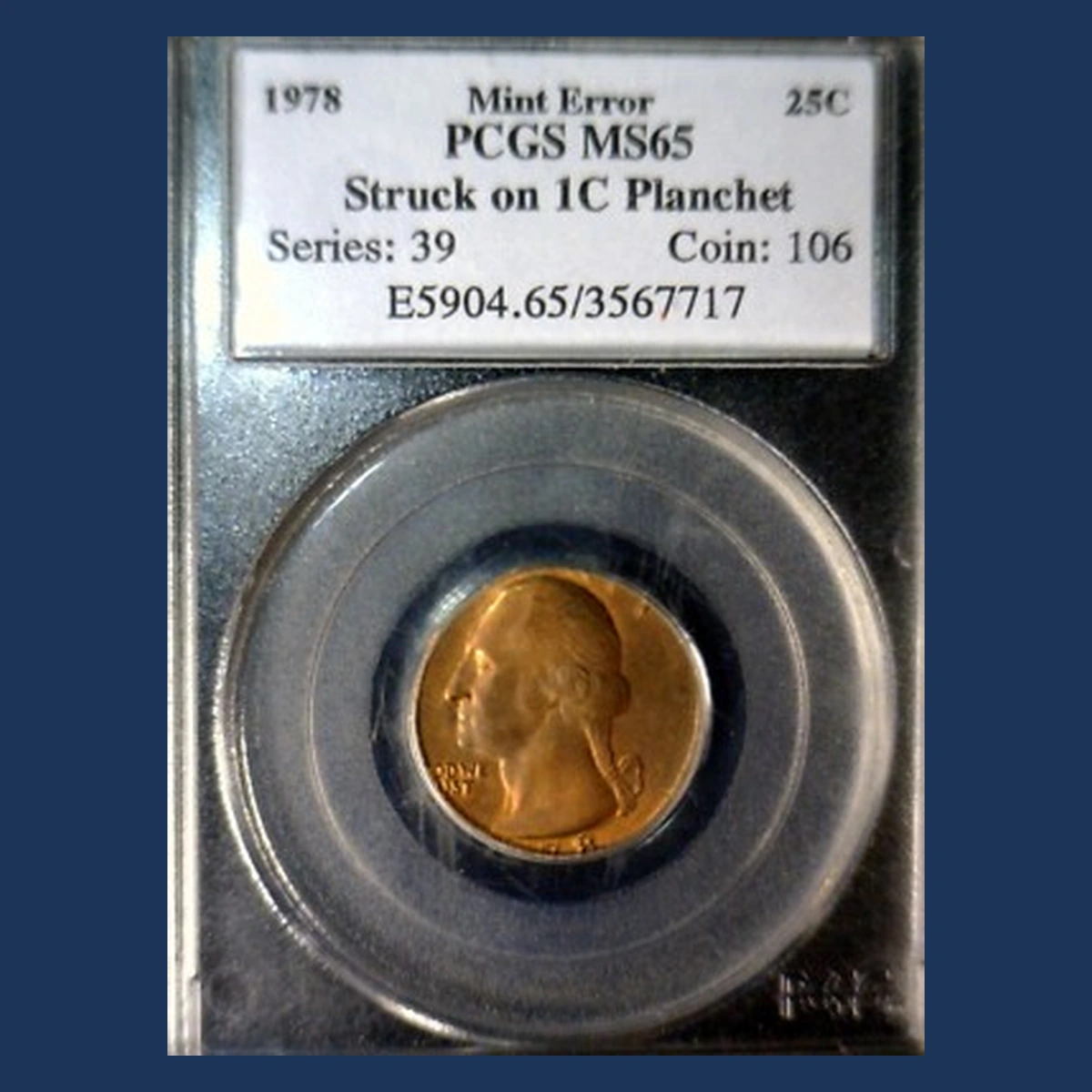
A quarter design can land on a blank intended for another denomination. The result may be copper-colored, unusually small, or too thick for its size.
Recorded Philadelphia examples include cent, nickel, and dime blanks. One cent example weighs 3.08 g, a nickel example is listed at 5.0 g, and a dime example at 2.4 g.
Each weight belongs to that particular coin. Denver versions are also reported, but their identification needs an actual D-bearing example rather than photographs or measurements borrowed from Philadelphia pieces.
Estimated Value
Estimate $150–$2,000 for these wrong-blank quarters, depending on the metal, remaining design, and condition. Nickel-blank examples often cost less than highly attractive copper-colored cent-blank pieces.
A Philadelphia nickel-blank quarter brought $216 in December 2024. A cent-blank example graded NGC MS66 Red sold for $1,440 in September 2025.
The copper coin shows why condition matters, especially when its small blank clearly cuts off the larger quarter design.
How to Identify
Begin with a scale and calipers, not color alone. The ordinary quarter is 5.67 g and 24.26 mm; a 1978 cent blank normally starts near 3.11 g and 19.05 mm.
Nickel blanks use 5.0 g and 21.2 mm standards, while dime blanks normally use about 2.27 g and 17.91 mm. Striking can spread these blanks, so diameter need not stay exactly at its starting size.
The recorded dime-blank quarter weighs 2.4 g; keep that measured figure separate from the standard. Under a 10× magnifier, inspect the edge metal, any grooves, and the naturally missing outer design.
A cut-down quarter can also be small and light. Check that the metal and surviving quarter design fit the proposed blank without a filed edge or added plating.
15. 1978 Washington Quarter Later Struck as a 1979 Dollar
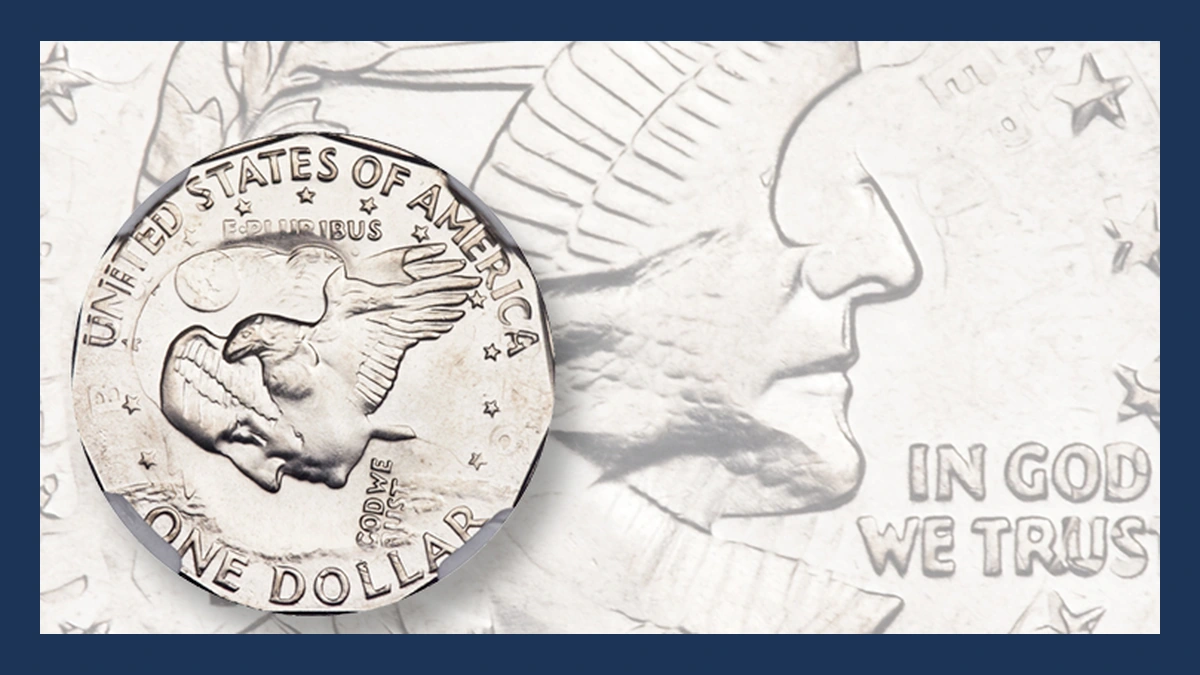
One 1978 quarter later received the design of a 1979-P Anthony dollar. The finished error is therefore a dollar struck over an earlier quarter, not a quarter struck by 1978 tools.
Its bold dollar date and mint mark survive alongside traces of the earlier design. The quarter’s faint but nearly complete 1978 date appears between three and four o’clock on the dollar’s back.
NGC graded the coin MS67. This two-denomination error preserves evidence of two different trips through the coin-making process on the same piece of metal.
Estimated Value
The NGC MS67 dollar overstrike sold for $10,200 in November 2025. An estimated $7,500–$15,000 suits a comparable authenticated piece with both dates and clear surviving quarter details.
This is the value of the entire dollar error, not a premium that applies to ordinary 1978 quarters. Strong preservation and a readable earlier date make the unusual pairing easier to recognize and can draw interest from collectors of both denominations.
How to Identify
Start with the bold 1979-P dollar design, then examine its back between three and four o’clock. The faint earlier 1978 date is the key to identifying the quarter underneath.
A 10× magnifier and low-angle light help separate the old date from the newer design. Follow other surviving quarter details instead of mistaking random lines for a second denomination.
For a loose piece, use a scale and calipers to document its construction. A normal quarter starts at 5.67 g and 24.26 mm, while a normal Anthony dollar is 8.1 g and 26.5 mm.
Those are reference standards, not this specimen’s measured results. Inspect the grooved edge for alteration and match the nearly complete 1978 date to its recorded position beneath the dollar design.
Conclusion
Estimated 1978 quarter error values range from $2 for small raised defects to $15,000 for the related dollar overstrike. Wrong blanks, missing layers, and clearly separated strikes can also bring strong prices.
Start with the date, mint mark, and visible mistake. Then check weight and size before comparing prices, keeping ordinary quarters separate from the 1979 dollar struck over a 1978 quarter.